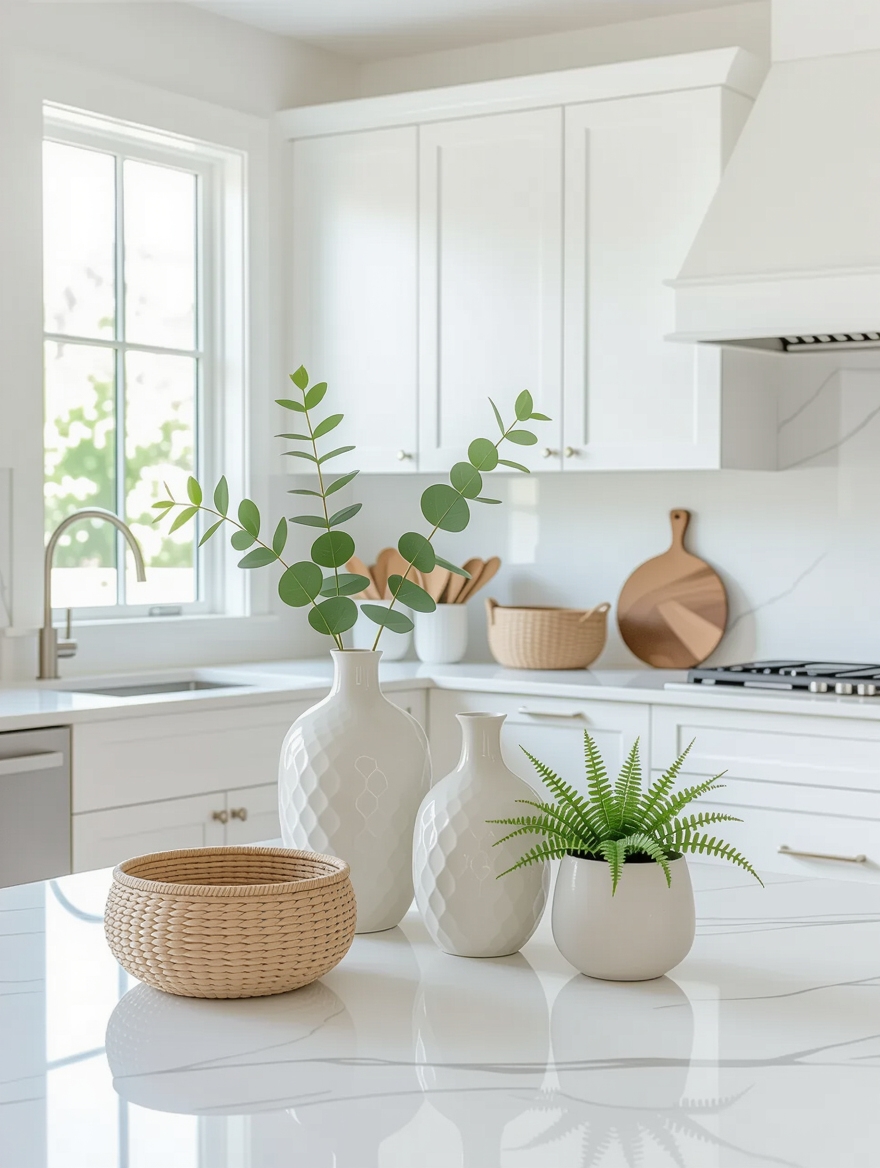

The kitchens that still look right a decade after the remodel almost never chased a trend. They leaned on materials and shapes that have already survived forty years of changing taste, then let the owner’s personality fill in the rest. That is the whole idea behind timeless kitchen decor: choose the bones well, and you stop repainting your opinion every three years.
These ideas are the ones I keep coming back to because they age slowly and forgive a lot. Some cost a weekend and a can of paint, others a real budget, and I will tell you which is which so you can spend where it actually shows.
The Short Version
| Element | Why it lasts | Rough cost |
|---|---|---|
| White or wood cabinets | Neutral base survives every trend cycle | $80-120 a door to repaint |
| Natural stone or butcher block | Real materials age better than fakes | $40-100 per sq ft installed |
| Subway tile backsplash | Clean lines that never date | $10-25 per sq ft |
| Vintage hardware | Small swap, big character, easy to change | $4-12 per pull |
Timeless White Cabinets for a Clean Base
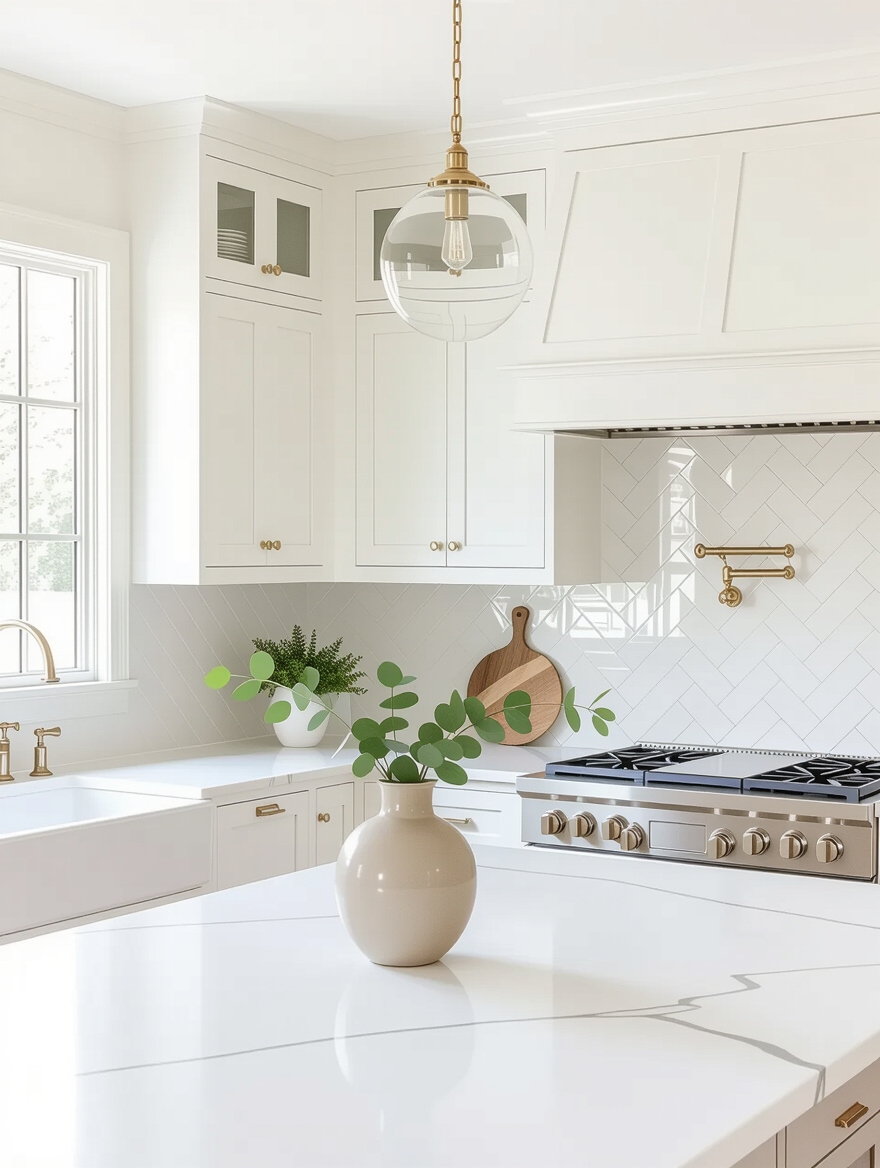
White cabinets earn their reputation for one boring reason: they refuse to commit to a decade. A warm white like Benjamin Moore White Dove bounces light into a dark galley and stays quiet behind whatever you put on the counters. That neutrality is the point. It lets you change your mind about color through the easy stuff, not the cabinets.
Pick a White With an Undertone
If your boxes are sound but the doors look tired, repainting runs about $80 to $120 a door through a pro, or a careful weekend with a sprayer if you are patient. The fix I make most often is talking people out of stark builder white and into something with a hint of greige, which hides splatter and feels softer under both daylight and bulbs.
White also plays well with a budget kitchen refresh, because every other choice you make sits comfortably against it.
Glass-Front Cabinets for Your Favorite Dishes

Swapping a few solid doors for glass fronts does something a full open shelf cannot: it shows off your favorite dishes while keeping the dust out. I usually steer people toward glazing just one or two upper cabinets, flanking the range or the sink, so the effect stays intentional and calm. One cabinet is plenty.
Clear glass is the honest choice if your stacking is tidy. Frosted or reeded glass is the kind one, blurring the contents just enough that mismatched mugs stop mattering. Either way, light one of those cabinets from inside with a cheap puck light and it turns into the warmest thing in the room at night.
- Clear glass for matched sets and well-stacked plates you want seen
- Reeded or seeded glass to hint at contents without demanding perfection
- A $15 stick-on puck light inside to make the cabinet glow after dark
Glass-front cabinets reward you for keeping only what you actually love within reach.
Open Shelving to Show Your Style

Open shelving gets sold as airy and easy, and then real life piles vitamins and a phone charger on it. It works beautifully when you treat the shelf as a small stage with a strict cast: a stack of plates, two or three pieces of pottery, one trailing plant, and air. The empty space is what makes the rest look styled.
Mount sturdy brackets into studs, because a loaded 36-inch shelf carries more weight than people expect. I tell first-time renovators to keep open shelving to the spots they use daily, so the rotation itself stays the styling. Anything you only reach for at Thanksgiving belongs behind a door.
- Limit each shelf to three groupings with breathing room between
- Mix heights: a tall pitcher, a short stack, one horizontal object
- Keep the palette tight so daily dishes read as decor, not mess
Vintage Hardware That Adds Character

Hardware is the cheapest personality you can buy. A set of unlacquered brass knobs or bin pulls will warm up the most generic cabinets, and because brass ages instead of chipping, it only improves as the finish softens with handling. This is the swap I push hardest. When someone has a sound but bland kitchen and a small budget, brass changes the whole feel for the price of a nice dinner out.
- Cup pulls on drawers, knobs on doors, for a classic layered look
- Unlacquered brass at $6 to $12 a piece if you like a living patina
- Match screw spacing to existing holes, or you are also patching and drilling
Not sure which hardware finish to commit to? Match it to how much patina you can live with.
🎯Unlacquered brass
Ages and darkens with handling; best if you like a living, weathered metal
🎯Polished nickel
Stays bright and warm-silver; a safe classic that never looks dated
🎯Matte black
Bold and graphic; hides fingerprints but shows hard-water spots near the sink
Classic Subway Tile Backsplash

Subway tile has been on walls since the early 1900s and it has outlasted every backsplash fad that tried to replace it. The reason is proportion: the 3-by-6 brick stays calm whether you run it straight, stacked, or in a herringbone. It is also one of the few upgrades a confident DIYer can actually pull off, which keeps the cost down to mostly material.
Let the Grout Do the Talking
Where it gets interesting is the grout. The same white tile looks crisp with bright white grout and far moodier with a soft gray, and that single choice is free. I have watched a kitchen go from flat to expensive just by switching to a warm gray grout that lets each tile draw its own line.
Budget around $10 to $25 per square foot installed, less if you tile it yourself over a weekend. For more permanent-feeling rooms, pair it with the kind of elegant kitchen design that keeps everything else simple.
Durable Butcher Block Countertops

Butcher block is the warm counter that forgives. It scratches, yes, but it sands back to new in an afternoon, which is more than quartz can say after a hot pan lands on it. Here is how I keep a wood counter looking right for years instead of months.
- Oil it monthly at first with food-safe mineral oil, then a few times a year
- Keep a board near the sink so standing water never sits on the wood
- Sand out deep scratches with 120-grit, then re-oil the same day
- Run it on an island or a dry run, not flanking the sink, if you are nervous
A few counter terms worth knowing before you choose a material:
📖Honed finish
A matte, non-reflective surface; softer look but shows etching more on marble
📖Sealing
A penetrating treatment that blocks stains on porous stone; redone yearly
📖End grain
Butcher block cut so the wood fibers face up; toughest and kindest to knives
Natural Stone Countertops Built to Last

If butcher block is the warm option, natural stone is the heirloom one. Granite shrugs off heat and knives, and honed marble carries a softness that engineered surfaces still cannot fake. The trade-off is honest upkeep: most natural stone wants sealing once or twice a year, a ten-minute job, to keep red wine and lemon from etching in.
- Granite for the lowest-maintenance, heat-proof workhorse at $40 to $70 a sq ft
- Honed marble if you accept patina as character, not damage
- Soapstone for a matte, dark look that needs only mineral oil
- Seal yearly with a $20 bottle; water beading means you are still protected
Warm Wood Accents for Lasting Character

An all-white or all-stone kitchen can tip cold fast, and warm wood is the cheapest way back. You do not need wood cabinets to get it, either. A single walnut shelf, a row of oak stools, or a wood-framed mirror on a blank wall brings in grain and warmth without committing the whole room to a finish. This is where I tell people to stop renovating and start decorating.
- One floating walnut shelf for instant contrast against pale cabinets
- Oak or rattan stools at the island to break up painted surfaces
- A wood cutting-board lean against the backsplash, working and decorative at once
Farmhouse Sinks for Cozy Kitchens

A farmhouse sink is one of those rare choices that is both nostalgic and quietly practical, with a deep basin that swallows roasting pans and a front apron that saves your lower back from leaning over a lip all day. The look has been around for a century, so it is not going anywhere, which matters because this is not a cheap or quick swap.
Material decides the personality. Fireclay gives you that crisp white farmhouse glow and resists staining, while cast iron with enamel runs warmer and heavier. Stainless looks more modern and shrugs off everything. Expect a real install, since the cabinet usually needs modifying to carry the weight and hold the apron.
Budget $300 to $900 for the sink plus install, and have a plumber confirm your base cabinet can take it. It pairs naturally with farmhouse kitchen details if you want to lean the whole room that way.
Mixing Metals for a Balanced Kitchen Look

The matched-metal rule died years ago, and good riddance, because a kitchen where the faucet, hardware, and lighting are all the same chrome can feel like a showroom nobody cooks in. Mixing two finishes gives you depth. The trick is to pick a lead and a sidekick, then let the proportion stay lopsided. The most common question I get is whether brass and black ‘go,’ and they do, beautifully, when you let one carry the room.
- Choose one dominant metal for the big pieces, faucet and lighting
- Let a second finish play support on hardware or open shelf brackets
- Keep it to two metals total; three starts to look accidental
Styling Tips That Hold It All Together
Timeless bones still need editing or they feel like a model home nobody lives in. The trick is the three-foot rule I use on every job: stand back three feet from each surface and remove one thing. Counters in particular feel expensive the moment they are mostly clear. That is why a clutter-free counter beats almost any decorative object you could add.
Then bring warmth back on purpose. A bowl of lemons, a worn cutting board left out, one trailing pothos by the window: these signal a kitchen that gets used, not staged. If you want a low-cost jolt of personality on a blank wall, a coat of color behind floating shelves does more than art, and the green kitchen walls approach proves how far paint goes. For a higher-end finish, study how a luxe counter gets styled with restraint rather than stuff.
Build the Bones, Then Make It Yours
None of these ideas are loud, and that is exactly why they last. A neutral cabinet, a real-material counter, a clean run of subway tile, and a few honest wood and metal accents give you a kitchen that takes any direction you feel like next year without a single demolition.
Start with whatever is bugging you most, whether that is dated hardware or counters you are afraid to use, and fix that one thing well. Timeless kitchens are built one good decision at a time, not in a single weekend.
More Hair Inspiration