

The kitchens that still look right in fifteen years almost never pick a side. They borrow the clean lines of modern design and the warmth of classic detailing, then pair the two so neither overwhelms the other. That balance is the whole secret. Neither side wins. Go fully modern and it can feel cold; go fully traditional and it can date.
What makes it work is the pairing. The right material against the right finish, the right metal against the right cabinet, is what gives a kitchen that hard-to-name quality of looking both current and timeless. Here are sixteen modern-classic pairings that age beautifully, with honest notes on cost and care.
Pairing Questions, Answered Fast
What makes a kitchen feel modern and classic at once? Clean modern shapes paired with warm classic materials, so neither side takes over.
Which pairing ages best? Natural materials with simple finishes: marble or wood with restrained, quality hardware.
Where should I spend? On the surfaces you touch and the metals you see; those carry the whole look.
Marble Counters With Warm Wood Cabinets

This is the pairing I reach for most, because it never fails. Cool marble veining against warm wood grain gives a kitchen instant depth, the modern stone balanced by the classic warmth of the cabinetry. It looks expensive without trying, and it only gets better as the wood ages. The same logic drives a warm modern feel.
Marble does ask for care. It is porous, so you reseal it once a year and wipe spills quickly, and a resealing takes about ten minutes.
- Budget roughly $60 to $100 per square foot for the marble, before fabrication.
- Choose a honed finish to hide the etching acidic foods leave behind.
- Pair with white oak or walnut for the warmest, most current contrast.
A Timeless Pairing: Quartz and Shaker

If marble’s upkeep gives you pause, this is the low-maintenance answer. Quartz brings the modern, near-bulletproof surface, and classic shaker cabinets bring the warmth and familiarity, so the kitchen feels grounded but never fussy.
The Low-Maintenance Classic
Quartz now copies marble convincingly, so you can keep the soft veined look without the sealing or the etching worries. It is the pairing I point busy families to most, and it pairs naturally with a calm minimal base.
Keep the shaker simple and the hardware restrained so the look leans current rather than country. Quartz runs about $50 to $120 per square foot installed.
💡Designer Tip
When you pair a cool material with a warm one, let one clearly dominate the room and the other play the accent. A kitchen that is fifty percent cool stone and fifty percent warm wood can feel split down the middle; weight it roughly seventy-thirty and it instantly looks intentional.
Industrial Concrete With Rustic Wood

For something with more edge, polished concrete counters against rustic wood cabinets land modern and warm at once. The matte, architectural surface is unmistakably contemporary, while the wood keeps it from feeling like a parking garage. It is a confident pairing for people who want a little grit.
Concrete needs sealing to resist stains, and it develops a patina over time that some love and some do not. Go in knowing it will age into character rather than staying pristine.
Two-Tone Cabinetry: Modern Meets Traditional

Two-tone cabinetry is the easiest way to literally pair modern and classic in one room. A deep, moody color on the lowers with a soft classic white or cream above, or a bold island against quiet perimeter cabinets, gives the eye contrast and keeps the kitchen from feeling flat.
The trick is letting one tone clearly lead. Split it fifty-fifty and it can look indecisive; weight it toward one color and it looks designed. For palette ideas, see these white kitchen variations.
Not sure which pairing suits you? Match it to how you live.
1You want zero maintenance
Quartz with shaker cabinets gives the classic look with none of marble’s care.
2You love patina and character
Marble with warm wood, or concrete with rustic wood, ages into beauty over time.
Vintage Cabinetry With Matte Black Fixtures

Here the contrast does the work. Old meets new. Vintage-inspired or beaded cabinetry carries the classic charm, while matte black fixtures and hardware snap it firmly into the present. The old-and-new tension is exactly what keeps the look from tipping into a period replica.
- Use matte black on the faucet, pulls, and lighting for a consistent modern thread.
- Keep the cabinet detailing restrained so the black looks intentional, not heavy.
- Black hardware hides fingerprints better than polished metals, a quiet practical win.
Classic Cabinetry With Polished Nickel

Polished nickel is the unsung hero of a modern-classic kitchen. Softer and warmer than chrome but cleaner than brass, it sits beautifully on classic cabinetry and comes across as quietly luxe without shouting. I love it for clients who want shine without the trendiness of gold.
It ages well too, taking on a gentle warmth rather than dating like high-shine chrome. Quality nickel fixtures run about $200 to $600 for a faucet.
Two pairing myths worth dropping:
❌ Myth: Myth: you cannot mix metals.
✅ Reality: You can, and it looks sophisticated. Keep it to two metals and let one lead, the other accent.
❌ Myth: Myth: modern and classic clash.
✅ Reality: Done as deliberate pairings, the contrast is exactly what makes a kitchen age well instead of dating.
Subway Tile and Brass for Luxury Kitchens

White subway tile is about as classic as it gets, and pairing it with warm brass hardware is what lifts it from builder-basic to considered. The crisp tile stays timeless, the brass adds the warmth and a touch of modern glamour, and together they cost very little for the payoff.
Take the tile to the ceiling behind the range and keep the grout close in tone for a calmer, more current look. Brass pulls run about $5 to $20 each, so this is a high-impact, low-cost pairing.
Glossy Lacquer Cabinets With Stone Accents
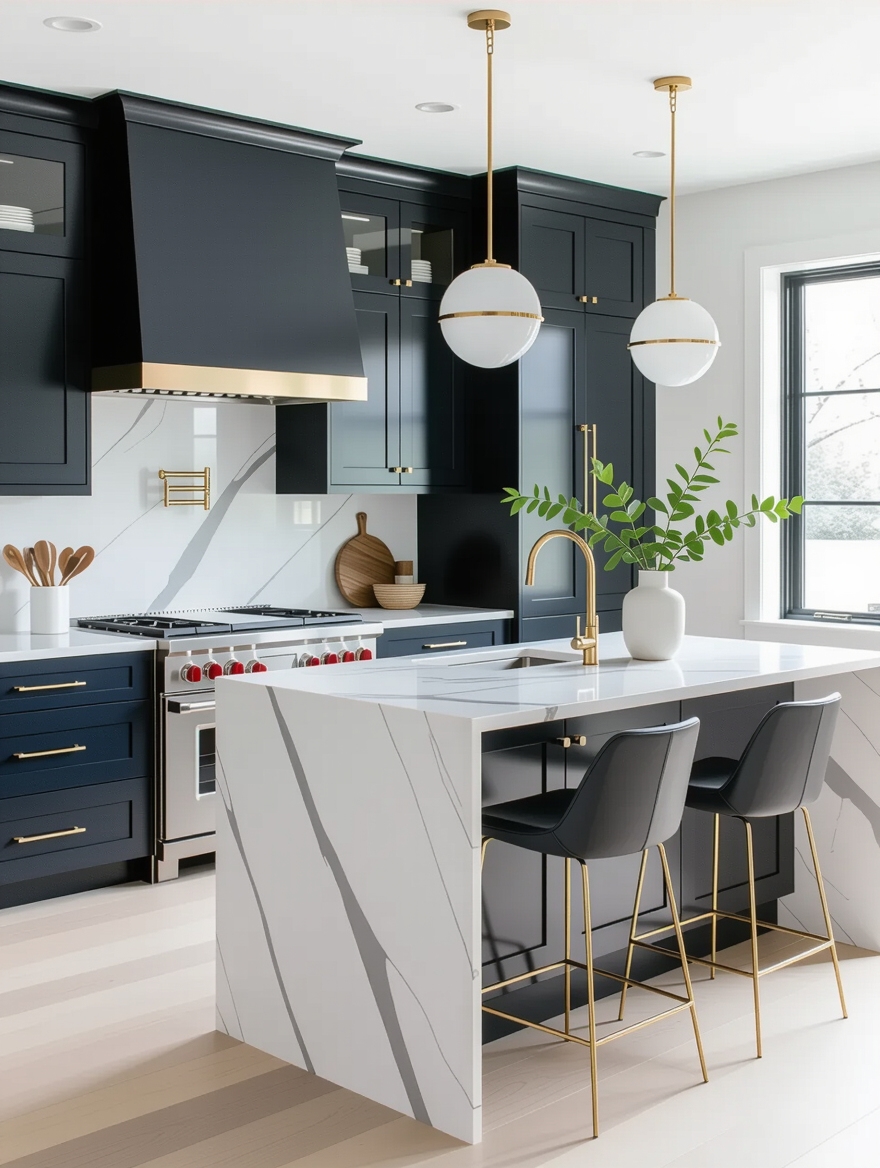
For a bolder modern lean, high-gloss lacquer cabinets against natural stone accents make a striking, light-filled pairing. The reflective fronts feel sleek and contemporary, while the stone keeps the room rooted in something timeless and warm.
Gloss shows fingerprints, so it suits people who keep a tidy kitchen and want the drama. Balance it with a matte or honed stone so the whole room is not shiny.
- Use gloss on one run, like the island or uppers, not everywhere.
- Pair with a honed or leathered stone so the finishes contrast.
- Keep the palette simple so the gloss stays the statement.
Open Shelving With Antique Wood

A short run of open shelving in antique or reclaimed wood is a lovely way to thread classic warmth through a modern kitchen. The aged grain adds history and texture against clean cabinetry, and it gives a few good pieces a place to be seen.
Keep it to one zone and style it sparingly, since open shelving only works when it stays edited. One genuine reclaimed board says more than a wall of new shelves. The enduring mid-century elements use wood the same restrained way.
- Use one or two thick reclaimed boards, not a whole wall.
- Style with a few pieces in one tonal family for calm.
- Let the wood’s age be the character; skip the heavy distressing.
Classic Counter Edges for Traditional Floors

The detail almost nobody pairs on purpose is the counter edge with the flooring, yet it quietly ties modern and classic together. A simple eased or square edge keeps the counter modern, while it sits comfortably above a traditional wood or patterned floor.
A Small Detail That Ties It Together
Skip the heavy ogee or bullnose edge if you want the modern half of the equation; those read traditional on their own.
Match the warmth of the floor to the warmth of the wood elsewhere so the whole room agrees. The edge is a tiny choice with an outsized effect on how current the kitchen feels.
Integrated Appliances Behind Cabinet Panels
Hiding the fridge and dishwasher behind classic cabinet panels is among the most effective modern-classic moves there is. The panel-ready fronts let the cabinetry run unbroken, so the room keeps its traditional rhythm while the technology disappears, the cleanest possible marriage of old look and new function.
It is a premium choice, but even one integrated appliance, usually the dishwasher, makes a noticeable difference for less. The timeless modern direction leans on exactly this kind of quiet integration.
Statement Lighting: Industrial Meets Classic
Lighting is where you can be playful with the pairing. An industrial-style pendant over a classic island, or a modern linear fixture above a traditional table, creates the kind of deliberate contrast that makes a room feel collected rather than matched from a catalog.
Hang one strong fixture where it can be seen and put it on a dimmer. One confident light does more than several timid ones, and it is often the piece guests remember.
A Neutral Palette With Bold Accents
A quiet neutral base is what lets a modern-classic kitchen age without dating, and a single bold accent is what keeps it from feeling safe. Warm whites, soft greiges, and natural wood form the classic backdrop, then one confident move, a colored island, a dramatic stone, adds the modern punch.
The beauty of this approach is flexibility. The bold accent can change with the years while the timeless base stays put.
- Keep the big surfaces neutral and warm so they never date.
- Add one bold accent you can swap later, like an island color or art.
- Let the accent be the only loud thing so the room stays calm.
Mixed Metals, Modern and Classic
Mixing metals used to be a rule you broke at your peril; now it is among the most sophisticated modern-classic pairings going. A warm brass on the lighting with a cooler nickel or black on the hardware looks layered and intentional, as long as you keep it to two metals and give each a clear job.
I tell clients to let one metal lead and the other support, rather than splitting them evenly. Two metals, two roles, and the kitchen looks designed instead of accidental.
Patterned Backsplash With Minimalist Lines
A patterned or handmade backsplash against clean, minimalist cabinetry is the last great pairing on this list. The classic pattern brings craft and character, while the simple lines around it keep the room from feeling busy, so the two balance each other perfectly.
Keep the pattern to the backsplash alone and let everything else stay quiet. The contrast of one detailed surface against simple ones is what makes the whole kitchen feel considered and current at once.
Modern-Classic Kitchen Questions, Answered
?What is a modern classic kitchen?
It blends the clean lines and simple shapes of modern design with the warm materials and detailing of classic style. The goal is a kitchen that feels current and familiar at once, which is also what helps it age well instead of dating.
?Which countertop pairing ages best?
Natural materials with simple finishes age most gracefully: marble or warm wood paired with restrained cabinetry. If you want the look without the upkeep, quartz with classic shaker cabinets is the low-maintenance equivalent.
?Can you really mix metals in a kitchen?
Yes, and it is among the most sophisticated modern-classic moves. Keep it to two metals, give each a clear job, and let one lead while the other accents. Brass lighting with nickel or black hardware is a reliable combination.
?Where should I spend for a kitchen that lasts?
Put the money on the surfaces you touch daily and the metals you see most, since those carry the whole look. A quiet, quality neutral base ages well, so save the bold, swappable choices for accents you can change later.
Pair It to Last
The kitchens that age beautifully are not the most modern or the most traditional; they are the best paired. A cool surface against a warm one, a classic cabinet against a modern metal, a quiet base against one bold accent, that balance is what keeps a room looking right for decades.
So as you plan, ask of every choice: what is this pairing with, and does one side clearly lead? Answer that honestly and you will land on a kitchen that feels current the day it is finished and still does long after the trends have moved on.
More Hair Inspiration


