
How do you get pink into a kitchen without it looking like a dollhouse? The answer is almost always restraint. A few well-chosen accents in the right shade come across as warm and a little playful, while pink on every surface tips fast into too much. The good news is that accents are cheap, reversible, and the easiest way to test the color before you ever pick up a paintbrush.
I have talked plenty of clients out of pink cabinets and into pink accessories, and they end up happier for it. Below are twenty ways to bring the color in, from small appliances to pendant lights, with the shade and rough cost for each. Start with one or two, live with them for a season, and add from there.
Pink Accents at a Glance
| Accent type | Easiest shade to live with | Rough cost |
|---|---|---|
| Small appliances | Matte blush or dusty rose | $30 to $80 each |
| Towels & textiles | Any pink, very low risk | $10 to $30 |
| Bar stools | Blush to bubblegum | $40 to $90 each |
| Pendant lights | Soft rose or smoked glass | $45 to $120 each |
Pink Countertop Appliances That Set the Tone
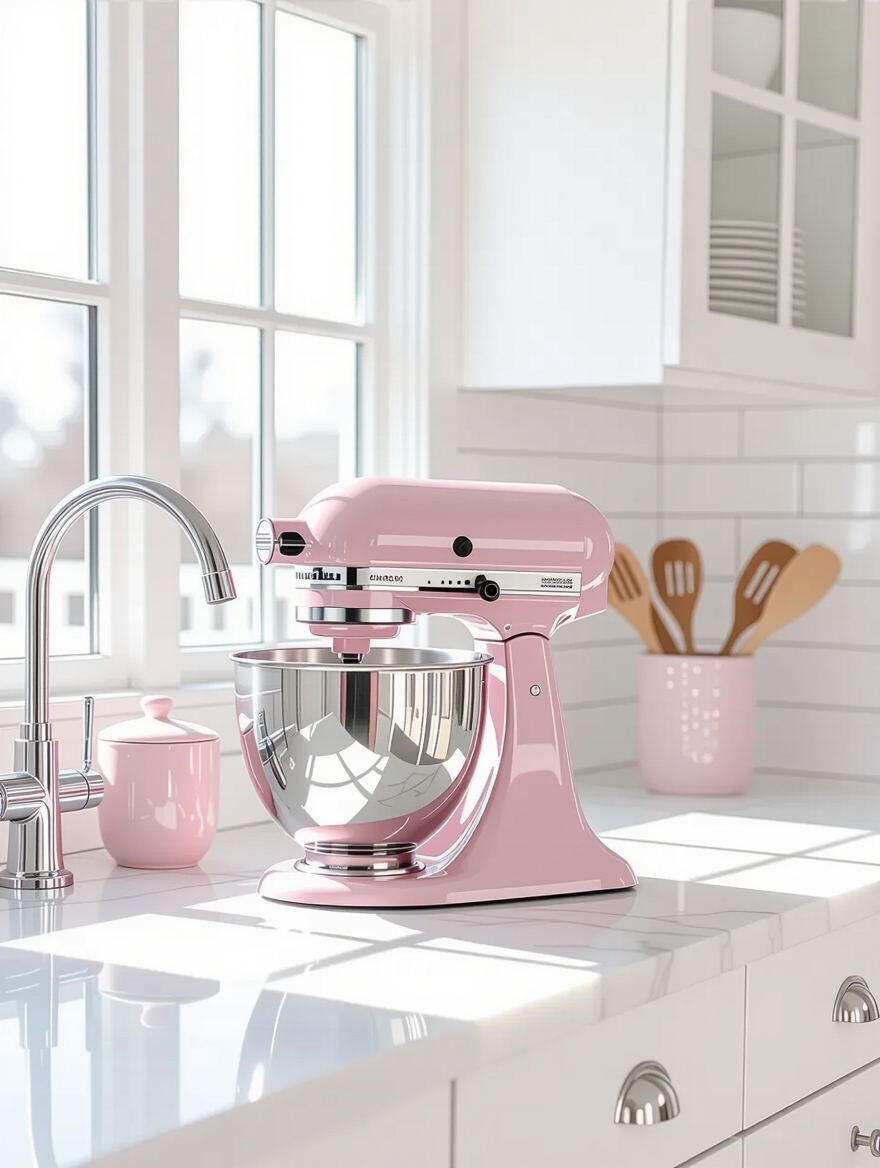
A single pink small appliance is one of the highest-impact, lowest-commitment moves you can make. A blush stand mixer or toaster sits out on the counter all day and does the color work of a whole accent wall for $30 to $80.
Shade matters more than people expect. A matte dusty rose looks current and grown-up, while a glossy hot pink can feel like a toy. I tell people to buy one statement piece. Three is a crowd. Keep the counter calm and let that single color do its job.
If you ever tire of it, an appliance is far easier to retire than paint. That makes it the perfect first step for a budget kitchen refresh when you are still testing whether pink is really your color.
Bold Pink Cookware for the Stovetop
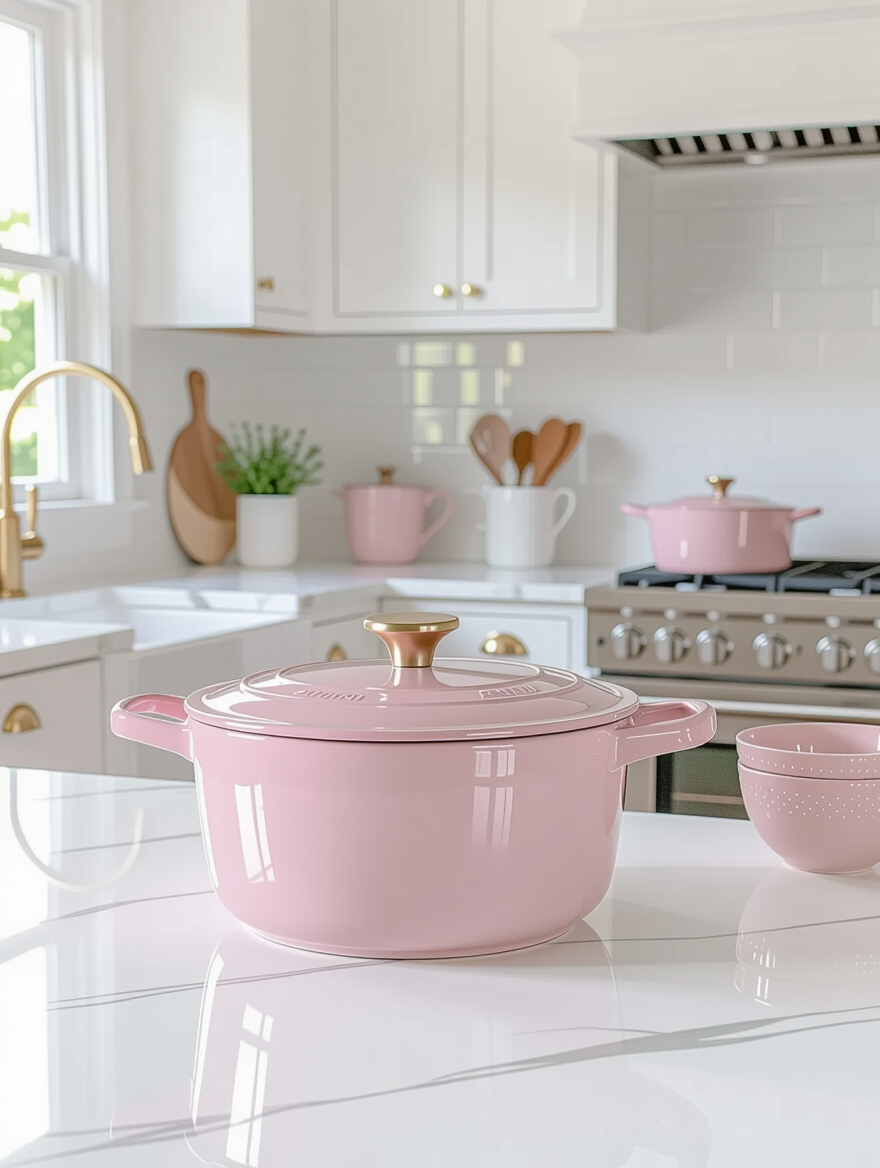
Enameled cast iron in pink is the rare accent that earns its keep twice, working hard on the stove and looking good when it lives on the open shelf. A single pink Dutch oven becomes a small focal point without any decorating effort.
Buy one good piece, not a set
Quality counts here, since you are cooking in it. Expect to pay $60 to $150 for a piece that will outlast a dozen trendy gadgets. Cheaper enamel chips, and a chipped pot just looks like clutter. Wash these by hand and they hold their color for years.
Keep the rest of your cookware neutral so the pink piece stays special. One or two showpieces beats a full matching set, which starts to look more like a display than a working kitchen.
📋Before you buy a pink piece
- ✓Is the shade matte and muted, or candy-bright? Muted ages better.
- ✓Does it earn its space by being useful, not just pretty?
- ✓Can you undo it easily if the color stops working for you?
Pink Utensils That Earn Their Drawer Space
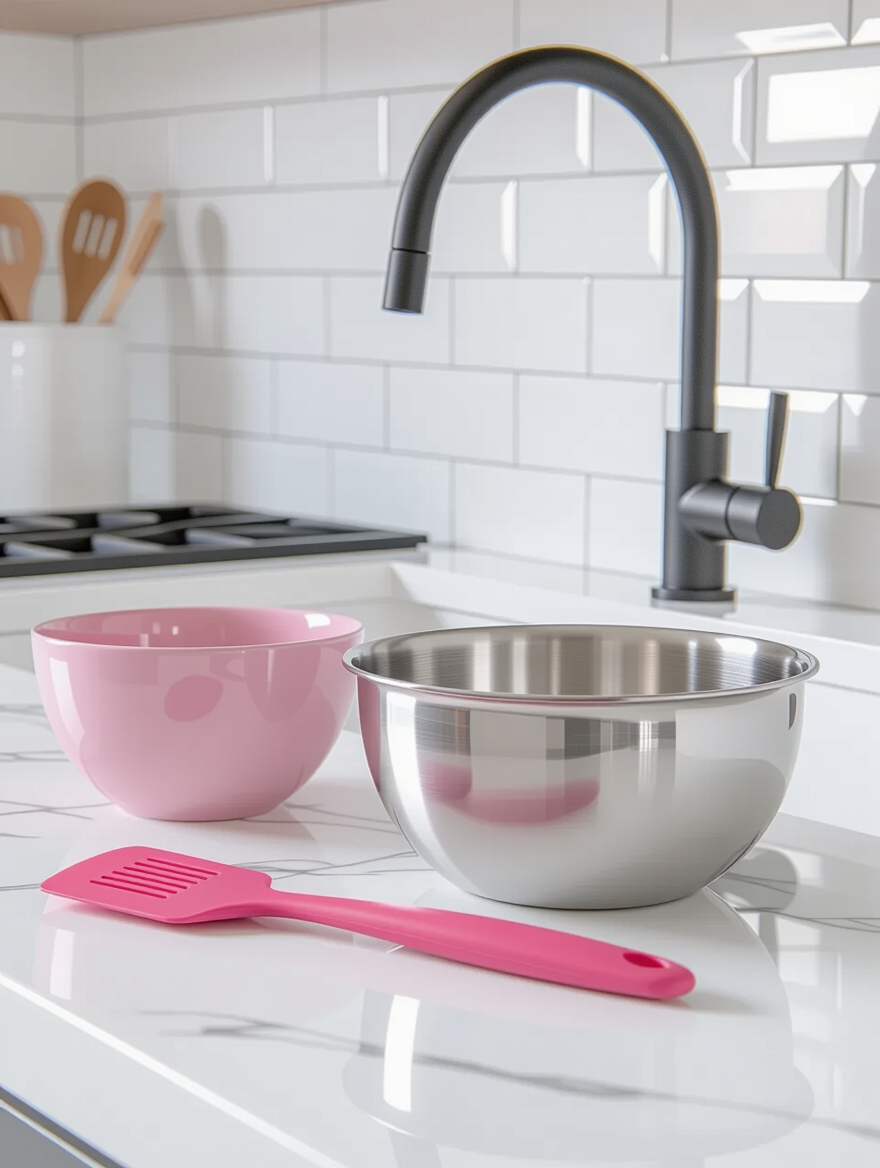
Utensils are the cheapest way to test the color, and they hide in a crock when you want them to. A pink spatula or set of measuring cups costs almost nothing and adds a little life to meal prep. This is where I send anyone curious but cautious. If a few pink tools start to grate after a month, you have lost ten dollars, not a renovation, and you know to keep the color small.
- Stick to silicone tools in soft pink, usually $8 to $20 a set, since they handle heat and wash clean.
- Stand a few in a neutral crock so the color peeks out without taking over.
- Skip pink knives and anything where performance matters more than looks.
Soft Pink Towels and Kitchen Textiles
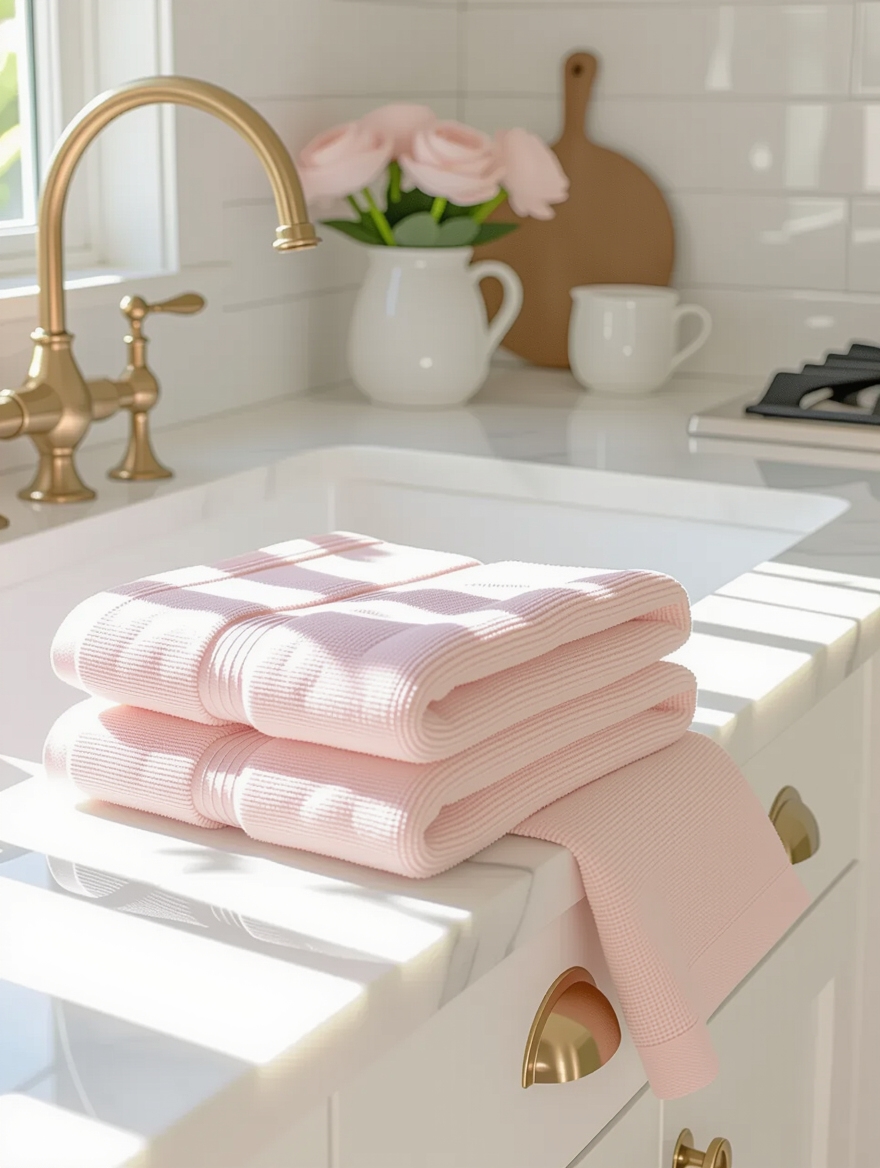
Textiles are where I steer anyone nervous about pink, because they are the lowest-stakes accent in the room. Dish towels, a runner, or a few napkins bring warmth for $10 to $30 and disappear into the wash when you want a change.
Because they are soft and matte, textiles flatter almost any pink, from pale blush to a deeper rose. They also let you follow the seasons, swapping a brighter pink in spring for something muted come fall.
- Choose cotton or linen weaves that soften with washing and actually dry dishes.
- Mix a patterned towel with a solid so the color feels collected and a little undone.
- Keep one set purely decorative and another you do not mind staining.
“Hold any pink piece against your actual cabinets and counter in daytime and again under your evening bulbs. Pink shifts more than almost any color between natural and artificial light, and the towel that looked dusty rose at the store can turn salmon at dinner. If it works in both, buy it.”
Playful Pink Bar Stools and Seating
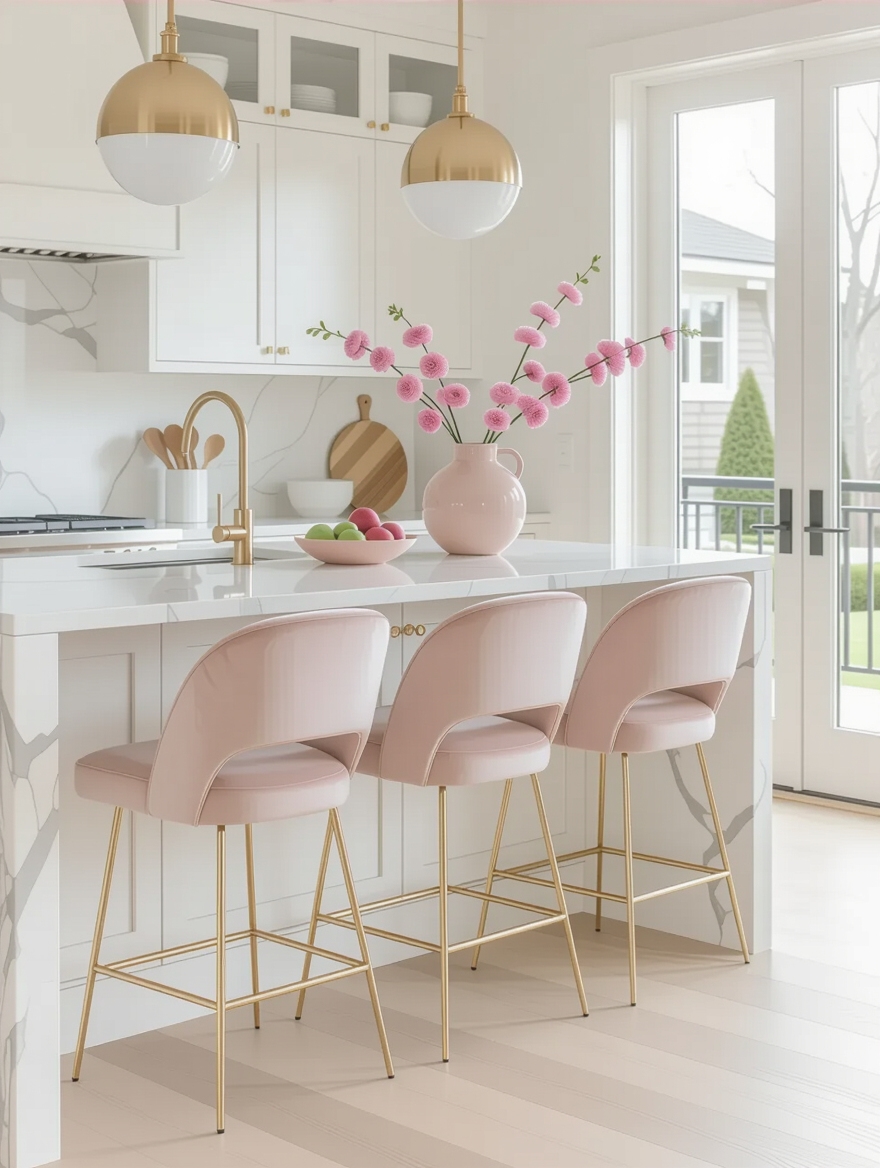
Bar stools put color right at eye level, which makes them feel like a bigger statement than they cost. A set of pink stools can wake up an island without touching the cabinets, and they pull out easily if you change your mind. Secondhand wooden ones are simple to refinish. Sand them down, then spray two light coats about 20 minutes apart, and they look new by the next morning for the price of a can of paint.
- Plan on $40 to $90 a stool, with secondhand wooden ones easy to sand and repaint.
- Match the shade to your nerve: blush for subtle, bubblegum for a real pop.
- Check seat height against your counter, leaving about 10 to 12 inches between seat and underside.
Subtle Blush Accents and Backsplash Touches
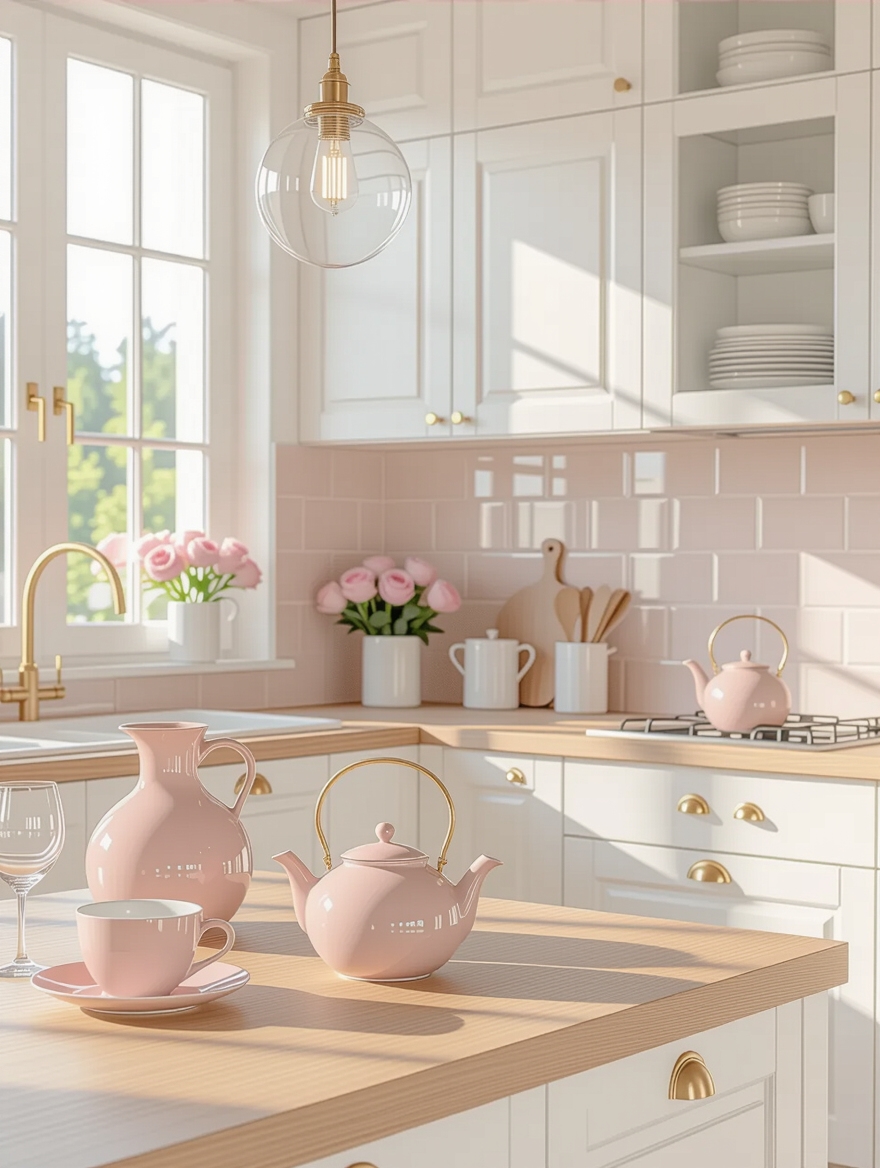
When you want pink to whisper, work it into the surfaces in tiny doses. Pale blush tiles as an accent strip, or a soft pink grout between white subway tiles, adds warmth that most people feel before they notice.
This is the most permanent accent on the list, so keep it muted and let it support the room. A blush tile behaves almost like a warm neutral, which is exactly why it ages so well.
If you want more color on the walls without the commitment of tile, borrow the idea behind character on the walls and let paint carry it instead.
ℹ️Good to Know
Designers increasingly treat soft, grayed pink as a warm neutral, much like beige with a little life in it. That is why blush pairs with so many colors and why a muted pink rarely looks dated the way a bright one can.
Pink Kitchen Storage Jars and Canisters
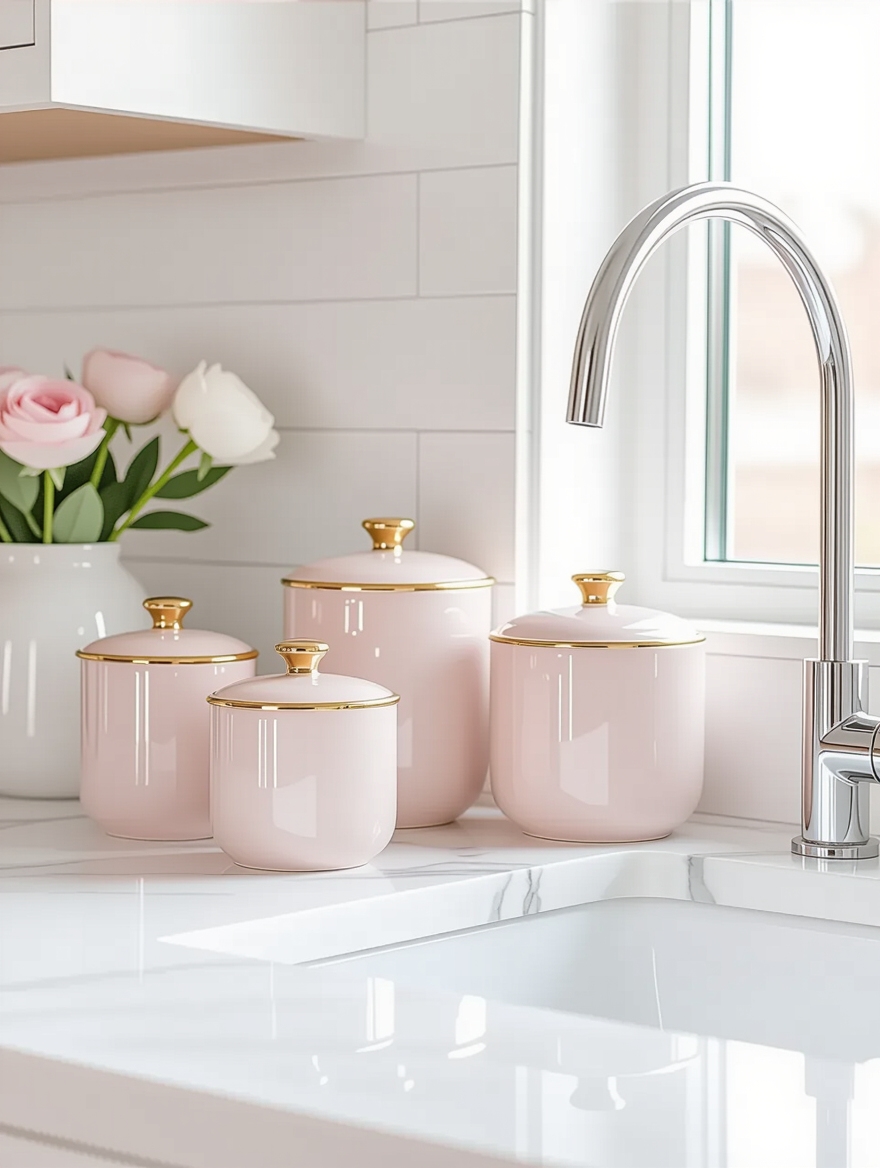
Canisters earn their counter space twice, holding flour and sugar while adding a little color where you see it every day. I love a row of matte pink jars because they look intentional and still pull their weight, which is the whole point of good counter styling: the things you leave out should be the things you actually reach for several times a day, dressed up just enough to be worth seeing.
- Pick matte ceramic or frosted glass, around $12 to $30 each, for a calmer look than glossy plastic.
- Stick to two or three jars so the counter stays clear, not crowded.
- Group them near where you bake so the color sits where the work happens.
Elegant Pink Dishware for the Table
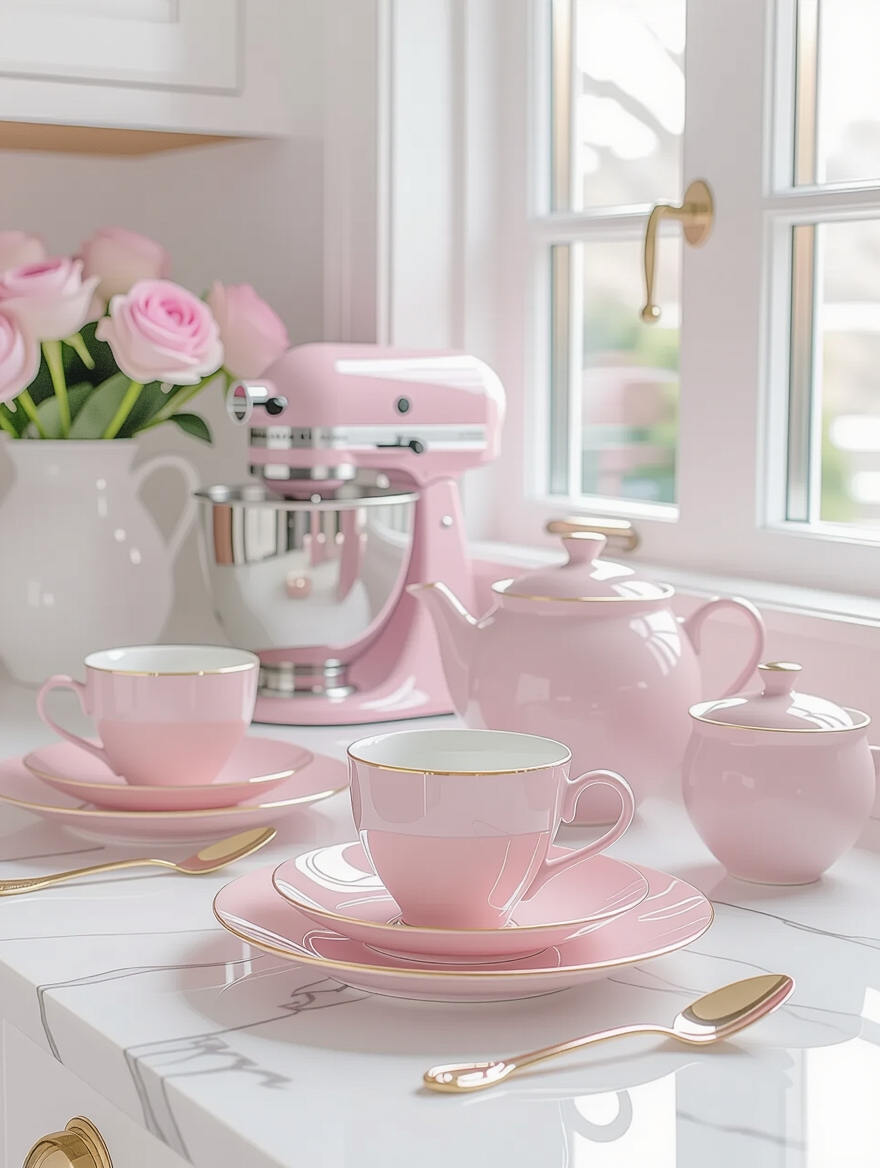
Pink dishware is the accent that only appears when you want it, since it lives in the cabinet until a meal calls it out. Soft blush plates make an ordinary dinner feel a touch special and photograph beautifully for anyone who hosts. The color stays put away most days. That is exactly what keeps it feeling like a treat when it does come out.
You do not need a full set. A few salad plates or bowls in pink, layered over white dinner plates, give you the color with none of the commitment of a complete service.
- Layer pink over neutral, like blush salad plates on white, for an easy collected look.
- Choose stoneware you can put in the dishwasher so the set actually gets used.
- Pair with linen napkins in a deeper rose to tie the table together.
Chic Pink Glassware for Hosting
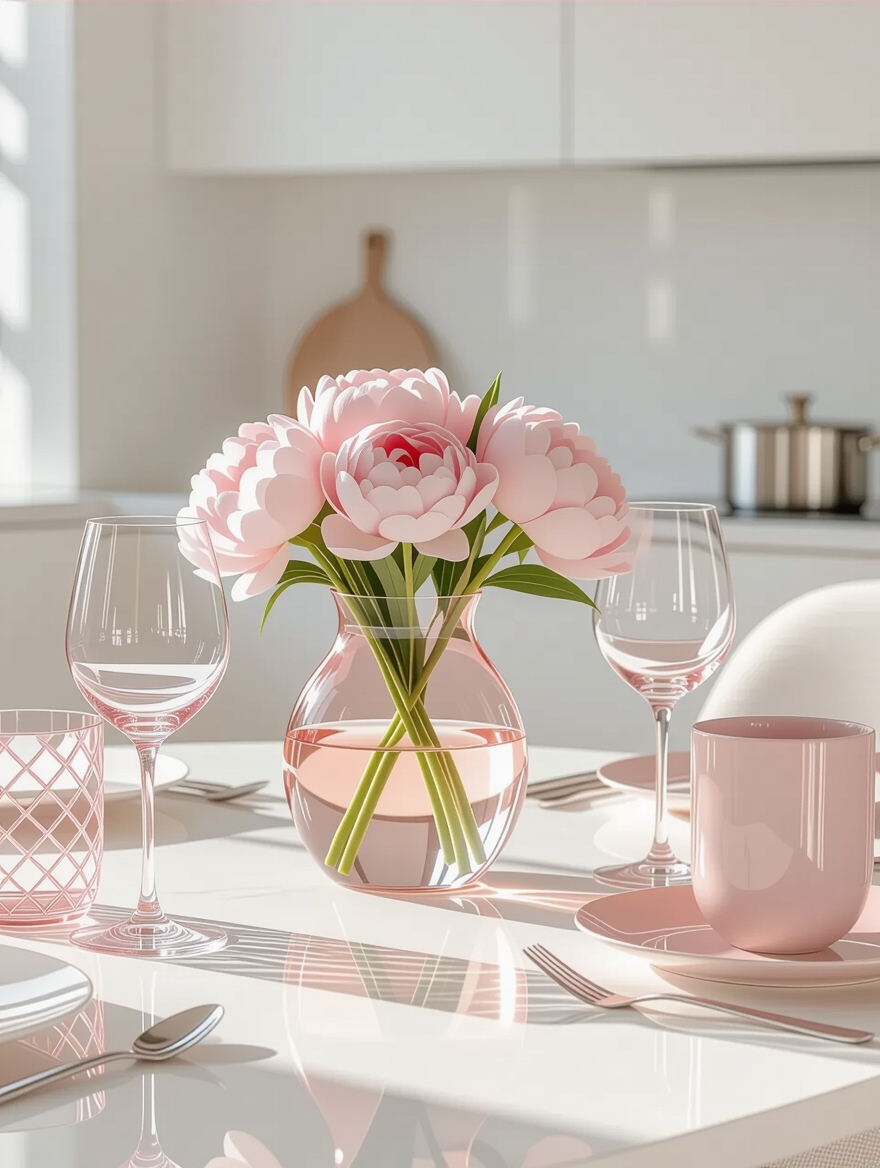
Tinted pink glassware is the small luxury that turns a regular evening into something. The color catches the light on a shelf and lifts any table the moment you set it. A few rose-tinted glasses cost little and feel like a lot. Set a couple out for a weeknight dinner that was nothing special on paper, and somehow the whole table feels like you made an effort, which is a strange amount of mileage to get from a four-dollar thrift-store find.
- Look for rose or blush tints, often $4 to $12 a glass, at home stores and thrift shops alike.
- Mix tinted and clear so the pink feels like a choice, not a theme.
- Store them on an open shelf where the light can do its job.
Pink Kitchen Pendant Lights for a Warm Glow
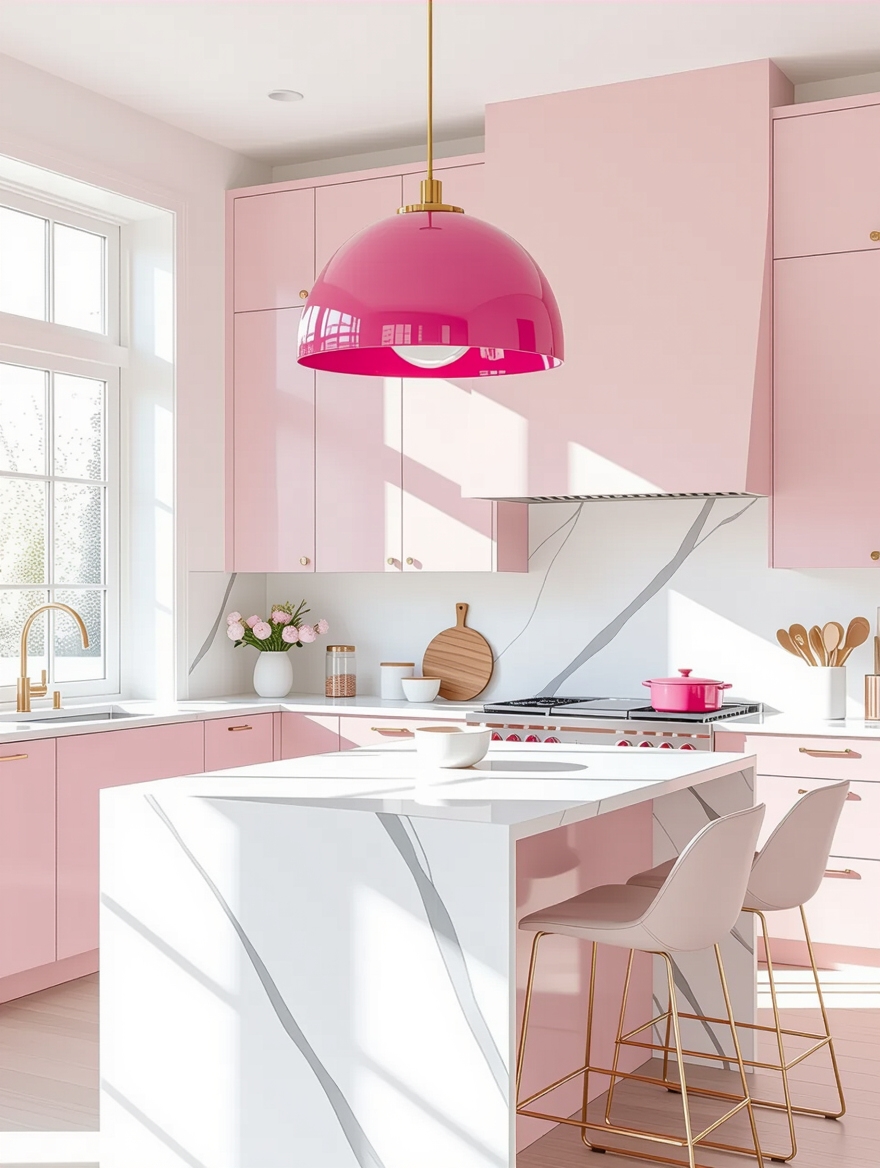
Lighting usually gets ignored in a kitchen, which is a shame, because a pink pendant doubles as functional art. Over an island or a peninsula, a rose-glass shade throws warm color and a little glow without you giving up a single surface.
Pick the glass tone carefully
Glass tone is everything here. A smoked or soft rose shade glows warm, while a hard candy pink can feel harsh once the bulb is on. Plan on $45 to $120 per pendant, and use a warm bulb around 2700K so the light flatters the room.
Because pendants hang above the action, they add color where almost nothing else competes. If you are rethinking the whole scheme, it is worth reading up on how lighting changes the mood before you commit to a fixture.
Where to Start, and What to Skip
If you take nothing else from this list, start small and reversible. Buy one statement appliance or a set of stools, add textiles, and let the room tell you how much pink it wants before you touch anything permanent. Most of these accents cost under fifty dollars and can be undone in an afternoon, which is exactly why they are the smart way to experiment.
What I would skip is matching everything. A kitchen where every pink thing is the same shade looks staged and ages quickly. Mix a couple of tones, keep the big surfaces neutral, and let pink stay the accent. For more on editing what sits out, the rules behind clutter-free counters apply just as much to colorful accents as to anything else.
Let the Room Tell You How Much Pink It Wants
Pink works in a kitchen when it shows up as a guest, not the host. A few well-chosen accents in muted shades bring warmth and a little fun, and they let you change your mind for the price of a towel rather than a renovation.
Pick one idea that made you smile, try it for a season, and build slowly from there. The beauty of accents is that there is no wrong first step, only a starting point you can adjust as the room comes together.
More to Explore