

Why does the same kitchen feel bright and busy at noon and cozy at night? Lighting. It is the cheapest upgrade that changes a room the most, and most kitchens are stuck on a single ceiling fixture that does neither job well. Get the lighting right, in layers and on a dimmer, and the kitchen shifts from a hard-working space to a warm gathering spot with one touch.
These are the lighting ideas that truly transform the mood, from the layers every kitchen needs to the warm bulb that makes it inviting at dinner. Most cost little, and I will flag the few that need a licensed electrician, so you can change how your kitchen feels without changing a single cabinet.
Light It in Layers
What is the one mistake most kitchens make? Relying on a single overhead light. Real mood comes from three layers, ambient, task, and accent, each doing a different job and all on dimmers.
What is the cheapest high-impact lighting upgrade? Under-cabinet strips and a dimmer. For well under a hundred dollars, they kill the shadows on your counters and let you set the mood instantly.
What bulb makes a kitchen feel cozy? A warm-white bulb, toward the lower, warmer end of the range. It makes the room feel inviting at night instead of clinical, especially on a dimmer.
Kitchen Lighting Layers: Ambient, Task, Accent

The single secret behind every well-lit kitchen is layering, since no one fixture can do every job. A kitchen needs three layers working together: ambient light to fill the room, task light where you work, and accent light for warmth and depth. Most kitchens have only the first, which is exactly why they feel flat after dark.
Once you understand the three layers, every idea below slots into one of them, and the magic is in combining them on separate switches and dimmers. With all three in place, the same kitchen can be bright and practical for cooking or low and warm for a late dinner, all at the turn of a dial.
- Ambient: overall fill light, usually recessed cans or a central fixture
- Task: focused light where you work, like under-cabinet strips and island pendants
- Accent: decorative depth, such as in-cabinet or toe-kick lighting
Maximize Natural Light

The best light in any kitchen is the free kind, so before adding fixtures, make the most of the daylight you have. A bright kitchen feels fresh and open in a way no bulb fully replaces, and where the budget allows a larger window, a glass door, or a skylight, the whole room lifts. Even a small tubular skylight can rescue a dim, windowless kitchen.
When you cannot add glass, work with the light you have: keep the wall facing the window pale and a little reflective, hang nothing heavy over the glass, and choose simple treatments that pull all the way back. Glossy surfaces and a mirror or two bounce daylight deeper into the room, much like the brightening tricks behind a fresh, light kitchen.
- Add a skylight or sun tunnel where a wall window is not possible
- Keep window treatments simple and able to pull fully back
- Bounce daylight with pale walls and reflective surfaces
| Layer | What it does | Typical fixtures |
|---|---|---|
| Ambient | Fills the room with overall light | Recessed cans, a central fixture |
| Task | Lights where you actually work | Under-cabinet strips, island pendants |
| Accent | Adds depth, warmth, and focal points | In-cabinet, toe-kick, shelf washes |
Warm Pendant Lights Over the Island
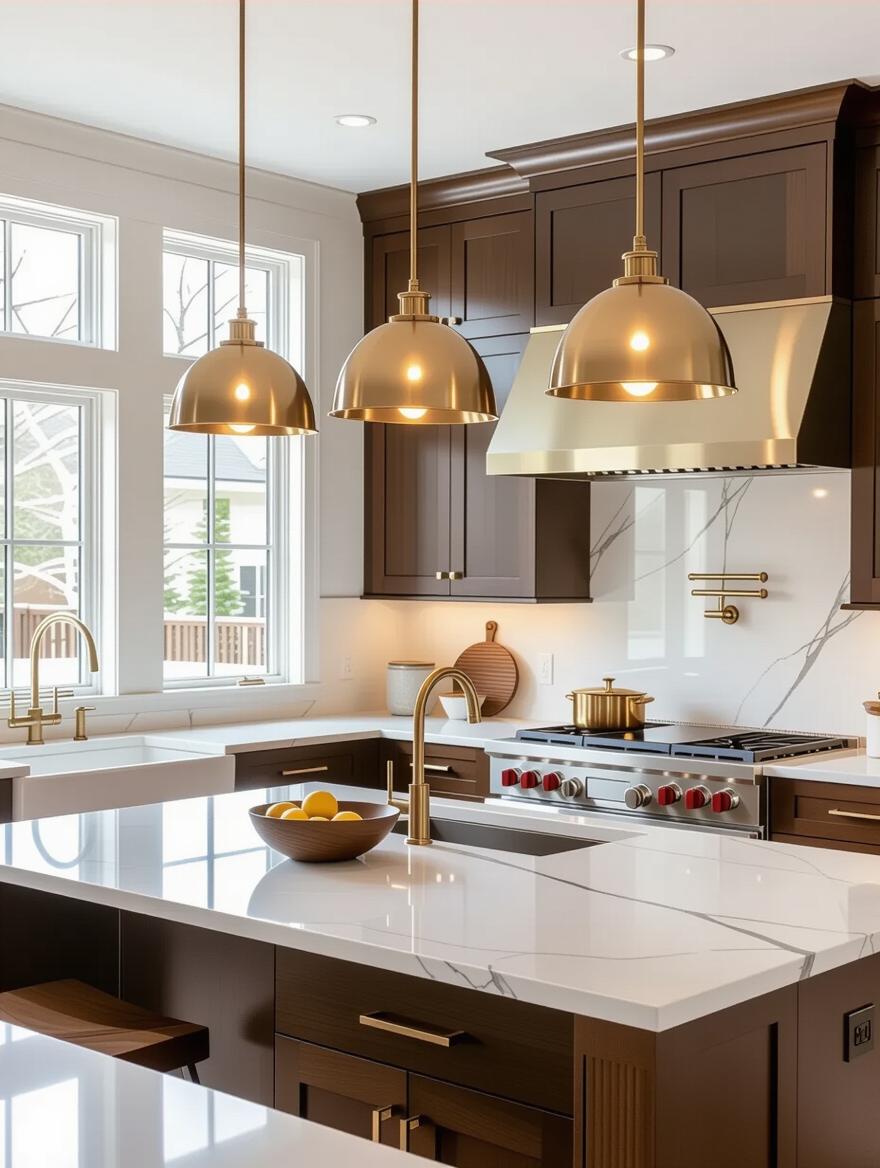
Pendant lights over the island are the mood-setters everyone notices, the jewelry that both lights the surface and warms the room. Hung at the right height with a warm bulb, a pair of pendants turns the island into the cozy heart of the kitchen at night, and because they swap out in an afternoon, they are a low-risk way to be bold.
- Hang the bottom 30 to 36 inches above the counter so it lights without blocking faces
- Choose a warm-white bulb so the glow feels inviting, not clinical
- Put them on a dimmer to shift from bright prep to soft dinner light
- Size them generously, since a small pendant looks lost over an island
Recessed Lights for Even Ambient Light

Recessed ceiling lights are the workhorse of the ambient layer, spreading even, shadow-free light across the whole kitchen while disappearing into the ceiling when off. Spaced properly, they give the room its baseline brightness without any visible fixture competing with your pendants or chandelier. They are the quiet foundation the other layers build on.
The keys are spacing and control: place recessed lights roughly every four feet for even coverage, choose a warm-white tone to match the rest of your lighting, and put them on their own dimmer. On full they light the room for cooking; dimmed low, they recede and let the warmer accent and task layers set the evening mood.
The lighting belief that leaves kitchens flat:
❌ Myth: One bright ceiling light is enough
✅ Reality: A single overhead source casts shadows on your work surfaces and gives you no control over mood. You need task and accent layers, all on dimmers, to actually see and to set the feel.
❌ Myth: Brighter is always better
✅ Reality: Not for mood. The cozy, inviting feeling comes from warm bulbs and dimmers, not maximum brightness. Bright for prep, low and warm for gathering, is the goal.
Under-Cabinet Task Lighting

If one upgrade transforms a kitchen for the least money, it is under-cabinet lighting. A simple LED strip tucked beneath the upper cabinets throws clean light right onto the counter, so you stop chopping in the shadow your own body casts. It is the task layer most kitchens are missing, and you feel the difference immediately.
Stick-on or plug-in LED strips run only about twenty to sixty dollars a run, which a renter can use, while a hardwired version with a hidden switch looks tidier. Choose a warm-white tone so it matches the rest of your lighting, put it on a dimmer, and you get bright task light while you cook and a soft under-glow you can leave on as a nightlight.
Color-Changing LED Strips
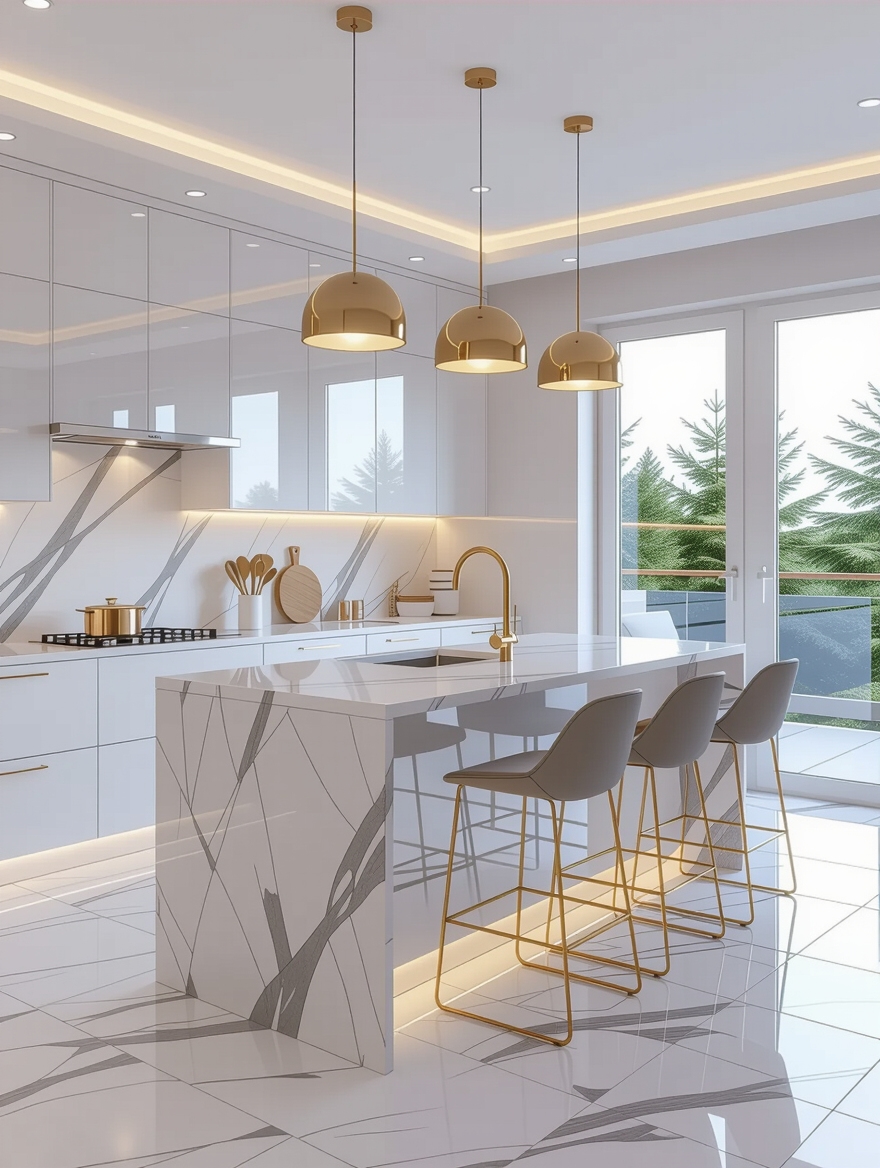
For a playful, modern touch, color-changing LED strips add ambiance and a little fun to a kitchen. Tucked above the cabinets, under a toe-kick, or inside glass-front cabinets, they wash the room with soft color or a warm glow you can change to suit the moment, from a calm white for dinner to a festive hue for a party. It is the accent layer at its most flexible.
Indirect Glow, Not Harsh Strips
These are inexpensive and easy to add, often controlled by an app or remote, so you can dial the color and brightness from the couch. The trick is restraint, so use them for a soft, indirect wash rather than a harsh strip in your eyeline, and keep them on a dimmer.
Set to a warm white most of the time, color-changing strips double as a gentle nightlight and accent glow, with the color option saved for when you want it. It is a low-cost way to give a kitchen a layer of mood lighting it never had.
🅰️Warm-white bulbs
Best for the mood of a kitchen; the warmer tone feels cozy and inviting at night, especially on a dimmer. The right choice for most homes.
🅱️Cool-white bulbs
Brighter and crisper for pure task visibility, but they can read clinical and cold in a living kitchen. Use sparingly, if at all.
Accent Lighting for Features

Accent lighting is the layer that adds depth and a designed feel by highlighting the features worth showing off. A discreet light inside a glass cabinet, a strip washing an open shelf, or a small fixture over a piece of art draws the eye and makes a kitchen feel considered after dark. It is the difference between a lit room and a styled one.
- Light a glass-front cabinet from inside for a warm, glowing focal point
- Wash an open shelf with a hidden strip to set off your favorite pieces
- Add toe-kick lighting for a soft floating glow and a gentle nightlight
- Keep accent light low and indirect so it adds depth, not glare
Vintage Edison Bulbs for Warmth
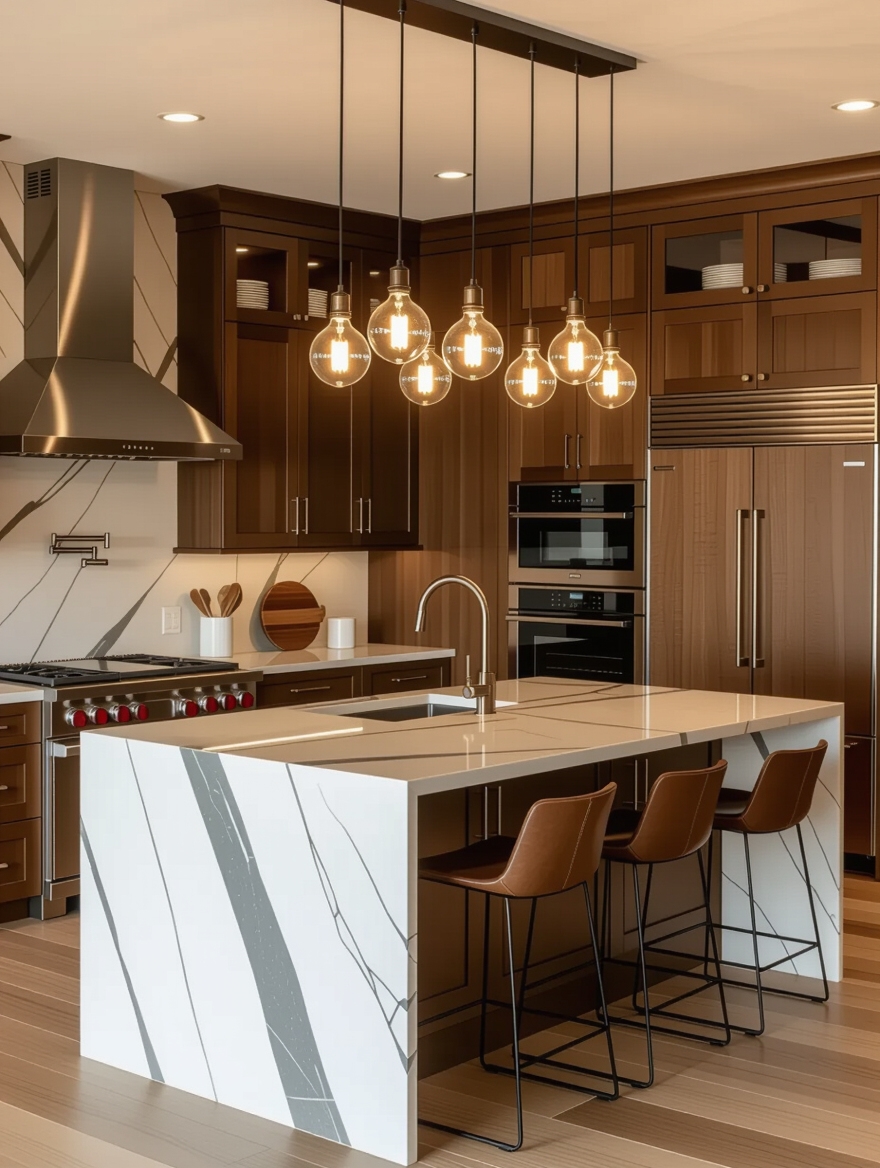
Vintage Edison bulbs, with their visible filaments and warm amber glow, are the cheapest way to make a kitchen feel cozy and characterful. In an exposed-bulb pendant or a cage fixture, they cast a soft, nostalgic light that flatters a farmhouse, industrial, or transitional kitchen and turns the bulb itself into part of the decor. The warmth is the whole point.
- Use Edison-style bulbs in exposed or cage fixtures for a warm, cozy glow
- Choose LED Edison versions for the look with far lower energy use
- Best as accent or island lighting, where the warm glow sets the mood
- Pair with a dimmer, since their warm light shines best turned low
Statement Chandeliers for the Kitchen

A statement chandelier turns kitchen lighting into a focal point, bringing drama and personality the moment you walk in. Over an island, a dining nook, or the center of the room, a bold fixture, sculptural, crystal, or vintage, sets the whole mood and dresses up the kitchen like jewelry. It is the choice for a kitchen that doubles as a gathering and entertaining space.
Scale It to the Room
The key is matching the chandelier’s scale and style to the room, since one too small disappears and one too ornate fights a simple kitchen. Pick a piece that echoes your kitchen’s character, then let it be the star while the other layers stay quiet and supportive.
Because it hangs at eye level and carries the room’s mood, treat a chandelier as furniture worth a splurge, and put it on a dimmer so it can glow softly at night. The right one makes the whole kitchen feel special, the kind of focal point a modern, considered kitchen is built around.
Mix Different Light Fixtures

The most polished kitchens never rely on one type of fixture; they mix several for both function and style. Combining recessed cans, island pendants, under-cabinet strips, and a statement fixture gives the room all three lighting layers and a designed, custom feel. The mix is what makes lighting look intentional rather than builder-basic.
- Combine recessed, pendant, under-cabinet, and accent fixtures for full layering
- Tie the metal finishes together so the mix reads cohesive
- Put each layer on its own switch and dimmer for full control of the mood
- Let one statement fixture lead and the rest support it
Layer It, Dim It, Warm It
Lighting is the upgrade that changes a kitchen’s entire mood for the least money, and the formula is simple: layer it, dim it, and warm it. Build the three layers of ambient, task, and accent, put each on a dimmer, and choose warm-white bulbs, and the same room can be bright and practical for cooking or soft and inviting for a late dinner.
Start with the cheapest, highest-impact moves, under-cabinet strips and dimmers, then add pendants, accent glow, and a statement fixture over time. Leave any new wiring to a licensed electrician, and your kitchen will finally feel as good after dark as it works during the day, the same payoff behind a designer’s best lighting secrets and a well-lit island.
More Looks We Love


