

Everyone obsesses over cabinets and counters and forgets the largest unbroken surface in the room is right overhead. A false ceiling, that lowered second layer below the structural one, is where a modern kitchen hides its lighting, its ducting, and a surprising amount of its character. Done right, it is the detail people feel without quite naming.
These are the tricks that earn their cost, from the material that survives kitchen steam to the layered light that makes the whole room glow. I will be honest about what each one runs and where you really need a licensed pro, since a kitchen ceiling hides wiring and moisture you do not want to get wrong.
The Tricks Worth the Money
- Start with the right material: moisture-resistant gypsum or PVC, since a kitchen ceiling fights steam and grease that a bedroom ceiling never sees.
- Layer the lighting: recessed downlights plus a hidden LED cove do more for the room than any decorative molding.
- Use the ceiling to zone: a dropped section over the island quietly marks where one area ends and another begins.
- Leave the wiring and ducting to a pro: this is the one place to hire out, since it hides electrical and ventilation.
Moisture-Resistant Materials for a Kitchen Ceiling

A kitchen ceiling lives in a tougher world than the rest of the house, fighting steam, grease, and heat every time you cook. So the material choice comes first. Moisture-resistant gypsum board, often the green or purple-faced kind, resists the damp that would warp a standard board, and PVC panels shrug off moisture entirely while wiping clean.
Match the material to your cooking and budget. Gypsum gives a smooth, paintable finish that looks built-in and runs a bit more, while PVC panels are cheaper, faster to install, and easy to clean, which suits a hard-working kitchen. Whichever you pick, make sure your range hood vents properly first, because no ceiling material loves trapped steam.
Layered Designs That Add Depth

A flat ceiling reads as an afterthought, while a layered one reads as design. Stepping the ceiling in two levels, with a recessed center or a dropped border, creates shadow lines and depth that a single plane never offers. It is the move that makes a ceiling feel intentional rather than just lowered.
The layers do practical work too, not only visual. A dropped perimeter is the perfect place to hide cove lighting and ducting, while the higher center keeps the room from feeling closed in. You get architecture and function from the same gesture.
Keep the steps shallow in a kitchen with normal ceiling height, since dropping too far can make the room feel low. A few inches of difference is enough to read as depth without stealing headroom you cannot spare.
| Material | Best for | Note |
|---|---|---|
| Moisture-resistant gypsum | A smooth, paintable, built-in look | Costs more; needs a clean hood to stay dry |
| PVC panels | Busy kitchens and tight budgets | Wipes clean, fast to install, visible seams |
| Wood or wood-look slats | Warmth and a focal point | Seal real wood near steam, or use PVC |
Recessed Lighting in the False Ceiling

The single best reason to build a false ceiling is the lighting it lets you bury. Recessed downlights sit flush, throw even light across the whole kitchen, and disappear when off, which is exactly the clean modern look. Plan their placement on paper before the ceiling closes up, since moving them later means opening it again.
- Space downlights evenly, roughly every 4 feet, for shadow-free general light
- Add a dedicated row over the counter and sink so you never work in shadow
- Choose a warm-white 2700 to 3000 Kelvin tone so the kitchen feels inviting
- Put zones on separate dimmers so you can light for cooking or for evenings
LED Strips to Transform the Ambiance

Hidden LED strip lighting is the trick that turns a nice kitchen into a memorable one after dark. Tucked into a cove or behind a dropped edge, the strip washes the ceiling with a soft glow and hides its own source, so the light seems to come from nowhere. It is pure ambiance for a modest price.
- Run a warm-white LED strip in the ceiling cove for indirect evening glow
- Hide the strip behind a lip so you see the light, never the diodes
- Add a color-changing strip on its own switch if you want occasional drama
- Keep it on a separate dimmer to use as a low nightlight after hours
Recessed downlights or a hidden LED cove? You likely want both, but start here:
1Do you need bright, even task light?
Then lead with recessed downlights, spaced evenly and aimed at your work zones.
2Do you want mood and a soft evening glow?
Add a hidden LED cove on its own dimmer; it washes the ceiling without showing the source.
Skylights and Panels for Natural Light

If your kitchen sits under a roof or a flat area you can open, a skylight is the most dramatic ceiling upgrade there is. Natural light pouring down makes the whole room feel bigger and fresher, and it is light you do not pay to run. Even a small tubular skylight can rescue a dim, windowless kitchen.
- A fixed skylight for pure daylight where you cannot add a wall window
- A tubular skylight (sun tunnel) to pipe light into a small or interior kitchen
- Position it over the prep zone or sink, where good light matters most
- Hire a pro for the cut and flashing, since a roof penetration must be watertight
Textured Ceilings With Wood or PVC

Texture overhead is the warm counterpoint to all the hard surfaces below. Wood slats, beadboard, or grained PVC panels bring grain and shadow to the ceiling, softening a kitchen full of stone and steel. In a modern room, a run of timber slats above the island is the kind of detail people look up and notice.
Keep the texture honest and low-maintenance for a kitchen. Real wood adds warmth but wants a sealed finish near steam, while wood-look PVC gives the same effect and wipes clean, which is why it suits a busy cook. One consistent texture beats a mix, so the ceiling stays calm, the same restraint that carries an elegant modern kitchen.
- Wood or wood-look slats over the island for warmth and a focal point
- Beadboard panels for a softer, transitional texture across the whole ceiling
- Seal any real wood near the cooktop, or choose PVC where steam is heaviest
Heads-Up
A false ceiling hides electrical and your range hood ducting. Anything involving wiring or new circuits should go to a licensed electrician, and the design must not block your hood’s vent path. This is general guidance, not an install manual, so confirm permits and code with a local pro.
Defining Zones With Different Ceiling Heights

In an open kitchen, the ceiling can do the job a wall used to. Dropping a section over the island or the cooking zone draws an invisible boundary that tells the eye where one area ends and the next begins. It defines space without closing it off, which is exactly what open-plan living needs.
Let the Ceiling Draw the Line
Pair the height change with its own lighting and the effect doubles. A lowered panel over the island, lit with recessed downlights or a cove, marks the spot as the heart of the room. The same trick separates a dining nook from the working kitchen in one shared space.
This works best where ceilings are tall enough to give a level up, so weigh your headroom first. Used well, it brings the quiet structure of a connected open kitchen without building a single wall.
Geometric Ceiling Patterns
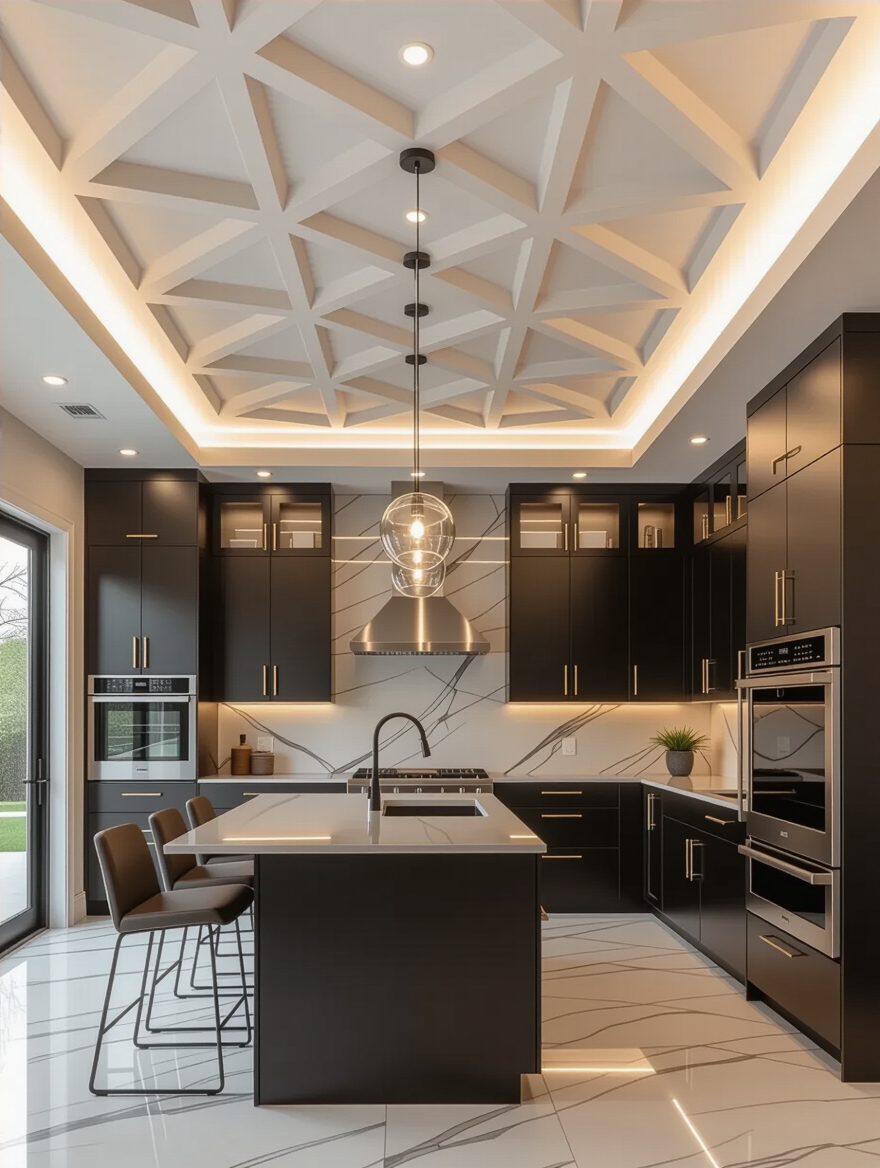
A patterned ceiling turns the fifth wall into a feature. Coffered grids, intersecting beams, or a simple geometric layout of recessed panels give the ceiling rhythm and a custom, architectural feel. In a modern kitchen, a clean grid reads sharp and deliberate rather than ornate.
Scale the Grid to the Room
Scale the pattern to the room so it feels balanced. A big open kitchen can carry a bold coffered grid, while a small one wants a simpler, finer pattern that does not crowd the eye. The geometry should feel like it belongs to the room’s proportions.
Keep the pattern in step with the rest of your kitchen’s lines. A geometric ceiling over flat modern cabinets looks intentional, while the same grid over fussy traditional details can fight itself. Let one language lead.
Bold Paint Colors to Make a Ceiling Pop

The cheapest ceiling trick of all is a tin of paint and a little nerve. Color overhead is unexpected, and a deep shade on the ceiling gives a kitchen instant character for the price of a weekend. Because the ceiling is out of the splash zone, you can be braver up there than you would dare on the walls.
- A deep navy, charcoal, or forest ceiling for cozy, dramatic impact
- A soft color that echoes your cabinets, for a subtler tie-together
- Keep walls and cabinets calmer so the colored ceiling stays the surprise
Glossy Panels to Brighten the Kitchen

A glossy ceiling is a clever fix for a kitchen short on light or height. Reflective panels bounce both daylight and fixture light back down into the room, so the space feels brighter and a low ceiling reads taller. It is a bold modern move that earns its keep in a dim or compact kitchen.
- High-gloss stretch or laminate panels to reflect light in a dark kitchen
- Best in a small or low room, where the lift in brightness pays off most
- Pair with hidden cove lighting so the gloss has soft light to bounce
- Keep the rest of the room matte so the ceiling is the only shine
What to Ask Your Contractor
A false ceiling hides wiring, ducting, and sometimes plumbing, so this is one project where the right questions and the right pro matter more than the finish. Ask whether your room has the height to drop a ceiling without feeling low, how the design accommodates your range hood ducting, and whether any electrical work needs a licensed electrician and a permit. A good contractor will walk you through all three before quoting.
Get clear on cost and access too. A basic gypsum false ceiling commonly runs $5 to $12 per square foot installed, more with layered designs and integrated lighting, so price the lighting and the labor together. Ask how panels can be opened later to reach anything hidden above, since you will eventually need to service a light or a duct. Plan the structure and the wiring with a pro, and the impact tricks above become the easy, fun part.
Look Up, Then Light It Right
A false ceiling is the rare upgrade that is structural and decorative at once. Get the moisture-safe material and the layered lighting right, then have fun with texture, zones, color, or gloss to suit your room. The biggest impact almost always comes from the light you hide up there, not the ornament you add.
Decide what your kitchen needs most, more light, defined zones, or a warmer feel, and choose the trick that delivers it. Leave the wiring and ducting to a licensed pro, and let the ceiling quietly lift the whole room from above.
More Hair Ideas


