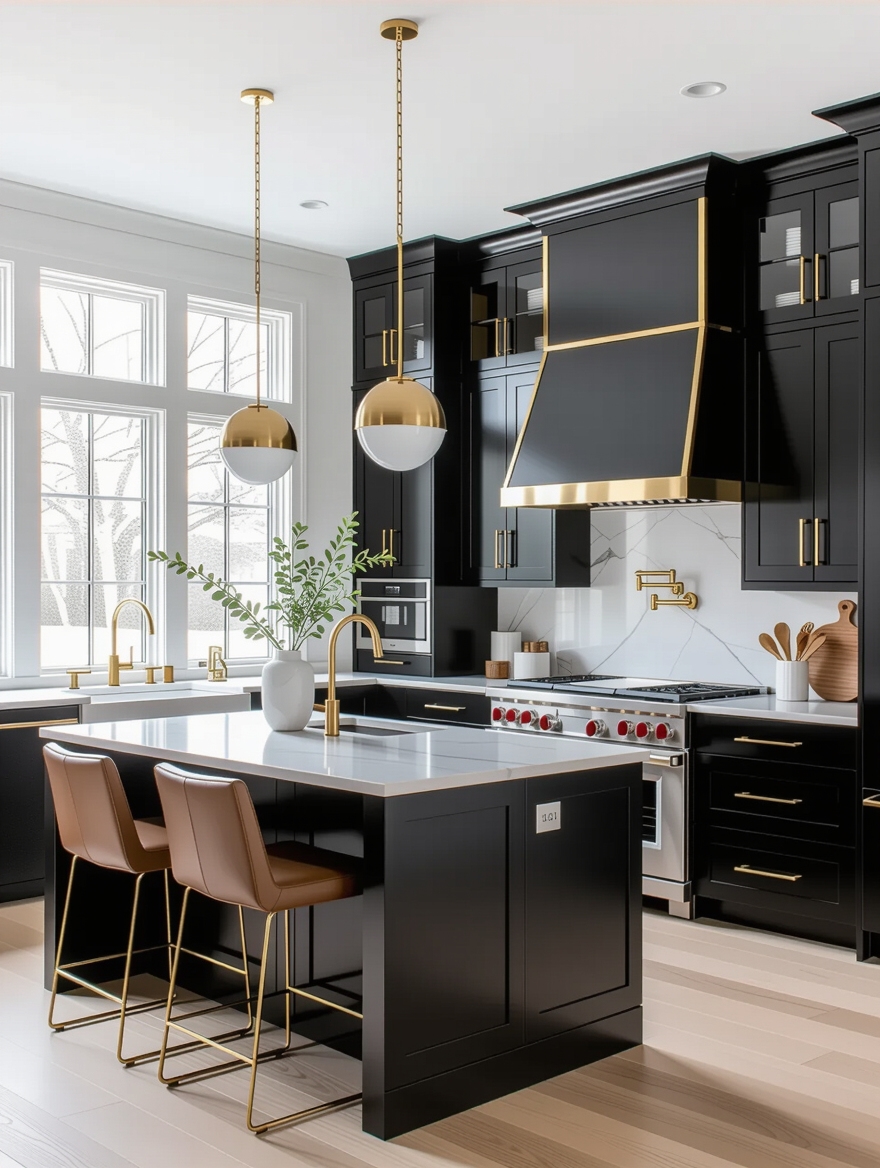

A small kitchen does not have to feel small. After years of reworking tight galleys and apartment kitchens, I am convinced the gap between cramped and comfortable is almost never square footage. It comes down to light, storage, and a handful of choices that quietly trick the eye.
Below are ten ideas I come back to on real small-kitchen jobs, the ones that pull more work out of a tiny footprint. For each you get what to do, how to do it, roughly what it costs, and the honest trade-off before you start.
Small Kitchen Quick Wins
Where should I start? With light and clutter. Lightening the walls and clearing the counters does more for a sense of space than any renovation, and both are cheap or free.
What gives the most impact for the least money? Paint, open shelving, and clear containers. None need a contractor, and together they make a small kitchen read brighter, taller, and tidier.
Do I have to knock down walls? Rarely. Most small kitchens gain far more from smarter storage and light than from structural work, so save the budget for cabinets and appliances that actually pull their weight.
Lighten the Walls to Open Up the Room

The cheapest move is also the most effective: lighten the walls and cabinets. Pale surfaces reflect light back into the room, so the edges visually recede and the whole space reads more open.
Warm white versus cool white
Stick to warm-toned neutrals, soft white, greige, pale sage, rather than a stark bright white, which can look clinical under kitchen lighting. If you want contrast, keep it low: a slightly deeper lower cabinet under light uppers keeps the eye traveling up, which adds height.
It works in any kitchen and suits renters especially, since a weekend of paint is reversible and costs little more than a tin and a roller. The honest trade-off is upkeep. Light cabinets near a stove show splatters, so choose a wipeable satin or semi-gloss over flat matte, which marks easily.
Bounce Light With Reflective Surfaces

Once the walls are light, reflective surfaces multiply the little light you have. Glossy cabinet fronts, a polished backsplash, or glass tile all push daylight deeper into the room; a flat matte finish tends to swallow it at the first surface.
Gloss where it counts
The easiest entry point is the backsplash. A glossy subway tile or a single sheet of glass behind the stove throws light back and wipes clean in seconds, which matters most in the splatter zone. Stainless steel or a mirrored panel does the same with even more shine.
Go easy if your kitchen gets harsh direct sun, since too many shiny surfaces can glare and feel cold. For most small kitchens, one or two reflective elements add real depth for the price of a few tiles, far cheaper than moving a cabinet.
📋Make a Small Kitchen Feel Brighter
- ✓Paint walls and upper cabinets a warm light neutral
- ✓Add one glossy or glass surface to bounce light
- ✓Clear the countertops so light has room to travel
- ✓Swap a heavy curtain for a blind that lets daylight in
Use a Mirror to Stretch the Space

A mirror in a kitchen sounds odd, and clients always ask me whether it looks strange. It does not, as long as you treat it like a window rather than a decorative feature. A mirror borrows space the way it does in a small bathroom or hallway, doubling the visual depth and throwing light around for almost no added bulk. Even a modest sixty-centimeter mirror noticeably deepens a tight galley kitchen. Here is how to use one without it feeling out of place:
- Hang a framed mirror on a free wall or in a dead nook, angled to catch a window across the room
- Try a mirrored or antique-glass backsplash to build the effect right into the kitchen
- Keep mirror away from the heat and grease behind the stove, or use a wipeable glass panel there instead
- Choose one larger mirror over several small ones, which read cluttered and busy
Add Under-Cabinet Lighting for Depth

Dark countertops quietly shrink a small kitchen, and under-cabinet lighting fixes them fast. A strip of LED tucked beneath the upper cabinets lights the work surface directly and erases the shadows that make a galley feel like a cave.
It also adds warmth at night, layering soft light over the one harsh ceiling fixture. Stick-on rechargeable bars are ideal for renters, run around fifteen to thirty dollars a strip, and take about ten minutes to put up; hard-wired versions are tidier and worth it if you own the place.
- Pick a warm white around 2700 to 3000 kelvin so food and wood tones look true
- Mount the strip toward the front cabinet edge to light the counter, not the backsplash
- Put it on a dimmer or tap switch so it doubles as soft evening light
- Tuck the strip behind the cabinet lip so only the soft glow shows
Two things people get wrong when they try to open up a small kitchen:
❌ Myth: One bright ceiling light is enough.
✅ Reality: A single overhead fixture throws shadows right where you work. Layered light, overhead plus under-cabinet, is what actually brightens a small kitchen.
❌ Myth: More storage always means more cabinets.
✅ Reality: Packing in cabinets can make a small room feel even tighter. Going taller and narrower often holds more while keeping the floor and sightlines open.
Go Vertical With Open Wall Shelves

When the floor is fixed, the only direction left is up. Open wall shelves use the room above your counters that standard cabinets often miss, keeping everyday things in reach without crowding the worktop. They feel lighter than closed cabinets too, which stops a small room from boxing you in. For more along these lines, our small-space kitchen storage guide digs deeper.
- Run shelves up toward the ceiling and keep rarely-used pieces on the highest one
- Curate what shows: a few good-looking, used items, not visual clutter
- Use slim metal brackets so the shelves carry almost no visual weight
- Mount into studs or proper anchors, since loaded shelves are heavier than they look
Hang Pots and Pans to Free a Cabinet

Bulky pots and pans eat cabinet space fast, so move them out of the cupboard and onto the wall or ceiling. Hanging your cookware frees a whole shelf inside and turns daily-use pieces into easy-reach storage, which speeds up cooking. It is a low-cost change, a rail and some hooks, that pays back every day.
- Mount a rail along a free wall or in the backsplash gap above the counter
- Hang only what you reach for often, since a wall of decorative pans wastes the saving
- For zero wall space, a ceiling rack over a counter works if your ceiling height allows
- Screw the rail into solid backing, since a full pot rail pulls hard on drywall alone
Not sure where to spend? Match the move to your situation:
🎯Renting on a tight budget
Stick to reversible wins: paint, clear jars, a stick-on light bar, and a freestanding tall cabinet. Nothing you cannot pack up and take with you.
🎯You own it and can invest
Put the money into built-ins that change daily life, mainly corner pull-outs and one right-sized appliance, since those pay back every time you cook.
Slot in a Slim Tall Pantry

If I had to name the single highest-value piece for a small kitchen, it is a slim, tall pantry, because it stacks a surprising amount of storage into a narrow floor footprint. Even a fifteen-centimeter-wide pull-out larder, usually a hundred and fifty to four hundred dollars depending on width and fittings, slots into the dead gap between a fridge and a wall and turns it into rows of usable shelves. Our small-kitchen pantry layouts cover more options.
- Measure awkward gaps first, since narrow pull-out larders are made for slots as slim as 15 cm
- Choose adjustable shelves so tall bottles and short jars both fit without wasted height
- Place it near the prep zone so staples sit a step from where you cook
- A freestanding tall cabinet works for renters who cannot fit a built-in
Switch to Clear Storage Containers

Mismatched packaging is visual noise, and in a small kitchen that noise reads as mess. Decanting dry goods into clear, uniform containers calms the look, helps you see what you have, and stops you buying duplicates. It is cheap, reversible, and makes even a packed shelf feel orderly, the same logic behind our kitchen organization. To make it work:
- Pick square or rectangular containers, which tile together and waste less shelf than round ones
- Label the lids or fronts so anyone can find and refill without digging
- Start with the staples you use daily before committing to a whole matching set
- Match the container size to the bag it replaces so nothing overflows or sits half-empty
Fit Pull-Out Cabinets for Dead Corners

Standard cabinets waste their deepest corners, where things slide to the back and never come out again. On a small job, the blind corner is where I claw back the most storage nobody knew they had. Pull-out cabinets and corner carousels bring that dead space out to meet you, so nobody has to crawl into the back. A few smart swaps:
- Fit a pull-out base unit so the whole back of the cabinet rolls forward into reach
- Add a corner carousel or swing-out unit to reach blind corners easily
- Retrofit wire pull-out baskets into existing cabinets if a full replacement is out of budget
- Keep the heaviest items on the lowest pull-out so the runners glide easily
Choose Compact Right-Sized Appliances

Full-size appliances often do not earn their footprint in a small kitchen, and right-sizing them frees room for prep and storage. The aim is matching capacity to how you actually cook, so buying smaller for its own sake just leaves you annoyed at the first big tray.
Match the appliance to how you cook
A slimline dishwasher, a narrow or under-counter fridge, and a combination microwave-oven each reclaim real space. If you cook for one or two, these usually hold plenty while handing back a whole cabinet or a stretch of counter. A combination oven that bakes and microwaves in one box is often the biggest single space saver of the lot.
Measure the opening and check the door swing before you buy, since a compact unit that blocks a drawer when its door is open is no win. Spend where it counts. The appliance you use daily deserves the budget, while the rarely-used one can safely go small.
Start Small and Build From There
A small kitchen rewards restraint more than ambition, so resist doing everything at once. Start with the no-cost wins, declutter, lighten, reorganize, and the room often feels bigger before you have spent a thing.
From there, add the storage pieces that fit your space and budget one at a time. If your layout can take one, even a compact small kitchen island adds prep space without crowding the room. Take your measurements, and begin with the idea that bugs you most.