

The first time I watched a stylist prep a kitchen for a shoot, I expected props. Instead she removed things, cleared the counters to two objects, lined up the cabinet pulls, squared the stools to the island. The room had not changed. Suddenly it looked like a magazine. That is the heart of minimal design: it is mostly about subtraction and precision.
Those professional habits are rules you can borrow, and most cost nothing. Here are fourteen minimal kitchen rules top stylists swear by, the principles behind that clean, calm look, plus the honest catch to making minimalism actually work in a real, used kitchen.
The Stylist Rulebook
- Minimalism is subtraction and precision, not buying a particular look.
- Keep a tight neutral palette and let texture, not color, add interest.
- Hide the clutter so clear counters can do the heavy lifting.
- Line things up: consistent reveals and squared-off details read expensive.
Neutral Palettes for Timeless Minimalism

Every stylist starts with a tight neutral palette, because color is the fastest way to break a calm room. Soft whites, warm grays, and natural wood give the eye nowhere to snag, which is exactly the restful effect minimalism is after. The rule is fewer colors, working harder.
- Limit the palette to two or three close, warm neutrals.
- Add interest with texture and material, not extra color.
- Keep any accent to one quiet note, easy to change later.
Handleless Cabinetry, the Stylist Rule

If there is a single cabinet rule stylists swear by, it is handleless fronts. Push-to-open mechanisms or a slim recessed channel remove the visual interruption of hardware, so the cabinets read as clean, unbroken planes. It is the detail that makes a minimal kitchen look architectural rather than just tidy.
- Choose push-to-open or a recessed finger channel over visible pulls.
- Flat slab doors suit the handleless look best, since there is no frame to interrupt the unbroken plane.
- If you keep hardware, make it slim and identical throughout.
Two minimalism myths stylists wish people would drop:
❌ Myth: Myth: minimalism means owning almost nothing.
✅ Reality: It means hiding what you own well. The calm comes from storage and zones, not from a sparse cupboard.
❌ Myth: Myth: minimal kitchens are cold.
✅ Reality: Only when they skip warmth. Wood, texture, and soft light keep a minimal room inviting rather than clinical.
Durable Materials That Age Gracefully

Stylists choose materials that stay looking clean, because a minimal kitchen has nowhere to hide wear. Quartz counters, large-format tile, and matte cabinet finishes shrug off daily life and keep the calm intact, which is why the pros reach for them again and again.
Pick Surfaces That Stay Clean
The rule is to pick surfaces that look as good in five years as on day one, since minimalism shows every flaw a busier kitchen would disguise.
Quartz at $50 to $120 a square foot is the workhorse here; it never needs sealing and wipes clean in seconds.
Matte Finishes to Soften the Look

Stylists favor matte over gloss in a minimal kitchen for two reasons. Both matter. Matte reads soft and calm where gloss can feel hard, and it hides the fingerprints that would otherwise break the clean look on a high-touch surface.
Matte Keeps It Smudge-Free
The rule is that a minimal kitchen lives or dies on staying smudge-free, so the finish that helps with that wins.
Matte also photographs without glare, which is why nearly every styled minimal kitchen you admire is low-sheen rather than shiny.
| Rule | Why It Works | The Catch |
|---|---|---|
| Clear the counters | Empty space reads calm and expensive | Needs hidden storage to last |
| Tight neutral palette | Nothing for the eye to snag on | Add texture so it is not flat |
| Line everything up | Precision looks professionally designed | Uneven gaps give it away |
Natural Wood and Stone for Warmth

The catch with minimalism is warmth. It is the rule stylists never skip. Pure white-and-flat minimalism can feel cold, so the pros work in natural wood and stone to add warmth and texture without adding clutter.
A wood shelf, a stone counter, or a woven stool gives the eye something to rest on so the room feels inviting rather than clinical. The warm modern feel is built on this exact move.
- Add one or two natural materials to warm the neutral base.
- Let the grain or veining be the texture; skip extra decoration.
- Keep tones warm so the room reads cozy, not sterile.
Hidden Storage Stylists Insist On

Here is the rule that makes all the others possible: clear counters need somewhere for everything to go. Stylists insist on hidden storage, pull-outs, an appliance garage, deep drawers, because the clean look they create for a photo only holds in real life if the clutter has a home. I tell clients this is the difference between a styled photo and a livable minimal kitchen.
- Plan pull-outs and an appliance garage to absorb the daily clutter.
- Aim for a home for every counter item you use less than daily.
- Build it in before the cabinets are made; retrofitting costs more.
Not sure where your minimal kitchen is going wrong? Match the symptom.
1It feels cold and unwelcoming
Add warmth: wood, texture, and dimmed light, without adding clutter.
2The counters keep filling up
You need hidden storage and zones, not more willpower.
A Balanced Mix of Open and Closed

Stylists love an open shelf in a photo, but the rule for real life is balance: mostly closed storage with one curated open run. Closed cabinets hide the chaos; a single styled shelf adds the warmth and personality that all-closed minimalism can lack.
The honest catch is that open shelving only stays minimal if you keep it ruthlessly edited, which most households cannot, so when in doubt, the pros choose the door.
Integrate the Appliance Fronts

One stylist rule keeps the lines unbroken. Integrate the appliances. Panel-ready fronts on the fridge and dishwasher let the cabinetry run continuous, so the eye never snags on stainless or dials, which is central to the calm minimal look.
Where a full integration is out of budget, the pros at least match every appliance finish, since a mismatched set is the fastest way to break a minimal kitchen. Even one panel-ready dishwasher, swapped in over a couple of hours, quietly lifts the whole run.
Simple Lighting That Enhances Minimal Style
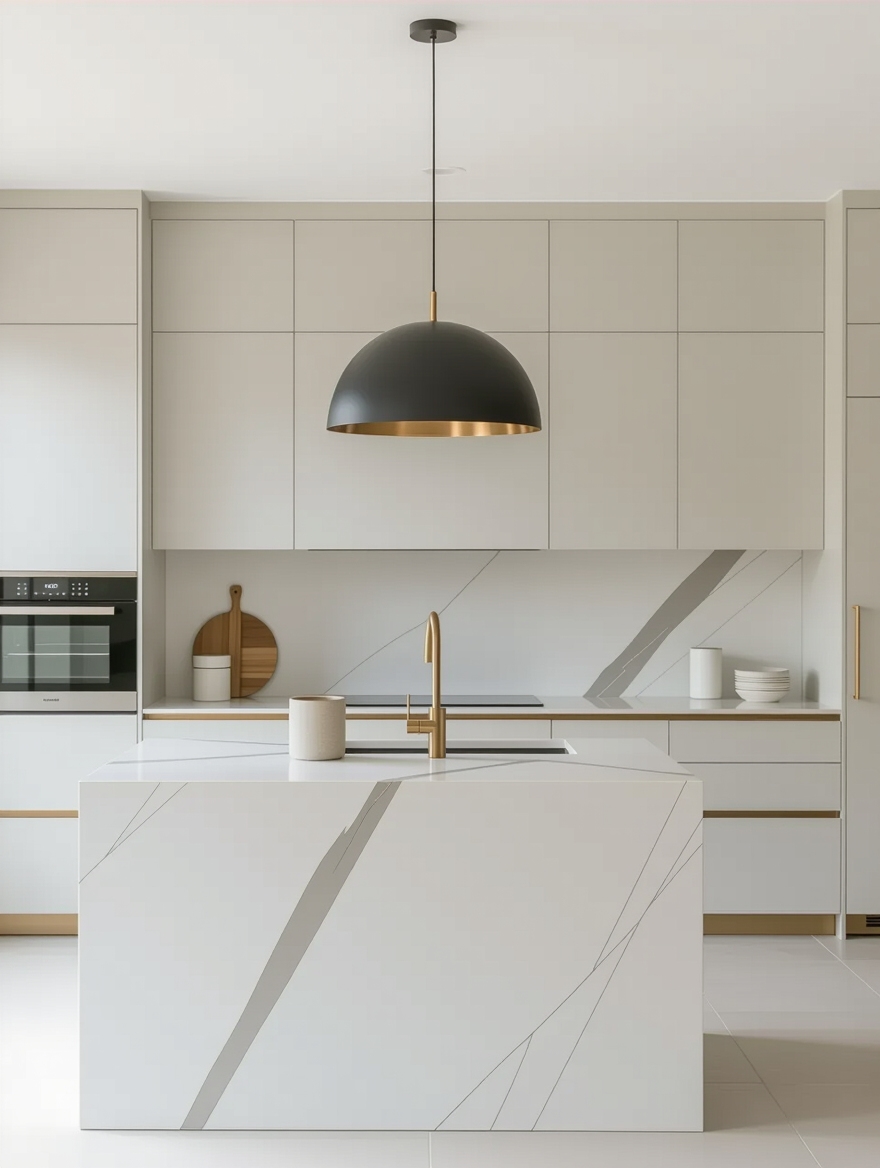
Stylists keep the lighting as pared-back as the rest of the room, choosing simple shapes and layering them well. A clean pendant or a recessed scheme, warm under-cabinet strips, and a dimmer light the space without adding visual noise, which is the whole point in a minimal kitchen.
- Choose simple, unfussy fixture shapes that do not compete.
- Layer task and ambient light, all on dimmers, around 2700K.
- Under-cabinet strips clear the shadows without cluttering the ceiling.
Clear Counters and Minimal Decor
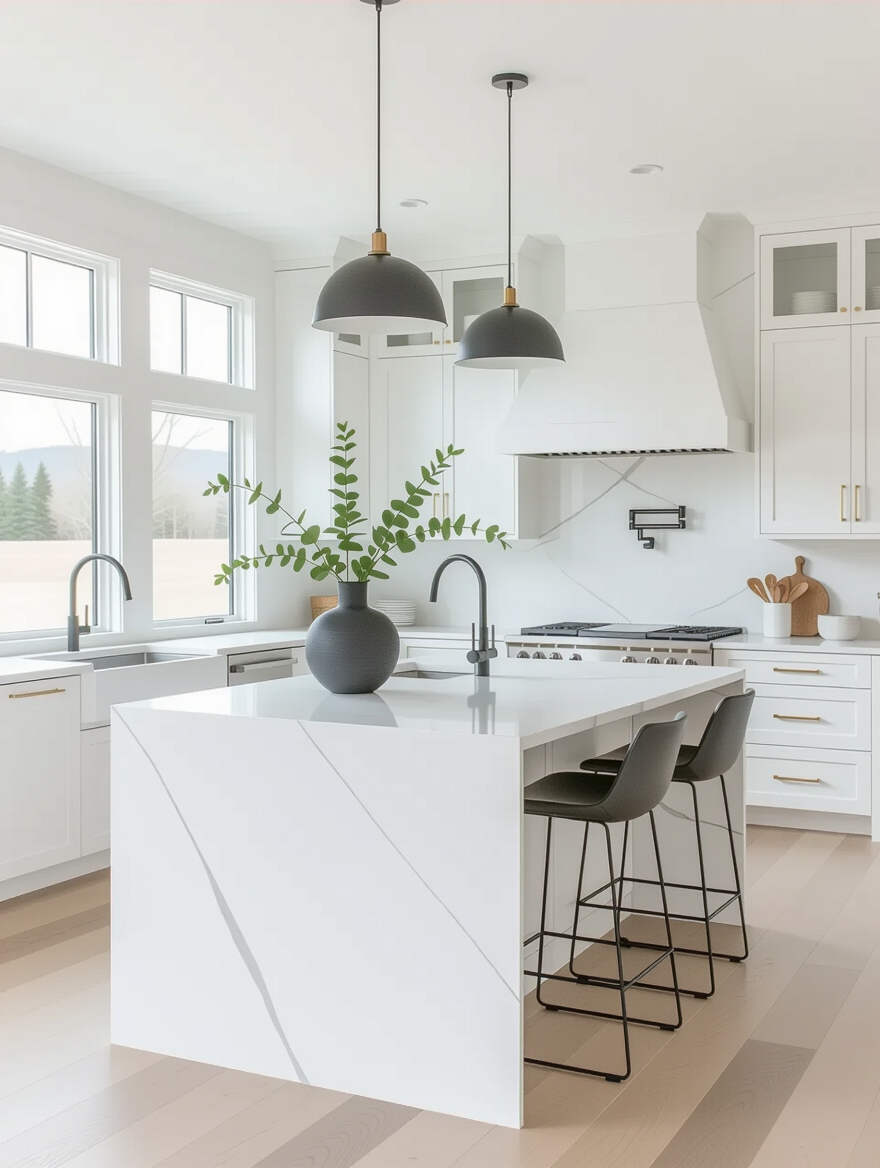
The most visible stylist rule of all is the clear counter. The pros allow two or three beautiful, useful objects out and store the rest, because every extra item shrinks the space and breaks the calm.
The trick is that minimal decor is not no decor; it is one plant, one bowl, one considered piece, given room to breathe.
I tell clients to style the counter, step back, and remove two things. That last edit takes about a minute and is what separates a minimal kitchen from a merely tidy one. A calm minimal base is built on this discipline.
Functional Zones for Easy Workflow
Minimalism is not just about looks, and the stylist rule that proves it is zoning. Setting up clear prep, cooking, and clean-up zones, with the tools for each stored where the task happens, keeps the counters clear because nothing migrates and piles up.
The honest catch most minimal photos hide is that the calm comes from this organization, not from owning less. Plan where everything lives, and the clean look takes care of itself. A kitchen with good zones rarely needs tidying, because nothing drifts to the counter in the first place. For tighter kitchens, these small-space solutions keep the zones intact.
Subtle Contrasts to Soften the Look
A rule that keeps minimalism from feeling flat is subtle contrast. Stylists work in gentle differences, a slightly darker island, a warm wood against cool stone, a matte surface beside a soft sheen, so the room has depth without color or clutter.
The contrast has to stay quiet, though. A loud contrast would break the calm, so the pros keep it to tone and texture rather than bold strokes, the kind of difference you feel before you can name it. A modern white palette uses this kind of low-contrast layering beautifully.
Flooring and Consistent Lines
Two final rules tie a minimal kitchen together. Flooring should be calm and continuous, a large-format tile or a wide wood plank with few seams, so it does not interrupt the clean look underfoot, and the whole room should follow consistent lines and simple geometry.
Stylists square everything: aligned reveals, level shelves, matching sightlines. That precision is invisible until it is missing, and it is what makes a minimal kitchen look professionally designed rather than simply bare. A stylist will spend longer aligning the details than choosing them. A timeless modern base rests on the same consistency.
Common Mistakes to Avoid
The biggest minimal mistake stylists see is confusing minimal with cold, then ending up with a room nobody wants to cook in. The fix is the warmth rule: keep the wood, the texture, and the soft light even as you pare back, so calm never tips into clinical.
The second mistake is treating minimalism as a one-time clear-out rather than a system. Without the hidden storage and the zones, the counters fill back up within a week. Build the storage and the routine, and the minimal look holds; skip them, and no amount of styling will save it.
Minimal Kitchen Rule Questions
?What is the most important rule for a minimal kitchen?
Hide the clutter so the counters can stay clear. Clear counters are what read calm and expensive, but they only last with planned hidden storage. Stylists build that storage in first, then the clean look takes care of itself.
?How do I keep a minimal kitchen from feeling cold?
Work in warmth: natural wood, stone, woven texture, and soft, dimmed lighting, all without adding clutter. The most common stylist fix for a cold minimal kitchen is one or two natural materials and warmer light.
?Why do styled minimal kitchens look better than mine?
Two reasons: precision and storage. Stylists line up the reveals, square the details, and clear the counters to a couple of objects, and the room they photograph has hidden storage absorbing everything you leave out.
Subtract, Align, and Warm It Up
The rules stylists swear by come down to three moves: subtract what you can, align what stays, and warm the whole thing up so it never feels cold. Add the hidden storage and the zones that let clear counters actually last, and you have the professional version of minimalism rather than a tidy imitation.
So borrow the pro habits that fit your life, clear the counters, line things up, build in the storage, keep the wood and the warm light, and your kitchen will read as styled and calm as any in a magazine, even on a busy weeknight.
More Looks We Love


