

Organic modern is the rare kitchen style you feel before you analyze it. Step into one and your shoulders drop: the wood is warm, the colors are quiet, the surfaces invite a hand. It is the antidote to a decade of cold, hard, all-white kitchens, and the calm is the whole point.
The good news is that the calm comes from a handful of natural, tactile choices, most of them attainable. Here are thirteen modern organic touches that make a kitchen feel soothing rather than sterile, with honest notes on cost and the easy wins you can add this weekend.
What Makes a Kitchen Feel Calm
- Natural materials, wood, stone, and woven texture, are the heart of the calm.
- Soft, earthy colors let the eye rest where bright ones jangle.
- Matte finishes and organic shapes soothe; gloss and hard edges do not.
- A little greenery and a few handmade pieces bring the room to life.
Why an Organic Kitchen Calms You
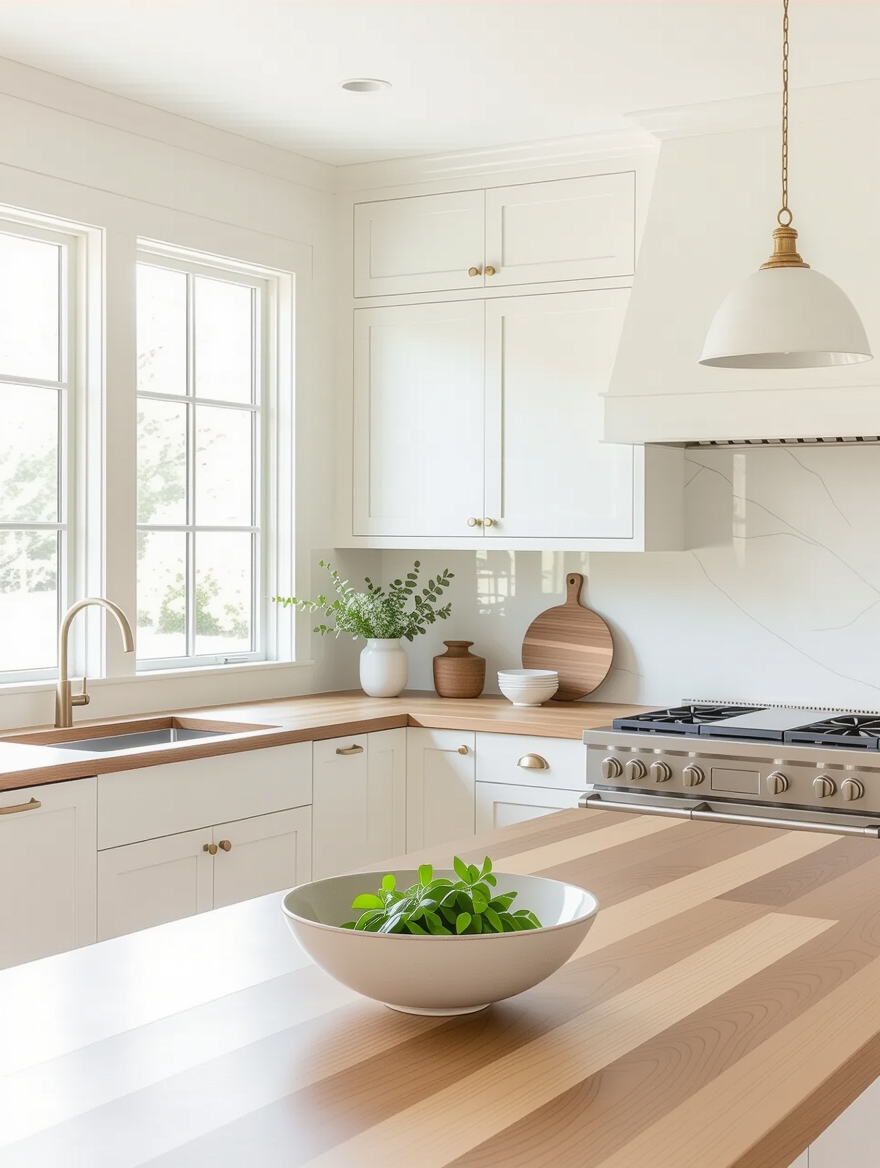
There is real reasoning behind the organic trend. It is not just a pretty look. Natural materials, soft color, and tactile texture lower the visual and sensory noise of a room, which is why an organic kitchen truly feels more restful to stand in. Our eyes and hands relax around wood and stone in a way they never do around glossy plastic.
That calm is the goal, and every touch below is a way to deliver a little of it. I lean on it in nearly every kitchen I design now.
- Natural texture and soft color lower a room’s sensory noise.
- The style suits anyone craving calm after busy, hard-edged design.
- Most of the calm comes from materials, not from spending more.
A Functional Layout for Workflow
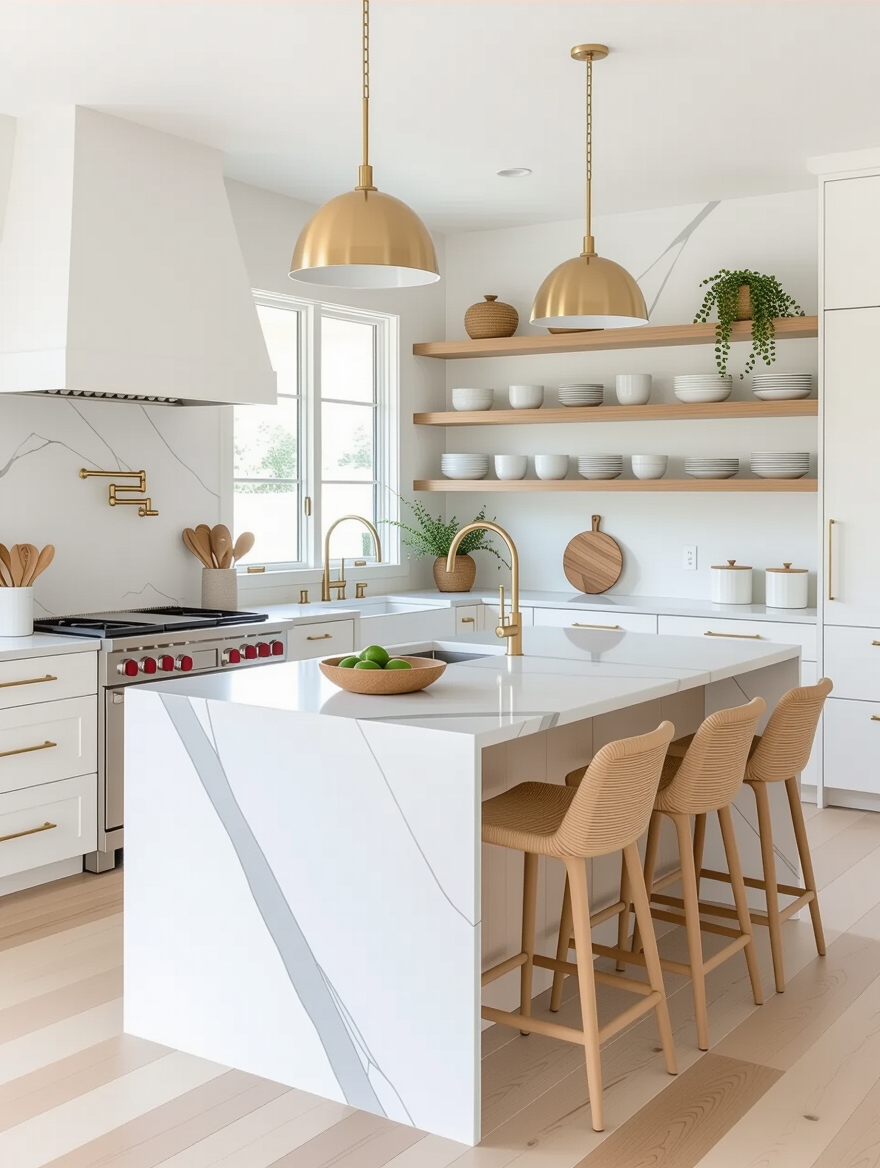
Calm starts with a kitchen that does not fight you. A sensible work triangle and clear counters mean you are not constantly working around clutter or doubling back, and that ease is its own kind of serenity.
Calm Needs Clear Counters
Organic style leans on clear surfaces to let the natural materials breathe, so the layout has to support that. Crowded counters undo the calm no matter how lovely the wood.
Keep the sink, range, and fridge a few comfortable steps apart, and plan storage so the counters can stay mostly clear. A calm minimal base underneath makes the organic layer feel even quieter.
📋The Organic Calm Checklist
- ✓Lead with natural wood and a soft, earthy palette.
- ✓Choose matte finishes and honed stone over anything glossy.
- ✓Add greenery and a few handmade pieces to bring it to life.
Soft, Earthy Colors
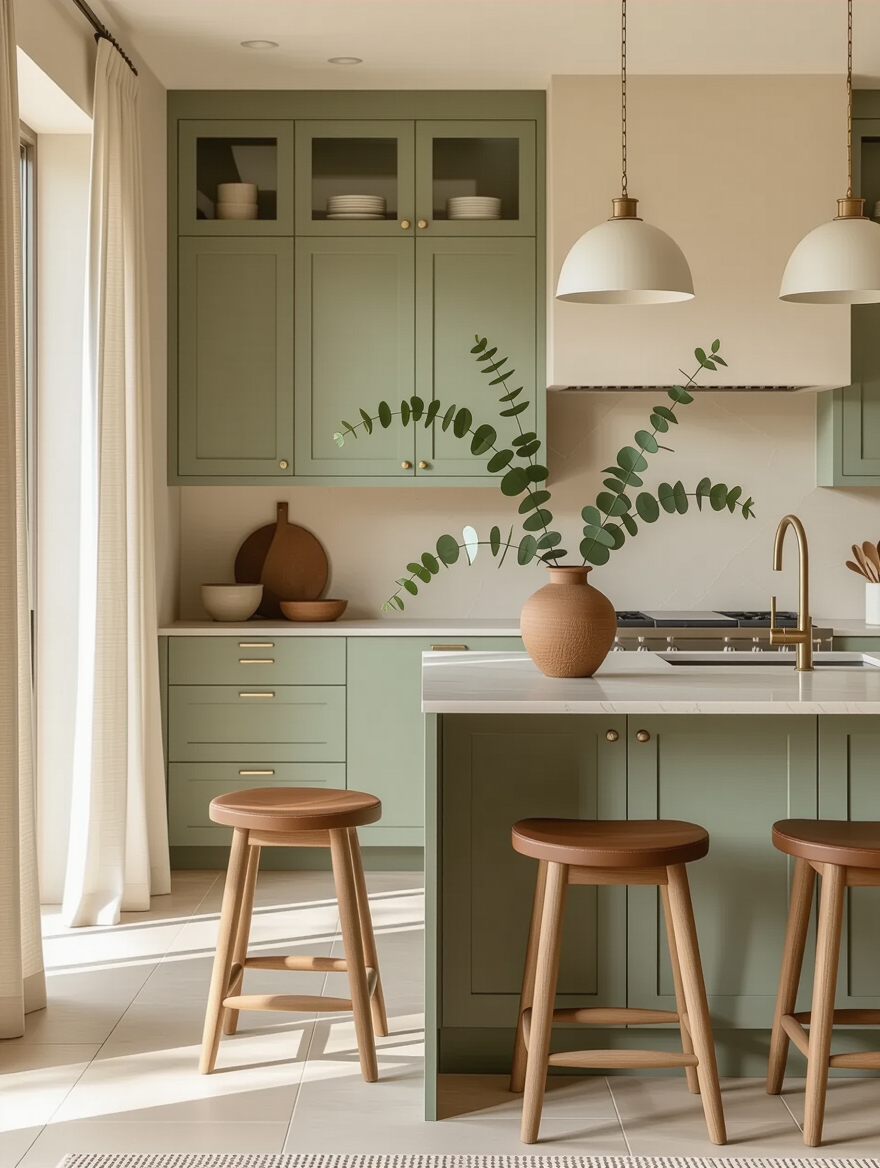
Color sets the mood. Organic kitchens lean on soft, earthy tones drawn from nature: sage green, warm beige, clay, oatmeal, and muted terracotta. These quiet shades let the eye rest where a bright or high-contrast palette keeps it busy, which is exactly the calm the style is after.
Keep the palette close in tone and warm rather than cool, and let one natural material, the wood or the stone, supply most of the color. A wall of sage cabinets against warm wood is plenty. I tell clients to resist adding a second color at all.
Sustainable Materials
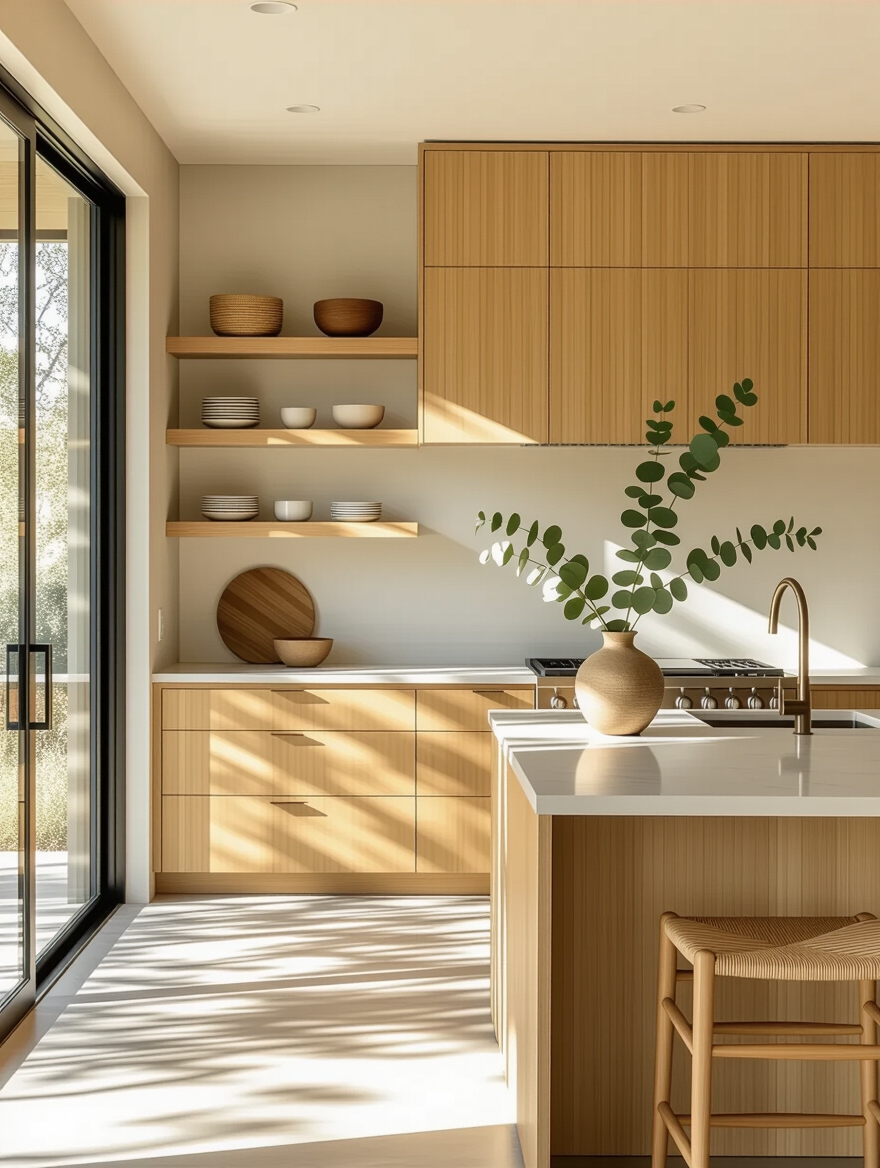
Organic design and sustainability go hand in hand, and choosing materials that tread gently is part of the calm of knowing your kitchen does some good. Bamboo flooring, recycled-glass or terrazzo counters, and FSC-certified woods bring real texture along with a clear conscience.
Good for the Room and the Planet
These choices often wear better than budget particleboard, too, so the calm lasts.
Bamboo flooring runs about $5 to $9 a square foot, and a low-VOC finish keeps the air in the room as clean as the look.
💡Designer Tip
If your kitchen feels cold and you cannot renovate, start with the cheapest organic wins: add a wood cutting board and bowl, a few plants, a linen runner, and swap to warm bulbs. These tactile, natural touches deliver much of the calming organic feeling for the price of a single dinner out.
Natural Wood for Warmth
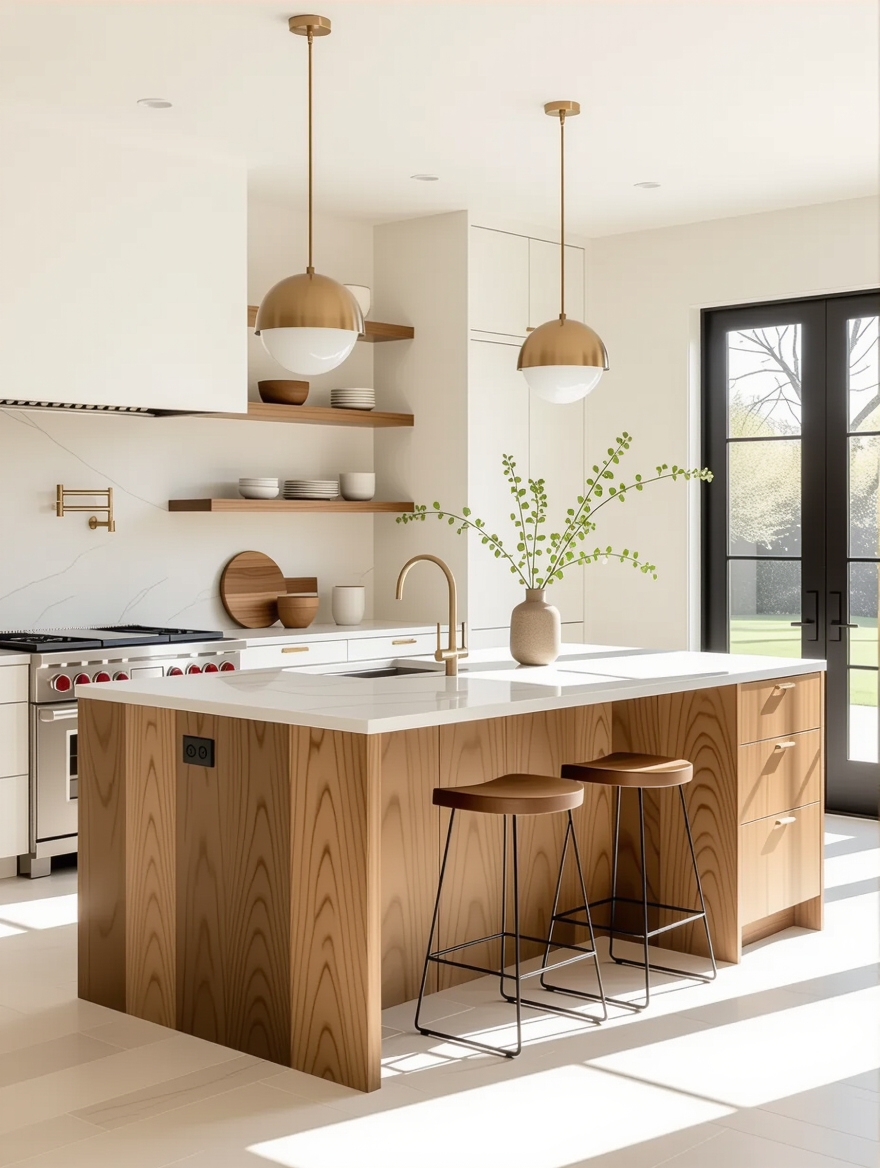
Wood is the soul of an organic kitchen. It is the single material that does the most to warm a space and calm it. White oak, walnut, and warm-toned woods on the cabinets, an island, or open shelves bring the grain and warmth that nothing synthetic matches.
Let the Wood Lead
Let the wood be a real presence, not a token accent, since the warmth is what separates organic from cold modern.
Keep the finish matte and natural rather than glossy or orange, and oil a wood counter every couple of months so it ages beautifully. The warm modern feel is built on this same warmth.
Natural Stone for Organic Texture
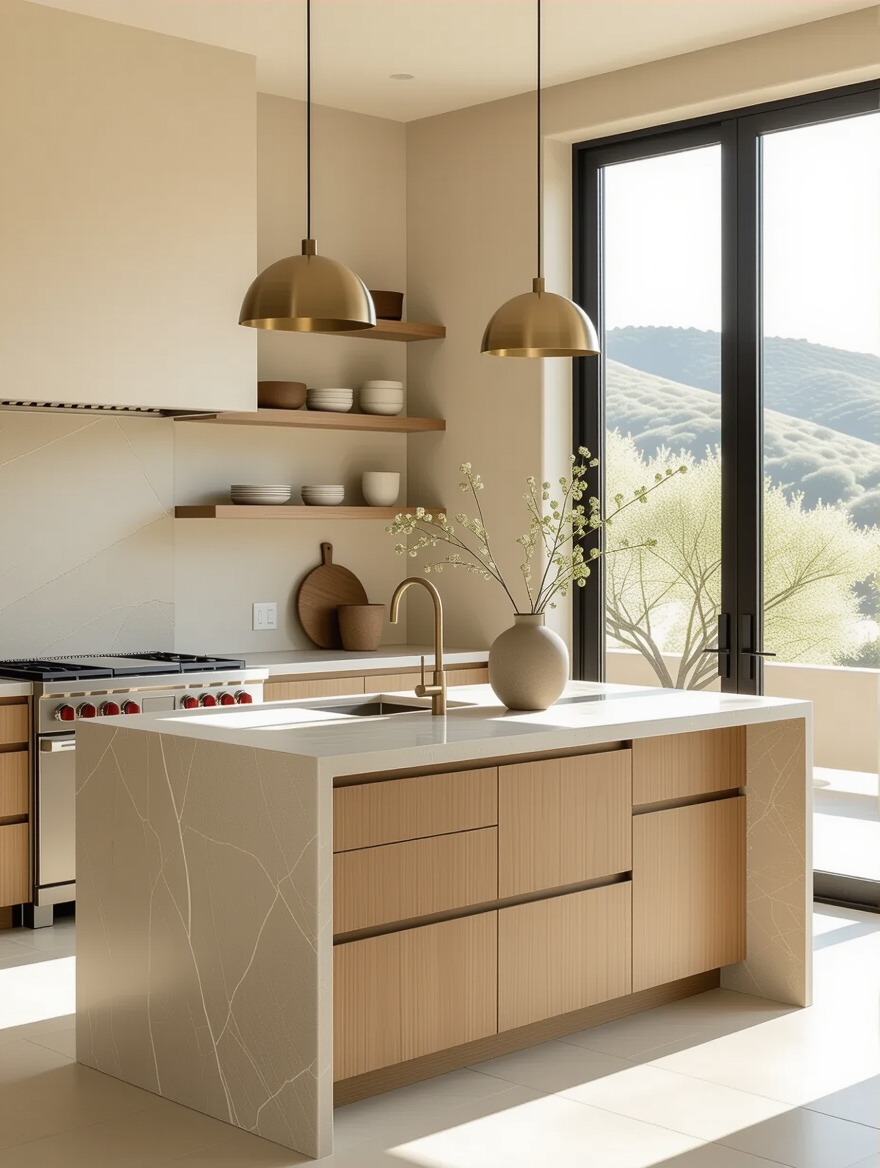
Stone grounds the whole look. It brings the organic, earthy texture nothing else can. A honed marble, a soft soapstone, or a textured quartzite adds natural movement and a tactile, matte surface that invites touch, which is central to the calm.
Honed, Not Polished
Choose honed or leathered finishes over polished, since the matte surface suits the organic feel and hides etching better.
Stone is a splurge. Use it where it is seen and touched most, the island or the main counter, and let a quieter surface carry the rest.
“What to ask yourself before going organic: which surfaces do my hands and eyes meet most? Spend the natural materials there, the wood on the island, the honed stone on the main counter, and let cheaper, quieter choices carry the rest. The calm comes from the materials you actually touch, so concentrate them where you live.”
Easy-Care Greenery
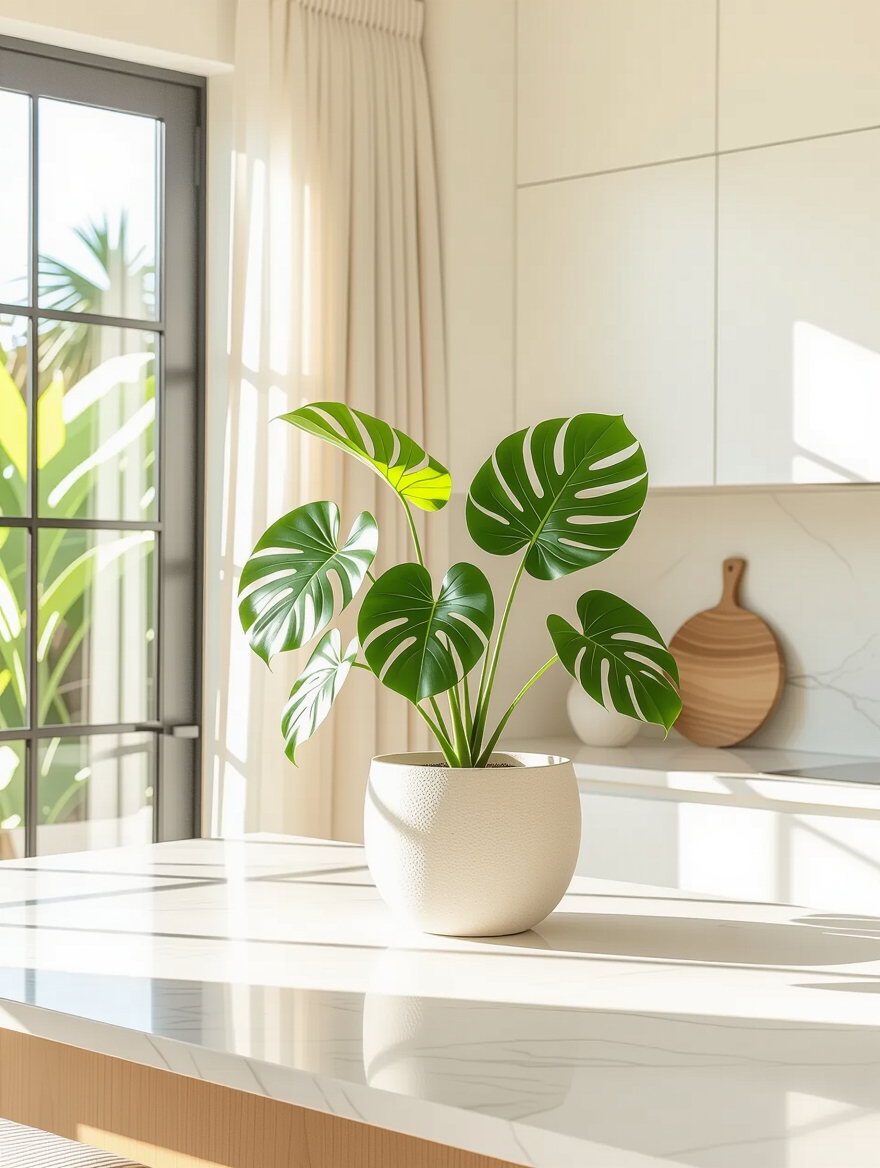
Nothing brings an organic kitchen to life like real greenery. It is the cheapest calming touch here. A few hardy plants, a trailing pothos on a shelf, a herb pot by the window, a snake plant in a corner, add the living texture and gentle color that all those neutrals need. They literally bring breath into the room.
- Choose hardy, low-light plants like pothos or snake plant for a kitchen.
- Keep the pots simple and natural, terracotta or woven, not flashy.
- A weekly watering, just a few minutes, is all most of them need, which makes greenery the highest-impact, lowest-effort touch in the whole organic kitchen.
Matte Finishes for Calm
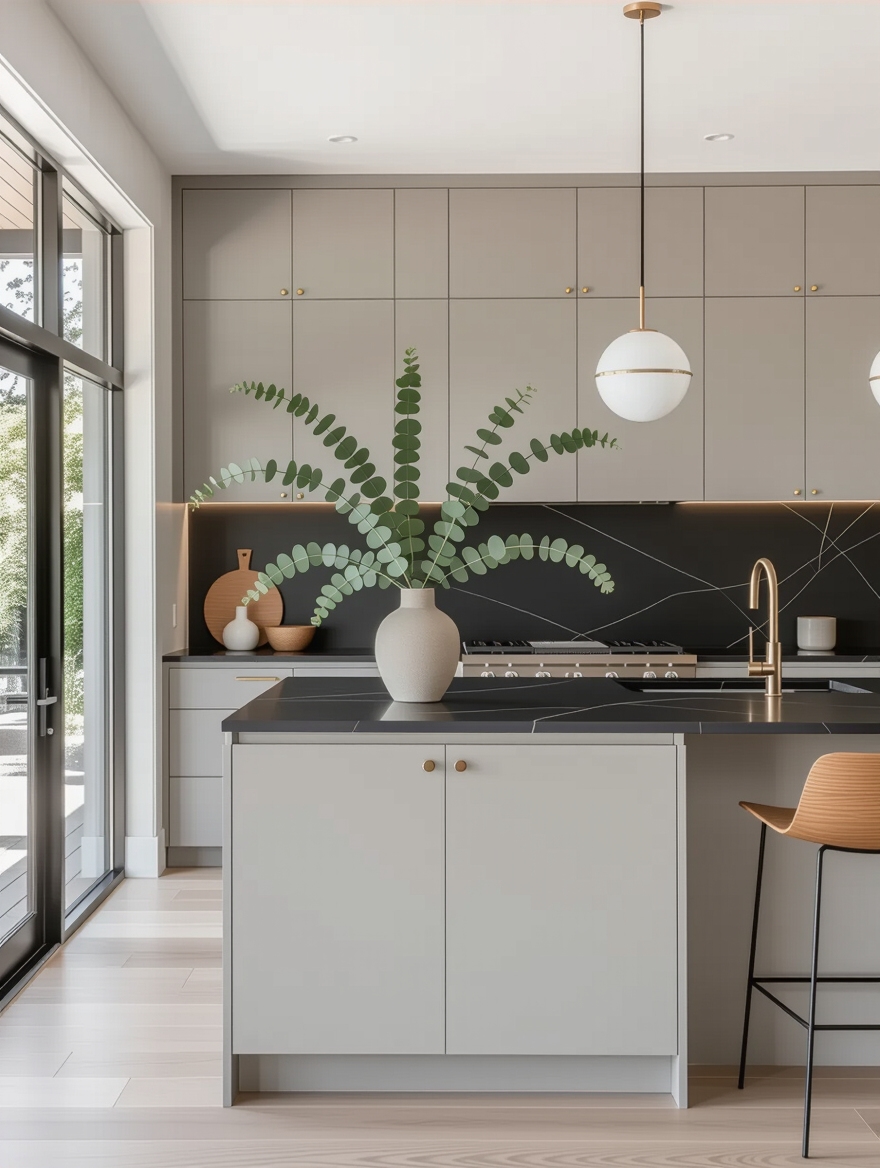
Finish matters more than people expect. It quietly shapes the calm of a room. Matte and low-sheen surfaces absorb light softly and reduce the glare and harsh reflections that make a glossy kitchen feel busy and cold, which is why organic kitchens are almost always matte.
Soft Light, Soft Feel
It is a practical calm, too, since matte hides the fingerprints that would otherwise nag at you.
Choose matte cabinet fronts, honed stone, and brushed rather than shiny metals, and the whole room settles. I push organic kitchens toward matte at every turn.
Fixtures With Organic Shapes
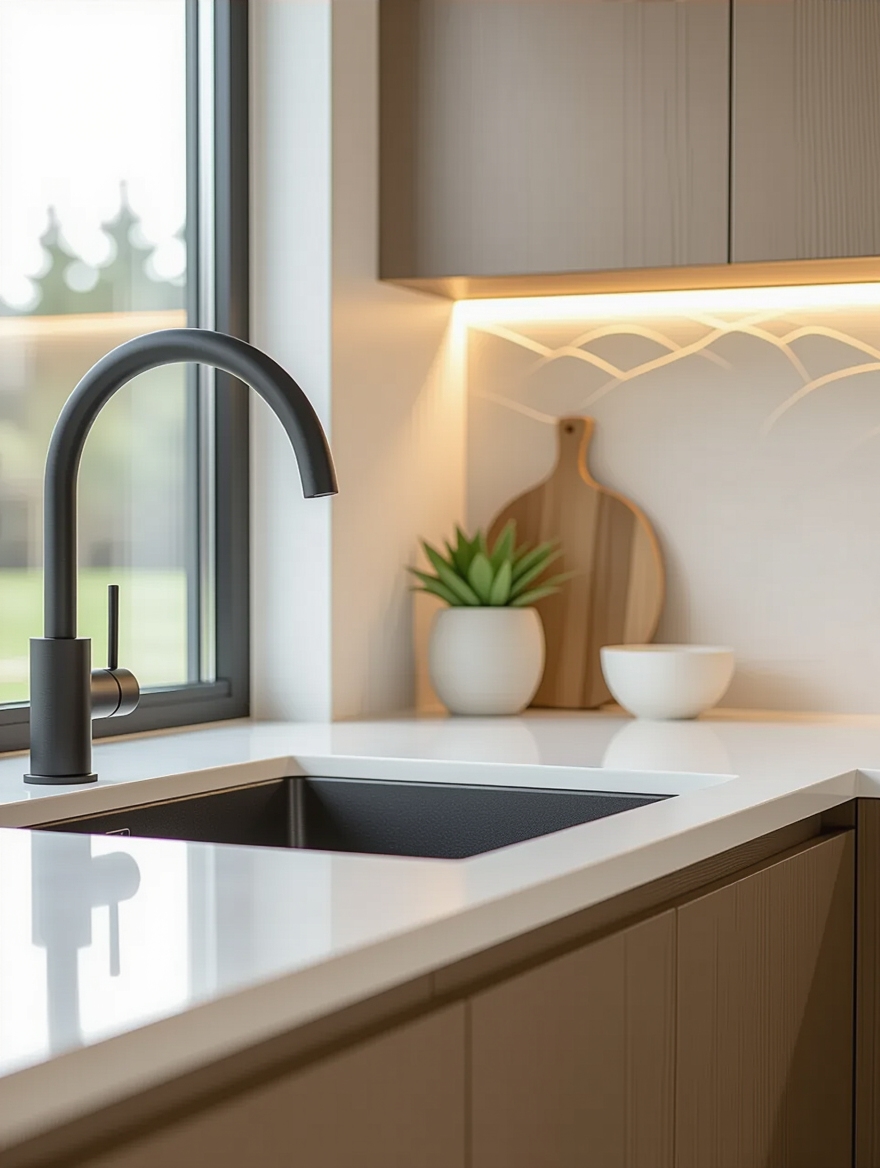
The organic look softens a kitchen. Rounded, natural shapes take the edge off its hard geometry. A curved island end, an arched faucet, a rounded pendant, or a soft-edged stone all echo the forms of nature and ease the rigid lines that make a room feel severe. The curves are subtle, but they change how the room feels.
- Choose rounded or arched shapes for faucets, pendants, and stools.
- Soften one hard corner, like a rounded island end, for a calmer flow.
- Keep the shapes simple; organic means natural, not fussy.
Open Shelving for Natural Textures
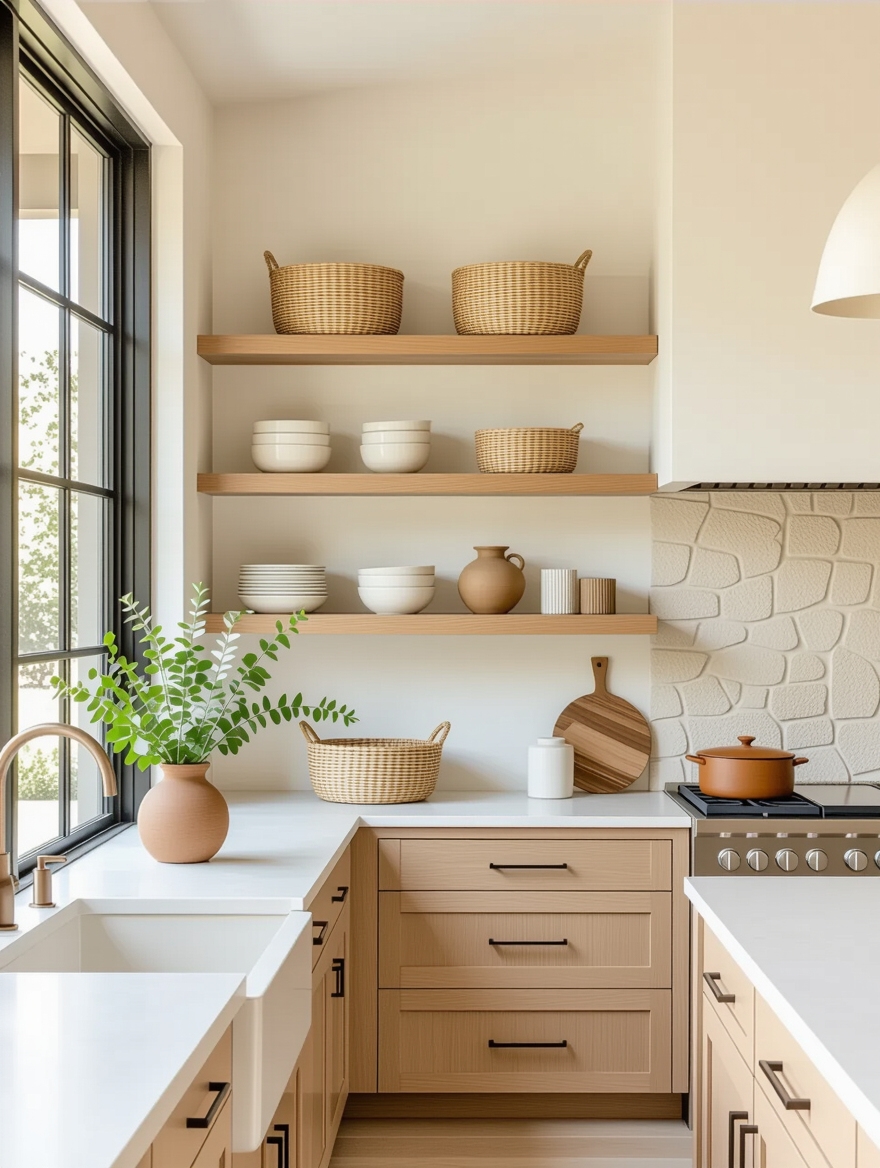
A run of open wood shelving is the organic kitchen’s stage for natural texture. A few woven baskets, wooden bowls, and handmade ceramics turn everyday storage into quiet, tactile interest, and the wood shelf itself adds warmth. As always, the calm depends on keeping it edited.
- Use a solid wood shelf and style it with a few natural-texture pieces.
- Mix woven, wood, and ceramic for organic variety, not clutter.
- Leave breathing room so the textures read calm, not busy.
Handcrafted Ceramics and Textiles
The touches that make an organic kitchen feel personal rather than catalog-bought are the handmade ones. A few pieces of handcrafted pottery, a linen runner, a woven mat, or a hand-thrown bowl bring the slight irregularity and warmth that mass-produced items cannot, and that human quality is deeply calming.
Buy from makers when you can, and keep it to a few real pieces rather than a shelf of them; the restraint is part of what keeps the look calm rather than cluttered. One beautiful handmade bowl says more than a dozen factory ones, and it ties the whole natural palette together. The tiny imperfections are exactly what reads as warm and human rather than mass-produced.
Energy-Efficient Appliances
Quiet, efficient appliances fit the organic ethos in two ways: they tread lightly, and they keep the room peaceful. A near-silent dishwasher and energy-efficient appliances in a calm finish blend into the natural palette instead of interrupting it with noise or shine.
Where you can, integrate them behind panel-ready fronts so the cabinetry and wood stay the focus. Even matching the finishes you already have keeps the room cohesive, which is its own quiet kind of calm. A row of mismatched appliances is one of the loudest things in a kitchen, even when it is switched off.
Natural Scents and Fresh Herbs
Calm is not only visual, and the organic kitchen is one of the few rooms where scent is part of the design. A small pot of fresh herbs on the sill, a bowl of citrus, or a little eucalyptus by the sink brings a gentle, natural fragrance that store-bought air fresheners never match, and the herbs earn their place in your cooking too.
It is the final, almost free layer of the style, and the one guests notice without quite knowing why. For more ways to bring life and color in, these green kitchen ideas pair beautifully, and a timeless modern base keeps the organic layer from ever dating.
Organic Kitchen Questions, Answered
?What is a modern organic kitchen?
It blends clean modern lines with natural, tactile materials, warm wood, honed stone, woven texture, and a soft earthy palette, to create a calm, grounded space. It is the warm antidote to cold, all-white, high-gloss modern kitchens.
?How do I make my kitchen feel calmer?
Lead with natural wood and a soft, earthy palette, choose matte finishes over gloss, clear the counters, and add a little greenery and a few handmade pieces. The calm comes mostly from natural materials and clear space, not from spending more.
?What colors suit an organic kitchen?
Soft, earthy tones from nature: sage green, warm beige, clay, oatmeal, and muted terracotta. Keep them close in tone and warm rather than cool, and let the wood and stone supply much of the color.
?Are organic kitchens hard to maintain?
Not especially. Honed stone and matte finishes hide marks well, and most easy-care plants need only a few minutes of watering a week. A wood counter wants oiling every couple of months, which is the main bit of upkeep.
?Can I get the organic look on a budget?
Yes. The cheapest wins, warm bulbs, a wood board and bowl, a few plants, a linen runner, and clear counters, deliver much of the calming organic feeling without touching the cabinets or counters at all.
Build the Calm From Natural Things
A calming organic kitchen is not about a particular product; it is about surrounding yourself with natural, tactile, quiet things. Warm wood, soft earthy color, honed stone, matte finishes, a little greenery, and a few handmade pieces add up to a room that lowers your shoulders the moment you walk in.
So start with one or two natural touches this week, a wood board, a plant, a warmer bulb, and feel how the room shifts. Build from there, keep the palette quiet and the counters clear, and your kitchen will become the calmest spot in the house.
More Hair Ideas


