

Everyone obsesses over cabinet color and forgets the cheapest character in a kitchen is on the walls. A gallon of sage and a free weekend can warm up a whole room for the price of a takeout dinner, and if you hate it, you paint over it. No demo, no contractor, no commitment.
Walls are also where sage does its coziest work, wrapping the room in soft color while your cabinets and counters stay put. Below are fifteen ways to use sage on the walls, from the shade that suits your light to the cabinets, metals, and finishes that make it sing. Every one of them is reversible, which is exactly why walls are the place to be brave.
Sage Walls in Short
- Wall paint is the cheapest, most reversible way to get sage, roughly a gallon and a weekend.
- Sample on the actual wall, because wall sage shifts even more than it does on a cabinet across the day.
- Let your existing cabinets pick the shade: warm wood wants a warm sage, white takes almost any.
- Two coats over a tinted primer give the truest, most even color on a wall.
Choose the Right Sage Shade for Your Walls

Wall sage and cabinet sage are not the same decision. A wall covers more surface and sits behind everything else, so a shade that looked perfect on a door can overwhelm a whole room. Test before you buy the gallon.
- Buy two or three sample pots at about $5 each and paint big swatches on the wall.
- Look at them by daylight and again under your night bulbs, since wall color swings hard.
- Lean a shade lighter than you think, because a wall looks deeper than a small chip.
How Sage Walls Make a Small Kitchen Feel Bigger

People assume a color shrinks a small kitchen, but a pale sage on the walls does the opposite. A soft, low-contrast green blurs the line where wall meets ceiling, so the room feels less boxed in than stark white does.
Blur the corners, gain the room
The move is to keep it gentle and continuous. Run the same sage onto any soffits or the ceiling edge, and the eye stops registering hard corners. The space feels calmer and, oddly, larger.
I have painted tiny galley walls this way and watched them relax instantly. It costs one gallon and beats almost any budget refresh for impact per dollar.
💡Quick Win
On walls, sheen matters as much as shade. A flat or matte finish hides drywall flaws and deepens that cozy, velvety sage, while an eggshell wipes cleaner near the stove and sink. Many people split the difference: matte on the main walls, a wipeable eggshell on the splash-prone stretch behind the counter.
Cozy Up a Big Kitchen With Darker Sage Walls

Big kitchens have the opposite problem: they can feel cavernous and cold. A darker, deeper sage on the walls pulls the space inward and wraps it in warmth, turning a vast room into a cozy one.
Depth needs light to carry it. This works best where windows or good fixtures keep the room from going gloomy. Pair the deep walls with pale counters and warm wood so the color feels rich and considered.
Think of dark sage as a hug for an oversized room. It is the rare case where more color makes a space feel more intimate, the way a deep green dining room or library always seems to gather people in tighter than a pale one ever does.
Sage Walls With Warm Wood Cabinets

If your cabinets are wood, sage walls are one of the easiest upgrades you can make. The green flatters honey oak and walnut alike, calming down an orange-toned wood that might otherwise date the room.
Match the temperature so the two agree. A warm, olive sage loves warm wood, while a cooler gray sage can fight it. Get it right and dated cabinets suddenly look intentional, no refacing required.
- Pair warm wood with a warm, olive-leaning sage for natural harmony.
- Use sage walls to rescue orange oak you cannot afford to replace.
- Keep the ceiling and trim creamy white so the wood and green stay the focus.
Watch Out
Deep sage on a big wall shows every roller mark and unpatched ding if you rush the prep. Fill and sand dings flat first, then roll in consistent, overlapping passes while the wet edge is still open. Skip that and a rich wall color turns patchy under raking afternoon light, which is exactly when you most want it to look its best.
Sage Walls Around White Cabinetry
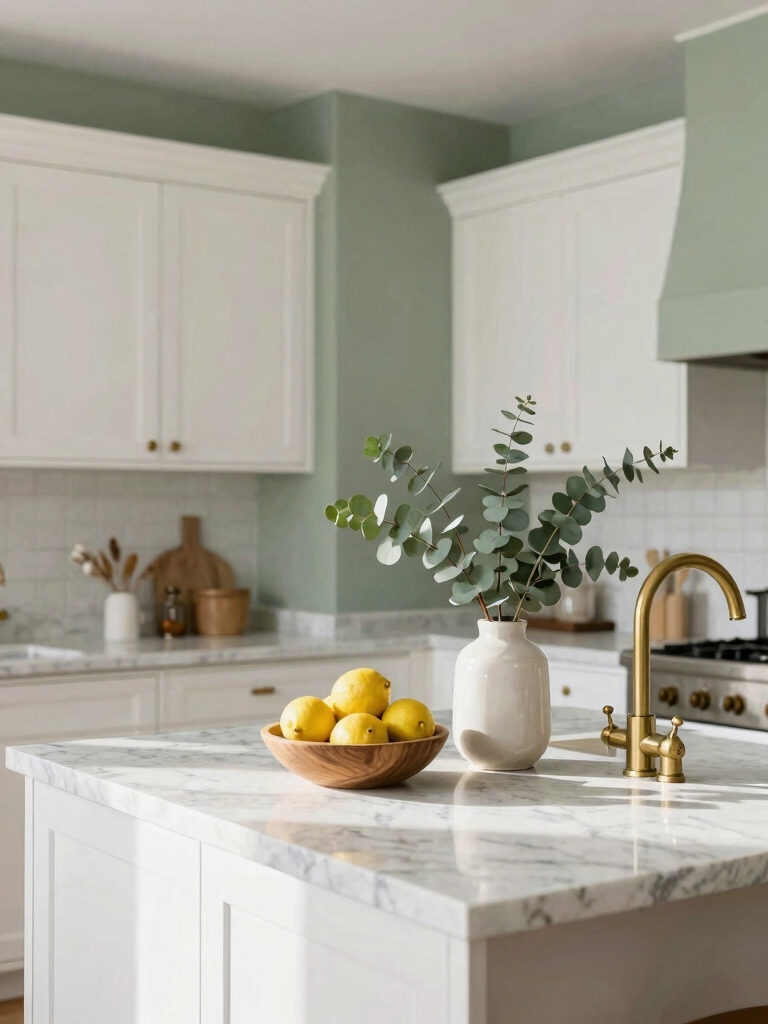
White cabinets are the most forgiving partner for sage walls. White takes almost any shade of green beside it. The contrast keeps the cabinets crisp while the walls add the warmth white kitchens often lack.
White takes any green
This is the combination I steer most renters and recent buyers toward. You leave the cabinets alone, paint the walls, and a plain builder-white kitchen suddenly has a point of view for the cost of a gallon.
Push the sage as light or as deep as you like here, because white can hold its own against either. A pale sage keeps it airy; a deeper one makes the white pop like trim around the room.
Two-Tone Walls: Sage Below, Neutral Above

You do not have to commit a whole wall to sage. Painting the lower third or half of the walls sage and keeping the top neutral gives you a grounded, wainscot-style look with half the color.
It is a classic move for a reason: the deeper color anchors the room at hand height where scuffs land, while the lighter top keeps things open. A simple chair rail or a clean painted line marks the divide.
- Split the wall around a third of the way up for the most balanced proportion.
- Use a slightly deeper sage below so it grounds the room at hand height.
- Run a thin chair rail or crisp tape line to keep the divide sharp.
A few wall-painting terms worth knowing:
📖Tinted primer
A primer shaded toward your final color, so the true sage shows in fewer topcoats and covers a dark old wall faster.
📖Sheen
How glossy the paint dries. Flat and matte hide flaws and read cozy; eggshell and satin wipe clean more easily.
📖Wainscot line
The horizontal divide on a two-tone wall, usually a third of the way up, where the lower sage meets the lighter top.
Modern Farmhouse Sage With Matte Black

Sage walls lean cozy and soft, so a few matte black touches give them a modern edge and keep the room from going too sweet. Black hardware, a black faucet, or black window frames read crisp against the green.
This is the modern-farmhouse formula at its simplest: warm sage walls, simple cabinets, and graphic black accents. It feels current and grounded. The look pairs naturally with the rest of a farmhouse kitchen, where sage walls do the heavy lifting and the black keeps it from sliding into pure country.
- Add matte black on the fixtures and hardware, not the big surfaces.
- Keep the black minimal so it sharpens the sage instead of fighting it.
- Echo it in one more spot, like pendant lights, so it feels intentional.
Coastal Calm With Sage Walls and Whitewash
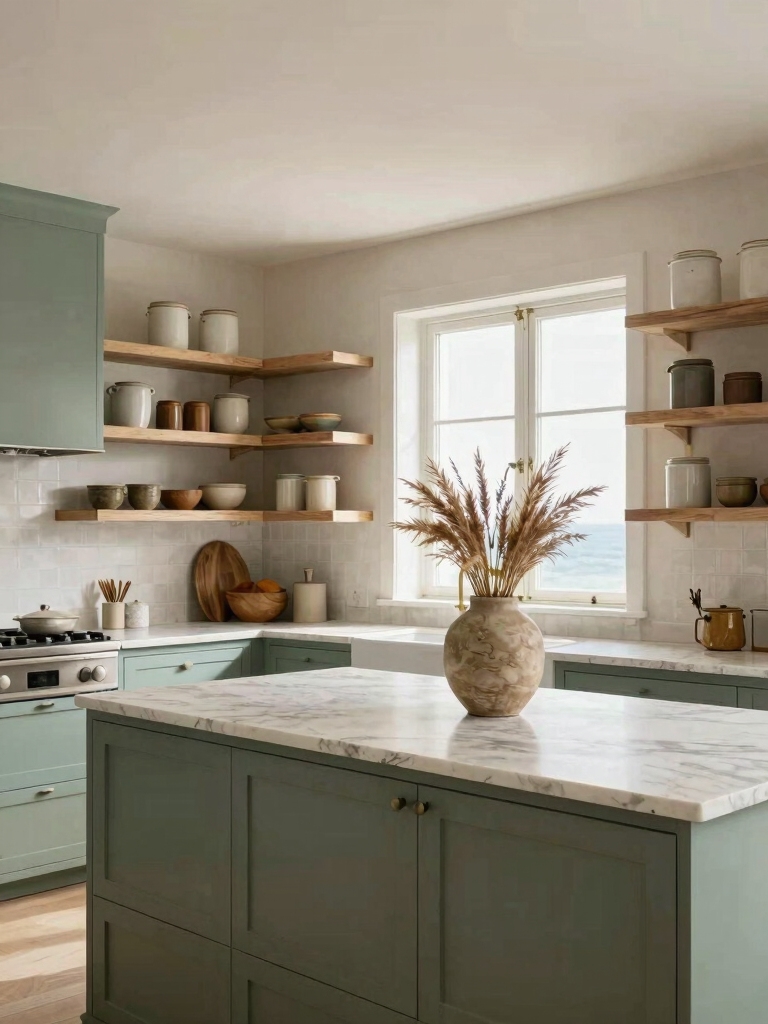
For a breezy, coastal feel, pair pale sage walls with whitewashed wood and natural textures. The green stands in for sea grass and the whitewash for driftwood, and the room feels relaxed and sun-bleached without any literal beach decor.
- Choose a pale, slightly gray sage that looks like weathered sea glass.
- Pair it with whitewashed open shelving and woven baskets for texture.
- Keep metals light, like brushed nickel, so the palette stays soft and airy.
Warm Up Sage Walls With Brass and Copper

Warm metals are the fastest way to make sage walls feel cozy. I add them to nearly every sage room. Brass and copper pick up the green’s warm undertones and throw a soft glow that turns flat afternoon light into something closer to candlelight by the time dinner is on.
You do not need to re-plumb the kitchen for this. A copper pot rail, brass cabinet pulls, or a warm-toned pendant over the sink does the job for a fraction of a fixture overhaul, often under fifty dollars.
If you are choosing lighting anyway, lean warm. A 2700K bulb in a brass fixture makes sage walls feel like candlelight, which is the whole cozy point. Worth reading how lighting changes the mood before you commit.
Sage Walls Against Natural Stone

Natural stone and sage walls share a quiet, earthy quality that makes them easy partners. A soapstone or honed-granite counter, or a stone backsplash, grounds the green with texture and depth, and because both come from nature, they rarely clash. I love this pairing for anyone who wants the cozy of sage with a little more weight and permanence in the room.
- Pair sage with soapstone or honed granite for an earthy, grounded look.
- Let the stone’s natural veining stay soft so it supports the walls, not competes.
- Carry a stone or slate accent elsewhere, like a hearth or shelf, to tie it together.
How to Get Your Wall Color Right
The single habit that saves the most grief is sampling on the actual wall, not a fan deck. Paint a two-foot square, give it two coats, and live with it for a couple of days through morning, afternoon, and lamplight. Wall sage swings further than cabinet sage because there is so much more of it, and a green that looked gentle at noon can turn gray or yellow by dinner. Spend the ten dollars on samples; it is the cheapest insurance in any paint job.
When you do paint, prep the easy way: clean the walls, patch any dings, and roll a tinted primer first so the true color shows in two coats instead of three. A gallon of quality wall paint runs about $40 to $60 and covers a small kitchen, drying enough to recoat in roughly two to four hours.
Because it is only paint, you can change your mind next year for the price of another gallon, which is the whole freedom of decorating with walls instead of cabinets. For more on what color does to a room, the case for character on the walls goes well beyond sage.
Start With the Walls, Stay Cozy
Walls are the cheapest, bravest place to bring sage into a kitchen, because the stakes are one gallon and a weekend. You get the cozy color without touching the cabinets, and you keep the freedom to change your mind whenever the mood shifts.
Start by sampling your shade on the actual wall, then pick the cabinets, metals, and finishes that flatter it. Whether you go pale to open a small room or deep to warm a big one, sage walls are the lowest-risk way to make a kitchen feel like a place you want to linger.
More to Explore


