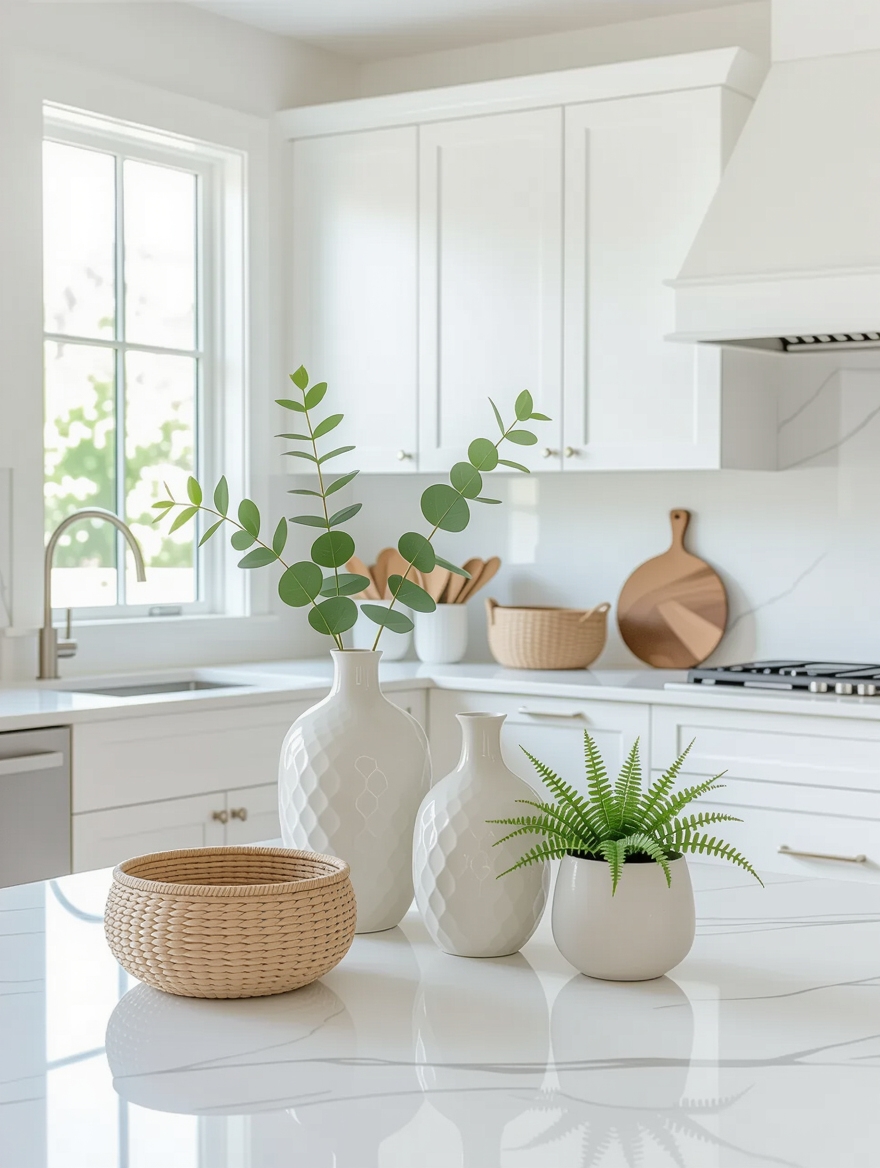

The first apartment I rented had a kitchen so small two people could not stand in it at once. I could not knock down a wall, so I did the next best thing: I tricked the eye. Pale paint, a mirror, cleared counters, and better light made it feel nearly double its size, even though not one inch had actually moved.
That is the heart of small-kitchen decor: you cannot always add space, but you can make the room feel bigger. These thirteen hacks mix the visual tricks that fake square footage with the storage moves that keep surfaces clear, since clutter is what shrinks a room fastest. Pick a few, start with the cheapest, and watch the kitchen open up.
How to Fake More Space
- Light bounces; clutter shrinks. Pale colors, mirrors, and cleared counters make a room feel bigger.
- Take storage up the walls so the floor and counters stay open and the eye keeps moving.
- Reflective surfaces and good lighting do as much for the sense of space as any renovation.
- Most of these are cheap, reversible decor moves, not builds, so renters can use almost all of them.
The Core Principles of Maximizing a Small Kitchen
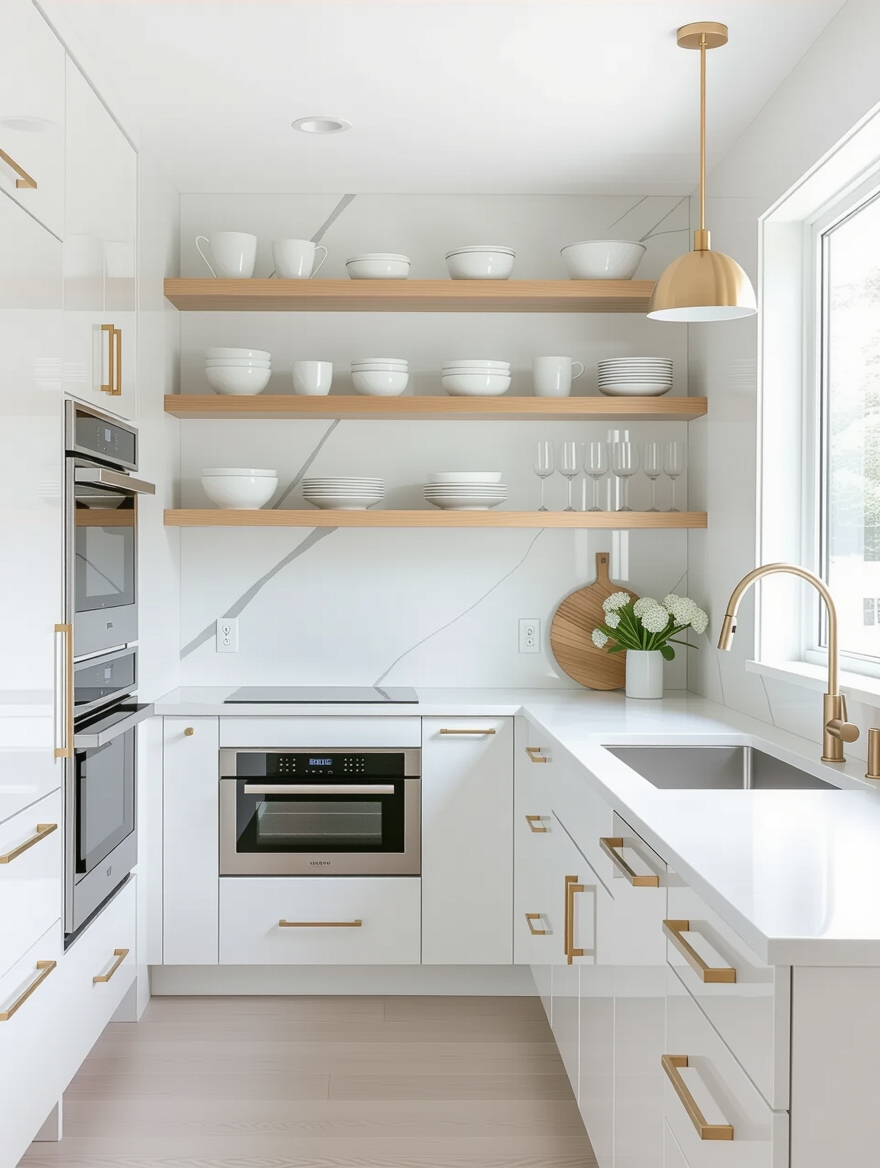
Before the individual tricks, two principles tie them all together. Light makes a room feel bigger, and clutter makes it feel smaller. Almost every hack below serves one of those two ideas, so when you are unsure, ask which one a change supports.
- Maximize light: pale colors, mirrors, and reflective finishes all stretch the room.
- Minimize clutter: clear counters and hidden storage let the eye keep moving.
- When a decor choice does neither, in a small kitchen it is usually working against you.
Use Vertical Storage to Clear the Counter
A cluttered counter is the fastest way to shrink a small kitchen, so the first decor hack is really a storage one: get things up off the surfaces and onto the walls. Clear the counter. I tell every client this is where the eye reads space, because a clean, open surface signals room in a way no amount of clever color ever can on its own.
Rails, hooks, and a slim shelf turn bare wall into storage and keep the counter clear for cooking. The same clutter-hiding moves that organize a kitchen also make it look bigger, which is the two-for-one at the heart of small-space decor.
- Mount a rail with hooks above the counter for mugs, tools, and a towel.
- Add a high shelf for things you reach for less often.
- Keep the counter down to one or two beautiful, useful objects.
Hang Pots and Tools to Free Drawers

Hanging your pots and most-used tools does double duty: it empties a bulky drawer and turns the cookware into a bit of warm, working decor. On a rail or a pegboard, the pieces you reach for stay in sight and within a grab, which speeds up cooking in a tight space.
Keep it to the pieces you actually use so the wall stays useful rather than busy. A simple rail runs about $20 to $50, and a pegboard you cut to fit costs even less, with the bonus that you can rearrange the hooks anytime.
- Hang daily pots and tools on a rail or pegboard to empty a drawer.
- Limit it to what you use so the wall does not turn cluttered.
- Position it near the stove so the tools land where you cook.
Maximize Cabinet Space With Organizers

The more your cabinets hold, the less needs to live on the counter, so cabinet organizers quietly buy back visual space. Pull-out shelves, risers, and door racks reach the dead zones a small kitchen wastes and let you stash the gadgets that would otherwise crowd the room.
Clear cabinets, clear counters
It is the unglamorous half of small-kitchen decor, but it is what makes the pretty half possible. You cannot keep counters clear if the cabinets are too jammed to hold anything.
Most organizers are a few dollars and an afternoon, far cheaper than new cabinets. Start with the deepest base cabinet, add a pull-out, and you instantly free counter space you did not know you had.
👍Open shelving in a small kitchen
- +Lifts visual weight so the wall feels lighter.
- +Puts everyday dishes in easy reach.
- +Cheaper than cabinets and easy to install.
👎What to weigh
- –Shows everything, so it needs styling and editing.
- –Less hidden storage, a real cost in a tight kitchen.
- –Collects grease and dust if you do not rotate the dishes.
Clear Containers and Labels for the Pantry

Decanting dry goods into clear, matching containers does more for a small kitchen than it gets credit for. It is quiet magic. A row of uniform jars looks tidy and calm, which makes even a mismatched cabinet feel considered and more spacious.
Square containers also waste far less space than floppy bags, so you fit more in the same cabinet. Labels keep the system going, and the uniform look is a cheap decor upgrade that doubles as organization.
- Use square, stackable containers to fit more and look tidy.
- Decant the staples you use most, like flour, sugar, and pasta.
- Add simple labels so the calm, uniform look actually lasts.
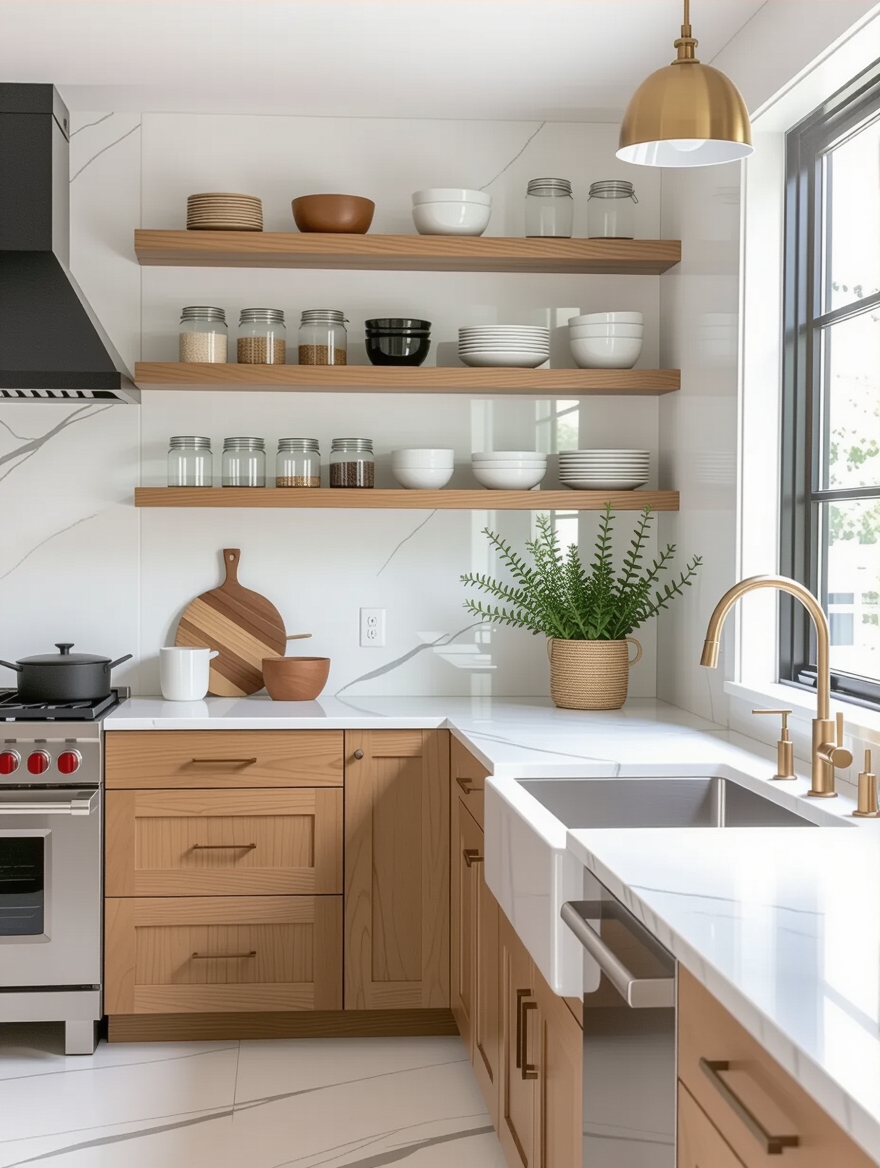
Open Shelving That Lightens the Walls

Swapping one run of upper cabinets for open shelves lifts the visual weight off a small kitchen. A solid bank of uppers presses in; open shelves let the wall breathe and the room feel airier.
Lighter walls, bigger feel
The trick is restraint, since a crowded shelf just trades cabinet clutter for visible clutter. Keep it to one wall, stock it with everyday dishes you rotate, and leave real gaps so it looks styled rather than stuffed.
This is a hack that looks like decor but works like space. The lightened wall makes the whole kitchen feel less boxed in, especially on the run you face while cooking.
Which space-doubling hack should you try first?
1My kitchen feels dark
Hang a mirror opposite the window and add under-cabinet LEDs; light is your fastest win.
2My counters are always buried
Go vertical with rails and cabinet organizers so the surfaces stay clear and the room feels bigger.
3It just feels closed in
Paint pale and low-contrast, then add a glossy or reflective surface to bounce the light around.
Light Colors to Expand the Room

Color is the cheapest space-doubling hack there is. Pale cabinets and walls bounce light around and blur the edges of a room, so a small kitchen feels open instead of closed in. Dark, high-contrast schemes do the opposite in a tight space.
Low contrast, bright and open
You do not have to go stark white. A soft greige, a pale sage, or a warm off-white all keep things bright while adding a little character. The key is keeping the contrast low so the eye glides across the room without stopping.
If you can only do one thing, paint. I steer almost every small kitchen here first. A couple of gallons lighten a room more than almost any purchase, the same instinct behind most small kitchen decorating refreshes.
Mirrors and Reflective Surfaces for Brightness

A mirror is the oldest trick for faking space, and it works as well in a kitchen as anywhere. I use one in nearly every tight room. Hung opposite a window, it bounces daylight deep into the room and doubles the sense of depth, making a galley feel far less like a corridor.
Reflect light, not mess
Reflective surfaces do the same job quietly. A glossy backsplash, polished counters, or glass cabinet fronts all catch and spread the light that reaches them, so even a kitchen with one small window ends up feeling brighter and noticeably bigger without your hanging a single mirror.
Place anything reflective where it bounces light or a view, not a cluttered counter. Aimed right, a mirror or a glossy tile turns a dim, tight kitchen into one that feels open and full of light.
Place a mirror to fake the most space:
1Find the window
Pick the wall opposite or beside your main window so the mirror can catch daylight.
2Aim it at light, not clutter
Position it to reflect the window, a plant, or the table, never a busy counter.
3Go as big as the wall allows
A larger mirror bounces more light; a leaning floor mirror works where you cannot drill.
Brighten the Kitchen With LED Lighting

A dim kitchen always feels smaller, because shadows hide the edges of the room and bury the counters. Light fixes that. Layered LED lighting erases the gloom and opens the space, and it is one of the cheapest upgrades on this list, the kind of move that pairs with any small kitchen plan.
Under-cabinet strips are the single best move, lighting the counter where one ceiling fixture leaves you in shadow. Plan on about $15 to $40 a run and an hour to fit them, with no wiring if you choose the rechargeable or plug-in kind.
Use warm 2700K bulbs so the small space feels inviting rather than clinical, and add a dimmer if you can. A well-lit kitchen feels bigger and warmer at any hour, which is exactly the illusion you are after.
Slim, Multi-Functional Appliances
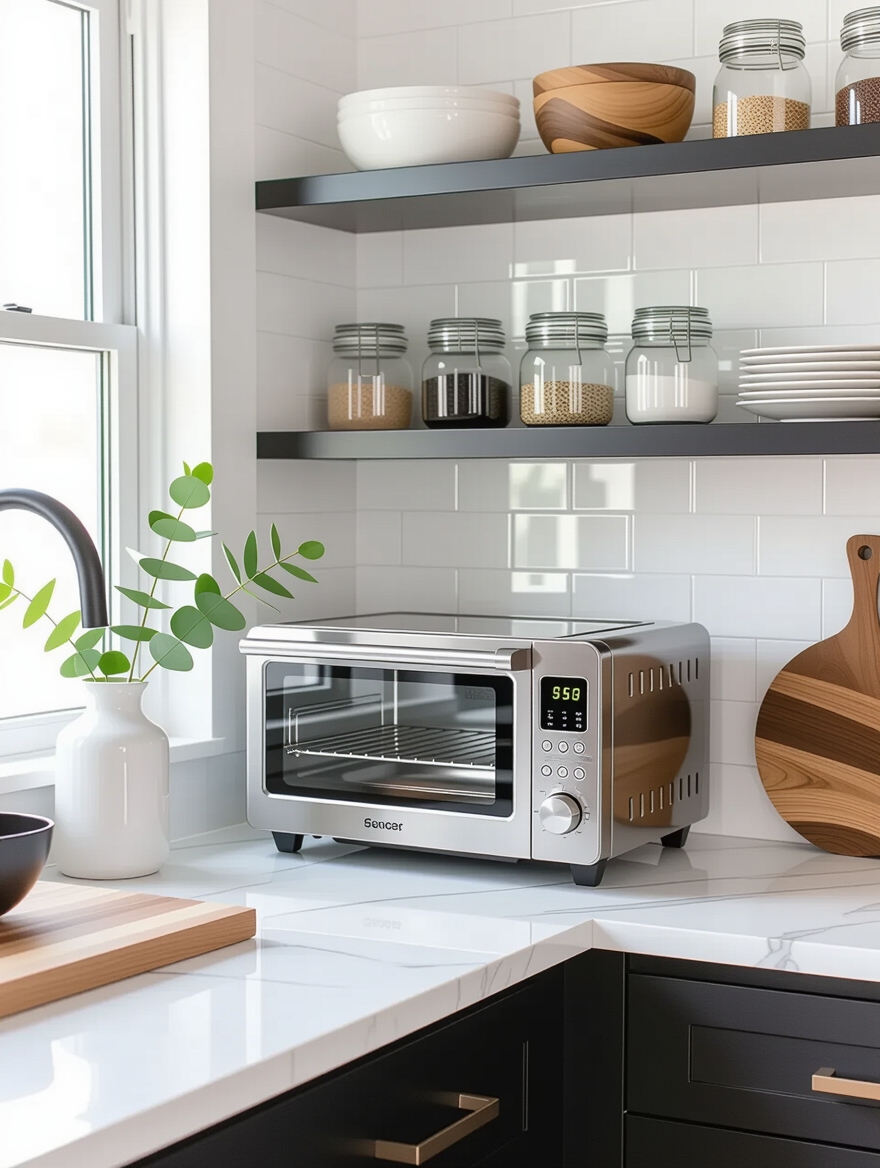
Bulky appliances eat both counter and floor in a small kitchen, so going slim and multi-functional frees up room and clears sightlines. One machine that does two jobs means one less thing crowding the counter and the cabinets.
- Swap a bulky microwave for a combo unit that also bakes or air-fries.
- Choose a slim or counter-depth fridge that sits flush instead of bulging out.
- Retire any appliance you use less than monthly to free its footprint.
Who These Hacks Suit Best
Almost all of these hacks suit renters, since the highest-impact ones, light paint, a mirror, cleared counters, under-cabinet lighting, and clear containers, are cheap and reversible.
If you cannot paint, lean harder on the mirror, the reflective surfaces, and the lighting, which fake space without touching the walls. I tell tenants to start with a mirror and a lamp before anything else, because together they transform how big a dim kitchen feels for under fifty dollars.
Homeowners can layer the storage hacks on top: pull-outs, open shelving, and slim appliances that make the cleared look easy to keep up. Whoever you are, the order is the same. Clear the clutter first, add light and reflection second, and bring in color last, since paint shows best once the room is already calm. Bookmark the two or three that fit your kitchen and your budget, and the space will feel like it grew without a single wall moving.
Small Kitchen Decor Questions, Answered
?What is the cheapest way to make a small kitchen look bigger?
Light and reflection. A coat of pale, low-contrast paint, a mirror opposite the window, and a cleared counter cost very little yet do more for the sense of space than almost any purchase. Under-cabinet LEDs add to the effect for $15 to $40 a run.
?Do dark colors always make a small kitchen feel smaller?
Mostly, in a tight space, because dark, high-contrast schemes absorb light and stop the eye. If you love a dark look, save it for one accent and keep the big surfaces pale, and lean hard on layered lighting to compensate.
?Where should I hang a mirror in a small kitchen?
On the wall opposite or beside your main window, aimed so it reflects the daylight, a plant, or the table rather than a cluttered counter. The bigger the mirror, the more light it bounces and the deeper the room feels.
Trick the Eye, Open the Room
You cannot always add square footage to a small kitchen, but you can make it read as nearly double the size. Bounce light with pale color and mirrors, keep the counters and floor clear with smart storage, and brighten the shadows, and the room opens up without a wall ever moving.
Start with the cheapest hack that fits, a mirror, a coat of pale paint, or a cleared counter, and build from there. Bookmark the ones that match your kitchen and your lease, and the next time you walk in, the space will feel like it finally has room to breathe.
More to Explore