

Picture the kitchen in a really good beach house. Light pours in. The air feels lighter. The colors are soft, the surfaces are natural, and nothing feels heavy or fussy. That breezy, just-came-in-from-the-water calm is what modern coastal design is after, and the best part is you do not need an ocean view to pull it off.
The line to walk is between coastal and kitsch. Lean too hard on anchors and seashells and it turns into a theme restaurant. Done with restraint, though, the look is one of the calmest a kitchen can wear. Here are seventeen modern coastal picks that get the breezy feel right, with honest costs along the way.
The Breezy Formula
Modern coastal lives on three things: a soft, light palette, natural materials, and plenty of light bouncing around. Get those right and the room feels breezy on its own, no seashells required.
Keep the nautical references to a whisper, lean on wood, glass, and greenery for warmth, and let open, airy layouts do the rest. The goal is the feeling of the coast, not a costume of it.
Light, Breezy Coastal Colors
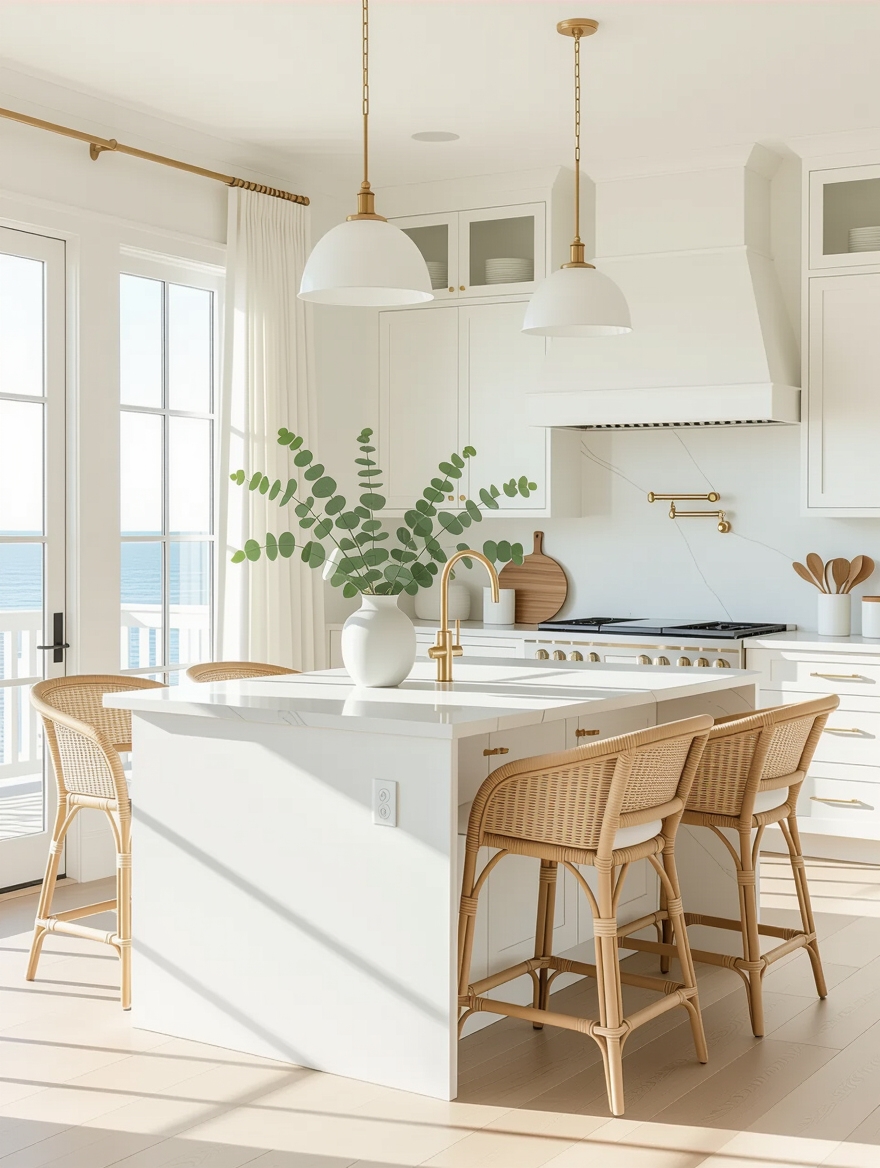
Color is where the breezy feeling starts. Soft whites, sandy neutrals, and the palest blues and greens mimic sea glass and sky, and they bounce light around so the whole room feels open. The trick is keeping the palette quiet, since a loud color anywhere undoes the calm.
I tell clients to pick one soft accent and let the rest stay neutral. A wall of pale blue lowers against warm white above is plenty; you do not need the color everywhere.
Sleek Minimalist Cabinetry in Soft Tones
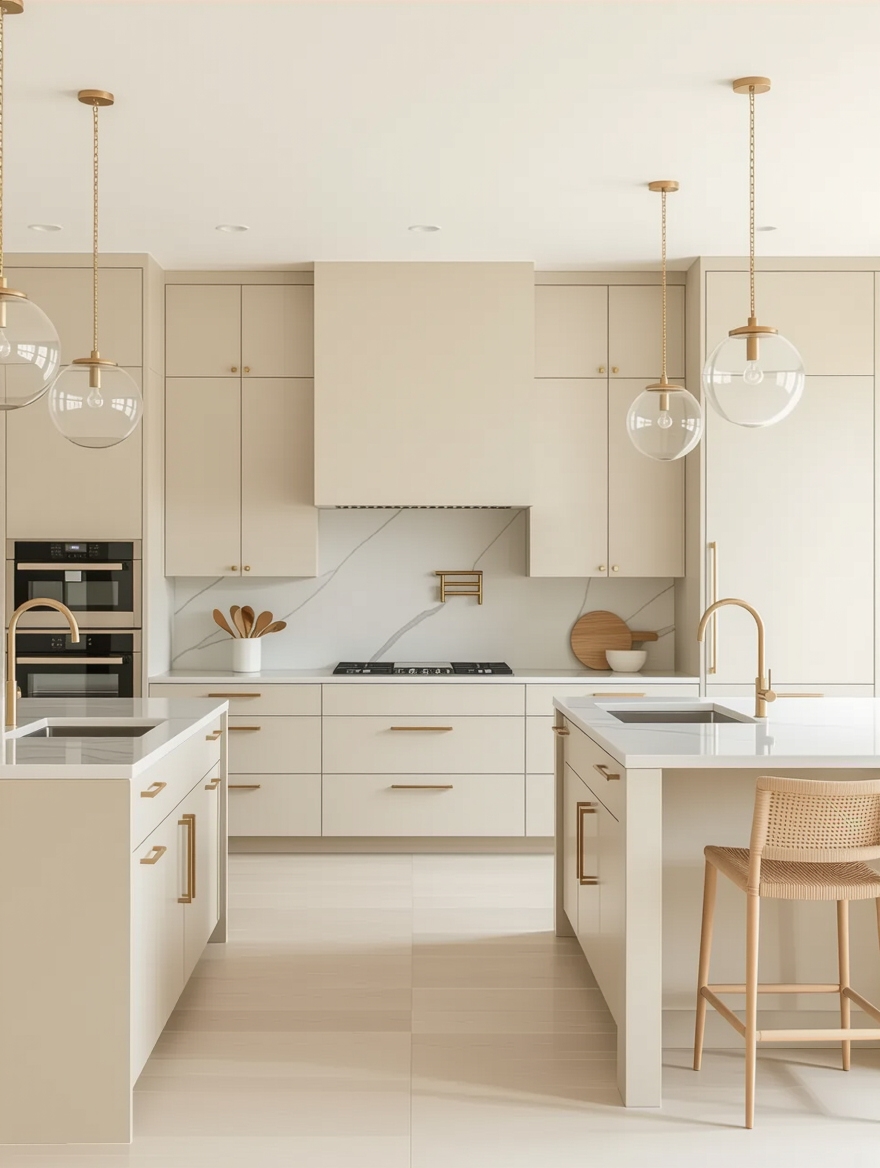
Modern coastal is not the heavy, distressed beach look of years past. The cabinetry should be clean and simple, flat or slim shaker fronts in a soft tone, so the room feels current and uncluttered. Let the color and the light do the work, not fussy detailing.
- Choose flat or simple shaker doors in soft white, sand, or pale blue.
- Skip heavy distressing; modern coastal leans crisp, not weathered.
- Handleless or slim hardware keeps the fronts calm and breezy.
📋Coastal Without the Kitsch
- ✓Lean on a soft palette and natural materials, not literal beach objects.
- ✓Keep nautical references to one subtle nod, if any.
- ✓Let light, wood, and greenery carry the coastal feeling.
Natural Wood Accents for Warmth
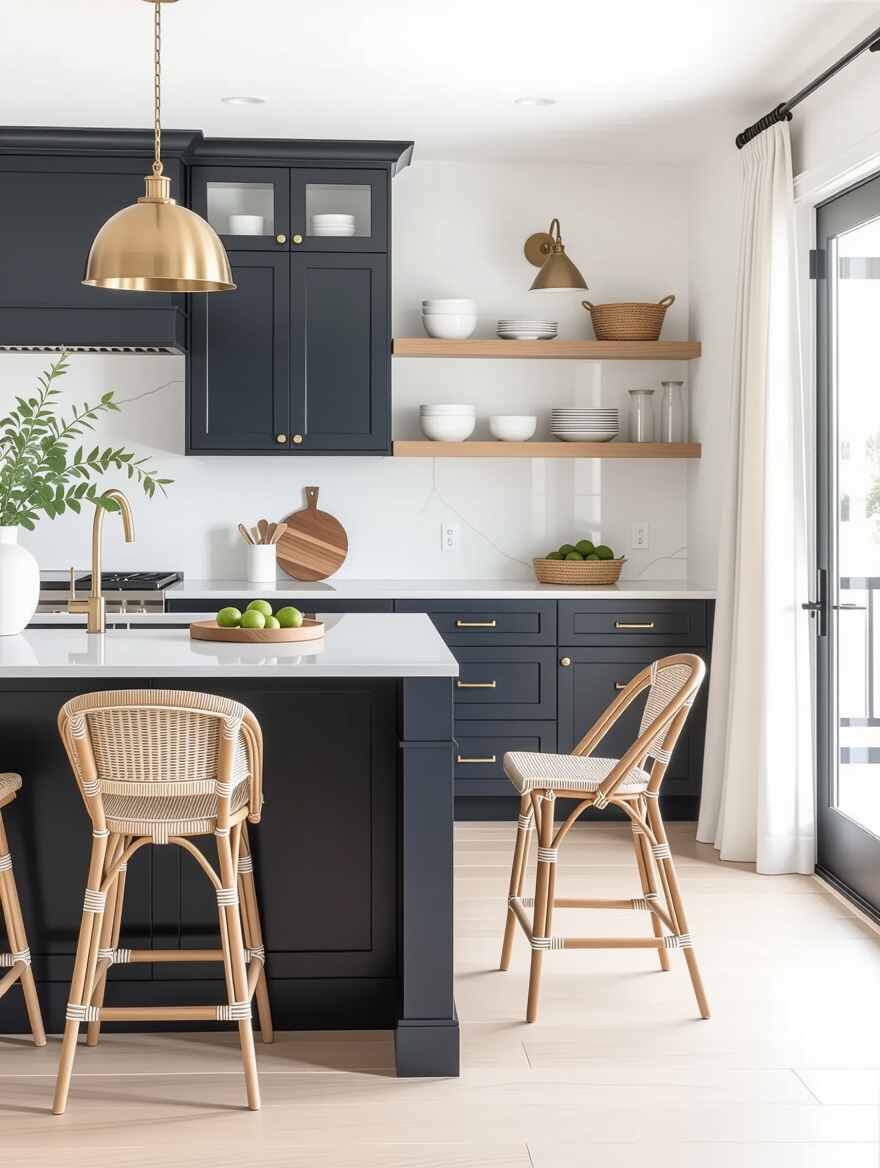
All that soft color can tip cold without warmth to balance it, and natural wood is the answer. A light oak shelf, a wood range hood, or a butcher block island brings the sun-bleached warmth of a beach house and keeps the palette from feeling clinical. The contrast of cool color and warm grain is the whole charm, and it is the single move that separates a calm modern coastal kitchen from a cold, washed-out one.
- Choose light, warm woods like white oak or teak over dark, heavy tones.
- A single wood element, a shelf or island, is often enough.
- Keep the finish matte and natural rather than glossy or orange.
Open Shelving to Keep It Airy
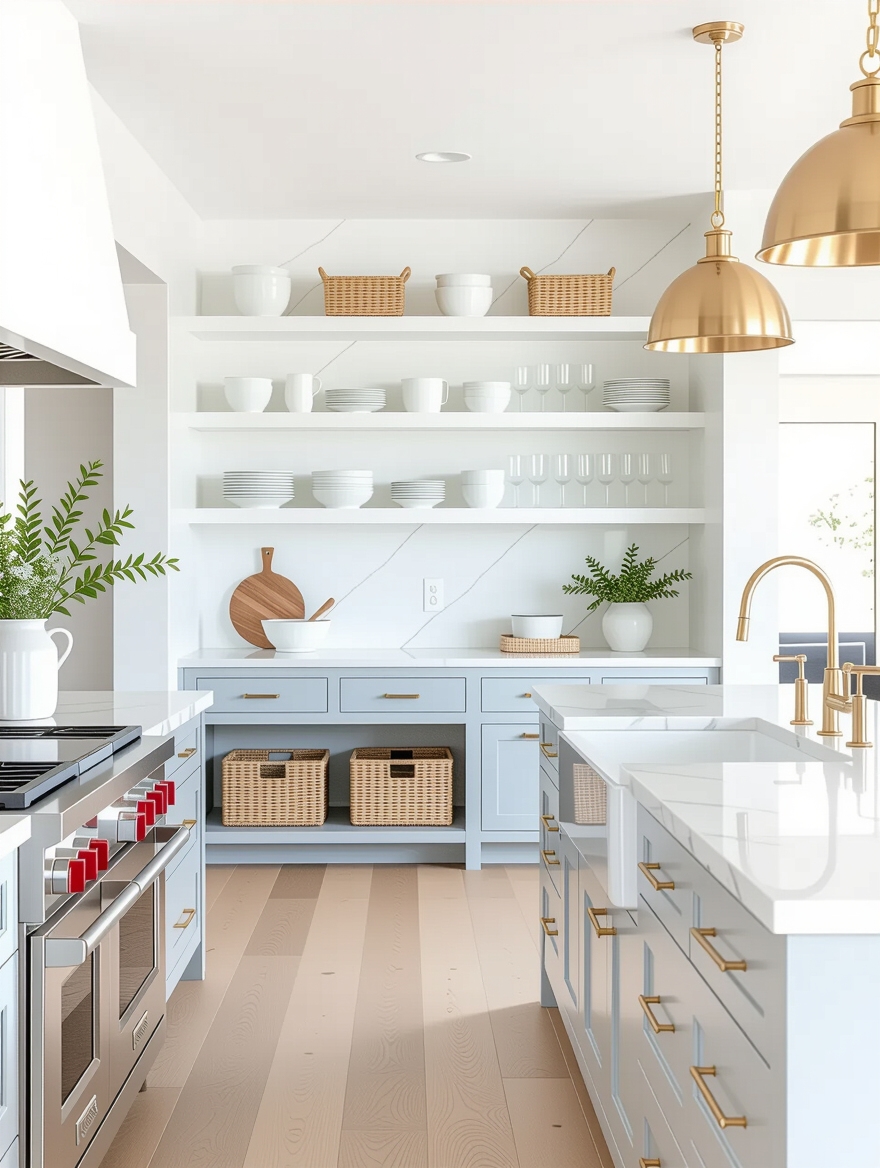
Open shelving suits the airy coastal feel, lifting the visual weight off the walls so the room breathes. A shelf or two of simple white dishes and a little glass keeps essentials in reach and the kitchen feeling light. As always, the catch is keeping it edited.
- Use one or two shelves, not a whole wall, to stay airy not cluttered.
- Style with white ceramics and clear glass for a breezy, light look.
- Leave breathing room; crowded shelves kill the calm instantly.
🅰️Quartz Counters
Pick this for a busy beach-house kitchen; it handles sand, water, and spills with zero sealing.
🅱️Marble Counters
Pick this if you want the real soft veining and accept resealing once a year and a little patina.
Coastal Countertop Choices With Subtle Veining
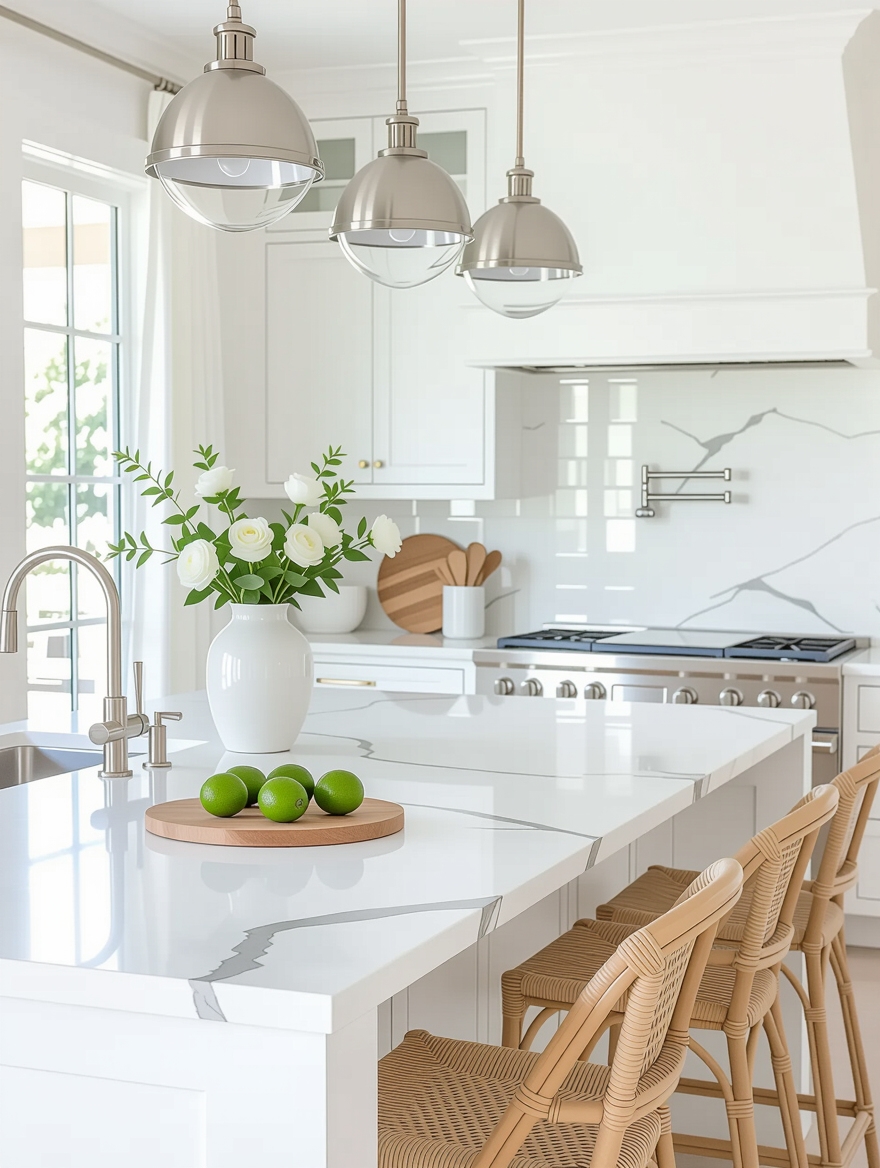
Counters set the tone. For coastal you want soft, watery movement rather than bold drama. A quartz or marble with gentle gray-blue veining echoes sea foam and keeps the surface light. Busy, high-contrast stone fights the breezy feel.
Soft Movement, Not Drama
Quartz is the practical pick for a busy kitchen, since it shrugs off spills and never needs sealing. Marble gives the real thing if you accept the upkeep, and I love it for the soft veining when a client cooks gently; resealing takes about ten minutes once a year.
Keep the counter pale so it bounces light. Quartz runs about $50 to $120 per square foot, and marble a touch more before fabrication.
Ocean-Inspired Textured Backsplashes
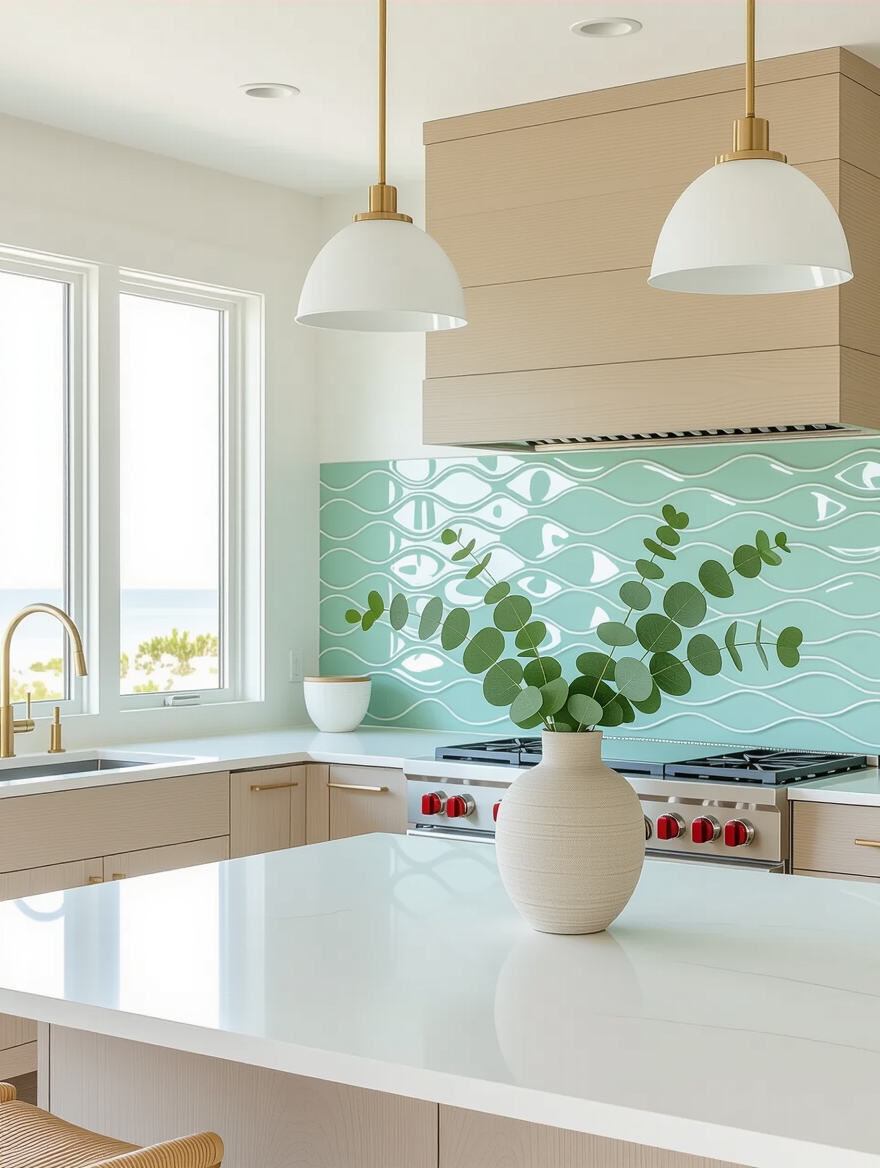
The backsplash is the place to nod to the ocean without going literal. A handmade zellige in a soft blue-green, a glossy tile that catches light like water, or a textured stacked tile brings movement and a hint of the sea. Because the area is small, you can afford a special tile here that carries the whole coastal feel.
- Choose a watery blue-green zellige for soft, handmade movement.
- A glossy finish bounces light the way water does.
- Keep it to one tile; the texture is the statement, so let it lead.
How to layer the breezy look without overdoing it:
1Start with the palette
Soft whites and sandy neutrals on the big surfaces, one pale accent color.
2Add natural warmth
Bring in a wood element and a few plants so the soft color does not feel cold.
3Finish with light and glass
Natural-material pendants, a mirror, and clear glass to bounce the daylight around.
Nautical-Style Hardware and Fixtures
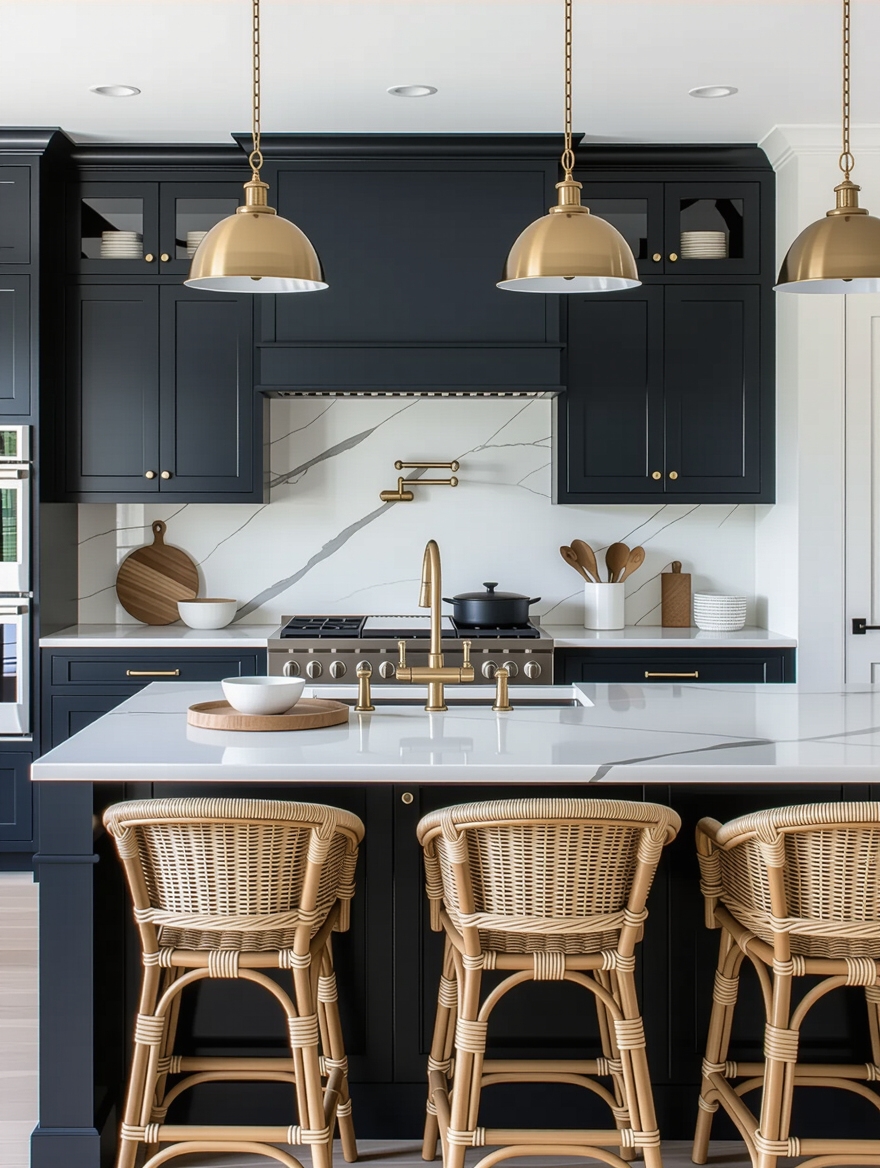
Hardware is where coastal kitchens most often tip into kitsch, so this is a whisper, not a shout. A simple rope-detail pull, an unlacquered brass that ages like ship fittings, or a clean bridge faucet gives a quiet nod to the sea without a single anchor in sight.
I steer clients away from literal nautical motifs and toward materials that simply feel coastal. Aged brass or matte black both work beautifully against soft cabinets.
- Pick one warm metal and use it throughout for cohesion.
- A subtle rope or rounded pull looks coastal without the theme.
- Brass pulls run about $5 to $20 each, a cheap way to set the tone.
Pendant Lighting With a Beachy Feel
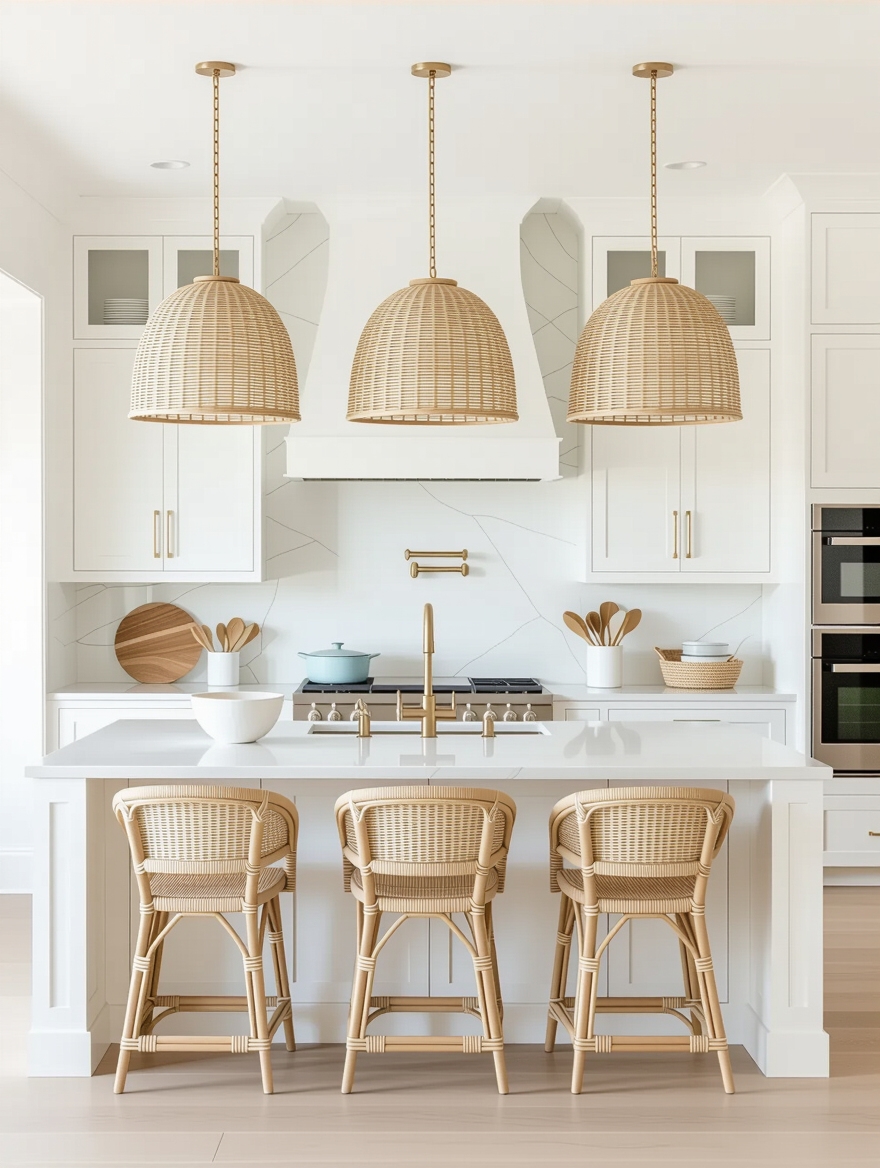
Lighting is half the breezy feeling, both the fixtures and the glow they cast. Natural-material pendants, woven rattan, rope, or seeded glass, add coastal texture overhead and filter the light softly. Hung over an island, they become the room’s quiet centerpiece.
Natural Materials Overhead
Put everything on a dimmer and choose warm bulbs so the kitchen glows at night instead of glaring. The coast is never harsh, and your light should not be either.
Quality pendants run about $150 to $600 each. Two over an island is the usual rule, three for anything over seven feet long.
Durable Flooring Like Driftwood or Sand
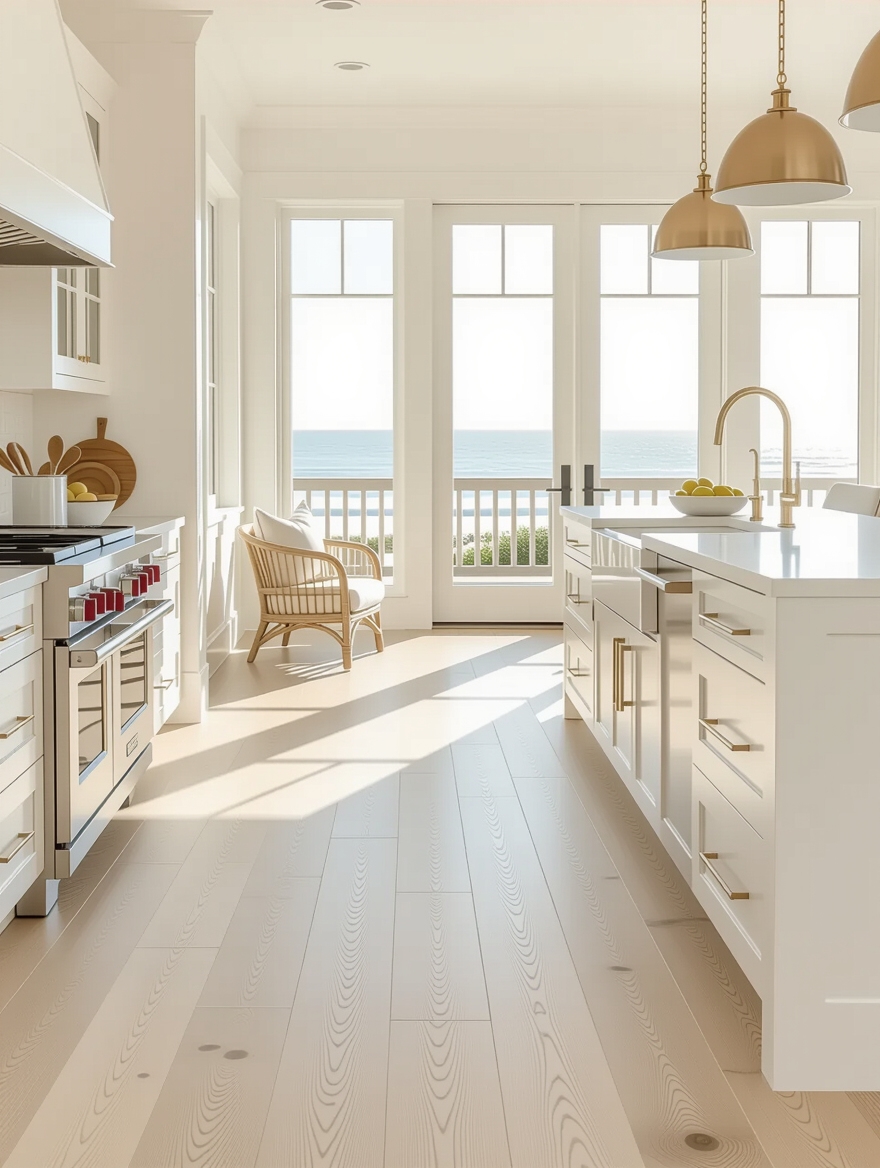
Coastal floors should look sun-bleached and handle real life, since a beachy kitchen sees sand, water, and bare feet. A pale wood-look luxury vinyl plank in a driftwood or sandy tone gives the relaxed look and shrugs off spills, which makes it the practical and pretty choice at once.
- Choose a pale, gray-washed or sandy plank for the driftwood look.
- Luxury vinyl plank runs about $2 to $7 per square foot and handles water.
- Avoid dark, glossy floors; they fight the light, breezy palette.
Greenery and Coastal Plants
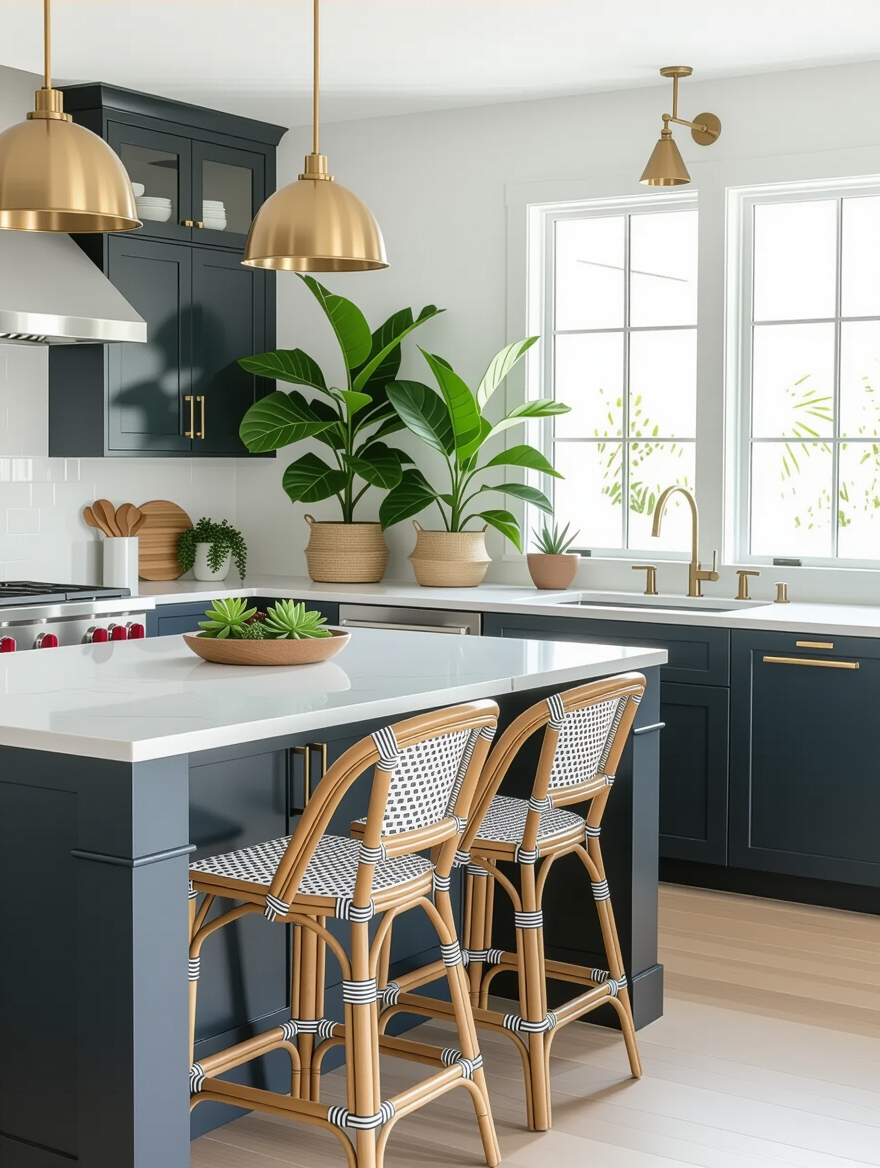
Nothing brings a coastal kitchen to life like a little greenery. A few plants, a trailing pothos on an open shelf, a herb pot by the window, a fern in a woven basket, add the freshness and life that all those soft neutrals need. It is the cheapest finishing touch on the list. I add greenery to every coastal kitchen I style.
Keep the pots simple and natural, terracotta, ceramic, or woven, so they read coastal rather than cluttered. A little green against pale blue and white is what makes the room feel alive instead of staged.
Glass and Sea-Inspired Decor
Glass is the secret weapon of a breezy kitchen, because it reflects light and adds almost no visual weight. Clear canisters, sea-glass tumblers, a glass-front cabinet, and a mirror or two bounce the daylight deeper into the room and keep everything feeling open and airy.
Lean on color and material rather than literal beach objects for the sea-inspired part. A bowl of soft blue glass says coastal far more quietly than a shelf of shells. The organic, calming approach uses natural materials the same way.
Breakfast Nooks With Coastal Textiles
A built-in breakfast nook is a coastal classic, the spot where everyone lingers with coffee and salt air. A simple banquette tucked into a corner, dressed with soft striped or linen cushions, adds the relaxed, gathered feeling at the heart of the look, and the bench hides storage underneath.
Keep the textiles soft and natural, linen, cotton, a loose stripe, rather than themed prints. Comfort is what makes the nook the most-used seat in the house.
Open Layouts for Gathering
Coastal living is casual and social, so the layout should encourage people to gather rather than wall the cook away. An open plan, an island with seating, or a pass-through to the living space keeps the room connected and the light flowing through, which is the whole breezy spirit.
If the walls cannot move, even widening a doorway or adding island stools brings the same relaxed, come-on-in feeling.
- Add island seating so guests gather while you cook.
- Keep sightlines open to the light and the rest of the home.
- Choose a layout that flows; coastal is casual, never closed off.
Soft, Natural Fabrics for Windows and Seats
The finishing layer is fabric, and it should be as light as the rest of the room. Sheer or simple linen at the windows lets the light pour in while softening the hard surfaces, and natural-fiber seat cushions and a woven rug add texture without weight. Heavy drapes or dark upholstery would sink the breezy feel.
Keep the colors soft and the materials natural so everything agrees. For more ways to stretch a smaller coastal kitchen, these small-space solutions help, and a warm modern feel or a calm minimal base pairs naturally with the look.
Modern Coastal Kitchen Questions
?How do I make a coastal kitchen without it looking tacky?
Chase the feeling, not the theme. Lean on a soft palette, natural wood, glass, and greenery, and keep nautical motifs to one subtle nod at most. Literal anchors and shells are what tip coastal into kitsch.
?What colors are best for a modern coastal kitchen?
Soft whites, sandy neutrals, and the palest blues and greens. Keep the palette quiet and bounce light around with glass and pale surfaces; one soft accent color is usually plenty for the whole room.
?What flooring suits a coastal kitchen?
A pale, driftwood or sandy-toned luxury vinyl plank is ideal: it looks sun-bleached, handles water and sand, and runs about $2 to $7 per square foot. Avoid dark, glossy floors that fight the light, breezy palette.
Capture the Feeling, Skip the Theme
Modern coastal works because it chases a feeling, not a checklist of beach objects. A soft palette, natural wood, glass, greenery, and plenty of light will give any kitchen that breezy, just-came-in-from-the-shore calm, whether you live by the water or three hundred miles from it.
Try one change this week, swap in a soft accent color or a few woven pieces, and see how much lighter the room feels. Build from there, keep the nautical references quiet, and you will land on coastal calm without a single seashell in sight.
More to Explore


