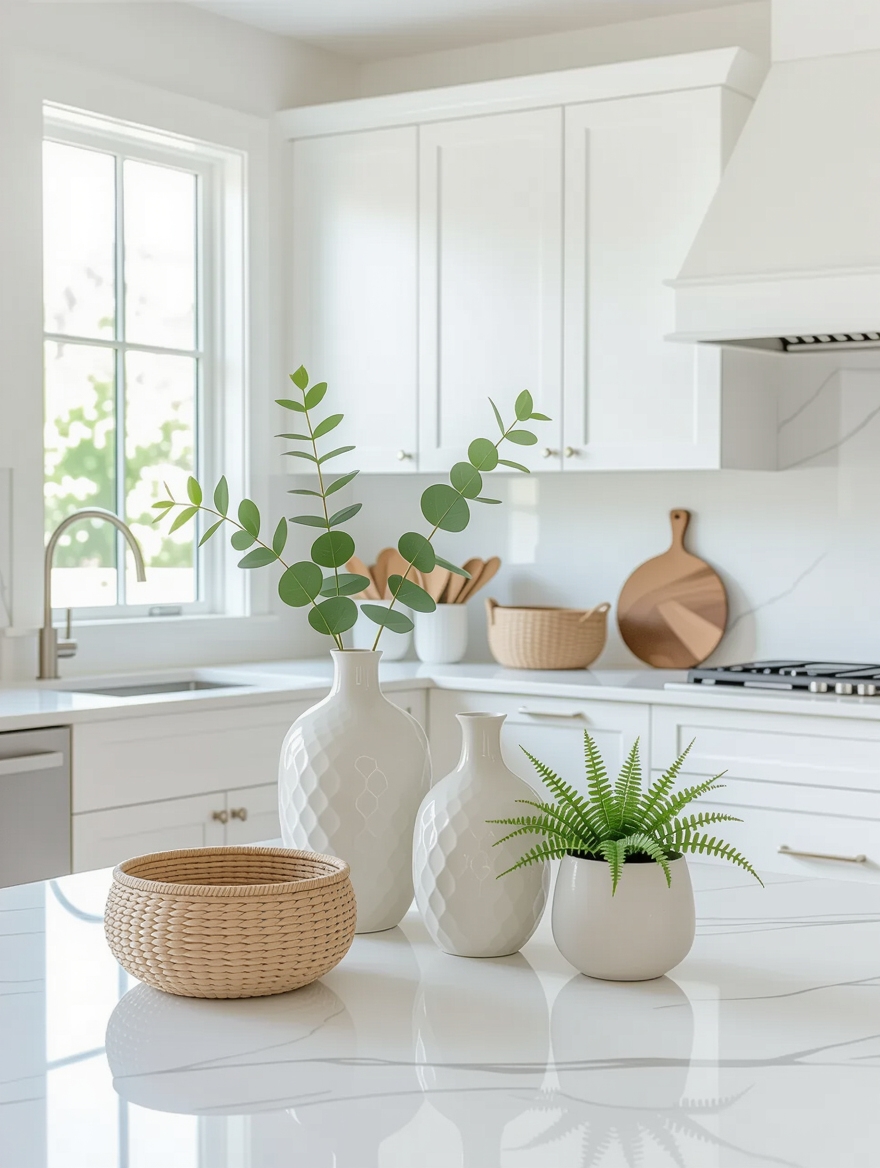

Most kitchens that feel off are not badly designed; they are badly styled, undone by a handful of countertop habits nobody questions. The mail pile, the mismatched canisters, the appliance graveyard by the outlet, I see the same handful in nearly every kitchen, and each one quietly drags the whole room down. None of them cost a thing to fix. The vibe killer is almost never the kitchen itself.
These mistakes are the ones I see most often, and each comes with the simple fix that turns the counter around. None require money or a renovation, just a different decision about what stays out and how it is arranged. Spot the ones you are making, fix them this weekend, and the kitchen you already have will feel calmer and more expensive.
The Vibe Killers, in Short
- The biggest mistake is too much out at once; clutter cheapens a counter faster than anything.
- Mismatched containers and loud packaging make a counter look busy and cheap.
- Storing things by accident instead of by use means the clutter always creeps back.
- Most fixes cost nothing: edit down, coordinate, corral on a tray, and reset daily.
Mistake: Crowding the Countertop With Everything

The number one countertop mistake is simply having too much out, the appliances, the mail, the half-used bottles, all competing at once. A crowded counter looks chaotic and cheap no matter how nice the individual things are, and it makes even a beautiful kitchen feel smaller and more stressful. In the kitchens I get called into, this single habit accounts for most of the tiredness people blame on the design.
- Keep out only what you use every single day, and store the rest behind closed doors.
- Apply the frequency test: weekly and monthly gadgets belong in a cabinet, not on the counter.
- Aim to leave the main prep stretch completely clear, so the counter looks intentional and you have room to work.
Mistake: No Balance Between Style and Function
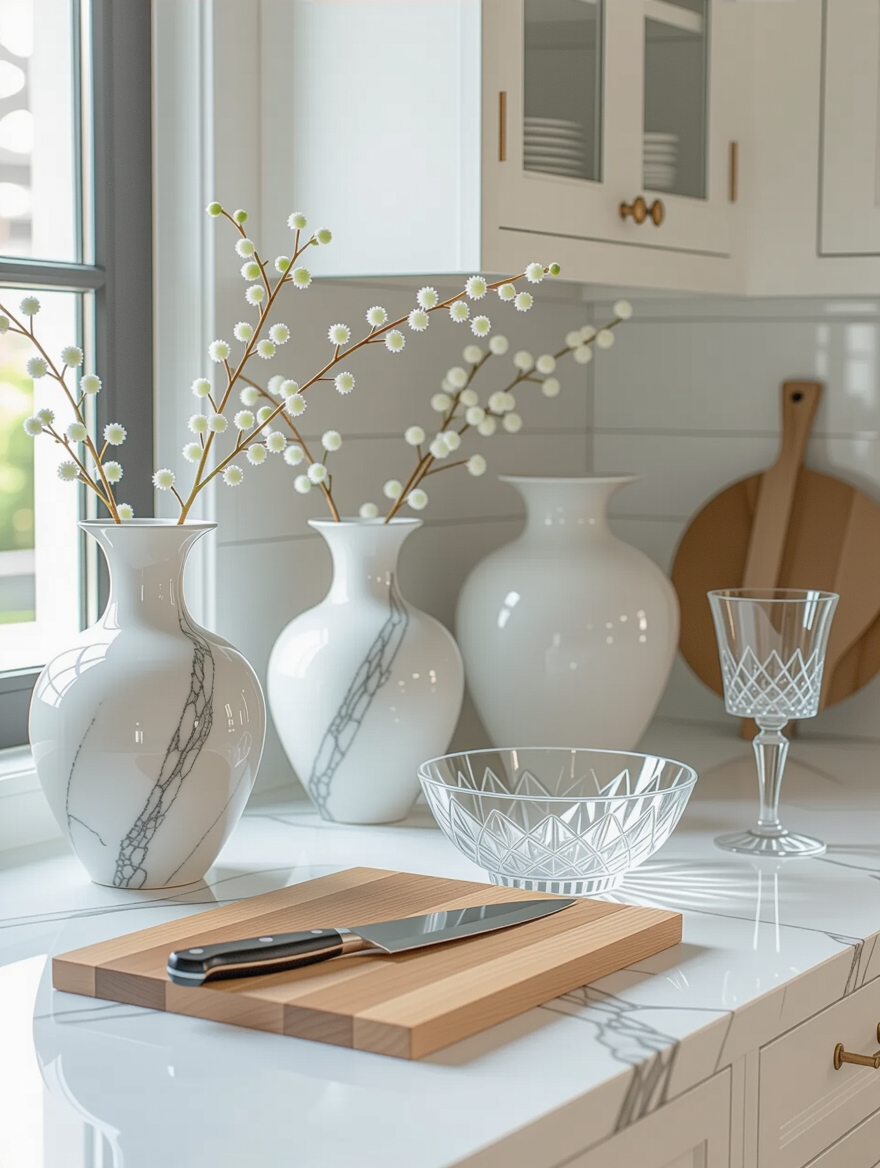
A common mistake pulls in two directions: counters covered in purely decorative objects that just collect grease, or counters crowded with ugly-but-useful gear and nothing nice to look at. Both miss the mark. A great counter holds things that are useful and good to look at. The pieces that survive on my clients’ counters are the ones that earn their spot twice, by being used and being good to look at.
- Choose useful pieces in quality materials, a wood board, a ceramic crock, that earn their spot twice.
- Move the purely decorative knickknacks elsewhere, since they cheapen a working counter fast.
- Hide the truly ugly necessities, the cleaning spray, the tangled chargers, in a cabinet or a basket.
“Before fixing a cluttered counter, ask: Does each item out here earn its spot by being used daily? Is anything out that is purely decorative, or purely ugly-but-useful? Do the visible pieces coordinate in color and material, or clash? And does everything have a real home to return to after a daily reset? Answer those honestly and the mistakes, and the fixes, become obvious.”
Mistake: Never Actually Decluttering

Many people tidy their counters without ever decluttering them, just shuffling the same too-many things into neater piles. The mistake is treating a storage problem as a tidying problem, which is why the clutter is back within a day. Real decluttering means fewer things on the counter, full stop, not the same pile in tidier rows.
- Clear one counter completely, then put back only the few things that earn a permanent spot.
- Be ruthless with duplicates, expired items, and gadgets you have not touched in a month.
- Give everything that comes off the counter a real home in a cabinet, so it has somewhere to return.
Mistake: Mismatched Containers and Packaging

Nothing cheapens a counter faster than a jumble of bright commercial packaging and mismatched containers, the cereal box, the branded canister, the random plastic tub. Even an otherwise tidy counter looks busy and cheap when the things on it clash in color and material. It is among the most common and most fixable misses there is, and a matching canister set runs only about twenty-five to forty dollars.
Coordination is the cure. Decant the staples you keep out, coffee, sugar, tea, into a matching set of simple containers, glass with wood lids or plain ceramic, and pull the loud branded packaging into the cabinets. A coordinated set costs little and instantly calms the counter. For the full luxe-styling version, see counter tricks for a luxe look.
A few styling terms behind the fixes.
📖Rule of three
Styling in odd-numbered groups, usually three, which the eye finds more natural and balanced than pairs or even rows.
📖Tonal palette
Keeping the visible pieces within a narrow band of related colors, so the counter looks calm and coordinated rather than busy.
📖Landing zone
A single designated spot, a basket or tray, for the daily incoming clutter, so mail and keys never colonize the whole counter.
Mistake: Skipping the Daily Reset

Even a perfectly styled counter falls apart without a small daily habit, and skipping it is the mistake that undoes all the others. Clutter does not arrive all at once; it accumulates one set-down item at a time, the opened mail, the used mug, the bag from the store, until the counter is buried again. It creeps. The cure is a quick, regular reset instead of occasional big cleanups.
Build a two-minute habit into the end of the day. Clear the strays back to their homes, wipe the surface, and reset the styled pieces, and the counter starts every morning calm. Because everything already has a designated spot, the reset takes a couple of minutes, not an evening, which is exactly what makes it stick. The habit, not the willpower, is what keeps a counter clear.
Mistake: Ignoring Vertical and Hidden Storage

A lot of counter clutter exists only because people forget the storage above and around the surface. The mistake is treating the countertop as the only place to put things, when the walls, the backs of cabinet doors, and the wasted height inside cabinets can all absorb the overflow. Counters stay cluttered when that hidden space goes unused.
Use the Space You Forget
The fixes are cheap and quick. A wall rail or magnetic strip lifts utensils and knives off the surface, under-cabinet hooks hold mugs and tools, and shelf risers inside the cabinets free room for a counter gadget to move in. Each costs a few dollars and clears real estate the counter badly needs.
Think of the counter as the most valuable real estate in the kitchen, as something to protect. Pushing storage up the walls and back into the cabinets is what keeps the prime surface clear. For the inside-the-cabinet playbook, see organization hacks every kitchen needs.
👍Vibe builders
- +A few coordinated, useful, attractive pieces with space around them.
- +Decanted staples, a styling tray, and one living touch.
- +A quick daily reset so the counter starts clear each morning.
👎Vibe killers
- –Too much out, mismatched packaging, and clashing styles.
- –Purely decorative clutter and dated plastic accessories.
- –Tidying around clutter instead of actually reducing it.
Mistake: Clashing, Uncoordinated Decor

Another vibe killer is decor that does not agree with itself, a farmhouse crock next to a sleek chrome gadget next to a brightly colored modern kettle. Even when each piece is nice, a counter of clashing styles, colors, and metals looks accidental. The fix is a tight, coordinated palette across the few things you leave out.
These choices pull the counter together.
- Keep the visible pieces in one or two coordinated metals and a tight color palette.
- Match the counter decor to the kitchen’s overall style, so nothing feels grafted on.
- Repeat a material or color two or three times across the counter so it looks like a deliberate scheme.
Mistake: Poor Placement and No Balance

Sometimes the items are fine but the arrangement is the mistake, everything shoved to one end, or scattered evenly with no grouping. Random placement makes even nice pieces look like clutter, because the eye has no rhythm to follow. The fix is to arrange in deliberate groupings with breathing room, the way a stylist would.
Group, Then Leave Space
The trick is grouping and negative space. Cluster related items together, the coffee things in one spot, the cooking oils in another, and leave clear space between the groups so each one stands out. A styled counter has a few intentional vignettes with room around them, not an even sprinkle of stuff edge to edge.
Vary the heights within a grouping, too. A tall canister, a medium board, a low bowl together create a pleasing little composition, where three items of the same height look flat. These small arrangement choices are the difference between styled and simply occupied.
Mistake: Skipping the Styling Tray

Leaving the few daily essentials loose on the counter, rather than corralling them, is a small mistake with a big effect. Loose items, the oil, the salt, the soap, always look like scattered clutter, even when there are only a few of them, because nothing groups them visually. A ten-to-twenty-dollar tray is the simplest cure on this whole list.
A tray draws a border around the daily things, so the eye sees one styled object instead of three random ones. Anything on the tray belongs; anything off it is clutter to put away, which also makes tidying a glance, done in seconds. It is the cheapest, fastest way to turn a messy little cluster into something that looks intentional.
Choose a tray in a material that suits the kitchen, wood, stone, or metal, and keep its grouping small, three to five items with space to breathe. Place it where the daily things naturally gather, by the stove or the sink, and a chronic clutter spot becomes a deliberate vignette for a few dollars.
Mistake: Clinging to Dated Accessories

The last common mistake is letting tired, dated accessories drag down an otherwise current kitchen, the scratched plastic utensil holder, the novelty cookie jar, the freebie mug tree. These small things sit out all day and quietly age the whole counter, even when the cabinets and counters themselves are fine. A few cheap swaps refresh the entire vibe.
Refreshing the small stuff is the highest return for the lowest cost. Replacing a worn plastic soap dispenser with a simple glass or ceramic one, swapping the novelty pieces for clean, quality versions, and updating a dated dish rack are each a few dollars, and together they modernize the counter more than people expect. The eye lands on these small daily objects constantly, so upgrading them pays off out of proportion to their cost.
Start with whatever piece you look at most and like least. One swap leads to noticing the next, and within a couple of small purchases the counter feels current again. For warming, current touches, see kitchen staples that add warmth.
Countertop Decor Mistake Questions
?What is the most common kitchen countertop decor mistake?
Simply having too much out at once. A crowded counter looks chaotic and cheap regardless of how nice each item is, and it makes the whole kitchen feel smaller and busier. The fix costs nothing: keep out only what you use daily, store the rest, and leave the main prep stretch clear. Editing down fixes more than any purchase.
?Why does my counter look cluttered even after I tidy it?
Because tidying and decluttering are different. Shuffling too many things into neater piles leaves the same overload on the surface, so it looks cluttered again within a day. The real fix is reducing what lives on the counter at all, giving each item a home in a cabinet, and keeping out only the daily few. Then a quick reset actually works.
?How do I make my counter look less cheap?
Coordinate and edit. Decant loud commercial packaging into a matching set of simple containers, keep the visible pieces in one or two metals and a tight palette, corral the daily essentials on a tray, and swap any dated plastic accessories for clean glass, ceramic, or wood. The clash and the clutter are what cheapen a counter, and both are free to fix.
Fix the Habits, Not the Kitchen
What is striking about all of these is that none of them are design flaws; they are styling habits, and every one is free to fix. Edit down what stays out, coordinate the few things that remain, group them with breathing room on a tray, hide the working clutter, and reset daily, and the kitchen you already own will feel calmer, more current, and more expensive. The vibe was never the kitchen’s fault; it was the clutter on top of it.
Walk into your kitchen and find the one mistake on this list that bugs you most, then fix just that one tonight. Which vibe killer has been hiding in plain sight on your counter?
More Hair Ideas