

Swap nothing but the cabinet doors and people will swear you gutted the kitchen. The boxes can stay; the doors are what your eye actually reads, so they carry the whole modern look for a fraction of a full remodel. It is the most underrated upgrade in the kitchen.
These are the modern door styles worth knowing before you order, each with a different job. Some flood a kitchen with light, some hide their handles, some bring color or texture. I will tell you what each one costs, who it suits, and where it quietly disappoints, so you commit to the right face for your room.
Pick the Right Door for the Job
| Door style | Best for | Watch out for |
|---|---|---|
| Glass / frosted | Opening up a heavy wall of cabinets | Inside has to stay tidy and styled |
| Handleless / integrated | Clean minimalist modern lines | Costs more; fingerprints on push-opens |
| Matte vs high-gloss | Matte hides prints; gloss bounces light | Gloss shows every smudge |
| Bold color / textured | Personality and depth | Pick the color you can live with for years |
Choosing Doors for Durability, Style, and Function

Before you fall for a finish, weigh how a door will live. A kitchen door gets opened thousands of times a year, splashed, and grabbed with greasy hands, so durability and upkeep matter as much as looks. The right choice balances all three: how it wears, how it works, and how it reads in your room.
I always ask clients about their daily reality first. A household with kids and a busy stove wants a forgiving matte or textured finish, while a quiet, careful kitchen can carry high-gloss or pale color. Match the door to your life and you will still love it in a decade.
- Durability: how the finish handles grease, knocks, and constant handling
- Function: whether a handle, push-open, or slide suits how you cook
- Cohesion: one door family across the room so nothing looks bolted on
Glass Panel Doors for a Bright, Open Kitchen
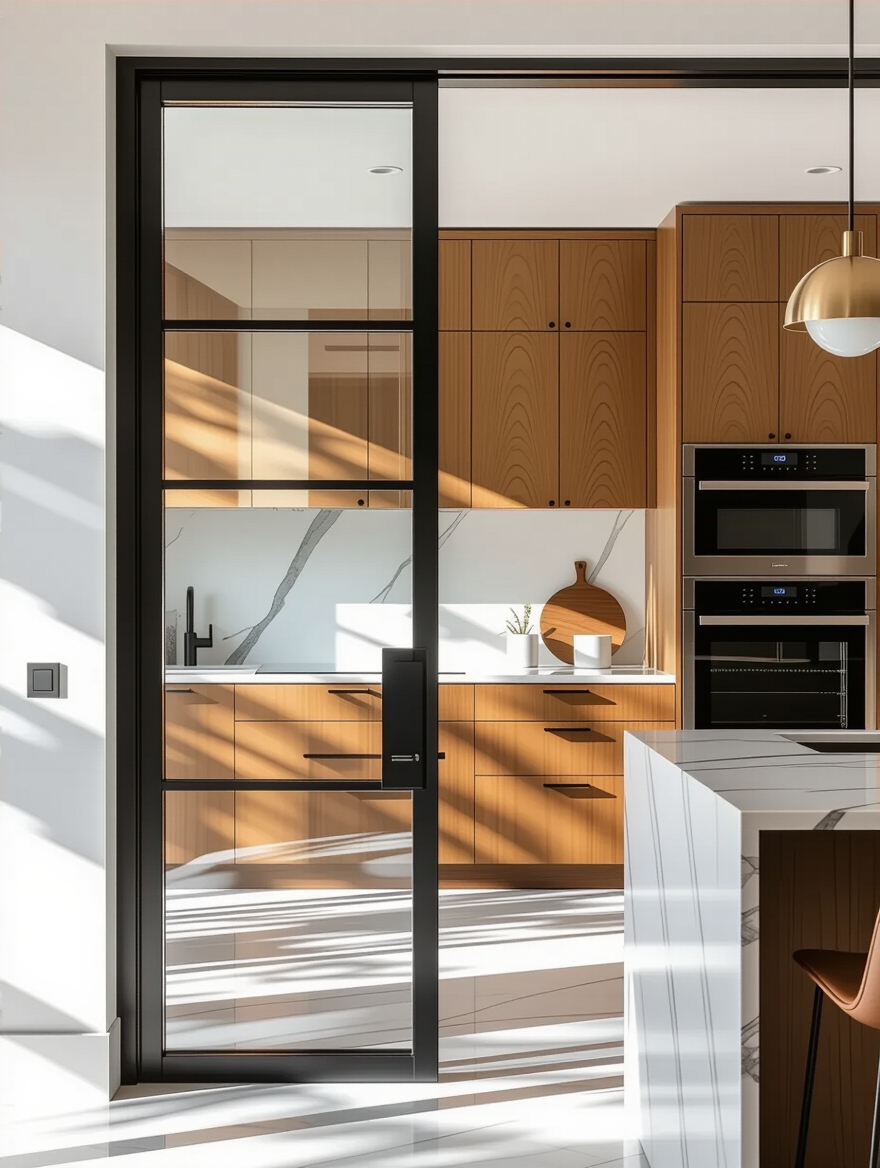
Glass-front doors are the fastest way to lighten a heavy wall of upper cabinets. Clear panels let the eye travel into the cabinet instead of stopping at a solid block, so the whole kitchen feels more open. They suit anyone whose dishes are worth a look and whose stacking stays tidy.
- Glaze just one or two uppers flanking the range or sink, not the whole run
- Light a glass cabinet from inside with a $15 puck light for a warm glow
- Reserve them for matched dishes you do not mind keeping in order
- Pair with solid doors below so the kitchen does not feel like a display case
Heads-Up
If your boxes are sound, you may not need new cabinets at all. Reputable door-replacement (cabinet refacing) runs a fraction of a full remodel, but measure twice and order a single sample door first; hinge boring and overlay have to match your existing boxes exactly.
Frosted Glass Doors for Privacy and Style

Frosted and reeded glass give you the lightness of glass without the pressure of a perfect interior. The blur softens whatever is inside, so a cabinet of mismatched mugs still looks intentional. It is the kind compromise between solid and clear, and it has a quietly modern feel.
- Frosted glass for a soft, even blur that hides clutter
- Reeded (fluted) glass for a textured, on-trend modern look
- Great on a pantry door, where you want light through but not the full view
- Backlight it for a glowing panel that doubles as evening ambiance
Handleless Doors for Sleek Minimalism

Handleless doors are the signature of a modern, minimalist kitchen, because nothing interrupts the clean run of fronts. Push-to-open mechanisms or a recessed channel behind the door let you open them without a single visible pull. The result is calm, architectural, and unmistakably contemporary.
The honest trade-offs are cost and fingerprints. Push-open doors show every smudge right where you push, so a matte finish helps, and the hardware that makes them work adds to the price. They suit tidy households who want the uninterrupted look and will keep a cloth handy.
- Push-to-open doors for a totally smooth, hardware-free face
- A J-channel or recessed rail as a hidden grip without push hardware
- Choose matte here, since fingerprints land right where you touch
Handleless or handled? Answer honestly before you commit:
1Do fingerprints bother you?
If yes, skip push-to-open gloss. A handle or an integrated grip keeps your hands off the door face.
2Is your kitchen tight on walkway space?
If yes, integrated or handleless doors stop hardware from catching as you squeeze past. Worth the small premium.
Sleek, Space-Saving Integrated-Handle Doors
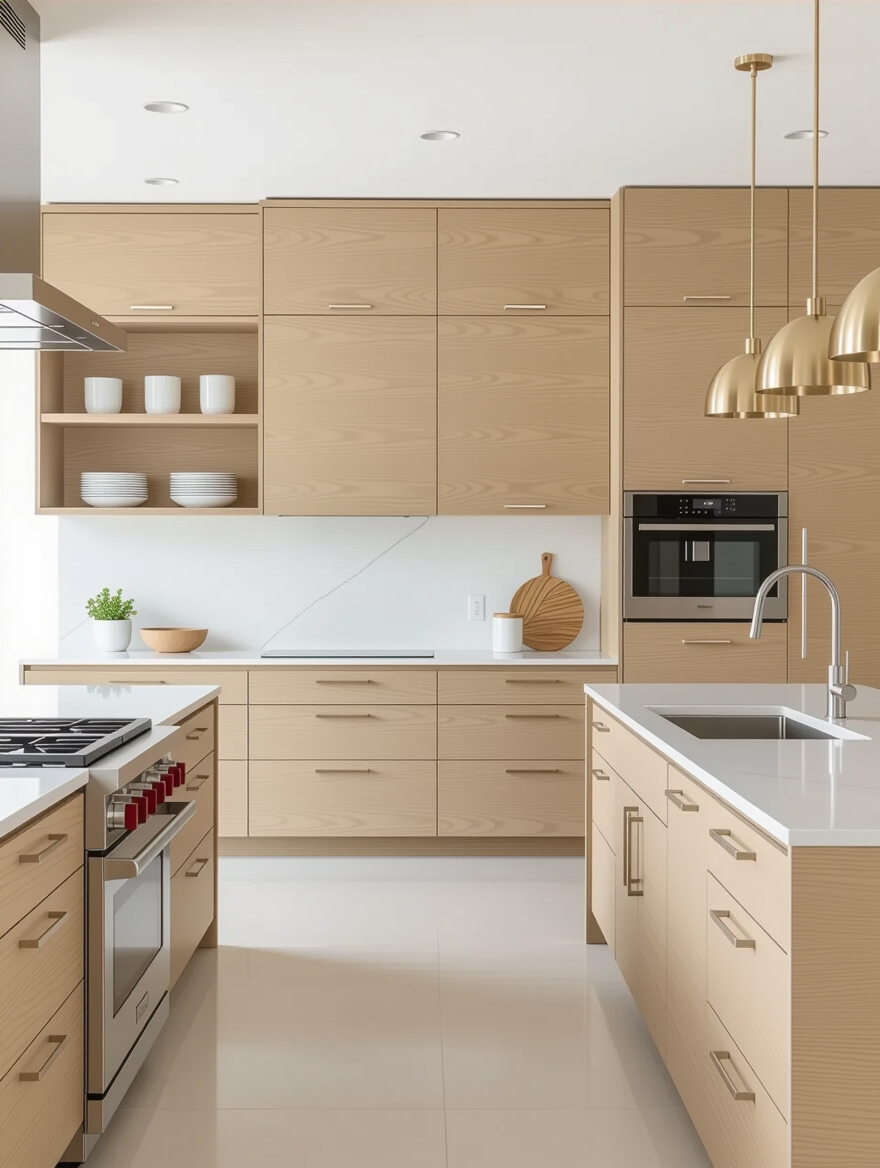
Integrated-handle doors split the difference between handleless and traditional. The grip is routed right into the top or side edge of the door, so you get something to grab without a protruding pull. The line stays sleek, and nothing snags a hip or a dish towel as you pass.
The Clean Look Without the Push Hardware
This is the practical modern choice for narrow kitchens and busy households. Because the handle is part of the door, it never catches in a tight walkway, and it costs less than the push-open hardware of a fully handleless look. You get most of the clean effect for less money and fuss.
It also ages well, since there is no trendy hardware finish to date. The door’s own edge is the handle, so the look stays quiet while the rest of your finishes carry the personality.
Mixed-Material Kitchen Doors

Mixing door materials within one kitchen is how modern designs gain depth without a single bold color. A run of warm wood doors beside matte painted ones, or a metal-framed glass door breaking up solid fronts, gives the eye contrast and richness. The kitchen reads custom rather than catalog.
The way to keep it from looking accidental is to let one material lead and use the others as accents. Wood on the island, paint on the perimeter, and a couple of glass fronts up top is a balanced recipe. Hold the palette together with one consistent hardware finish.
This approach pairs naturally with a broader modern kitchen that stays timeless, where contrast does the work that a trend color otherwise would. Material depth is the quieter, longer-lasting move.
How to mix door materials without it looking random:
1Choose the lead material
Pick one material, usually painted or wood, to cover most of the doors and set the tone.
2Add a contrasting accent
Bring in a second material on the island or a few uppers, like wood against paint or framed glass.
3Unify with hardware
Use one hardware finish across every door so the mix looks designed, not pieced together.
Low-Maintenance Kitchen Doors

If your kitchen works hard, choose doors that forgive it. Some finishes shrug off grease, knocks, and constant cleaning far better than others, and in a busy household that durability is worth more than a trendy surface. The least glamorous spec, easy upkeep, is the one you will thank yourself for daily.
- Laminate or thermofoil fronts wipe clean and resist moisture cheaply
- Matte painted MDF hides fingerprints better than gloss or dark wood
- Avoid high-gloss or deep textures in a heavy-use, kids-and-pets kitchen
- Pick a mid-tone color that hides the inevitable splashes between cleans
Reflective High-Gloss Kitchen Doors

High-gloss doors do double duty as a light trick. The mirror-like surface bounces daylight around and makes a small or dark kitchen feel brighter and larger. In a modern room, that reflective sheen reads sharp and current, and it pairs beautifully with a handleless front.
The trade-off is constant fingerprints, since gloss broadcasts every smudge and water spot. I steer clients who love it toward a forgiving white or mid-tone, paired with a matte counter so the whole room is not one shine, and a microfiber cloth within reach. Used in balance, it keeps its impact.
Gloss works best where the reflection earns its keep, in a tight or shadowy kitchen. In a big, bright room it can tip into glare, so reach for matte there instead.
Bold Color Doors That Make a Statement

When you want a kitchen people remember, color on the doors is the boldest swing you can take. A deep green, a clay terracotta, or a moody navy turns plain boxes into the star of the room. Because doors are swappable and paintable, this is also a braver choice than it feels, since you can change your mind later.
- Commit color to one zone: the island, the lowers, or a pantry wall
- Keep the rest neutral so the bold doors have room to land
- Paint is the cheap, reversible route; a respray runs a few hundred dollars
- Test the shade against your real light for a full day before you commit
Textured Doors for Visual Depth

Texture is the subtle way to give modern doors interest without color or shine. Reeded fronts, V-grooves, slatted wood, or a deep wood grain catch light and shadow across the day, so a flat cabinet gains quiet depth. It is the detail that makes a neutral kitchen feel considered rather than plain.
Used well, texture also hides fingerprints and small wear better than a flat gloss. Keep it to one consistent texture across the room so it stays cohesive, and let it pair with calm colors so the surface does the talking. For more ways to add this kind of warmth, an elegant modern kitchen leans on texture often.
What to Check Before You Order Doors
Before you commit to any door style, run a few practical checks that save expensive mistakes. Confirm whether your boxes can take new fronts at all, since the hinge boring, overlay, and door size have to match exactly; a single sample door ordered first tells you in a week. Then think about the finish against your real habits, because the prettiest gloss in the showroom is the one covered in fingerprints by Tuesday in a busy home.
Budget honestly too. Door-only replacement runs roughly $5,000 to $9,000 for an average kitchen, far below a full remodel but well above a paint job, so weigh it against simply repainting solid doors you already have. Keep your hardware finish consistent across every door, pick a color and texture you can live with for a decade, and the new fronts will read like a brand-new kitchen, the same payoff a modern timeless kitchen is built on.
Kitchen Door Questions
?Can I just replace cabinet doors instead of the whole kitchen?
Yes, if your cabinet boxes are structurally sound. Replacing the doors and drawer fronts, sometimes called refacing, gives you a brand-new look for a fraction of a full remodel. Order one sample door first to confirm the hinge boring and overlay match your boxes.
?Are handleless kitchen doors practical?
They look clean but ask for a little patience. Push-to-open versions show fingerprints where you press, so a matte finish helps, and the mechanism adds cost. Integrated-handle doors give a similar sleek look with an easier grip and a lower price.
?Matte or high-gloss kitchen doors, which is better?
It depends on your light and habits. High-gloss bounces light and suits small or dark kitchens but shows every smudge. Matte hides fingerprints and feels soft and modern, making it the easier choice for a busy household.
New Doors, New Kitchen
You rarely need to gut a kitchen to transform it. The doors are the face of the room, and choosing the right modern style, glass to open it up, handleless for clean lines, matte or gloss for the light you have, color or texture for personality, changes everything your eye reads. Match the door to how you actually cook and the look will last.
Start by deciding what your kitchen needs most: more light, cleaner lines, or more character. Pick the door style that delivers it, order one sample to confirm the fit, and let the new fronts do the heavy lifting your budget cannot.
More Looks We Love


