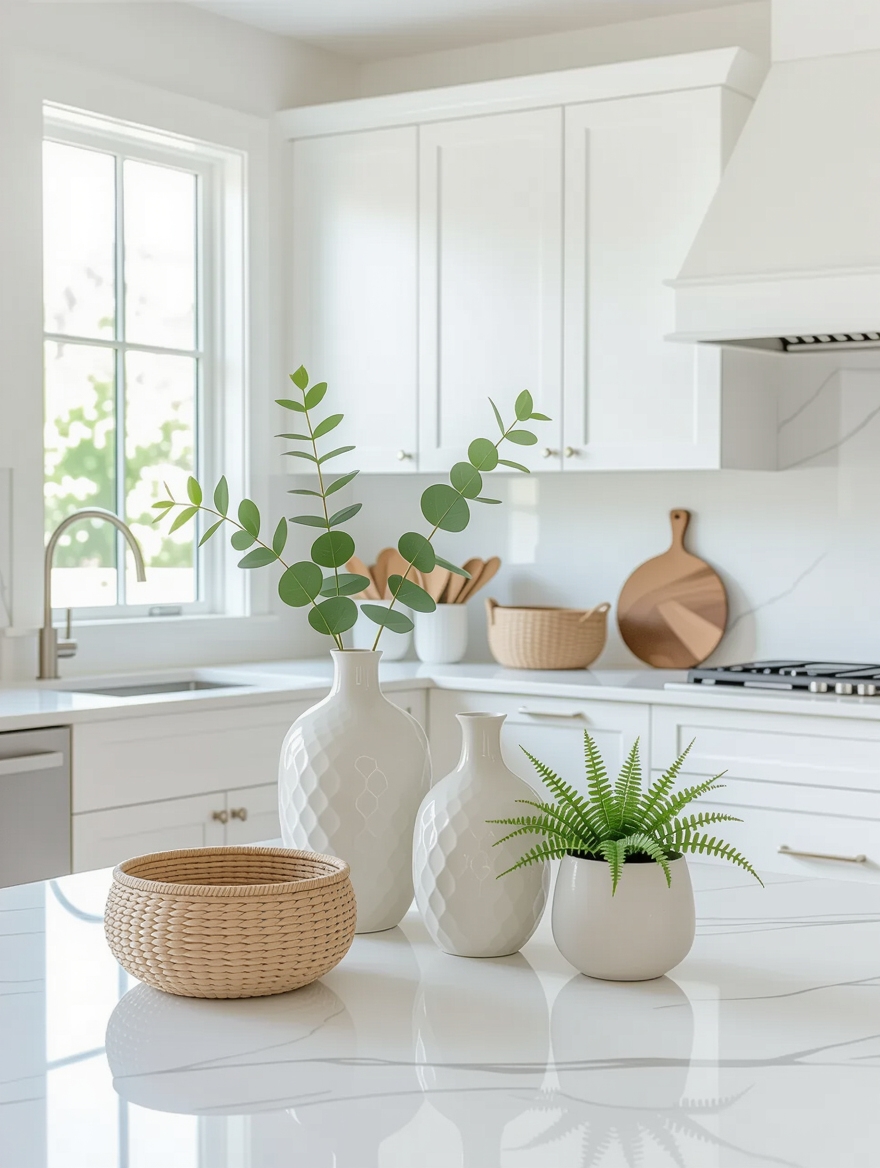

There is a real difference between wall decor you splurge on once and keep for decades, and the cheap stuff you happily swap every season. The trouble is that the showroom rarely tells you which is which, so people overspend on the disposable and skimp on the pieces that would have lasted. Knowing where the money actually pays off is the whole game.
So this is a spend-or-save guide to kitchen walls, sorting the decor worth a real investment, original art, solid shelving, genuine vintage, from the spots where cheap is the smart call. Each comes with a rough price and a clear verdict on whether it earns the spend. Put your money where it lasts, and save it where the budget version works just as well.
Spend or Save, Answered Fast
What kitchen wall decor is worth investing in? The things that last and grow on you: original or limited art, solid-wood shelving, quality framing, and genuine vintage. These hold up and often hold value, unlike mass prints you tire of.
Where should I save instead? On the easily swapped layer, magnetic racks, paper prints, trend pieces, and anything you will change in a couple of years. Cheap is the smart call where you expect to move on.
One rule for spending wisely? Invest in the anchor, the one piece the wall is built around, and economize on everything supporting it. A great anchor makes cheap accents look better.
Easy, High-Impact Kitchen Decor

Before spending a dollar, sort any wall idea into one of two buckets: a keeper you will love for years, or a swapper you will change with the seasons. The keepers deserve real money and good framing; the swappers should stay cheap, since you are going to move on from them anyway. Getting that sort right is what stops a wall-decor budget from leaking.
- Ask of any piece, would I still want this in ten years, before deciding what to spend
- Put real money into the one or two anchor pieces, and keep the accents cheap and changeable
- Resist splurging on a trend piece you will tire of, since that is the classic budget mistake
Stylish Open Kitchen Shelves

Solid open shelving is one of the few wall pieces truly worth investing in, since it is decor and storage that stays put for decades, the permanent cousin of our open-shelf displays. A thick, solid-wood or quality metal shelf, properly mounted, becomes a permanent stage for everything you display, and it never dates the way a trend piece does. This one is worth the spend, since a flimsy bracket shelf that sags is a false economy.
Spend on the shelf, restyle the display free
Expect to pay $30 to $80 for a truly solid floating shelf, about an hour to mount well, more for a long custom run, and treat the mounting as part of the cost since it carries real weight. Cheap particleboard shelves bow under a stack of plates within a year, which is exactly where the budget version fails.
Because the shelf itself is permanent, you get endless free refreshes by restyling what sits on it. Invest once in the shelf, then change the display with the seasons for nothing, which is the best of both worlds. Our open-shelf styling formulas show how to keep that display sharp.
ℹ️Good to Know
Original art and genuine vintage are the only kitchen wall decor that can hold or gain value over time. Almost everything else, prints, racks, planters, depreciates the moment you hang it, which is exactly why those are the categories to keep cheap and swappable.
Magnetic Strips That Maximize Efficiency

A magnetic strip or rack is the opposite of an investment piece, and that is fine. A $20 to $40 one performs just as well as a designer version. It frees a drawer, keeps knives or spices visible, and adds a clean, graphic line to the wall, none of which improves with a luxury price tag. This is a clear save, not a splurge. I tell clients to put the money toward an anchor piece instead.
- Buy a mid-priced magnetic strip, since the expensive ones do not hold any better
- Mount it near the prep zone to free a drawer, the function that earns its keep
- Spend the savings on the wall’s anchor art, where the money actually shows
Vintage Kitchenware as Wall Decor

Genuine vintage kitchenware is the rare decor that can actually hold or grow in value, which puts it in a category of its own. A real enamel advertising sign, a piece of collectible pottery, or an antique scale carries history. If you buy well, it can be worth more in a decade than you paid. It is the closest thing to an appreciating asset on a kitchen wall, and the finds people obsess over guide covers where to hunt them.
The catch is knowing genuine from reproduction, since a mass-made fake costs little and stays worthless. If you are buying for value, learn the maker marks and condition signs, or buy simply because you love the piece, in which case the price is your call. Either way, vintage rewards patience and a good eye more than a big budget.
“Decide your anchor piece first and put most of the budget there, then furnish the rest of the wall cheaply around it. A single invested artwork or a solid shelf makes thrifted and budget accents look intentional, while a wall of equally cheap pieces just reads cheap.”
A Stylish Kitchen Organization Solution

A well-made rail system, a solid brass pot rack, or a quality pegboard sits in the middle of the spend-or-save scale, and it usually earns the modest investment. Unlike a cheap stick-on version that pulls free under weight, a properly mounted, well-built rail holds your cookware for years and reads as a deliberate design feature. Lean toward spending here, but moderately, since you do not need the most expensive option, just a sturdy one.
The money goes into the build and the mounting rather than the brand. A solid steel rail anchored into studs will outlast three flimsy ones, so paying a little more once is the cheaper path over time. Match the finish to your hardware and it reads as part of the kitchen, not an afterthought bolted on.
A Stylish Floating Plant Display

A wall of plants brings life and color no framed piece can. The good news is it leans toward the save side of the ledger. The greenery does the work, so simple, inexpensive wall planters or a few mounted pots deliver the look without a designer price. A trailing pothos in a plain hanger looks lush for the cost of the plant and the pot, the same trick our above-cabinet greenery uses up high.
Where a small investment helps is in the mounting and the watering setup, since self-draining or well-fitted planters spare your wall from drips and stains. Spend a little there, save on the planters themselves, and the wall stays beautiful and low-maintenance.
The honest variable is light, since most kitchen walls are dim and a struggling plant wall is worse than none. Put it by the brightest window and choose forgiving plants, and a living display becomes the cheapest high-impact decor in the room.
🅰️Worth the investment
Original or limited art, solid-wood shelving, quality framing, genuine vintage, and built-in wall treatments. They last, age well, and sometimes hold value.
🅱️Keep it cheap
Magnetic racks, paper prints, planters, and trend pieces. They perform fine at a low price and you will likely swap them, so spending more is wasted money.
A Bold Food Art Display

Original food and botanical art suits a kitchen perfectly, and it is the category where investing in an original or a limited print truly pays off. A mass-produced poster reads cheap up close and fades fast, while an original painting, a signed print, or a quality giclee holds its color, its texture, and often its value. This is a clear spend, since the difference is visible the moment you walk in.
If the budget is tight, the smart middle path is one good piece rather than a wall of cheap ones. A single invested artwork anchors the room while you fill in around it cheaply over time, much as our personality-first wall decor does with meaningful pieces.
- Invest in one original or limited print rather than several mass posters
- Choose quality framing and glass, since good framing protects the art and lifts a modest piece
- Budget realistically, since original art runs from $100 into the thousands, the real splurge here
Transform Your Kitchen Walls

Beyond hung pieces, the wall surface itself can be the investment. A quality treatment transforms a kitchen more permanently than any framed art. A run of real tile, a limewash or plaster finish, or a wood-paneled feature wall is built in, ages well, and lifts the whole room. These are the priciest ideas here, and for a forever kitchen they are often the most worthwhile.
The reason a wall treatment justifies the spend is permanence, since unlike decor you swap, a tiled or paneled wall is part of the architecture for decades. It also tends to add real value at resale, which a poster never will.
Because these are fixed and pricey, they reward getting the choice right, classic over trendy, quality materials, professional installation for anything structural. This is the one category to spend carefully on, only what you will still love in fifteen years, and to bring in a pro for the install.
Artistic Kitchen Wall Decor

Building a small, curated art collection is the most rewarding long-term investment of all. Good pieces grow more meaningful, and sometimes more valuable, with time.
Rather than buying a matched set at once, you collect a few works you truly love, from local artists, travels, or makers. I love a wall gathered this way far more than any one shopping trip, since it lets the room tell your story. The collection becomes worth more to you than any catalog could be.
Collect slowly, frame well
The investment is patience as much as money, since the best collections are gathered slowly. Buy one real piece a year rather than a wall of filler, frame each well, and the kitchen gains depth a single shopping trip never delivers.
Mix the invested pieces with a few cheap, personal ones so the wall feels collected rather than purchased. A signed print beside a child’s drawing in a good frame reads richer than ten matching posters, which is the whole argument for spending selectively and saving everywhere else.
Wall-Mounted Herb Garden Essentials

A wall-mounted herb garden is the rare investment that literally pays you back, since the herbs you would otherwise buy in plastic clamshells grow right on the wall. A quality mounted planter with good drainage costs more up front than a row of jam jars, but it lasts for years and earns its keep in fresh thyme and basil. Here a modest spend on the planter is worth it, while the plants themselves stay cheap.
- Invest in a well-made planter with real drainage, since cheap ones rot the wall or the roots
- Spend on real drainage over looks, since a rotted wall costs more than the planter saved
- Treat the planter as the one-time investment and the herbs as the cheap, renewable payback
Spend Where It Lasts, Save Where It Swaps
The smartest kitchen wall is a mix of a few invested anchors that last decades and cheap, changeable accents you swap on a whim. The mistake is the reverse, overspending on the disposable and skimping on the pieces that would have endured.
So before you buy, sort each idea into keeper or swapper, then spend accordingly. Put your real money into the one or two things you will still love in fifteen years, keep everything else cheap and flexible, and your kitchen wall will look richer than the budget that built it.
More Hair Inspiration