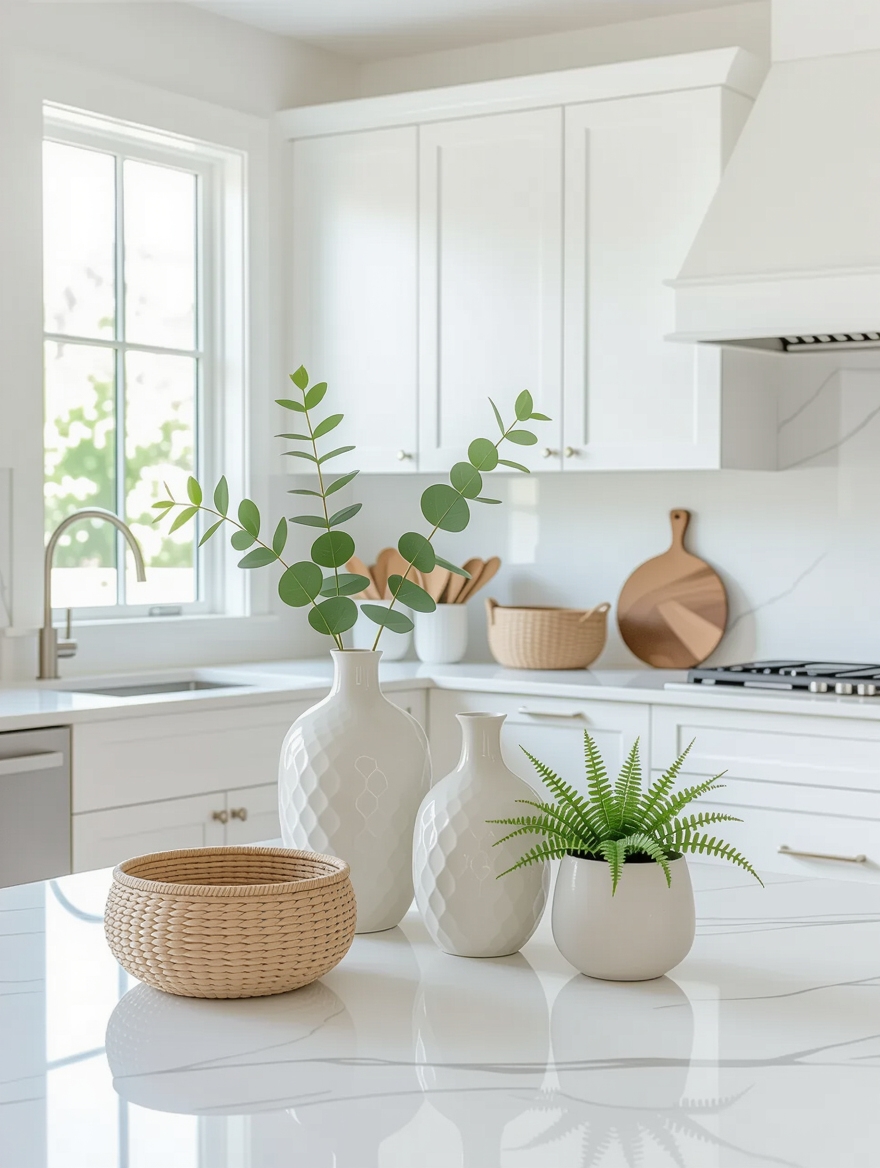

Most people style a shelf by instinct, add a thing, step back, add another, and wonder why it still looks off. Designers do not work that way. They lean on formulas. Repeatable rules for grouping, height, and color take the guesswork out and make almost any shelf look composed.
So this is a set of formulas, the structural recipes you can apply to your own pieces over and over. Each one comes with the rule, how to use it, and where it bends. Learn three or four of these and you will stop dreading an empty shelf. If you want the style-by-style version, our open-shelf display ideas covers the looks.
The Core Formulas at a Glance
| Formula | The rule | Why it works |
|---|---|---|
| The triangle | Arrange items so the eye traces a triangle, tall at one side stepping down | Creates movement instead of a flat row |
| Rule of three | Group in odd numbers, threes and fives | Odd groupings read intentional, even ones feel stiff |
| 60-30-10 color | One main tone, one secondary, one accent | Keeps a shelf cohesive instead of random |
| Two-thirds full | Leave about a third of each shelf open | Breathing room is what reads as styled |
The Balanced Kitchen Shelf Formula

The first formula is balance, distributing visual weight so no corner of the shelf feels heavy while another sits bare. Picture each item as having a weight, a big dark bowl is heavy, a slim glass jar is light, and spread those weights so the arrangement feels settled. This single habit fixes more bad shelves than any pretty object can.
- Counter a heavy piece on one side with two or three lighter ones on the other
- Avoid stacking all the tall, dark items together, which tips the shelf off balance
- Step back across the room to judge it, since balance is something you feel from a distance
Neutral Tones as Your Base Formula

The base-neutral formula gives you a foundation that never clashes: build the bulk of the shelf from whites, woods, and warm neutrals, then add personality through a few colorful or characterful pieces. Because most of the shelf stays quiet, whatever you add on top always works. It is the most forgiving formula for people who change their mind often.
- Make roughly two-thirds of the pieces neutral, so the accents have room to stand out
- Lean on natural materials, stoneware, wood, glass, for a base that feels warm, not bland
- Swap the few accent pieces seasonally without ever touching the neutral foundation
“When a shelf feels off but you cannot say why, take a phone photo of it. A flat image flattens the styling the way a guest’s eye does, and suddenly you can see the gaps, the pile-ups, and the missing height far more clearly than you can standing right in front of it.”
Colorful Shelf Accents, Repeated

When you want color, the formula that keeps it from looking random is repetition in a ratio. Borrow the designer 60-30-10 rule: about 60 percent of the shelf in your main tone, 30 percent in a secondary, and 10 percent in a punchy accent. The accent only works because it repeats, so one red bowl looks like a mistake while three across the shelves look deliberate.
The key is spreading the accent color across the display, a few touches at different points. A pop of cobalt at the top left, again in the middle, and once more low right pulls the whole arrangement together and leads the eye on a path.
- Pick one accent color and repeat it at least three times across the shelves
- Keep the accent to roughly a tenth of the display, so it stays a pop and not a takeover
- Pull the accent from something nearby, a tile or a rug, so it ties into the room
The Texture-Layering Formula
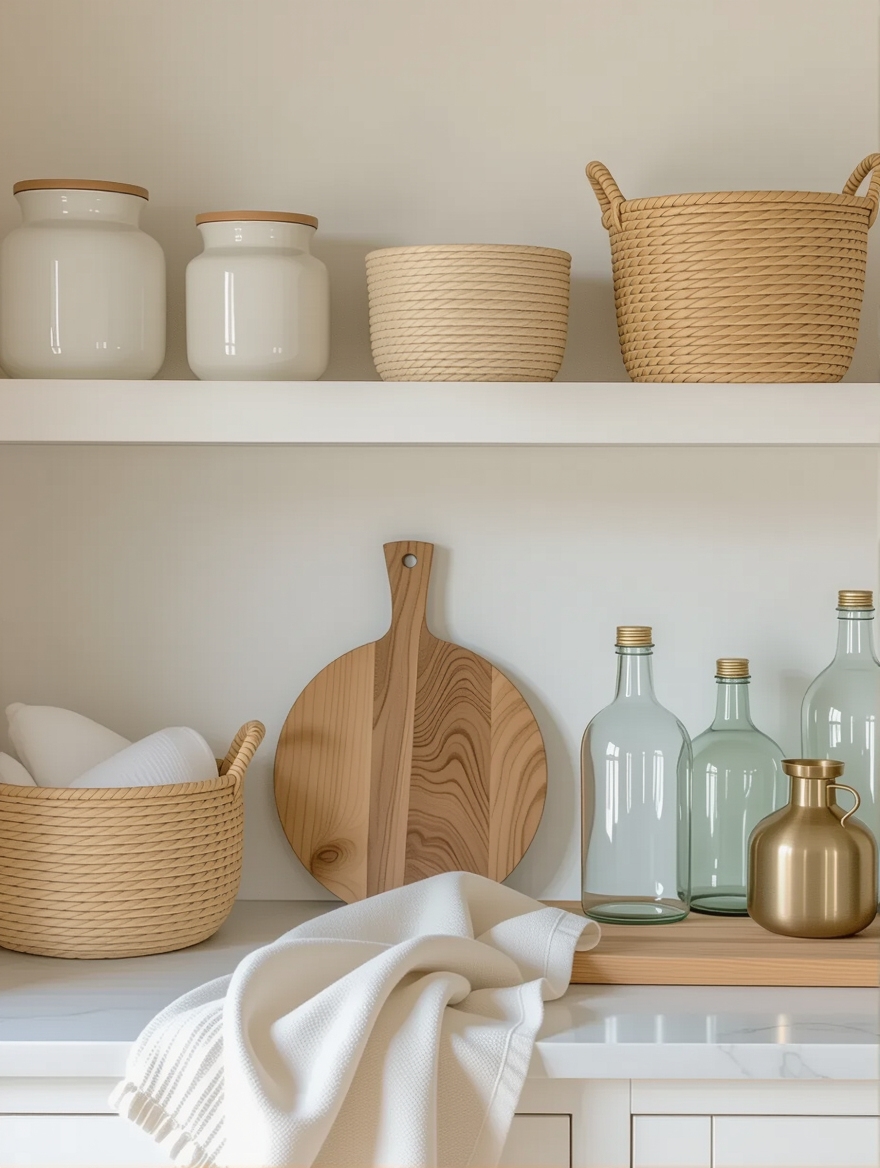
If a shelf looks flat even when it is full, the missing formula is texture, and the fix is contrast, not volume. Pair a rough material with a smooth one in each grouping, a matte stoneware crock beside a glossy glass jar, a woven basket against a ceramic vase, so the contrast gives the eye something to do. This is what keeps an all-neutral shelf lively. Our expensive-looking shelf arrangements lean hard on this trick.
Layering front to back adds depth too. Set a piece of art or a board at the back, a couple of mid-height pieces in front of it, and a small object at the very front, so the shelf has foreground and background instead of one flat line.
- Put one rough and one smooth material in every little grouping
- Layer back to front, tall art behind, mid pieces ahead, a small object in front
- Mix finishes, matte, glossy, woven, metallic, while keeping the colors calm
Styling a shelf is not about owning beautiful things. It is about arranging ordinary ones with a formula, so they look like you meant it.
Warmth With Wood and Plants

The warmth formula is simple: every shelf display needs a little wood and a little green so it feels alive instead of staged. A wooden board, a cutting block, or a bread box brings organic warmth, while a trailing plant or a few cut stems add the life that no ceramic can. Together they keep a shelf feeling warm and real, the same warmth our open shelving ideas chase.
- Add at least one wood element per shelf, a board, a bowl, a small riser
- Include one living or faux-green piece, trailing shapes soften a boxy shelf best
- Keep plants realistic for the spot, since dim, greasy kitchen shelves suit pothos or good faux greenery
The Cozy Vintage Formula

The vintage formula adds soul by mixing in a few worn, characterful pieces among the new. An old enamel pitcher, a weathered crock, or a stack of vintage cookbooks brings a history and patina that brand-new decor simply cannot manufacture. One or two genuine old pieces do more for warmth than a whole shelf of matching new ones.
The rule that keeps it from looking like a junk shop is restraint, so let vintage stay the accent. A few old pieces against a clean, mostly-new shelf read as collected and intentional, while an all-vintage shelf can tip into cluttered fast.
Hunt flea markets, estate sales, and your own family cupboards, where the best pieces cost little and carry a story. This is the formula I reach for when a new kitchen feels a touch too showroom-perfect.
👍A formula is working when
- +Your eye travels up, down, and across instead of skating off
- +Colors repeat and most of the shelf stays calm and neutral
- +There is breathing room, with about a third of each shelf left open
👎Rework it when
- –Everything sits at the same height in a flat, even row
- –One bright color appears once and looks like an accident
- –The shelf is packed corner to corner with no space to rest
Vintage Charm Meets Modern

A close cousin of the vintage formula is the deliberate old-meets-new mix, where a clean modern shelf and modern pieces are punctuated by one or two antiques. The tension between sleek and weathered is what makes both look better, the modern looks crisper and the vintage looks richer. It is a formula that suits almost any kitchen.
One old piece per few modern ones
The balance to strike is roughly one old piece for every few modern ones, so the contrast stays a deliberate accent. Place the vintage item where it gets a moment, at eye level or with space around it, rather than buried in a crowd.
This mix also future-proofs a shelf, since you can update the modern pieces over time while the anchoring antique stays. I tell clients it is the most personal formula here, because the old piece is usually the one with the story.
The Functional-Decor Formula

The smartest kitchen-shelf formula is to decorate with things you use, so the display pulls double duty. Stacked everyday bowls, a row of drinking glasses, a crock of utensils, and pretty mugs all look styled while staying within reach. Because you use them, they get washed and dusted naturally, which solves the kitchen-shelf grime problem.
This formula works best near the prep and coffee zones, where reaching for a displayed mug or bowl is part of the routine. It is also the most honest look, since a shelf of real, used pieces feels like a kitchen rather than a photo set.
- Display the dishes you reach for daily, since used pieces stay clean and look lived-with honestly
- Group like with like, a stack of bowls, a row of glasses, for an orderly kind of pretty
- Keep the most-used items at the easiest height, so styling never gets in the way of cooking
Baskets to Tidy Shelf Clutter

Not everything on a shelf should be on display, and the basket formula handles that gracefully. A couple of woven baskets or fabric bins corral the small, unphotogenic stuff, the spare napkins, the chip clips, the odds and ends, behind a warm, textural front. They add softness while hiding the clutter that would otherwise wreck the styling, and a set of nice woven baskets runs about $10 to $30 each.
The trick is using baskets as part of the composition, part of the look, not storage dumped on a shelf. Match the weave or tone loosely across the ones you use, and treat a basket as one of your textural pieces in the balance and triangle formulas.
Keep baskets to the lower or less-prominent shelves, where their job is function first. Reserve the eye-level shelves for the pieces you actually want seen, and let the baskets quietly do the hiding below.
Dynamic Height Shelf Styling

The height formula is the one designers reach for most: vary the heights so the eye travels up and down instead of skating across a flat row. Within any grouping, aim for a tall piece, a medium, and a short, arranged so they step down like a staircase or peak like a triangle. That movement is what separates a styled shelf from a lineup.
When a shelf is too short to allow real height, you fake it. Stack a couple of books to lift a small object, use a riser or a cake stand, or lean a piece of art at the back to add a tall element. The goal is always a high point and a low point in every grouping.
Combine this with the triangle across the whole unit, not just one shelf, so the tallest points zigzag rather than line up. Done across the display, the height formula gives the whole arrangement rhythm, and it is the fastest fix for a shelf that looks flat and boring.
Build Your Own Shelf Formula
You do not need every formula at once; the magic is stacking two or three. A reliable starting recipe is the triangle for height, the rule of three for grouping, and 60-30-10 for color, applied to a base that is two-thirds neutral with a third left empty. Run any shelf through those four and it will look composed, whatever pieces you own.
Then make it yours by adding the warmth formula, a little wood and green, and one vintage or functional piece with a story. Style it in about fifteen minutes, step back across the room, and pull off anything your eye trips on. Save this page, try a single shelf first, and let the formulas do the thinking so you can stop second-guessing. For more, our open-shelf styling rules and declutter-first plan pair well.
Shelf Styling Questions People Ask
?What is the easiest formula for styling a kitchen shelf?
The triangle plus the rule of three. Group items in odd numbers and arrange each group with a tall, a medium, and a short piece so the eye steps up and down. Add a third-empty rule for breathing room and most shelves will look composed with no other trick.
?How do I use color on open shelves without it looking messy?
Borrow the 60-30-10 ratio: keep about 60 percent of the shelf neutral, 30 percent a secondary tone, and 10 percent a punchy accent, and repeat that accent at least three times across the display. Color reads intentional when it repeats and random when it appears just once.
?How full should a styled shelf be?
Aim for about two-thirds full, leaving roughly a third of each shelf open. Packed shelves read as clutter no matter how nice the pieces, while a little empty space is what makes the styling look deliberate and gives the eye somewhere to rest.
?How do I keep decorated kitchen shelves from getting greasy?
Decorate mostly with pieces you use and wash, so they stay clean naturally, and keep delicate display-only items away from the zone right around the stove. Choose wipeable ceramics and glass over paper or fabric near cooking, and dust the shelves every couple of weeks.
Let the Formula Do the Thinking
A shelf that always works comes down to a few formulas quietly doing their job. Vary the height, group in odd numbers, repeat a color, layer texture, and leave breathing room, and almost any pieces you own fall into place. The formulas free you from guessing.
So pick one shelf this weekend, run it through the triangle, the rule of three, and the color ratio, and watch it click into something composed. Once the formulas are second nature, you will style every shelf in the house in minutes.
More Hair Ideas