

Ask a top designer why their kitchens feel expensive and they rarely point to the price tag. They point to things you would not notice: the gap between cabinet doors, the height of the light over the island, where the outlets hide. Luxury, it turns out, is mostly a set of small decisions most people never think to make.
Those decisions are the real secrets, and the good news is that knowing them is free. Here are twenty luxury kitchen design principles top designers lean on, the insider thinking behind a high-end room, with honest costs and the details most people miss.
The Insider Thinking
Luxury is built from details most people overlook: consistent reveals, the right light height, hidden technology, and one strong material against quiet surfaces. None of it shouts, and much of it is free to get right.
The other half of the secret is restraint and planning. Designers decide where the clutter hides, where the eye lands, and how the room flows before they pick a single finish, which is what separates a designed kitchen from a decorated one.
Sleek Design and High-Quality Materials
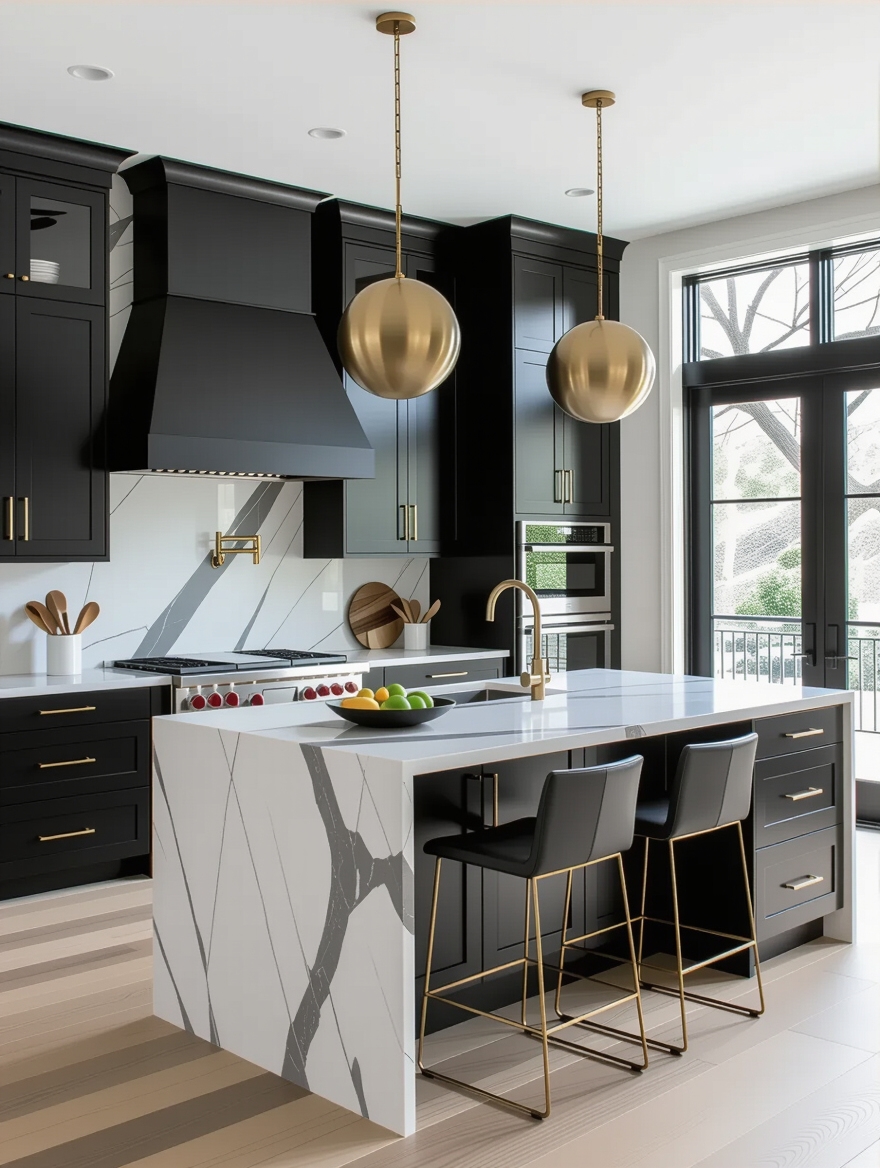
The first thing designers know is that luxury reads as calm, not loud. A restrained palette, clean lines, and a few truly good materials beat a room crammed with expensive features, because the eye registers quality through quiet, not clutter.
What most people miss is that material quality shows up close, in the weight of a pull and the finish of an edge, more than from across the room. Spend where hands and eyes actually land.
- A calm, restrained palette reads richer than a busy one.
- Quality shows in the details you touch, not the price tag.
- One strong material against quiet surfaces does the heavy lifting.
Luxurious, Durable Materials

Designers choose materials that stay beautiful under real use, which is a quieter kind of luxury than a showroom shine. The pros lean on natural stone, solid wood, and quality quartz because they age gracefully rather than wearing out, and a material that looks better in five years is the real high-end choice.
- Pick materials that patina or hold up, not just ones that dazzle new.
- A quality quartz, roughly $50 to $120 a square foot, holds the calm with zero sealing or worry.
- Solid wood and natural stone earn character as they age.
A few terms behind the designer secrets:
📖Reveal
The gap between cabinet doors and drawers; consistent, narrow reveals are what make cabinetry look custom.
📖Panel-ready
An appliance fronted to match the cabinets, so the fridge or dishwasher looks like joinery rather than metal.
An Efficient Layout for Workflow

The least visible secret is the most important: a layout that flows. Designers obsess over the work triangle and the clearances long before they think about finishes, because a kitchen that moves well feels luxurious to cook in, finishes or not.
Flow Before Finishes
Most people choose the look first and live with the awkward flow forever. I reverse that order on every job, and a tape-and-sketch pass takes about ten minutes.
Keep the sink, range, and fridge a sensible few steps apart and leave 36 to 42 inches of clearance around the island. That groundwork is free, and it is what every other secret sits on.
Smart Storage That Maximizes Space

The calm that makes designer kitchens feel expensive comes from a place for everything. Pros plan hidden storage, appliance garages, deep pull-outs, a concealed bin, so the counters stay clear, because clutter is what reads cheap no matter the budget.
What people miss is that this is planned, not tidied. I tell clients the calm is built into the cabinetry, not swept up each night. The order is built into the cabinetry, which is why it holds even in a busy household.
ℹ️Good to Know
Top designers hang island pendants roughly 30 to 36 inches above the countertop. Too high and they stop lighting the surface and lose their presence; too low and they block sightlines across the room. That few inches of placement is one of the most-missed luxury details.
Statement Lighting as a Focal Point

Designers treat the island light as the room’s jewelry, and they hang it with care most people skip. A sculptural fixture becomes the focal point, but only at the right height, roughly 30 to 36 inches above the counter, where it lights the surface without blocking sightlines.
Placement Is the Secret
The fixture matters, but the placement is what does it. Hang it too high and the magic disappears.
A single sculptural fixture, usually a few hundred dollars, does more than a scatter of small lights. Designers spend here because the payoff is so visible.
Layered Lighting for Atmosphere

Beyond the statement fixture, the pros layer light in a way that transforms a room after dark. Task light under the cabinets, a general wash overhead, and a low accent glow, all on dimmers, let one kitchen shift from bright prep to soft evening calm.
Layers Plus Dimmers
The detail amateurs miss is the dimmer and the bulb temperature. Cool, undimmed light undoes every other luxury in the room.
Keep the bulbs warm, around 2700K, and put every layer on a dimmer; I recommend it even when the rest of the budget is tight. It is one of the cheapest secrets and the most transformative.
👍Where the Secrets Pay Off
- +Planned flow and hidden storage make a kitchen feel expensive for free.
- +Layered, warm, dimmable light transforms the room after dark.
- +One hero material and matched metals read richer than many features.
👎Where People Go Wrong
- –Choosing finishes before fixing the flow locks in awkward function.
- –Cluttered counters undo any amount of money spent on surfaces.
- –Cool, undimmed lighting flattens an otherwise luxurious room.
High-Performance Appliances

Designers know that one serious appliance signals a real kitchen better than a wall of mid-range ones. They spend on the piece the client actually uses, usually the range, and let it anchor the room while everything else stays understated.
One Hero, Not a Showroom
The secret most people miss is restraint: a single standout appliance, not a maxed-out spec sheet, is what reads considered, and I steer clients there every time.
A pro-style range runs about $5,000 to $12,000. Buy for how you actually cook, and skip the commercial overkill you will never use.
Hidden Kitchen Technology
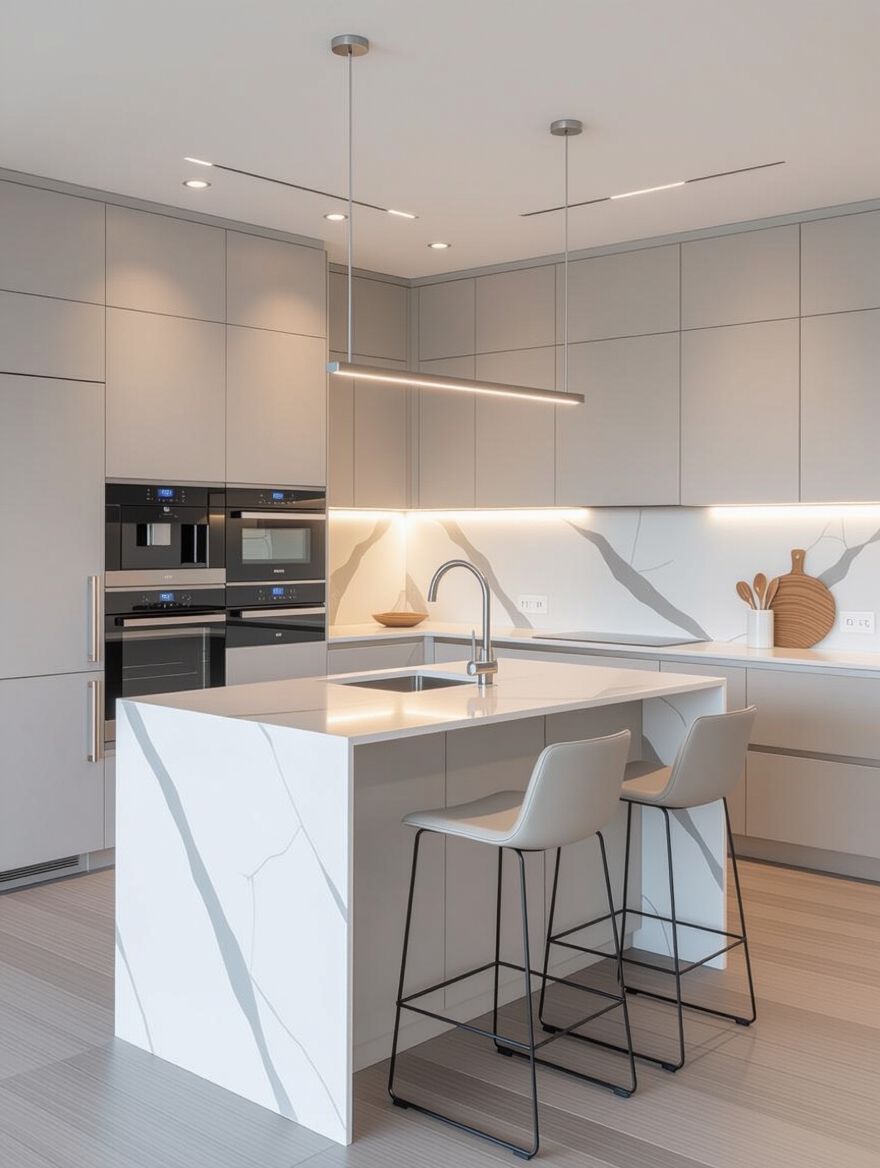
A hallmark of high-end design is technology you cannot see. Pros hide the outlets in a drawer or under the upper cabinets, integrate charging into the island, and choose panel-ready appliances that vanish into the run, so the room stays clean and the gadgets stay handy. The luxury is the absence of visible clutter, which takes planning rather than money.
- Hide outlets in a drawer or beneath the uppers, not across the backsplash.
- Build charging into the island so devices stay off the counter.
- Panel-ready fronts let appliances disappear into the cabinetry.
A Timeless, Balanced Palette
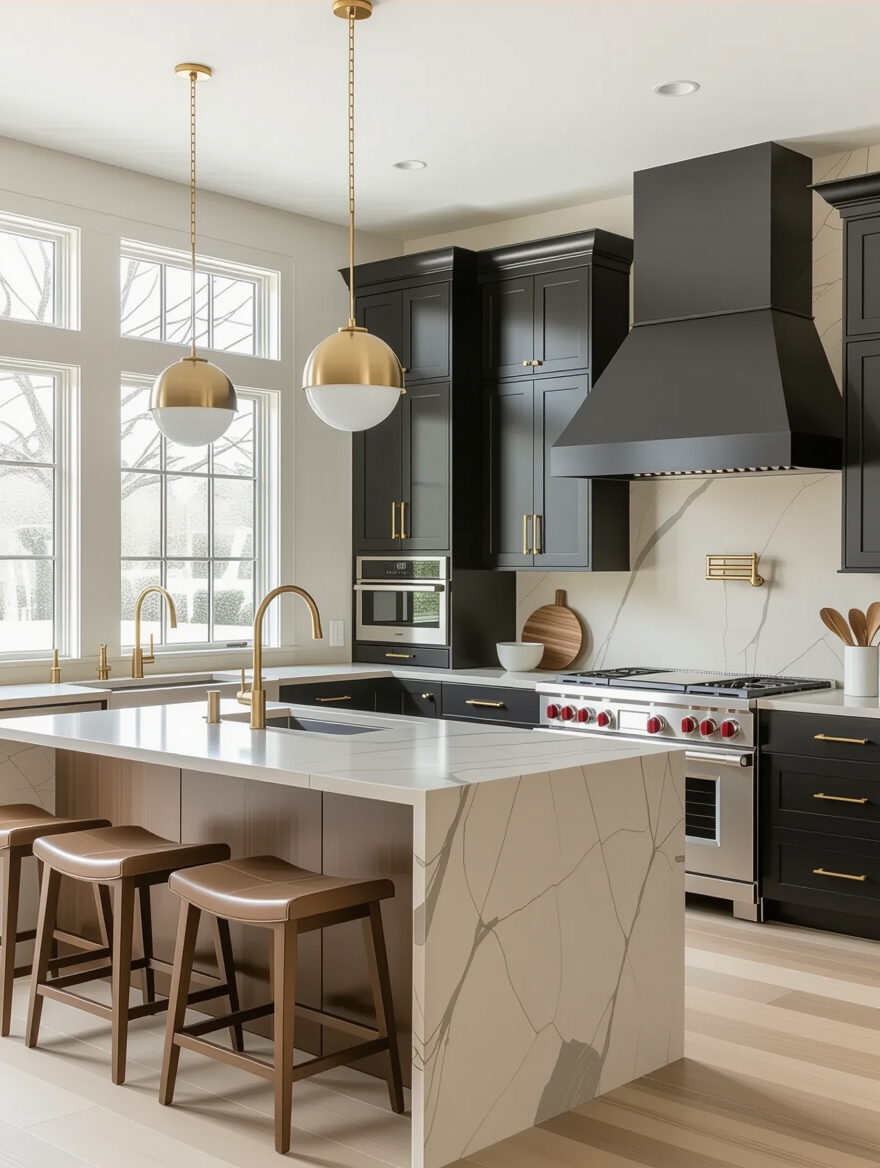
Top designers keep the palette tight and timeless, then add interest through texture rather than competing colors. A calm base of warm neutrals with one quiet accent ages far better than a kitchen chasing this year’s it-color, which is why designer rooms still look right a decade later.
- Build on warm neutrals and add depth with texture, not extra colors.
- Limit the palette to two or three close tones plus one accent.
- Put any trend color where it is cheap to change later.
Natural Stone and Wood for Warmth

The secret to a luxury kitchen that feels inviting rather than cold is natural material, used deliberately. Designers pair a cool stone with warm wood so the room has both depth and warmth, and they let the grain and the veining be the decoration rather than adding more.
What people miss is the restraint: one stone, one wood, given room to be seen. The modern classic pairings designers borrow all rest on this exact balance.
A Multi-Use Island Secret
Designers plan the island to do several jobs at once without looking busy, and the secret is zoning within the single surface. A prep zone, a clean seating overhang, and hidden storage on the working side let one island cook, serve, and gather without colliding.
The detail most people miss is keeping the seating side completely clear of the cooking side, so guests never lean into the work. Build the storage and power in before the floor goes down. The island materials show the full range of what an island can hold.
Sleek Cabinetry and Minimalist Hardware
The cabinetry rule designers rely on is precision over ornament. Flat or handleless fronts with consistent, narrow reveals look custom because the alignment is exact, and minimalist or hidden hardware keeps the eye gliding across clean surfaces.
The detail amateurs miss is the gaps: uneven spacing between doors is the giveaway that separates a high-end kitchen from a near-miss. Match every metal to one finish, and the restraint does the rest. A calm minimal base leans on the same discipline.
Beverage Station, Ventilation, and Zones
Three quieter moves round out a designer kitchen. A well-planned beverage station or coffee bar keeps the morning ritual tidy and off the main counter; a properly sized, quiet ventilation hood protects every surface from grease; and clear cooking, prep, and dining zones keep the room flowing even when it is full.
None of these photographs as a highlight, yet together they are what make a luxury kitchen work as well as it looks. The pros plan all three early, because they are far harder to add later. Pair them with the features worth the splurge worth saving for.
Bold Backsplashes and Final Details
The final move is where designers let a kitchen show personality: the backsplash and the finishing details. A dramatic slab or hand-glazed tile in a small area gives a high-end moment for little, since you need so few square feet, and the final styling, matched metals, clear counters, a few good pieces, ties everything together.
What people miss is that the personality belongs in the cheap, small places, not the expensive permanent ones. Keep the costly bones calm and let the backsplash and styling carry the character. A timeless modern base underneath keeps it all from dating.
How to Ask Your Stylist
When you sit down with a designer, ask the questions that get you the secrets rather than the surface. Where will the clutter live? How high will the island light hang? Where do the outlets hide? Those answers reveal whether you are working with someone who thinks like a top designer.
The best question of all is what most people get wrong that you can fix here. A good pro will point straight to the flow, the storage, or the lighting, the invisible decisions that make a kitchen feel expensive, and that is exactly where the real luxury hides.
Luxury Kitchen Secret Questions
?What makes a kitchen look luxurious?
The invisible decisions more than the budget: a flowing layout, hidden storage that keeps counters clear, layered warm lighting, consistent cabinet reveals, and one strong material against quiet surfaces. Quality reads up close, in the details you touch.
?What do top designers do that most people miss?
They fix the flow and plan the storage before choosing a single finish, hang the island light at the right height, hide the outlets and technology, and keep the palette restrained. The luxury is in those small, planned details, not the price.
?How high should I hang an island pendant?
Roughly 30 to 36 inches above the countertop. Higher than that and it stops lighting the surface and loses presence; lower and it blocks sightlines. That small placement detail is one of the most-missed luxury secrets.
?Can I get a luxury look without a big budget?
Yes, because most of the secrets are free or cheap: planning the flow, hiding the clutter, putting lights on dimmers, matching the metals, and keeping the counters clear. These read high-end regardless of what you spent on cabinets or stone.
Luxury Is in the Details You Cannot See
The reason designer kitchens feel expensive is rarely the budget; it is the accumulation of small, invisible decisions most people never make. The flow, the storage, the light height, the consistent reveals, the hidden tech, these are the real secrets, and knowing them costs nothing.
So before you spend on finishes, get the invisible decisions right. Plan the flow, hide the clutter, place the light with care, and keep the palette calm, and your kitchen will read as high-end as any in a magazine, whatever you actually spent on it.
More Looks We Love


