

The myth about a small kitchen is that it is full. Open the cabinets and you will usually find the opposite: a third of every shelf out of reach, a strip of bare backsplash, a dead toe-kick, the back of every door doing nothing. The space is there. It is just hiding in spots most people never think to use.
These thirteen ideas hunt down that wasted space one spot at a time, from the wall behind the stove to the gap under the cabinets. Each comes with what it can hold and a rough cost, and almost all are afternoon jobs. Walk your kitchen looking for the wasted gap, then put the right idea on it.
Where the Hidden Inches Are
- The biggest gains hide where you stop looking: behind deep shelves, on bare walls, and under the cabinets.
- Go up the walls and into those overlooked spots before you ever think you have run out of room.
- Match each fix to a specific spot, since a small kitchen rewards precision over big purchases.
- Nearly every idea here is under fifty dollars and a single afternoon to fit.
Vertical Storage Up to the Ceiling
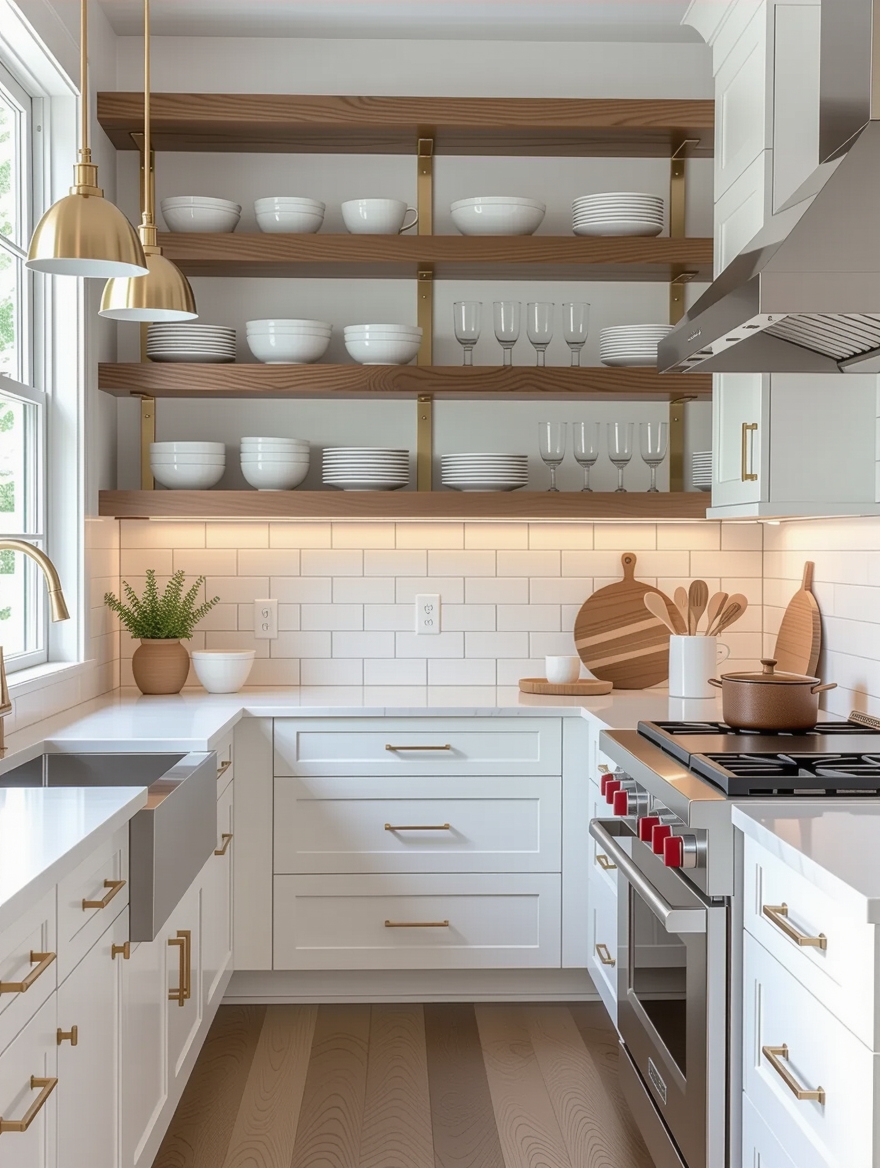
The first inches to claim are overhead. Look up first. Look up. I tell people to check the wall above the cabinets first, since it almost always sits empty, so a tall stack of shelves or cabinets to the ceiling turns that air into real storage. The higher tiers hold what you rarely reach for, freeing the prime middle for daily use.
- Run shelves or cabinets to the ceiling to use the wasted top foot.
- Keep daily items at eye level and seasonal gear up top.
- Stash a fold-flat step stool nearby so the high tier stays usable.
Space-Saving Multi-Functional Appliances
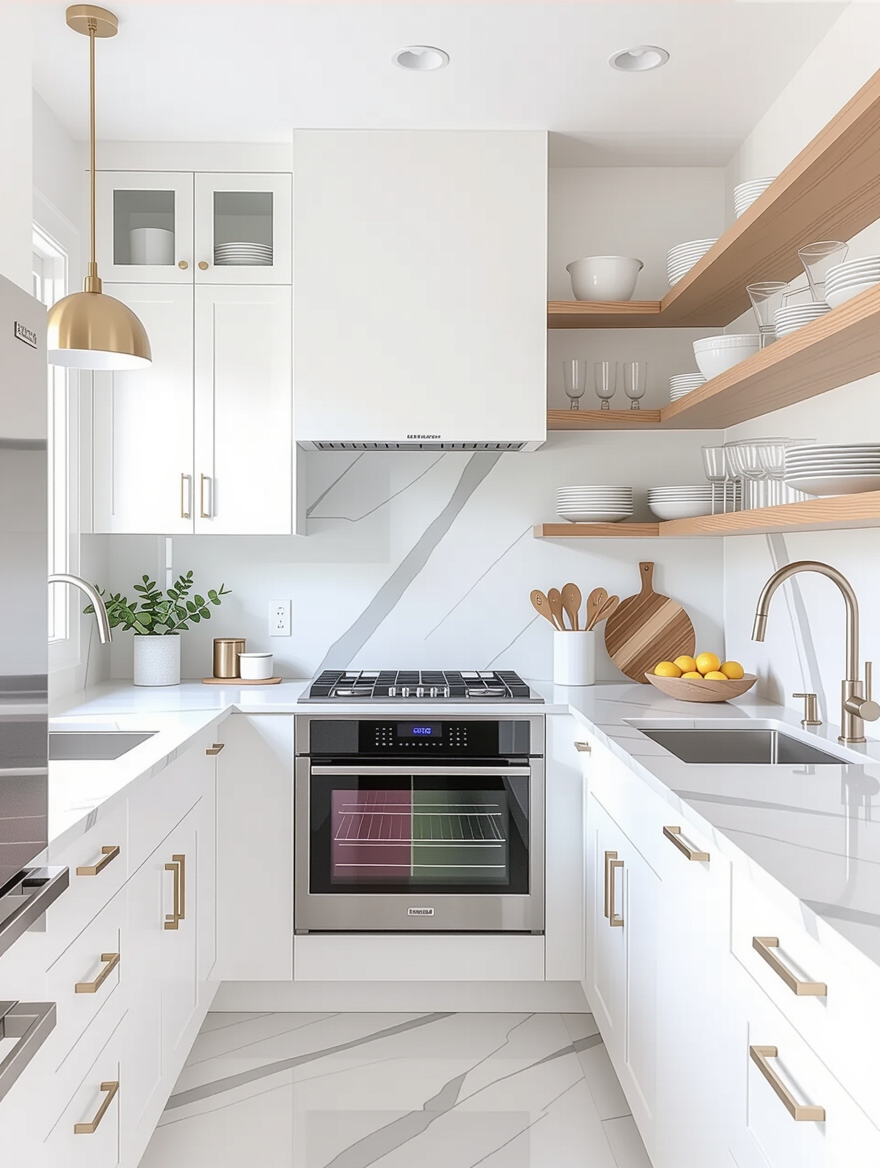
Every appliance you can combine wins back inches in a small kitchen. A convection microwave that also bakes, an air fryer that roasts, or a single multi-cooker replaces two or three single-use gadgets and the counter they each demanded.
I recommend choosing the combo that matches how you actually cook, then retiring what it makes redundant. A single machine should pull two jobs. Clearing even one bulky gadget off the counter opens a working zone you did not know you were missing, and in a kitchen this tight that single reclaimed stretch of surface can change how the whole room cooks.
Open Shelves for Reach and Organization
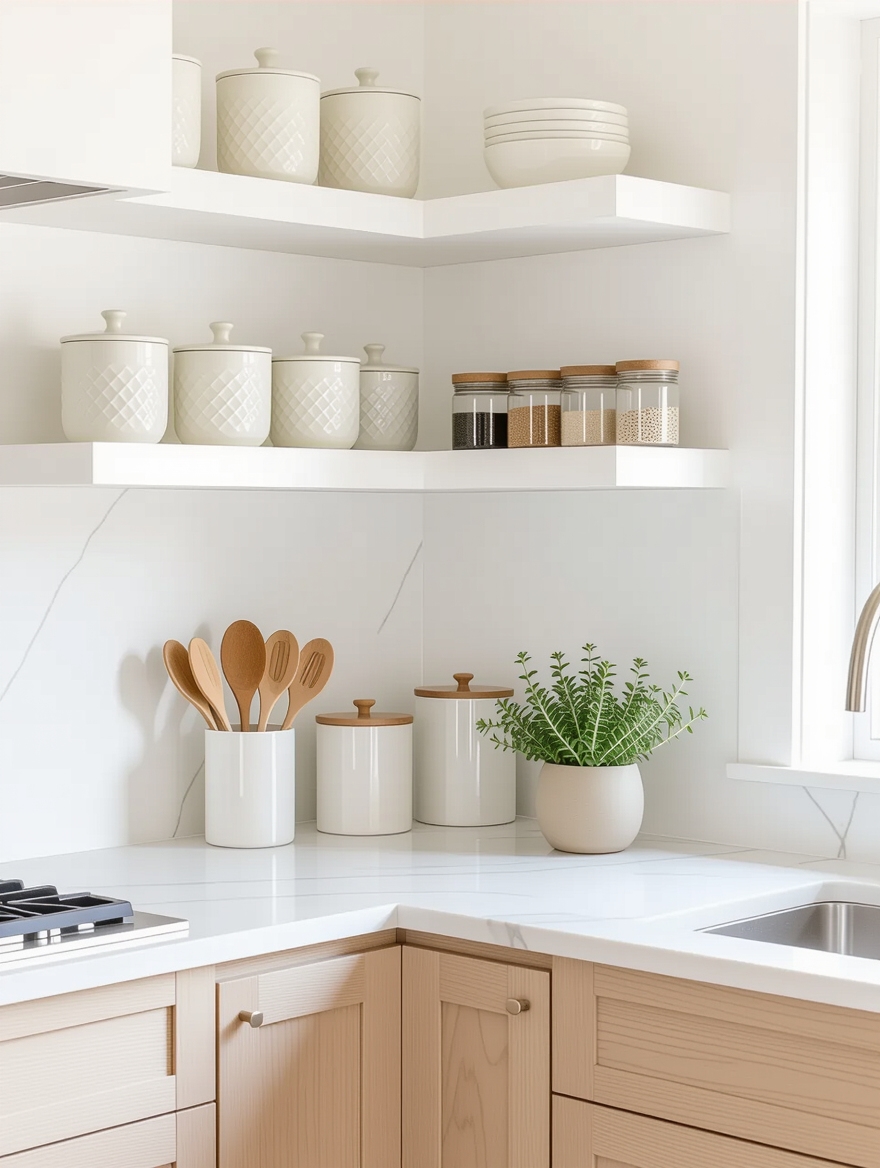
Open shelves squeeze more usefulness out of a wall than closed cabinets do, because nothing hides at the back. You reach what you need in a single move. In a small kitchen, that speed matters as much as the storage itself.
Reach beats hide in a tight kitchen
Stock them with the plates and glasses you cycle through daily, so constant use keeps them tidy. A crowded shelf undoes the point, so keep the grouping loose and the count low.
Hold open shelving to a single wall and keep closed storage elsewhere for the clutter you would rather not see. The mix is what keeps a small kitchen feeling open instead of busy.
Which forgotten inch will you claim first?
🎯The deep cabinet back
Add a pull-out shelf so the dark third slides out to you instead of swallowing pots.
🎯The bare backsplash
Mount a rail or magnetic strip to move tools and knives off the counter and onto the wall.
🎯The toe-kick and door backs
Fit toe-kick drawers and clip-on door racks for shallow storage no one else uses.
Hidden Storage in Forgotten Spots
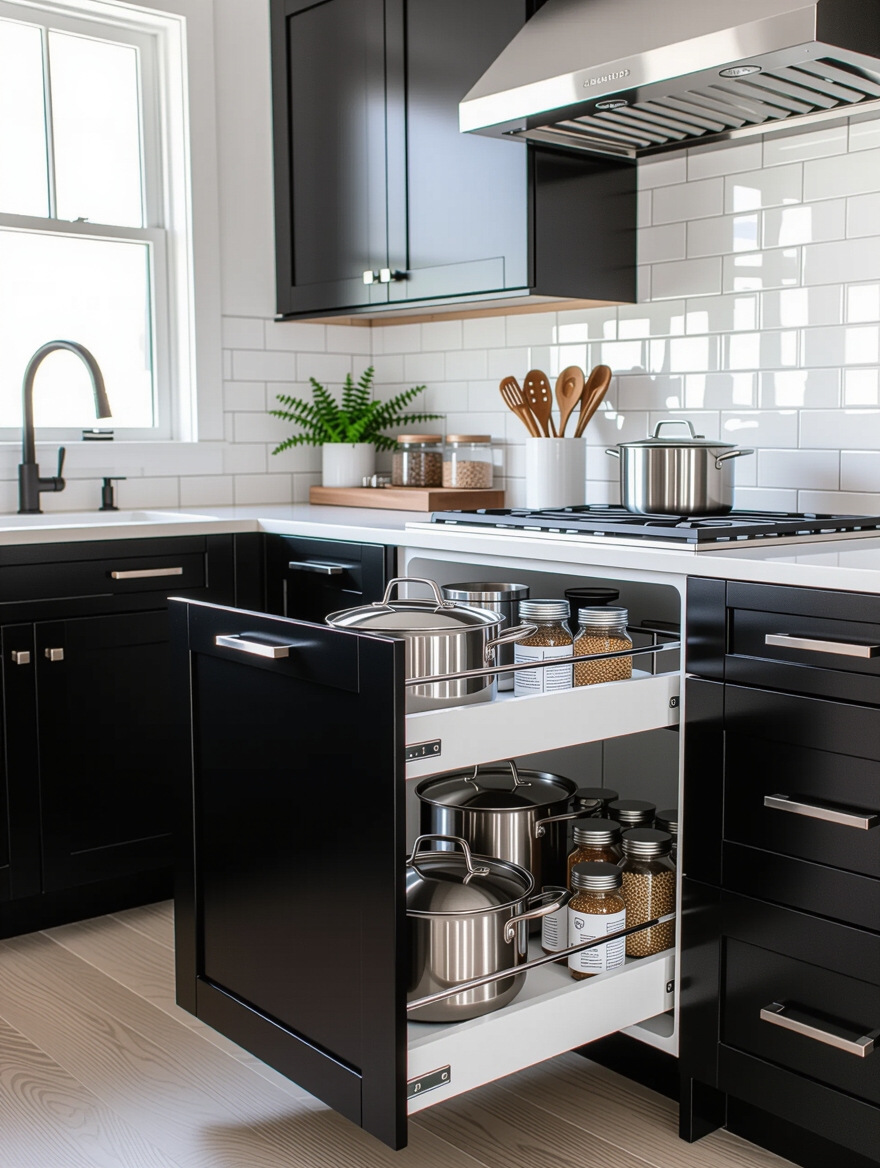
The real inch-hunting happens in the spots people forget. The recessed toe-kick under your base cabinets, the strip of wall inside a cabinet door, and the gap under a shelf are all dead space waiting for shallow storage.
These are the hiding places a designer hunts first. They cost almost nothing to claim. Toe-kick drawers swallow flat platters, door racks hold spices and wraps, and under-shelf baskets double a cabinet’s capacity, all without changing the kitchen’s footprint a bit. I have tucked a whole stack of baking sheets into a toe-kick that held nothing but dust before.
- Fit toe-kick drawers under the base run for flat, rarely used items.
- Clip racks to the backs of cabinet doors for spices and lids.
- Hook under-shelf baskets onto existing shelves for a hidden second layer.
Light Colors and Reflective Tricks
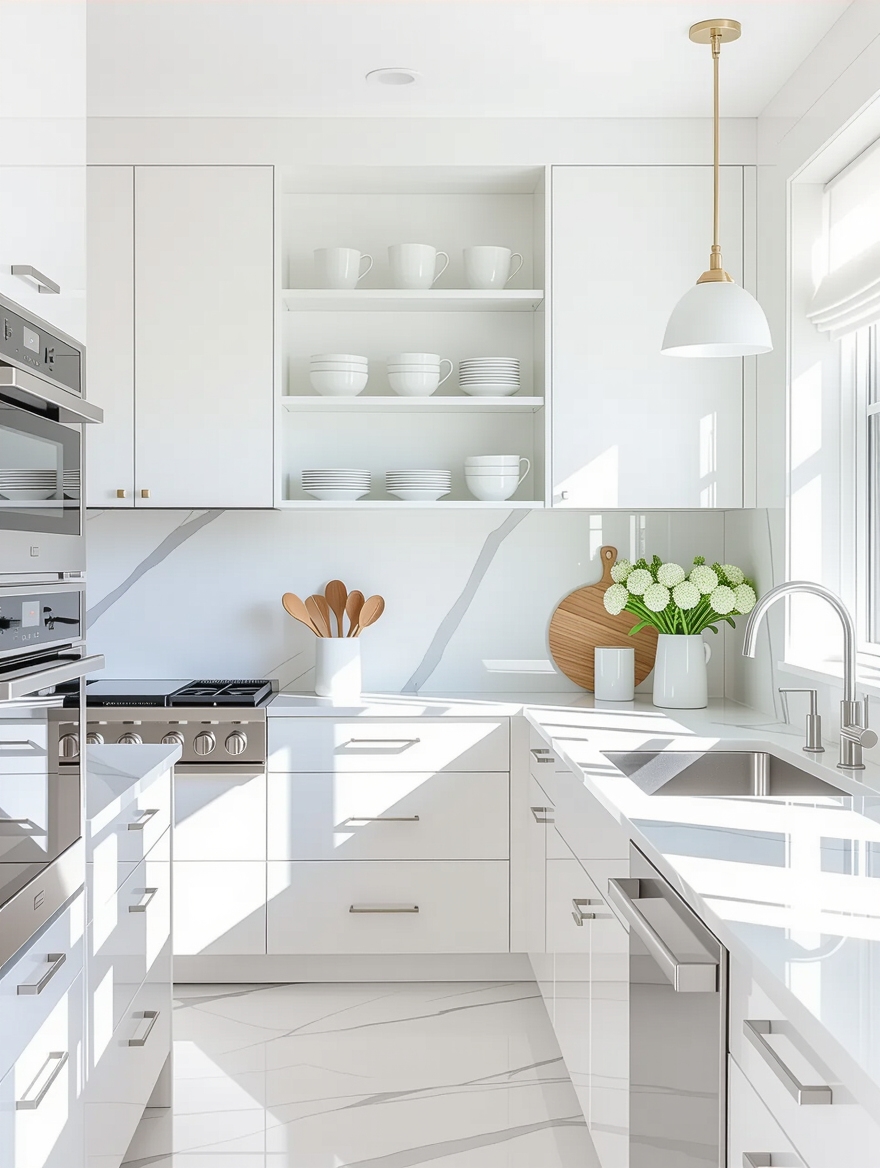
Not every win is literal; some you fake. Pale, low-contrast colors and reflective surfaces make a small kitchen feel roomier than the tape measure says, which counts for as much day to day as a few real shelves of storage.
Visual space counts too
Keep cabinets, walls, and counters in close, light tones so the eye glides without stopping at hard edges. A glossy backsplash or a mirror across from the window then bounces the light deeper into the room. It is the cheapest visual win there is.
It is the cheapest move on this list, a weekend and a couple of gallons. The visual space it buys is why designers reach for color and reflection before they spend on anything structural.
Flexible Fold-Down Tables
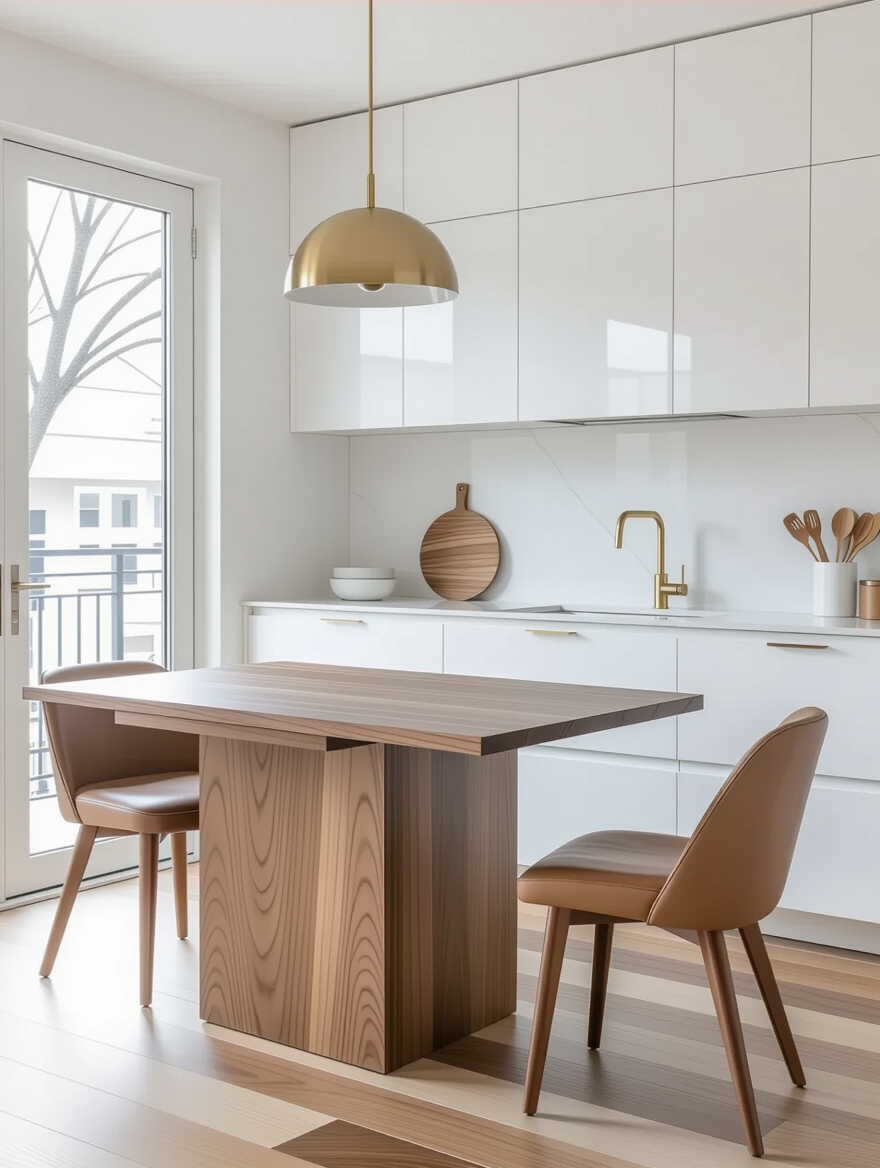
When floor space is the scarcest thing you have, a fold-down table earns its keep. It opens for a meal and folds flat afterward, so you get a surface only when you actually need one. A wall-mounted drop-leaf opens for a meal or extra prep, then folds flat against the wall and gives the floor back the rest of the time.
It is the answer for the tiniest kitchens, where a permanent table would block the room daily. A simple wall-mounted version runs about $60 to $200, far less than the floor it frees is worth.
- Mount a wall drop-leaf table that folds flat when you are done.
- Set it at a height that suits both prep and a quick stool-side meal, roughly counter height for standing work or a touch lower for sitting.
- Pair it with stools that tuck fully under so nothing blocks the floor.
📋The forgotten-inch walk-through
- ✓Open every cabinet and note the dark, unreachable back.
- ✓Check the strip of wall above the counter.
- ✓Look at the toe-kick under the base cabinets.
- ✓Flip through the backs of all the cabinet doors.
Slim, Space-Saving Furniture Choices
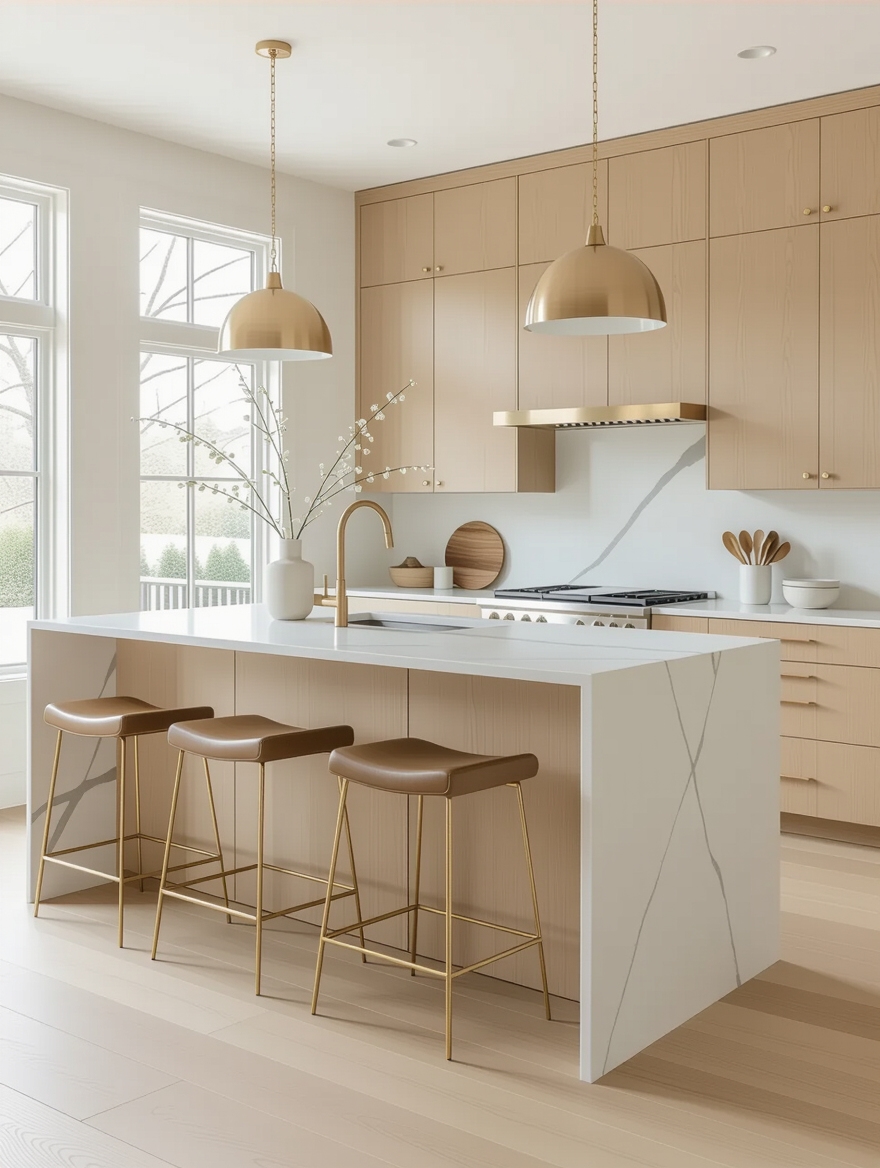
Furniture is where people quietly lose space, by buying for a bigger room than they actually have. Choosing slim, shallow pieces, a 12-inch console, a narrow rolling cart, a backless stool, keeps the floor open while still adding function.
Scale the piece to the gap
The trick is matching the depth to the gap. A cart that fits the awkward space beside the fridge earns its keep, while a too-deep one just narrows the path you walk.
Measure the spot before you shop, including the doorway it has to pass through. The right slim piece slots into an inch-perfect gap and does a real job; the wrong-sized one quietly shrinks the room.
Organize Drawers With Dividers
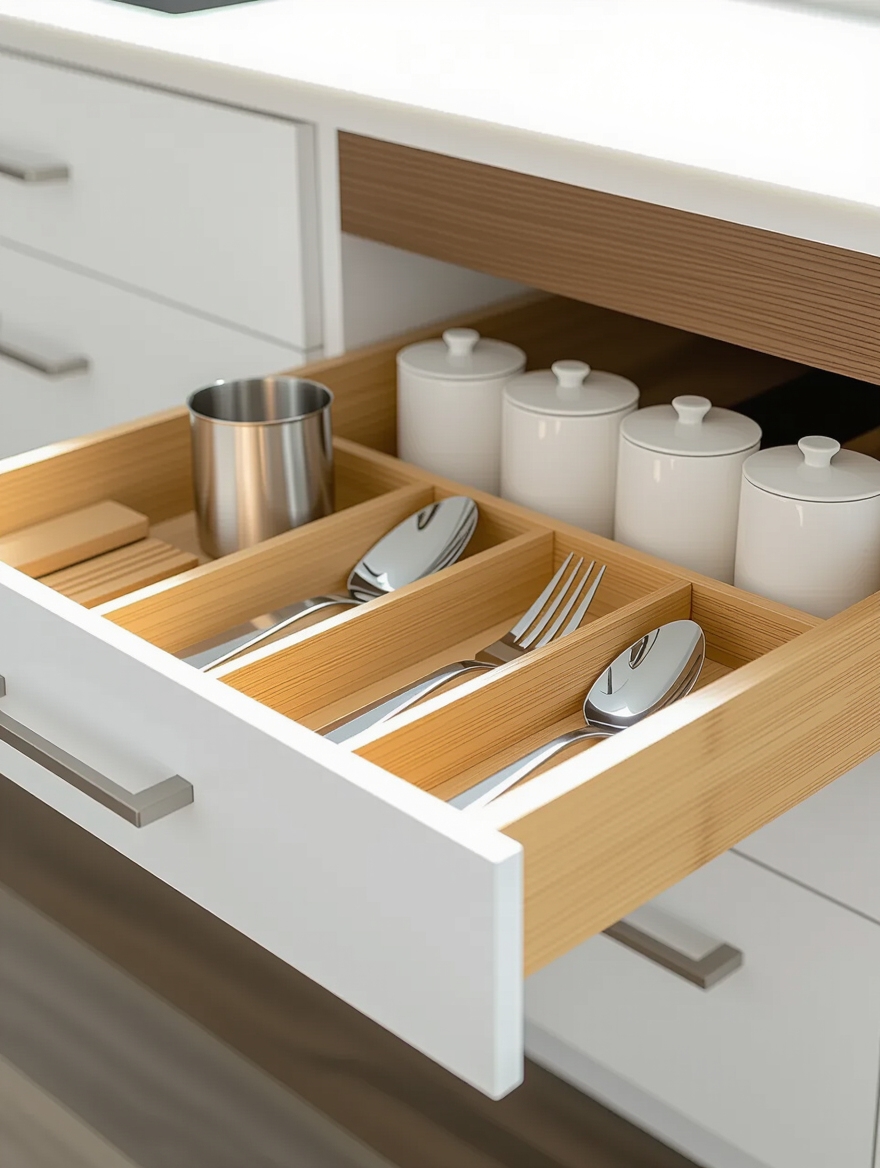
A jumbled drawer wastes its own inches, since you cannot fit much into chaos. Dividers give every utensil a lane, so the same drawer holds far more and you stop pawing through a tangle. It is a five-dollar fix that pays back every single day, and it is where a small kitchen finds quiet capacity it already owned and never used.
- Add adjustable dividers so the layout matches your tools.
- Use a tiered cutlery insert so a shallow drawer holds more.
- Give wraps and foil their own drawer to free a cabinet.
Maximize the Backsplash for Storage
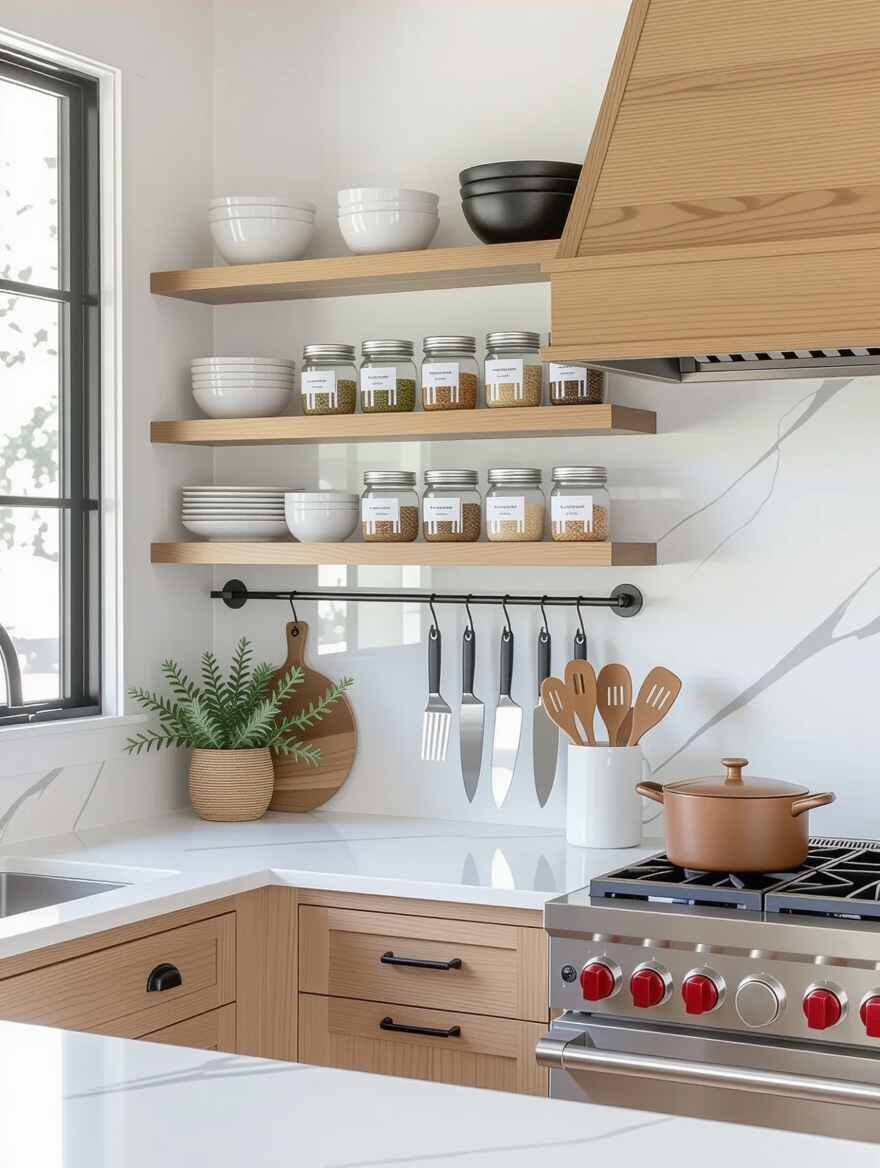
The backsplash is prime real estate most small kitchens leave blank. That bare strip can carry real weight, and I lean on it hard in galleys where there is no spare counter to give. The strip of wall between counter and uppers can carry a rail, a pegboard, or magnetic holders, moving daily tools off the counter and into reach without using a single inch of surface.
- Mount a rail with S-hooks along the backsplash in under an hour for tools and mugs.
- Add a magnetic strip for knives and metal gadgets to free a drawer.
- Use a slim ledge shelf there for oils and spices you grab while cooking.
ℹ️Good to Know
The standard toe-kick under base cabinets is about 3.5 inches tall and 3 inches deep, which sounds tiny until you run it the length of a cabinet bank. A toe-kick drawer there can hold a surprising stack of flat platters, baking sheets, or linens in space that was doing absolutely nothing.
Make the Pull-Outs and Corners Work
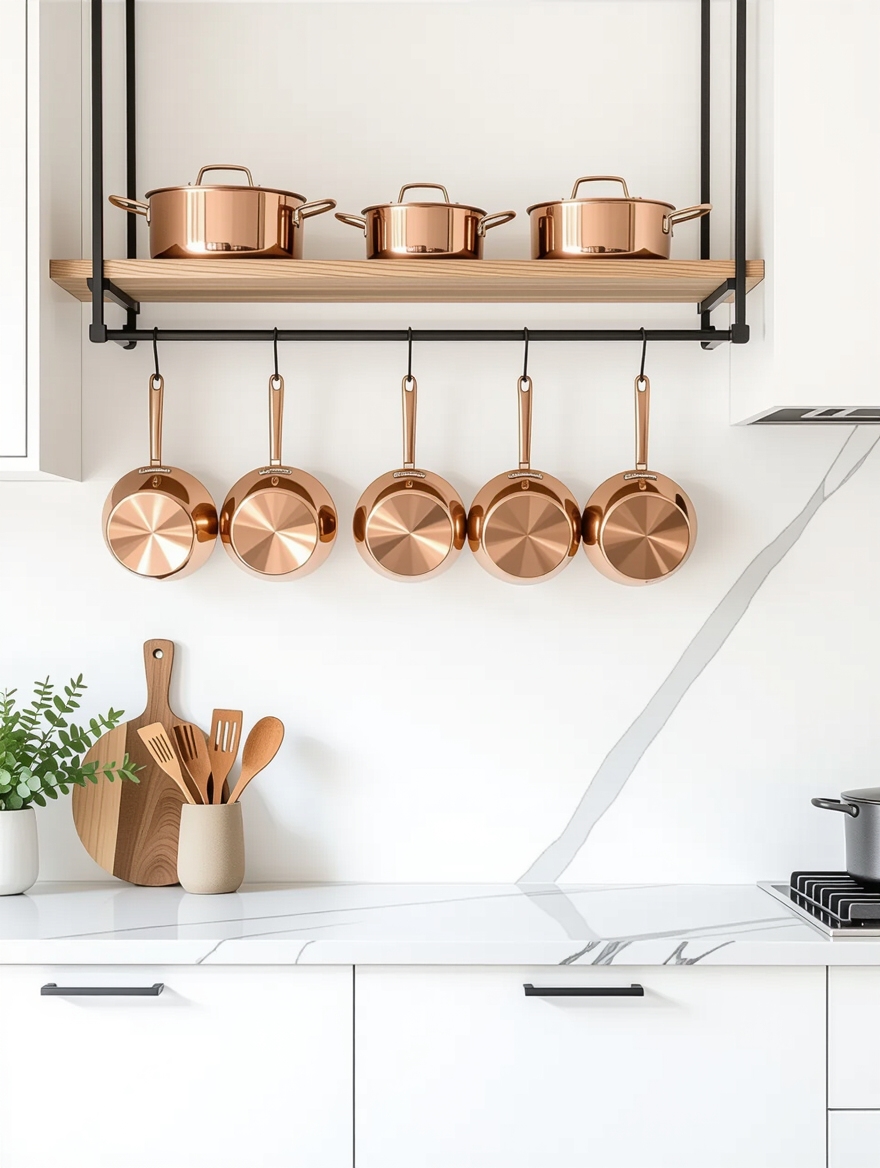
Once you have hunted the individual spots, the last step is making them work together. Give the deepest cabinet a pull-out, the corner a turntable, and the walls a rail, while keeping the busy path short, so every part of the kitchen pulls its weight at once.
The same precision behind any clutter-hiding plan applies here: solve named problems one spot at a time, and the gains stack up fast. A small kitchen handled this way out-stores a careless big one, the same payoff behind any well-planned small kitchen design.
- Add a pull-out to the deepest base cabinet so nothing hides at the back.
- Put a turntable in the corner cabinet to reach the cavern.
- Keep the main path clear so all that storage stays easy to use.
What to Expect
Hunting these spots is satisfying because the payoff is fast and cheap. Most of these fixes, dividers, door racks, under-shelf baskets, a backsplash rail, a turntable, cost under fifty dollars each and go in within an afternoon, with nothing more than a drill and a tape measure.
The toe-kick drawers and full ceiling-height cabinets are the bigger jobs, and a fold-down table sits in the middle, but the bulk of the list is a string of small, same-day wins you can tackle one spot at a time.
What you should not expect is for any single idea to transform the room on its own. The magic is cumulative: a reclaimed shelf here, a freed drawer there, a cleared counter, until the kitchen quietly works far better than its footprint should allow. Measure before you buy, match each fix to a real wasted spot rather than a trend, and resist crowding the walkway in the process.
Maximizing Every Inch, Answered
?What is the most overlooked storage spot in a small kitchen?
The toe-kick under the base cabinets and the backs of the cabinet doors. Both are completely dead space in most kitchens, and a toe-kick drawer or a clip-on door rack turns them into real, shallow storage for almost nothing.
?How do I get more storage without losing floor space?
Go vertical and into hidden spots. Take shelves to the ceiling, add a backsplash rail, fit under-shelf baskets, and use the door interiors. All of it adds capacity without touching the floor you walk on.
?Are these small kitchen fixes renter-friendly?
Most are. Magnetic strips, under-shelf baskets, door racks, tension rods, and a fold-down table all add function and come off cleanly when you move. Save the toe-kick drawers and ceiling cabinets for a place you own.
Win the Room One Inch at a Time
A small kitchen is rarely as full as it feels. Once you start seeing the bare backsplash, the dead toe-kick, the unreached cabinet back, and the empty door interiors as storage, the room hands you spot after spot you did not know you had.
Walk your kitchen with fresh eyes, claim the most useless spot first, and add the next when you are ready. None of it needs a renovation, and most of it fits in an afternoon, so the smallest kitchen can end up holding more than rooms twice its size.
More Inspiration


