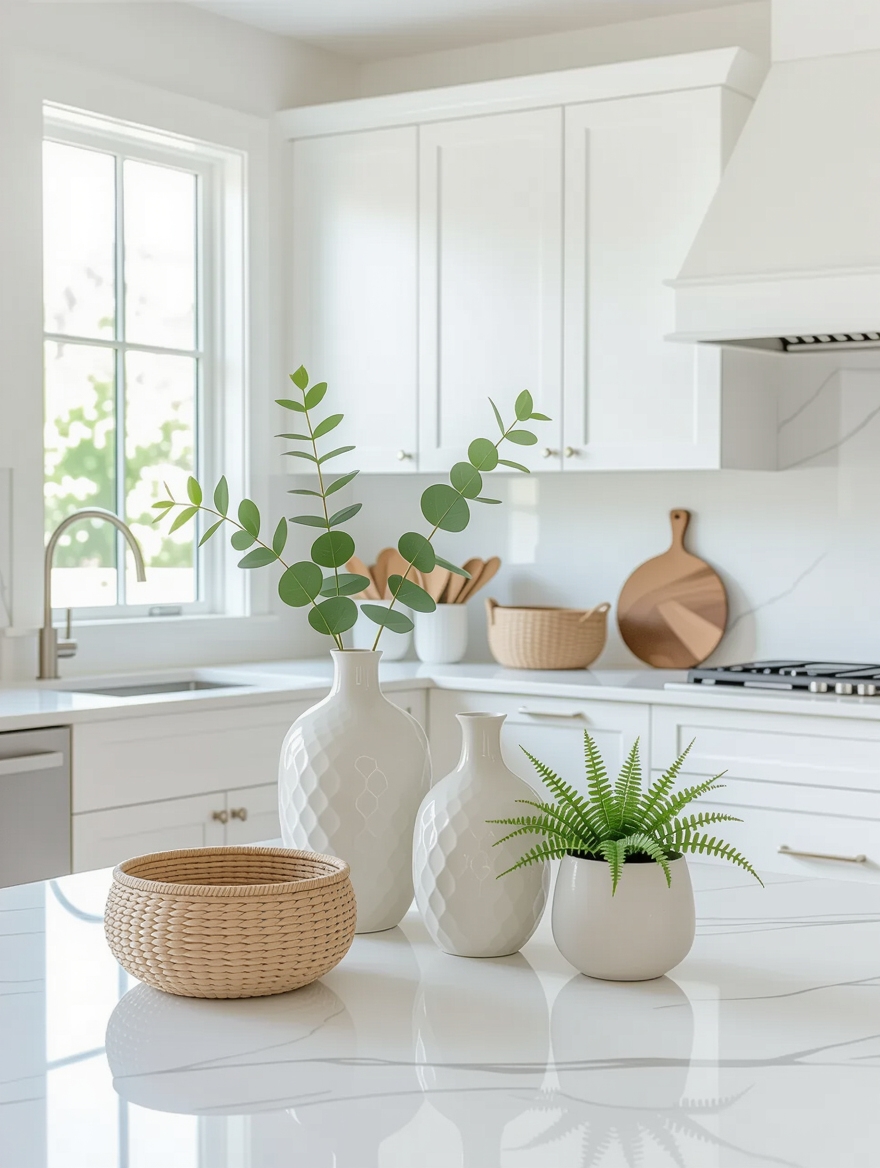

Farmhouse decor gets a bad rap for a reason. Done wrong, it is a wall of mass-produced signs telling you to gather in a kitchen nobody actually gathers in. Done right, it is something else entirely: warm, useful, and full of pieces that look like they have a story.
The difference is real materials and real function. The 15 farmhouse pieces here all earn their place by working, a sink you actually use, jars that hold flour, wood that has aged honestly. Skip the fake patina and the slogan art, and rustic charm takes care of itself.
Farmhouse Charm, the Short Version
- Lead with honest, natural materials, wood, stone, linen, and iron that look better as they age.
- Let useful pieces do the decorating: a deep apron sink, jars of flour, a crock of worn wooden spoons.
- Use reclaimed wood and salvage as an accent, not a wall-to-wall theme, so charm never tips into kitsch.
Where Rustic Charm Starts

Real rustic charm starts with honest materials, not a theme. Wood that shows its grain, stone that wears, metal that patinas, and linen that wrinkles all age into something better, which is the whole point of the farmhouse look.
Mix old and new so the room feels collected over time. Slow beats matchy here. One truly old piece, a worn cutting board, a flea-market crock, anchors a dozen newer ones, and a kitchen assembled over years reads warmer than one bought in a single afternoon. The modern farmhouse blend leans on exactly this mix of aged and clean.
- Choose natural materials that age well: wood, stone, linen, iron.
- Mix one or two truly old pieces with newer ones.
- Let function lead, since useful pieces never look like props.
Charming Mason Jar Displays

Mason jars are the workhorse of the farmhouse kitchen, and they cost almost nothing. A row of them holds flour, sugar, beans, and pasta in plain sight, turning storage into decor.
More Than Just Storage
I love a set of matching jars on an open shelf, labeled simply, with the food itself providing the color. A wide-mouth quart jar runs about $1 to $2 at the hardware store, so a full shelf costs less than a single canister set.
Beyond storage, jars hold cut herbs, wildflowers, utensils, or a bundle of wooden spoons by the stove. The timeless decor staples always include a few jars for exactly this reason.
| Jar size | Best for | Where to put it |
|---|---|---|
| Wide-mouth quart | Flour, sugar, pasta, beans | Open shelf or a counter row |
| Pint | Spices, seeds, small grains | Inside a cabinet or on a rail |
| Half-gallon | Utensils, cut herbs, flowers | Beside the stove or sink |
Layered Warmth and Texture

What separates a cozy farmhouse kitchen from a cold imitation is layered texture. A linen runner, an enamelware pitcher, a galvanized tray, a wool runner underfoot, and a stack of nubby dish towels each add a different surface, and together they make a hard, tiled room feel soft and lived with.
Keep the palette warm and quiet, creams, soft woods, faded blues, black iron, so the layers feel like harmony and not clutter. The warm kitchen staples you collect over time end up doing most of this work for you.
- Layer linen, enamelware, galvanized metal, and woven textures.
- Keep the palette warm and quiet so the layers feel calm.
- Add a runner underfoot to soften a hard tile floor.
The Timeless Farmhouse Sink

If one piece defines the farmhouse kitchen, it is the apron-front sink. That deep, exposed basin is honestly useful, big enough for sheet pans and stockpots, and it reads classic in fireclay, cast iron, or hammered copper.
I recommend it for the function as much as the look, since the wide single bowl handles real cooking better than a divided sink. It is the one farmhouse splurge worth the money. The farmhouse remodel touches almost always start right here. Pick the basin material for your habits. Fireclay shrugs off scratches, copper asks for more care, and enameled cast iron splits the difference at a friendlier price.
- Pick an apron-front sink for the deep, practical single bowl.
- Choose fireclay or enameled cast iron for easy upkeep.
- Treat it as the one splurge that anchors the whole look.
Two farmhouse-sink myths, sorted out:
❌ Myth: Apron sinks are high-maintenance.
✅ Reality: Fireclay and enameled cast iron wipe clean and resist stains; only unsealed copper or stone needs real upkeep. Most farmhouse sinks are no fussier than a standard one.
❌ Myth: A farmhouse sink only works in a country kitchen.
✅ Reality: A clean white apron-front sink looks just as right in a modern or transitional kitchen. The shape is what reads classic, and it crosses styles easily.
Natural Finishes, Chosen With Care

Farmhouse charm lives in finishes that are allowed to look natural. Butcher-block counters, an unlacquered brass faucet that patinas, honed stone, a raw-wood shelf, and matte black hardware all feel handmade, with a little age in them.
The trick is choosing finishes that improve with use. Unlacquered brass darkens, butcher block scuffs and re-oils, and zinc and copper develop a soft gray bloom, so a few months of cooking only makes them look better. That patina is the point.
Skip anything shiny and sealed to look new forever, since that is the opposite of the farmhouse idea. Buy the unlacquered version, oil the wood now and then, and let time finish the job over the first year of cooking. The kitchen looks better at year three than it did on day one.
Charming Reclaimed Wood Essentials

Reclaimed wood is the heart of rustic charm, and a little goes a long way. A single reclaimed-wood shelf, a barn-beam mantel over the range, or a weathered plank island top brings age and grain that new lumber cannot fake.
I see people overdo it and wrap a whole kitchen in barnwood, which tips from charming into theme-park. One or two reclaimed pieces against painted cabinets and clean walls is plenty. Source it from a salvage yard or an architectural-reclaim shop, and make sure it has been cleaned and treated for pests.
Less is more here. Check the boards for old nails and soft, rotted spots before you bring them home, and ask the dealer whether the wood has been kiln-treated, since salvage can carry insects you do not want anywhere near food or cabinets.
👍Reclaimed wood pros
- +Real age and grain that new wood cannot imitate
- +Each piece is one of a kind
- +Reuses material and keeps it out of a landfill
👎Things to watch
- –Must be cleaned and treated for pests before use
- –Can cost more per board foot than new lumber
- –Easy to overdo, so use it as an accent
Rustic Open Shelf Storage

Open shelving suits farmhouse kitchens because it puts honest, everyday things on display. Thick wood shelves on iron brackets hold stoneware, jars, cutting boards, and a stack of bowls where you can see and reach them.
Style them with pieces you actually use so they never look staged: white ironstone, wooden boards leaning at the back, a few jars, a small plant. Leave breathing room between groupings, since a crammed shelf looks like clutter and a sparse one looks like a showroom. Edit ruthlessly.
Pull everything off, then put back only what earns its spot: the bowls you reach for, the boards you use, two or three jars. A shelf of working pieces always looks more honest than one styled with things you never actually touch. The vintage kitchen finds you turn up at markets are perfect here.
A Charming Rustic Pantry

A farmhouse pantry is half storage, half display, and getting it organized is the rustic upgrade that actually changes your day. Decant dry goods into matching jars and tins, line the shelves with woven baskets for potatoes and onions, and add simple handwritten or kraft-paper labels. The result is tidy and warm at once, and you can reset the whole pantry in an hour on a slow Sunday.
- Decant dry goods into matching glass jars and tins.
- Use woven baskets for produce and bulkier overflow.
- Label simply with kraft tags or a handwritten script.
Artisanal Wooden Utensil Holders

The little things carry a farmhouse kitchen, and a good utensil crock is one of them. A turned-wood, stoneware, or stitched-leather holder by the stove keeps your most-used tools in reach and looks like a still life while it does it.
Fill it with wooden spoons, a few of them old and worn smooth, mixed with newer beech and olive-wood pieces. The mix of tones and ages is what makes the crock feel collected, never bought as a matched set.
I love an artisan-made holder from a local potter or woodworker, since the small irregularities of a handmade piece are exactly what mass-produced farmhouse decor tries and fails to copy. Buy the good crock once. It sits out every single day, takes daily handling, and quietly sets the tone for the whole counter, so it is worth more than the bargain-bin version that cracks in a year.
Rustic Kitchen Organization With Charm

The last layer of farmhouse charm is organization that lives out in the open. A row of iron hooks for mugs and aprons, a wall rail for utensils, a wooden crate for cookbooks, and a peg rail by the door all keep daily life tidy while adding warmth and patina.
Choose black iron, raw wood, and aged brass, and let the things you use every day, the mugs, the linens, the boards, become part of the decor. The modern rustic mix balances this open, useful clutter against cleaner surfaces so it never tips into chaos.
- Hang mugs and aprons on a row of black iron hooks.
- Add a wall rail or peg board for everyday utensils.
- Use crates and baskets to corral cookbooks and linens.
More Farmhouse Kitchen Decor Questions
?How do I get farmhouse charm without it looking cheesy?
Skip the mass-produced signs and the fake-distressed everything. Lean on real materials, wood, stone, linen, iron, and let useful pieces like a deep sink, jars, and worn boards do the work. One or two truly old pieces beat a cart full of new farmhouse decor.
?Is the farmhouse look going out of style?
The slogan-and-shiplap version is fading, but the core, natural materials, open storage, and functional charm, is timeless. Lean into honest materials and away from trendy props, and the look stays current for decades.
?What is the cheapest way to add farmhouse charm?
Jars and open shelves. A row of dollar-store mason jars filled with dry goods, a thick wood shelf on iron brackets, and a crock of wooden spoons cost very little and read farmhouse instantly. Shop salvage yards and flea markets for the aged pieces.
Charm That Earns Its Keep
The farmhouse kitchens that age well are the ones built on real materials and real use, not a checklist of signs and slogans. Honest wood, a working sink, jars that hold dinner, a few salvaged pieces with a past, those are what give a room warmth you cannot buy in a single shopping trip.
Start with one honest piece, the sink, a reclaimed shelf, a row of jars, and let the rest gather slowly. Rustic charm is patient by nature, and a kitchen that earns its character over time will always feel warmer than one decorated overnight.
More Looks We Love