

Concrete is having a real moment in outdoor kitchens, and for once the trend is also the practical choice. It is one of the few materials that truly belongs outside. It takes sun, rain, and grill heat without complaint, and it costs less than the stone it so often imitates.
It is not perfect, and I will be honest about the cracks and the sealing as we go. But poured right, finished well, and sealed once a year, a concrete outdoor kitchen looks modern, lasts for decades, and shrugs off the weather that wrecks lesser builds. Here are 14 concrete designs that show what the material can really do.
Concrete Outdoors, Answered
Is concrete good for an outdoor kitchen? Yes. Concrete handles sun, rain, and heat better than almost any material, takes any shape, and costs less than natural stone. The trade-offs are weight, a yearly seal, and the chance of hairline cracks, which most people accept as part of its character.
How much does a concrete outdoor counter cost? Poured-in-place concrete runs about $65 to $135 a square foot installed, sitting between budget tile and high-end stone. A DIY pour over a block base costs far less in materials but a lot more in labor and patience.
Does outdoor concrete crack? Small hairline cracks are normal and usually cosmetic, since concrete moves with temperature. Good reinforcement, control joints, and slow curing keep them minor. If a perfect surface matters most to you, a lightweight GFRC mix resists cracking best.
Durable, Cost-Effective Concrete Kitchens

The first reason to build in concrete is simple math. It gives you the look of poured stone at a fraction of the price, and it lasts as long as the house. Clients ask me whether a cheaper material can really look high-end outdoors. Concrete is my standing answer.
Pick the Form to Match Your Budget
Concrete works in a few forms, each at a different price and effort level. You can pour it in place, build block frames and face them, set pavers, or order lightweight cast pieces. The right one depends on your budget and how much labor you want to take on.
Whatever route you pick, concrete earns its keep by outliving the weather. For a sense of how it fits a tight budget, the cheap outdoor kitchen ideas lean on concrete for exactly this reason.
| Option | Rough cost | Best for |
|---|---|---|
| Poured-in-place | $65 to $135 / sq ft | Custom shapes, one solid piece |
| Block plus veneer | $40 to $90 / sq ft | Budget builds and DIY frames |
| Concrete pavers | $10 to $30 / sq ft | Patios and simple counters |
| GFRC (lightweight) | $100 to $150 / sq ft | Thin, crack-resistant counters |
Practical Outdoor Kitchen Aesthetics

What makes concrete special outdoors is that the good looks and the function are the same thing. The smooth gray slab that looks so modern is also the surface that wipes clean in a minute, ignores the sun, and never warps. That is rare. Most pretty materials are fragile, and most tough ones are plain ugly.
It also plays well with everything: warm wood, black steel, stainless, greenery. A concrete base lets you change the accents over the years without ever touching the bones of the kitchen.
A Sleek, Functional Concrete Centerpiece

A single poured island is the showpiece of many concrete kitchens, and for good reason. One continuous slab, with the grill, sink, and storage built in, reads as a custom, architect-designed piece.
Keep the form simple and let the material speak. A thick, square edge and a honed gray finish look more expensive than any busy detailing, and they hide the wear a working island takes.
- Build the grill, sink, and storage into one continuous slab.
- Choose a thick, simple edge; it looks custom and hides chips.
- Honed gray reads modern and hides daily marks better than gloss.
Rustic Charm With Reclaimed Materials

Concrete does not have to look cold. Paired with reclaimed wood, weathered brick, or rusted steel, a concrete counter turns warm and rustic in a hurry. The contrast of raw industrial gray against old timber is the heart of the modern-farmhouse outdoor kitchen.
I love mixing a board-formed concrete face, which picks up the grain of the wood mold, with actual reclaimed beams overhead. The two materials echo each other and make a new build feel like it has been there for years.
- Pair gray concrete with reclaimed wood or weathered brick for warmth.
- Try board-formed concrete to press real wood grain into the surface.
- Add rusted-steel accents to lean into the industrial side.
A Stylish, Durable Outdoor Build
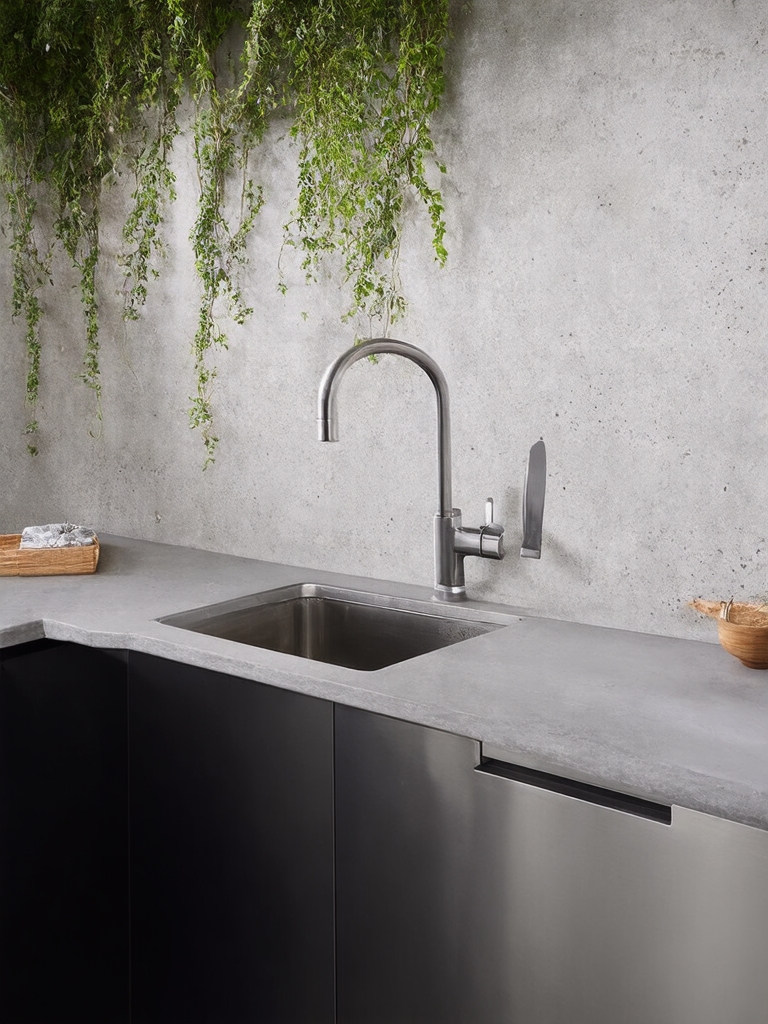
The reason concrete keeps winning outside is that style and durability stop competing. A finish that looks high-end is also the one that survives a decade of weather, which is rare in building materials. The catch is upkeep, and I would rather you hear it now than after the pour.
- Seal concrete counters once a year to keep stains and water out.
- Use control joints on long runs so cracks land where you plan them.
- Wipe acidic spills like wine and lemon quickly; they can etch a worn seal.
Heads-Up
Concrete is heavy, so a poured counter or island needs solid support and a level base; this is not a casual weekend DIY for a large run. It also needs control joints and a yearly seal. Plan for both, or hire a pro for the pour, and you avoid the cracks and stains that give concrete a bad name.
A Smooth Indoor-Outdoor Extension

One of the best uses of concrete is to blur the line between inside and out. Running the same polished concrete floor from the kitchen through a slider to the patio makes the outdoor kitchen feel like another room of the house. The indoor-outdoor kitchen ideas that work best almost always share a floor material across the threshold. It is the simplest trick for making a yard feel like part of the house.
- Carry one concrete floor finish from indoors to the patio.
- Match the outdoor counter to an indoor concrete element for flow.
- Use a wide slider or folding door so the two zones read as one.
Compact Concrete Kitchen Solutions

Concrete is not only for sprawling patios. Its custom-pour nature makes it perfect for small spaces, where every inch has to work.
Pour It to Fit the Space
A single L-shaped concrete counter can hold a built-in grill, a small sink, and storage below in the footprint of a closet. Because it is poured to fit, there is no wasted space around stock cabinet sizes.
For a balcony or a tiny yard, a slim cast-concrete ledge along one wall gives you prep space and a grill spot without crowding. Small concrete builds prove the material is about precision, not just mass.
Luxury Concrete Textured Finishes

The finish is where concrete goes from sidewalk to luxury. Grinding the surface to expose the aggregate, polishing it to a soft sheen, or pressing texture into it transforms plain gray into something that looks deliberately designed.
Integral color, mixed into the concrete itself, lets you move past gray into charcoal, sand, or warm taupe. A custom finish costs more in labor, so it is the place to spend if you want the build to feel high-end.
- Grind and polish for a soft, stone-like sheen.
- Add integral color to escape plain gray without painting.
- Press board or stamp texture in for grip and visual interest.
How a concrete counter gets its finish:
1Form and pour
Build a mold, pour the mix, and screed it level with reinforcement inside.
2Cure slowly
Let it cure for several days; rushing the cure is what causes cracks.
3Grind and seal
Grind to expose the texture you want, then seal it against stains and water.
Tiered Concrete for Entertaining

A two-level concrete counter is the entertainer’s trick. The lower tier handles prep and cooking while the raised tier becomes a bar that hides the mess from guests seated on the other side.
The height change does real work. It keeps raw food and dirty dishes out of sight, gives guests a comfortable bar to lean on, and separates the cook’s zone from the party without a wall.
Concrete is the natural material for this because it pours into any stepped shape in one piece. The backyard outdoor kitchen ideas built for hosting almost all use a raised bar like this.
A Concrete Kitchen Built for Pizza

If a wood-fired oven is the dream, concrete is its best friend. The material handles the intense heat that would crack tile or scorch wood, so it is the safe choice for the counter and base around an oven.
I tell pizza lovers to build a concrete landing zone right beside the oven for launching and pulling pizzas, with room for the peel, the toppings, and a stack of plates. The heat-proof surface means you never worry about setting a blazing pan down. The concrete just takes it.
It makes the oven the heart of the yard. For the cost of the oven plus a modest concrete surround, you get the centerpiece every gathering ends up circling.
Is Concrete Right for Your Build?
Concrete rewards the right owner and frustrates the wrong one, so be honest with yourself first. If you want a modern, durable, custom surface and can live with a little character, the occasional hairline crack, a yearly seal, concrete is hard to beat outdoors. It also suits anyone who wants poured stone looks without natural-stone prices.
Where I steer people away is the hunt for a perfectly smooth, never-changing surface, or a build with no plan for the weight, since concrete is heavy and a counter needs solid support below. In those cases a porcelain slab or tile may serve better. For more on where the money goes furthest, the remodel moves that add value apply outdoors as much as in.
Caring for Outdoor Concrete
Concrete is low-maintenance, not no-maintenance, and a small routine keeps it looking new for decades. I recommend sealing the counters once a year, an hour or two of work, to keep water and stains out of the surface. Wipe up acidic spills like wine, citrus, and tomato quickly, since they can etch a worn sealer.
Clean it with mild soap and water, never harsh acids or abrasive pads that strip the seal. Hairline cracks are cosmetic and can be filled if they bother you. Treated this way, an outdoor concrete kitchen will outlast nearly everything else in the yard.
More Concrete Outdoor Kitchen Questions
?Is a concrete outdoor kitchen cheaper than stone?
Usually, yes. Poured concrete runs about $65 to $135 a square foot installed, below most granite and marble, and a DIY block-and-veneer build costs less still. You trade some labor and a yearly seal for the savings.
?Will an outdoor concrete counter crack?
Fine hairline cracks are normal as concrete moves with temperature, and they are cosmetic. Reinforcement, control joints, and a slow cure keep them small. A lightweight GFRC mix is the most crack-resistant option if that worries you.
?How do you seal an outdoor concrete counter?
Clean it well, let it dry, and roll or wipe on a penetrating or food-safe topical sealer made for concrete, following the label. Reseal once a year. The whole job takes an afternoon and is the single most important upkeep step.
?Can you build a concrete kitchen yourself?
Small pieces and block-based builds are doable for a confident DIYer, but a large poured island is heavy and unforgiving. Forming, reinforcing, and curing have to be right. For big runs, hiring a concrete pro is money well spent.
?Does concrete get too hot in the sun?
A dark or unshaded concrete counter can warm up in direct sun, like any surface. A lighter integral color and a little shade keep it comfortable, and the material itself is unbothered by the heat.
Built to Last, Made to Impress
Concrete wins outdoors because it refuses to choose between looks and toughness. It pours into any shape, takes any finish, survives any weather, and costs less than the stone it imitates. The honest price of all that is a yearly seal and a few character cracks, which most owners gladly pay.
Save the designs here that fit your yard and your budget, then talk to a fabricator about the form and finish before you pour. Get the support and the sealing right, and a concrete outdoor kitchen is the last one you will ever need to build.
Keep the Inspiration Going


