

A client once asked me for a two-tier island with a raised bar, a waterfall edge, and a built-in wine fridge, because she had saved a dozen photos of exactly that. We built her something simpler and she loves it more, because it matched how she actually cooks. That gap, between the islands people save and the islands that work, is what this list is about.
These thirteen ideas are the ones that earn their place in real kitchens, the features designers reach for again and again because clients use them. I have flagged what each one is good for, what it costs in money or space, and, where it matters, which popular ideas are worth a second thought before you commit.
What Pros Actually Recommend
- Match the feature to your habits. A baking station or prep sink beats a trophy island you never touch.
- Storage and seating are the two features clients use most and regret least.
- Some saved-photo favorites, multi-tier bars, giant islands, work less well in real kitchens than they look.
- Spend on function first; a beautiful top on a badly planned island still frustrates daily.
An Organized Kitchen Island Design

Ask any designer which island feature clients thank them for later, and storage tops the list every time. The island sits in the room with the most stuff and the least wall space, so packing it with smart storage solves a problem every kitchen has. It is the least glamorous idea here and the one you will use most.
Design the storage around what you actually own. Deep drawers for pots and pans beat fixed shelves, a pullout for the trash and recycling hides the ugliest job in the kitchen, and a few dividers keep the chaos sorted. Built well, the storage disappears into a clean island exterior while doing the heavy lifting inside. For more storage thinking, see ideas that double small-kitchen storage.
An Efficient Galley-Style Kitchen Island

In a long, narrow kitchen, a galley-style island, slim and stretched to match the run, works far better than forcing in a square one. It keeps the parallel-counter efficiency of a galley while adding prep and storage down the middle, which is why designers favor it for the rooms most people assume cannot take an island. Here is how to make it work.
It is the move that proves a narrow kitchen can have an island after all, as long as you respect the aisles. Designers reach for it constantly in older homes and apartments where the floor plan is long and lean.
- Keep it narrow, around 24 to 30 inches deep, so the walkways on both sides stay generous.
- Stretch the length to suit the run, which gives you prep and storage without crowding the aisles.
- Skip seating if the room is tight, and use the whole top as a long, uninterrupted prep surface.
- ✓Does this feature match something you actually do daily, or just a photo you liked?
- ✓Will it still leave you 36 to 42 inches of clearance on every side?
- ✓Does it add storage, seating, or workflow, the three things clients use most?
- ✓Is the cost worth it versus a simpler version of the same idea?
- ✓Could a movable or smaller version serve you better in this room?
A Multi-Level Kitchen Island Design

The two-tier island, a lower prep level and a raised bar, is one designers recommend with a caveat. The raised bar does hide kitchen mess from seated guests and defines the eating zone, which some clients love. But it also breaks up your usable counter and can feel dated, so it is worth being honest about whether you want it.
If you go multi-level, do it for the right reasons.
- Choose it if hiding prep clutter from guests truly matters to how you entertain.
- Skip it if you want maximum continuous counter, since a single-level island gives more usable space.
- Keep the height difference subtle so the island still reads as one piece, not two stacked boxes.
A Dedicated Baking Station Design

For anyone who bakes, a dedicated baking station built into the island is the upgrade that earns daily love. A lower section of counter, set a few inches below standard height, makes kneading and rolling far easier on the back and shoulders, and clever storage keeps the flour, the stand mixer, and the sheet pans right where you use them. This is function tailored to a real habit.
The details make it sing.
- Set the baking counter a few inches lower than standard, around 30 to 32 inches, for comfortable rolling.
- Add a marble or cool-stone insert, which stays cool and suits pastry, plus a pop-up stand-mixer shelf.
- Store the baking gear, pans, mixer, and tins, in the drawers directly below so nothing travels far.
Match the island idea to your budget and commitment.
🎯Generous renovation budget
This is where a prep sink, a custom material blend, or a waterfall edge earn their cost, if they fit how you cook.
🎯High impact for low spend
Add storage and seating, swap the hardware, and add a baking-counter drop. The cheap features clients use most.
🎯Renting or cannot touch built-ins
A movable island on locking casters gives you prep, storage, and a top, and rolls out the door when you go.
A Minimalist Narrow Kitchen Island

Not every kitchen can take a hulking island, and designers increasingly recommend slim, minimalist versions for medium-sized rooms. A narrow island, just deep enough for prep and a single row of storage, delivers the central work surface and gathering point without eating the clearances a full island demands. It is the realistic island for a lot of homes.
The minimalist version keeps the form simple and the footprint honest. A clean, single-level top, flush or push-to-open fronts, and a tight profile let it serve its purpose without dominating, which suits modern kitchens and tight floor plans alike.
Because it is small, every inch has to count. Use the storage below for the things you reach for daily, keep the top clear for prep, and resist the urge to add seating that would push the footprint past what the room can spare.
A Movable Kitchen Island for Flexibility

A movable island on locking casters is the idea designers recommend for renters, small kitchens, and anyone who likes to reconfigure. It gives you the central prep surface and storage of a built-in island, then rolls aside for a party or out the door when you move. For flexibility on a budget, nothing built-in competes. Here is how to choose one.
- Pick one with locking casters so it stays put while you work, then frees up when you need the floor.
- Look for storage and a butcher-block top so it earns its keep as both prep and counter space.
- Size it to roll through your doorways, since the whole point is that it can move with you.
The island ideas that look better saved than built.
❌ Myth: Every kitchen needs an island
✅ Reality: Not true. If you cannot keep 36 inches of clearance around it, a peninsula or a cart serves the room far better.
❌ Myth: Bigger islands are always better
✅ Reality: An oversized island that crowds the walkways works worse than a smaller one with room to move around it.
❌ Myth: A waterfall edge is a timeless must-have
✅ Reality: It is beautiful but distinctly modern and pricey. Worth it in the right kitchen, out of place and costly in the wrong one.
Comfortable, Functional Seating Zones

Seating is the feature clients ask for most and the one most often done badly, so designers pay close attention to the comfort details. The difference between a bar that gets used for homework and dinner and one that sits empty comes down to a few inches of legroom and the right stool height. Get those right and the island becomes the heart of the home.
The numbers matter more than the look here. A 12-inch overhang for knees, about 24 inches of width per seat, and stools matched to the counter height are what separate comfortable seating from a sore back. Designers measure these before they choose a single finish.
Where the seating goes matters too. Putting stools on the side away from the cooking keeps guests out of the work zone, and angling a corner of the island can create a friendlier, face-to-face spot than a straight row. Comfort is what turns seating from a photo prop into a place people linger.
A Sleek Waterfall-Edge Design

The waterfall edge, where the counter material runs down the sides to the floor, is the feature clients save most and designers recommend selectively. It looks undeniably high-end and modern, turning the island into a single sculptural block, and it protects the cabinet sides from wear. It is a beautiful move in the right kitchen.
When Waterfall Is Worth It
The caveat is cost and commitment. A waterfall edge uses far more of an expensive slab and requires precise fabrication, so it adds meaningfully to the counter budget. It also reads distinctly modern, so it can feel out of place in a traditional or rustic kitchen and harder to undo later.
Designers recommend it when the kitchen is modern, the budget has room, and the stone is worth showing off. If those line up, it is a striking move; if they do not, a standard edge in the same material gives you most of the look for much less. For statement islands, see green islands worth the investment.
A Cozy Live-Edge Kitchen Island

A live-edge wood top, where the natural curve of the tree is left intact, is the idea designers recommend when a kitchen needs warmth and a one-of-a-kind focal point. The organic edge brings nature and craft into a room full of straight lines, and no two are alike, which gives the island real soul. Here is how to use one well.
- Use live-edge on a seating overhang or a small island, where the edge is visible and the wood can be admired.
- Seal it well and keep it away from the sink, since standing water is wood’s enemy.
- Pair it with simple, modern bases so the natural edge stays the star and does not tip into theme.
A Custom Kitchen Material Blend
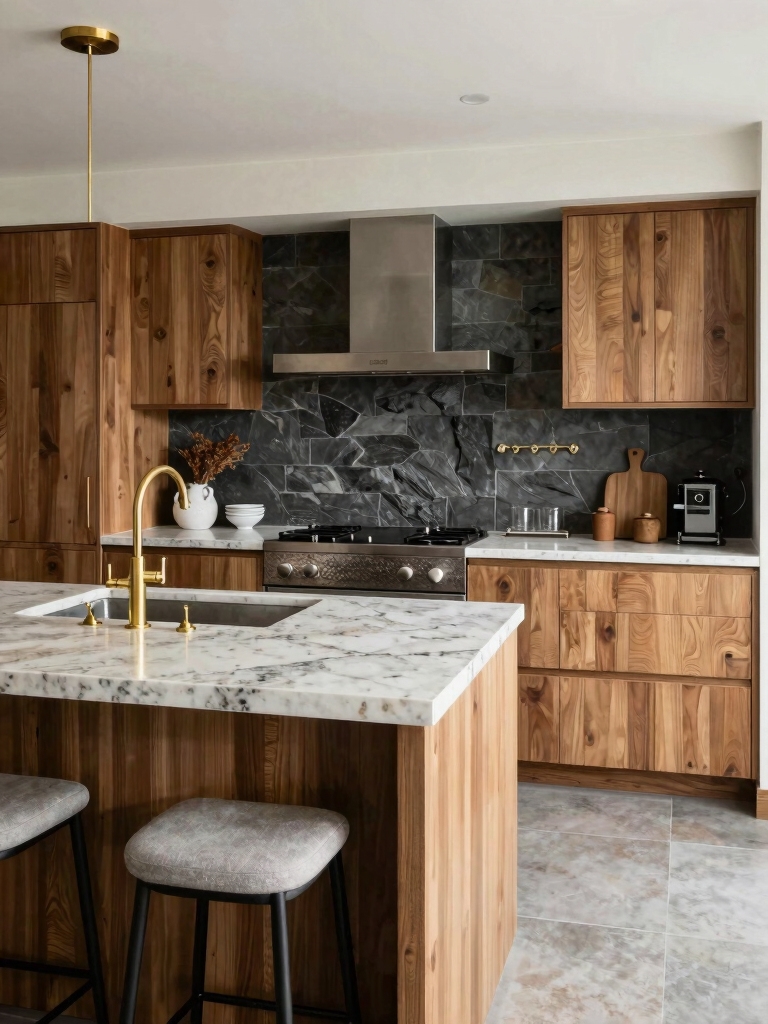
One of the most-recommended high-end moves is blending materials on a single island, a stone top over a wood base, or a butcher-block prep section set into a stone counter. Mixing materials adds depth and lets each surface do what it does best, the stone for looks and durability, the wood for warmth and knife-friendliness. It is how designers make one island feel custom.
The key is restraint and intention. Limit it to two materials that share a temperature or tone, and give each a clear job, so the blend reads as a considered choice rather than a leftover-bin mashup. Done with care, a material blend is the detail that makes people ask who designed the kitchen. For mixing tones across cabinetry, see how two-tone proves its worth.
Who It Suits Best
The honest truth is that no single island idea suits everyone, which is exactly why designers ask about your habits before your wish list. Serious cooks and bakers get the most from function-forward features: a baking station, a prep sink, deep pot storage, a long uninterrupted top.
Entertainers lean toward comfortable seating, a serving zone, and perhaps a beverage fridge, the features that pull people in. Small-space owners and renters are best served by a slim minimalist island or a movable one that flexes with the room.
And a word for the trophy-island dreamers: a waterfall edge, a two-tier bar, and a blend of four materials can absolutely be beautiful, but only if they match how you actually live. The clients happiest a year later are the ones who chose the boring, useful features first and saved the drama for one well-judged statement.
Pick the ideas that fit your real days, not just your saved photos, and the island will earn its keep. Where it gets tricky, a designer or a few hours with a kitchen planner is money well spent.
Designer Island Questions, Answered
?What island feature do designers recommend most?
Smart storage, every time. The island sits where a kitchen has the most stuff and the least wall space, so deep drawers, a trash pullout, and good dividers solve a near-universal problem. It is the least exciting feature and the one clients use most, which is exactly why pros prioritize it over flashier add-ons.
?Is a waterfall edge worth the cost?
Sometimes. It looks high-end and protects the cabinet sides, but it uses much more of an expensive slab and reads distinctly modern. Designers recommend it when the kitchen is contemporary, the budget allows, and the stone is worth putting on display. In a traditional or budget kitchen, a standard edge in the same stone gives most of the look for far less.
?Are two-tier islands out of style?
They are less universally loved than they once were, since the raised bar breaks up usable counter and can feel dated. Designers still recommend them for clients who specifically want to hide prep mess from seated guests, but for most people a single-level island gives more usable space and a cleaner, more current look.
Choose the Island You Will Actually Use
What unites every idea designers truly recommend is that it serves a real habit, not a saved photo. Storage you will fill, seating you will sit in, a baking counter you will roll dough on, those are the features people thank their designer for years later. The trophy details can come too, but only after the useful ones are locked in and only where they truly fit the kitchen.
Before you commit, list the three things you do most at a counter and choose the island features that serve them first. Which one feature would change how you actually use your kitchen?
More Hair Ideas


