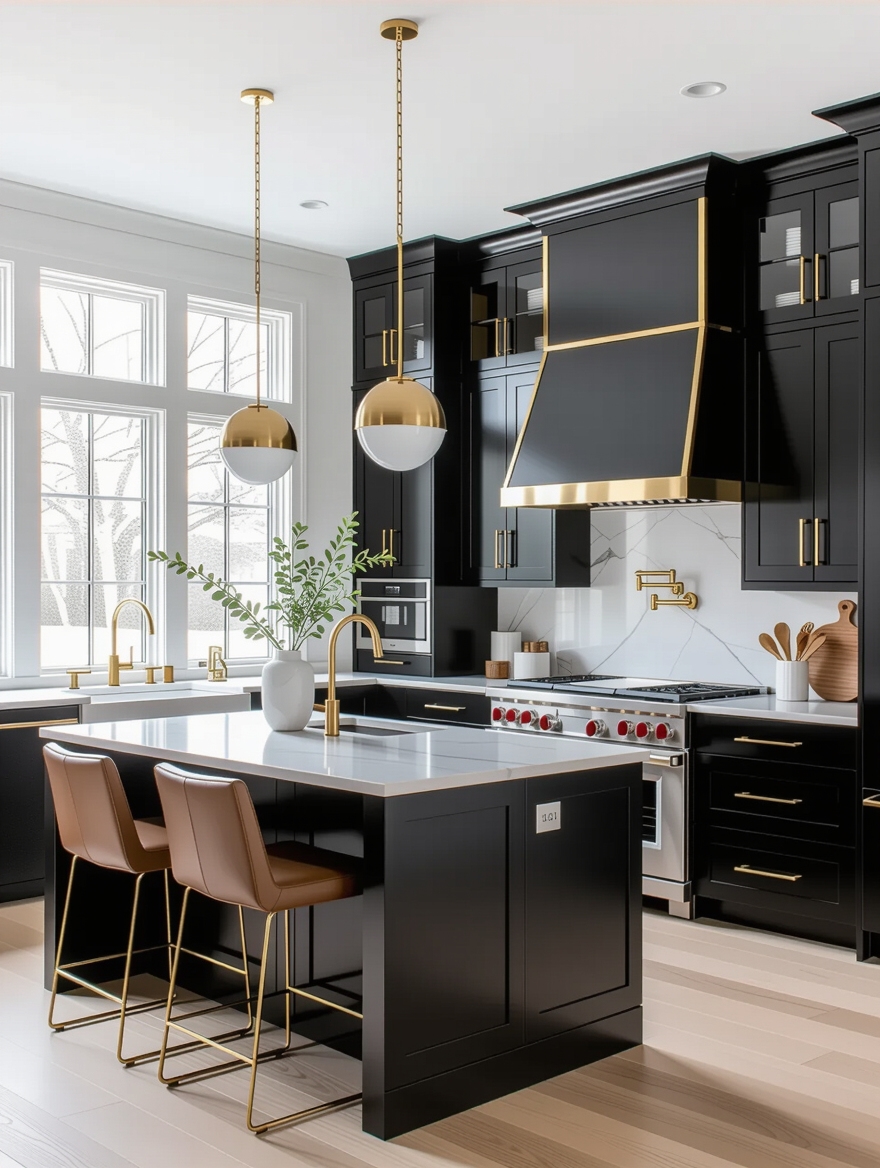

Open a deep base cabinet in a small kitchen and watch what happens: the front holds three things and the back holds a graveyard of pans you forgot you owned. That wasted dark zone is where most of your storage actually hides. The cabinets are not too small; they are just half-used.
These thirteen ideas double a small kitchen’s storage from the inside, by reaching the dead space cabinets waste rather than adding new boxes. Most are organizers you can fit yourself in an afternoon, and each note includes a rough cost. Start with the cabinet that frustrates you most, usually the deep one by the stove.
Double Your Storage From the Inside
- Most lost storage is the deep, dark back of base cabinets; pull-outs bring it to you.
- Use the vertical air inside cabinets with shelf risers and dividers, not just the floor of each shelf.
- Reach awkward spots, corners, toe-kicks, and door backs, that a small kitchen usually ignores.
- Most fixes are DIY organizers under $50; you rarely need new cabinets to gain real space.
Pull-Out Cabinets to Maximize Deep Storage
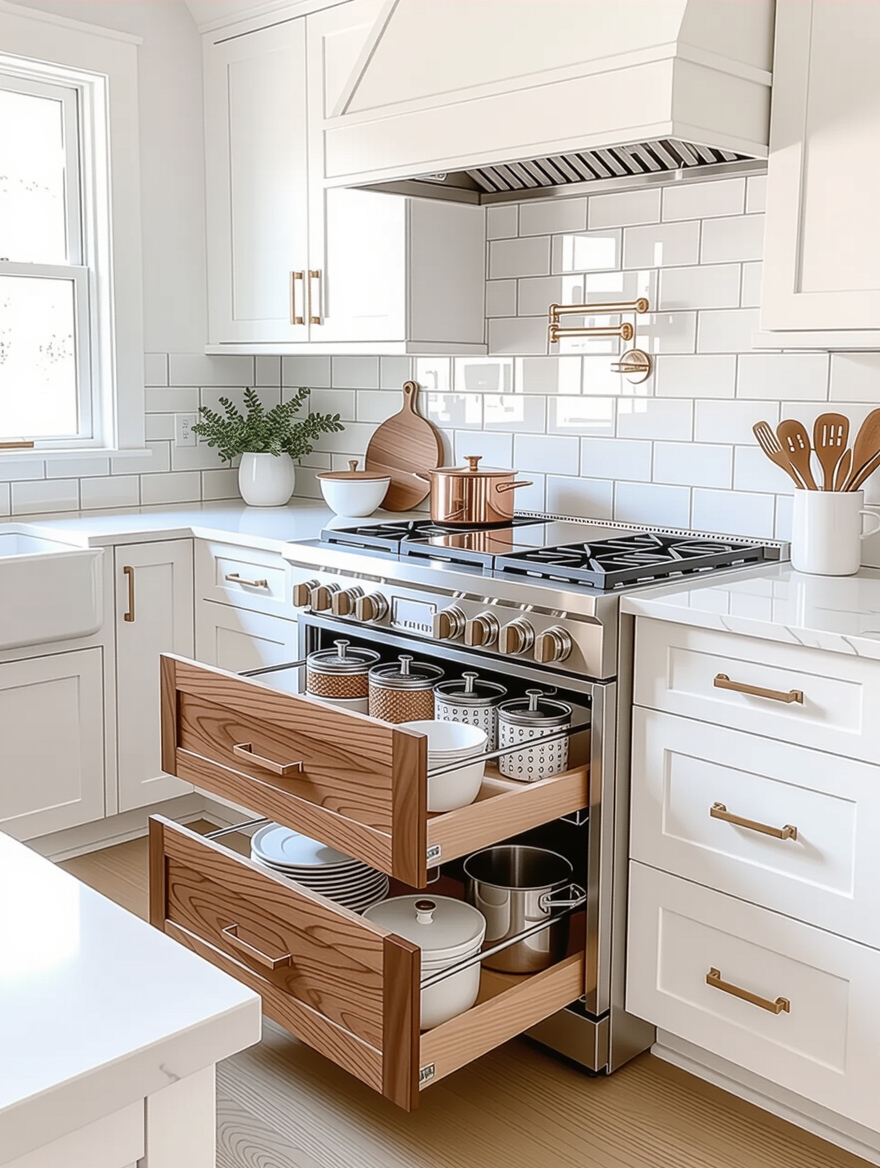
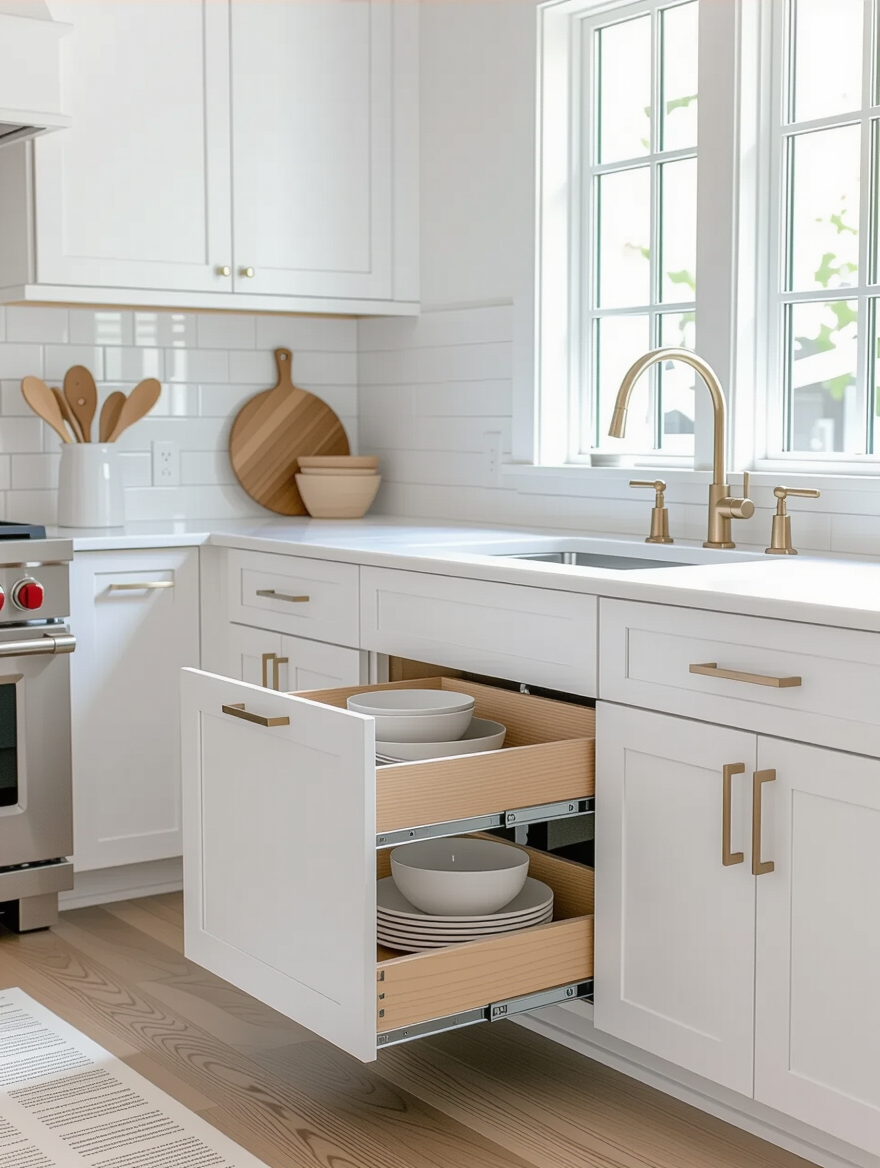
The single biggest storage win in a small kitchen is a pull-out shelf in a deep base cabinet. No more crouching and digging. The whole shelf slides out so you see and grab everything at once, and you instantly use the third of the cabinet that was dead space.
Reach the wasted third
It is also one of the easiest upgrades to fit. Many pull-out trays simply screw to the cabinet floor or rest on the existing shelf, so it is an afternoon job with a drill. Expect about $15 to $40 per pull-out tray.
I steer people to start with the deepest, heaviest pull-out where the pots live, since that is the cabinet that frustrates everyone most, and getting that one right tends to change how the whole kitchen feels to cook in within a single week. One good slide-out turns a useless deep box into the most usable storage you own, and the case for painted cabinets gets stronger when the boxes work this hard.
Slide-Out Pantry Shelves for Easy Access
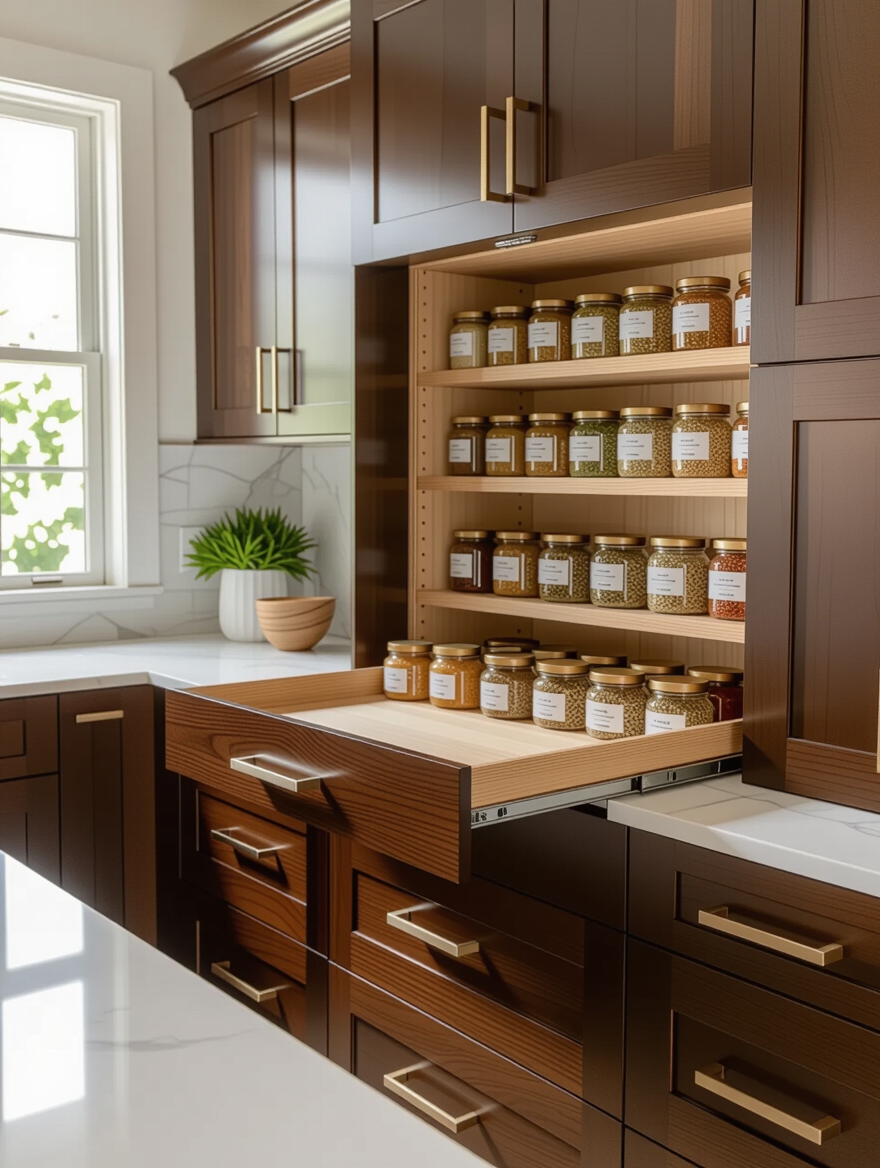
A small kitchen rarely has a walk-in pantry. A slide-out pantry fixes that. It packs the same capacity into the width of a cabinet, and the whole tower rolls out so both sides are reachable, turning a narrow gap into serious storage.
- Fit a tall slide-out pantry, often $80 to $200, into a cabinet or a slim gap beside the fridge.
- Use the door-facing side for cans and jars you reach for daily.
- Keep heavy items low so the unit rolls smoothly and stays stable.
Corner Cabinets With Lazy Susans for Reach

Corner cabinets are the black hole of any small kitchen. You can never quite reach the back. A lazy Susan turns that cavern into spinning storage, so a quick rotation brings the far corner around to your hand.
For an even better reach, a swing-out or pull-out corner unit brings the contents clear of the cabinet entirely. These cost more than a basic turntable, but they rescue the most wasted cabinet in the whole kitchen.
A drop-in lazy Susan runs as little as $20 to $50, while a full pull-out corner system costs more and may want a pro to fit. Either way, you reclaim a corner that was holding nothing but air and forgotten appliances.
Vertical Dividers to Organize Flat Items

Baking sheets, cutting boards, and trays waste a whole shelf when they lie flat in a teetering stack. Stand them up. Vertical dividers hold them on edge, so you store more in less space and pull one out without toppling the rest.
It is a five-minute, few-dollar fix that changes how a cabinet works. A tall cabinet beside the oven becomes the perfect home for everything flat, freeing the shelves those items used to hog.
- Add vertical dividers to a tall cabinet for trays, boards, and sheet pans.
- Stand lids on edge too, so they stop sliding around loose.
- Use a tension-rod version if you rent and cannot screw anything in.
Which cabinet is wasting the most space?
🎯A deep base cabinet by the stove
Add pull-out shelves so the dark back slides out to you instead of swallowing your pots.
🎯A black-hole corner cabinet
Drop in a lazy Susan or a swing-out corner unit to reach the cavern you never could.
🎯A tall, awkward cabinet
Use vertical dividers for flat items and a slide-out pantry for cans and jars.
Add Adjustable, Flexible Cabinet Shelves

Most cabinets ship with shelves spaced for nothing in particular, leaving a wasteful gap of dead air above your dishes. Adding adjustable or stackable shelf inserts lets you match the spacing to what you actually store, often doubling what a single shelf holds. A shelf riser, in particular, creates a second tier for cups or cans for just a few dollars.
- Drop in shelf risers to create a second level above plates or mugs.
- Reset adjustable shelves to your real item heights, closing the dead gaps.
- Use stackable wire shelves where the cabinet has no peg holes to move.
Use Every Inch of a Small Kitchen Cabinet
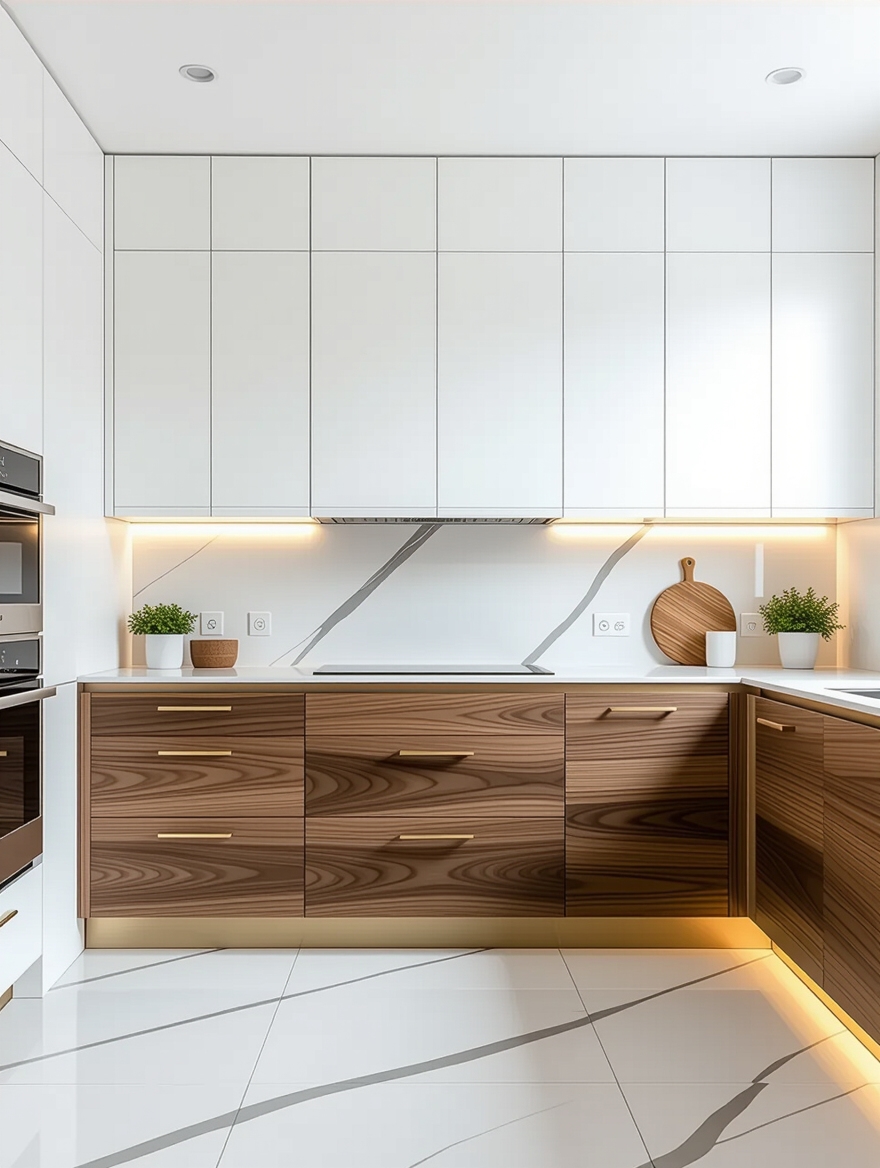
The inside of every cabinet door is prime storage that most small kitchens ignore. I check it first in every kitchen. Clip-on or adhesive racks there hold spices, wraps, lids, or cleaning bottles, using a surface that was doing nothing at all.
It is the cheapest way to find space you did not know you had. A row of door racks under the sink corrals the spray bottles, and a rack on a pantry door turns into a spice shelf, all without touching the cabinet’s actual shelves.
- Mount door-back racks for spices, wraps, and cleaning supplies.
- Use the under-sink door for bottles to free the cabinet floor.
- Choose adhesive versions if you rent, and test them on a hidden spot first.
Maximize Storage Up to the Ceiling
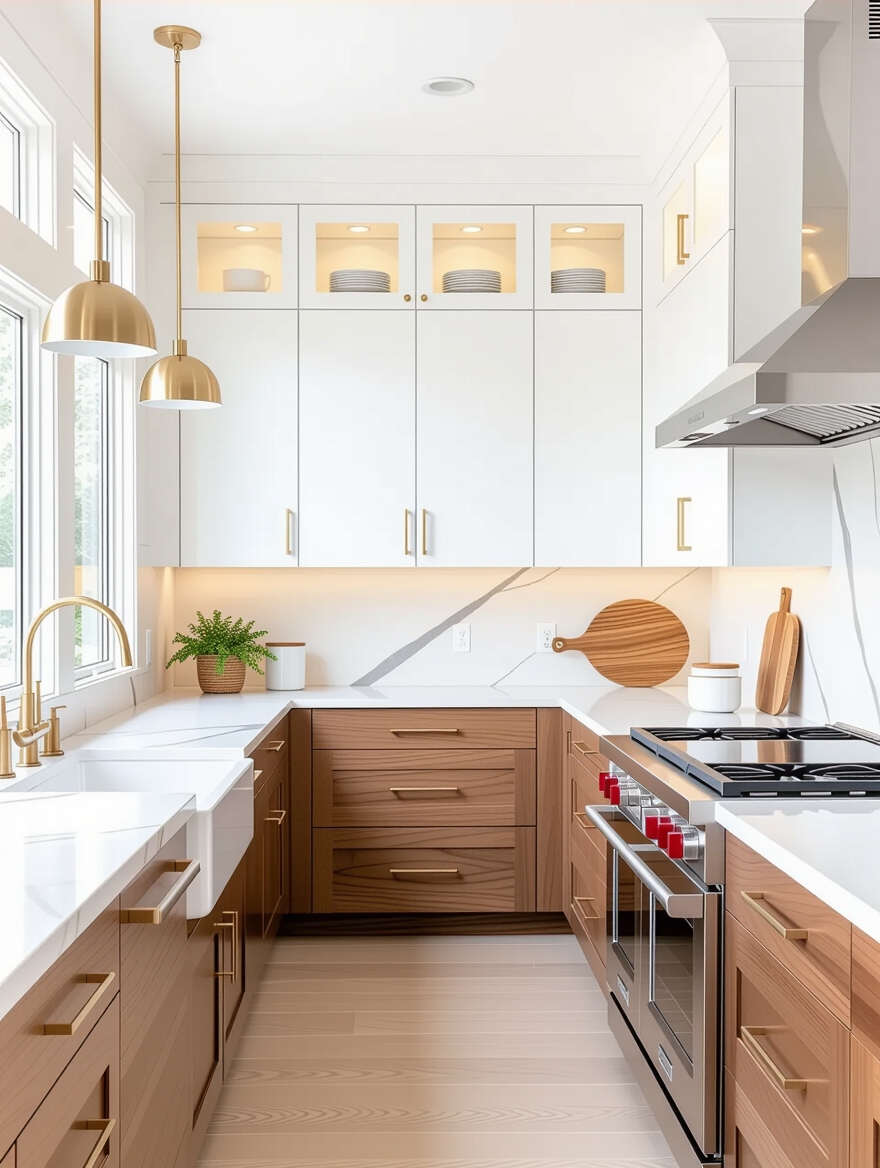
Most small kitchens leave a foot of dead air above the upper cabinets, gathering only dust. I hate seeing that gap. Taking cabinets to the ceiling, or adding a shelf or bins up there, reclaims that wasted band for the things you reach for a few times a year. Found storage, in a kitchen that swears it has none.
- Stack bins or baskets above the uppers for seasonal and rarely used items.
- Add a high shelf if full cabinets to the ceiling are out of budget.
- Keep daily items lower and let the top tier hold the once-a-year gear.
📋Dead space most kitchens ignore
- ✓The dark back third of deep base cabinets.
- ✓The backs of every cabinet door.
- ✓The foot of air above the upper cabinets.
- ✓The toe-kick strip under the base run.
Open Cabinet Fronts for Easy Accessibility
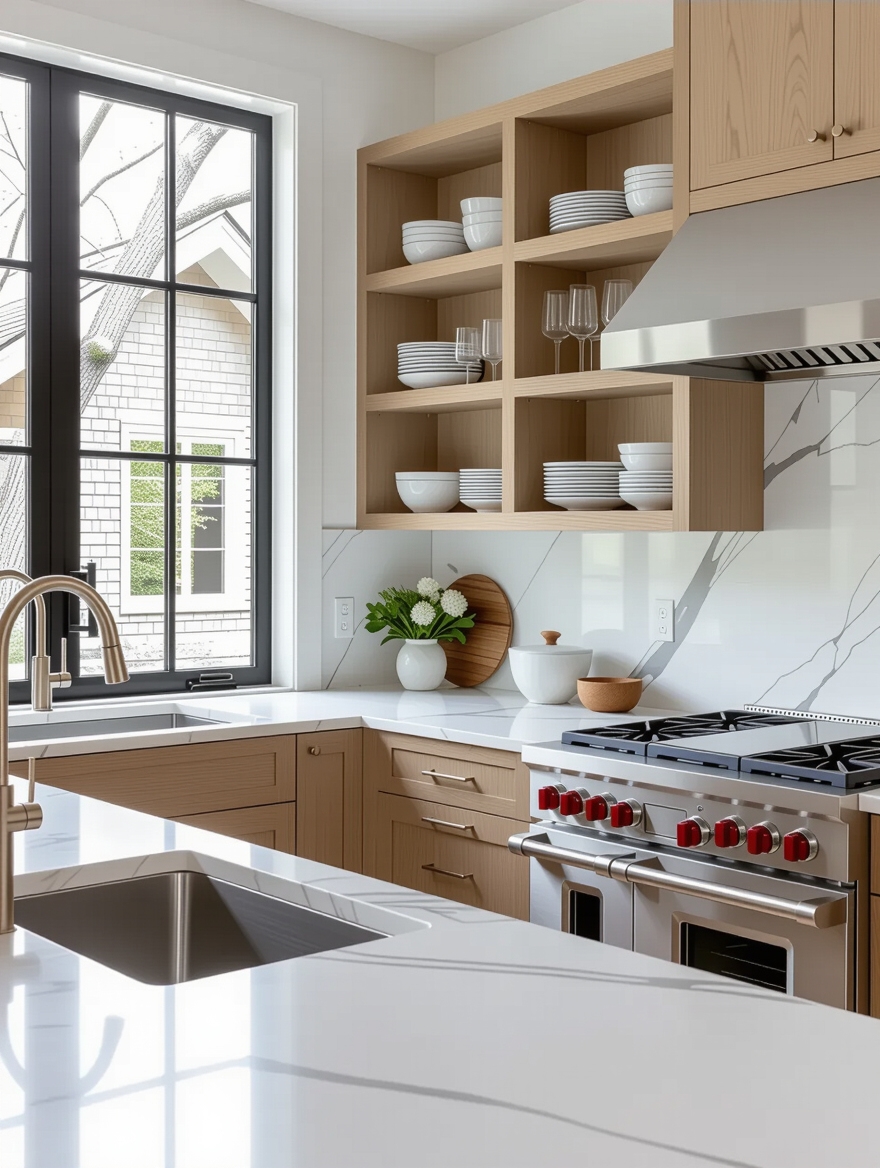
Swapping a cabinet door for an open front, or removing one entirely, makes a small kitchen feel less boxed in and puts everyday items right at hand. You see what you have at a glance, which speeds up cooking in a tight space where every second of digging adds up.
Keep open cabinets to one section and stock them with things you use and rotate, so they stay tidy through constant use. The mix of a few open fronts and mostly closed storage keeps the room airy without putting your whole cupboard on display.
- Open one cabinet section, not the whole run, to keep hidden storage.
- Stock it with daily dishes so use keeps it clean.
- Remove a door entirely for a free, reversible trial of the look.
Convenient Spice Organization

Spices are the clutter that takes over a small kitchen counter, and corralling them frees the most-used surface you have. Get them off the counter. A tiered insert, a drawer organizer, or a magnetic rack keeps every jar visible so you stop buying duplicates of cumin you already own.
Pick the method that suits your space: a pull-out spice rack in a narrow gap, an in-drawer tray that lays jars flat and labeled, or a door-back rack. Each gets the jars off the counter and into a spot you can scan in a second.
- Use an in-drawer tray to lay spices flat and labeled for a quick scan.
- Fit a slim pull-out rack into a narrow gap beside the stove.
- Keep the spices you cook with most at the front, the rest behind.
| Upgrade | Rough cost | DIY friendly? |
|---|---|---|
| Pull-out shelf or tray | $15 to $40 each | Yes, a drill and an hour |
| Lazy Susan | $20 to $50 | Yes, drops in |
| Slide-out pantry | $80 to $200 | Mostly; some need a pro |
| Toe-kick drawers | Kit or reface | Advanced or pro |
Hidden Toe-Kick Drawers
The recessed strip under your base cabinets, the toe-kick, is dead space in nearly every kitchen. Toe-kick drawers turn that hidden band into shallow storage for flat things like platters, baking sheets, or pet bowls, finding inches no one else thinks to use.
- Fit toe-kick drawers under base cabinets for flat, rarely used items.
- Use them for platters, linens, or pet bowls that waste a real shelf.
- Buy a kit to retrofit existing cabinets, or add them during a reface.
How to Plan It Without Wasting Money
Before you buy a single organizer, empty the problem cabinet and sort what comes out. I tell every client to do this first, because half the storage problem is usually stuff you no longer use. Once the keepers are clear, you can see what each cabinet really needs: a pull-out for the deep pots, dividers for the flat trays, risers for the short stuff.
Matching the fix to the contents is what keeps you from buying a drawer of organizers that just become new clutter. Measure the interior width, depth, and height of each cabinet too, since a pull-out that does not fit is a frustrating, expensive return.
The mistake I see most is buying trendy organizers before doing that audit, then forcing them to fit. Start with the one cabinet that annoys you daily, solve it properly, and live with it a week before tackling the next. Most of these upgrades are under fifty dollars and reversible, so there is no need to redo the whole kitchen at once.
Work cabinet by cabinet, and the storage adds up faster than a big-box shopping spree ever would. The same edit-first instinct behind any clutter-hiding plan applies here.
Cabinet Storage Questions, Answered
?What is the cheapest way to add cabinet storage in a small kitchen?
Door-back racks and shelf risers, both often under ten dollars. They use the inside of doors and the dead air above shelves, two spaces nearly every kitchen wastes, with no tools beyond a screwdriver or adhesive.
?Can I add pull-out shelves myself?
Usually, yes. Many pull-out trays rest on the existing shelf or screw to the cabinet floor in about an hour with a drill. Measure the cabinet’s interior width carefully first, since pull-outs need clearance to slide.
?Are corner cabinet lazy Susans worth it?
For a small kitchen, absolutely. The corner cabinet is usually the most wasted space you own, and even a basic drop-in turntable at $20 to $50 turns an unreachable cavern into spinning, usable storage.
?How can I really double my kitchen storage?
Stack the fixes. Pull-outs reach the deep back, risers and dividers use the vertical air, door racks and toe-kick drawers find new surfaces, and ceiling-height bins claim the top. Together they roughly double what the same cabinets hold.
Your Cabinets Are Bigger Than They Look
The storage you are missing in a small kitchen is mostly already there, locked in the dark backs, dead corners, door interiors, and toe-kicks your cabinets waste. Reach those spaces with pull-outs, dividers, and a few clever inserts, and you can nearly double what the same cabinets hold without adding a single new box.
Best of all, most of it is a do-it-yourself afternoon and well under fifty dollars per fix. Start with the cabinet that annoys you most, claim its wasted space, and work outward. The kitchen will feel like it grew, even though all you really did was finally use it.
More Inspiration