

People agonize over cabinet color and barely think about the door style, which is backwards. The profile of the door, shaker, slab, beadboard, raised panel, is what decides whether your kitchen reads modern, classic, or country, often more than the color does. It is the bones of the look, and it is what fills every design board you have been saving.
These sixteen door styles are the ones trending right now, sorted by the mood they set. For each I have noted what it suits, roughly where it sits on cost, and the small detail that makes it feel current. Get the door style right and almost any color works on top of it; get it wrong and no paint color quite saves the room.
Cabinet Styles at a Glance
| Style | Reads as | Best for |
|---|---|---|
| Shaker | Timeless, versatile | Almost any kitchen |
| Flat-front / slab | Modern, minimal | Contemporary kitchens |
| Beadboard / vintage | Cottage, characterful | Country and period homes |
| Two-tone | Layered, designed | Adding depth on a budget |
Choosing Your Kitchen Cabinet Style
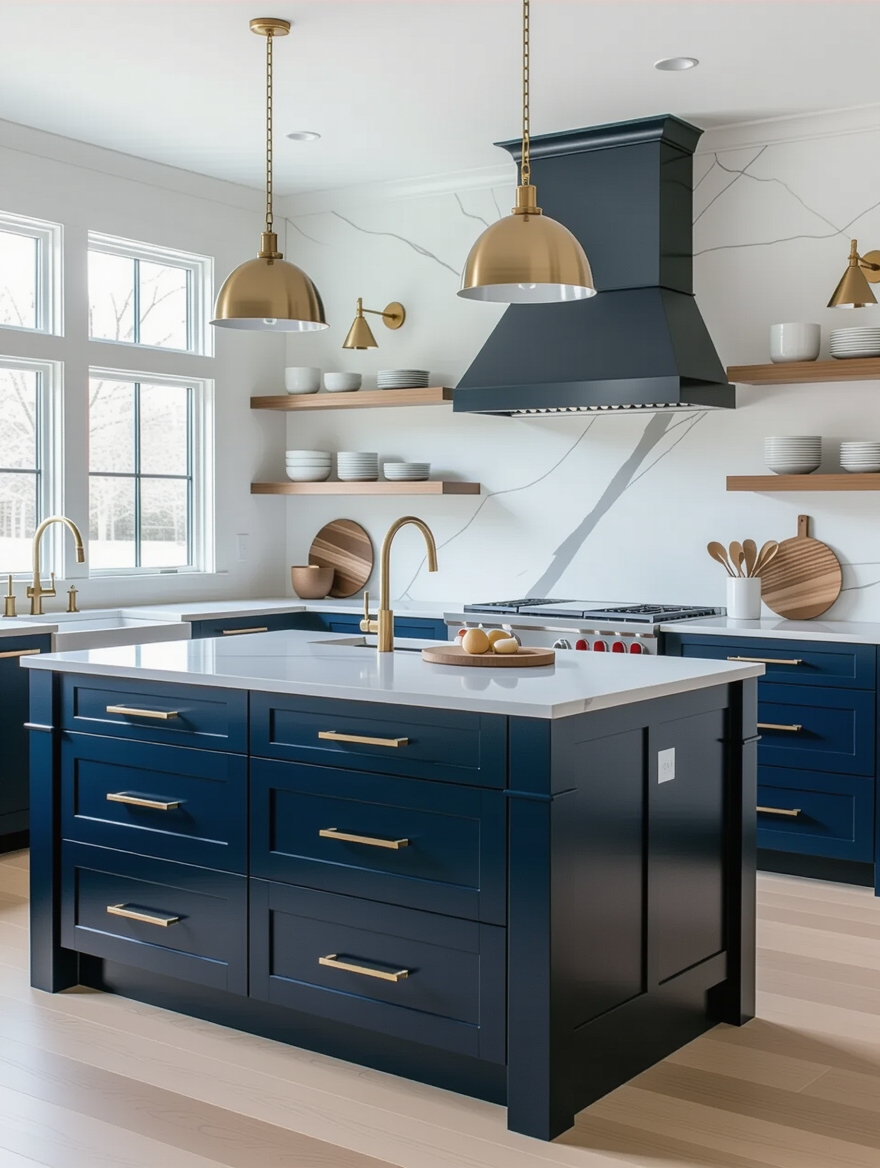
The cabinet door is the single largest repeated element in a kitchen, so its style sets the tone before any color does. A flat slab door looks modern no matter what color you paint it; a beadboard door looks cottage even in a sleek gray. That is why choosing the style is the real first decision, with color a close second.
Style First, Color Second
Start from the feeling you want and the house you have. A door style that fights the architecture, ultra-modern slab in a Victorian, fussy raised panel in a loft, always looks slightly off, while a style that suits the bones of the home feels original to it. Let the house guide the door before the trend does.
Budget plays in, too. Simpler doors like flat-front and basic shaker cost less to make than detailed raised panels or custom profiles, so the style choice has a real price tag attached. I always have clients settle the style and the budget together, since one constrains the other. A door swap on existing boxes can take a cabinetmaker a week or two to mill and fit.
Timeless, Versatile Shaker Cabinets
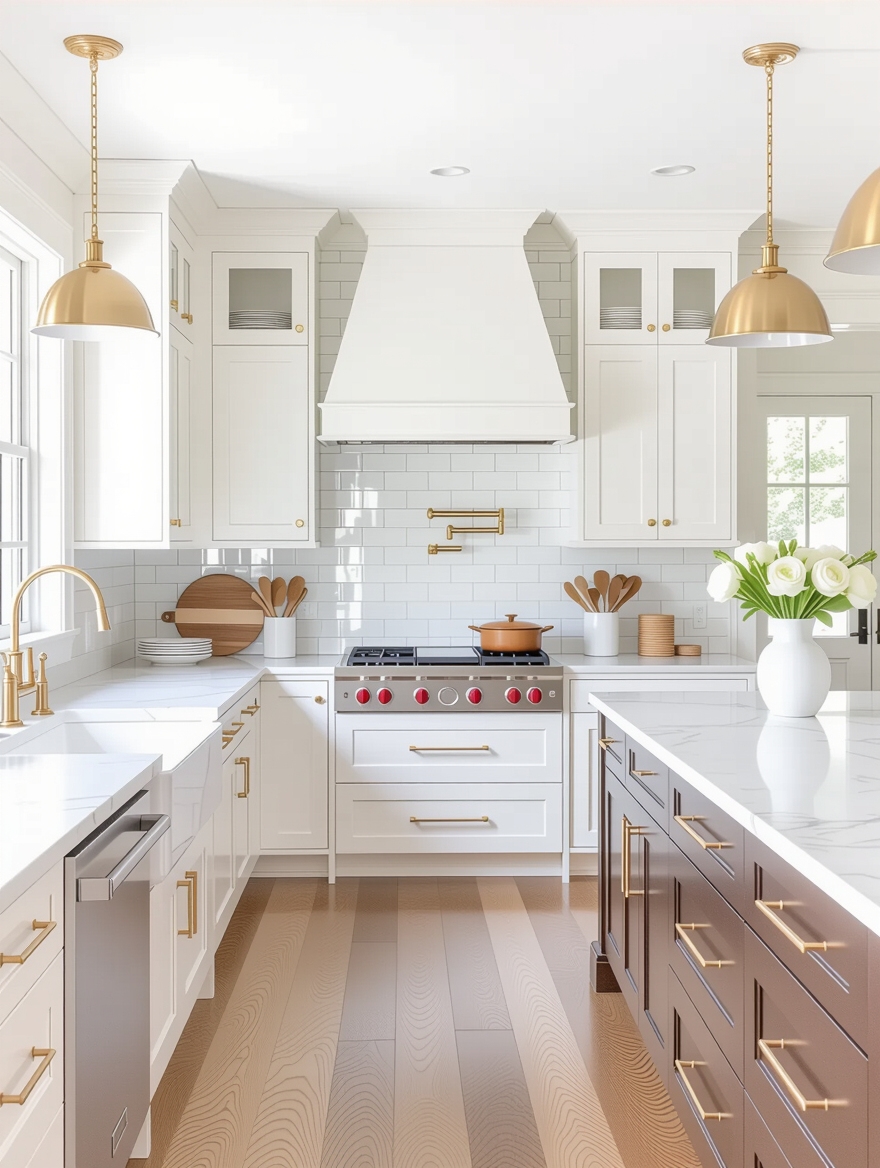
If one style rules every design board, it is the shaker: a simple recessed-panel door with clean, square edges. It earns that ubiquity honestly, since it suits almost any kitchen, takes any color, and has stayed in style for over a century. When clients cannot decide, shaker is almost always the right answer. Here is why it never loses.
- It bridges every style, reading traditional in cream and contemporary in charcoal, so it fits any home.
- It is mid-priced and widely available, which keeps a quality kitchen within reach.
- It is the safest resale choice, since its broad appeal dates the slowest of any door. See grey cabinets designers swear by.
👍Trendy door styles
- +Handleless and super-matte feel of-the-moment and modern.
- +Two-tone and bold-color slabs photograph beautifully and feel current.
- +Vintage profiles ride the strong cottage and farmhouse wave.
👎Timeless door styles
- –Shaker and simple slab age the slowest and suit nearly any home.
- –Natural wood and inset read classic and rarely fall out of favor.
- –Safer choices are the smarter call if you plan to sell in a few years.
Timeless Charm With Inset Cabinets
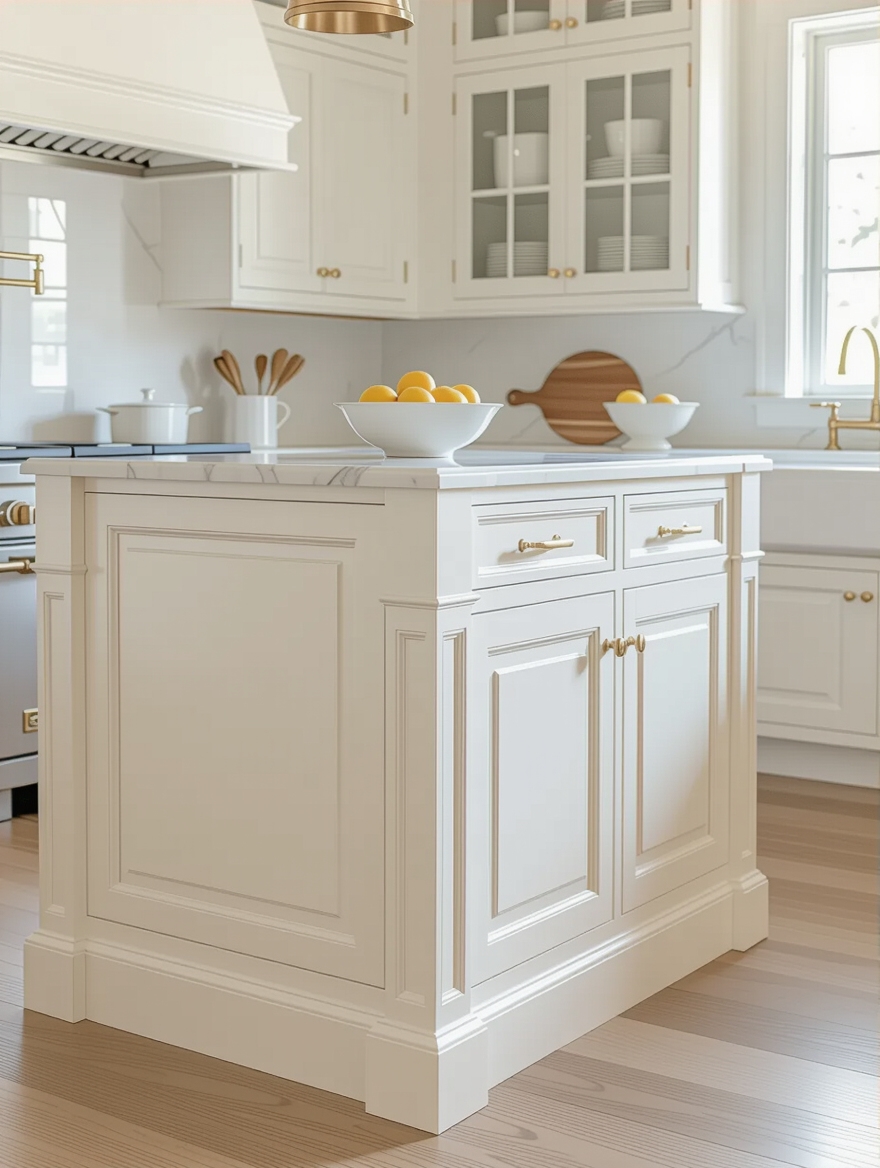
For a step up in craftsmanship, inset cabinets, where the door sits flush inside the frame rather than overlaying it, are the detail designers quietly prize. The flush fit reads custom and high-end, with the precise, furniture-like lines of an old, well-built house. It is the choice that says real money and real craft went into the kitchen.
Worth It When the Budget Allows
The catch is cost and precision. Inset doors require tighter tolerances to build and fit, so they sit at the premium end of cabinetry, and they need a stable environment, since the close gaps show any seasonal swelling. This is a style for a bigger budget and a quality cabinetmaker.
If the budget does not stretch to true inset, a quality shaker with a slim, consistent reveal gives a similar tailored feeling for less. But where the budget allows, inset is the detail that separates a truly high-end kitchen from a merely nice one.
Timeless Vintage Kitchen Charm

Vintage-leaning door styles, beadboard panels, raised panels with period profiles, and detailed moldings, are trending hard for anyone chasing cottage and farmhouse charm. The texture and detail bring warmth and a sense of history that a flat modern door cannot, which is exactly the well-worn character people are pinning by the thousand.
These styles suit the homes and looks they came from. Beadboard sings in a cottage or coastal kitchen; a raised panel suits a traditional or period home. Dropped into a stark modern space they can feel costumey, so they reward a kitchen with the architecture to back them up.
The honest trade-offs are cleaning and cost. Detailed, grooved doors catch grease and dust in their profiles and take longer to wipe down, and the extra millwork costs more than a flat door. For the right characterful kitchen, though, that texture is the whole point and well worth the upkeep.
Match the door style to your kitchen.
🎯You want a safe, do-anything choice
Shaker. It suits any home, takes any color, and dates the slowest of all.
🎯You want a sleek, modern kitchen
Flat-front slab, or handleless if the budget allows, for clean, uninterrupted lines.
🎯You want cottage or period charm
Beadboard or a raised panel, ideally in a home with the architecture to match.
🎯You want depth on a budget
Two-tone, with the bolder finish on the lowers or island and lighter uppers.
Warm, Inviting Wood Cabinets
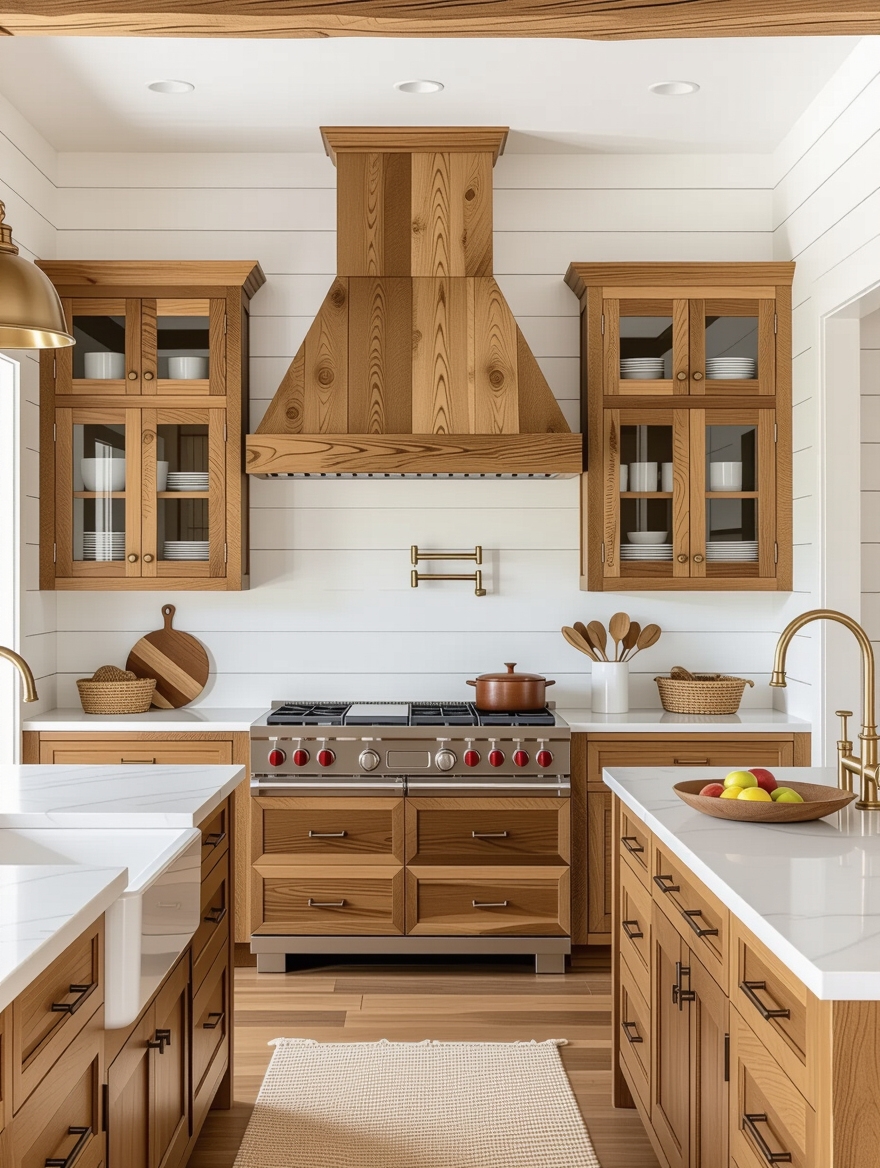
After years of painted-everything kitchens, natural wood cabinets are firmly back, and the boards are full of them. The grain and warmth of real or wood-look doors, white oak, walnut, knotty alder, bring an organic richness that paint cannot, and they pair beautifully with the warm, natural materials trending alongside them. This is the style for a kitchen that wants soul.
A few choices keep wood cabinets current.
- Choose a matte or natural finish over heavy gloss or orange-toned stain, which is what dated the old wood kitchens.
- Pair wood with a quiet counter and warm metal so the grain stays the star.
- Use wood on part of the kitchen, an island or lowers, for richness without a dark, heavy room. See wood cabinets that feel fresh.
Minimalist Flat-Front Slab Cabinets
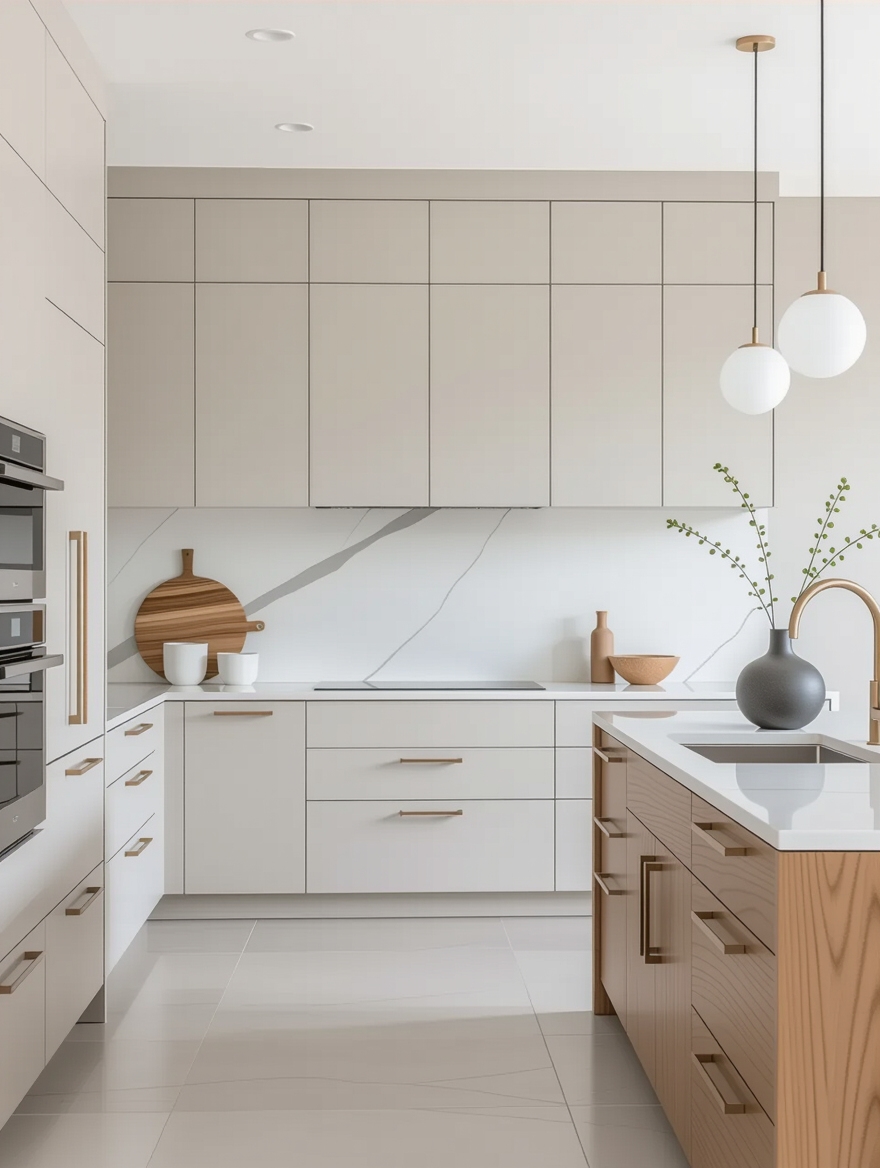
The flat-front slab door is the backbone of the modern kitchen, a smooth, unbroken panel with no frame or detail. Its clean simplicity lets color, grain, and the room’s architecture lead, which is exactly the pared-back look contemporary boards are full of. It is also the most affordable door to make, since there is no millwork involved.
Slab doors reward a few deliberate touches.
- Choose slim bar pulls or push-to-open fronts to keep the clean lines uninterrupted.
- Let a beautiful wood grain or a rich color carry the door, since there is no detail to hide behind.
- Keep the whole kitchen restrained, since slab doors look best in a tight, uncluttered palette.
ℹ️Good to Know
The reason shaker dominates design boards year after year is that it is truly neutral as a shape, not just as a color. Because the recessed-panel door reads neither strongly modern nor strongly traditional, it acts as a blank canvas that takes on the character of whatever color, hardware, and counter you pair it with. That chameleon quality is why it has survived more than a century of changing kitchen trends and shows no sign of dating now.
Handleless, Integrated Minimalist Design
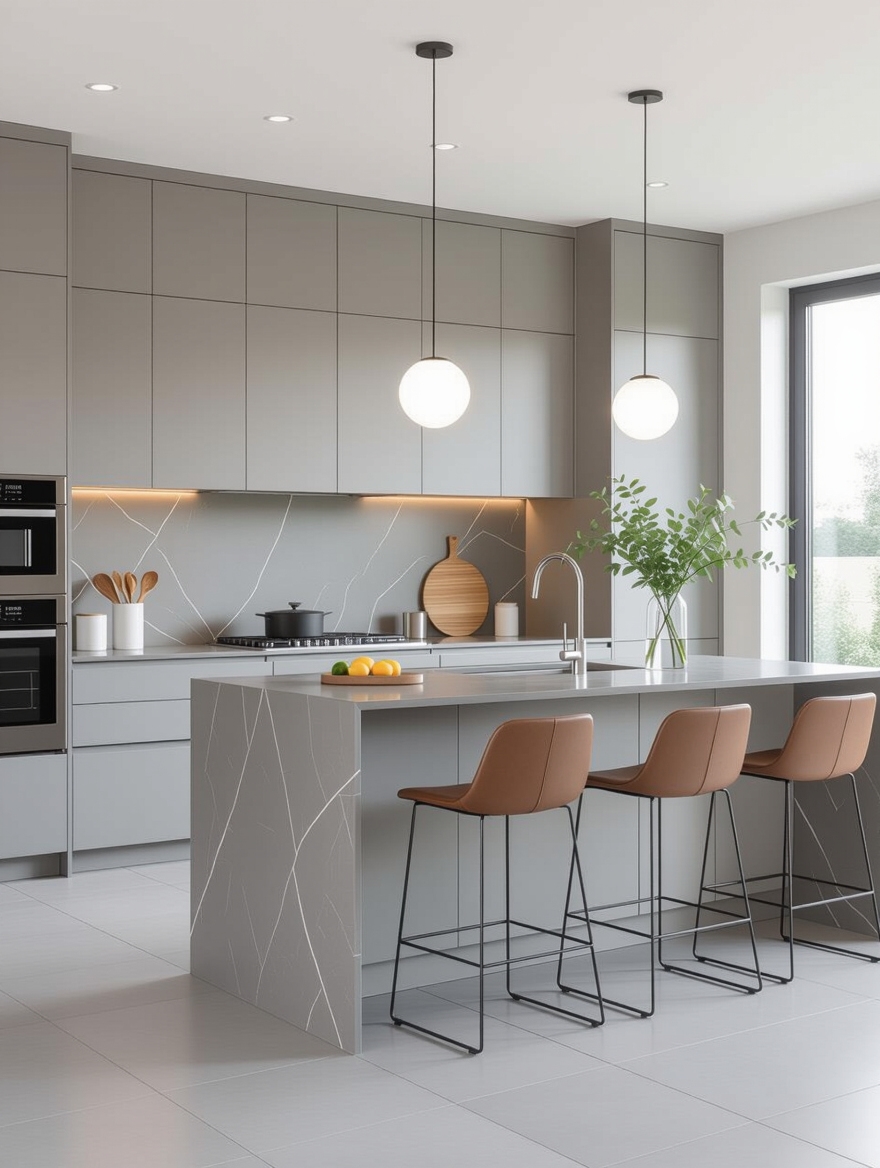
The most minimal door style of all skips visible hardware entirely. Handleless cabinets, using push-to-open mechanisms or a continuous routed channel along the edge, give a flat run of cabinetry an uninterrupted, almost architectural smoothness. This is the look topping the most modern boards, where the kitchen reads more like furniture than a workspace.
Going handleless asks for some planning.
- Decide between push-to-open and a J-channel pull, since each changes how the edge looks and works.
- Pair it with slab doors and integrated appliances so the whole run stays smooth and quiet.
- Know that push-to-open hardware adds cost and the occasional repair, the trade for that clean face.
Sleek, Modern, Bold Cabinets
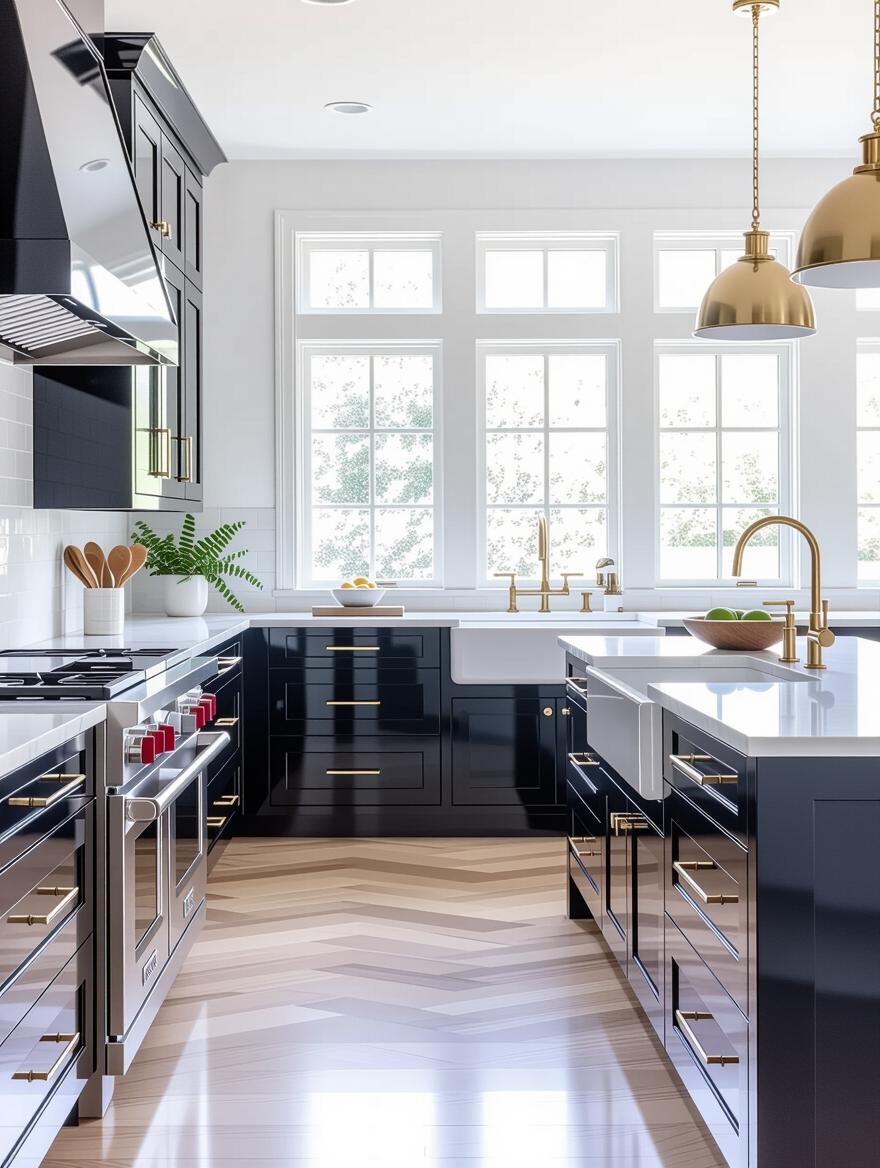
Modern cabinet style is not only about restraint; a confident, saturated color or a high-contrast scheme on clean slab doors is one of the boldest looks trending now. The combination of a sharp, simple door profile with a daring color, deep green, inky blue, dramatic black, feels current and self-assured, letting one strong choice define the whole room.
The discipline is to be bold in one dimension at a time. A loud color works best on a quiet, simple door, and an intricate door works best in a quiet color, so pick whether the drama lives in the shape or the shade and keep the other calm. That restraint is what keeps bold modern looking designed rather than chaotic. For confident color, see green that looks expensive.
Inviting Modern Matte Finishes
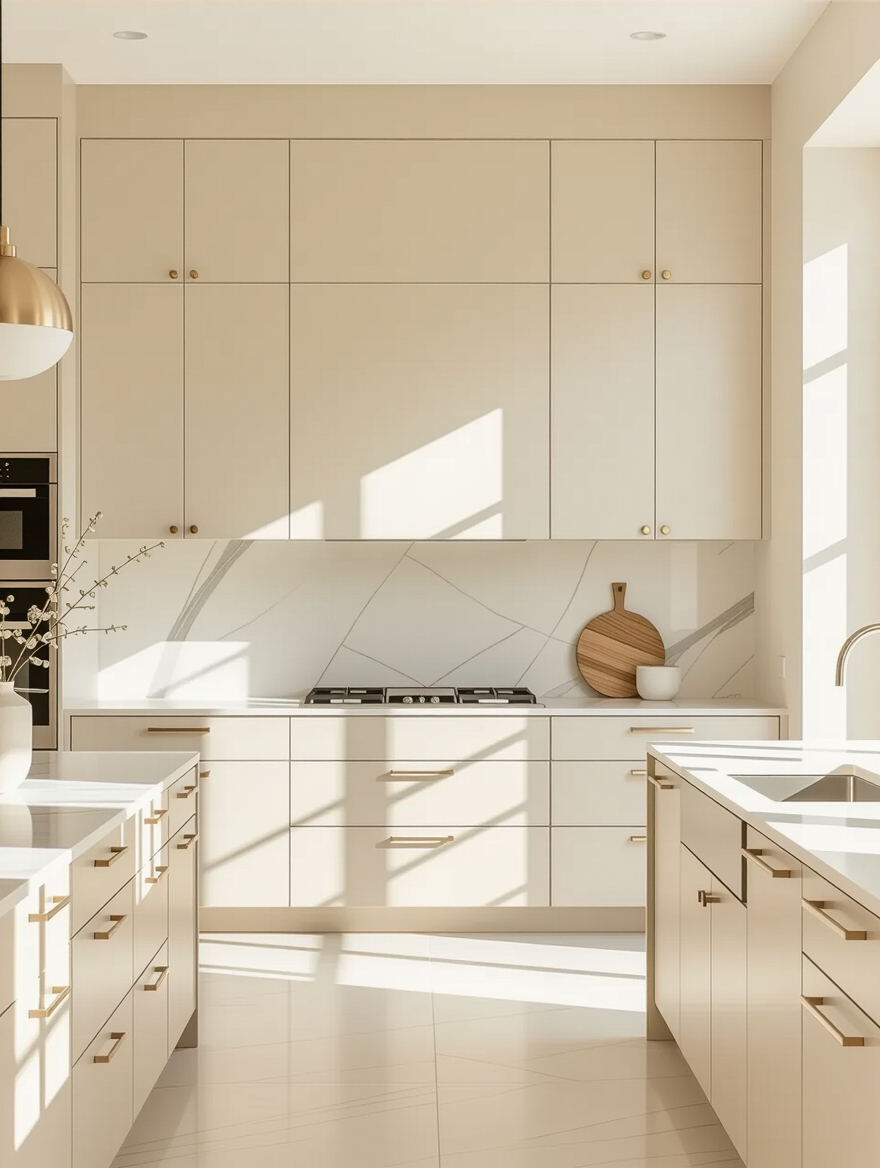
Beyond the door shape, the finish is its own trend, and matte is firmly the look of the moment. A matte or super-matte door, on any profile, reads soft, modern, and expensive, absorbing light where a glossy door bounces it. It gives even a simple slab or shaker a contemporary, velvety quality that boards cannot get enough of.
Soft, Low-Glare, Current
Matte does ask for the right expectations. Some matte and super-matte finishes show fingerprints more on darker colors, though many newer finishes are specifically engineered to resist them, so it is worth asking about the specific product. On lighter colors, matte hides smudges beautifully, and a quick wipe takes under a minute to keep it calm.
The payoff is a quiet sophistication that suits the whole trend toward soft, natural, low-glare kitchens. Pair a matte finish with warm wood and brass and the kitchen feels current and gentle at once, which is exactly the mood the boards are chasing right now.
Bold Two-Tone Cabinet Design
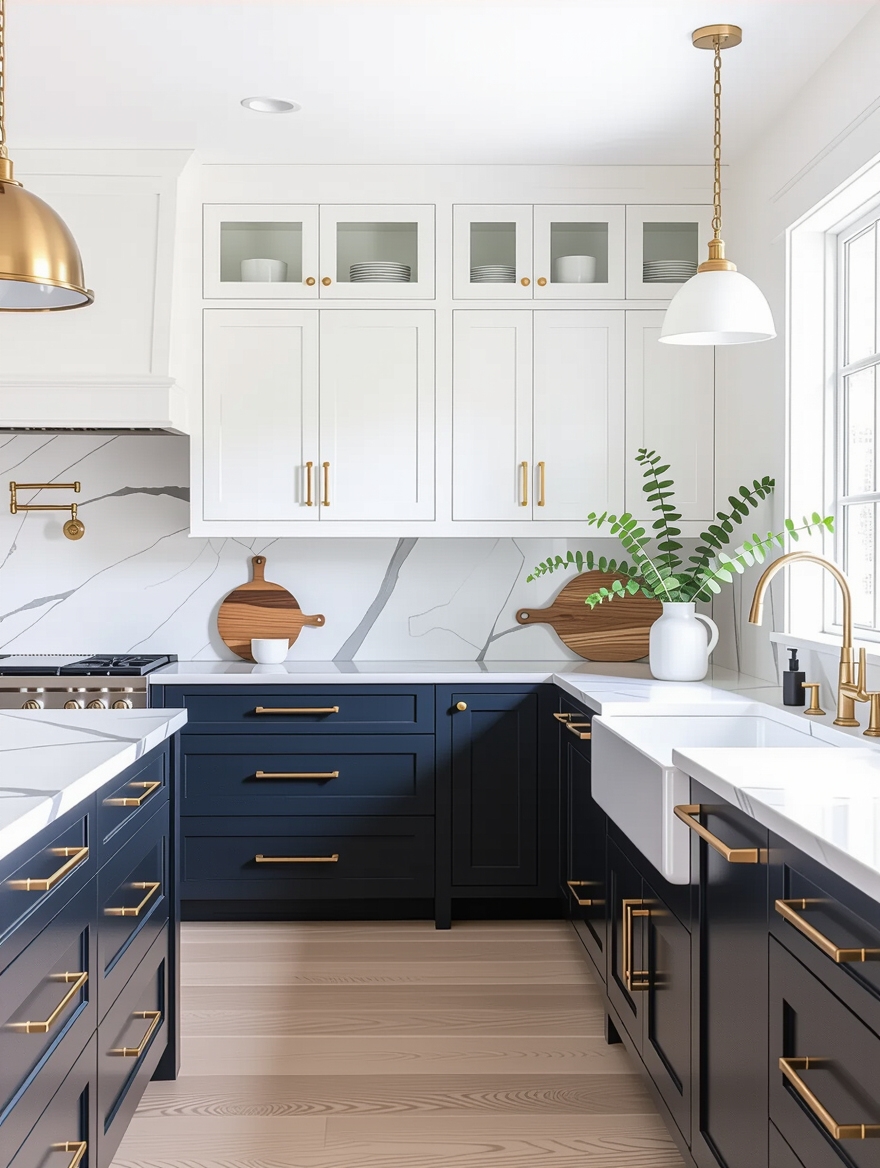
Two-tone, mixing two cabinet colors or finishes in one kitchen, remains a perennially pinned design move because it adds depth and a custom feel for the cost of a second can of paint. Pairing a colored or wood lower with a lighter upper, or a contrasting island, lets you have a bold kitchen while keeping it grounded and bright. Here is how to keep two-tone looking intentional.
- Put the darker or bolder tone on the lowers or island so it grounds the room and the uppers stay airy.
- Run one hardware finish across both tones so the two halves feel connected.
- Keep the two finishes related in undertone so the contrast looks planned. See how two-tone proves its worth.
Start With the Door, Not the Paint
The styles filling every board come down to a handful of door profiles and finishes, and choosing among them is the decision that shapes your kitchen more than color ever will. Shaker for safe versatility, slab for modern calm, beadboard for cottage charm, two-tone for depth, matte for of-the-moment softness, each sets a clear tone that the right color simply completes. Decide the bones first, and the rest of the kitchen falls into place around them.
Before you obsess over the perfect shade, pin a few kitchens you love and look past the color to the door style they share. Which profile keeps showing up in the rooms that stop you scrolling?
More Hair Ideas


