

Beige spent a decade as the color people painted over. Now it is the one they are painting back on, and the feeds are full of it. After years of cool gray and stark white, a lot of kitchens started to feel like operating rooms, and a warm neutral brings the comfort back without committing to a real color.
Here is the part the pretty photos skip: beige is the trickiest neutral to get right. The exact same word covers a clean greige and a muddy, yellowed builder beige, and the gap between them is all undertone and light. Get that one call right and beige is the warmest, most forgiving backdrop in the kitchen.
Beige Cabinet Questions, Answered
Are beige kitchen cabinets going out of style? No. Beige is a warm neutral, and warm neutrals tend to outlast the trend cycles that bright colors get caught in. The real risk is the undertone, which can turn a kitchen dingy within a few years if you pick the wrong one.
What undertone should beige cabinets have? Match the undertone to your light and your fixed finishes. A north-facing or cool room warms up with a yellow or greige beige, while a bright south-facing room can take a cooler, grayer beige without going sallow. Test it against your counters and floor first.
Beige or white cabinets? White reads crisp and bright but shows every smudge and can feel cold. Beige is softer, hides wear better, and feels warmer under evening light. If your kitchen gets little natural light, beige usually flatters it more.
Why Versatile Beige Cabinets Took Over

Beige is having its moment because the cool, all-gray kitchen wore out its welcome. People wanted warmth back. Few wanted to gamble on a real color they might regret in three years.
Clients ask me whether beige is just another trend on a timer. My honest answer is that the color itself is durable; beige behaves like a soft, warm backdrop that flatters wood, brass, and stone alike. What dates a beige kitchen is the wrong undertone, and that is the whole game.
Think of it as the warmer cousin of white. It brightens a room nearly as much, hides fingerprints and splatter far better, and feels cozier at night. For a direct comparison, the white cabinets people love worth a look show exactly what beige softens.
How Beige Adds Warmth and Elegance

What beige does that white cannot is hold a room at a comfortable temperature, visually speaking. It carries enough pigment to feel intentional and enough lightness to keep a small kitchen open. That balance is why it photographs well and lives even better.
The elegance comes from restraint. Beige hands the spotlight to your hardware, counters, and one accent. No loud cabinet color competes for attention.
- Works with almost any metal, from matte black to warm brass, without a clash.
- Hides the daily smudges and water spots that show instantly on bright white.
- Stays warm under evening bulbs, when cool grays can turn flat and blue.
Choosing the Perfect Beige Shade

This is where beige kitchens are won or lost. Beige is not one color; it is a family with pink, yellow, green, and gray undertones, and the wrong one turns a room dingy. I tell everyone to test large swatches on the actual doors and live with them for a few days, checking them morning, noon, and night.
Watch the light reflectance value (LRV) too: a higher number keeps a small kitchen bright, a lower one adds coziness in a sunny room. A cooler greige sits between beige and true gray, and the gray cabinets worth pinning worth a look show that end of the range.
- Paint two coats on poster board, then tape it to the cabinets you are matching.
- Check it at three times of day; north light cools beige, evening bulbs warm it.
- Hold it against your counter and floor, since undertones clash fastest with fixed finishes.
🅰️Warm beige
Yellow or tan undertones that feel cozy and forgiving, ideal for north-facing or low-light kitchens, though they can read sallow in very bright midday sun.
🅱️Cool greige
A gray-leaning beige that stays crisp and current, great in bright south-facing rooms, but it can feel cold where natural light is scarce.
Bold Hardware on a Neutral Base

A neutral cabinet is a blank canvas for hardware, and this is the cheapest way to give beige a point of view. Swapping pulls is a job you can finish in under an hour for a few dollars apiece, and it changes the whole read of the room. Matte black adds a graphic edge, unlacquered brass warms things up and patinas with use, and oversized pulls turn plain doors into a statement.
- Matte black for a crisp, modern contrast against soft beige.
- Unlacquered brass for warmth that deepens with age and handling.
- Long, oversized pulls to make flat-front doors feel custom.
Marble Counters That Complement Beige
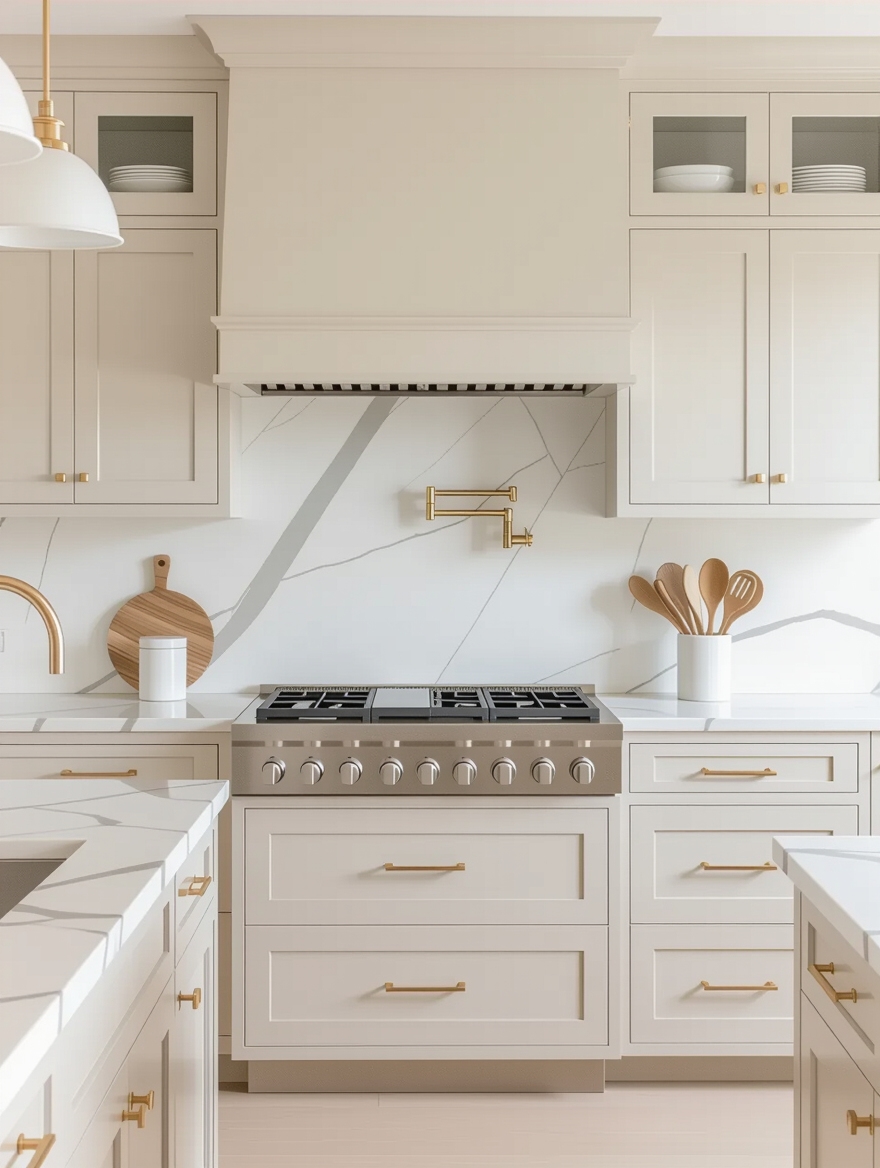
Marble and beige is the pairing that looks expensive in every feed. There is a good reason for that. The cool, veined stone gives the warm cabinets something to play against, and the two share a soft, organic quality that feels calm rather than busy.
If real marble’s upkeep worries you, a marble-look quartz gives the same effect with none of the etching. Natural marble runs $60 to $150 per square foot installed, while comparable quartz lands closer to $60 to $120.
- Pick a marble or quartz with a warm-white background so it does not fight the beige.
- Pull one vein color into your hardware or stools to tie the whole thing together.
- Choose a honed finish to hide etching and scratches better than a polished one.
Heads-Up
Match undertones before you fall for a slab. A cool, blue-gray marble next to a yellow-beige cabinet will make the beige look muddy. Bring an actual cabinet door to the stone yard, and remember natural marble needs sealing once or twice a year to resist stains.
Natural Wood Accents to Pair With Beige
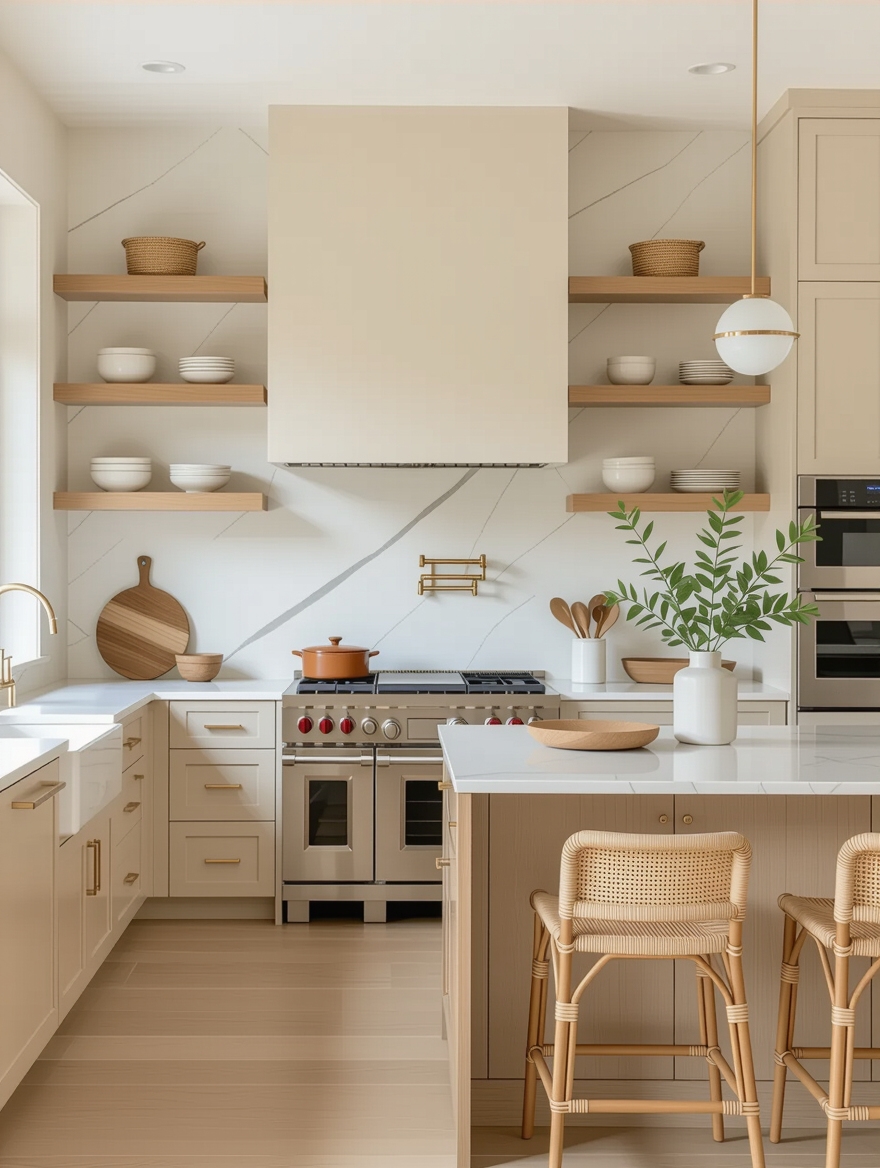
Wood is what keeps a beige kitchen from feeling flat. Because beige is already a warm neutral, a wood accent adds grain and depth without introducing a competing color, so the room gains texture and stays calm.
Match the wood’s undertone to the beige, warm with warm, and you get a layered, collected look. I love a light oak shelf or a walnut island set against soft beige doors.
- Light oak for a bright, airy feel that keeps small kitchens open.
- Walnut for deep, rich contrast on an island or open shelving.
- Maple for a subtle warmth that blends quietly beside beige.
Warm Wood Accents for a Farmhouse Look

In a farmhouse kitchen, beige and warm wood are a natural match. The soft cabinet color plays the quiet backdrop while reclaimed beams, a butcher-block top, and vintage latches bring the character.
Layer Texture First
The move here is to add texture instead of more color. Woven baskets, a linen runner, aged brass hardware, and a wood counter give the eye plenty to enjoy while the palette stays calm.
Keep the wood tones within one family so it looks intentional. Two or three warm woods look collected. Five competing tones look like leftovers. For more in this lane, the cream cabinets for a cozy space worth a look use the same warm-neutral logic.
Sleek Contemporary Kitchens in Beige
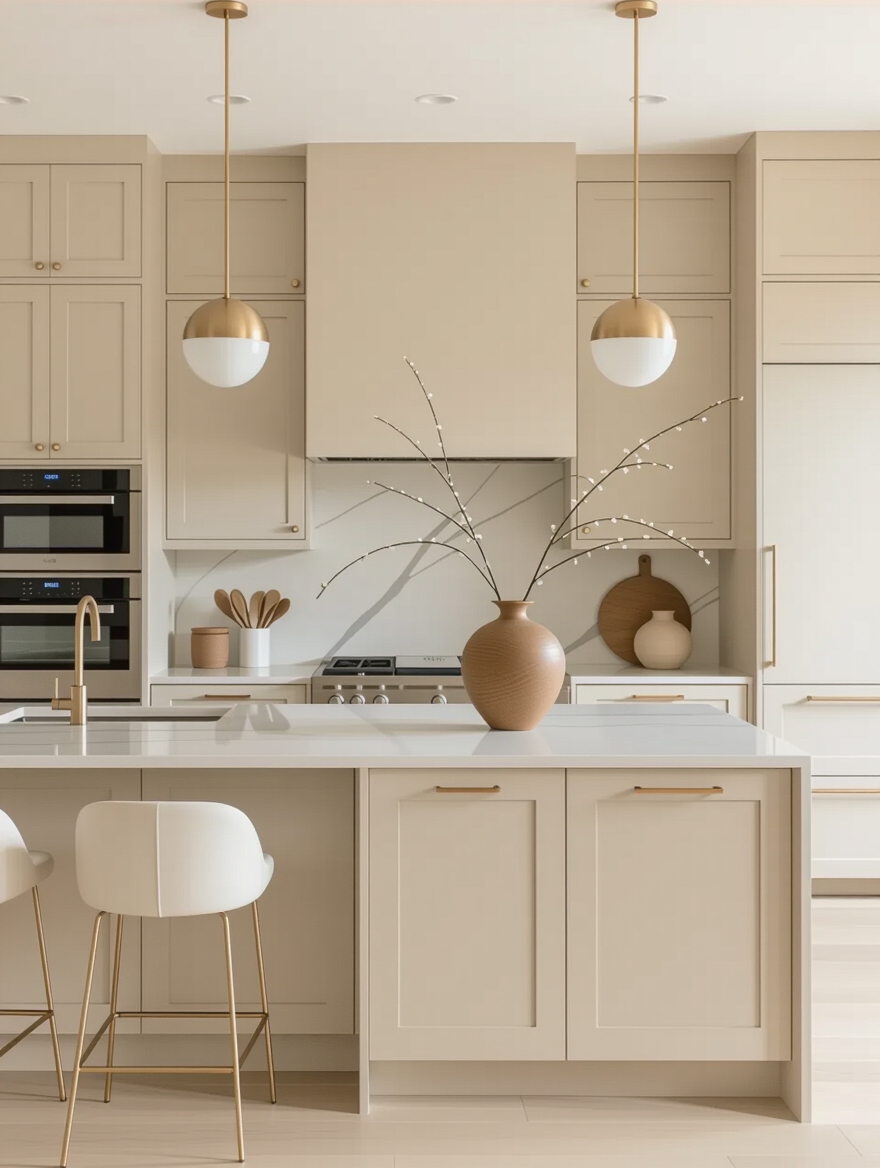
Beige is not only for cottages. In a contemporary kitchen, a smooth, flat-front beige cabinet looks soft and architectural at once, taking the chill off minimalism without cluttering it.
Warm Up the Minimal Look
Pair beige slab doors with stainless appliances and integrated handles for a clean line, and the warmth keeps the space from feeling like a showroom. A handleless beige run looks especially current.
The trick is consistency. In a modern kitchen, let the beige carry the whole story. Add interest through finish and form, and keep the palette to one.
Two things people get wrong about beige cabinets:
❌ Myth: Beige cabinets are boring, builder-grade filler.
✅ Reality: Builder beige earned that name with one flat, yellow shade under bad lighting. A considered greige with good hardware and warm light looks anything but basic.
❌ Myth: Beige only works in traditional kitchens.
✅ Reality: Flat-front beige slabs are a staple of modern and Scandinavian kitchens. The color is neutral, so the door style sets the mood, not the beige.
Mixing Matte and Glossy for Texture and Light

Mixing finishes is a quiet way to add depth to a single-color kitchen. A matte beige base feels soft and hides fingerprints, while a glossy or satin upper or island catches light and lifts the whole room.
The balance is everything. Too much gloss in a kitchen looks plasticky and shows every smudge, so use it as an accent and let matte do the heavy work.
- Keep busy, high-touch lower cabinets matte to hide wear and prints.
- Add a satin or semi-gloss island or hood for a subtle light-catch.
- Skip full high-gloss in a working kitchen; it magnifies smudges and scratches.
Beige Cabinets With White and Neutral Palettes

Layering beige with white and other neutrals is how you get that soft, magazine calm. The key is using a few warm neutrals together, so the room gains depth without leaning on color.
Build a Tonal Layer
Crisp white walls keep the room bright, taupe or greige accents add a middle tone, and natural textures like linen and rattan bring it to life. Each layer sits close in temperature, which is what makes the whole thing feel deliberate.
If you want a touch more contrast, a two-tone setup works beautifully here. The two-tone cabinets worth trying worth copying often pair beige uppers with a deeper base color.
Is Beige Right for Your Kitchen?
Beige is not an automatic yes, and it is worth being honest about where it shines. It flatters kitchens with limited natural light, hides daily mess, and gives you a warm, low-commitment backdrop that plays nicely with almost any counter and metal. If you love a cozy, layered room more than a crisp, high-contrast one, beige rewards you. And if you tire of it, a repaint that beats new cabinets worth the weekend changes everything.
Where I steer people away is a kitchen flooded with cool north light and finished in cool grays, since a warm beige can look out of place there, or a renter who cannot properly test undertones first. In those cases a clean white or a true greige is the safer bet. For more directions, the cabinet colors nobody talks about worth weighing go well past the neutrals.
More Beige Cabinet Questions
?Do beige cabinets make a kitchen look small or dated?
The wrong beige can, but the right one does the opposite. A muddy, pink-beige under warm bulbs looks dated fast, while a clean greige with good light feels current and lets a small kitchen recede. It comes down to the undertone and the lighting.
?What countertop goes with beige cabinets?
White or veined marble and quartz keep it light and classic, while a charcoal or honed-black counter grounds the warmth and adds contrast. Whatever you pick, match the counter’s undertone to the cabinet’s so the two do not clash.
?What wall color works with beige cabinets?
Stay in the same temperature family. Warm beige cabinets like soft white, greige, or pale sage walls; a cool, stark white nearby can make warm beige look yellow by comparison. Sample the wall color against the doors before you commit.
?How do I update beige cabinets without repainting?
Swap the hardware, add a peel-and-stick or real tile backsplash, and change the bulbs to warm LEDs. A hardware swap alone takes an afternoon and a few dollars per pull, and it changes the whole read of the cabinets.
Get the Undertone Right and Beige Sings
Beige is not a safe, do-nothing choice, and that is exactly why it is back. Handled carelessly it goes flat and dated; handled well it is the warmest, most flattering neutral in the kitchen. The whole difference comes down to one decision.
So before you fall for a feed, test your shade against your own light and your own counters for a few days. Nail the undertone, give beige one good hardware and one warm wood to play with, and it will carry your kitchen for years.
More Hair Inspiration


