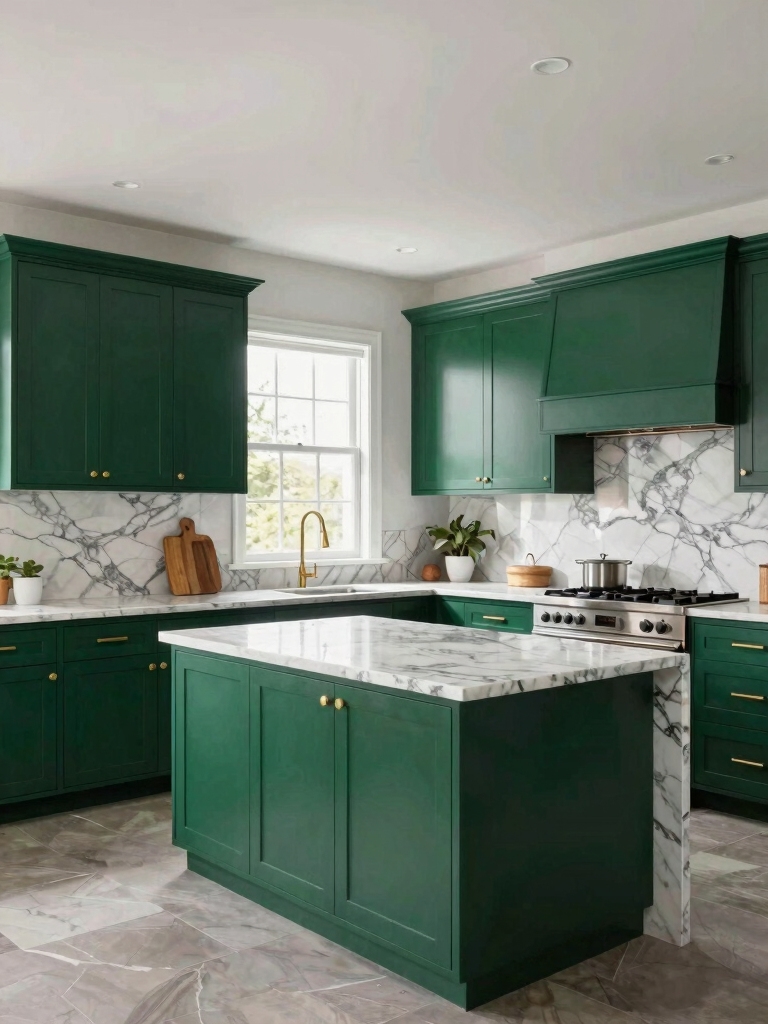
Walk into two green kitchens with the same paint color and one can look custom while the other looks like a rental. The cabinets are rarely the difference. What separates a five-figure kitchen from a five-hundred-dollar one is a short list of small, copyable details: the metal on the pulls, the sheen of the finish, a sliver of walnut, a remnant of marble.
I have spent years tracking which of those details actually signal money and which just cost it. Below are seventeen green-cabinet looks built on the first kind. Each one leans on a finish trick or a material pairing that signals expensive, and most can be done for the price of paint, hardware, and a weekend.
What Makes Green Look Expensive
- Warm metal is the single biggest cue. Unlacquered brass or aged bronze signals custom; shiny chrome looks builder-grade.
- Finish matters as much as color. A clean satin or sprayed lacquer looks costly; a streaky roller job undoes a great shade.
- A small dose of a rich material, walnut, marble, leather, does the heavy lifting for very little money.
- Restraint sells it. One or two luxe accents look designed; piling on five looks busy and cheap.
Green Cabinets With Unlacquered Brass Hardware

If you change one thing on this whole list, change the hardware to unlacquered brass. It is the detail that does the most to make plain green cabinets, even flat-pack IKEA boxes, look architect-designed. The reason is patina.
- Unlacquered brass is raw metal, so it darkens and mellows over months of handling. That living finish is exactly what factory hardware fakes and never quite nails.
- A full set of knobs and pulls runs roughly $80 to $150 in budget unlacquered brass, a fraction of custom anything.
- It flatters every green here, from pale sage to deep hunter, because warm metal against cool green is the contrast the eye sees as luxe.
Soft Sage and Cream for Quiet Elegance

Sage paired with cream is the most foolproof way to get a layered, expensive look without a custom budget. The two soft tones give the kitchen depth that a single color cannot, and because both are quiet, the result feels refined and calm. This is the pairing I point nervous clients toward first.
A few moves keep it on the right side of high-end.
- Add crisp white through subway tile or open shelving to keep the palette from going flat.
- Choose a satin or matte finish, which hides fingerprints and looks more custom than a cheap gloss.
- Keep the cream on the uppers and sage on the lowers, so the heavier color grounds the room.
ℹ️Good to Know
Unlacquered brass will look bright and yellow the day you install it. The patina that makes it look expensive develops over the first several months of handling, darkening fastest around the pulls you touch daily. If you want the aged look immediately, a quick wipe with a vinegar-and-salt solution jump-starts it, or simply buy hardware sold pre-aged as antique brass.
High-Gloss Lacquer for Instant Glamour
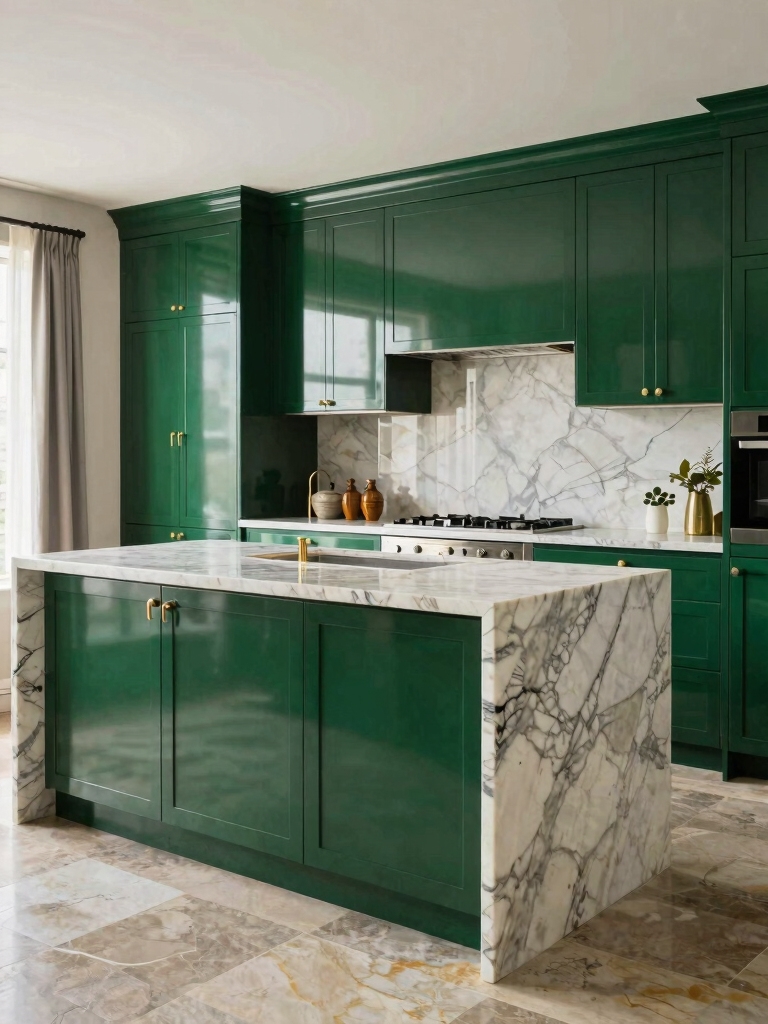
Few finishes catch the eye like emerald lacquer, and it is the fastest way to make a kitchen look glamorous without gutting it. The mirror-like surface bounces light around the room, which is why a small galley can feel both larger and more expensive once the cabinets go glossy. I have watched a tired kitchen turn editorial for under $400 in materials.
Gloss is unforgiving. The prep is the whole game.
- Sand thoroughly, prime with shellac, and apply three thin coats for a glassy finish. Thin always beats thick here.
- Gloss telegraphs every drip and brush mark, so this is the look most worth spraying or hiring out.
- It earns its place in a compact kitchen where the reflection truly buys you light and space.
Moss Green Shaker Cabinets With Matte Black

Moss green settles into a kitchen like it has always been there, earthy and grounding and surprisingly easy to live with. Shaker doors keep the look classic and the cost reasonable, since the simple flat-frame style is the cheapest cabinet door that still looks intentional. It is a smart base for an expensive-looking kitchen on a real budget.
Why Shaker Saves Money
Matte black hardware is what sharpens the whole thing. Slim black bar pulls, often $3 to $6 each online, give the soft moss a crisp, modern edge that looks deliberate. Pair the cabinets with butcher block counters and you have a high-end-looking kitchen for very little.
If you want the moss to feel even richer, carry a touch of black elsewhere, a faucet or a pendant, so the hardware looks intentional.
A few finish terms worth knowing before you shop.
📖Lacquer
A hard, high-gloss finish that cures to a glassy, reflective surface. Beautiful and light-bouncing, but it demands careful prep and shows every flaw.
📖Unlacquered brass
Raw brass with no protective coating, so it ages and darkens over time. The living patina is what looks custom and expensive.
📖Satin finish
A soft, low-sheen paint surface that wipes clean and hides fingerprints. The most forgiving and practical choice for most kitchens.
Dark Olive Cabinets With Warm Walnut Details
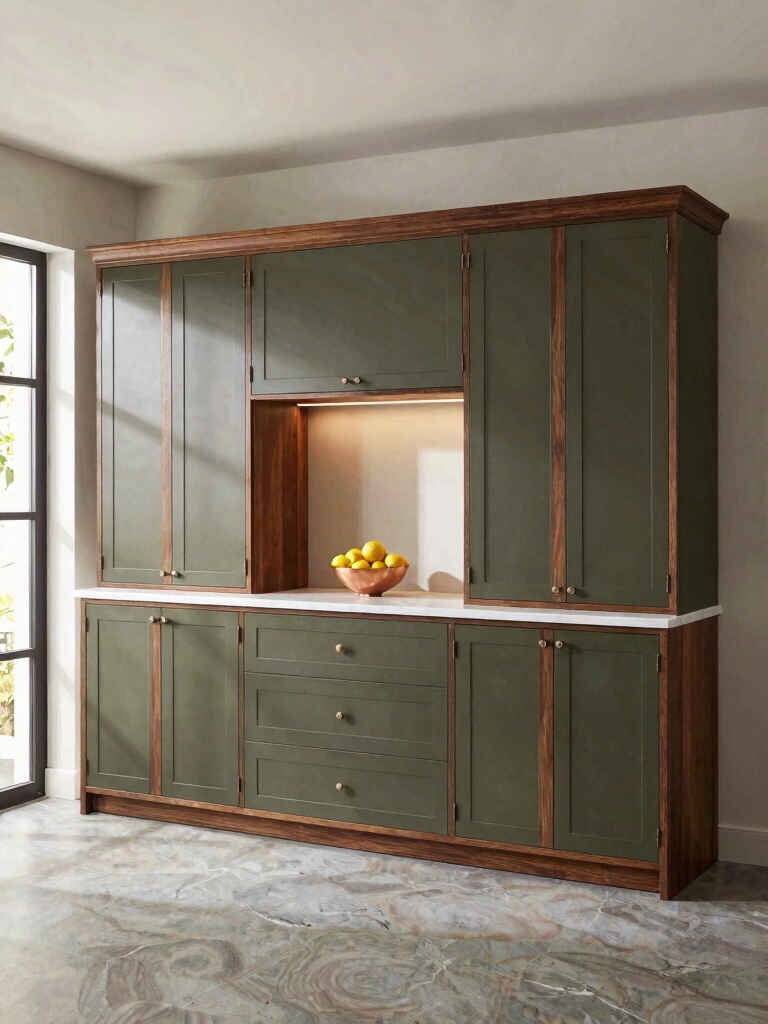
Because dark olive behaves like a neutral, it pairs with almost anything, and warm walnut is what makes the combination sing. A little real wood goes a long way toward that furniture-grade, custom look. Here is where to spend the small amount it takes.
- Swap in walnut pulls or add walnut brackets under open shelving for a hit of grain against the green.
- A thin walnut inlay strip along a few cabinet faces costs a fraction of full wood cabinetry and looks bespoke.
- Keep the walnut tones consistent so the accents look chosen and cohesive. For the full-luxe version, walnut cabinetry shows where it can go.
Sage Green Cabinets With Warm Wood Floors

Sage cabinets over warm wood floors is the look that feels fresh without trying, and it costs less than people assume. The honey tones of oak or hickory balance the gray-green of the sage, and that temperature contrast is the thing that quietly comes across as designed. You do not need pricey custom stains to get it.
Sourcing Affordable Wood
Source the wood smartly. Oak or hickory from a local lumber yard, finished with a simple matte sealer, looks collected and costs a fraction of an engineered name-brand floor. Matte black or brass pulls finish it without splurging.
The whole effect leans on keeping everything a little understated. Let the floor and the cabinets do the work, and skip the loud counter or backsplash that would compete for the eye.
👍Why painted green wins
- +A fraction of the cost of new cabinets, often a few hundred dollars in materials.
- +Lets you copy expensive-looking finishes like lacquer or two-tone at home.
- +Easy to change later, since it is paint, not a permanent install.
👎Where it asks for care
- –Deep and glossy greens punish sloppy prep and rushed coats.
- –A quality cabinet enamel and primer cost more than basic wall paint.
- –Hardware and accent materials are extra, and they are what sell the look.
Dramatic Deep Green Pantry Walls
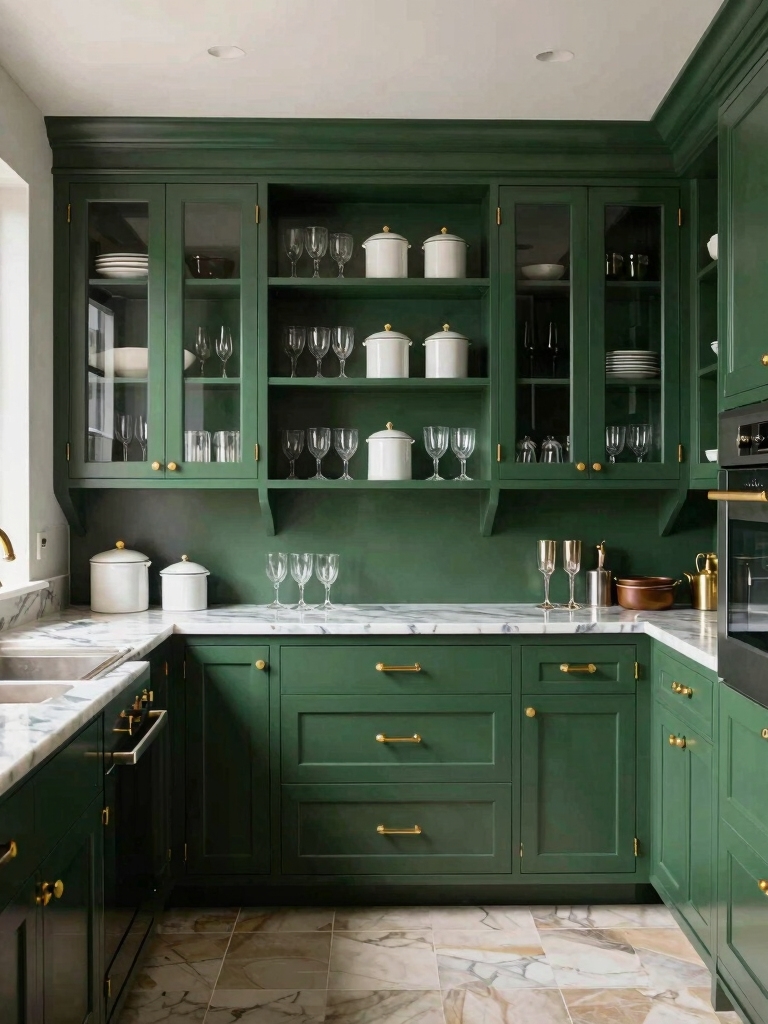
A deep forest pantry is the cheapest drama in the house. Paint the walls of a pantry or a recessed nook a saturated forest green, build in simple plywood shelving, and the color alone makes plain storage look expensive. It is just paint and plywood. The depth alone turns a utility space into a feature.
Built-In on a Budget
Hardware seals the impression. Swap basic knobs for warm brass, ideally salvaged for a few dollars at a reclaim shop, and the metal pops against the dark green like jewelry. Three coats of a rich green over primed walls is the entire material cost.
If your kitchen is tight on space, this trick earns its keep twice: it gives the room a standout moment and it stops the pantry from being the dull corner everyone ignores.
Mint Green Cabinets With Mixed Metal Finishes
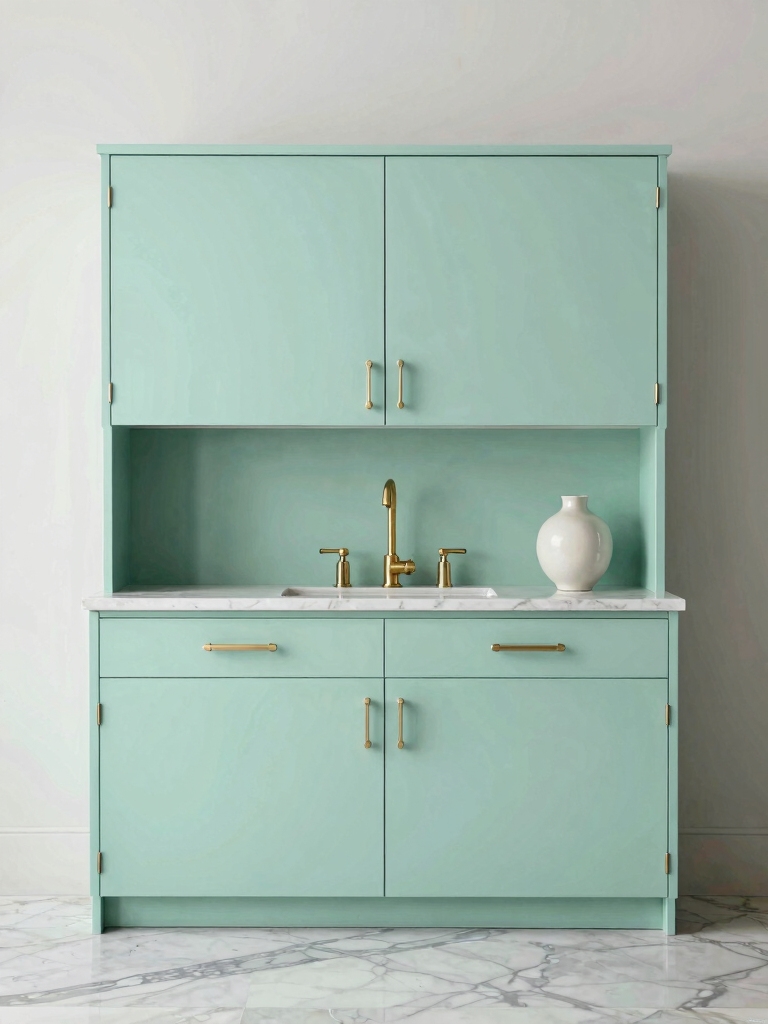
If you worry mint feels too sweet or one-note, mixing two metal finishes is the budget fix that adds instant depth and a custom feel. The trick is discipline, because mixed metals tip from intentional to accidental fast.
- Pair brushed nickel pulls with antique brass knobs to break up the pastel without buying new doors.
- Stick to two metals at most. Three starts to look like a mistake instead of a choice.
- Repeat each metal at least twice around the room so the mix looks deliberate.
Elegant Green and White, Anchored Low

Anchoring hunter green on the lowers and keeping the uppers white is the two-tone formula that looks expensive in a modest kitchen. The dark base grounds the room, the white top keeps it airy, and the balance is the part that looks custom even though it costs the same as any repaint. It is also a forgiving place to learn two-tone painting.
The hardware is where you steer the mood and the budget.
- Brass pulls warm the hunter and lean traditional; matte black keeps it crisp and modern.
- Whichever you choose, run it across both colors so the two halves feel connected.
- This look pairs naturally with a fuller two-tone treatment if you want to take it further.
Stylish Matte Green Cabinets With Leather Pulls

Matte green cabinets with leather pulls is the look that feels bespoke for almost no money. The flat paint looks modern and hides fingerprints well, while the leather adds a soft, tactile detail you almost never see on a budget kitchen. Together they feel considered and a little bit quiet-luxury.
A couple of pointers keep it from looking like a craft project.
- Quality leather pulls run under $8 each online, and the leather only gets better as it wears in.
- Choose a saddle or dark brown leather against a deep matte green for the richest pairing.
- Keep the rest of the hardware story simple so the leather stays the special touch. For more matte-green ideas, see how green works as a neutral.
Common Mistakes to Avoid
The fastest way to make green cabinets look cheap is to get the finish wrong. A rushed roller job on a dark or glossy green shows every streak, so for deep shades and any lacquer, slow down, thin your coats, and give each one a couple of hours to cure before the next. If you cannot commit to that, choose a forgiving mid-tone like sage in satin, which hides a multitude of small sins.
The other common stumbles are about the supporting cast. Shiny chrome or hollow plastic pulls cancel out a beautiful color, so put your small hardware budget into warm brass or solid matte black. And resist stacking every luxe trick at once: lacquer plus marble plus walnut plus mixed metals in one kitchen looks frantic.
Pick one or two signals of money, execute them cleanly, and let the green carry the rest. For a calmer take, green as the new neutral leans on exactly this restraint.
Expensive-Looking Green Cabinets, Answered
?What hardware finish makes green cabinets look the most expensive?
Warm metals win, and unlacquered brass or aged bronze top the list because their living patina is impossible to fake convincingly with cheap hardware. Matte black is the modern runner-up and stays crisp. The finish to avoid is shiny chrome, which looks builder-grade against a rich green.
?Is high-gloss or matte better for a luxe green kitchen?
Both can look expensive; they just signal it differently. High-gloss lacquer feels glamorous and bounces light, which suits small or dramatic kitchens, but it demands careful prep. Matte and satin feel calm and modern, hide fingerprints, and forgive a DIY hand, which makes them the safer luxe choice for most people.
?How much does it cost to make green cabinets look high-end?
Less than most expect. A quality repaint runs roughly $200 to $600 in materials, plus $80 to $150 for warm hardware and maybe $50 to $100 for one rich accent like a marble remnant or walnut pulls. For a few hundred dollars total, you can land a look that rivals a custom install.
Spend on the Details, Not the Boxes
The throughline across all seventeen of these is that the expensive look lives in the details, not the cabinets. A two-hundred-dollar paint job with the right brass, a clean satin finish, and one rich material can hold its own next to a kitchen that cost twenty times as much. The boxes are just the canvas.
So pick the green you love, then put your real attention and your small budget into the finish and the hardware. Get those two right and almost any green will look like it cost a fortune. What is the one detail you would upgrade first?
More Hair Inspiration


