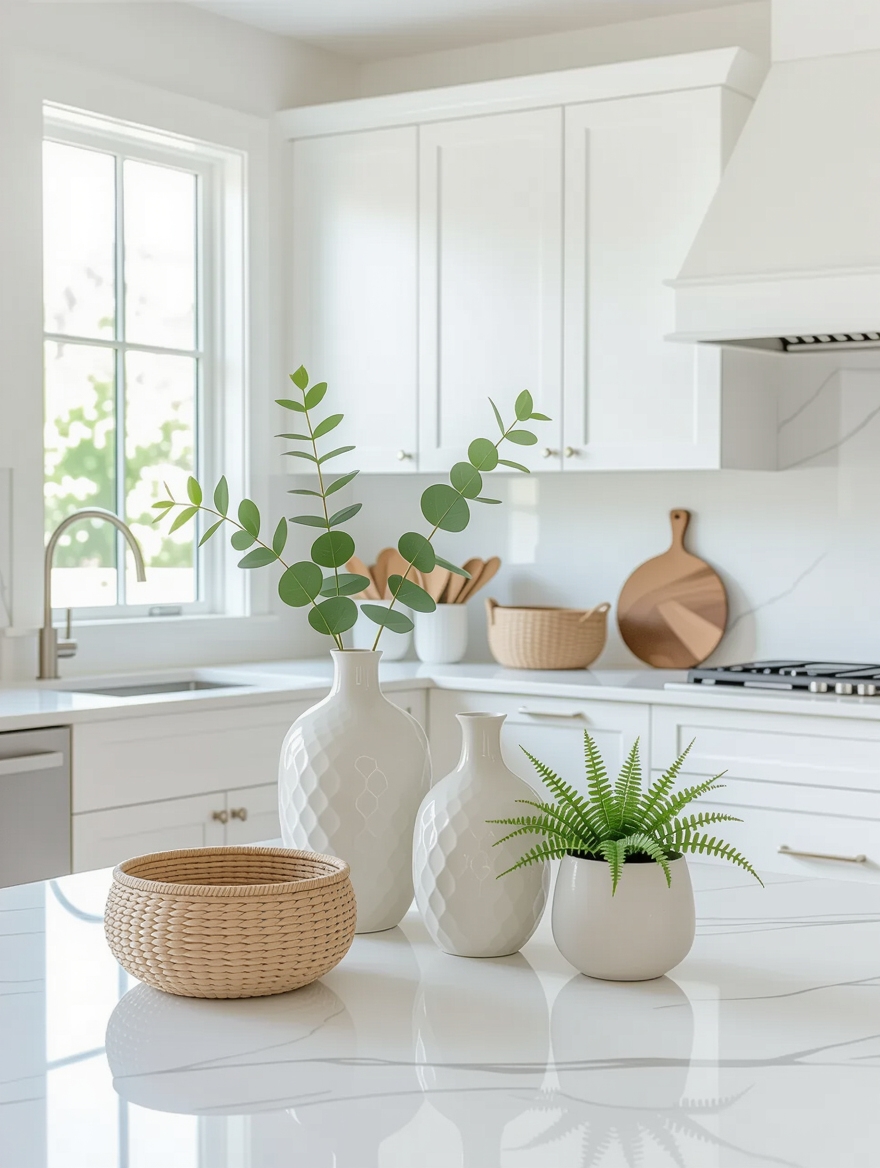

Most people who tell me their kitchen feels dark assume the fix is a bigger window. It almost never is. The window you already have is usually fine, and the things crowding it, dressing it, and bouncing around it are quietly eating your daylight. Move those, and the room wakes up.
These tips are about that quieter work. Some take five minutes, some take an afternoon, and a couple cost nothing at all. None of them require knocking out a wall. Start at the top of the list and stop wherever your kitchen stops feeling gloomy.
Quick Wins for a Brighter Window
- Clear the sill and the counter beside it first. Bottles and clutter block more light than any curtain.
- Switch heavy drapes for sheers or a top-mounted roller shade so glass stays uncovered when you want it to.
- Use pale, low-sheen paint and one well-placed mirror to push the light you do get deeper into the room.
- Layer your controls (a sheer plus a blind) so you can soften harsh glare without going dark.
Clear the Sill Before You Buy Anything

Before you spend a dollar, look at what is sitting on your windowsill right now. Soap bottles, a struggling herb pot, the mail, a stack of mismatched glasses. Each one casts a shadow and shrinks the bright opening light comes through. I tell clients to strip the sill completely for one day and just notice the difference. It is usually the single biggest jump on this whole list, and it took ten minutes.
The One-Third Rule for Sill Objects
The counter directly under the window matters just as much. A tall stand mixer or a knife block parked there blocks the low-angle light that reaches deepest into the room. Slide bulky items two feet down the run. Keep the zone right below the glass low and open.
Then decide what, if anything, earns a spot back on the sill. One short plant. A single ceramic jar. Nothing taller than about a third of the pane. The point is to dress the window without building a wall across the bottom of it. If you want a fuller styling plan for the surfaces nearby, the ideas in our kitchen shelf decor guide carry over well.
Pick Slim Window Frames and Trim

Chunky frames and deep trim look solid, but every inch of frame is an inch of glass you do not have. If you are replacing a window or repainting the surround, lean toward a slim profile and keep the trim shallow. More glass, same hole in the wall.
You do not need new windows to get the effect. A coat of paint changes how the frame reads against the room, and a few small choices stretch the visible opening:
- Paint the frame the same color as the wall so it visually disappears and lets the glass read as the main event.
- Skip the valance or heavy cornice across the top; it lops several inches off the pane every single day.
- If you have a deep reveal, paint the inside faces white so they reflect light inward and brighten the whole reveal.
| Treatment | Brightness kept | Best for |
|---|---|---|
| Sheer voile panels | High | Almost any window that needs softening without going dark |
| Top-down bottom-up shade | Adjustable | West-facing windows with strong evening glare |
| Satin-finish blinds | Medium-high | Spots where you want control but no fabric |
Choose Light-Filtering Curtains, Not Blackout
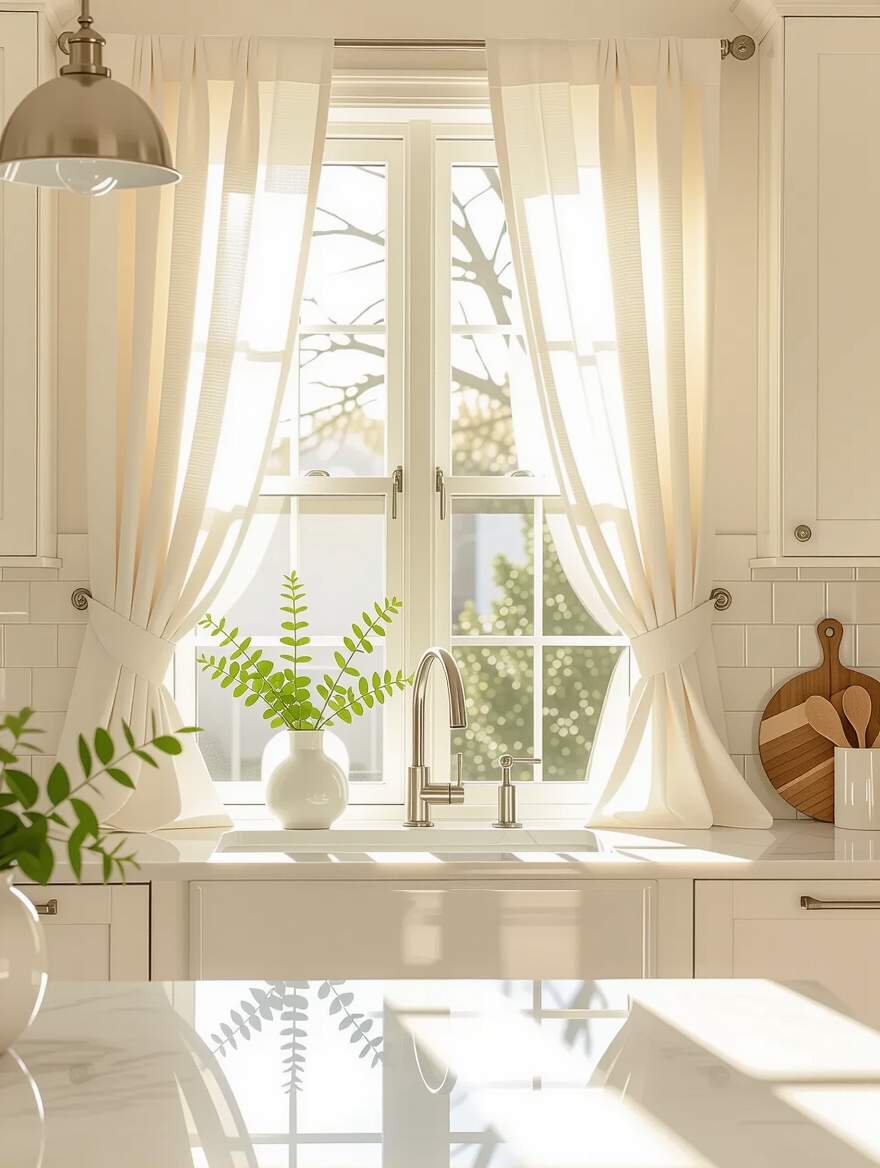
Kitchens rarely need blackout fabric. You are cooking and washing up, not sleeping. So the curtains here should filter and soften the daylight. Look for loose-weave linen, cotton voile, or a light poly blend that glows when the sun hits it.
Fabrics That Glow Instead of Block
Hang the rod high and wide. Mount it a few inches above the frame and let it extend well past each side, so the fabric stacks against the wall and clears the glass when open. This one trick makes a standard window look taller and wider, and it costs nothing beyond a longer rod.
Color counts too. White, oatmeal, and pale gray keep things bright; a deep navy panel will swallow the light even in a thin fabric. If you love a bit of pattern, keep it small and low-contrast so it reads as gentle texture and stays out of the light’s way.
Hang Lightweight Sheer Curtains

Sheers are the workhorse of a bright kitchen window. They turn hard, glaring sun into a soft even wash, give you a little privacy, and cost very little. A pair of basic voile panels runs about $20 to $40, which makes this the easiest swap on the list. Here is how I hang them:
- Measure for floor-length or sill-length panels, then add four inches to the rod width on each side for stacking room.
- Use a slim rod or a tension wire so the hardware itself barely shows against the glass.
- Wash and hang them slightly damp; the weight pulls out creases in under an hour and they drape cleaner.
📋Brightness audit before you redecorate
- ✓Sill and the counter under the window cleared of tall clutter
- ✓Curtain rod mounted high and wide enough to clear the glass
- ✓A pale, low-sheen wall or backsplash bouncing light back in
- ✓At least one mirror or shiny surface placed to face the window
Layer Light Control So You Can Adjust

Maximum brightness is not the same as harsh glare all day. A west-facing window can be lovely at breakfast and blinding by dinner. The fix is layering: pair a sheer with a second, adjustable layer so you control the light by the hour and tune it as the sun moves.
A common pairing is a sheer panel plus a top-down shade you can lower from the top. That keeps the upper glass open for sky light while shading the lower pane against direct sun in your eyes. Mix and match based on which way your window faces:
- South-facing: sheers alone often do it; add a thin roller only if afternoon glare bothers you.
- West-facing: pair sheers with a top-down bottom-up shade so you can block the low evening sun.
- North-facing: keep it bare or near-bare; that gentle light is the kind you want to protect.
Modernize Tired Window Treatments

If your window still wears a gathered valance, a swag, or heavy tab-top drapes from a previous decade, that styling is probably costing you both light and a current look. Clean, simple treatments let more glass show and feel calmer in a busy kitchen. You do not have to spend much to update the whole feel.
A few low-effort swaps modernize the window and brighten it at the same time:
- Trade a fabric valance for a single flat Roman shade mounted inside the frame; it disappears when raised.
- Replace fussy tiebacks with a plain rod and rings so panels glide fully off the glass.
- Pull anything plastic or yellowed (old vinyl mini-blinds especially) and switch to woven wood or a fresh roller for around $30 to $60.
The brightest kitchens I walk into rarely have the biggest windows. They just stopped letting things pile up in front of the light they already had.
Bring in Bright Colors Near the Glass

Light does not just come through the window; it bounces off everything around it. The surfaces flanking the glass either pass that light along or absorb it. Pale, warm, low-sheen colors keep it moving, which is why a bright kitchen usually has bright walls near its windows. Good color flow ties into the whole room, something we get into in our kitchen room design guide.
You do not need to repaint the entire kitchen. Concentrate the brightness right where the daylight lands:
- Paint the wall around the window a warm white or soft cream so it acts like a reflector and throws daylight back into the room.
- Keep nearby cabinet fronts light; a dark upper cabinet beside the glass throws a shadow across the sink.
- Add a pale, washable backsplash under the window so the counter zone stays clean and open.
Try Reflective Blinds to Catch Sunlight

Blinds get a bad reputation for blocking light, but the right ones do the opposite. Slats with a soft satin or pearl finish catch incoming sun and scatter it across the ceiling, which lifts the whole room and reaches well past the window wall. The trick is the finish, not the slat size.
When you want adjustable brightness without curtains, this is a strong pick. A few things to look for:
- Choose a light satin or pearl finish over flat matte; the subtle sheen is what bounces light upward.
- Tilt the slats upward so they throw light onto the ceiling and spread it wide.
- Stick with white or pale aluminum or faux wood; dark slats absorb the sun you are trying to spread.
Place a Mirror to Push Light Around

A mirror is the closest thing to a free window. Hang one on the wall opposite or adjacent to your glass and it catches the daylight and throws it back across the room, so the kitchen feels almost twice as bright. I love this move in galley kitchens and any spot where there is only one small window to work with.
Placement is everything. You want the mirror to face the window directly, so stand where you usually work and notice where the glass reflects. A framed mirror, a mirrored splashback behind the sink, or even a glossy metal tray propped on a shelf all do the job. For more ways to dress that empty wall, our kitchen wall decor finds has options that double as reflectors.
Keep the glass itself clean and the frame light. A heavy dark frame eats into the reflective surface, while a slim or frameless edge gives you the most bounce. One well-aimed mirror beats three scattered around the room that only catch the cabinets.
Add Metallic Accents That Catch the Light

Once the big moves are done, small metallic touches keep light bouncing around the window zone. Brass cabinet pulls, a stainless kettle, a chrome faucet, a few glazed ceramic pieces on the sill, each one catches a little daylight and tosses it back. They work like dozens of tiny mirrors scattered at eye level.
One Metal, Repeated, Beats a Mix
Keep it restrained. The goal is sparkle, not a hardware store. Pick one metal and repeat it a few times near the glass so the eye reads a calm, deliberate gleam. A row of matching pulls, a single hanging pendant with a reflective inner shade, and a polished tap is plenty. If you are tiling near the window, a glossy finish adds the same effect, which our kitchen tiles design guide covers in detail.
Watch the finish on your surfaces too. A high-gloss countertop reflects beautifully but shows every smudge, so save the shine for spots you will not lean on. A satin metal pull gives you the bounce without the fingerprints, and it pairs neatly with the table styling in our seasonal table decor ideas.
Kitchen Window Brightness Questions
?What window treatment lets in the most light?
Lightweight sheer panels in white or oatmeal let in the most daylight while still softening glare and giving a bit of privacy. Hang them on a rod mounted above and beyond the frame so the fabric clears the glass entirely when open.
?How do I brighten a kitchen with only one small window?
Lean on reflection. Place a mirror or a glossy surface on the wall the window faces, keep the surrounding walls pale and low-sheen, and clear the sill so nothing blocks the opening. A mirror opposite a small window can make the room read nearly twice as bright.
?Are blinds or curtains better for a bright kitchen?
It depends on glare. Sheer curtains keep the most light for windows that just need softening. Satin-finish blinds win when you want to adjust brightness through the day or face strong afternoon sun, since you can tilt the slats to bounce light up onto the ceiling.
?Should kitchen window frames be light or dark?
Light frames keep a room brighter because they reflect daylight back into the space. Painting the frame and any deep reveal to match the wall makes the glass feel larger and stops the frame from boxing the light in. Save dark frames for rooms that already get plenty of sun.
?Can paint color really affect how bright my kitchen feels?
Yes, quite a lot. Surfaces near the window pass light along or soak it up, so a warm white or soft cream wall beside the glass works like a reflector and spreads daylight deeper into the room. Dark or glossy-but-deep colors next to the window will dim the effect.
Start With the Free Fixes First
You do not need a renovation to brighten a kitchen window. Clear the sill, push the clutter down the counter, hang a sheer high and wide, and add one good mirror. Those four steps alone will change how the room feels by tomorrow morning, and not one of them touches the structure. A bright window is also a charming one: clean glass, a soft glow, and a sill you actually want to look at.
Work down the list at your own pace and stop when the gloom lifts. Every kitchen reaches that point at a different spot, and that is fine. The window was probably never the problem; what surrounded it was.
More Looks We Love