

Walk into a well-planned L-shaped kitchen with an island and you feel it before you can name it: light moving across two open sides, a clear path from door to counter, and an island sitting right in the middle of the action like it was always there. The L gives you the workspace. The island gives you the gathering spot. Together they make a room that feels open and busy at once.
The catch is that an island can either complete an L-shape or crowd it. Get the size and spacing right and the island becomes the heart of an airy, sociable kitchen. The designs below all keep that open feeling while showing very different personalities, so you can find the one that fits your room and your taste. A few sizing tips run through them so the island helps the space instead of fighting it.
Matching the Island to Your L-Shape
| Island style | Keeps it open by | Best for |
|---|---|---|
| Stone or dining island | Acting as one calm focal point on the open side | Rooms that flow into a living or dining area |
| Two-tone or dark island | Anchoring the open run with color, not bulk | Pale L-shapes that need a centerpiece |
| Multi-tier or rustic island | Adding seating and zones without a second cabinet run | Busy family kitchens short on wall space |
A Bright, Cohesive L-Shaped Kitchen

The reason an L-shape and an island work so well together is space. The L lines your work along two walls, which leaves the floor open for an island that does not block a single sightline. The result feels bright and connected, since you can see across the whole room from almost anywhere in it.
Cohesion is what sells the look. When the island shares a finish or a counter material with the two runs, the eye takes the kitchen in as one considered piece, with the runs and island clearly built as a set. Carry one element across, whether that is the worktop, the cabinet color, or the hardware, and the open plan feels intentional.
Start with the flow before the style. Make sure the work path between sink, stove, and fridge still runs clean with the island in place, the same flow thinking our kitchen room design guide walks through. Once the bones work, the island style is the fun part.
A Bold Stone Island Centerpiece

If you want the island to be the thing people notice, let a bold stone do the talking. A waterfall slab of veined quartzite or a marble-look quartz turns a plain L-shaped island into a centerpiece without any extra clutter. The open layout gives the stone room to breathe, so it looks like art from across the room.
Because the island sits out in the open, the stone is visible from every angle, which makes it worth the spend. A statement slab with a waterfall edge can add several hundred to a couple thousand dollars over a basic top, depending on the material. I tell clients to put their money here rather than into busy detailing elsewhere.
Keep the rest of the kitchen calm so the stone stays the star. Pale runs, simple hardware, and a handleless island base all let the slab lead. For more ways to build an island around one strong material, our island setup ideas runs through the options.
“The single thing that decides whether an L-shape with an island feels open or cramped is the gap around the island. I have seen beautiful islands ruin a room because someone squeezed in an extra foot of cabinetry. Keep a clear yard of walkway on every side, measure it with the appliance doors open, and only then fall in love with a finish.”
The Casual Dining Island

In an open L-shape, the island is often where everyone ends up eating, so design it for that from the start. A counter overhang of about twelve inches gives you room to tuck stools underneath, turning one side of the island into casual seating that faces the open room. Breakfast, homework, and a glass of wine while you cook all happen right there.
This setup shines in homes with no separate dining room, since it folds eating into the kitchen without eating up floor space. Leave enough clearance behind the stools to pull them out and walk past, which usually means keeping the seating on the open side of the L. Two or three stools is plenty for most families.
Think about comfort, not just looks. Counter-height stools suit the standard island, while a lower table extension is kinder for long meals with kids. If you are weighing the choices, our island seating guide compares stools, benches, and extensions side by side.
Warm Wood for Easy Flow

Wood is the easiest way to warm up an open L-shaped kitchen. It stops the whole space from feeling showroom-cold. A wood island, or wood accents on the island base, bridges the kitchen and the living space it opens onto, so the whole area flows as one room. Here is how I use it:
- Put the wood on the island and keep the perimeter runs pale, so the island glows as the warm center.
- Match the wood tone to the flooring or the living-room furniture nearby to tie the open plan together.
- Choose a sealed, hardwearing finish on any wood top near the sink, since open kitchens show every water ring.
Heads-Up
An island that looks right on a floor plan can still choke a real kitchen. Before you commit, tape the island’s footprint onto the floor and live around it for a few days. If you find yourself sidestepping it or banging a hip on a corner, size it down before anything gets built.
Sleek Minimalist Island Design

For a modern open plan, a minimalist island keeps the sightlines quiet. Flat slab fronts, hidden handles, and a single calm material mean the island sits as a clean block in the middle of the room, with nothing fussy to interrupt the open feeling. The look lives on restraint, so the details matter. A few rules I keep:
- Use push-to-open or recessed-channel fronts so the island has no visible hardware at all.
- Hide the storage, the bin, and any appliances inside, leaving the worktop nearly bare day to day.
- Repeat the perimeter material on the island so the minimalist look stays calm and cohesive.
A Bold Two-Tone Pairing
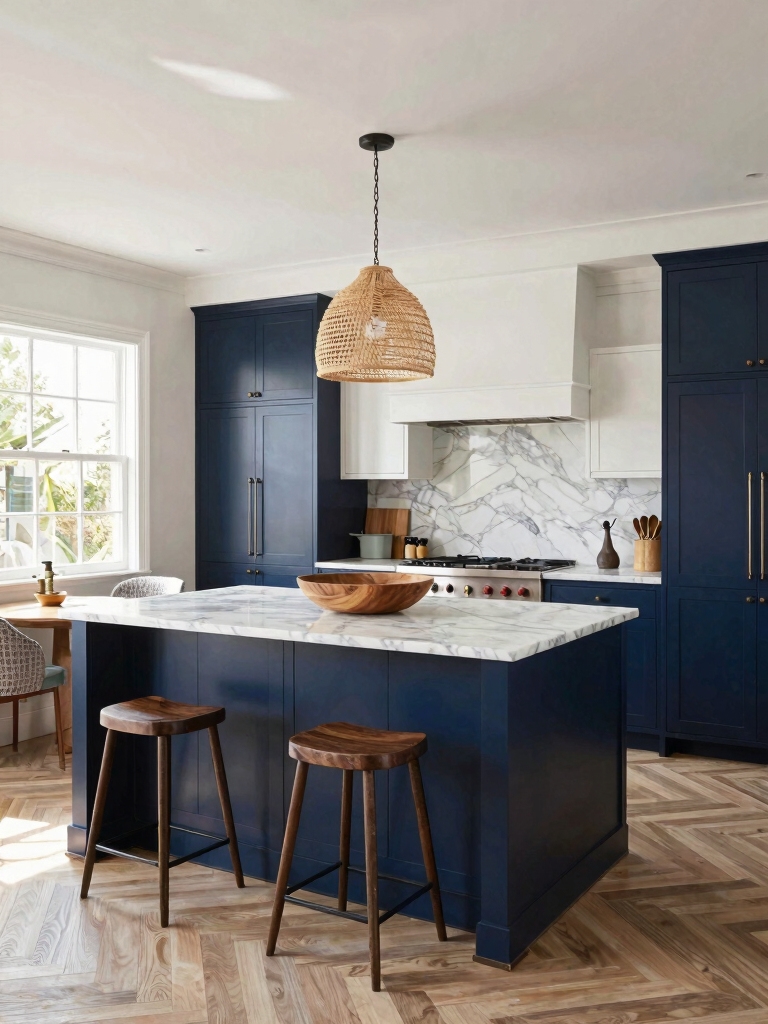
A two-tone scheme is the friendliest way to give an open L-shape a focal point. Keep the two runs pale and paint the island a deep, grounded color, and you get a centerpiece that anchors the room without any extra bulk. It is the change I recommend most to anyone who wants impact on a small budget, since a few cans of cabinet paint do the work.
Color choice is where it lives or dies. Aim for a saturated shade that feels deliberate against the light perimeter:
- Deep navy or forest green islands look modern and pair well with brass or black hardware.
- Warm clay and charcoal suit a wood-heavy open plan, echoing the tones around the room.
- Carry a touch of the island color somewhere small nearby, like open-shelf brackets, so it looks tied in.
👍Why an island suits an L-shape
- +Uses the open floor the L leaves free, without blocking sightlines
- +Adds prep space and casual seating in one piece
- +Gives the open plan a natural social center
👎When to think twice
- –A room under about ten feet wide rarely keeps proper clearance
- –A poorly placed island breaks the work path between sink and stove
- –Plumbing or wiring the island adds real cost to retrofit later
A Dramatic Dark Island Focal Point

A near-black island is all about light management in an open L-shape. The reason it works where you might expect it to feel heavy is the daylight pouring across the two open runs: that light lands on pale walls and counters and keeps bouncing, so the dark mass sits in the room as an anchor instead of a shadow. Get the light right and it grounds the whole open plan. Here is how to pull it off:
- Balance the dark island with light counters and a pale floor so the room stays bright around it.
- Light it well with pendants overhead, the kind our island pendant guide sizes and spaces.
- Add one warm metal, like aged brass pulls, so the dark surface has a point of contrast and life.
A Multi-Tier L-Shaped Island

When a single flat island feels too plain or too exposed, a multi-tier design adds function and a little privacy for the cook. A raised bar section behind a lower prep counter hides the working mess from anyone seated on the open side, which is a quiet gift in a room where the kitchen is always on show. It also gives you two distinct zones on one footprint.
This works especially well in a busy open plan. A few ways to use the two levels:
- Put the prep counter at standard height facing the runs, with the raised bar facing the open room.
- Use the higher tier for stools and serving, so guests gather there while you work below.
- Keep both tiers in the same material so the island still looks like one solid piece rather than a bolted-on shelf.
A Rustic Gathering Island

If your open L-shape leans warm and relaxed, a rustic gathering island brings character a sleek box cannot. A reclaimed-wood top, a furniture-style base, and an open shelf for baskets make the island feel like a big farmhouse table that happens to have storage. In an open plan, it becomes the natural place people drift to and linger. I love this look in a kitchen that opens onto a relaxed family room.
You can build it without a custom budget, which is part of the appeal. A few starting points:
- Top a simple cabinet base with a butcher-block counter for warmth at a fraction of stone.
- Add a couple of woven stools and an open shelf of crocks and cookbooks for the gathered look.
- Leave one end open for legs so it looks like furniture, inviting people to sit and stay a while.
A Sleek Industrial Look

For an open-plan loft or a city apartment, an industrial island gives the L-shape an urban edge while keeping things airy. Think a concrete or stainless top, a black metal base, and a few exposed elements that feel honest and unfussy. The open layout suits the look, since industrial style wants room and light to read well.
Warm It Up So It Still Feels Like Home
Materials carry this one. A polished concrete worktop is tough and characterful, though it needs sealing and will patina over time, so go in expecting it to age. Resealing takes an hour or so once a year, and it is worth the habit. Pair it with matte-black framing and simple open shelving for the warehouse feel without the chill.
Soften the hard materials with a little warmth so the open room stays welcoming. A couple of wood stools, a trailing plant, and warm pendant light keep an industrial island from feeling like a workshop. The same balancing act shows up across the styles in our L-shape planning guide.
L-Shaped Kitchen Island Questions
?How big does an L-shaped kitchen need to be for an island?
As a rule of thumb, you want the room to be at least about ten feet wide so you can keep a clear yard of walkway on every side of the island. Below that, a slim island, a rolling cart, or a peninsula off one run usually works better than a fixed island that crowds the floor.
?Where should the island go in an L-shaped kitchen?
Center it on the open floor the L leaves free, roughly parallel to the longer run, so it sits within easy reach of the sink and stove without blocking the path between them. Keep it off to the open side rather than jammed into the corner, which preserves the airy feel.
?Can an island make an L-shaped kitchen feel closed in?
It can if it is too big or badly placed. The fix is clearance and sightlines: keep a yard of walkway around it, choose a height and color that suit the room, and avoid stacking tall fittings on top. A well-sized island actually makes an L-shape feel more open by giving the floor a purpose.
?What is the best island style for an open-plan L-shaped kitchen?
Any style works if it stays cohesive with the two runs. For pale kitchens, a two-tone or dark island adds a focal point without bulk; for warm homes, a wood or rustic island ties the open plan together. Match one material or color across the island and runs so it feels like one room.
?Should the island match the rest of the L-shaped kitchen?
Not exactly, but it should relate. Sharing one element, the counter material, the cabinet color, or the hardware, keeps the open kitchen feeling intentional. A contrasting island color is fine and often welcome, as long as something carries across so the island looks part of the plan.
Build the Island Your Open Kitchen Wants
An L-shaped kitchen with an island can feel as open as you let it. Get the clearances right, keep the island tied to the two runs, and pick the personality, stone, wood, two-tone, dark, multi-tier, rustic, or industrial, that suits how you live. The open floor the L gives you is the gift; the island is how you use it.
Start with the look that made you stop scrolling and measure your room against it honestly. If the clearances work, you are most of the way there. Almost any of these designs will turn an L-shaped kitchen into the open, gathering heart of a home.
More to Explore


