

Light green is the most forgiving color you can bring into a kitchen, full stop. It behaves like a soft neutral, it flatters wood and white and stone alike, and it makes a room feel like the windows are open even when they are shut. The only real question is where to put it.
That is what these inspirations are about: not which shade to pick, but how to use light green across the surfaces of a real kitchen. Cabinets, lower runs, islands, backsplashes, floors, each one is a different way in, and some take a weekend while others take a single afternoon. Find the one that suits how far you want to go.
Quick Answers Before You Start
I love green but I am nervous. Where do I start? Put it on the lower cabinets or the island only, and keep the uppers and walls light. You get the color with none of the commitment, and it is the easiest part to repaint later.
How do I keep a green kitchen feeling fresh, not dated? Pair the green with warm white and natural wood, and let in as much daylight as you can. The freshness comes from the contrast with light surfaces, so resist surrounding it with more color.
What is the lowest-effort way to try light green? A green backsplash or a pale sage floor brings the color in without touching the cabinets, and a tile or vinyl run is a contained weekend job.
A Sage Green Kitchen Transformation

The boldest inspiration is the full commitment: sage on every cabinet, top and bottom. Done well, it transforms a tired white kitchen into something calm and collected, the kind of room you want to linger in with a coffee. Because sage behaves like a soft neutral, going all in feels less risky than it sounds.
Let the Counters and Metals Do the Work
The transformation lives in the supporting cast. Keep the walls a warm white, the counters pale, and add brass or wood so the sage glows and keeps its depth. A full sage kitchen with the wrong cold-white counter can look gray and tired, so the pairings carry the whole look.
If you are repainting existing cabinets, this is a weekend job with a quality cabinet paint and patient prep. The materials run a few hundred dollars if you do it yourself, which makes a full transformation one of the best-value changes in the kitchen. The result reads custom for the price of paint.
A Mint Green Kitchen Transformation

Where mint really earns its place is a kitchen you want to feel cheerful the moment you walk in, a sunny breakfast spot or a small galley that needs a lift. Use it on full cabinets in a bright room and it sets the whole mood, instantly nodding to retro diners and spring mornings. It is the inspiration for anyone whose kitchen is the happy heart of the morning.
Mint asks for a bright room to look its best, since the cool undertone can turn chilly in shadow. I love it in a kitchen with a big window or a sunny aspect, paired with crisp white and a little chrome. Keep the rest of the palette simple so the mint stays the star. The room reads fresh and uncluttered.
How far do you want to take the green?
🎯Just a hint
Start with a green backsplash or a pale sage floor; the cabinets stay as they are and the color stays easy to change.
🎯A real commitment
Go for full sage cabinets or a green island, pair with warm white and wood, and enjoy the calm of a proper green kitchen.
A Seafoam Green Kitchen Makeover

Seafoam is the makeover for a kitchen that opens to a garden or a view, where you want the room to feel like an extension of the outdoors. It is the calm one. Put it on the cabinets or just the island and pair it with natural textures, and the watery tone pulls the whole space into a calm, coastal mood. It is the one to reach for when the room itself already leans light and breezy.
Lean into the seaside feel to make the makeover sing. Natural textures like rattan stools and linen, white counters, and brushed-nickel hardware all play up the coastal calm. A seafoam kitchen near a window with a sea or garden view is hard to beat, but even in town it carries that just-by-the-water lightness.
Sage Green on the Lower Cabinets

If a full green kitchen feels like a leap, put the color only on the lower cabinets. This is the inspiration I recommend most to the nervous, because it gives you a real green kitchen while keeping the upper cabinets and walls light and airy. The room stays bright and the green grounds it from below.
Why the Lower-Only Look Just Works
It is also the practical choice. Lower cabinets take the daily knocks and splashes, so a slightly deeper, hardwearing color down there makes sense, while pale uppers keep the kitchen feeling open. The split reads as a deliberate design decision, not a half-measure.
Pair the green base with white or wood uppers and a pale counter to bridge the two. Open shelving up top keeps things light, an idea our open shelving guide styles in detail. It is the lowest-commitment way to live with green before you go further.
The freshest green kitchens are not the greenest ones. They are the ones where a soft green has room to breathe against plenty of white, wood, and daylight.
Serene Two-Tone Kitchen Looks
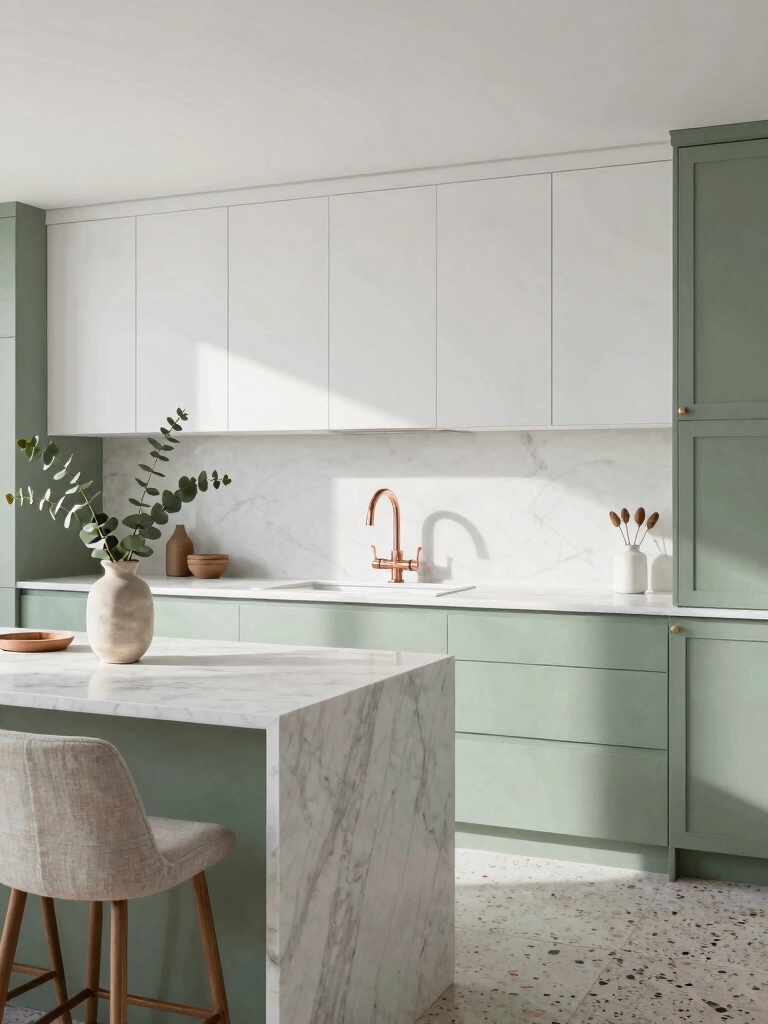
Two-tone is where light green gets to play, and it keeps a kitchen feeling layered and serene. Pairing a soft green with a second calm color gives you depth without noise, and it lets the green be a feature rather than the whole story. A few combinations that always feel fresh:
- Sage with warm white, the classic, for a calm scheme that flatters almost any home.
- Sage or olive paired with natural oak for a Scandi-leaning, woodsy warmth.
- A pale green island against off-white perimeter cabinets, so the green anchors the open floor.
Sophisticated Muted Sage Tones

If you want green to feel refined and grown-up, reach for the muted, grayed sage tones. The more gray in the mix, the more sophisticated and timeless the kitchen reads, which is why these complex shades show up in the calmest, most expensive-looking rooms. They are quiet, and quiet ages well.
Getting the muted look right is about restraint across the whole room. A few pointers:
- Choose a complex, grayed sage over a clean, bright green for the grown-up feel.
- Keep counters and walls in soft, warm neutrals so nothing competes with the subtle color.
- Add texture instead of contrast, with honed stone, matte hardware, and natural wood.
A simple way to land on the right green for your room:
1Gather your fixed elements
Pull together your floor, counter, and any wood tones, since the green has to live with these.
2Pick warm or cool
Look at those fixed pieces and decide which way they lean, then choose a green with the same undertone.
3Test a large sample
Paint a board or buy a tile and move it around the kitchen for a couple of days before you commit.
Subtle Green Backsplash Options

Not ready to touch the cabinets? Bring light green in through the backsplash instead. A run of green tile adds the color exactly where it catches the light, and it is a contained weekend job that leaves the rest of the kitchen alone, with the grout left to cure for an hour or two before you wipe it back. Here are a few subtle ways to do it:
- Glossy zellige or subway tile in pale sage for a soft, light-catching wall behind the counter.
- A green-and-white pattern if you want a little more life without a bold color block.
- Pick the finish that wears well by the stove, which our kitchen tile guide breaks down.
A Sage Green Kitchen Island

An island is the perfect place to try light green if you have one. Painting just the island a soft sage gives the kitchen a single, confident focal point while the perimeter stays pale and bright. The color sits right in the middle of the room and pulls the whole scheme together, doing a lot of work for one coat of paint.
Because the island is a contained piece, this is a low-risk, high-impact move. You can repaint one island in a weekend, and if your taste shifts in a few years, changing one piece is far easier than a whole kitchen. I see it land especially well in open-plan rooms, where the green island reads as a piece of furniture against the living space.
Tie it in by carrying a hint of the green somewhere small, like a stool cushion or a shelf of green-glazed pottery, and by matching the island counter to the perimeter. For more ways to build a kitchen around one island, our island setup ideas runs through the options.
Pale Sage on Vinyl Planks
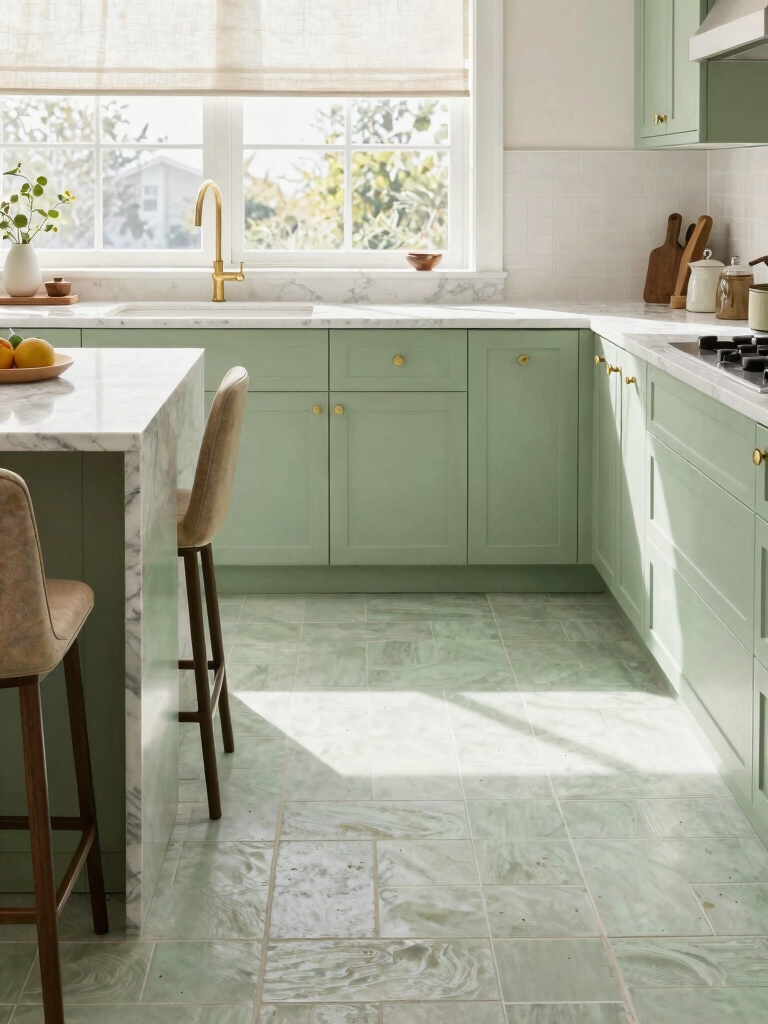
Light green does not have to stop at the cabinets. A pale, green-tinged vinyl plank floor brings the color underfoot in a soft, washed way that warms the whole room. It is a practical, budget-friendly surface. Most rooms can be planked in a day or two, and it is a way to nod to green without committing the cabinets, which suits a modern rental as much as a forever home. Here is how to use it:
- Choose a muted, gray-green plank so the floor reads as a soft neutral, not a statement.
- Pair it with white or pale wood cabinets so the green stays gentle and the room stays bright.
- Lean on vinyl plank for its warmth underfoot and easy cleaning, a forgiving choice in a busy kitchen.
Matching Green Undertones

The thread running through every fresh green kitchen is undertone harmony. When the green, the wood, the counter, and the metals all share a warm or cool lean, the room feels pulled together; when they fight, it feels off in a way you cannot quite name. This is the quiet skill behind the kitchens that just work.
You do not need a designer’s eye, just a simple habit. A few rules keep your undertones talking:
- Decide if your green leans warm or cool, then match wood and metals to the same lean.
- Pair warm sage and olive with brass and oak; pair cool mint and seafoam with chrome and pale stone.
- Test everything together in your own light, since a swatch that works in the store can clash at home.
Light Green Kitchen Questions
?Is a light green kitchen a good idea?
Yes, light green is one of the most forgiving kitchen colors. It acts like a soft neutral, pairs with wood, white, and stone, and keeps a room feeling fresh and bright. Start small with an island or backsplash if you are unsure, and build up from there.
?What colors go with a light green kitchen?
Warm white, cream, natural wood, and pale stone are the safest and freshest partners. For metals, pair warm greens like sage and olive with brass, and cool greens like mint and seafoam with chrome or nickel. Keep the rest of the palette quiet so the green stays the feature.
?Will a green kitchen go out of style?
The muted, grayed greens like sage and olive have been used for generations and read timeless rather than trendy. Bright, saturated greens date faster. Choosing a soft, complex shade and pairing it with neutral surfaces is the surest way to a green kitchen that lasts.
?What is the easiest way to add green to a kitchen?
A green backsplash, a pale sage floor, or painting just the island brings the color in without committing the whole kitchen. Each is a contained project you can finish in a weekend, and each is simple to change later if your taste shifts.
Pick One Surface and Begin
If there is one thing to take from all this, it is that light green rewards a light hand. The freshest kitchens give a soft green room to breathe against white, wood, and daylight, whether it lands on every cabinet or just the backsplash. Start with the surface that suits how far you want to go, and let the color do the rest.
Try the lowest-commitment idea that excited you, a green island, a tiled splashback, a sage lower run, and see how the room lifts. You can always go further once you have lived with a little green and found you cannot imagine the kitchen without it.
More Hair Inspiration


