

Here is the honest truth about the cabinets you save in your inspiration folder: most of them work because of one small detail you cannot see at a glance. The undertone of the paint. The way the hardware sits. The reveal under a floating run. Copy the style without the detail and it falls flat.
So this is not just a list of looks; it is the insider detail behind each one, the thing that separates a cabinet that looks designer from one that looks close. Here are nineteen modern cabinet styles worth stealing, with what actually makes each work, rough costs, and what to ask before you commit.
Stealing Cabinet Styles, Answered
What makes a cabinet look designer, not just nice? The small detail: the right undertone, matched metals, and a clean reveal, more than the style itself.
Where should the budget go? Into the boxes, the soft-close hardware, and the finish; the door style matters less than the build.
What is the safest steal? Flat or shaker fronts in a warm neutral with quality hardware; almost impossible to get wrong.
How to Choose Modern Cabinets

Before you steal any look, know what you are actually buying. Cabinets are roughly half a kitchen’s budget, and the part that lasts is the box and the hardware, not the door style on the front. A pretty door on a flimsy box disappoints within a year.
Decide your build quality first, then your style. Plywood boxes and solid soft-close hardware are the steal worth making before any finish, and the cabinet ideas worth stealing almost always start there rather than with the color.
Sleek Minimalist Cabinets

The minimalist steal is about what you remove, not what you add. Strip the hardware, run the lines unbroken, and let a single material carry the wall, and the cabinets feel calm and expensive. The detail that sells it is the reveal: a consistent, narrow gap between doors that signals precision.
The Reveal Is the Tell
Cheap minimalist cabinets give themselves away with uneven gaps and misaligned fronts, so this is a look that rewards a careful installer.
If you love the calm but want a little warmth, slip one wood open shelf into the run. The restraint is the point.
| Element | Why It Matters | Steal-Worthy? |
|---|---|---|
| Box material | Plywood lasts; particleboard sags | Spend here first |
| Soft-close hardware | Daily feel of a quality kitchen | Always worth it |
| Door style | Sets the look but not the longevity | Save where you can |
Rustic Warm Wood Cabinets

The wood steal works when the grain does the decorating. Choose a wood with character, then keep everything around it simple so the grain stands out instead of competing. The insider detail is matching the wood tone to your floor’s undertone so the room agrees rather than clashes.
- Pick a wood with visible grain and let it be the room’s texture.
- Match the wood undertone to your flooring so they do not fight; I check this on the floor itself before ordering.
- Keep counters and walls quiet so the grain stands out as the feature.
Classic White With Modern Accents

White cabinets are the most-stolen look there is, which is exactly why the detail matters most here. Plain white on plain white looks builder-grade; what lifts it is one modern accent, a black faucet, a fluted island, a brass pull, that signals intention.
The Shade of White Decides It
The other secret is the shade of white. A warm white flatters wood and brass; a stark white can feel cold under poor light.
Test your white against your counters and your light before committing. The right warm white is the difference between fresh and flat.
💡Designer Tip
When you copy a cabinet look from a photo, match the undertone before the color. A warm white, a greige, or a soft sage can look identical in a thumbnail and completely different on your wall. Bring home large samples and judge them in your own light, morning and night, before you order anything.
Bold Colored Cabinets That Steal the Show
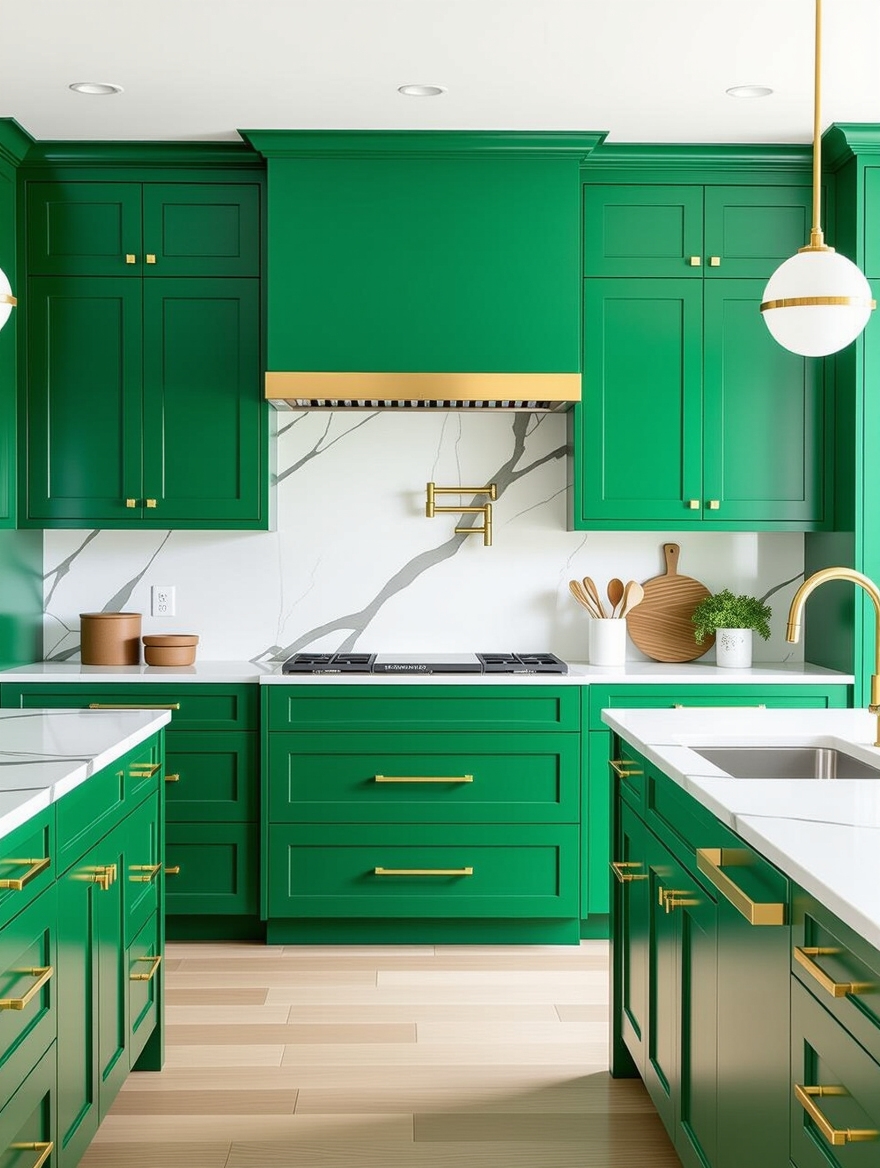
A bold color is the most dramatic steal, and the detail that keeps it from feeling like a mistake is restraint everywhere else. Put the color on the island or lowers, keep the rest neutral, and the boldness looks deliberate rather than overwhelming.
Repainting later is real work, so this steal rewards conviction. Borrow the courage from these dark green statement cabinets.
- Confine the color to one zone you could repaint without redoing the kitchen.
- A repaint runs about $250 to $700 in materials for a DIY job.
- Keep counters and walls neutral so the color stays the star.
Balanced Two-Tone Cabinets

Two-tone is a steal because it adds depth for the price of a second can of paint. The detail most people miss is proportion: the look works when one tone clearly dominates and the other accents, usually a darker island under lighter perimeter cabinets.
Split the two evenly and the kitchen looks undecided. Weight it heavily toward one and it looks designed. Keep both tones in the same undertone family so they harmonize rather than clash.
📋Before You Order Cabinets
- ✓Confirm plywood boxes and solid soft-close hardware.
- ✓Test the exact finish and undertone in your own light.
- ✓Decide where to splurge (build, function) and where to save (door style).
Soft Matte Finishes

Matte is the finish stylists steal for photo shoots, because it kills glare and looks soft and expensive on camera. In real life it earns its keep by shrugging off the fingerprints that plague gloss. The detail to get right is the quality of the matte coating, since a cheap one can look chalky and mark easily.
- Choose a quality matte that resists marking, not the cheapest coating.
- Matte suits calm, modern palettes and high-touch family kitchens.
- Pair it with one warm metal so the soft finish does not fall flat.
Glossy Cabinets to Brighten the Room

The gloss steal is really a light trick: reflective fronts throw daylight deeper into a dim or small kitchen and make it feel bigger. Designers use it where windows are scarce, and it brings a sleek polish nothing else matches. I reach for it most in galley kitchens with one small window.
A Light Trick, Not Just a Look
The catch is fingerprints, which show instantly on a glossy surface, so this steal suits a tidy cook.
If you want the brightness without the upkeep, steal it for the uppers only and keep the lowers matte where hands land most.
Sleek High-Gloss Lacquer Cabinets

High-gloss lacquer is the luxe cousin of everyday gloss, with a deep, mirror-like finish that feels truly high-end. The detail that justifies the cost is the application: real lacquer is sprayed in layers and buffed, which is what gives it that mirror-clean depth a brushed finish never reaches.
- Expect a premium, since quality lacquer is a multi-step sprayed finish.
- It shows every smudge, so reserve it for low-touch zones or tidy kitchens.
- Keep the rest of the room matte so the lacquer is the one shining moment.
Mixed Wood and Metal Contrast

The mixed-material steal looks the most custom of any on this list, because combining a warm wood with a metal accent reads as bespoke joinery. The detail is keeping it to exactly one wood and one metal, each with a clear job, so the contrast looks intentional instead of busy. One framed-glass metal door or a brass toe-kick is often all it takes.
- Limit yourself to one wood and one metal for a clean contrast.
- Use the metal as an accent, a frame or toe-kick, not the whole run.
- Match the metal to your other hardware so it ties in.
Industrial Raw-Edge Cabinets
For lofts and open plans, the industrial steal pairs simple cabinets with raw materials, exposed steel, concrete, blackened metal, for an urban edge. The detail that keeps it from feeling cold is one warm element, a wood shelf or a few plants, so the raw look stays livable.
It is a confident, of-the-moment style that suits a high-ceilinged space. Keep one material the star, since too many raw textures start to compete.
Soft-Close and Smart Function
The least glamorous steal is the one you will appreciate every single day: soft-close hardware and smart interiors. Drawers that glide shut without a slam, pull-outs that end the digging in deep cabinets, and a pull-out bin make a kitchen feel high-end in a way no finish can. I tell clients a quality slide outlasts the trend by decades, and swapping tired hinges for soft-close ones takes about an hour a cabinet.
This is where I tell people to spend before the door style. The function is what you live with, and it is the quiet marker of a quality kitchen.
- Pay for soft-close hinges and full-extension drawer slides; they outlast trends.
- Add pull-outs and dividers so deep cabinets stop swallowing things.
- A pull-out bin keeps the trash hidden and the counter clear.
Integrated Appliances and Custom Layouts
The highest-end steal is making the appliances disappear. Panel-ready fronts on the fridge and dishwasher let the cabinetry run continuous, and a layout built around your real habits, not a stock template, is what turns good cabinets into a great kitchen.
Custom or semi-custom cabinetry is the splurge here, but even one integrated dishwasher and a layout walked through with your routine in mind pays off daily. A DIY cabinet refresh is the budget alternative when custom is out of reach.
Eco-Friendly Sustainable Materials
A growing steal is choosing cabinets that look good and tread lightly. Bamboo, reclaimed wood, and FSC-certified plywood with low-VOC finishes bring real texture and cleaner indoor air, and they often wear better than budget particleboard.
The insider detail is to ask about the core and the adhesives, not just the door, since the low-VOC finishes matter most for the air in a room you cook in daily. Pair the idea with fresh cabinet color ideas for a look that is both green and current.
How to Ask Your Stylist
When you take an inspiration photo to a designer or fabricator, do not just ask for the look; ask for the detail behind it. What undertone is that white? Plywood or particleboard box? Soft-close throughout? Those questions get you the kitchen in the photo rather than a near miss.
The single best question is what makes this work that I cannot see. A good pro will point straight to the reveal, the undertone, or the hardware, and that answer is the real thing worth stealing. A calm minimal base is a safe starting point if you feel unsure.
Cabinet Stealing Questions, Answered
?What makes kitchen cabinets look expensive?
The details more than the style: consistent reveals between doors, a flattering undertone, matched metal finishes, and soft-close hardware. A plywood box and a quality finish read high-end even on a simple door.
?Where should I spend my cabinet budget?
On the box and the hardware first. Plywood construction and solid soft-close mechanisms are what you live with daily and what lasts. The door style sets the look but matters less to longevity, so save there if you must.
?What is the most timeless cabinet style to steal?
Flat-panel or shaker fronts in a warm neutral with simple hardware. Both have stayed current for years because there is nothing fussy to date, which makes them the lowest-risk steal for most kitchens.
?How do I copy a cabinet color from a photo?
Match the undertone, not just the name. Bring home large samples and view them against your counters and your light at different times of day, since the same color can look warm at noon and cold under a lamp.
?Are integrated appliances worth it?
If a built-in, unbroken look matters to you, yes. Panel-ready fronts let the cabinetry run unbroken for a high-end effect. Even one integrated dishwasher makes a difference, and it is cheaper than panel-ing the whole kitchen at once.
Steal the Detail, Not Just the Look
The cabinets worth stealing are not magic; they just get the small things right. The undertone, the reveal, the matched metals, the soft-close that you feel before you see, those details are what separate a designer kitchen from one that looks close but never quite lands.
So as you save your favorites, look past the style to the detail underneath, and ask the right questions before you order. Steal the thing you cannot see at a glance, and your cabinets will look every bit as good in your own light as they do in the photo.
More Looks We Love


