

Here is a sentence I never expected to write: oak cabinets are cool again. The honey oak that everyone painted over in the 2010s is back, this time in cleaner grains and smarter pairings, and designers who once steered clients away from wood tone are now specifying it on purpose. Warmth, it turns out, beat the all-white era.
The comeback is real, but doing oak well today is different from the orange-toned 1990s version. Here are nineteen ways oak is making its return, what makes it look current rather than dated, honest notes on cost, and which oak suits your kitchen best.
Doing Oak’s Comeback Right
Why is oak back? After a decade of cold white kitchens, people crave warmth, and oak delivers it naturally.
How is today’s oak different? Cleaner grains, matte natural finishes, and modern pairings instead of orange-toned gloss.
Do I have to replace my oak? No. The right finish, hardware, and pairings can update existing oak without a remodel.
Timeless Oak Cabinet Styles

Oak earns its comeback because the cabinet itself was never the problem; the orange stain and the ornate doors of the past were. Strip those away and oak is a timeless hardwood with beautiful grain, which is exactly why the cleaner, more natural versions look so current now.
- Choose a natural or lightly stained oak over the old orange tones.
- Pair simple slab or shaker doors with the grain for a current look.
- Let the wood’s grain be the feature; skip the fussy detailing.
How Oak’s Warm Tones Brighten a Kitchen

Part of oak’s appeal is how it warms and brightens a room at once. The honey and amber tones catch the light and add a glow that cool, painted cabinets simply cannot, which makes a kitchen feel welcoming the moment you walk in.
It is the warmth people missed during the all-white years, and it is the single biggest reason oak came back. A run of warm oak does for a kitchen what good light does for a room. I lean on it whenever a space feels cold.
Not sure which oak suits your kitchen? Match it to your style.
🎯You want a modern, current look
Choose rift-cut oak in a slab front with a natural matte finish.
🎯You love rustic or farmhouse warmth
Go for a richer plain-sawn grain and a warmer, deeper stain.
Modern Twists on Oak Cabinets
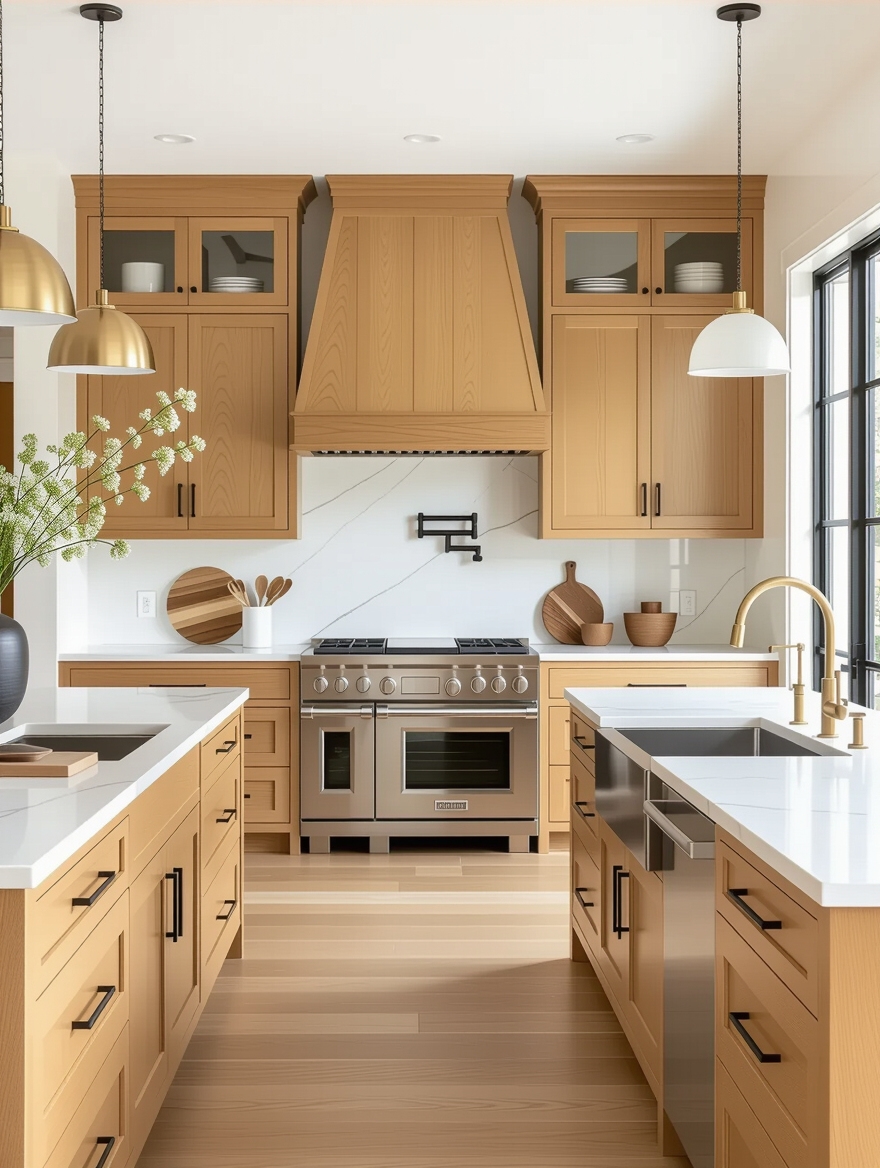
Today’s oak looks nothing like your grandmother’s. The modern twists are what make the comeback work. Flat slab fronts, handleless designs, and vertical or rift-cut grain give oak a clean, contemporary feel that the old raised-panel version never had.
- Choose rift-cut oak for a straight, modern grain.
- Flat or handleless fronts make oak look current, not country.
- Keep the stain natural and matte rather than glossy and orange.
Blending Oak With Modern Accents

Oak shines brightest when it is the warm note in an otherwise modern room. Set against white or stone counters, matte black or brass hardware, and clean lines, the wood grain becomes a deliberate warm accent rather than a throwback to a wood-everything kitchen.
The trick is balance: let oak be one strong element, on the island, the lowers, or a wall of cabinets, and keep the surroundings clean and contemporary so the wood looks modern.
📋Keep Oak Looking Current
- ✓Choose a natural matte finish, never orange-gold gloss.
- ✓Pair oak with light or quiet counters and modern hardware.
- ✓Let oak be the warm accent against clean, contemporary surroundings.
Oak’s Unique Grain Patterns

Half of oak’s character is in the grain. Understanding it helps you choose well. Plain-sawn oak shows the bold, cathedral-arch pattern most people picture, while rift and quarter-sawn cuts give a straighter, more linear grain that looks cleaner and more modern.
Neither is wrong; they simply suit different looks. The busy cathedral grain leans rustic and traditional, while the straight rift grain leans contemporary.
Decide which grain fits your style before you order, since it changes the whole personality of the cabinet more than the stain does.
Enhance Oak With the Right Finish

The finish is what separates a dated oak kitchen from a current one. The orange-gold, high-gloss finishes of the past are exactly what gave oak its bad reputation, while today’s matte, natural, and lightly whitewashed finishes let the grain show without the dated tone.
Matte and Natural, Never Orange
A natural matte oil or a water-based finish keeps the wood looking like wood rather than plastic.
If you are choosing new, ask for a natural or neutral stain in a matte finish; it is the single most important decision for keeping oak modern.
👍Why Oak Is Worth the Comeback
- +Warm, light-catching tone that no painted cabinet matches.
- +A durable hardwood you can sand and refinish for decades.
- +Affordable for a real wood, especially in veneer or ready-to-assemble.
👎Where People Go Wrong
- –An orange-gold gloss finish dates it instantly.
- –Heavy raised-panel doors read straight back to the 1990s.
- –A busy counter competing with the grain makes it look cluttered.
Solid Oak vs Veneer

When you buy oak cabinets, you will choose between solid wood and oak veneer, and both have a real place. Solid oak is durable and can be sanded and refinished, while a quality veneer over plywood is more stable against humidity, often cheaper, and uses the wood more efficiently.
- Solid oak can be refinished, so it lasts and updates over decades.
- Quality veneer resists warping and costs less for the same look.
- Avoid cheap veneer over particleboard, which chips and fails fast.
Popular Oak Door Styles

The door style decides whether oak looks modern or dated as much as the finish does. A flat slab front shows off the grain cleanly and feels the most contemporary, while a simple shaker keeps oak classic and versatile.
Slab or Shaker, Not Raised Panel
What to avoid is the heavy raised-panel cathedral door of the past, which dates oak instantly no matter how nice the wood.
For most kitchens, I steer clients to a slab or shaker in a natural finish, which is the safest way to ride the comeback.
Maximizing Space With Oak

Oak suits a small kitchen better than people expect, because its warm, light tone keeps a tight space from feeling cold or cave-like the way dark wood can. A lighter natural oak, run to the ceiling and paired with light counters, adds warmth and storage without shrinking the room.
Keep the grain calmer and the finish light in a small space, so the wood feels airy rather than heavy.
- Choose a lighter, natural oak to keep a small kitchen bright.
- Run cabinets to the ceiling for storage and a clean line.
- Pair with light counters so the wood warms without darkening.
Mixing Oak With Contrasting Woods

Mixing oak with another wood or a contrasting material adds depth and keeps a kitchen from feeling like a wood box. Oak cabinets with a walnut island, or oak against painted lowers, give the warmth of wood with the contrast a modern kitchen wants.
The rule is to vary the tone clearly, since two similar-but-different woods can look like a mistake rather than a choice.
- Pair oak with a clearly different wood, like walnut, not a near-match.
- Or mix oak with one painted color for contrast and warmth.
- Keep one wood the lead and the other the accent.
Updating Oak Without a Remodel
Here is the best news of the comeback: if you already have oak, you may not need to replace it at all. Updating the finish, swapping the dated hardware for slim modern pulls, and pairing the oak with fresh counters or a new backsplash can take it from dated to current for a fraction of a remodel.
Even just removing an orange-toned topcoat and re-oiling to a natural finish transforms the look, and a refinish runs a few hundred dollars against thousands for new cabinets. I tell clients to try the cheap updates first, since oak’s comeback means the wood they were about to paint over is suddenly an asset. A refresh with new color and hardware often does the job.
Best Countertops and Durability
The right counter is what makes oak look intentional. A white or pale quartz keeps oak feeling fresh and modern, a soft soapstone or honed marble adds quiet contrast, and a creamy stone warms it further; all read better than a busy granite that competes with the grain. Keep the counter calmer than the wood and the pairing sings.
Oak earns its place on durability too. As a dense hardwood, it resists dents and daily wear and can be refinished if it ever looks tired, which is why oak cabinets often outlast the kitchens around them. It is warmth that truly lasts.
Affordable Oak and Maintenance
Oak does not have to be a splurge. Oak veneer and ready-to-assemble units deliver the warm grain for far less than custom solid wood, often $150 to $400 a linear foot versus several times that for custom, and they look high-end when paired with good hardware and counters. The wood itself is one of the more affordable hardwoods, which helps the comeback reach real budgets.
Caring for oak is simple, too: wipe with a soft, damp cloth, avoid harsh cleaners, and re-oil a natural finish every so often to keep it rich. A few minutes of care keeps oak looking warm for decades. For more on warming a modern room with wood, see the warm modern feel and the modern rustic mixes.
Who It Suits Best
Oak’s comeback suits almost everyone, but the version depends on your style. A modern home wants rift-cut oak in a slab front with a natural matte finish; a rustic or farmhouse kitchen wants a richer plain-sawn grain and a warmer stain; and anyone with existing oak should start by updating the finish and hardware rather than tearing it out.
Match the grain, finish, and door style to your look, and oak rewards you with warmth no painted cabinet can match. The mid-century era used oak the same warm, grain-forward way, as these mid-century wood elements show, and a dark wood option is the moodier cousin if you want more depth.
Welcome the Warmth Back
Oak is back because the all-white era left kitchens craving exactly what wood gives: warmth, grain, and a little soul. Done in today’s way, with a natural matte finish, a clean door style, and modern pairings, oak looks current and inviting rather than dated, and it brings a glow no paint color can.
So if you have oak, update it before you paint it; if you are choosing new, lean into the grain and keep the finish natural. Either way, ask whether your kitchen could use a little more warmth, because oak’s comeback is really the warmth coming back, and that never truly goes out of style.
More Looks We Love


