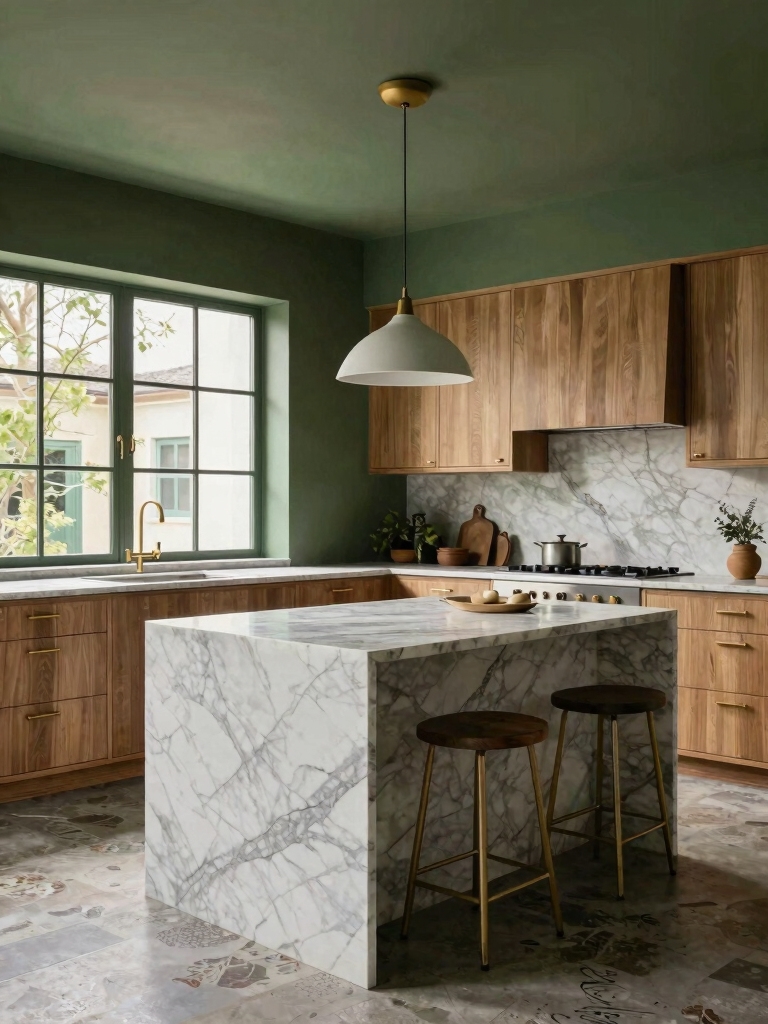
Mention olive green cabinets and someone always pictures a 1970s kitchen with avocado appliances and brown laminate everywhere. That version earned its bad name. The olive taking over kitchens now is a different animal: grayed, muted, and treated like a warm neutral that happens to have a pulse.
What makes this wave stick is range. The same color family stretches from a chalky Scandinavian sage to a deep, lacquered urban olive, so there is a version for almost any kitchen style. Below are the olive green kitchen styles taking over right now, grouped by the mood they create, with what each one actually costs and asks of you.
The Quick Version
- Grayed, muted olives have replaced the dated avocado greens of the past; the new look leans warm and almost neutral.
- One color, many styles: chalky sage for Scandinavian rooms, deep forest for drama, golden olive for dark kitchens, terracotta-paired olive for Mediterranean warmth.
- Most of these looks fit a repaint budget of about $200 to $400 DIY; brass, wood, and the right white do the rest.
Choosing the Right Olive Green Style for Your Kitchen

Before you pick a style, figure out the mood you want, because olive bends to all of them. A warm, golden olive turns cozy and farmhouse; a cool, gray-leaning sage turns crisp and modern; a deep forest-olive turns dramatic. The honest first step is matching that undertone to your light and your existing finishes.
Hold a few samples against your counters and floor in daylight, and the one that belongs usually announces itself, much the way the right olive cabinet shade settles a room once it matches the light. I always tell people the style follows the undertone, so settle that before you fall for a single photo.
- Warm golden olive: farmhouse, Mediterranean, cozy rooms.
- Cool gray-sage: Scandinavian, modern, small kitchens.
- Deep forest olive: dramatic, dark, statement spaces.
Deep Matte Olive: The Earthy Farmhouse Look

The matte, deep olive paired with brass and wood is the look most responsible for this whole trend. It is grounded and earthy, and it sits naturally with the modern farmhouse details people already love: warm brass hardware, reclaimed wood shelves, black iron pendants, and the simple shaker doors common in sage green kitchens.
Matte is what sells it, soaking up light for that velvety depth, though it asks for a washable cabinet-grade finish near the sink and stove. Budget-wise this is friendly territory, since it is mostly a paint-and-hardware change, roughly $250 to $450 for a DIY repaint plus new pulls. Keep your counters and backsplash light so the deep cabinets have somewhere to breathe.
ℹ️Good to Know
Olive shifts more than most cabinet colors from room to room. A shade that looks earthy in a south-facing kitchen can turn gray-brown in a north-facing one, so always test in your own light before buying a gallon.
Pale Sage for Airy, Open-Concept Kitchens

On the opposite end is pale, chalky sage, the version that melts into the walls in the best way. In an open-concept kitchen that flows into the living room, a whisper-soft sage gives you color without drawing a hard line between the zones.
Keep the bulbs on the warm side
This is the one I suggest when people want green but worry about commitment, because pale sage behaves almost like an off-white. It plays well with light oak, white counters, and matte black hardware for a Nordic feel. The lighter the sage, the more forgiving it is in a busy, shared space.
The one caution: very pale sage can wash out under bright, warm bulbs and slide toward gray. Swap to a softer 2700K to 3000K LED and it holds its green after dark.
Elegant Dark Forest Olive and Brass

When someone wants drama without going all the way to black, deep forest-leaning olive is the answer. Close to a true moss, it gives cabinets real weight and a dressed-up feel, especially under warm brass that catches the morning light. It is the style that makes a plain kitchen look considered.
Dark colors are honest about flaws, so this is a place to spend on finishing, whether that is a careful two-coat job or a pro spray at roughly $50 to $100 per door. Give a deep olive a full 24 hours to cure between coats, because dark matte finishes show drag marks and lap lines if you rush a second coat onto paint that has not set.
Balance the depth with a pale stone counter, the way the best bold dark green kitchens do, and keep at least one wall or the uppers light, or a small kitchen can start to feel like a cave.
💡Small-Kitchen Trick
In a galley or small open kitchen, run the same pale sage on the walls and the cabinets. Dropping that contrast line tricks the eye into reading one larger, calmer space.
Light Sage Cabinets With Natural Wood Counters

Pairing soft sage cabinets with natural wood counters is the organic, garden-brought-indoors style, and it has quietly become a favorite. The green and the warm grain do something for each other, looking fresh and calm at once. Butcher block, walnut, or even a live-edge slab all work, and the combination sits at the heart of the green-and-wood kitchen look. I have watched this pairing turn a flat builder-grade kitchen into the warmest room in the house.
The trade-off is maintenance. Wood counters want periodic oiling, every few months in a busy kitchen, and they will patina over time. If that worries you, a warm-veined quartz mimics the look with far less upkeep. Either way, this style suits cottage and casual-modern kitchens far better than glossy, formal ones.
Olive and Cream Two-Tone Layouts

Two-tone is the low-risk way into the trend and a resale-friendly favorite. Deep olive on the base cabinets and island, soft cream up top, and the room feels grounded and bright at the same time. The contrast adds depth without committing the whole kitchen to dark color, which is why nervous first-timers land here so often. Pull it together with brass or aged-gold hardware and a warm wood accent, and it slots neatly into the wider two-tone cabinet trend.
- Olive lowers plus cream uppers keeps a kitchen from feeling top-heavy or dark.
- Choose a warm cream over a stark white so the olive holds its color.
- Repeat the cream in the counter or backsplash to tie the two tones together.
🅰️Real wood counters
The warmest look against sage, and you can sand out damage. But they need oiling every few months and will dent and patina with hard daily use.
🅱️Wood-look quartz
Almost the same warmth with near-zero upkeep and better stain resistance. It costs more up front and never develops that real-wood character.
Olive Butler’s Pantries and Wet Bars

If you love olive but the main kitchen feels too public for a big swing, the butler’s pantry or wet bar is the perfect place to commit. The pantry is where I send clients who adore the color but freeze at the idea of painting the whole kitchen. Wrapping a smaller, tucked-away room in floor-to-ceiling olive feels intentional and a little unexpected.
Go all in here: matching olive subway tile, open shelving in the same tone, brass fixtures, maybe an olive pocket door for a quiet reveal. Because the footprint is small, the cost stays reasonable even with nicer materials, and the impact per square foot is high.
An integrated wet bar gets the same treatment. Matte olive cabinets hiding a wine fridge, floating shelves for glassware, and a stone top let it blend into an open-concept living area while still pulling its weight.
Retro Avocado: The Nostalgic Vintage Style

Here is where olive splits in two. Push it warm, glossy, and yellow-green, and you land in deliberate retro territory, the avocado of mid-century kitchens done on purpose this time. It is a real style, not a mistake, when the rest of the room commits to the era.
The trick to keeping it charming is context. Pair glossy avocado appliances or cabinets with checkerboard floors, chrome accents, and rounded vintage shapes. Skip the shiplap, which drags it back toward farmhouse and muddies the message. This one rewards people who truly love a vintage look.
- Go glossy and warm-yellow for an intentional retro avocado look.
- Anchor it with a checkerboard floor, chrome, and rounded mid-century shapes.
- Keep farmhouse details like shiplap and barn doors out of this one.
Bold Olive Islands With Crisp White

A deep olive island anchoring crisp white perimeter cabinets is the style that stops people in the doorway, and it is hard to get wrong. The white keeps everything open while the olive island becomes the heart of the room, an instant focal point without a full color commitment.
Let the island carry the color
It is also practical. The island takes the visual weight and the daily wear, while the rest of the kitchen stays bright and easy. Natural textures like wood stools, a stone top, and brass pulls pop against both tones and keep the look from going flat.
For a small kitchen with no island, the same idea works on a run of lower cabinets or a peninsula. The point is one concentrated hit of olive against a light backdrop.
Muted Mediterranean Olive and Terracotta

The olive-and-terracotta pairing is the warmest style on this list, all sun-baked courtyard and handmade texture. Earthy olive cabinets against terracotta tile, clay pots, and unglazed surfaces give a kitchen that relaxed Mediterranean feel without a single fake-Tuscan cliche.
It leans rustic and works best where you can bring in real texture: zellige tile, plaster walls, and aged wood. This is the style that rewards patience and a little thrifting over a single big shopping trip.
- Start with a warm, slightly golden olive rather than a cool sage.
- Add terracotta in the floor, backsplash, or accessories for the heat.
- Layer handmade textures like plaster, zellige, and raw wood so it feels collected.
What to Expect Before You Commit
Whichever style pulls at you, a few realities are worth knowing up front. Olive is a chameleon, so the single most important step is testing big samples in your own kitchen across a full day. What looks earthy at noon can go gray by dinner, and skipping that test is how good intentions turn into a do-over.
On budget, most of these looks are paint-led: a DIY cabinet repaint runs about $200 to $400, a pro job far more, and a single island or butler’s pantry is the cheapest way to try the color. On longevity, the muted, grayed olives age more slowly than the bright, yellow ones, so if resale is a worry, lean quiet. Plan for touch-ups at high-traffic edges every couple of years.
Olive Green Style Questions, Answered
?Is olive green just the avocado kitchen trend coming back?
Not quite. The avocado of the past was a bright, warm, glossy green tied to mid-century appliances. Today’s olive is usually grayed, muted, and treated as a warm neutral, which is why it looks sophisticated rather than dated. You can lean retro on purpose, but most current styles go the muted route.
?Which olive green style works best in a small kitchen?
Pale, chalky sage is the safest bet, since it keeps a small or galley kitchen feeling open and behaves almost like an off-white. If you want more color, put a deeper olive on just an island or the lower cabinets and keep everything above it light. Avoid wrapping a tiny, low-light kitchen in dark forest olive.
?What hardware and metals go with olive green kitchens?
Brass and aged gold are the classic partners and warm the green nicely, while matte black gives a more modern, Scandinavian edge. Natural wood tones like oak and walnut work with almost any olive. The main thing to skip is shiny chrome, unless you are deliberately going for a retro look.
?How much does an olive green kitchen makeover cost?
If you are repainting existing cabinets, expect roughly $200 to $400 for a DIY job or $50 to $100 per door for a professional spray finish. A butler’s pantry, wet bar, or single island is the budget-friendly way to test the color for a few hundred dollars. Full cabinet replacement is a much larger project.
One Color, Almost Any Style
The reason olive green keeps spreading is simple: it is less a trend color than a flexible neutral that adapts to whatever style you already love, from chalky Scandinavian calm to sun-warmed Mediterranean to dramatic forest depth. Pick the mood first, match the undertone to your light, and the rest falls into place.
If you are still deciding which direction fits your kitchen, bookmark this page and come back with paint samples in hand. Testing a few olives against your own counters and light beats any photo, and it is the one step that turns a risky color into a safe bet.
More to Explore


