

I once stood in a friend’s kitchen where forest-green cabinets met a thick walnut island, and I did not want to leave. The deep green and the warm grain seemed to hum together, calm and rich at the same time. It was the room that made me fall for green-and-wood for good.
There is a reason the pairing feels so right. Green and wood are both pulled straight from the forest, leaf and trunk, so our eyes treat them as a natural set. These 20 green-and-wood kitchens show how different greens come alive against different woods, from pale oak to dark walnut, and how to pair them so the result looks rich rather than busy.
Pairing Green With Wood
Green and wood is the easiest pairing to get right, because both come from the same place, the forest, so they rarely clash. The one rule is to match the mood: a pale green with pale wood feels light and Scandinavian, a deep green with dark walnut feels rich and dramatic, and an earthy olive with rustic wood feels warm and grounded.
Keep one wood tone consistent, give a strong green a pale counter to breathe against, and let warm metals and plants tie it together. Do that, and a green-and-wood kitchen feels less decorated than grown, like it belongs exactly where it is.
Sage Green and White Oak
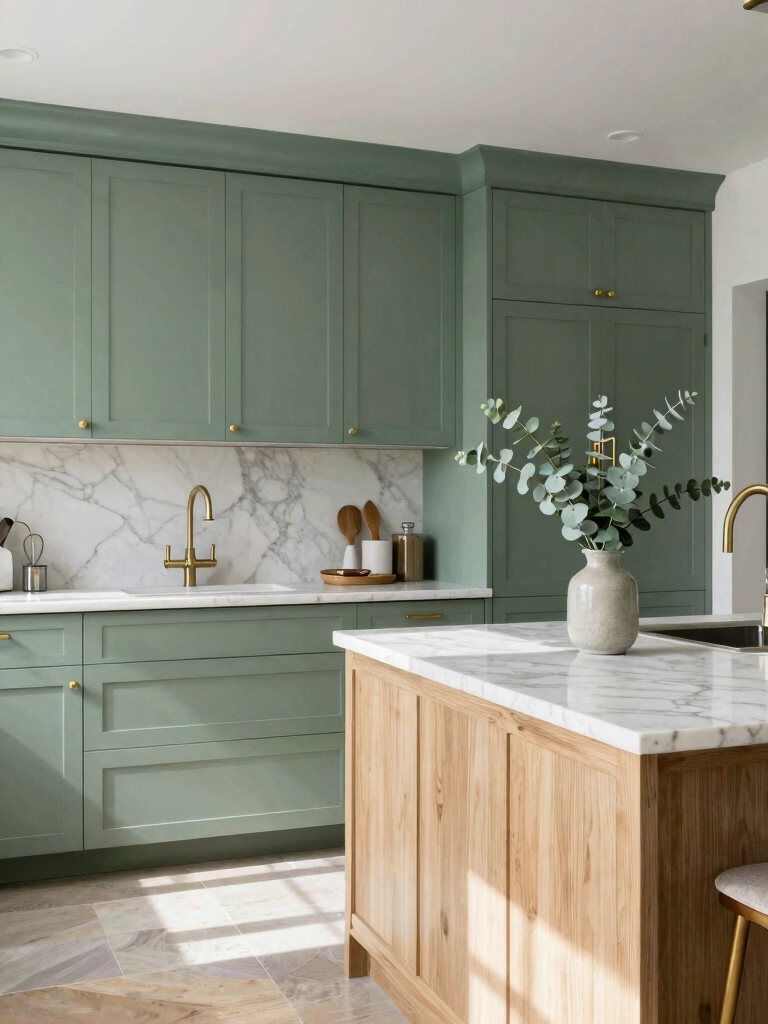
Start here. The easiest green-and-wood pairing is soft sage with pale white oak. The muted gray-green and the light, straight-grained oak share a calm, understated quality, so together they feel airy and Scandinavian rather than heavy.
Sage cabinets with white oak floors, open shelves, or a slatted island look fresh and modern, and the pale wood keeps the whole kitchen feeling light. I love this combo for a smaller or north-facing kitchen, where both the soft green and the blond wood help the room hold on to what daylight it gets. Add white counters and black or brass hardware, which runs about $4 to $8 a pull, to finish it.
- Pair muted sage cabinets with pale white oak floors or shelves.
- Keep the wood light and straight-grained for a Scandi feel.
- Finish with white counters and black or brass hardware.
An Emerald Island in Walnut
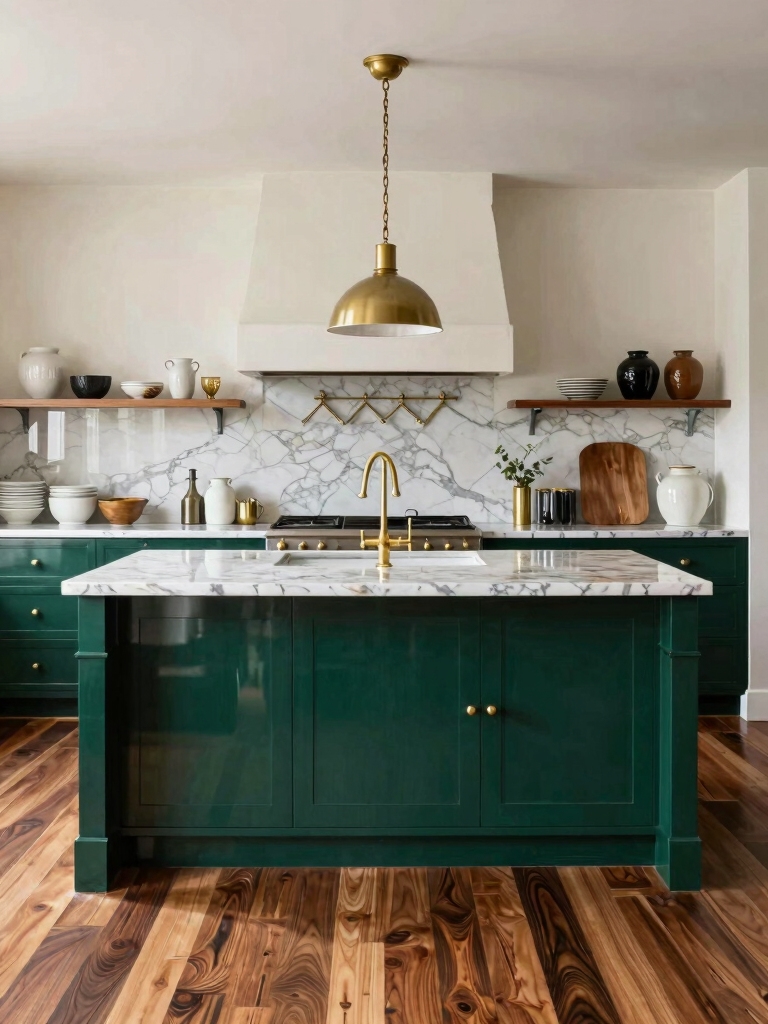
For something richer, an emerald-green island topped or trimmed in walnut is a showstopper. It stops people in the doorway. The jewel-toned green and the dark, chocolatey grain of walnut together feel luxurious, like a piece of fine furniture dropped into the kitchen, deep and glowing under good light.
I recommend keeping this pairing to an island or a single run, since both the saturated green and the dark walnut are strong. Surround the emerald-and-walnut centerpiece with paler perimeter cabinets and a light counter so it has room to shine. A brass faucet and pendant lights warm the whole thing up.
👍Emerald and walnut pros
- +Deep, luxurious color that looks high-end
- +Walnut’s dark grain flatters jewel-toned greens
- +Makes a dramatic island or feature without a full remodel
👎Things to plan for
- –Both are dark, so the room needs pale surfaces and good light
- –Walnut costs more than oak or birch
- –Best kept to one element, since too much feels heavy
Rustic Olive Green Warmth
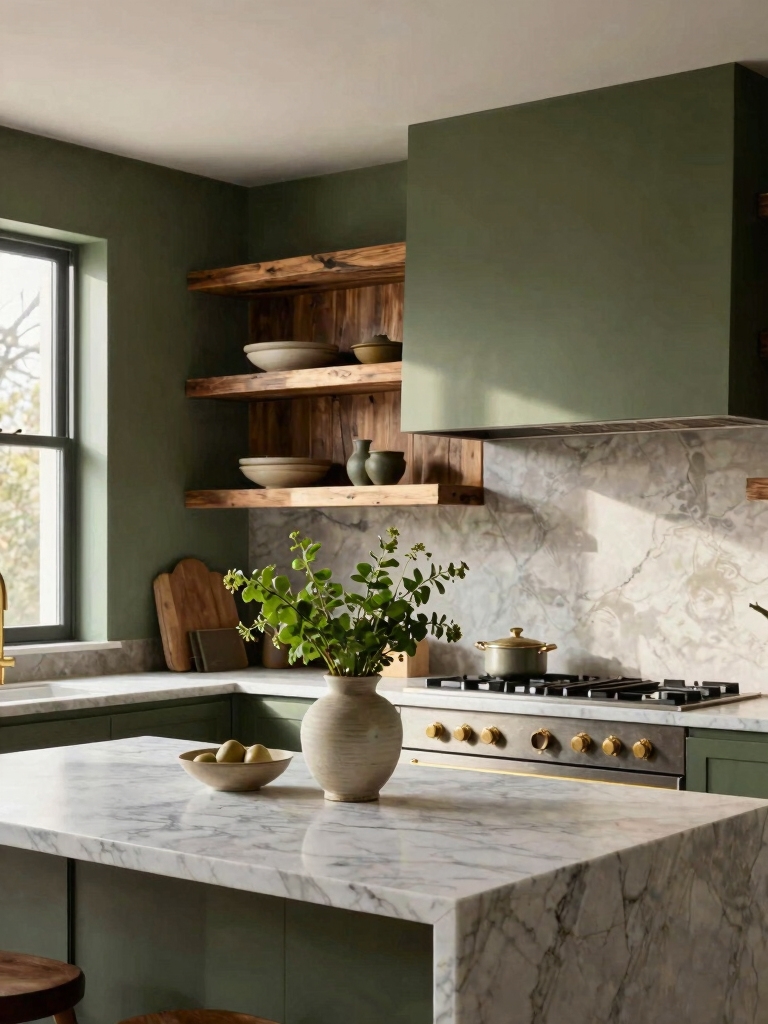
Olive green with a warm, rustic wood, knotty pine, reclaimed oak, or hickory, is the cozy, farmhouse end of green-and-wood. Olive loves wood. It is a brown-green to start with, so it melts into warm, characterful wood like it grew there.
This pairing wants texture and imperfection: a live-edge shelf, a chunky butcher block, a reclaimed-wood range hood. The knots and grain of a rustic wood echo olive’s earthiness, and the result is a kitchen that feels grounded and warm. Keep counters and walls light so the warm, busy palette does not close in. The olive green styles show how flexible this shade is.
- Pair olive cabinets with knotty pine, hickory, or reclaimed oak.
- Lean into texture: live-edge shelves, butcher block, a wood hood.
- Keep counters and walls light to balance the warm palette.
Mint Tiles and Honey Shelves
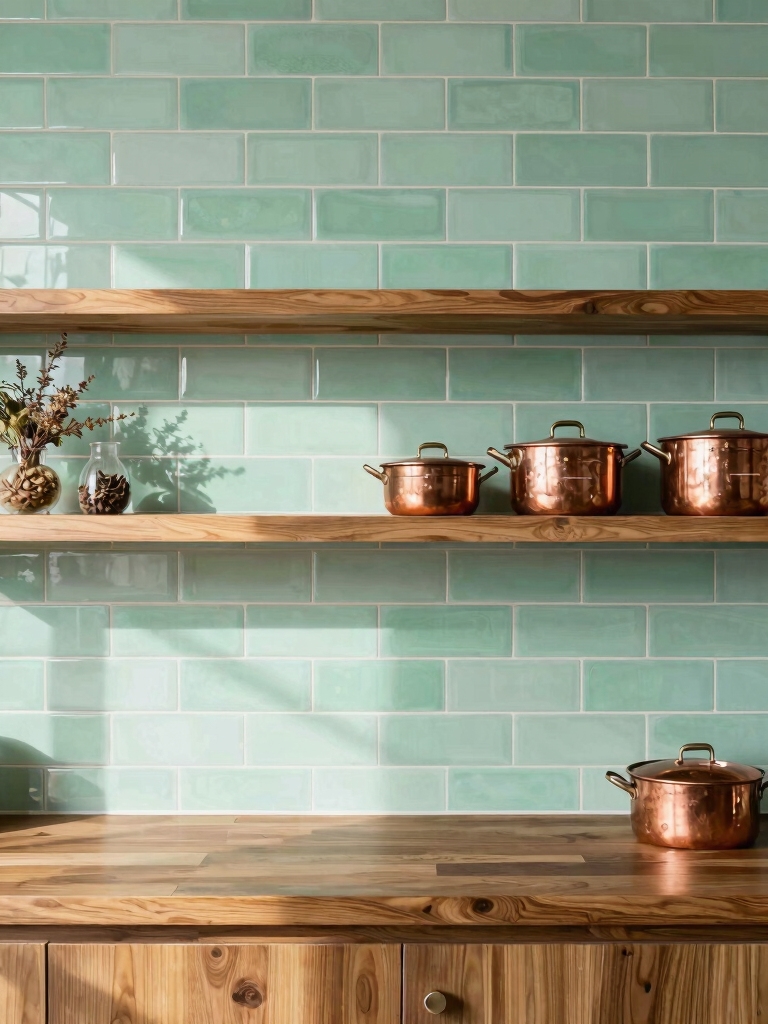
Green and wood does not have to mean green cabinets. Skip them entirely. A mint tile backsplash paired with honey-toned oak shelves and cabinets brings the green in through tile while the wood carries the warmth.
The cool mint and the golden honey wood are near opposites, which is exactly why they pop, a fresh, retro-leaning combination that feels sunny and cheerful. Use the mint on the backsplash and let honey oak cover the cabinets and shelves, with a white counter to keep it crisp.
Honey oak has swung back into style after years out of favor, so this look feels current again rather than dated. If your existing cabinets are already a golden oak, a mint backsplash may be the only change you need to bring the whole kitchen up to date.
- Bring green in through a mint tile backsplash, not the cabinets.
- Pair it with honey-toned oak cabinets and open shelves.
- Keep counters white to hold the fresh, sunny contrast.
Which green-and-wood mood is yours?
1Calm and Scandinavian
Sage with pale white oak and white counters.
2Warm and rustic
Olive with knotty pine or reclaimed oak.
3Rich and dramatic
Emerald or forest with dark walnut.
Forest Green Cabinetry
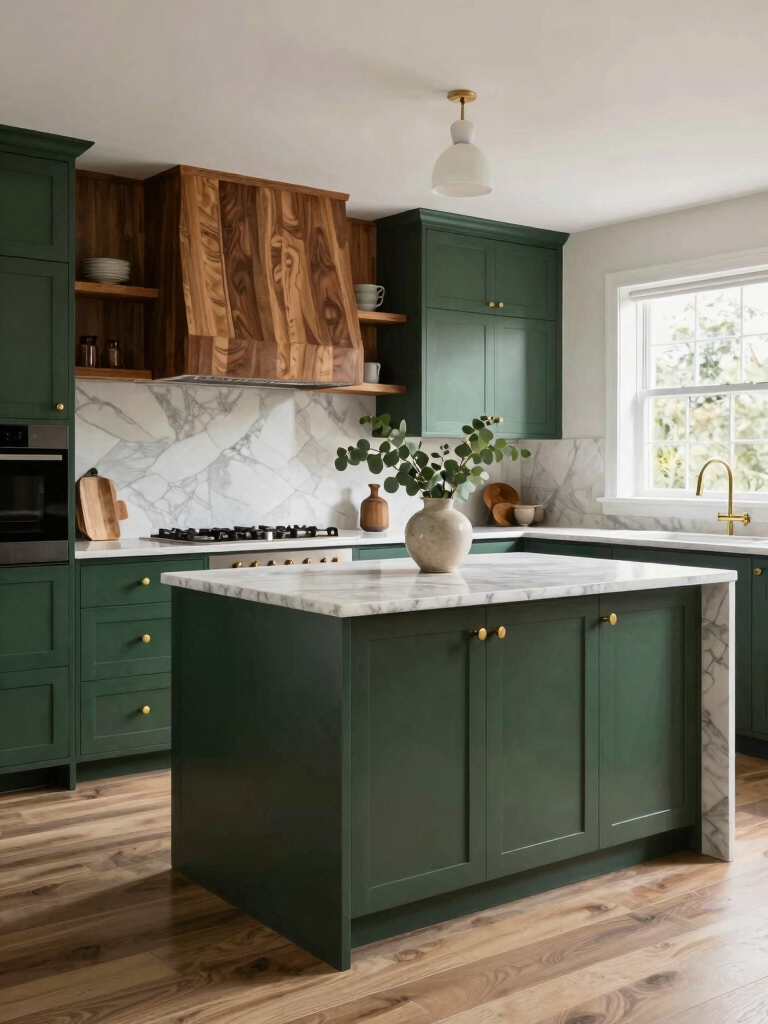
Forest green cabinets with natural wood accents are the deep, classic heart of this whole palette. Wood saves the dark green. The rich green behaves almost like a neutral once wood enters the picture, since the warm grain softens the depth and keeps the kitchen from feeling like a cave.
Pair forest cabinets with white oak floors and a walnut or teak shelf, add a pale stone counter, and the room feels both moody and warm. I tell people that wood is what makes a dark green kitchen livable, because the grain brings light and warmth back into a deep color. Keep one wood tone consistent so the green has a single, calm partner rather than a jumble.
- Pair deep forest cabinets with one consistent wood tone.
- Add a pale counter so the dark green stays rich, not gloomy.
- Let wood floors and a shelf warm the moody color.
Coastal Tranquility in Green and Wood
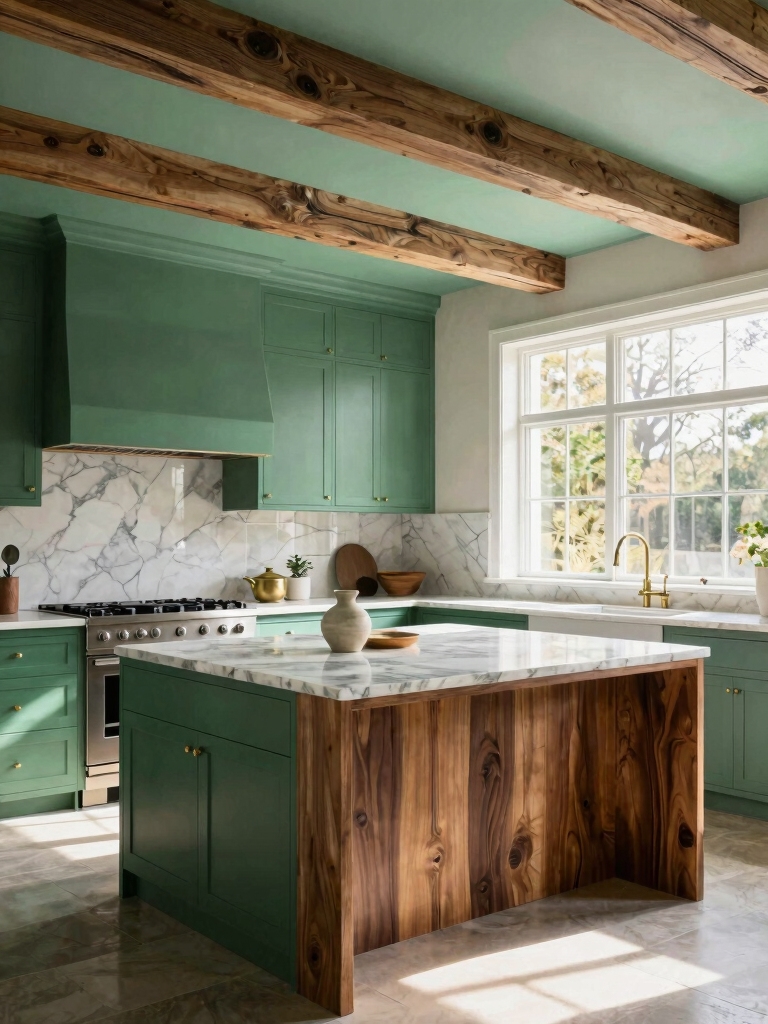
A coastal green-and-wood kitchen swaps depth for breeziness: a soft seafoam or sea-glass green with pale, weathered wood like bleached oak or driftwood. The cool, watery green and the sun-faded wood capture that calm, by-the-shore feeling. Keep everything light, white counters, pale wood, soft green, and add woven and rope textures for the seaside mood.
A coastal palette like this is also forgiving and affordable, since weathered and bleached woods hide wear and pair with paint you can do yourself in a weekend, and you can refresh a tired shelf with an hour of sanding and oil. This is the tranquil, low-key end of green-and-wood, made for a relaxed home.
- Pair soft seafoam green with bleached or driftwood-toned wood.
- Keep counters and walls white for an airy, coastal feel.
- Add woven and rope textures for the by-the-shore mood.
| Green | Wood tone | Mood |
|---|---|---|
| Sage | Pale white oak | Calm, Scandinavian |
| Olive | Knotty pine, reclaimed oak | Warm, rustic |
| Emerald or forest | Walnut | Rich, dramatic |
| Seafoam | Bleached or driftwood | Breezy, coastal |
Elegant Green and Cherry
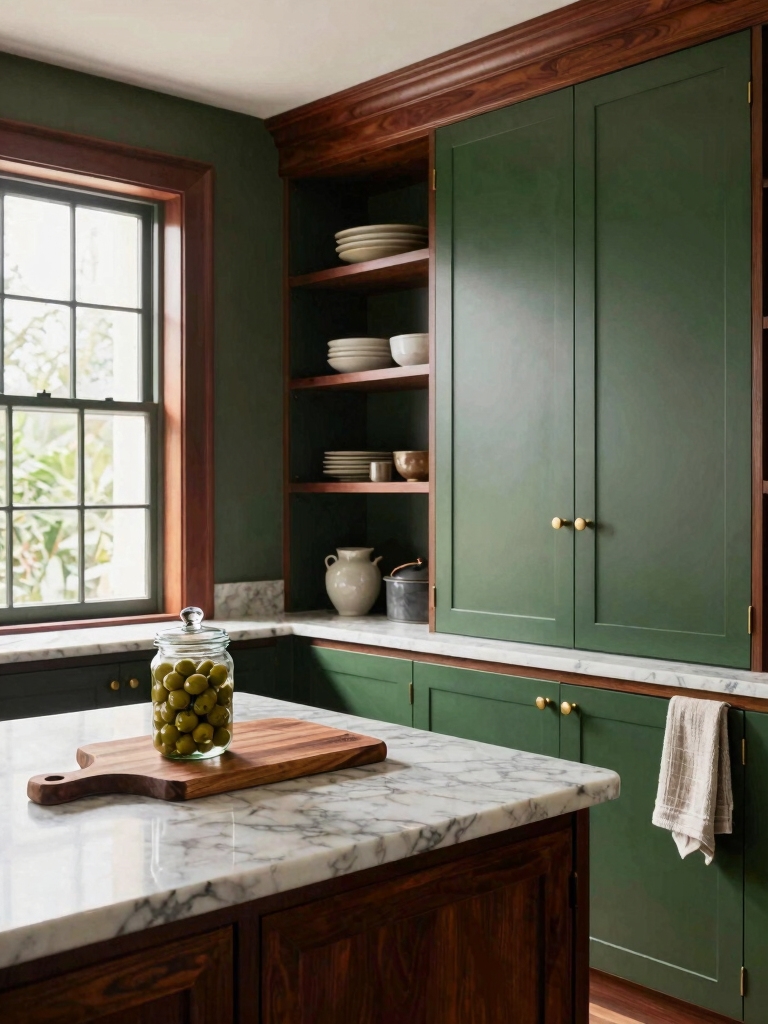
Cherry wood, with its warm reddish glow, is an underused partner for green, and the two are quietly elegant together. Cherry needs a cool partner. A muted green, sage, celadon, or a grayed eucalyptus, calms cherry’s warmth, while the wood adds a rich, traditional depth.
This pairing suits a more formal or traditional kitchen, where cherry cabinets or a cherry island meet green walls, a green hutch, or green-painted lower cabinets. The green cools and modernizes cherry, which can otherwise feel dated on its own. Keep the metals warm, gold or bronze, to honor cherry’s red undertone.
Tranquil Green and Warm Wood
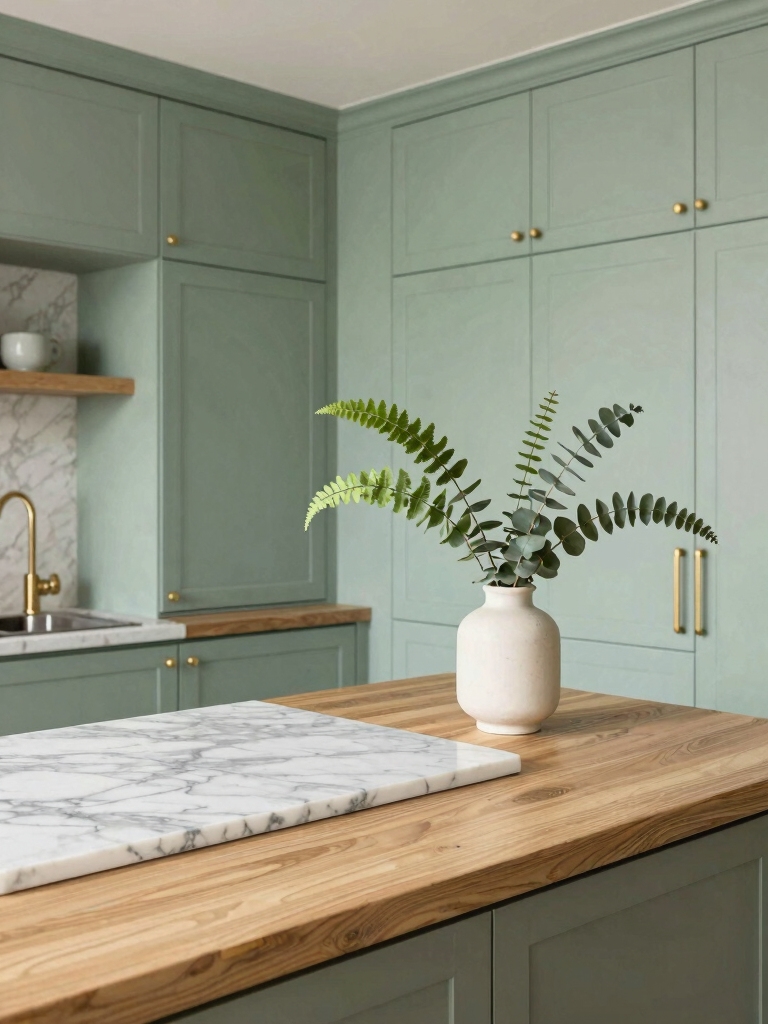
If you want a kitchen that simply feels calm, a tranquil green with any mid-toned warm wood is the most foolproof formula in this palette. Calm is the whole point. A soft, grayed green, sage, eucalyptus, soft fern, beside honey oak or medium walnut creates an instant sense of restful balance.
I see this combination work in almost any home, because muted green and warm wood are both quiet, natural, and easy to live with. There is no jarring contrast, just two soft, organic tones supporting each other. Add plants, linen, and stone, and the kitchen becomes the calmest room in the house.
Moody Moss and Warm Walnut
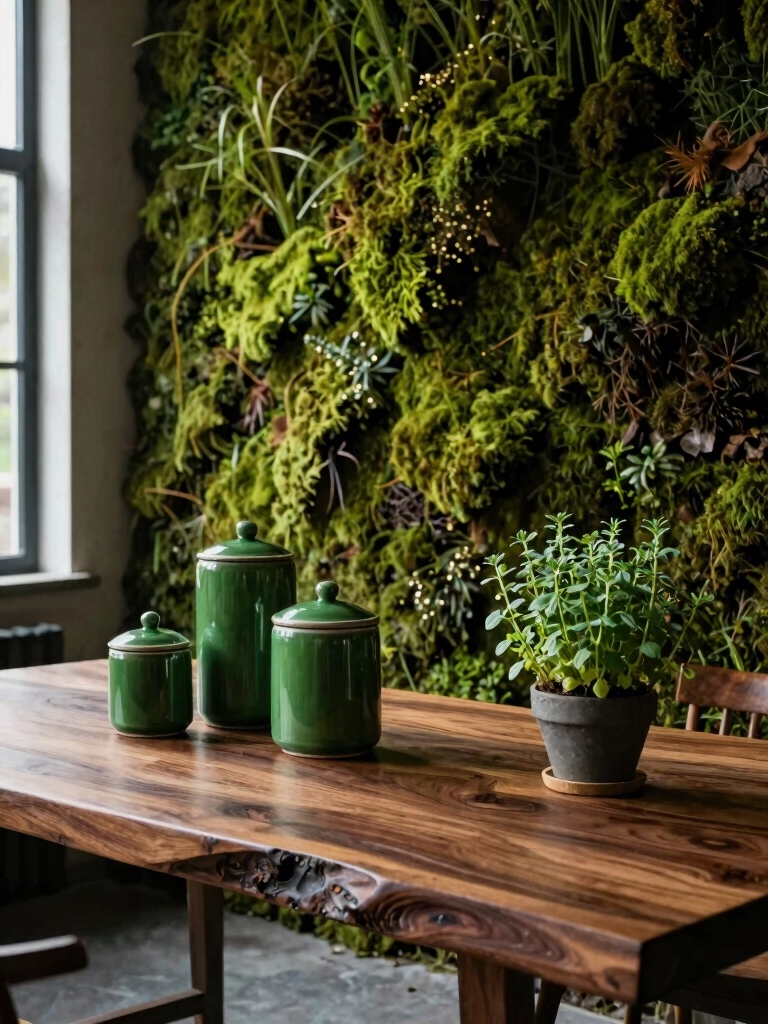
For a deeper, more atmospheric take, moss green paired with warm walnut is rich without going as dark as forest-and-walnut. Moss has a softness and a hint of gray that keeps it from feeling heavy, and walnut’s chocolate warmth makes it glow.
Cozy, Like a Library
This is a cozy, library-like pairing, perfect for a kitchen you want to feel intimate and enveloping. Use moss on the cabinets and walnut on the island, shelves, or a slatted feature wall, balanced by a warm-white counter and soft lighting.
Keep the lighting warm, around 2700K, so the moss and walnut feel cozy rather than dim. Bring in a few brass accents and a pale stone counter, and the moody palette gains just enough sparkle to keep it from going flat. The depth of this pairing photographs beautifully and feels even better in person. The deep green tones show how rich the green end can run.
Lime Green and Serene Cedar
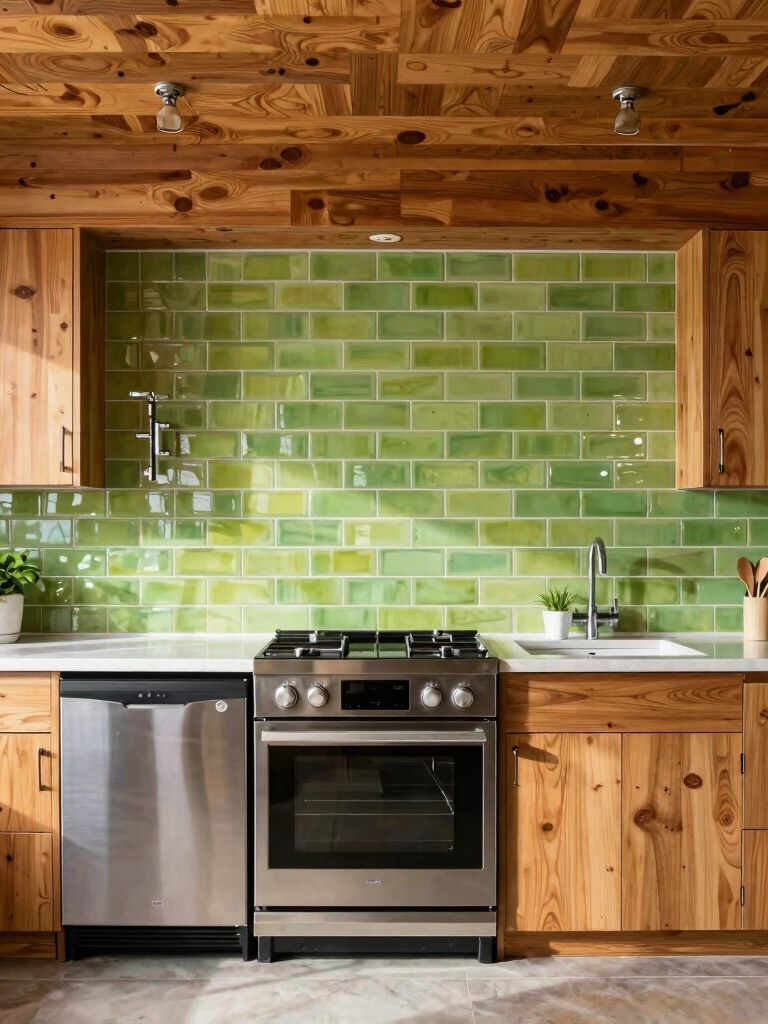
At the brightest, most playful end sits lime or chartreuse green with the soft, pale warmth of cedar. The zingy green and the gentle, aromatic wood are an unexpected pair, the lime bringing energy and the cedar grounding it with calm.
Use it sparingly. This is a bolder, more modern choice, best kept in small doses: a lime accent cabinet, a band of lime tile, or lime bar stools against cedar cabinetry. The cedar’s mellow tone keeps the bright green from overwhelming, so the kitchen feels lively rather than loud.
Cedar is practical too. It smells wonderful, resists moisture, and ages softly, though it pays to seal it well so the pale wood keeps its color rather than yellowing over time. Reserve the lime for one or two spots and let warm cedar carry the rest.
More Green and Wood Kitchen Questions
?Do green and wood go together in a kitchen?
Wonderfully, because both come straight from nature, leaf and trunk, so the eye treats them as a matched set. The key is pairing the right tones: pale greens with pale woods for a light look, deep greens with dark walnut for drama, and earthy olive with rustic wood for warmth.
?What wood goes best with green cabinets?
It depends on the green and the mood. Pale white oak suits soft sage and seafoam for a Scandi feel; warm walnut flatters deep emerald and forest; rustic pine and reclaimed oak pair with earthy olive. Match the wood’s warmth to the green’s, and keep one wood tone consistent.
?Does adding wood make a dark green kitchen feel warmer?
Yes, and that is exactly why the pairing works so well. Natural wood grain brings warmth and light back into a deep green, keeping a forest or emerald kitchen from feeling like a cave. A wood floor, shelf, or island is often what makes a dark green kitchen livable.
?Is green and wood a timeless kitchen look or a trend?
It is truly timeless, since it draws on a color pairing found everywhere in nature rather than a passing fashion. Muted greens with natural wood have looked right for generations. Stick to soft or deep natural greens and real wood tones, and the look ages gracefully.
?How do I keep a green and wood kitchen from looking too busy?
Limit your palette. Keep one wood tone throughout instead of mixing three, let one green lead, and add pale counters and walls so the eye can rest. Green and wood are both rich, so a little restraint and a few calm, neutral surfaces keep the kitchen from feeling cluttered.
Grown, Not Decorated
Green and wood works because nature already proved it works; every forest is a green-and-wood room. From sage and pale oak to moss and walnut, every pairing in this palette borrows that built-in harmony, which is why these kitchens feel so calm and so right.
Choose the green and the wood that match the mood you want, keep one wood tone leading, and let a little light into the mix. Done with care, a green-and-wood kitchen does not just look good on day one; it feels rooted, warm, and alive for as long as you cook in it.
More Looks We Love


