

No color says quiet luxury in a kitchen quite like dark green. It has the depth of a library and the calm of a forest, and when it is handled with restraint, it makes a kitchen look like it cost far more than it did. Done right, dark green is pure sophistication.
The difference between a green kitchen that looks expensive and one that looks loud is all in the styling. The shade, the metals, the balance of light and dark, these are what separate a refined green from a costume. Here are 14 dark green looks that ooze sophistication, and exactly how to get there.
Where the Sophistication Comes From
Dark green looks sophisticated for one reason: restraint. The kitchens that ooze it are not the loudest greens but the most controlled, a deep, slightly muted shade, one warm metal, a calm counter, and nothing fighting for attention. Sophistication is what you leave out.
The technique behind it is layering. Pair the green with natural materials, wood, stone, and brass in close, tonal harmony, and add light so the depth looks rich instead of dim. Get the balance right and dark green becomes the most timeless, expensive-looking color in the house.
Choosing Your Dark Green Wisely
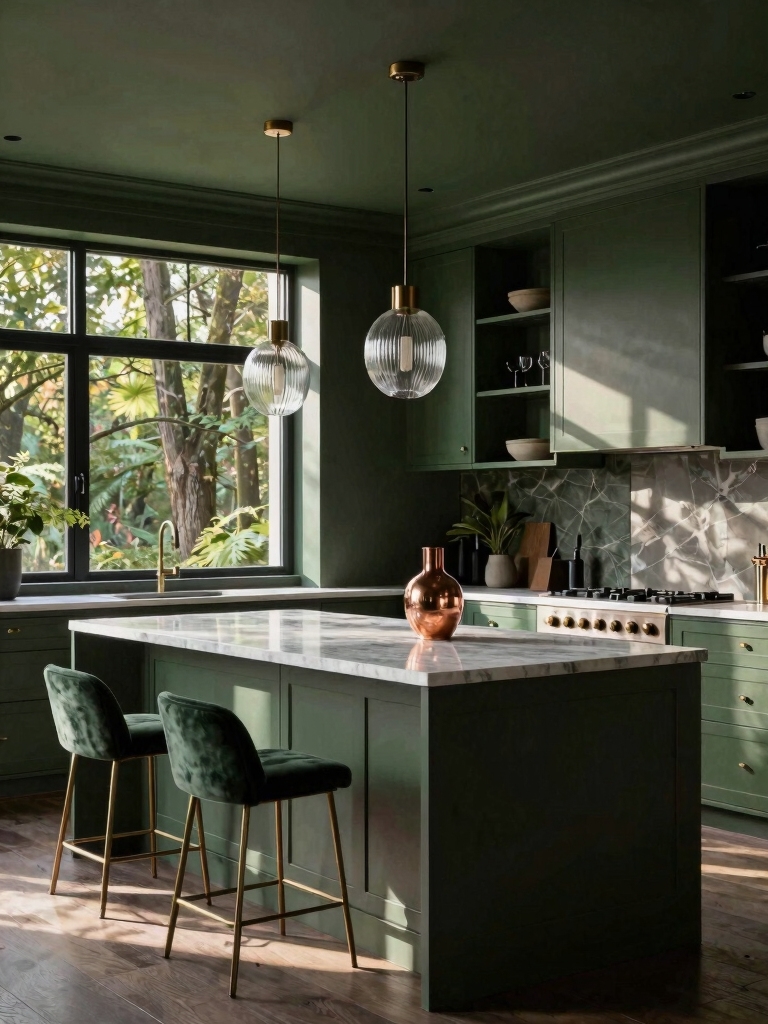
Sophistication starts with the shade, and the refined greens are the muted ones. A deep, slightly grayed forest, hunter, or olive looks timeless, while a pure, bright green can tip into loud or trendy fast.
Think about the undertone. A green with a touch of gray or black in it feels grown-up and calm, while a green leaning toward lime or kelly feels young and busy. For a kitchen you want to love for years, the grayer, deeper greens win.
I tell people to test the shade large and live with it through the day, since green shifts more than most colors between daylight and evening bulbs. The right green looks like a deep, settled neutral, calm and quiet on the wall.
Brass Hardware That Enhances Green
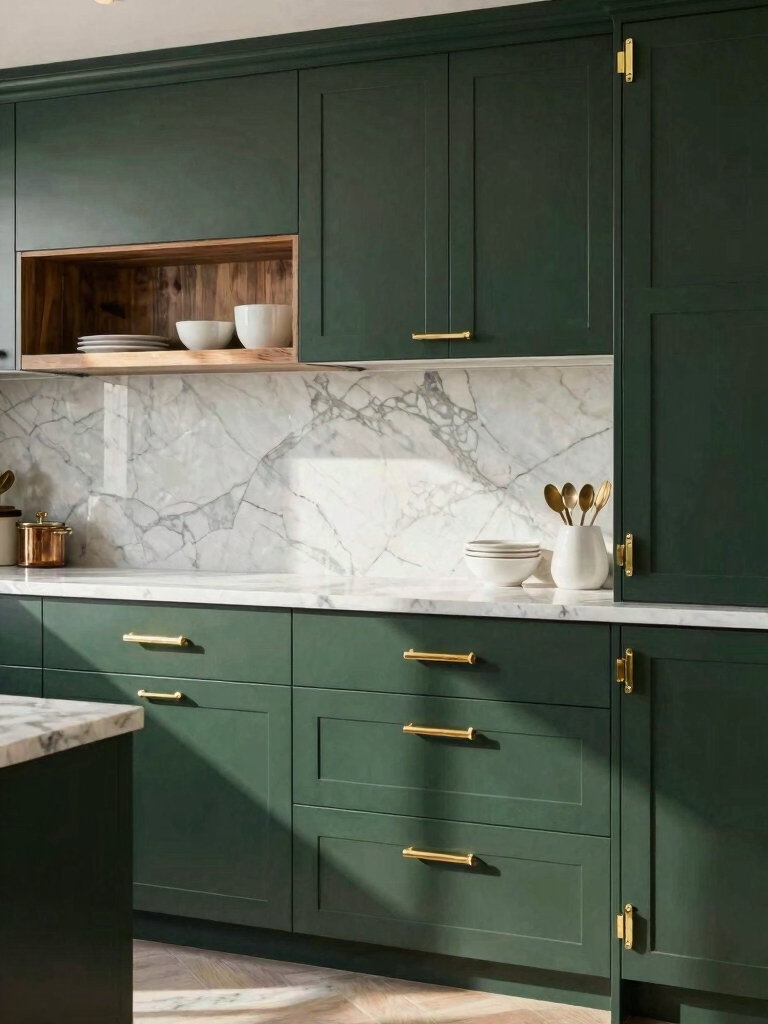
Brass is dark green’s most sophisticated partner, as long as you use a light hand. A few well-placed brass pulls and a brass faucet warm the green and catch the light; a kitchen drowning in shiny gold tips into flashy. The most refined version is aged or antique brass, which has a soft, low glow instead of a mirror shine, so it sits quiet and expensive against the deep color.
- Use brass on the pulls and faucet, then stop; restraint reads richer.
- Unlacquered brass ages into a soft patina over the years.
- Skip mixing three metals; one warm metal keeps it sophisticated.
ℹ️Good to Know
Unlacquered brass starts bright and shiny, then slowly patinas to a warm, antique tone over months of handling. Lacquered brass stays shiny forever. Neither is wrong, but the aged, collected look most people call sophisticated comes from the unlacquered kind left to age.
A Balanced Green and White

The most reliable way to make dark green look refined is to balance it with white. The white lifts the green, keeps the room bright, and gives the eye somewhere to rest, which is the difference between moody and gloomy.
Proportion is everything. Green on the lower cabinets with white above and a white counter is the classic, balanced split, while an all-green kitchen needs far more light and discipline to pull off.
Keep the white warm and soft, so it sits comfortably beside the green. A soft white and a deep green is a combination that has looked expensive for a century, as the before-and-after remodel stories full of green kitchens keep proving.
An Elegant Green and Marble Combination

Nothing says quiet luxury like dark green against marble. The cool, veined stone and the deep green share an organic, natural quality, so together they look calm and high-end rather than busy.
Choose a marble with soft gray or warm veining that picks up the green, and let the stone be the bright moment against the dark cabinets. A waterfall edge on a green island with a marble top is about as sophisticated as a kitchen gets.
- Pick a marble whose veining echoes the green or the brass.
- Let the pale stone be the bright relief against the deep green.
- A honed finish looks refined and hides etching better than polish.
🅰️Real marble
Unmatched depth and a soft, natural veining that ages with character, but it etches from acids and needs sealing and gentle care.
🅱️Marble-look quartz
The same bright, veined look against the green with none of the etching or sealing, though it gives up the very last bit of natural depth.
Deep Green With Warm Wood

Wood is what gives a sophisticated green kitchen its warmth. The grain of oak or walnut against the smooth, deep green adds texture and keeps the room from feeling cold or severe.
Use it in measured doses, a wood island, a run of open shelves, a single range hood, so the wood reads as a deliberate layer. One warm wood tone is plenty.
The pairing leans English and timeless. A deep green with aged oak and brass is the look of a kitchen that has been quietly perfect for decades, and the cabinet makeovers that age best almost always layer wood with their color this way.
Layered Green for Real Depth
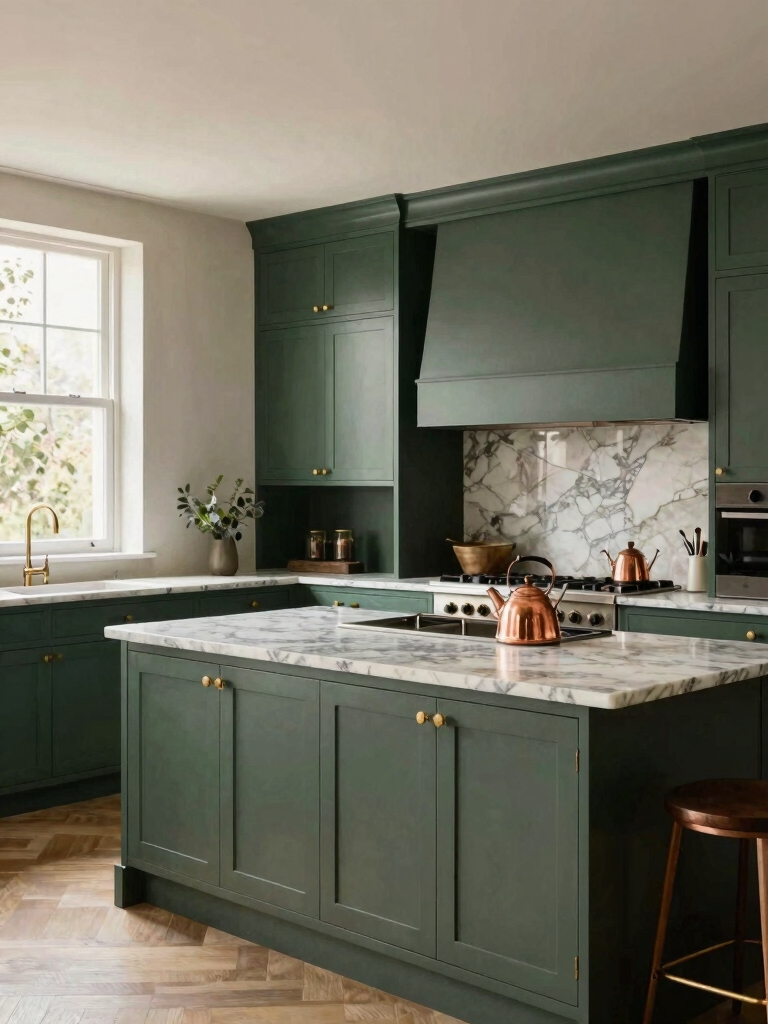
The secret behind the most sophisticated green kitchens is layering tones over a single flat color. A deep green base, a slightly different green on the island, sage or olive in the accessories, and the room gains a richness a single shade cannot.
Layer the materials too. I love mixing matte cabinets, a polished stone, a woven shade, and an aged metal, since that gives the eye texture to travel across, which is what makes a space feel collected and expensive.
- Vary the green slightly between cabinets, island, and accents.
- Layer matte, polished, woven, and metal textures for depth.
- Keep every green in the same muted family so they harmonize.
How to layer a sophisticated green kitchen:
1Set the base green
Choose one deep, muted green for the main cabinets.
2Add a tonal shift
Put a slightly different green or a wood tone on the island.
3Layer textures and metal
Bring in stone, a woven shade, and one warm metal to finish.
A Bold Dark Green Accent
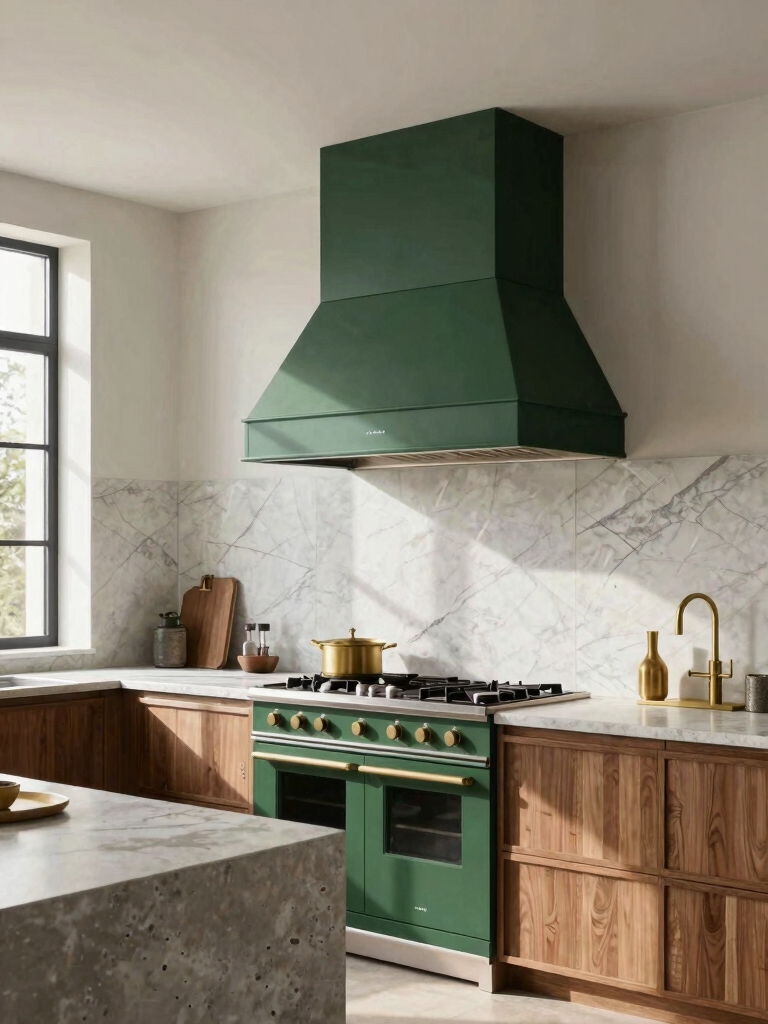
You do not need a whole green kitchen to get the sophistication; sometimes one green element is more refined than many. A single green island in a white kitchen, a green pantry door, or a green range alcove gives the color a starring moment while the rest of the room stays light and calm.
This is where I send nervous first-timers, because a green accent against neutrals often looks more deliberate than an all-green room. A painted cabinet refresh makes testing a single green run cheap and reversible, often $150 to $400 in materials.
- Put green on just the island, a pantry door, or a range alcove.
- Keep the rest of the kitchen light so the green stays the moment.
- One green element is often more sophisticated than a whole green room.
How to Brighten Dark Green Cabinets

The risk with any deep color is a dark, cave-like kitchen, and brightening is what keeps green sophisticated rather than gloomy. Light counters, a pale backsplash, and warm, layered lighting all lift the green and let its depth look rich.
Reflective touches help too. Brass, a marble counter, a glass-front cabinet, and good under-cabinet lighting bounce light around so the green glows. For the dramatic end of the deep-color spectrum, the black cabinets face the very same brightening challenge.
- Use a light counter and backsplash to balance the deep green.
- Add layered lighting, including under-cabinet, so green does not go dim.
- Reflective brass and stone bounce light and keep the room bright.
Open Shelving That Brightens the Kitchen

A run of open shelving is a quiet way to lighten a dark green kitchen and show a little personality. Breaking up the deep cabinets with a couple of open wood shelves adds warmth, airiness, and a spot to style a few beautiful pieces. Keep the shelves edited, a few ceramics, a plant, a stack of bowls, so they lighten the room without adding clutter. Against deep green, even simple white dishware looks composed and intentional.
- Swap a few upper cabinets for open wood shelves to add air.
- Style them sparingly so they lighten, not clutter, the room.
- Simple white or natural pieces look elegant against the green.
Complementary Backsplash Tile Choices
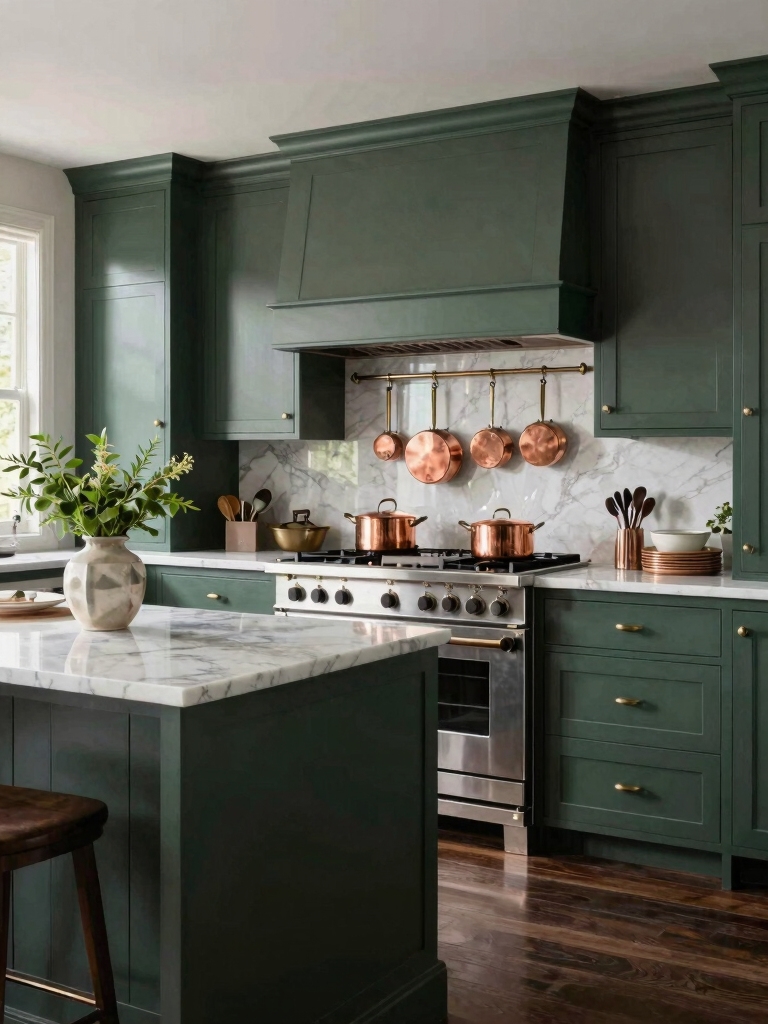
The backsplash is where a sophisticated green kitchen is finished or undone. The most refined choice is usually the quietest one, the tile that complements the green instead of competing with it.
Quiet Tile, Rich Effect
A warm marble, a soft handmade zellige in cream or pale green, or a simple honed stone all let the green stay the star while adding subtle texture. A loud, contrasting tile fights the calm you are building.
If you want a little more, a tonal green tile doubles down for a deep, enveloping look. For more on choosing tile, the backsplash ideas that look most refined keep the pattern soft and the palette tight.
The Muted Greens Worth Knowing
The sophistication lives in the grayed, muted greens rather than the pure ones, and a few families show up again and again in refined kitchens. Think of a deep, almost-black green like a forest at dusk, a soft gray-green in the sage-to-eucalyptus range, and the muddy olive-grays that look almost neutral.
I love these dustier greens for how grown-up they are. What they share is a low light reflectance value, usually under 20, and a touch of gray or black that keeps them from ever going candy-bright.
When you sample, hold the chip against a true emerald or kelly green and the difference jumps out: the sophisticated greens look quieter, dustier, more settled. A cleaner, higher-LRV green can still work, but it asks for more white and light around it to stay refined. As a rule, the grayer the green, the more forgiving and timeless it tends to be.
Keeping Green Bright and Cared For
Keeping a green kitchen sophisticated is mostly about the finish and the brass. A satin or matte green wipes down with mild soap and a soft cloth, and the one habit that matters is drying the water before it spots. The brass is a decision, not a chore: polish it to hold the shine, or leave it alone and let it dull into that aged patina on purpose.
Light counts as upkeep here too. As bulbs age and dim, a green kitchen drifts toward gloomy, so swap in warm LEDs the moment they fade. If you have a natural-stone counter, a yearly reseal, about an hour with a cloth and sealer, keeps it crisp. Treated this way, the refined look holds for years.
More Sophisticated Green Kitchen Questions
?What sheen should sophisticated green cabinets be?
A satin or eggshell finish is the most refined choice. It has a soft, low luster that suits a deep green and hides fingerprints, where high gloss can look flashy and a flat matte can feel chalky in a dark color. Satin is the expensive-looking middle ground.
?What is the best metal for a sophisticated green kitchen?
Unlacquered or aged brass is the classic, for the warmth and the patina it develops. Bronze and matte black also work. Whatever you pick, use one metal and use it sparingly, since mixing three is what cheapens the look.
?Is a dark green kitchen hard to keep bright?
It can be without planning. Pair the green with light counters and a pale backsplash, layer the lighting, and add reflective brass or glass so the depth looks rich rather than dim. Refresh aging bulbs before the room creeps toward gloomy.
?What white goes with dark green cabinets?
A warm or soft white, not a cold, blue-white. A creamy white sits comfortably beside deep green and keeps the contrast from feeling harsh. Carry it onto the counter, the uppers, or the walls to balance the depth.
?What wood goes best with a sophisticated green kitchen?
Warm mid-tones suit deep green best: aged or white oak, walnut for richness, or a soft reclaimed timber. Keep to a single wood tone so it reads as a deliberate layer, and let the grain bring the warmth that a flat green color lacks.
Sophistication Is What You Leave Out
Dark green looks expensive not when you pile on, but when you hold back. A deep, muted shade, one warm metal, a calm counter, and enough light to let the color glow, that is the whole formula, and it is more about restraint than budget.
Pick the muted green you could live with for a decade, give it one wood or stone partner and good lighting, and resist the urge to add more. The most sophisticated green kitchen in the room is almost always the calmest one.
More Hair Inspiration


