
Two kitchens the exact same size can feel completely different, and I have stood in both. One felt like a closet; the other felt open and calm. The square footage never changed. What changed was a handful of tricks that fool the eye into seeing the room as bigger than it measures.
These thirteen small kitchen remodel tricks are about perception, not square footage. Color, light, sightlines, and scale all tell your brain how big a room is, and you can nudge every one of them in your favor. None of these add an inch. All of them make the kitchen feel like you did.
Tricks That Fool the Eye
- Light, low-contrast color makes walls recede and the room feel open
- Continuous lines and few visual breaks register as one larger space
- Reflective surfaces bounce light and push the walls back
- Vertical emphasis draws the eye up and lifts a low room
- Clear counters and hidden clutter give the brain room to breathe
Light Color That Expands the Walls
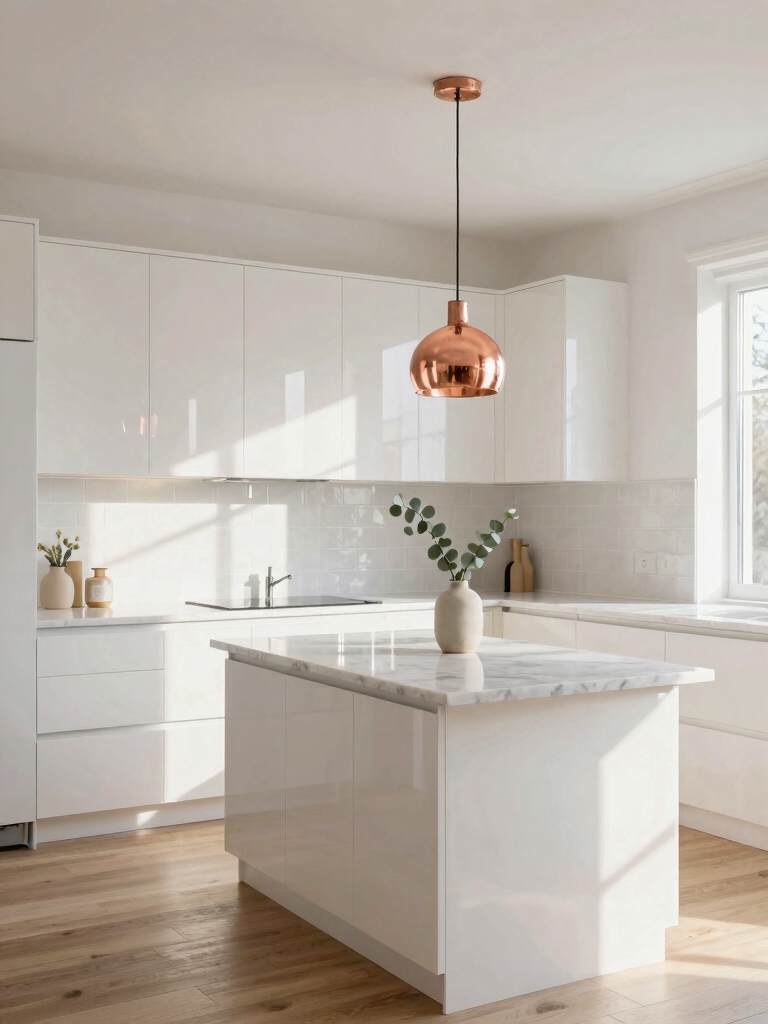
The oldest trick in the book works because of how the eye handles light. Light, low-contrast color on the cabinets and walls makes the surfaces recede, so the room feels like it pushes outward and opens up. A dark kitchen closes around you. A pale one seems to open up.
You do not need stark white, either. Soft greige, pale sage, and warm off-whites all expand a room while staying warm:
- Keep the walls and cabinets close in tone so there are no hard breaks
- Save bold color for one small accent, not the whole room
- Match the ceiling close to the wall color so the top feels higher
- Use a single pale tone across the longest run to stretch it
Take Storage Vertical to Lift the Room

Anything that draws the eye up makes a low, tight kitchen feel taller. Running storage and lines vertical, cabinets to the ceiling, tall narrow shelving, a vertical backsplash pattern, leads the gaze upward and borrows height the room did not know it had. It is the same trick a pinstripe plays on a silhouette:
- Carry the upper cabinets all the way to the ceiling
- Choose a tall, narrow pantry over a short, wide one
- Run a backsplash pattern in vertical lines to stretch the wall up
- Hang one long open shelf high to lead the eye toward the ceiling
Open Shelving to Lighten the Walls

Solid upper cabinets look like a heavy block, and swapping one run for open shelving lets the wall behind show through. That sliver of visible wall and the air around the dishes trick the eye into seeing more depth, so the kitchen feels less boxed in. The lightness is the whole point:
- Open one run only, so the contrast keeps it from feeling bare
- Let the wall color show behind the shelves for depth
- Keep the shelves thin so they look light and airy
- Float them with hidden brackets so nothing interrupts the line
How to draw the eye upward in three moves:
1Carry cabinets to the ceiling
Close the soffit gap so the storage runs to the top and the wall reads full-height.
2Add a vertical line
Run a tall pantry, a vertical backsplash pattern, or a high open shelf to lead the gaze up.
3Light the top
A little light near the ceiling, even an upward accent, makes the room feel taller still.
Style Open Shelves So They Recede

Open shelves only enlarge a room if they stay quiet, so how you style them matters as much as having them. Restraint is everything: a few matched pieces with space around them feel calm, while a crammed shelf adds the visual weight you were trying to remove. Less on the shelf means more room for the eye.
Stick to one or two colors and leave real gaps between groupings. Negative space is doing the work here, fooling the brain into seeing more wall than there is.
Keep the everyday dishes here so use keeps them tidy, and store the clutter behind closed doors. For more low-cost styling, my small kitchen decorating ideas for instant charm guide has the details.
Transform Clutter Into Hidden Storage

Nothing shrinks a small kitchen to the eye like clutter, so the most powerful trick is to hide it away entirely. Clear counters and closed storage give the brain uninterrupted surface to take in, which it translates as space. A buried counter looks small no matter how big the room.
Build in the storage that makes clearing easy: deep drawers for pots, a pull-out pantry for dry goods, door racks for the small stuff. When everything has a home, the surfaces stay bare without effort.
This one works even when you cannot repaint or renovate. My small kitchen storage ideas to hide clutter guide covers the inserts that clear a counter fast.
A Sleek Sink and Compact Appliances

Every bulky fixture and protruding appliance is a visual snag that chops a small kitchen into pieces. Choosing a sleek sink and compact appliances smooths the run so the eye glides instead of stopping, and an unbroken line feels like a longer, larger space. The fewer interruptions, the bigger the room feels.
Smooth the Sightline
An undermount sink keeps the counter line clean, a slim faucet stops blocking the window, and counter-depth or narrow appliances line up flush with the cabinets. Each one removes a snag.
You do not need to replace everything at once. Even lining up the fridge depth and swapping a chunky faucet smooths the sightline noticeably.
| Trick | What it fools | Best for |
|---|---|---|
| Light, low-contrast color | Makes walls recede | Any small kitchen |
| Vertical lines | Lifts a low ceiling | Short rooms |
| Reflective surfaces | Adds depth and light | Kitchens with one window |
| Cleared counters | Reads as open space | Cluttered rooms |
A Fold-Out Table That Disappears

A permanent table eats floor and chops a small kitchen in half, so a fold-out table that vanishes when you are done keeps the floor reading open most of the time. Folded flat against the wall or tucked into a cabinet, it gives back the space that a fixed table would steal, then appears only when you need it.
Match it to your counter material so it blends into the run when open, and use strong hidden hinges so it feels solid. Down it is a few inches of wall; up it seats two. For more space-saving furniture, my small kitchen ideas modern homes are loving piece covers double-duty pieces.
A Monochromatic Scheme That Blurs Edges
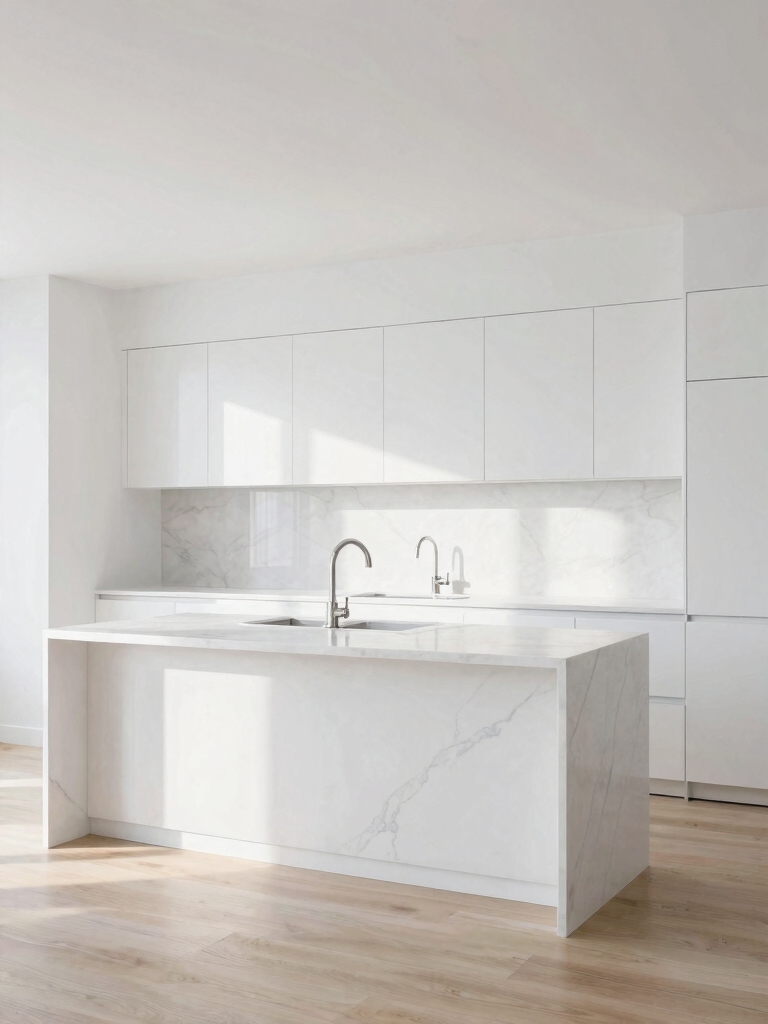
When everything in a small kitchen sits in one tonal family, the eye stops finding edges, and a room without hard edges feels bigger. A monochromatic scheme, cabinets, walls, and counter in close tones, blurs the line where one surface ends and the next begins, so the space feels continuous instead of chopped up.
Low Contrast, Big Feel
It does not have to be all white. A calm range of warm greys, soft greens, or creamy neutrals does the same trick while feeling cozier. The key is keeping the contrast low across the big surfaces.
Add interest through texture instead of color, a matte cabinet against a glossy backsplash, so the room stays calm but never flat.
Brighten the Kitchen in Layers

A dim room always feels small, and a single ceiling bulb leaves shadows that the eye reads as edges and limits. Layering the light, overhead, under-cabinet, and a small accent, erases those dark corners so the room feels like it extends all the way to the walls. Even light makes even space.
Aim under-cabinet strips at the counter, add a small lamp or puck in any dark nook, and keep the bulbs warm white. The goal is no dark corner left to shrink the room. For a cheap way to do it, my small kitchen ideas on a budget under 500 dollars guide keeps the lighting low-cost.
One color myth holds small kitchens back:
❌ Myth: Dark colors always shrink a small kitchen
✅ Reality: Not quite. A dark, low-contrast scheme where cabinets, walls, and trim all match can actually blur the edges and feel cozy and deep. What shrinks a room is high contrast and clutter, not the color itself.
❌ Myth: White is the only way to feel big
✅ Reality: White helps, but soft greige, pale sage, and warm neutrals expand a room just as well while feeling warmer and hiding marks better in a busy kitchen.
Reflective Surfaces That Push the Walls Back

Reflection is the closest thing to magic a small kitchen has. A reflective backsplash, glass cabinet fronts, or a glossy counter bounce light around and create the illusion of depth, so the walls seem to sit farther back than they do. A glass tile behind the stove acts like a small window that is not there.
Mirrored or high-gloss surfaces work hardest in a kitchen with one small window, where every bounce of light counts. They scatter daylight into the corners that would otherwise stay dim.
Keep it to a surface or two so the room does not turn into a fun-house. Paired with the light color and layered lighting above, reflection is the finishing touch that makes a tiny kitchen feel open.
How to Get the Look
You can stack most of these tricks for a few hundred dollars, no contractor required. Start with the two that move the needle most: paint everything in one light, low-contrast tone, then add layered lighting so no corner stays dark. Those two alone make a tiny kitchen feel noticeably bigger before you touch anything else.
From there, add a reflective backsplash, open one shelf, and clear the counters, and the illusion compounds. The point is that none of it requires more square footage, only a smarter use of color, light, and line. For the everyday tidiness that keeps the look working, my small kitchen organization ideas to declutter guide helps it last.
Making a Tiny Kitchen Feel Bigger, Answered
?What is the fastest way to make a small kitchen feel bigger?
Paint it a light, low-contrast color and add layered lighting. Pale cabinets and walls make the surfaces recede, and even light erases the dark corners the eye reads as edges. Together they make a tiny kitchen feel noticeably more open for the cost of paint and a few LED strips.
?Do dark colors make a small kitchen look smaller?
Not always. Picture a galley painted charcoal top to bottom, cabinets, walls, and trim in one matching tone: the edges disappear and the room feels deep and enveloping rather than small. A dark kitchen only shrinks when a pale ceiling or busy clutter breaks it into pieces, so commit fully or stay light.
?How do reflective surfaces make a kitchen feel bigger?
They bounce light and create an illusion of depth. A glossy backsplash, glass cabinet fronts, or a polished counter scatter daylight into the corners and make the walls seem to sit farther back. In a kitchen with one small window, a reflective surface acts almost like a second source of light.
?Should I use open shelving to make a small kitchen feel larger?
It helps if you keep it light and edited. Open shelves let the wall show through and break up the heavy block of upper cabinets, which adds visual depth. Restraint is everything: a few matched pieces with space around them, not a crammed shelf that adds back the weight you removed.
Bigger Is a Feeling
A tiny kitchen does not have to feel tiny. The eye judges size by light, color, line, and clutter long before it counts square feet, and every one of those is yours to shape. Lighten the color, draw the eye up, bounce the light, and clear the surfaces, and the room feels far bigger than the tape measure says.
Pick two tricks to start, paint and light are the heavy hitters, and live with the change before you add the next. Stacked together, these moves make a small kitchen feel huge without adding a single inch, which is the only kind of square footage that comes free.
Keep the Inspiration Going


