

An indoor kitchen hides behind walls. An outdoor one stands in the weather, on a patio that is usually smaller than you wish, with no closet to stash the overflow. A small outdoor kitchen has to be tougher and tighter than anything inside, which is why the tricks that work out here are their own thing entirely.
These thirteen small outdoor kitchen design tricks are built for a tight patio and an open sky: weatherproof materials that skip bulky framing, all-in-one grills, carts that roll away, and fold-down counters that appear only when you cook. None of them need a huge yard. All of them make a small outdoor setup actually work.
Quick Answers Before You Build
How small can an outdoor kitchen be? A grill, a stretch of counter, and some storage fit in as little as six to eight feet of run. The trick is going compact and mobile, not full-scale.
What materials hold up outdoors? Stainless steel, composite, and concrete shrug off weather and skip the bulky framing wood needs, which saves space on a tight patio.
Should it be built-in or on carts? For a small or rented patio, carts win. They roll out to cook and tuck away after, and you can take them with you when you move.
Plan the Layout for a Small Patio
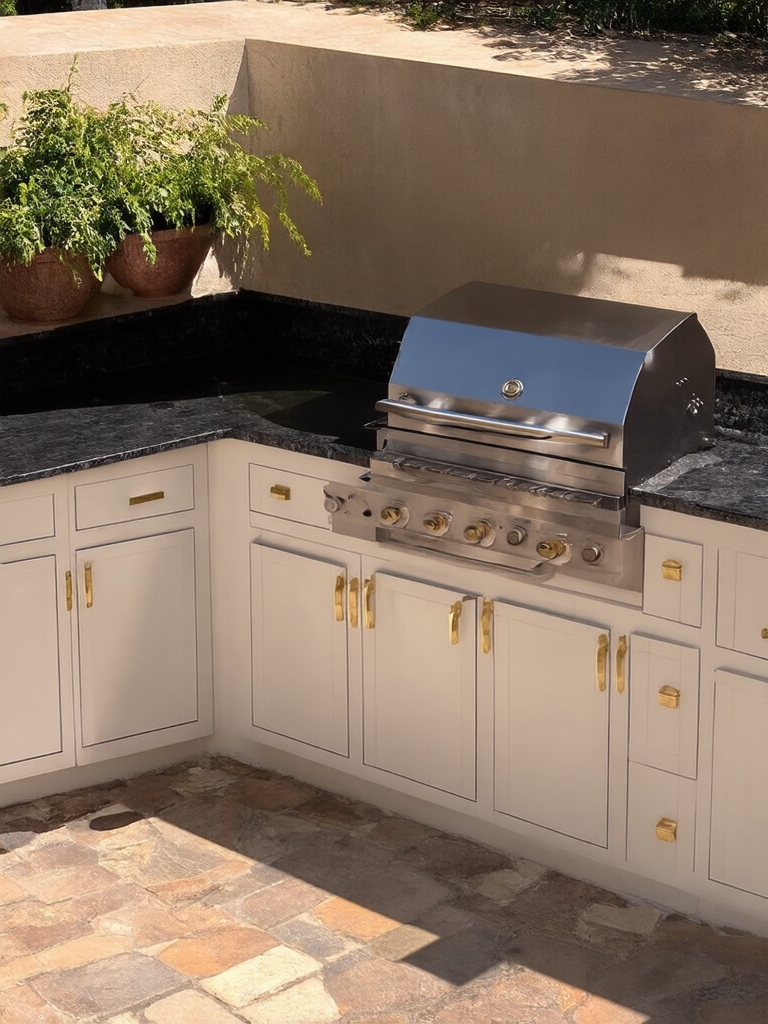
A small outdoor kitchen needs a plan even more than an indoor one, because there is no room to fix a mistake later. Map three quick zones, a hot zone for the grill, a prep zone for the counter, and a serve zone where guests gather, and keep them in a tight line so you are not carrying hot food across the patio. A single straight run against a wall or fence usually beats trying to wrap a corner.
Keep It to One Tight Run
Leave room to stand and turn, about three feet of clear space in front of the grill, and keep the grill away from the house and anything that can catch a spark. The smallest setup that works is just a grill, a couple of feet of counter on each side, and storage below.
Sketch it before you buy anything. I never skip this step. A patio kitchen planned on paper costs nothing to change; one built wrong costs a weekend to redo.
Compact, Weatherproof Materials
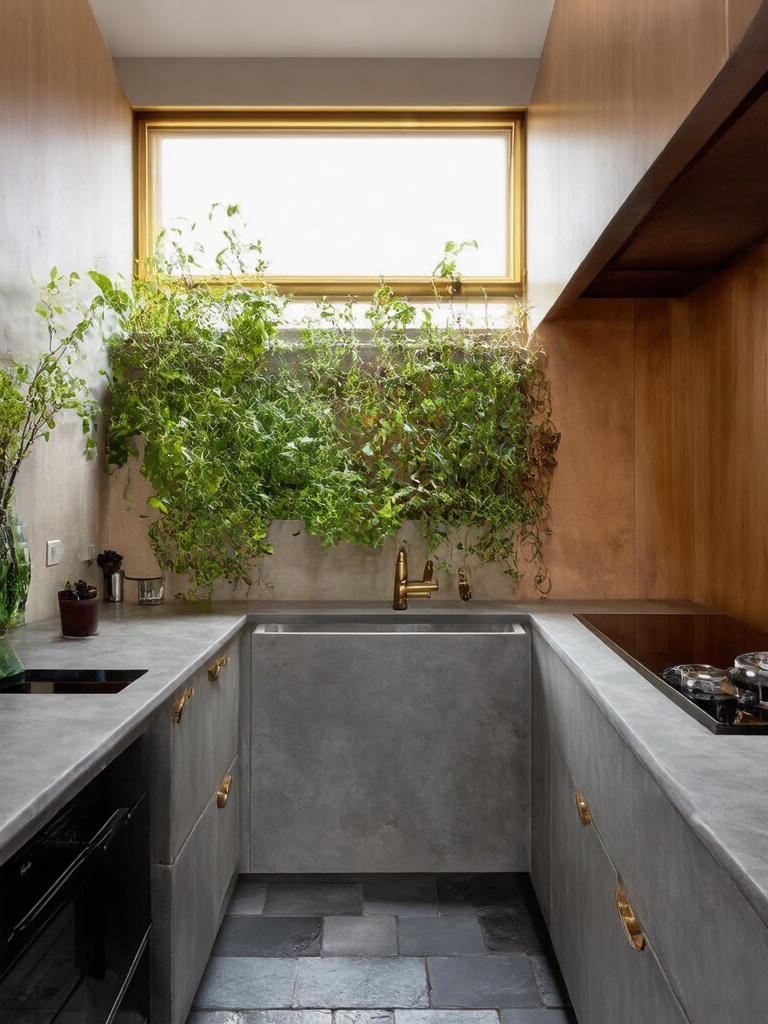
Outdoor materials have to survive rain, sun, and frost, and the best ones for a small patio are also the slimmest. Stainless steel, composite, and concrete are thin, strong, and weatherproof, so they skip the bulky support frames a wood counter needs. That slimness buys back inches on a patio where every inch counts. Bulk is the enemy outside.
Pick by how much weather your setup takes and how much you want to maintain:
- Stainless steel counters and cabinets, thin and rust-resistant
- Composite or porcelain tops that resist stains and need no sealing
- A concrete counter for a modern look, sealed against the weather
- Powder-coated aluminum frames that will not rot or rust
Safety First
Outdoor kitchens involve fire, fuel, and often gas, electrical, and water hookups. Keep the grill clear of the house and anything flammable, and never run a gas grill under a closed roof or in an unventilated space. Leave gas lines, wiring, and plumbing to a licensed pro who can pull the right permits. The fun part is yours; the hookups are theirs.
An All-in-One Outdoor Grill

The grill is the heart of any outdoor kitchen, and in a small one it should pull more than one shift. An all-in-one grill with a side burner, a prep ledge, and storage underneath folds several stations into a single footprint, so you skip buying separate pieces for a patio that has no room for them. Look for a model that does the work of three:
- A built-in side burner for sauces and sides while the grill works
- Fold-down side shelves that give you prep space, then tuck away
- Cabinet or drawer storage in the base for tools and propane
- A lid and cover rated for the weather your patio sees
Vertical Storage for a Tight Patio

Just like inside, storage on a small patio works best when you build up the wall instead of out across the floor. Vertical storage on a fence, a wall, or a tall slim cabinet holds the tools, plates, and supplies that would otherwise eat your limited counter. A pegboard rated for outdoors or a few weatherproof shelves do most of it.
Hang the grill tools on a rail by the grill, mount a slim cabinet for plates and serveware, and use hooks for towels and mitts. Keep everything in sealed or covered storage so the weather does not ruin it.
The wall is free space a patio kitchen rarely uses. For the indoor version of this thinking, my small kitchen storage ideas to hide clutter guide covers it.
A Compact Multi-Purpose Sink

A sink is the most underrated piece of a small outdoor kitchen, since it saves you running inside with greasy hands every few minutes. A compact multi-purpose sink handles rinsing produce, washing hands, and filling pots, all from one small basin that takes up almost no counter. Even a simple bar sink fed from a garden hose earns its keep:
- A small bar-style sink, around 15 inches, that fits a tight counter
- A pull-out or tall faucet for filling pots and rinsing trays
- A garden-hose feed for a setup without permanent plumbing
- A covered drain so leaves and debris stay out between uses
A Mini Fridge Under the Counter

Tucking a mini fridge under the counter uses the vertical space below the prep surface that would otherwise sit empty, and it keeps drinks and ingredients steps from the grill. An outdoor-rated unit handles the temperature swings a regular fridge cannot. A matching cabinet door hides it for a clean look. It pays off every time you would have walked inside for a cold drink. Fewer trips, more grilling:
- Choose an outdoor-rated model built for heat and humidity
- Tuck it under the counter so it uses no extra floor space
- Front it with a cabinet door to match the run
- Keep it near the serve zone so guests can reach drinks themselves
The piece people skip in a small outdoor kitchen is the sink, and it is the one that saves the most trips inside. Add even a hose-fed bar sink and the patio finally works on its own.
Fold-Down Counter Space

Counter is as scarce outdoors as it is inside, so the smartest small-patio move is a fold-down counter that drops flat against the wall and lifts up only when you cook. Folded, it is a few inches of weatherproof shelf. Open, it is real prep space beside the grill. The patio stays clear for lounging the rest of the time.
Counter Only When You Need It
Mount it on a sturdy weatherproof bracket at counter height, and choose a top that wipes clean and shrugs off rain. A gate-leg version supports more weight for heavy prep.
This is the trick that lets a tiny patio host a real cookout. When the meal is done, fold it down and the space goes back to being a patio. Cook, then lounge.
A Flexible Outdoor Kitchen Cart

For a small or rented patio, a flexible kitchen cart beats a built-in, because it rolls out to cook and tucks away after. A good cart gives you prep surface, storage, and sometimes a small sink or burner in one movable piece, so the patio is not permanently given over to a kitchen. When the party ends, you roll it against the wall.
Roll It Out, Roll It Away
Look for locking wheels, a weatherproof top, and a shelf or cabinet below for tools and supplies. Stainless or powder-coated carts hold up best in the weather.
A cart is also the piece you can take with you when you move, which a built-in never is. For more on budget-friendly setups, my small kitchen ideas on a budget under 500 dollars guide applies here too.
A Mobile Grill Cart

If your patio doubles as a lounge, a mobile grill cart keeps the grill from claiming the space full-time. A grill on locking casters rolls out for the cookout and back into a corner or shed after, which is the only way some small patios fit a grill at all. It also lets you chase the shade or escape the wind.
I keep mine parked by the fence and roll it out only when I am cooking, which leaves the patio open for everything else. Pick a cart sized to roll easily through your gate:
- Locking casters so the grill holds steady while you cook
- A folding side shelf for prep that tucks in for storage
- A weatherproof cover for when it lives outside between cookouts
- A size that fits through your gate and into its parking spot
🅰️Built-in outdoor kitchen
A permanent run looks polished and adds home value, but it costs the most, needs pro hookups, and cannot move. Best for a patio you own and will keep.
🅱️Cart-based setup
Carts and freestanding pieces roll out to cook and away after, cost far less, and move with you. Best for a small patio, a rental, or a space that doubles as a lounge.
Mobile Storage for the Outdoors

Storage that moves rounds out the setup, so your supplies follow the cook instead of staying put. A mobile storage cabinet on wheels holds plates, tools, and pantry items, and rolls wherever you set up that day, then rolls into the garage or a covered spot to ride out the weather. It is the closest a patio gets to a real pantry.
Storage That Follows You
Choose a sealed, weather-rated cabinet so the contents stay dry, and add a lockable lid if it stores propane or sharp tools. Keep the heavy things low so it does not tip on a rolling start.
Rolling the storage indoors between cookouts also doubles its life, since nothing sits in the weather it does not have to. For more design inspiration, my covered outdoor kitchen design inspirations guide and the concrete outdoor kitchen designs piece go further.
Common Mistakes to Avoid
The biggest small-patio mistake is building bigger than the space, a full masonry kitchen that swallows a patio you also wanted to relax in. Scale to the patio, and lean on mobile pieces you can move when the space needs to be something else. The second common error is skipping weather protection, since an uncovered outdoor kitchen ages fast and a cover or a small roof pays for itself in a season.
One more trap is rushing the hookups. Gas lines, electrical outlets, and water supply outdoors are real construction with real safety stakes, so plan them early and leave anything involving gas, wiring, or plumbing to a licensed pro who can pull the right permits. For a design-led take on pulling it together, my small kitchen ideas modern homes are loving piece covers the look indoors and out.
Small Outdoor Kitchen Questions, Answered
?How much space do you need for a small outdoor kitchen?
Less than you think. A grill, a couple of feet of counter on each side, and storage below fit in about six to eight feet of run along a wall or fence. Leave roughly three feet of clear standing space in front, and even a compact patio can hold a working outdoor kitchen.
?What is the best material for a small outdoor kitchen?
Stainless steel, composite, porcelain, and sealed concrete all hold up to weather and stay slim, which matters on a tight patio. They skip the bulky framing a wood counter needs and resist rust, stains, and rot. Powder-coated aluminum frames are another space-saving, weatherproof choice.
?Is a built-in or portable outdoor kitchen better for a small patio?
Portable usually wins for a small or rented patio. Carts and freestanding pieces cost less, need no permanent hookups, roll away when you want the space back, and move with you. A built-in looks more polished and adds value, but it commits the whole patio to a kitchen permanently.
?Do I need plumbing and gas for an outdoor kitchen?
Not necessarily. A hose-fed bar sink and a propane grill skip permanent plumbing and gas lines entirely, which keeps a small setup simple and cheap. If you do want hardwired gas, water, or electrical, plan it early and hire a licensed pro, since those hookups carry real safety and permit requirements.
?How do I protect a small outdoor kitchen from the weather?
Cover everything you can. Use weatherproof materials, fit grill and appliance covers, and add a small roof, pergola, or awning if the patio allows. Storing mobile carts and cabinets indoors or under cover between cookouts dramatically extends their life, since nothing sits in the rain and sun longer than it must.
Small Patio, Real Cookouts
A small outdoor kitchen does not need a sprawling patio or a five-figure build. It needs weatherproof materials that skip the bulk, a grill that pulls double duty, storage that climbs the wall, and mobile pieces that roll out to cook and tuck away after. Stack a few of these and a tight patio hosts a real cookout.
So look at your patio and picture the smallest setup that would get you grilling out there, probably a cart, a fold-down counter, and a covered spot for storage. Which corner of your yard is quietly waiting to become the place everyone gathers on a summer evening? Build that, and keep it small enough to still be a patio.


