

The myth I hear most is that a Mexican-inspired outdoor kitchen is something you buy: a cart of colorful pottery, a string of papel picado, and you are done. That version looks the part and feels like nothing. The setups that actually have soul are built around how people gather, cook, and linger, with the handmade pieces earning their place rather than being scattered for effect.
Done with care and respect for the crafts behind it, this style is one of the warmest ways to cook outdoors. Here are sixteen setups full of soul, the real materials and makers behind them, and honest notes on what each one costs to get right.
The Soul Is in These Four Things
| Element | Why It Matters | Rough Cost |
|---|---|---|
| A fire at the center | A comal, fogón, or fire pit gives the space a gathering point | $60 to $3,000+ |
| Handmade tile | Genuine Talavera or Saltillo brings color and supports artisans | $10 to $30 per tile |
| Communal seating | Long tables and benches keep people close to the cook | $300 to $2,000 |
| Warm evening light | Lanterns and string lights turn it into a night-long room | $100 to $600 |
Communal Cooking at the Heart of It
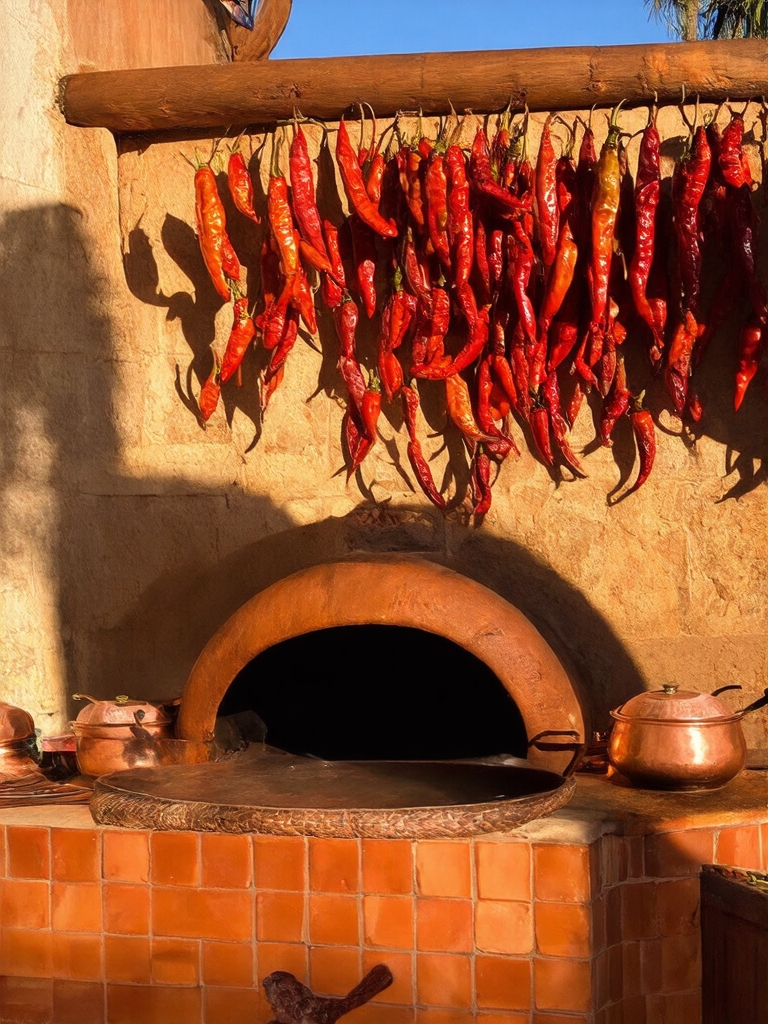
Before any tile or pottery, the thing that defines this style is the way people cook together in it. The cook is not hidden away; the comal, the grill, and the prep happen in full view, with everyone close enough to talk, taste, and help. I tell clients to plan the gathering first and the gadgets second, because that single choice is what gives the space its warmth.
- Put the cooking surface where guests can stand around it, not against a back wall.
- Leave room for a long table nearby so the meal stays where it was made.
- Build in a spot for slow tasks like shaping masa or grinding in a molcajete, where hands keep busy and people stay.
Plan the Layout and Functional Equipment

A soulful space still has to work, so plan the same zones any outdoor kitchen needs: a fire or cooktop, a prep counter, a sink, and storage. The difference here is that the fire is the star, often a clay comal or a wood-fired hearth, so everything else supports it.
Keep the essentials within a step or two of the heat so the cook never has to leave the conversation. The backyard outdoor kitchen layouts are a good starting point before you add the regional details.
- A comal or plancha for tortillas and searing; a grill for everything else.
- An outdoor-rated sink so masa hands and chile-stained boards get rinsed on the spot.
- Shaded storage for clay cookware, which can crack in hard freezes if left exposed.
ℹ️Good to Know
A comal is a flat griddle, traditionally unglazed clay, used to cook tortillas, toast chiles and spices, and char vegetables. Clay versions need seasoning and gentle heating; cast-iron ones are tougher and handle freezing temperatures without cracking.
Materials: Rustic Textures and Stone

The materials do the quiet work of making the space feel grounded and warm. Saltillo tile underfoot, rough plaster or adobe-look walls, and stone counters give you the earthy texture this style lives on, and they age into more character rather than less. The trick is to let the surfaces be a little imperfect. Perfection kills the warmth.
- Saltillo terracotta floor tile runs about $3 to $8 per square foot and warms the whole space.
- Lime-washed or plastered walls give that soft, handworked look for very little money.
- Reseal terracotta once a year so it shrugs off spills and foot traffic outdoors.
Color With Talavera and Pottery

Color is where this style sings, and the right way to bring it is through genuine craft rather than mass-printed lookalikes. Talavera, the tin-glazed ceramic made around Puebla, carries real artisan value, and using the real thing supports the makers who keep the tradition alive. A little goes a long way. Think one tiled riser, a few pots, a single patterned counter. For more on building the surface itself, see these concrete and tile counters.
- Genuine Talavera de Puebla is certified; handmade tiles run roughly $10 to $30 each.
- Concentrate color on one feature, like a bar front or stair risers, so it reads intentional.
- Mix in simple clay pots and a molcajete you actually use, not just display.
A couple of things people get wrong about the color:
❌ Myth: Myth: any colorful tile is Talavera.
✅ Reality: Genuine Talavera de Puebla is a certified, handmade tin-glazed ceramic. Much of what is sold as Talavera is printed imitation, so look for the maker and the certification.
❌ Myth: Myth: more color equals more soul.
✅ Reality: Overloading every surface reads like a theme park. One strong handmade feature carries more warmth than a dozen scattered props.
Seating for Fiesta-Ready Gatherings

Seating is what keeps people there for hours, so this is no place for a tidy pair of stools. A long table with benches, a few equipale chairs, and soft cushions in warm tones invite the kind of slow, crowded meal the whole style is built around.
Mix heights and pieces rather than buying a matched set. Skip the showroom look. A bench on one side, chairs on the other, and a couple of low stools for kids reads collected and lived-with.
Budget anywhere from $300 for a simple bench setup to $2,000 for handcrafted equipale and a solid table. Whatever you choose, prioritize comfort, because comfort is what turns a dinner into a night.
Lighting for Evening Ambiance

When the sun drops, lighting decides whether everyone drifts inside or stays for one more round. The goal is warmth and layers, never a single harsh floodlight: string lights overhead, lanterns on the table, and a low glow near the fire.
Layer It, Never Flood It
Keep the color temperature warm and put everything on a dimmer or a simple switch so you control the mood. I recommend candles or flameless ones in punched-tin lanterns for the flicker that string lights cannot fake.
It is one of the cheapest upgrades here, usually $100 to $600 for a setup that changes the whole feel after dark.
| Light Source | What It Adds | Rough Cost |
|---|---|---|
| String lights overhead | A soft ceiling of light that defines the space | $30 to $150 |
| Punched-tin lanterns | Patterned shadows and a real flicker on the table | $20 to $80 each |
| Low fire glow | Warmth and a gathering point once the sun is down | Varies with the feature |
A Hacienda Courtyard With a Clay Comal

This setup centers a courtyard on a large clay comal, the flat griddle used for tortillas, toasting chiles, and searing. Set into a masonry counter with seating wrapped around it, the comal becomes both the cooktop and the reason everyone leans in.
Season a new clay comal before its first use and warm it gradually so it does not crack. I have watched one comal turn a quiet patio into the busiest corner of a party, with everyone drifting over to flip the next tortilla. Treated well, it lasts for years. It cooks better the more you use it.
- A clay comal runs about $20 to $60; a cast-iron version is cheaper and freeze-proof.
- Build the counter at standing height so the cook works comfortably while facing guests.
- Surround it with Saltillo and a low plastered wall for that courtyard feel.
A Talavera Tile Bar Setup

Here the showpiece is a bar front faced in patterned Talavera, paired with simple stools and a beverage cooler. Because the tile is the star, everything around it stays plain. That restraint keeps the color from tipping into clutter. It is a setup that hosts beautifully and gives you one strong, handmade focal point.
- Tile only the bar face and counter edge to keep the cost of genuine Talavera in check.
- Choose one repeating pattern rather than mixing several, so it looks designed, not busy.
- Pair it with plain stone counters so the tile does not have to compete.
A Modern Adobe Patio Setup

For people who love the warmth but want clean lines, this setup pairs smooth adobe-look walls with a built-in smoker and minimal color. The earthy plaster does the heavy lifting, and a single tiled niche or a row of pots adds just enough craft. It proves the style does not have to be loud to have soul. I love this version for clients who flinch at bright color.
A built-in smoker runs about $1,000 to $4,000 and earns its place for anyone who loves a long Sunday cook. The modern outdoor makeovers worth studying show how to keep adobe feeling current rather than themed.
A Cozy Family Cocina

Not every soulful cocina is grand. This compact family setup fits a small patio with a comal or plancha, a little prep counter, and a table for six, and it gets used far more than any showpiece because it is easy and close to the house. Soul, after all, comes from use, not size.
If you are starting small, a DIY outdoor build is the most affordable way in, and you can add tile and a better fire later.
- A plancha or comal plus a two-burner setup covers most everyday family meals.
- Keep one wall of color or tile so even the small version has a point of view.
- Put it near the kitchen door so it gets used on ordinary weeknights, not just parties.
Styling Tips
When you style this style, restraint is what keeps it from sliding into costume. Choose a few genuine handmade pieces and let them breathe, rather than covering every surface in pattern. One tiled feature, a couple of good pots, warm light, and a long table will always feel more soulful than a backyard packed with souvenirs.
Buy from artisans and shops that credit their makers when you can; it costs a little more and means the color in your kitchen actually supports the tradition it comes from. The garden outdoor setups that age best are always the most edited ones.
How to Blend These Into Your Own Space
You do not have to commit to a whole hacienda to borrow what makes these setups work. Pick the one element that fits your patio and your cooking: a comal if you make tortillas, a tiled bar if you host, a long table if you gather a crowd. Start there, live with it for a season, and add the next piece once you know how you actually use the space.
Blend rather than copy. A single Talavera feature against your existing patio, warm lighting strung overhead, and a fire to gather around will carry the soul of the style without turning your yard into a set. The best versions feel personal, not staged.
Mexican Outdoor Kitchen Questions, Answered
?What makes a Mexican outdoor kitchen different from a regular one?
The fire and the gathering sit at the center. A clay comal or wood hearth is usually the main cooktop, the cook works in full view, and the layout is built for long, communal meals rather than quick grilling.
?Is real Talavera tile worth the cost?
If you love the color, yes. Genuine Talavera de Puebla is handmade and certified, so it carries real craft and supports the artisans behind it. Use it on one feature to keep the budget reasonable rather than tiling everything.
?How do I care for a clay comal?
Season it before the first use and heat it gradually so it never cracks from a sudden temperature change. Store it somewhere sheltered, since unglazed clay can crack in a hard freeze. With that care, a comal lasts for years.
?How do I get this look without it feeling like a stereotype?
Edit hard and buy real craft. A few genuine handmade pieces given room to breathe feel warm and respectful, while covering every surface in mass-printed pattern reads like a costume. Credit the makers when you can.
Start With the Gathering, Not the Props
If you take one idea from these sixteen setups, let it be that soul comes from how the space brings people together, not from how much pattern you can fit on the walls. A fire to gather around, a long table, a few genuine handmade pieces, and warm light after dark will carry more feeling than any amount of shopping.
Pick the one setup that fits your patio and your budget, start with the fire and the seating, and add the handmade color over time. Build it for the people who will fill it, and the soul takes care of itself.
Keep the Inspiration Going


