

A fully open kitchen sounds like the dream until you are scrubbing a pan while guests watch, or the smell of last night’s fish has drifted across the whole living room. A fully closed one fixes that and traps you alone with the dishes. A semi-open kitchen splits the difference, keeping the connection while drawing a soft line where one space ends and the next begins.
The trick is choosing how much to separate, since the options run from a knee-high divider to a full glass wall. Below are fifteen ways to get that cozy separation, sorted loosely from the most open to the most defined. Each note covers what it suits, a rough cost, and the catch, so you can match the right amount of wall to how you actually live.
How to Separate Without Closing Off
- Decide how much you want to hide; that one answer points you to the right divider.
- The softest separators, like a breakfast bar or open shelves, keep sightlines and conversation open.
- The firmest, like a half wall or glass partition, block mess and noise while still passing light.
- Use flooring, color, and lighting to mark zones when you do not want to build anything at all.
Balancing a Functional Kitchen and a Cozy Edge

Before you pick a divider, get honest about what bugs you. Is it the mess on the counter, the cooking smells, the noise of the extractor, or just the lack of a cozy edge to the room? Each problem points to a different fix, and building the wrong one wastes real money. I always start a semi-open project with that single question, because it decides everything downstream.
- Want to hide clutter? A half wall or raised bar lip does it without closing the room.
- Bothered by smells and noise? Glass partitions or sliding doors seal more while keeping light.
- Just want a cozier edge? Shelving, flooring, or color can zone the space for almost nothing.
Partial Walls That Define the Kitchen

A partial or stub wall is the workhorse of semi-open design. I point most clients here first. It rises to counter or chest height, hiding the working side of the kitchen while keeping the top half of the room open to light and conversation. It is also a handy spot to run plumbing or outlets you do not want on a full wall.
- Build it to counter height, around 36 to 42 inches, to hide the mess but not the people.
- Cap it with a wood or stone ledge so it doubles as a serving or display shelf.
- Expect roughly $1,000 to $3,000 framed and finished, more if you add plumbing.
👍Semi-open upside
- +Hides mess and contains smells better than a fully open plan.
- +Keeps light, sightlines, and conversation flowing.
- +Often adds storage or seating along the divider.
👎What to weigh
- –Built dividers cost real money and may need a contractor.
- –Too much separation can shrink the airy feel you wanted.
- –Structural walls limit where and how you can cut openings.
Glass Partitions for Light and Separation

When you want to block smells and noise but refuse to lose the light, a glass partition is the answer. I love these in dark homes. A framed glass panel, often in black steel for that modern look, seals the kitchen acoustically while the whole room stays bright and connected.
It is the priciest soft option here, but it earns its keep in a small or dark home where a solid wall would feel like a tomb. Crittall-style framing looks architectural; a frameless panel disappears almost entirely.
- Choose black-framed glass for a graphic, modern edge, or frameless to vanish.
- Plan on $1,500 to $4,000+ depending on framing and whether it has a door.
- Add a single pivot or sliding glass door if you want to fully close it sometimes.
Sliding Doors for Flexible Access

Sliding or pocket doors give you the best of both worlds: an open kitchen most of the time, closed off the moment you are hiding a sink full of dishes or containing a smoky stir-fry. Best of all, they take no floor space. Because they slide instead of swing, they fit layouts where a hinged door never could.
- Use a barn-style slider for character or a pocket door to hide the panel completely.
- Glass or part-glass doors keep light flowing even when shut.
- Budget $400 to $1,500 for the door and track, more for a pocket-door wall.
Plan your separation in three steps:
1Name the problem
Pin down whether it is mess, smell, noise, or just a missing edge, since each points to a different divider.
2Pick the strength
Match it to a soft separator like a bar or shelves, or a firm one like a half wall or glass.
3Mock it up
Tape the footprint on the floor and live with it a few days before you build or buy.
Pass-Through Windows for Easy Serving

A pass-through is a cut-out in an otherwise solid wall, and it is the move that makes a closed-ish kitchen feel sociable again. You hand plates straight to the dining side and talk to whoever is out there, all without the full open-plan exposure.
Soften a wall without losing it
Cap the opening with a counter and you gain a serving ledge or a casual eating spot for two. It is a relatively cheap way to soften an existing wall without tearing the whole thing down.
This suits older homes with a wall you cannot fully remove for structural reasons. Cutting a pass-through keeps the wall’s support while buying back the connection, often for a fraction of a full removal.
Half-Height Dividers for Subtle Separation

When even a stub wall feels like too much, a half-height divider just suggests the boundary. Think a low cabinet run, a freestanding shelf unit at hip height, or a bench back that quietly marks where the kitchen ends.
Because it is low, it keeps the whole room feeling open while still giving the eye a stopping point. It also adds storage or seating, so the separation earns its footprint twice over.
This is the gentlest built separator and the easiest to change later. A freestanding piece can simply be moved, which makes it a smart pick for renters or anyone still testing how much division they want.
Which separator fits your situation?
🎯I rent or want zero construction
Zone with flooring or a rug, plus a freestanding shelf unit you can take with you.
🎯I mainly want to hide the mess
A counter-height half wall or a two-tier breakfast bar hides clutter while keeping the room open.
🎯Smells and noise travel too far
A framed glass partition or a sliding door seals the kitchen while still passing light.
Breakfast Bars as Gentle Separators

A breakfast bar is the one I recommend most, because it does two jobs at once: it draws the line between cooking and living, and it pulls people right up to that line to sit. The counter becomes the social seam of the home. People gravitate to it without being asked.
Raise the kitchen side of the counter a few inches into a two-tier bar and you also hide the prep mess from anyone seated. It is a small detail that makes the bar far more forgiving on a busy weeknight.
This works in nearly any layout with an island or peninsula, and it is often the cheapest way to add both separation and seating. Many of the same small kitchen tricks lean on exactly this move.
Shelving That Divides Without Closing Off

An open shelving unit, especially a freestanding one you can see through, separates two zones while light and sightlines pass right between the shelves. It works as a soft screen rather than a wall, and it holds books, plants, or dishes along the way.
Leave gaps for light to pass
Keep the styling loose and leave gaps, since a fully packed unit becomes a solid wall and defeats the point. The airier you style it, the more open the room feels.
This is a favorite for open-plan homes that need a hint of structure without losing flow. It pairs naturally with the goals behind any open-concept kitchen that still wants a little definition.
Mixing Open Shelves and Closed Cabinets for an Organized Divider

On the divider itself, the smartest move is to combine open and closed storage. Open shelves on the living-room side keep things bright and display-friendly, while closed cabinets on the kitchen side swallow the clutter you would rather not show.
- Face open shelves toward the living area for a styled, welcoming view.
- Put closed cabinets on the kitchen side to hide appliances and odds and ends.
- Match the closed-cabinet finish to your kitchen so the divider feels like part of it.
Flooring Choices to Mark Kitchen Zones
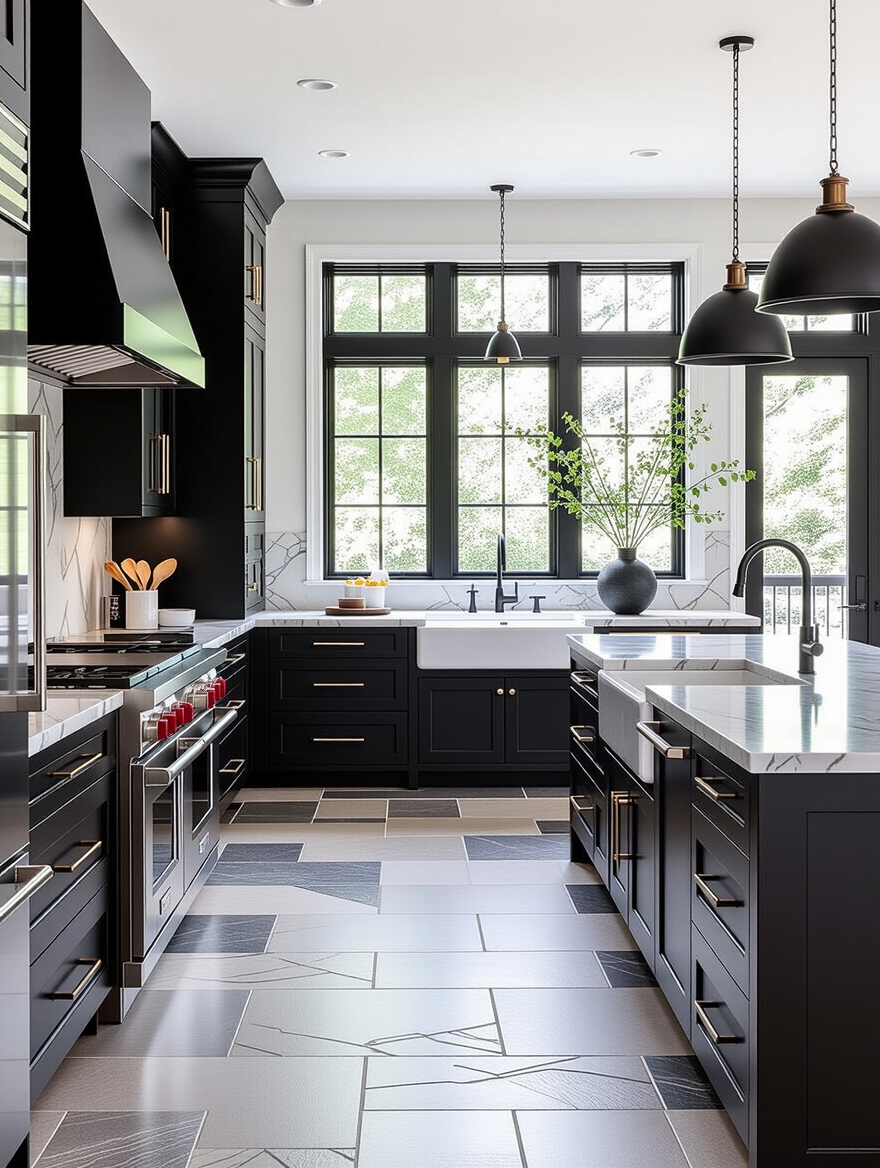
Sometimes the best separation is one you never build. Changing the flooring underfoot, tile in the kitchen meeting wood in the living area, draws a clear line your eye catches instantly while the room stays fully open.
It is the no-wall option, ideal for renters who can use a rug instead, or for anyone who wants the openness but still craves a defined cooking zone. Lighting and color do the same trick from above and around.
- Pair practical tile in the kitchen with warm wood in the living zone.
- For a no-commitment version, a large flat-weave rug marks the living side for $50 to $200.
- Keep one material continuous as a border so the change feels intentional, not abrupt.
Common Mistakes With Semi-Open Kitchens
The biggest mistake I see is over-separating a room that did not need it. People build a tall divider to hide one messy corner and lose all the light and openness that made them want a semi-open kitchen in the first place.
Start with the lightest separator that solves your actual problem, tape it out on the floor, and live with it for a few days before you commit a dollar. You can always add more division later; clawing it back after a wall is framed is far harder.
The second trap is forgetting ventilation. A half wall or a pass-through does almost nothing to stop cooking smells from drifting into the living space, so a strong range hood matters even more in a semi-open layout than a closed one.
And before you cut any opening into an existing wall, have a professional confirm it is not load-bearing; a 20-minute consult is far cheaper than a structural fix. If the wall holds weight, a pass-through or a steel-framed glass panel can still keep the support while opening up the view.
Match the Wall to How You Live
Semi-open is not one design but a dial, running from a rug on the floor to a steel-framed glass wall. The right setting depends entirely on what an open plan costs you day to day, whether that is visible mess, drifting smells, or just a room that feels a little undefined.
Start by naming the one thing that bothers you, then pick the lightest separator that solves it. Tape the footprint, live with it for a few days, and build only once you are sure. The best semi-open kitchen is the one tuned to exactly how much togetherness you actually want.
More to Explore


