

Walk into a home with a closed-off kitchen and then one with an open kitchen, and the difference hits you at the door. The closed version hides the cook behind a wall. The open kitchen pulls cooking into the center of family life, floods the floor with shared light, and makes a modest house feel generous. That is why opening up a kitchen transforms a whole home, not just one room.
But an open concept kitchen is not one look. The same wall-free layout can turn minimalist and serene, rustic and warm, or bold and full of personality, and each direction changes the home in its own way. Below are the open-kitchen design styles that reshape how a house feels and functions, with what each one does best and the trade-off to plan for.
Quick Answers
Does an open kitchen really transform a home? Yes. Removing the wall changes how light, sound, and people move through the whole floor, so the benefits reach the whole home and not just the kitchen, with the home living larger and more social.
Which open-kitchen style adds the most resale value? Clean, timeless looks like light Scandinavian or warm transitional please the most buyers, while bolder styles transform the everyday feel more dramatically for you.
What is the catch? Openness carries noise, smell, and clutter across the space, so good storage, a strong range hood, and clear zones are part of every successful transformation.
What Makes an Open Kitchen Feel Inviting

Before the style, it helps to know why an open kitchen transforms a home at all. With the wall gone, the kitchen stops being a service room and becomes the social heart. The cook talks to guests, parents watch kids, and one window’s light reaches the far sofa.
That connection is the real transformation, and every style below is just a different way to dress it, much like the best open-plan kitchen and living room combos prove. The most inviting versions share a few traits: they connect to the living space, they handle their own clutter, and they layer light so the room works morning to night.
- Sightlines connect the cook to family and guests.
- Shared daylight makes the whole floor brighter.
- Built-in storage keeps the open look calm, not chaotic.
Sleek Minimalist Open Kitchens

Minimalist is the style that turns a busy home into a calm one. Handleless cabinets, a quiet stone counter, and a tight neutral palette let the open space breathe, and with nothing visually shouting, the whole floor feels serene. In a hectic household, that calm is the point.
Minimalism transforms clutter into calm
The transformation depends on discipline, though, because an open minimalist kitchen has nowhere to hide a mess. Generous closed storage is non-negotiable, and the look only holds if you keep surfaces clear. I tell clients minimalism is a lifestyle choice as much as a design one.
Done well, it makes even a small home feel modern and expensive. Clean lines and uninterrupted surfaces look custom, so the cost lives in the cabinetry and the counters, not the decor. Spend where it shows.
📋Signs an Open Kitchen Is Working
- ✓The cook can see and talk to the living area
- ✓Daylight reaches past the kitchen into the next zone
- ✓Daily clutter has a closed home nearby
- ✓Each zone has its own light layer
- ✓Traffic flows around, not through, the work zone
Warm Rustic Kitchens in Wood and Stone

If minimalist cools a home down, rustic warms it up. I love how natural wood, stone counters, open shelves of pottery, and vintage fixtures turn an open kitchen into the coziest room in the house, the one everyone gravitates toward. The materials do the work. They break up the scale of a big open floor with texture and age.
This style suits homes that want to feel collected and well-worn. Reclaimed wood and honest stone hide wear well, which makes rustic forgiving for busy families. The catch is restraint, since too many heavy rustic pieces crowd an open room, so a few real materials should carry it.
- Use wood and stone to warm and break up a big open floor.
- Choose materials that wear gracefully for a busy family.
- Let a few honest textures lead the look.
Industrial Kitchens With Bold Metal

Industrial style gives an open kitchen edge and energy. Exposed brick, blackened metal, concrete, and open shelving on pipe brackets give a wide-open space the raw character a plain box lacks, and the hard materials suit the scale of a big room.
Industrial adds edge without losing warmth
The transformation stays warm if you balance the cold materials with wood and leather and plenty of light. All metal and concrete can feel like a warehouse. The trick is one or two raw elements against softer ones. Black-framed pendants are the easiest entry point.
Sound is the honest catch here, because hard surfaces echo, and an open industrial kitchen amplifies it. Rugs in the adjoining living zone and a few soft textures keep a loft-style kitchen from ringing at dinner.
A few rustic-kitchen terms.
📖Patina
The soft, aged finish wood and metal develop over time, prized in rustic design.
📖Live edge
A wood surface that keeps the natural, uncut shape of the tree’s edge.
📖Reclaimed wood
Timber salvaged from old buildings, reused for character and lower waste.
Bright, Airy Scandinavian Kitchens
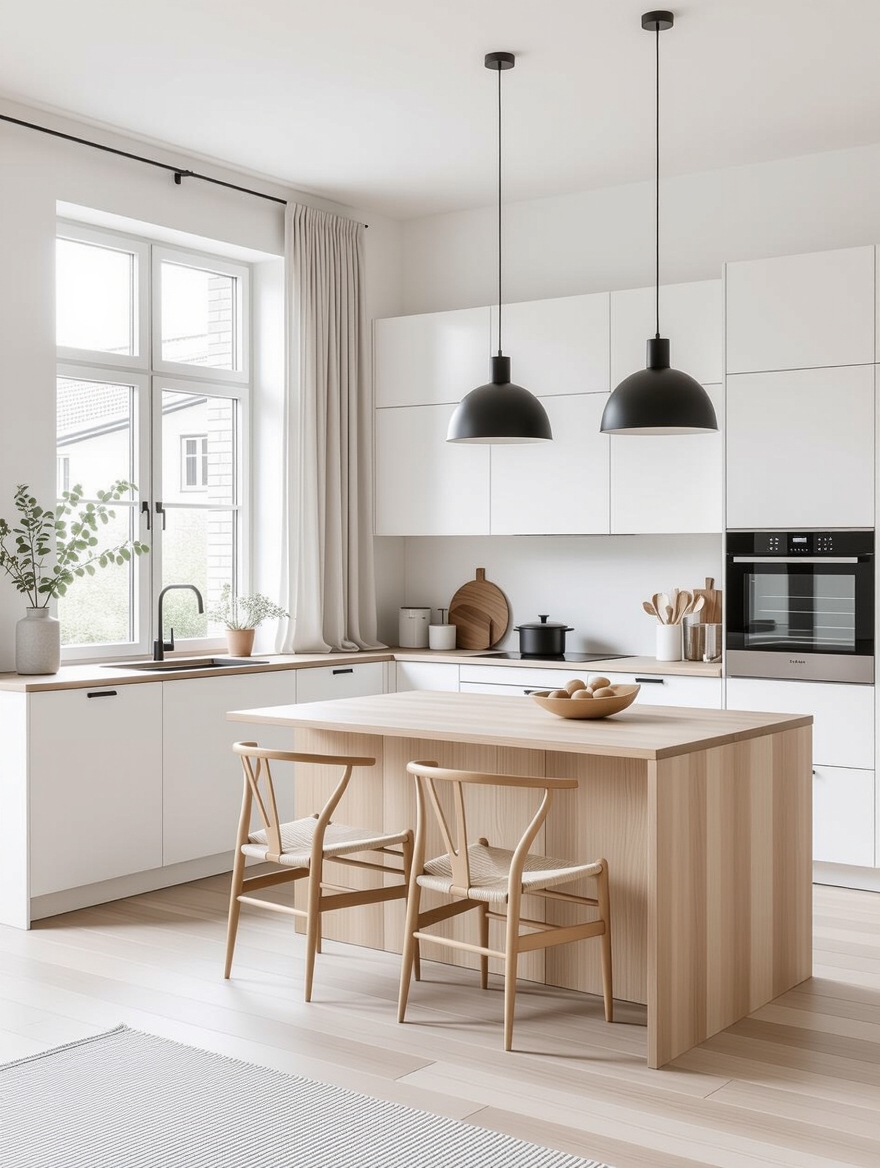
Scandinavian style turns a dim or boxy home into a bright, breathing one. White and pale-wood surfaces, leggy furniture, and a near-empty palette let daylight bounce across the whole floor, so even a north-facing space feels sunlit. It is the most reliable way to make an open kitchen feel larger and calmer at once, the same brightening logic behind bright white cabinets.
This is the style I suggest when a client’s main complaint is that the house feels dark or cramped. It costs little beyond light paint and a few well-chosen pieces, and it flatters almost any home. Keep the bulbs warm, around 2700K to 3000K, so the airy palette stays cozy after dark.
- Use white and pale wood to bounce daylight deep into the room.
- Keep furniture light and leggy so sightlines stay open.
- Warm the bulbs so the pale palette stays cozy at night.
Colorful Cabinets and Playful Accents
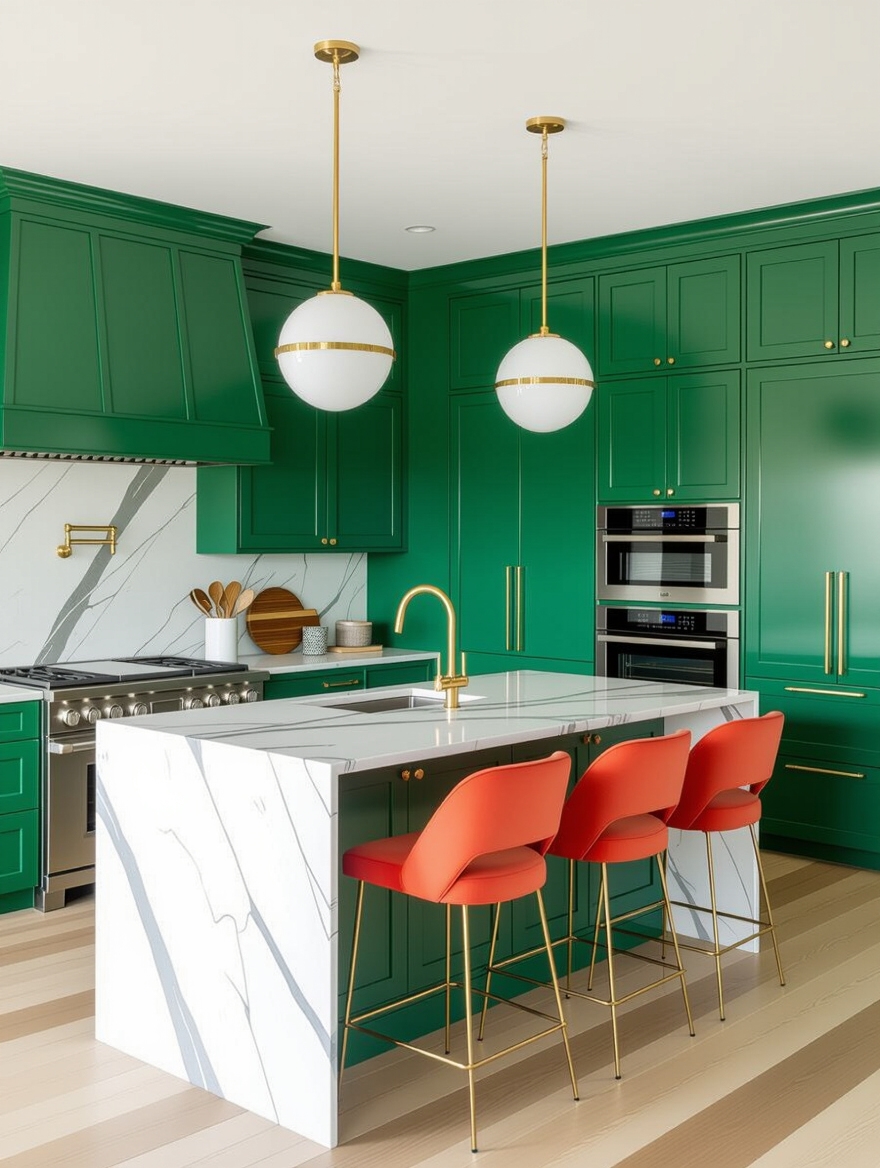
For homes that feel flat or generic, color is the transformation. Painted cabinets in green, blue, or terracotta, a bold backsplash, or playful accents turn an open kitchen into the most characterful space in the house. Because it anchors the whole floor, that personality spreads outward.
Color transforms a generic home into a personal one
The trick in an open plan is control. Let one zone carry the boldest color, usually the island or lower cabinets, and keep the rest calmer so the open space does not compete with itself. A confident green kitchen, for example, can borrow the balance of a green kitchen people copy without overwhelming the room.
Color is also the cheapest transformation on this list. A few quarts of cabinet paint, roughly $200 to $400 for a DIY weekend, can change the entire mood of a home. Best of all, it is reversible if your taste shifts.
A Scandinavian kitchen does not add light so much as stop wasting it.
Islands Built for Social Cooking

The island is where an open kitchen’s social promise actually delivers, turning cooking from a solo chore into the center of the gathering. Seat people on the living-room side and the cook faces the party while prepping, so making dinner becomes part of the evening.
The island turns cooking into a social act
To get the social win, load the island with function and size it right: storage on every face, an overhang of about 12 inches for stools, and 36 to 42 inches of clearance so it never clogs the flow. A second prep sink or a microwave drawer keeps the cook in the conversation.
This is the single change most clients say transformed how their family uses the kitchen. The counter where homework, coffee, and cooking all happen at once becomes the busiest, happiest spot in the house.
Dining Areas Folded Into the Kitchen

Folding the dining area into the open kitchen changes how a family actually eats, making everyday meals easier and more frequent than a formal, separate dining room ever managed. A table just off the island, or a built-in banquette in a corner, puts eating right where the food is, so weeknight dinners happen without ceremony.
The trick is to tie the dining zone to the kitchen with a shared palette and one defining light fixture, so it feels intentional. A banquette is the space-saving hero here. It seats more people in less room and hides storage under the bench, which is why so many smart kitchen designs lean on one.
- Place the table just off the island so food and eating share a zone.
- Anchor the dining area with one light fixture to define it.
- Use a banquette to seat more people and hide storage below.
Smart Storage for a Decluttered Kitchen

No open-kitchen style survives without storage, because the whole transformation falls apart the moment clutter creeps onto the counters in full view. Smart storage is what keeps the open look calm: full-height cabinets, deep drawers, an appliance garage for the toaster and blender, and a closed home for every gadget you would rather not display. The goal is simple.
Give the pretty and frequent things easy reach and hide the rest, so the style you chose keeps shining instead of vanishing under mail and small appliances. A quick five-minute reset each evening keeps the whole transformation intact, the same discipline behind clever small kitchen storage ideas.
- Take cabinets to the ceiling to win back storage lost with the wall.
- Hide small appliances in an appliance garage to clear the counter.
- Give every gadget a closed home so the open zones stay calm.
Zone-Specific Kitchen Lighting

Lighting is the transformation that only shows up at night, and it is the one people most often skip. A single overhead cannot serve cooking, eating, and lounging, so an open kitchen needs zone-specific layers: bright task light where you work, a feature fixture over the table, and softer, dimmable light in the living area.
Tie the zones together by keeping the bulb color consistent across the floor, a warm white around 2700K to 3000K, so the kitchen does not glow blue beside a cozy living room. Mismatched bulb tones are the fastest way to break the spell after dark.
Dimmers are the cheap finishing touch that completes the transformation, letting the same open space shift from bright morning prep to a low, warm glow at night. They cost little and change the mood instantly. That is exactly what a transformed home should be able to do.
One Wall Down, a Whole Home Changed
The real lesson of an open kitchen is that it transforms far more than the kitchen. Take down the wall and you change how light travels, how a family gathers, and how big a home feels. Then the style you choose, minimalist calm, rustic warmth, industrial edge, Scandinavian light, or bold color, decides the character of that change.
Pick the transformation you want most, plan for the storage and lighting that keep it working, and one wall coming down can make a whole house feel new. Start with the style that fits how you actually live, and the rest follows.
More to Explore


