

Which layout would actually make your kitchen feel twice as big? The cabinets get all the attention, but the single decision that maximizes a kitchen most is the layout, the shape the whole room takes and how you move through it. The right one for your space can hold more, flow better, and feel larger without a single extra cabinet.
Modular design makes those layouts easy to plan, since standard units snap into whatever shape your room needs. Here are twenty modular layouts that maximize every inch, what each one suits, the clearances that make them work, and honest notes on planning.
Layout Comes First
Match the shape to your room: single-wall and galley for narrow spaces, L and U for more room, an island or peninsula where you have the floor. Each shape has a sweet-spot size, and forcing the wrong one onto your footprint is what makes a kitchen feel cramped.
Whatever the shape, the work triangle and the clearances decide whether it actually flows. Two numbers carry most of that weight: keep 42 inches of walkway between facing runs and each triangle leg between four and nine feet, and almost any shape will work hard for you.
Choosing the Right Kitchen Layout
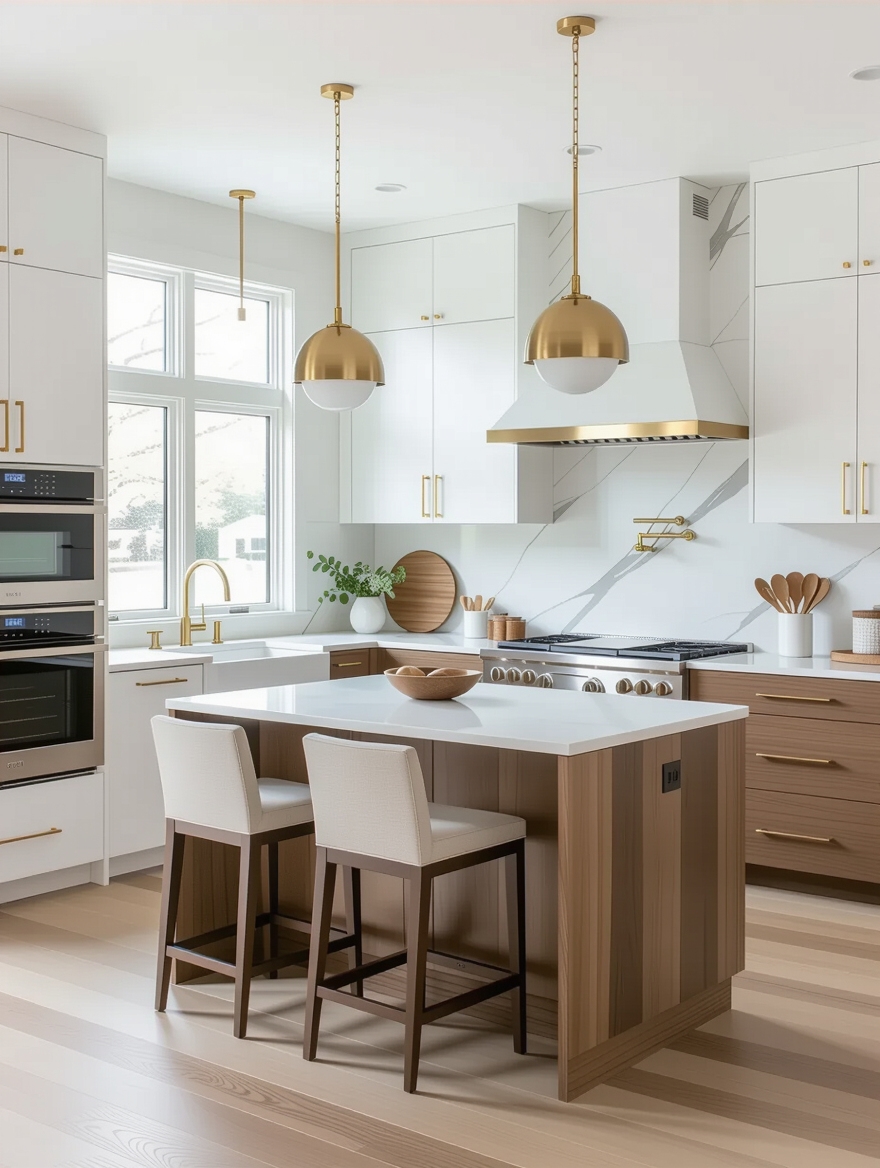
The layout has to answer to your room’s shape and how you cook. A long narrow space wants a galley or single wall; a roomier square suits an L or U; an open plan calls for an island or peninsula. Pick the shape that fits the footprint you actually have, not the one in the photo that caught your eye.
A good way in is to sketch the room and trace the path you walk most, then choose the layout that shortens it. That tape-and-sketch pass takes about ten minutes and saves costly missteps once the units are ordered.
- Match the layout to the room’s shape, not a photo you liked.
- Plan around the path you walk most, then shorten it.
- Leave at least 42 inches of walkway between facing runs.
Single-Wall Layouts for Small Spaces
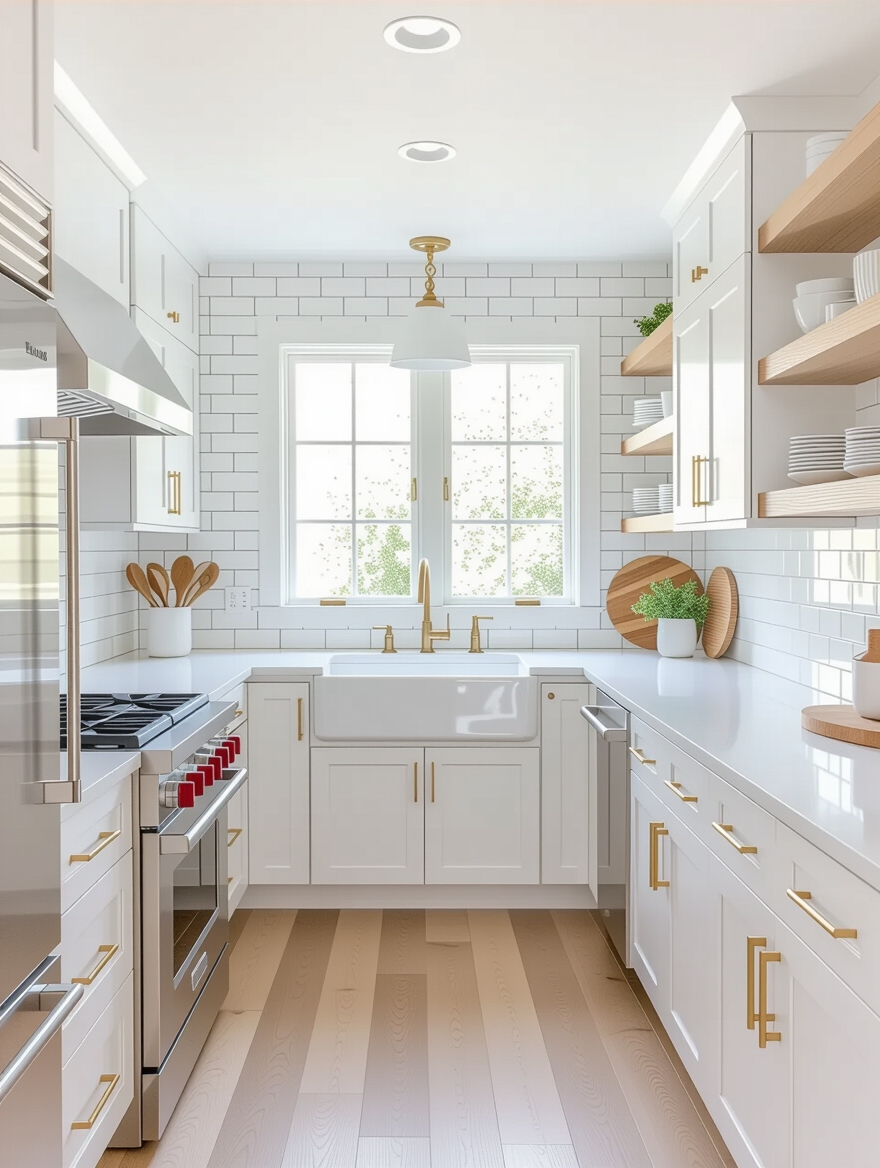
The single-wall layout lines everything up along one run, which is the most space-efficient shape for a small apartment or an open-plan studio. It keeps the kitchen to a tidy footprint and leaves the rest of the room free, and going tall with the cabinets makes up for the limited width.
- Run the sink, range, and fridge along one wall in a logical order.
- Go floor to ceiling to make up for the narrow footprint.
- Add a rolling cart, around $150 to $500, for extra prep space that tucks away.
Not sure which modular layout fits? Match it to your room.
1Your room is under about 8 feet wide
Single-wall, since a galley needs roughly 7 to 8 feet just for the two runs plus the 42-inch gap between them.
2Your room is 10 feet wide or more
An L or U, and you have the floor for an island once you can keep 36 inches clear on every walkable side.
The Efficient, Bright L-Shaped Kitchen
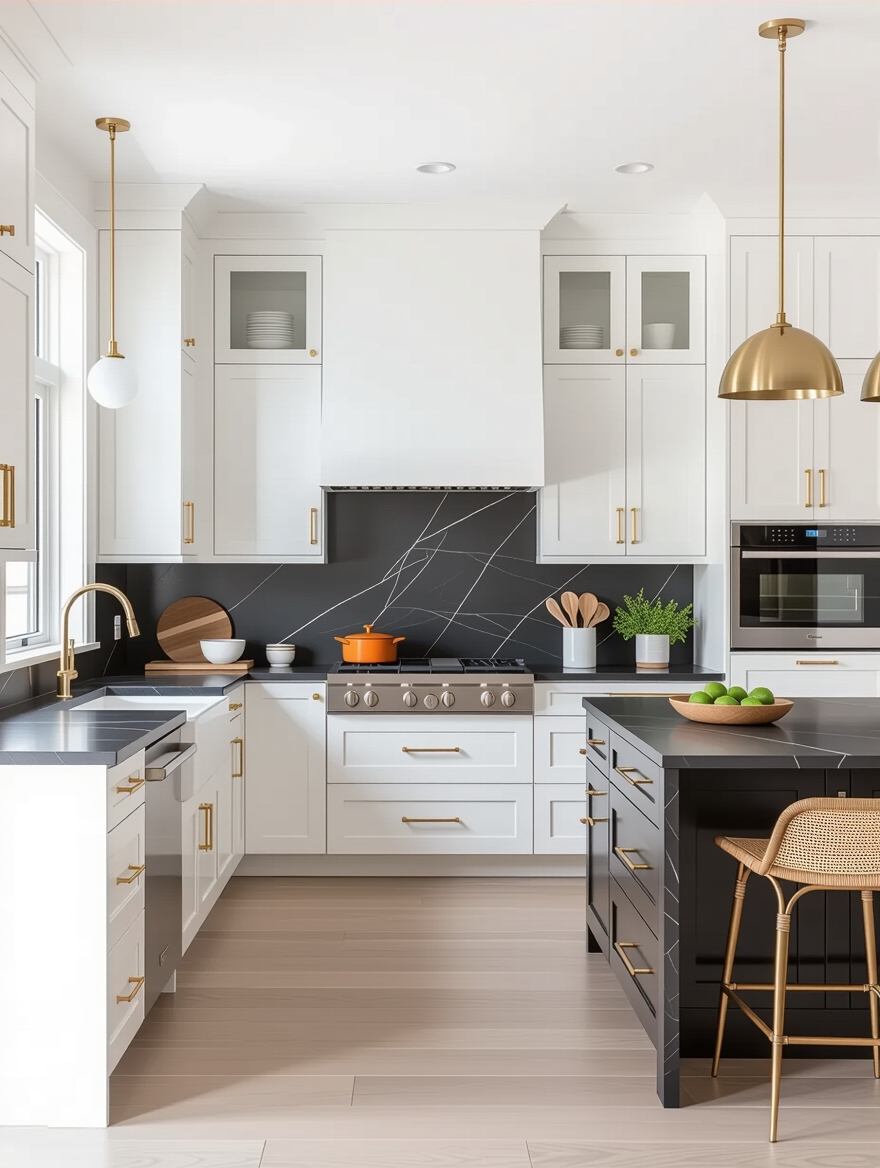
The L-shaped layout wraps the kitchen around two walls and a corner, which opens up the cooking area and works beautifully in an open-plan home. It gives you generous counter on both legs and a natural, flowing path between them.
Mind the Corner
It also leaves room for a table or an island in the open space, so it scales from small to large.
Plan a pull-out fitting where the two legs meet so that deep nook does not become dead space, the one weak spot of the L. A swing-out or carousel insert turns the hardest corner into the most-used cabinet in the run.
U-Shaped Layouts for Counter Space
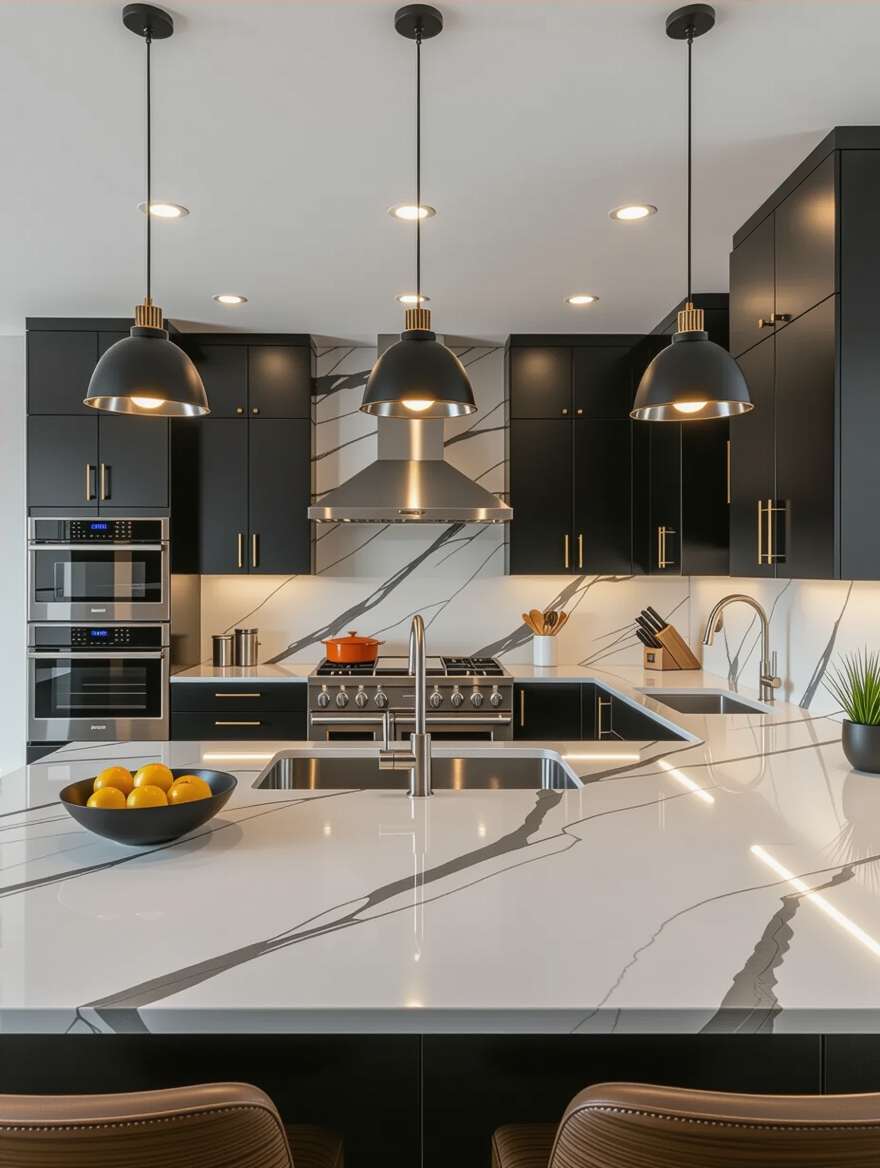
When you have the room, the U-shaped layout shines. It wraps the cook in counter on three walls, the most generous working layout there is. It maximizes both counter and storage and keeps everything within an easy turn.
The trade-off is that it needs real floor space and has two corners to plan around, so it suits a larger or square kitchen.
Keep the open mouth of the U at least 42 inches wide so two people can pass, and use corner units so neither nook is lost.
Island or peninsula? Let the clearances decide.
🎯You can keep 36 to 42 inches clear all around
An island works; budget for the plumbing or wiring run if you want a sink or cooktop in it, which a peninsula tied to the wall avoids.
🎯The floor is tighter than that
A peninsula gives most of the benefit, and because only its walkable sides need 36 inches, it fits where an island would choke the traffic.
Kitchen Islands for Storage and Style
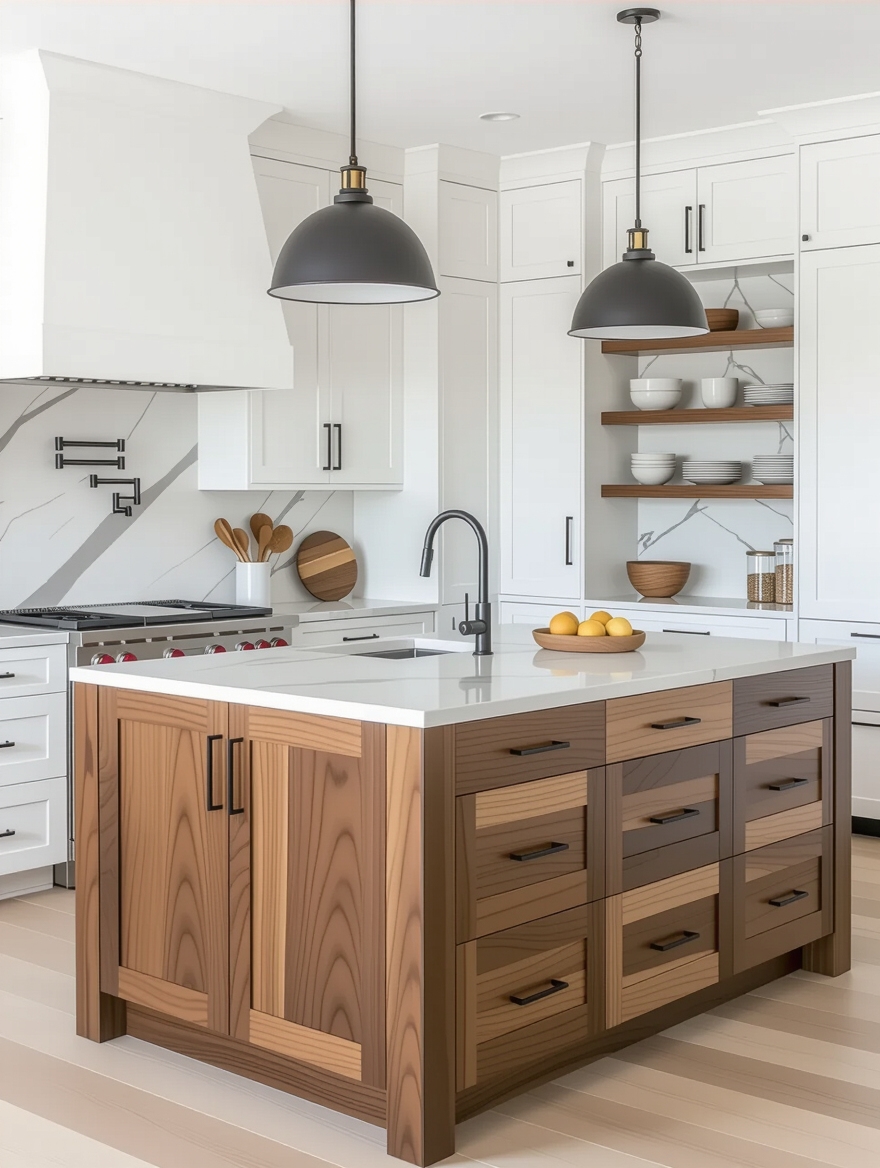
Adding an island to a layout is the move that maximizes a roomy kitchen, packing storage, prep, and seating into the center where it is all within reach. A modular island lets you configure that central footprint entirely for how you cook, which is why I recommend one wherever the clearances allow.
- Add an island only if you can keep 36 to 42 inches clear around it.
- Configure the base for storage on the working side.
- See the full range in these island configurations.
Peninsula Kitchens
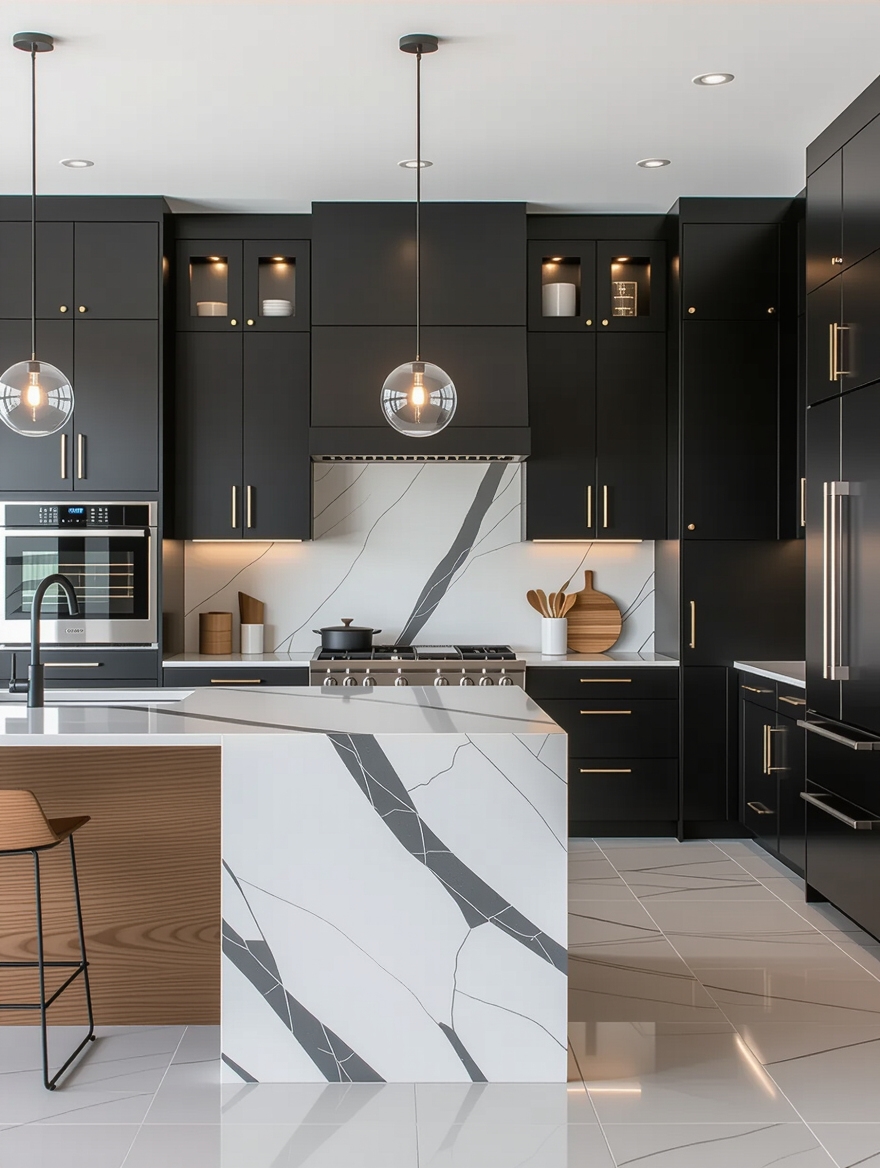
When the floor is too tight for a full island, go peninsula. It gives you most of the benefit. Attached to the run at one end, it adds counter, storage, and a casual seating spot while gently separating the cooking zone from the dining area, all without the clearance a freestanding island demands.
- Use a peninsula where an island would block the walkways.
- It adds seating and a soft divide between cooking and dining.
- Keep 36 inches clear on the walkable sides.
🅰️L-Shaped
Open and flexible, with room for a table or island; works in a room as small as about 8 by 8 feet.
🅱️U-Shaped
The most counter and storage, wrapping the cook on three walls; wants roughly 10 feet of wall on each side to avoid a cramped, two-corner squeeze.
Parallel Galley Layouts for Workflow
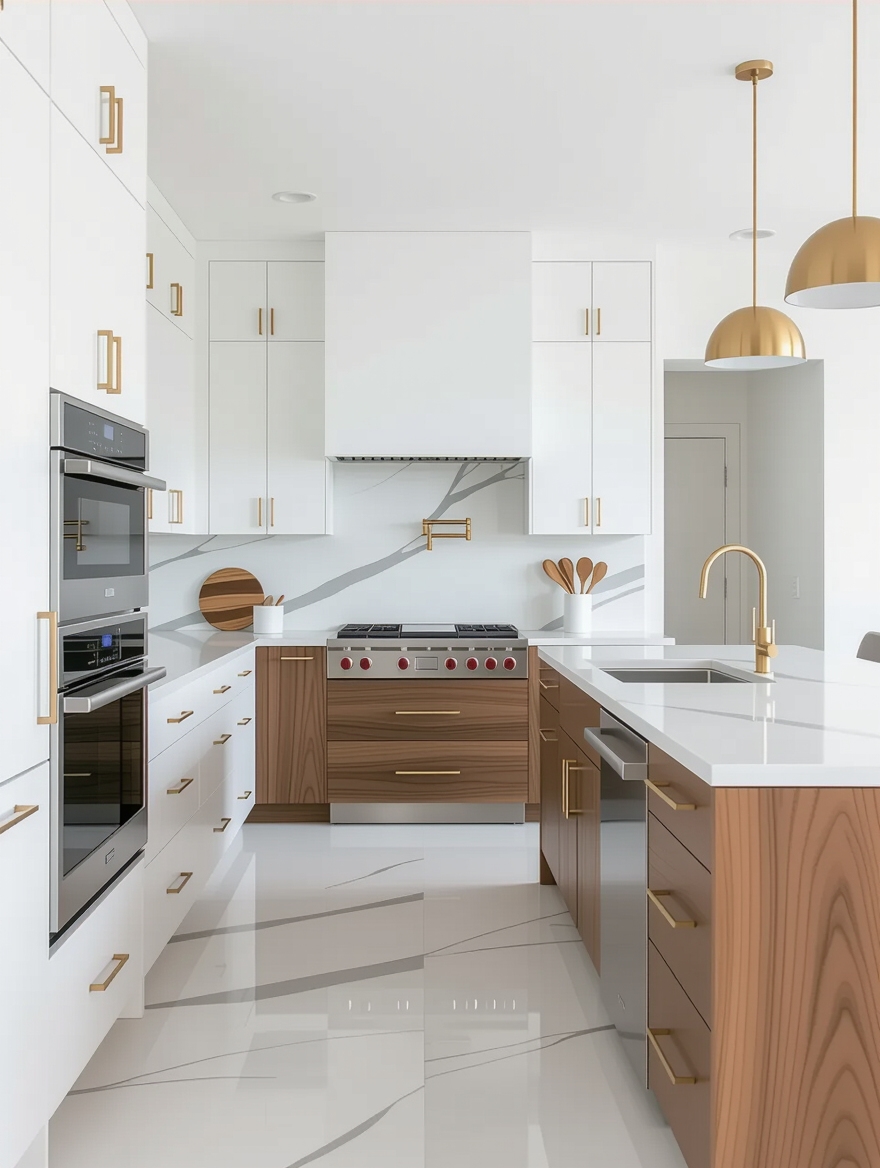
The parallel, or galley, layout runs cabinets along two facing walls, which is one of the most efficient shapes for serious cooking. Everything is a half-turn away. The two runs let you split wet and dry zones cleanly.
The one rule that makes or breaks it is the gap between the runs, since too narrow and two people cannot pass, too wide and you lose the efficiency.
- Keep at least 42 inches between the two facing runs.
- Put the sink and prep on one side, the cooktop on the other.
- It suits a long, narrow room better than any other layout.
Compact Kitchens for Studios
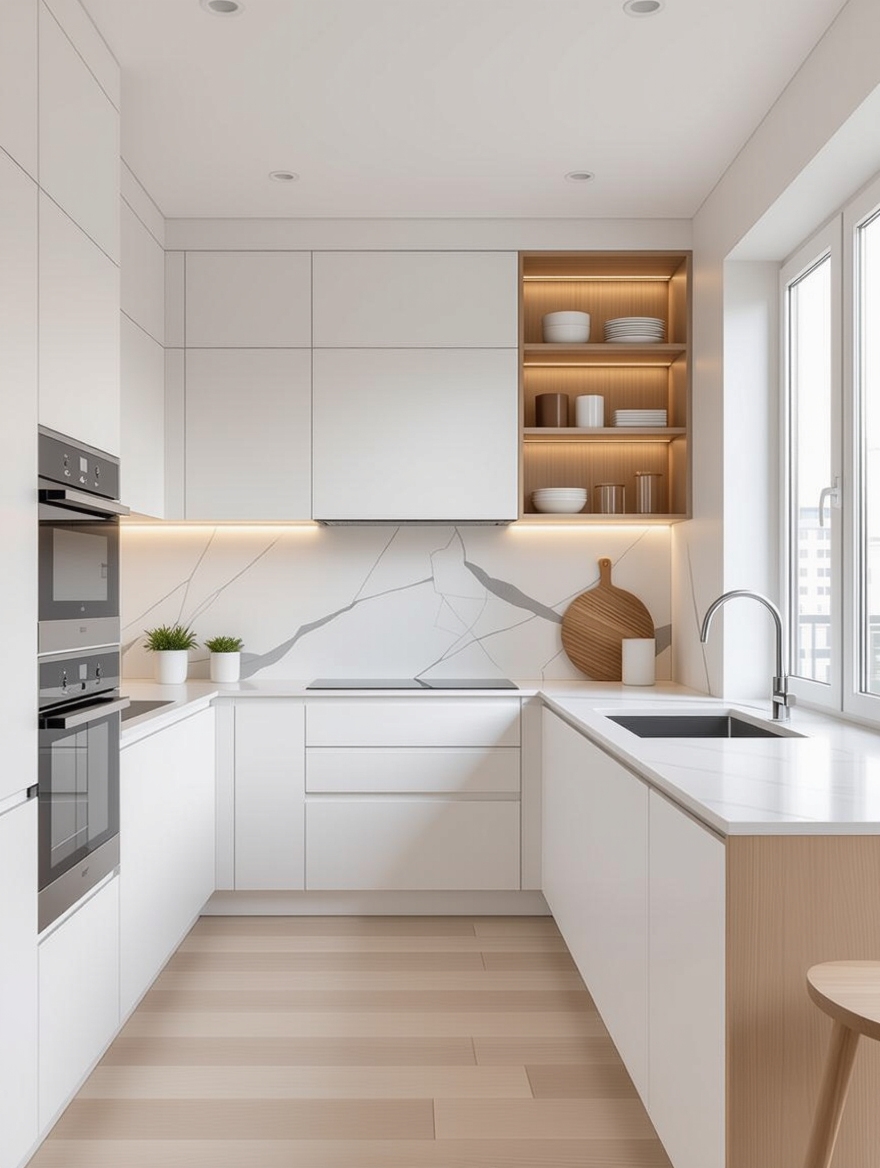
In a true studio, the layout has to do double duty, because the kitchen shares a room with everything else. The winning moves here are less about shape and more about making each piece earn its keep: a drop-leaf counter that folds flat, a cutting board that lids the sink, an 18- or 24-inch slim dishwasher, a two-burner cooktop instead of a full range.
Think in zones you can hide. A counter that doubles as a desk by day, a cabinet front that conceals the microwave, a cart that rolls out to cook and tucks back to disappear.
These mini kitchen ideas go deeper on appliance sizes and dual-purpose pieces for the tiniest kitchens.
Built-In Appliances for a Sleek Look
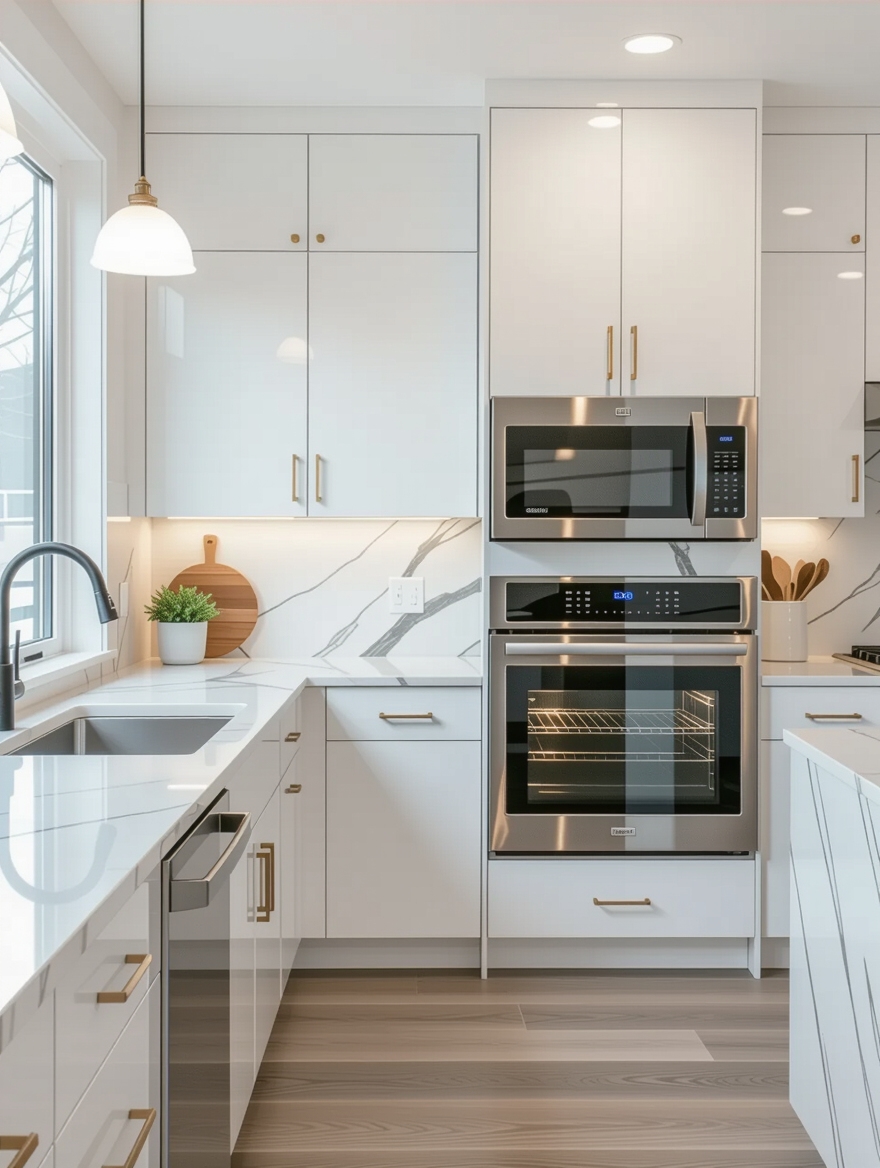
Building the appliances into the layout, rather than leaving them freestanding, maximizes both space and the clean look. Integrated, panel-ready fronts let the cabinetry run unbroken, and a built-in fridge or dishwasher takes up less depth than a freestanding one that juts past the counter.
Plan Them In Early
It is a layout decision as much as an appliance one, since the cabinetry has to be planned around the built-ins from the start.
Plan the power and any plumbing to these spots before the floor goes down, with a licensed pro for the connections.
The Work Triangle in Modular Design
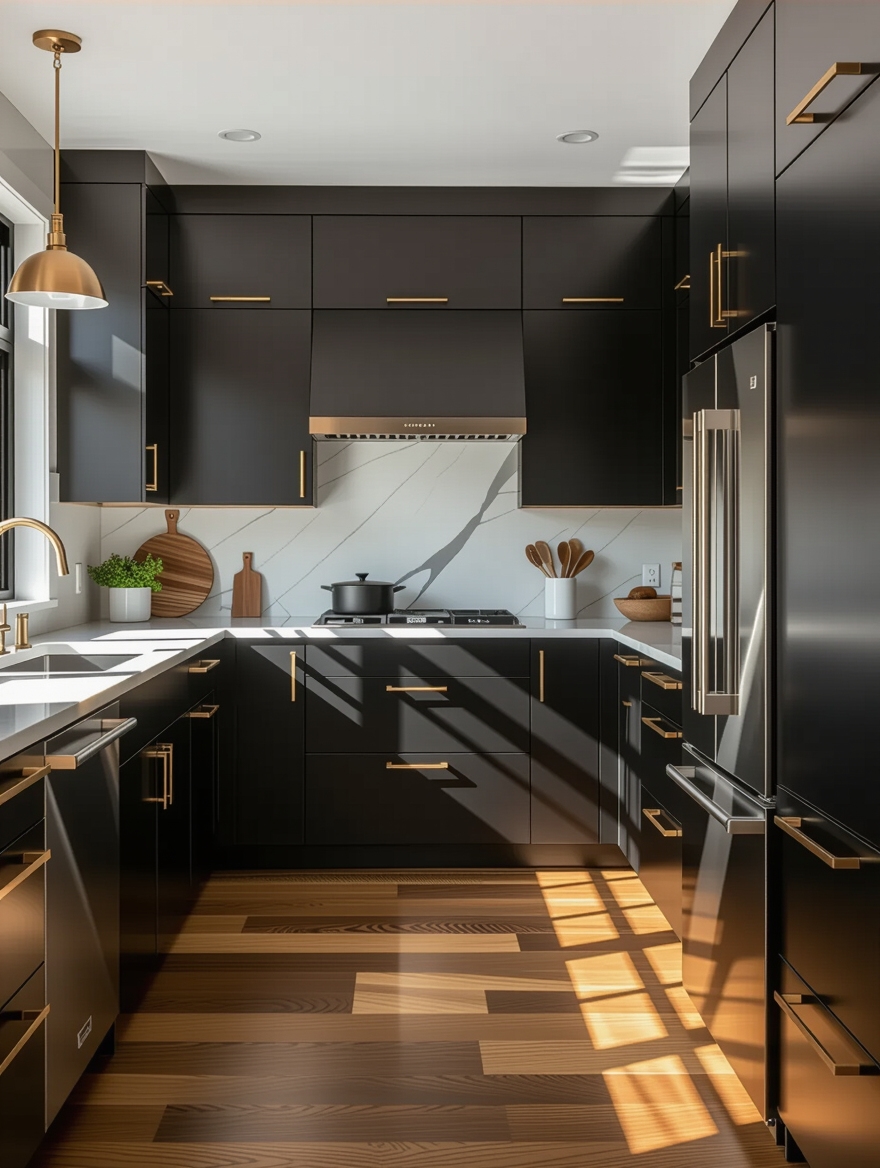
Whatever shape you choose, one rule decides whether it works. The work triangle. Keeping the sink, range, and fridge a sensible distance apart, with each leg roughly four to nine feet, means you move smoothly between them instead of crossing the whole kitchen.
Position those three points first and fill the rest with units around them; modular design makes that easy to adjust on paper. Get the triangle right and even a modest kitchen feels efficient; ignore it and the prettiest layout fights you every day.
Vertical Storage and Open Shelving
Two layout moves squeeze more from the walls. Going vertical, tall units and cabinets to the ceiling, claims the airspace a standard layout wastes, while a short run of open shelving keeps a small kitchen from feeling boxed in and puts daily items in reach.
Balance the two: mostly closed, vertical storage for capacity, with one open zone for access and a little breathing room. The combination is what makes a tight layout feel both roomy and uncrowded, holding far more than the floor space alone would suggest.
Breakfast Bars and Cooking Together
A layout can do more than store and cook; it can gather. Adding a breakfast bar to an island or peninsula gives you casual seating without a separate table, and planning a little extra room in the work zone lets two people cook side by side without colliding.
If your kitchen is the heart of the home, design for company: a second prep spot, clear paths, and seating that keeps guests close but out of the cook’s way. A layout built for togetherness gets used far more than one built only for one cook.
Integrated Pantry and Lighting
Two finishing layers complete a space-maximizing layout. An integrated pantry, a tall pull-out or a dedicated cabinet run, keeps bulk storage out of the main kitchen so the counters stay clear, and good lighting makes the whole layout work harder, with task light where you cut and cook and warm ambient light overhead.
Plan the pantry into the layout from the start rather than squeezing it in later, and put the lighting on dimmers. A calm minimal base sits on exactly this kind of planned storage and light, and these small-space solutions help when the footprint is tight.
How to Ask Your Stylist
When you plan a modular kitchen with a designer, bring your room’s measurements and a quick note on how you cook before you bring inspiration photos. Ask which shape suits the space, where the work triangle should fall, and whether an island or peninsula actually fits the clearances. Those answers shape everything else.
The most useful question is what layout would make this kitchen flow best, given how I actually cook. A good designer will start with the shape and the movement, and let the cabinets and colors follow once the bones are settled.
Modular Layout Questions, Answered
?What is the best modular kitchen layout for a small space?
Below about 8 feet of width, a single-wall layout usually beats a galley, which needs room for two runs plus a 42-inch gap. Above that, a compact L opens up the cooking area. Either way, a counter depth of 24 inches and at least 15 inches of landing space beside the range keep a small kitchen usable rather than just small.
?How much clearance does a kitchen layout need?
Leave at least 42 inches of walkway between facing runs or around an island, and 36 inches on tighter walkable sides. Tighter than that and two people cannot pass, and opening cabinets and appliances becomes awkward.
?What is the work triangle and does it still matter?
It is the path between the sink, range, and fridge, ideally with each leg about four to nine feet and the three legs adding up to no more than 26 feet total. Spread them wider and you cross the room all day; bunch them tighter and the zones collide. It still matters, and modular design makes the spacing easy to fine-tune on paper.
?Should I add an island or a peninsula?
An island needs about 36 to 42 inches clear on every side, which in practice means a room at least 12 to 13 feet wide before a useful island (figure a minimum of roughly 40 by 24 inches) earns its footprint. Tighter than that, a peninsula attached to the run gives you most of the extra counter, storage, and seating without the all-around clearance.
?Which layout is most efficient for serious cooking?
A galley, or parallel, layout puts everything a half-turn away and lets you split wet and dry zones across two runs. Keep at least 42 inches between the runs, and it is hard to beat for a focused, efficient cooking workflow.
Get the Shape Right First
The single biggest way to maximize a kitchen is to choose the right layout for the room before you think about cabinets or color. Match the shape to your space, respect the work triangle and the clearances, and a modular kitchen will hold more and flow better than one twice its size that was planned backward.
So start with the shape and the path you walk most, then let the modular units fill it efficiently. Get that part right and every inch works for you, with the cabinets simply finishing a plan that already fit the room.
More Hair Inspiration


