

A covered outdoor kitchen is the single best upgrade you can make to a backyard, full stop. A roof over your grill and counter changes everything. The rain no longer cancels dinner, the sun stops baking the cook, and the appliances last years longer out of the weather.
The cover is the whole story here. Whether it is an airy pergola, a solid pavilion, or a roofline pulled off the house, the structure is what turns a seasonal grill into a true outdoor room. These 15 covered designs show what the right roof makes possible.
Covered Kitchens, in Short
- A cover, pergola, pavilion, or solid roof, turns a fair-weather grill into a kitchen you use most of the year.
- A gas grill under a roof needs real ventilation and clearance. Plan that with a pro, never by guesswork.
- Run electrical, lighting, and a fan in the cover from the start; adding them later is far more expensive.
- Match the cover’s style and materials to your house so the addition looks built-in, not bolted on.
Versatile, Protected Outdoor Living
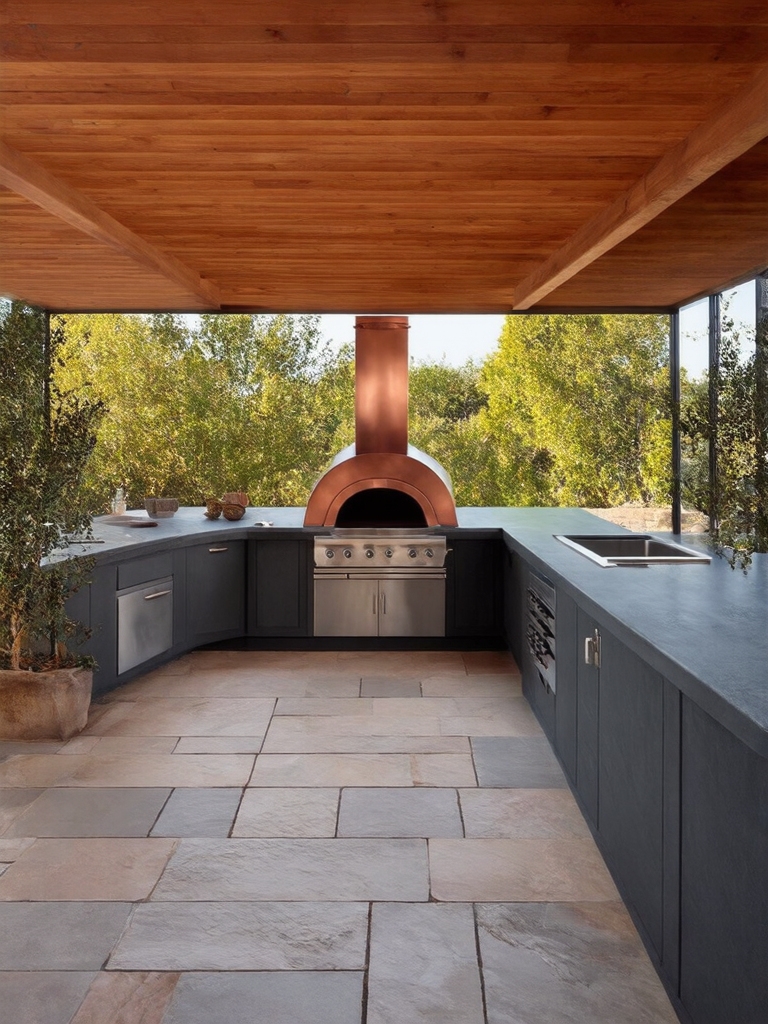
The reason to cover an outdoor kitchen is simple: you actually use it. An uncovered grill gets cooked on a few perfect evenings a summer. A covered one becomes a real second kitchen you reach for in light rain, harsh sun, and shoulder-season chill. Clients ask me whether a cover is worth the spend, and it is the upgrade people most regret skipping.
Protection also pays off in dollars. Appliances, cabinets, and counters all last far longer shielded from UV and water, so the cover often saves more than it costs over a decade. A roof turns a fair-weather toy into an everyday room.
- A cover stretches your season from a few weekends to most of the year.
- Shielded appliances and cabinets outlast exposed ones by years.
- Even partial shade makes the cook far more comfortable in summer.
Choosing the Ideal Cover

The cover is the biggest decision, so weigh it before anything else. Your options run from a simple pergola to a solid-roof pavilion, and the right one depends on your climate and your budget.
Match It to Your Weather
In a dry, sunny climate, a slatted pergola or a shade sail may be all you need. Where rain is regular, a solid roof or a louvered system earns its keep, keeping you and the appliances dry right through the season.
Budget a simple pergola at $3,000 to $8,000 and a solid-roof structure at $8,000 to $20,000 or more. Tie the cover into your house style so the addition looks built-in. The indoor-outdoor kitchen ideas that work best treat the cover as an extension of the roofline.
🅰️Open pergola
Lets light and air through, costs less to build, and keeps an airy feel, but it gives only partial shade and little rain protection without added panels.
🅱️Solid roof
Full protection from rain and sun for true all-season use, though it costs more, can darken the space, and usually needs a permit and a real foundation.
Essential Outdoor Kitchen Appliances

A cover lets you safely run appliances you would never leave fully exposed, so plan the lineup early. A built-in grill is the anchor. Under a roof you can add a refrigerator, an ice maker, a side burner, and a sink without fretting over the weather. I tell people to run the gas, water, and GFCI-protected power during the build, since adding a line later means tearing into a finished floor.
- Anchor with a built-in grill sized to how you actually cook.
- Add a fridge, ice maker, or side burner now that weather is handled.
- Rough in gas, water, and power during the build, never after.
Weather-Resistant, Low-Maintenance Materials

Even under a roof, an outdoor kitchen takes humidity, blowing rain, and temperature swings, so the materials still have to be tough. Lean on marine-grade polymer cabinets, sealed stone or concrete counters, stainless appliances, and powder-coated metal, all of which shrug off the damp that ruins indoor-grade builds.
Floors matter too. A sealed concrete, porcelain tile, or natural-stone floor handles wet feet and dropped pans and rinses clean with a hose. Picking weatherproof materials now keeps a covered kitchen looking new instead of weathered in five years.
“Before you put a gas grill or burner under any roof, ask your installer about clearance and ventilation. A covered grill needs space above and around it and often a vent hood so the heat and fumes can escape. This is one to plan with a pro, not improvise.”
A Cozy Outdoor Kitchen Fireplace

A fireplace turns a covered kitchen from a place you cook into a place you stay. Under a roof, the warmth is held in. The space then works on cool nights well past grilling season.
Build for the Long Evenings
I love setting the fireplace where the seating naturally gathers, across from the cooking zone, so the cook and the guests share the same warm room. A gas insert lights with a switch, while a wood-burner brings the crackle and the smell.
Budget a masonry fireplace at $3,000 to $8,000 built. Like any vented appliance under a roof, a fireplace needs a proper flue, so this is another spot to bring in a pro. The payoff is a room you use on a chilly October evening, not just a July afternoon.
Sleek Geometry With Hidden Appliances

For a modern covered kitchen, the look is all clean lines and hidden function. Flat-front cabinets, an uninterrupted counter, and appliances tucked behind matching panels make the whole run look like architecture rather than a row of gear.
The cover supports the look by framing it. A flat or low-slope roof with recessed lighting keeps the ceiling as quiet as the cabinets, so nothing breaks the calm, geometric line. It is the most design-forward way to do a covered kitchen.
Rustic Warmth With Elegance

On the other end sits the rustic covered kitchen, all timber beams, stone, and warm wood. A heavy timber pergola or a beamed pavilion ceiling gives the space instant age and character.
Let the Structure Show
Here the cover is part of the decor. Exposed rafters, a tongue-and-groove wood ceiling, and stone columns turn the structure itself into the main event, so you need very little extra decoration.
Pair the timber with a stone counter and an aged-metal hood, and the kitchen looks like it has belonged to the property for generations. It is the warmest way to build a covered space.
A covered outdoor kitchen is the rare addition that hands you a whole new room without building walls. The roof does the work, and the open sides do the magic.
Mediterranean Pizza Oven Charm

A covered kitchen is the ideal home for a wood-fired pizza oven, because the roof keeps the oven and the cook dry while the open sides let the smoke escape. Set under a beamed pergola with stucco and terracotta, the oven becomes a Mediterranean centerpiece the whole gathering circles.
The cover also means you can fire it up in any weather, which is the whole point of owning one. For the budget version of this dream, the cheap outdoor kitchen ideas show how to fake the look for less.
- Site the oven under cover but with open sides so the smoke clears.
- Surround it with stucco, stone, and terracotta for the look.
- A covered oven works year-round, rain or shine.
A Central Bar for Easy Entertaining

The covered kitchen is built for hosting. A central bar is its heart. A raised counter with stools, set so the cook faces the guests, keeps everyone together and the conversation flowing while dinner comes off the grill.
Run the bar along the open edge of the cover, so guests sit half in the room and half in the garden. Add overhead lighting and a fan in the structure above, and the bar works from a slow breakfast to a late-night nightcap.
- Face the cook toward the bar so hosting and cooking happen together.
- Put the bar at the open edge to blend the room with the yard.
- Wire the cover for light and a fan so the bar works day and night.
Compact Culinary Space Solutions

You do not need a huge yard to cover a kitchen. A small lean-to roof off the house, or a compact pergola over an L-shaped counter, gives a tiny patio the same all-weather upgrade. The trick in a small space is to let the cover define the whole zone, so even a modest grill and counter feel like a designed room. The backyard outdoor kitchen ideas for small yards lean on exactly this define-the-zone move.
- Use a lean-to roof off the house to cover a small patio affordably.
- Let the cover frame the whole zone so a small kitchen feels intentional.
- Keep the layout to an L or a single run to fit the footprint.
Planning a Covered Build
A covered outdoor kitchen is part structure and part kitchen, so plan it in that order. Settle the cover first, its size, style, and how it ties to the house, before you pick a single appliance, because the roof determines everything below it. Most solid covers need a permit and a real foundation, so build that time and cost into the plan early.
Then handle the utilities while the structure is open: gas, water, and GFCI power roughed in, plus lighting and a fan in the ceiling. I steer everyone toward over-wiring at this stage, since adding an outlet later means cutting into a finished space. Get the bones right and the rest is the fun part.
Maintenance and Care for a Covered Kitchen
A cover cuts the upkeep of an outdoor kitchen dramatically, but it does not erase it. Sweep and hose the floor, wipe stainless to stop water spots, and reseal stone or concrete counters once a year, an hour’s job. Check the roof and gutters each season so leaves and water do not pool above your kitchen.
Give the structure itself a yearly look: reseal or restain a wood pergola, and tighten any hardware the weather has worked loose. A covered kitchen treated this way stays sharp for decades, which is the whole reason to build one in the first place.
More Covered Outdoor Kitchen Questions
?Do you need a permit for a covered outdoor kitchen?
Usually, yes, for the cover. A solid roof or pavilion is a permanent structure that needs a permit, a foundation, and sometimes an engineer, while a freestanding pergola often does not. Always check local code, and have a pro handle anything involving gas, electrical, or a roof tied to the house.
?Can you put a gas grill under a covered patio?
Yes, but only with proper clearance and ventilation. A covered grill needs space above and around it and often a vent hood so heat and fumes escape safely. Plan this with your installer rather than by guesswork, since trapped gas and heat are a real hazard.
?How much does a covered outdoor kitchen cost?
The cover drives the price. A pergola runs about $3,000 to $8,000, while a solid-roof structure runs $8,000 to $20,000 or more, before the kitchen itself. Appliances, counters, and utilities add to that, but the roof is usually the biggest single line.
?What is the best roof for an outdoor kitchen?
It depends on your weather. A pergola or shade sail suits dry, sunny climates, while a solid or louvered roof is worth it where rain is regular and you want true all-season use. Match the material and pitch to your house so the cover looks built-in.
The Roof Is the Whole Point
Strip away the appliances and the finishes and a covered outdoor kitchen comes down to one decision: the cover. Get the roof right, sized for your space, styled like your house, planned for ventilation and wiring, and everything underneath it just works, in any weather, for years.
So before you fall for a grill or a finish, ask the bigger question. What kind of cover would let you actually use this space, on a rainy Tuesday in spring as much as a perfect Saturday in July? Answer that, and the rest of the kitchen designs itself.
Keep the Inspiration Going


