

It is the part of an outdoor kitchen nobody dreams about and everybody misses once they have it. Picture the cook mid-meal, hands covered in marinade, making the long, sticky walk to the indoor sink, again. A sink station ends that walk for good, and it quietly turns a grill corner into a kitchen you can actually work in.
These are the outdoor sink stations worth a close look, from a tiny rinse setup to a tiled showpiece, each one matching a real outdoor kitchen need. We will cover why a sink earns its place, what materials survive outside, how the plumbing works, and the styles we keep coming back to. Start with the case for adding one at all.
What to Know, in Short
- A sink station keeps the cook outside and the prep flowing, no more sticky trips indoors.
- Build it from weatherproof materials, stainless, stone, or sealed concrete, so it survives the seasons.
- A simple rinse station runs off a garden hose; a hard-plumbed sink on supply and waste lines is a job for a pro.
- Match the sink style, sleek, rustic, farmhouse, or tiled, to the rest of the kitchen so it belongs.
Why an Outdoor Sink Earns Its Place

A sink is the feature that turns an outdoor grill into a real kitchen. I love what one does for a space. Without it, every rinse, every wash-up, every messy hand means a trip indoors, which is exactly what an outdoor kitchen is supposed to spare you. Add a sink and the whole space works on its own.
It keeps the cook and the cleanup outside
Think about the moments it saves. Rinsing produce, washing your hands after handling raw meat, filling a pot, cleaning a board mid-cook, and tackling the dishes without carrying them inside all happen right where you are working. The cook stays at the kitchen, and the party stays outside with them.
A sink also makes hosting cleaner and safer, with a dedicated spot to wash up after raw food and keep the prep zone tidy. For the modest cost and effort, few additions improve daily use as much, which is why we would put a sink near the top of any build, the same self-sufficiency behind a well-planned backyard outdoor kitchen space.
Materials That Survive the Weather

An outdoor sink lives in the weather, so the material is the first thing to get right. Sun, rain, and a winter freeze punish the wrong choice fast, so the basin and the surround both need to be built for the outdoors from the start.
Stainless, stone, and sealed concrete lead the pack
Stainless steel is the workhorse. It is rust-resistant, tough, and easy to clean, and marine-grade is best near salt air. Natural stone and sealed concrete make beautiful, heavy basins that suit a built-in look, while glazed fireclay or a tiled basin adds color and holds up well. Whatever you choose, pair it with a weatherproof counter, stone, tile, or sealed concrete, and an outdoor-rated faucet that will not corrode.
The one rule is to avoid anything that holds water and then cracks in a freeze, or any indoor-grade fixture that will rust within a season. Get the materials right and the sink looks sharp for years, the same durability behind any concrete outdoor kitchen design.
Pick a basin material for your sink station.
🎯Stainless steel
Tough, rust-resistant, and easy to clean, the all-purpose workhorse, ideal near salt air in marine grade.
🎯Stone or sealed concrete
Heavy, beautiful, and built-in looking, great for a permanent, high-end station.
🎯Fireclay or tiled
Adds color and old-world charm, just choose frost-rated and seal it well.
Compact Sink Stations for Small Spaces

A small patio is no reason to skip a sink, since a compact station fits almost anywhere. A slim bar sink, a narrow counter, and a single faucet take up barely any room and still handle rinsing, hand-washing, and quick cleanup. A bar or prep sink runs roughly $50 to $150. I recommend one for any tight patio. You can rig the whole rinse setup in about an hour, which makes it one of the cheapest upgrades with the biggest daily payoff.
Tuck the station beside the grill or at the end of a counter run, choose a round or small rectangular basin to save space, and add a slim shelf or a hook below for towels and supplies. A wall-mounted or fold-down version saves even more room on a tight balcony or deck. Even at this size, a sink transforms how the space works, the same clever use of inches behind the smartest small outdoor kitchen layouts.
- Use a slim bar or prep sink, roughly $50 to $150.
- Tuck it beside the grill or at the end of a counter.
- Try a wall-mounted or fold-down basin on a tight deck.
Plumbing It In, the Right Way

Outdoor sinks come in two flavors, and knowing which you want shapes the whole project. The simple version is a rinse station: a basin fed by a garden hose, draining into a bucket or a graywater line out to the garden. It needs no permits and no real plumbing skill, and it handles cold-water rinsing and hand-washing just fine.
Know where the easy rinse setup ends
The full version is a hard-plumbed sink tied into your home’s water supply and a proper waste line, often with hot water. This is the one that works like an indoor sink year-round, but it is also the one that needs a licensed plumber, the right permits, and proper winterizing in cold climates. Running supply and waste lines and tying into drainage is not a DIY guess.
Choose by how you will use it: a rinse station for casual, warm-season cooking, a hard-plumbed sink for a serious, year-round kitchen. Whichever you pick, get the drainage right so water runs away from the house and foundation, and bring in a pro for any permanent water and waste connections.
Which sink station fits you?
1You have a small patio and a tight budget
A compact bar-sink rinse station, roughly $50 to $150 and easy to set up.
2You want a year-round, full-function sink
A hard-plumbed station, with a licensed plumber for the supply and waste lines.
3You host and entertain often
An upscale bar sink built into the serving counter, with a fridge and ice well.
The Sleek Modern Sink Station

For a contemporary kitchen, a sleek sink station reads as quiet luxury. A rectangular stainless or concrete basin set flush into a clean counter, paired with a minimalist faucet and a tight palette, keeps the whole station looking architectural and uncluttered. The simpler the lines, the more high-end it feels.
Set the basin flush for an unbroken counter
Choose an undermount or flush-set basin so the counter runs unbroken, pick a single-lever faucet in matte black or brushed steel, and keep the surrounding surface clear. Hide the supplies in a cabinet below so nothing breaks the clean look. A built-in soap dispenser and a flush drain keep the surface uninterrupted.
This station suits modern and minimalist kitchens and anyone who wants the sink to disappear into a clean design. Done right, it is the kind of detail that looks expensive precisely because it is so restrained, a sink chosen for modern form and function.
The Rustic Sink Station

A rustic sink station trades sleek for warmth and character. A stone or hammered-metal basin set into a wood or stone counter, paired with an aged-bronze or copper faucet, gives the station a handmade, weathered look that suits a country or cabin-style kitchen. The materials are meant to age and only improve with it.
Let stone and aged metal develop a patina
Lean into natural, textured materials: a rough stone surround, a wood counter sealed against the weather, a copper or pewter basin that develops a patina. Add an open shelf below for stacked towels and a potted herb or two, and the station feels collected rather than installed.
This look forgives imperfection, so a slightly uneven stone edge or a weathered finish reads as charm. It pairs beautifully with rustic and farmhouse kitchens, and because the materials weather honestly, the rustic sink only looks better with each passing season.
Heads-Up
Hard plumbing, tying a sink into your home’s water supply and waste lines, plus any backflow protection and cold-climate winterizing, is a job for a licensed plumber with the proper permits. Get the drainage right so graywater runs well away from the house and foundation, and check local rules on where it can go.
The Farmhouse Apron Sink

The farmhouse apron sink is the one that wins hearts. I see it charm people every time. It works just as well outside as in. A deep apron basin with an exposed front, in fireclay, stainless, or stone, gives you serious washing room for big pots and trays while bringing instant farmhouse charm to the kitchen. The deep bowl is as practical as it is pretty.
Pick a deep bowl for pots, trays, and charm
Pair the apron sink with a warm-wood or butcher-block counter, a bridge or gooseneck faucet, and a few black or brass fixtures to keep it current. The exposed front becomes a feature, so let it stand out against the counter. A single deep bowl handles everything from rinsing vegetables to soaking a roasting pan.
This sink suits farmhouse, cottage, and rustic kitchens, and its generous size makes it a favorite for anyone who cooks and hosts at scale. It is the rare feature that is both a workhorse and a centerpiece, the kind of detail that anchors a thoughtfully planned outdoor kitchen layout.
The Colorful Mediterranean Tiled Sink
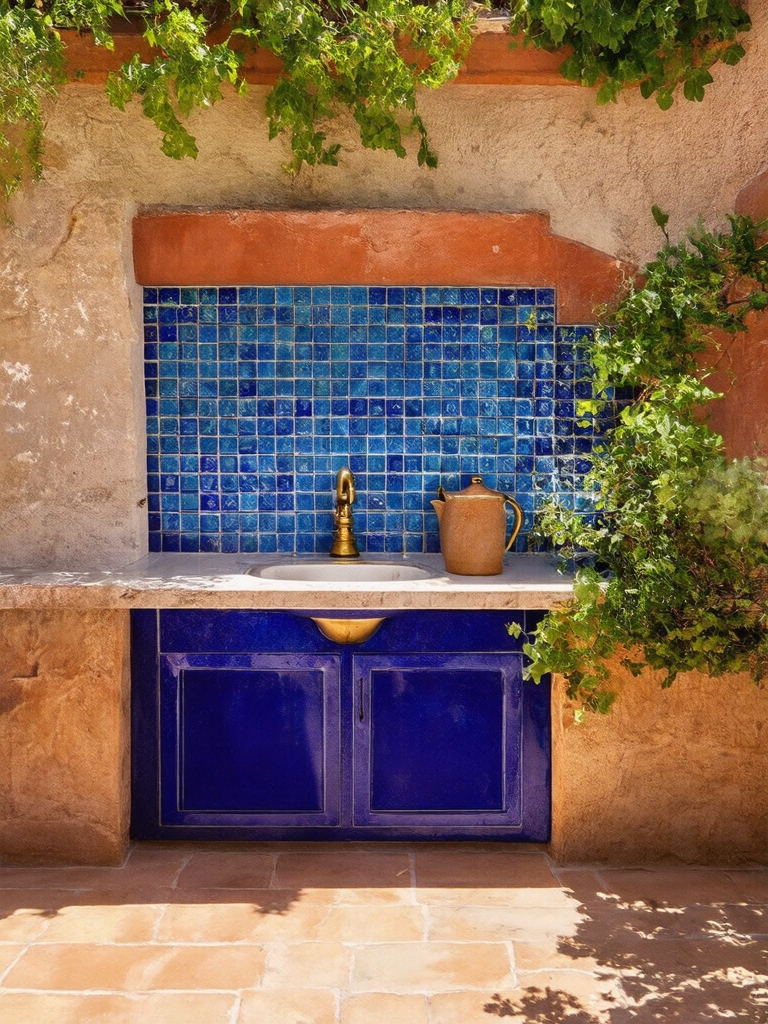
For a sink that doubles as a piece of art, the Mediterranean tiled station is hard to beat. A basin or surround clad in hand-painted, patterned tile, warm terracotta, cobalt, and ochre, turns a humble sink into a colorful focal point that anchors a sun-warmed, courtyard-style kitchen. The tile is the whole charm.
Use patterned ceramic tile on the basin face, the counter, or a backsplash behind the faucet, and pair it with a simple stone or stucco surround so the pattern stands out. Choose frost-rated tile and seal the grout well so the color survives the weather. A wrought-iron or aged-brass faucet completes the old-world look.
This station suits Mediterranean and Spanish-style kitchens, and it brings warmth and personality a plain basin would struggle to match, the kind of basin that becomes a sink as a focal point.
- Clad the basin, counter, or backsplash in patterned tile.
- Use frost-rated tile and well-sealed grout for the weather.
- Add a wrought-iron or aged-brass faucet to finish the look.
The Galley Prep-and-Sink Run

Sometimes the smartest sink station is not a standalone piece but part of an efficient run. In a galley layout, the sink sits in a single line with the prep counter and the grill, so washing, chopping, and cooking flow in order without a step wasted. The sink anchors the work triangle that makes the whole kitchen efficient.
Place the sink between the prep zone and the grill so produce goes from rinse to board to fire in a straight line, and leave counter on both sides for landing space. A galley run keeps everything within a step or two, which is exactly what makes cooking for a crowd manageable. For a long, narrow patio or a run along a wall, building the sink into the line is the most efficient setup there is.
The Upscale Entertaining Sink

At the high end, the sink station becomes part of the entertaining hub. Paired with a bar, a beverage fridge, and an ice well, a sink built into the serving counter turns the kitchen into a full outdoor bar where you mix drinks, rinse glasses, and keep the party flowing without stepping away. The sink does double duty as prep and bar station.
Build a bar sink into the serving counter
Set the sink into the bar run with stools on the guest side, add a fridge and an ice bin alongside, and choose a stylish faucet and basin that match the setup’s polish. A second, smaller bar sink near the seating keeps drink service separate from food prep. Good lighting over the bar makes it the centerpiece after dark.
This is the sink station for serious hosts, where washing up and pouring drinks happen at the heart of the gathering. It is the most social way to work a sink into a kitchen, the same priority behind the most-copied outdoor kitchen layouts.
Care, Drainage, and Common Pitfalls
A sink station rewards a little upkeep and the right setup. Wipe the basin down after use, reseal stone, concrete, and grout on a schedule, and clear the drain and trap so food bits do not clog the line. In cold climates, the single most important step is winterizing: shut off and drain any supply line before a freeze, since a burst pipe is a costly, messy surprise come spring. A rinse station is easier, just disconnect the hose and store it for winter.
The pitfalls are easy to design out. Get the drainage right so graywater runs well away from the house and foundation, and check your local rules, since many areas regulate where graywater can go.
Never tie a sink into your home’s water and waste lines yourself, hard plumbing, supply, drainage, and any backflow protection belong to a licensed plumber who can pull the right permits. Done correctly, an outdoor sink is a safe, low-fuss feature you will wonder how you lived without.
Add the Sink, Stay Outside
A sink is the unglamorous feature that quietly makes an outdoor kitchen whole. It ends the sticky trips indoors, keeps the cook and the cleanup outside, and makes the whole space truly usable. Whether you start with a simple hose-fed rinse station or build in a full hard-plumbed sink, choose weatherproof materials and a style that matches the rest of the kitchen, and it will earn its keep at every meal.
Pick the station that fits your space, your budget, and how you cook, a compact rinse setup, a deep farmhouse apron, a tiled showpiece, or a bar sink at the heart of the party. Get the materials and the drainage right, leave the hard plumbing to a pro, and the sink you almost skipped will end up the feature you use most.
Keep the Inspiration Going


