

Scroll a save folder of kitchen inspiration this season and a pattern jumps out fast: green, and a lot of it. The pins climbing fastest are not the loud, one-off green rooms from a few years ago. They are calmer and smarter, greens that double as neutrals, lighting that makes them glow, herbs trailing off a shelf, counters chosen with a conscience.
That shift is what these fifteen ideas capture. Each one is something people are actively bookmarking right now, and for each I have flagged the practical reason it works and roughly what it costs, so you can tell the keepers from the pretty pictures that fall apart in a real kitchen.
What People Are Saving and Why
- The trend has matured. Muted, neutral-leaning greens are out-pinning the bold one-note kitchens of a few years ago.
- Lighting is the quiet hero. Layered, warm-neutral light is what makes saved green kitchens look as good as they do.
- Natural touches are everywhere. Herb shelves, reclaimed wood, and earthy counters soften green and feel current.
- The most-saved ideas are doable. A green island or a styled shelf gets the look without a full renovation.
Versatile Sage Green Cabinets

Sage is the green doing the most work in everyone’s save folder, and the reason is range. It slips into farmhouse, modern, and transitional kitchens without changing the rest of the plan, which makes it feel like a safe bet even to people who swore off color. That versatility is exactly why it keeps getting bookmarked.
Why Sage Tops the Saves
The pins that get saved most pair sage with warm partners: natural wood, cream counters, brass pulls. Those warm touches keep the gray-green from going cold and give the room the soft, lived-with feeling people are chasing right now.
It is also the green most people can actually pull off. A mid-tone forgives a brush mark or two, and a coat dries to the touch in about an hour, so I have watched first-timers finish a small kitchen across two weekends. If you are saving sage, you are saving a project you could realistically do yourself.
Bold Deep Green Cabinets for Drama

If sage is the safe save, deep green is the aspirational one. Forest, emerald, and hunter give a kitchen the moody, enveloping feeling that photographs beautifully, and they make brass and marble look richer by contrast. That drama is why they fill so many inspiration boards even when the saver lives in a sunny white kitchen.
The honest note that those pins leave out is light. Deep greens need it, so they shine in a room with real windows and turn cave-like in a dim galley. If you love the look, keep it to a well-lit wall or an island, or lean on the bold dark-green statement for how to do it right.
“What to ask before you save and commit: How much real daylight does the kitchen get, and which way do the windows face? What are my counters and floors doing already, and will the green flatter them? Am I ready to paint, or do I want a removable test first? Do I want the green to lead or just to whisper? Answer those four and the right idea on this list picks itself.”
Sage Green Two-Tone Kitchens

Two-tone keeps showing up in saves because it is the compromise everyone secretly wants: real color without drowning in it. Sage on the lowers with white or wood uppers gives a kitchen depth at the floor and air at eye level, and it photographs as that balanced, collected look people screenshot.
The details that make the saved versions work are easy to copy.
- Keep the heavier color on the lowers so it grounds the room.
- Run one hardware finish across both colors to tie the halves together.
- Add a warm wood counter or open shelf to bridge the two. See green as the new neutral for the thinking behind it.
Unique Green Tile Backsplashes

Green tile is having a real moment in saves, and it is the texture, not just the color, that people are after. Handmade and zellige-style tiles catch light unevenly, so a green backsplash shifts and glows across the day in a way flat paint cannot. That liveliness is what makes these pins so sticky.
A few notes keep a tile project from blowing the budget or the look.
- Handmade tile runs $10 to $25 per square foot and up, so a small backsplash keeps it affordable.
- Keep the cabinets and counter quiet so the tile can be the star of that wall.
- Glossy green tile bounces light in a small kitchen; matte reads earthier and more rustic.
Green tile is the rare backsplash that changes through the day. Morning light makes it soft and chalky; evening lamps turn it deep and almost liquid. You are not buying a color so much as a small, slow show on the wall.
Expansive Moody Green Kitchens
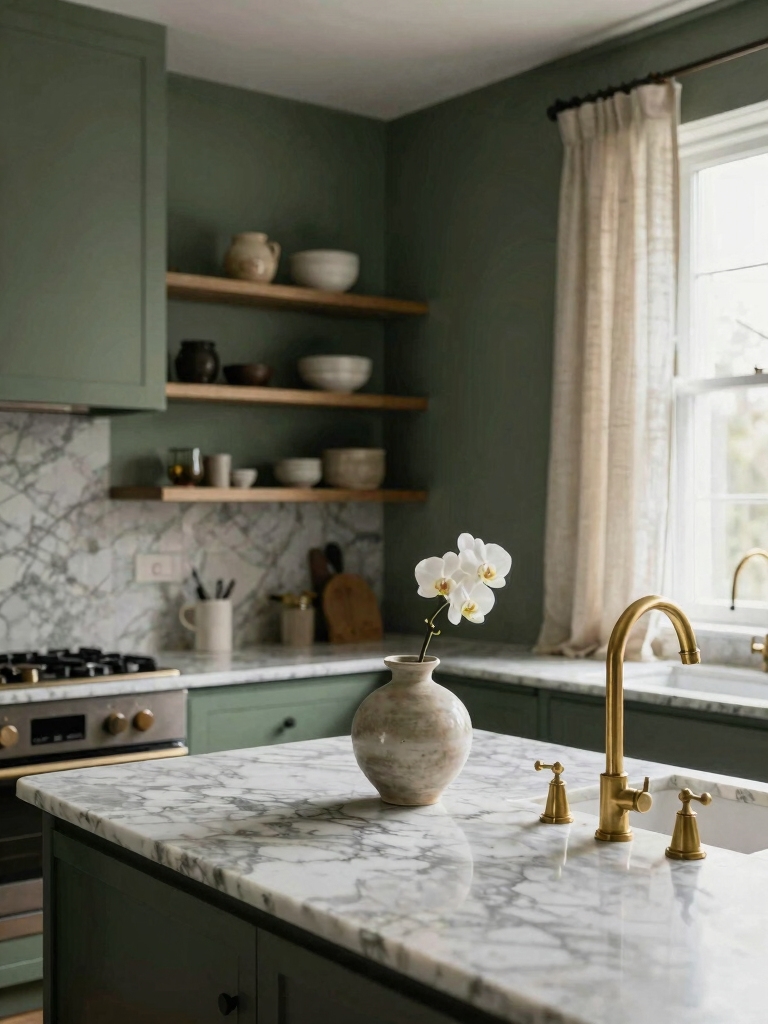
The all-in, wall-to-wall green kitchen is the dramatic end of the save spectrum, and it works best in a larger, light-filled room. Wrapping the space in a single deep green, cabinets, island, even the walls, creates an enveloping, library-like calm that feels luxurious and a little daring at once.
What keeps it from going gloomy is warmth and light. The successful versions layer in wood tones, brass, and plenty of fixtures so the green feels rich instead of heavy. A moody green is only as good as the light you give it.
This is the most ambitious idea on the list and the one to test carefully before committing. If you love it, start with a large sample on the most-lit wall and live with it for a week before you wrap the whole room.
Layered Lighting for Green Kitchens

Here is the thing the prettiest saved green kitchens have in common that nobody pins on purpose: the lighting. Green changes more than almost any color under different light, so the rooms that glow are the ones with light planned in layers rather than a single overhead fixture. Light is the whole game here. This is the upgrade that punches above its cost.
- Use neutral bulbs around 3000K to 3500K. Warm yellow light sours green; cold blue makes it look gray.
- Add under-cabinet LED strips, a $40 to $90 project, so deep greens stay rich at the counter.
- Layer in a pendant or two for warmth and depth, so the room is not lit flat from above.
The lighting myths that trip up green kitchens.
❌ Myth: Brighter bulbs make a green kitchen look better
✅ Reality: Color temperature matters more than brightness. A too-warm or too-cool bulb distorts green no matter how bright it is; aim for a neutral 3000K to 3500K.
❌ Myth: Deep green kitchens are always dark
✅ Reality: Only if the light is flat. Layered lighting, under-cabinet strips, and a couple of pendants keep a deep green rich instead of gloomy.
❌ Myth: Natural light is enough on its own
✅ Reality: Daylight shifts and disappears. The kitchens that glow at dinner have planned, layered electric light to carry the green after dark.
A Green Island Paint Transformation

Of every idea here, the green island is the one people save and actually do, because it is contained, affordable, and reversible. Painting just the island gives a kitchen a real focal point while the rest of the room stays exactly as it is, and you can repaint it in an afternoon if the color does not grow on you. That safety is the whole appeal.
Keep it deliberate and it looks designed.
- Choose a shade with depth, forest or hunter, so the island clearly anchors the room.
- A quart of cabinet enamel runs $30 to $50, which is most of the cost.
- Echo the green in one small accent nearby so the island does not feel marooned.
Herbs on Open Shelves

The fastest-growing save of all might be the simplest: a row of potted herbs on an open shelf. It brings living green into the kitchen for a few dollars, ties into the cabinets if they are already green, and gives you basil and thyme within arm’s reach of the stove. People are saving it because it works on every budget.
A little styling makes it look intentional rather than like a windowsill afterthought. Match the pots, vary the heights, and keep the herbs you actually use most within reach so the shelf earns its place. Terracotta or simple ceramic pots photograph better than plastic nursery containers.
It is also the lowest-commitment way to test whether you even like green in the kitchen. The clients I have nudged toward a herb shelf almost always end up painting within the year. If it makes the room feel better every morning, act on it.
Sustainable, Stylish Countertop Alternatives

Counters with a conscience are climbing the saves, and they happen to pair beautifully with green. The earthy, honest materials people are bookmarking echo green’s natural undertone, so the whole kitchen feels grounded and current. Here are the ones showing up most.
- Butcher block from a sustainably sourced supplier brings warmth and pairs naturally with olive and sage. It needs re-oiling every month or two.
- Recycled-content or terrazzo-look surfaces add subtle pattern and a lower-impact story than slab stone.
- Salvaged or remnant stone, often half the price of new, keeps both the budget and the waste down.
Warmth From Reclaimed Wood

Reclaimed wood is the warm counterpoint that makes a green kitchen feel collected, and it is everywhere in current saves. A weathered beam, a salvaged shelf, or a barn-wood island front brings age and texture that new materials take years to earn, and the warmth balances green’s natural coolness.
Where to Find It
The reason it photographs so well is honesty. Genuine reclaimed wood carries marks and tone variation that read as real, so it keeps a green kitchen from feeling staged or showroom-perfect. That lived character is exactly what the trend is chasing.
Source it from architectural salvage yards and reclaim shops, where character costs less than you would expect. Keep the wood tones in one family so they relate to each other, and let the green and the wood do the talking. For more of this look, ideas that steal the show lean on the pairing.
Who It Suits Best
Not every saved idea is right for every kitchen, and a quick gut check saves disappointment. If you have a bright, larger room, the ambitious saves are within reach: moody wall-to-wall green, deep cabinets, a dramatic tile backsplash. The light will carry the depth, and the space can hold the drama without closing in.
If your kitchen is small, rented, or dim, steer toward the gentle, reversible saves instead: a sage island, an herb shelf, layered lighting, a few green ceramics. They deliver the on-trend feeling without the risk, and most undo in an afternoon.
And if you are somewhere in between, the green island plus better lighting is the pairing that gives the most return for the least commitment. Match the idea to the room you have, and the trend works for you instead of against you.
Trending Green Kitchen Questions
?What green kitchen idea is most popular right now?
Muted sage cabinets lead, usually in a two-tone layout with white or wood uppers, because the look is both on-trend and low-risk. Close behind are green islands and tile backsplashes, since they deliver the trend in a contained, affordable project rather than a full renovation.
?Is the green kitchen trend going to date quickly?
The muted greens at the heart of the current trend, sage, olive, celadon, have a long track record and behave like neutrals, so they carry little risk of dating. The very saturated, of-the-moment greens are more of a gamble. Since cabinets are painted, even those can be changed for a few hundred dollars later.
?Why do saved green kitchens look better than mine?
Usually the lighting. Green shifts dramatically under different bulbs, and the kitchens that photograph well have layered, neutral-temperature lighting plus under-cabinet strips. Match your bulbs to around 3000K to 3500K and add task lighting, and your green will look much closer to the pins you saved.
?How do I bring the trend in cheaply?
Start with the no- or low-cost saves: an herb shelf, styled green ceramics, and better bulbs, none of which require painting. If you want more, a single green island runs about $30 to $50 in paint. These deliver the current look without the cost or commitment of a full green kitchen.
Save the One That Fits Your Kitchen
The reason these fifteen ideas are filling save folders is that the green trend has grown up. It is less about a single bold color now and more about warmth, light, natural materials, and shades that behave like neutrals, which is exactly why the kitchens feel calm instead of trendy. That maturity is what makes them worth copying rather than just admiring.
Before you save the tenth moody emerald kitchen, try the smallest idea here first: a green island, an herb shelf, a better bulb. Let your own room tell you whether to go further, and build the look one save at a time.
More Looks We Love


