

A green kitchen rarely fails because of the green. It fails because of everything around it: the wrong counter, a clashing floor, a flat finish that drinks the light. I have walked into rooms where a beautiful forest green looked cheap, and into others where a humble sage looked like a magazine, and the difference was never the paint.
So this is less a list of pretty pictures and more a set of decisions. Get the pairings right and green cabinets carry the whole room without trying. Below are fourteen ways to make them the part of the kitchen people notice first, organized the way I actually work through a project.
The Short Version
- The shade has to match your light. Deep greens need windows; sage and olive forgive a darker room.
- Counters and floors decide whether green looks rich or muddy, so settle those before you fall for a paint chip.
- Hardware and finish are the cheapest levers you have. Brass pulls and a satin sheen do more than another coat of a fancier color.
- In a small kitchen, green works best on the lowers or an island, with the upper half kept light.
Why a Bold Green Kitchen Earns Its Keep
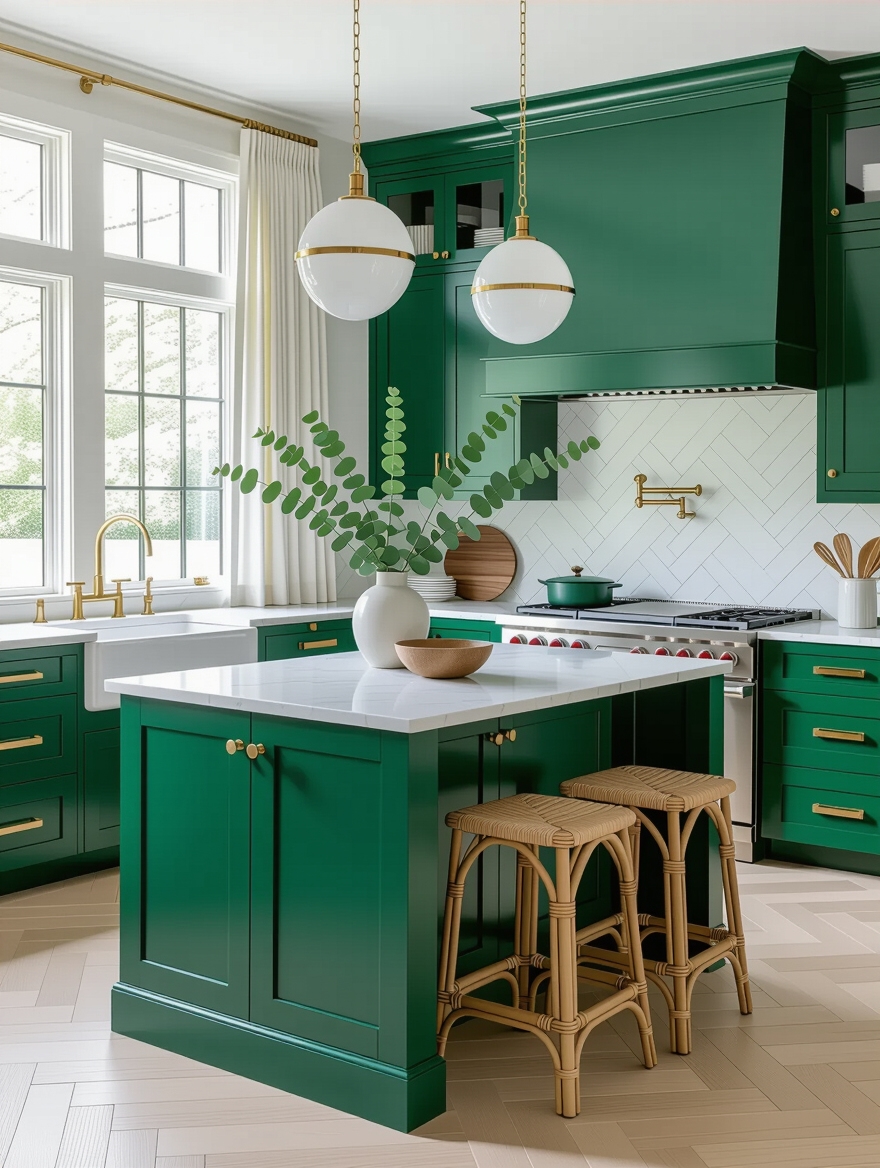
Color is the lowest-cost way to give a kitchen a point of view, and green is the one that does it without feeling like a gamble. It sits next to wood, white, brass, and black comfortably, which is why it can anchor a whole room while a brighter blue or red would fight everything in sight.
The payoff is range. Green feels calm in the morning and turns rich at night, so the same cabinets give you two slightly different rooms as the light moves across the day. That shift is what makes people stop in the doorway, even when they cannot name why.
What it asks in return is commitment to the supporting cast. A green kitchen is a system, and the cabinets are only the loudest piece. The thirteen choices that follow are how you tune the rest so the green actually leads.
Choosing a Calming Green Shade for Your Cabinets
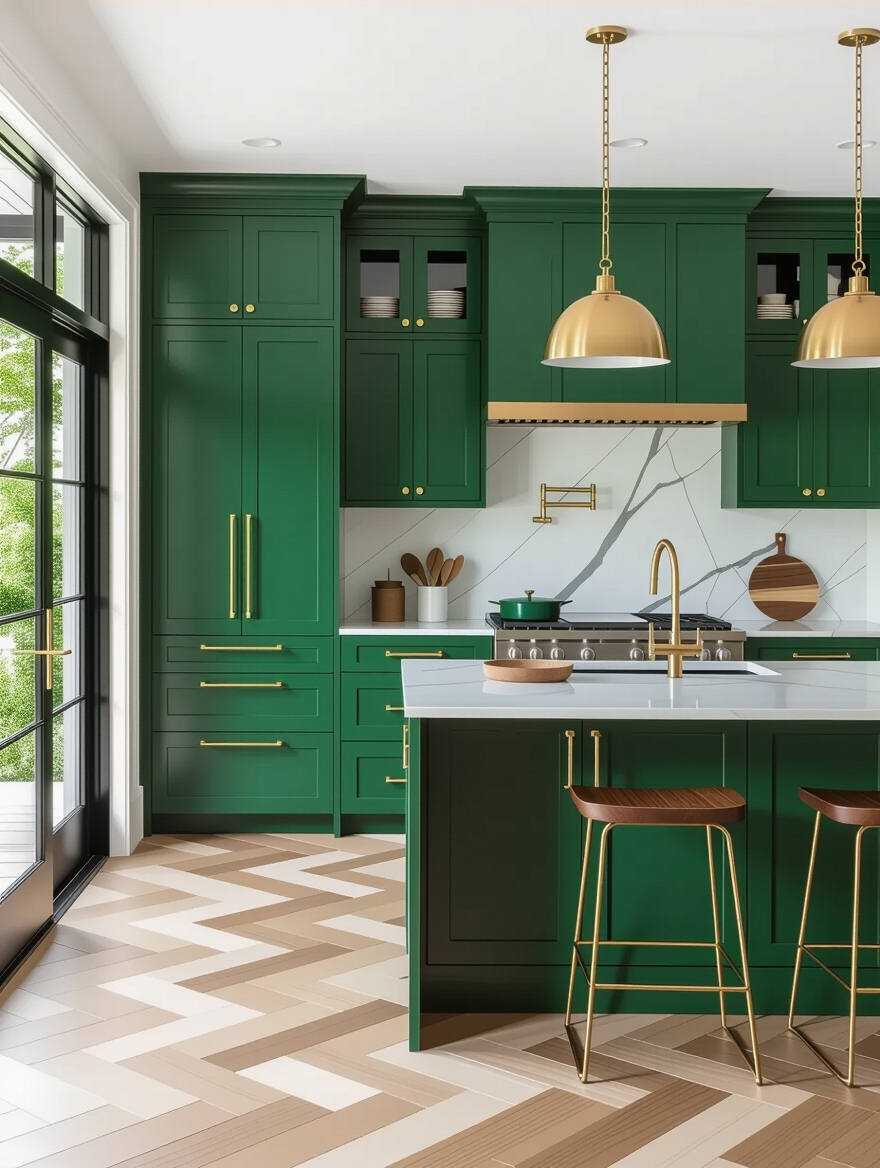
Forget the marketing names for a minute and look at undertone, because that is what you will live with. The same swatch shifts depending on whether it leans gray, blue, or yellow, and your light will exaggerate it. Here is how the common families actually behave.
- Sage has a gray base that keeps it quiet and neutral, the safest pick for a first green kitchen.
- Emerald and hunter lean blue and rich; they look expensive but demand good light and restraint elsewhere.
- Olive carries yellow and brown, so it warms a room but turns muddy under cool LED bulbs. Test it on site.
“What to ask before you commit to green: How much natural light does the room really get? What is on my counter and floor already, and will it flatter the shade? Am I painting the whole kitchen or testing it on an island first? Do I want a finish I can wipe down without thinking? Answer those four and the green almost picks itself.”
Elegant Countertop Options That Flatter Green
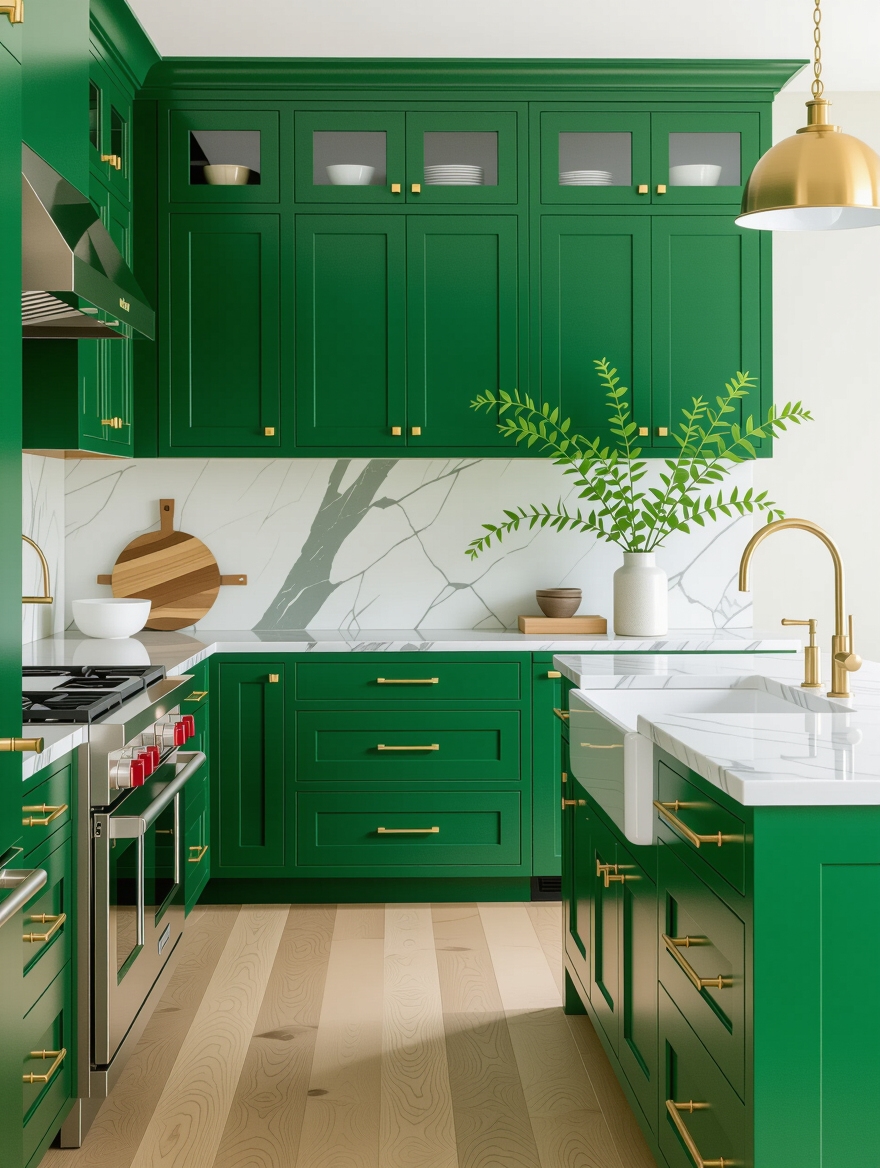
The counter is the decision people rush and regret. It sits at eye level right against the cabinets, so it has more say over the final look than almost anything else. I always lock the counter before the exact green, because a fixed counter narrows the green choices in a helpful way.
Match the Counter to the Green
White quartz or a pale marble-look is the crowd-pleaser; it brightens the room and lets the green stay the star. Butcher block is the warmer route, especially with olive or sage, and it suits a kitchen that gets used hard. Soapstone or a honed black, on the other hand, gives hunter green a moody, old-world weight.
The pairing to avoid is busy, multicolored granite. It competes with the cabinets for attention and usually loses, leaving the room feeling cluttered before you have added a single thing to the counter.
Warm Wood Meets Green for Tranquility

If a green kitchen ever feels cold to you, the missing ingredient is almost always wood. Green is a cool color at heart, and pairing it with a warm wood tone balances the temperature so the whole room feels grounded and warm. That single move is the trick behind most of the green kitchens that look quietly high-end.
You do not need a full wood island to get there. A run of butcher block, open wood shelving, a hood wrapped in oak, or even a wood-framed window does the work. Keep the wood tones in one family so a warm shelf and a cooler floor do not pull in different directions, and the green and wood will start to feel like they were chosen together. For a deeper look at this balance, the greens that look truly expensive lean on it heavily.
🅰️Satin finish
Soft, low-sheen, and forgiving. Wipes clean, hides fingerprints, and survives a DIY hand. The practical default for a kitchen that gets used.
🅱️High-gloss finish
Reflective and glamorous, and it pushes the walls back in a small room. But it shows every drip and brush mark, so it really wants a sprayed finish.
Versatile Green Cabinet Styling, Modern to Traditional
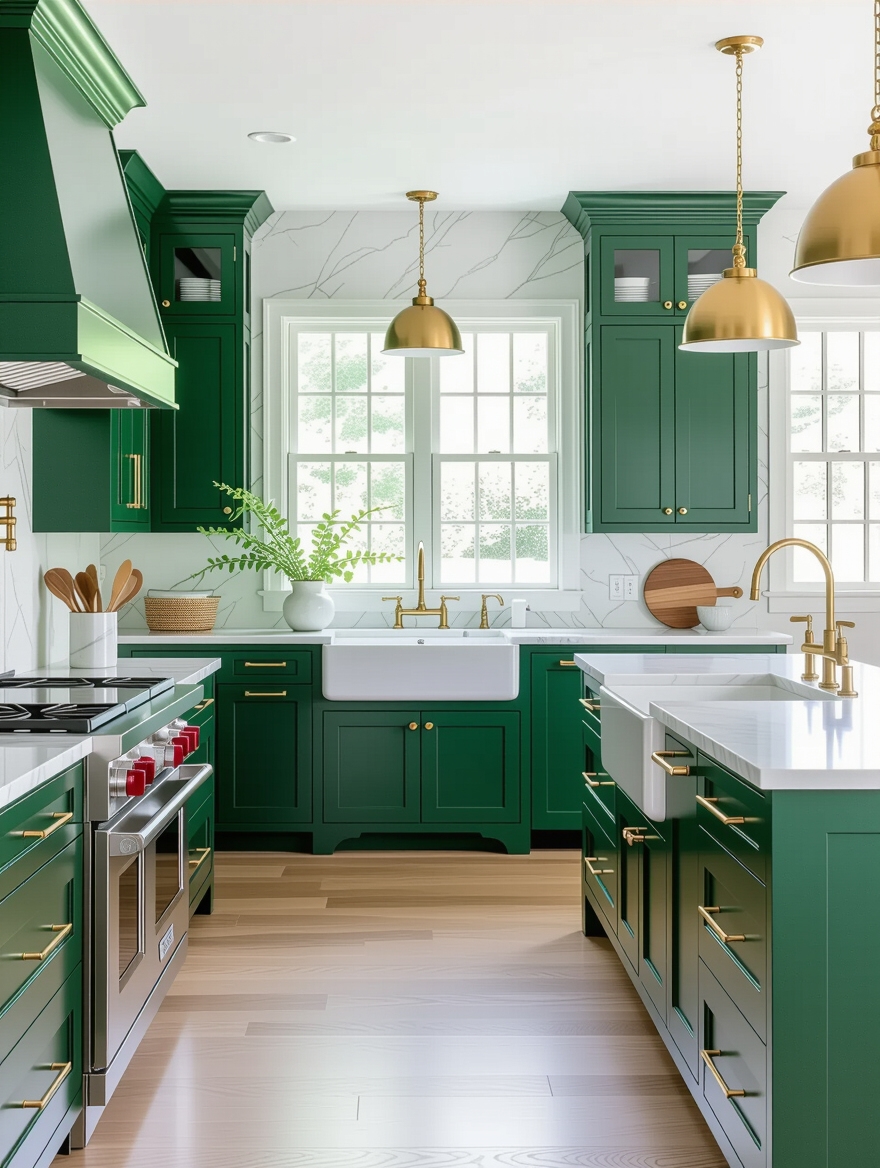
The same green can read sleek or classic depending entirely on the details you hang on it. That flexibility is green’s quiet superpower, and it is why the color survives changing trends. Steer it toward your style with these three levers.
- For a modern kitchen, use flat-front or slim shaker doors, long bar pulls, and a single quiet counter. Clean lines push the green contemporary.
- For a traditional room, choose raised-panel or beadboard doors, round knobs or cup pulls, and a marble-look counter for softness.
- Hardware is the fastest switch of all. A set of pulls runs $80 to $150 and can move the same cabinets from farmhouse to city apartment in an afternoon.
Choosing the Right Finish for Green Cabinets

Finish is the most overlooked decision on this list, and it changes how the color behaves more than people expect. The same green looks deeper in matte and brighter in gloss, because sheen controls how much light bounces back at you. In a kitchen, it also decides how the doors hold up to daily handling.
Matte, Satin, or Gloss
Satin is where I land for most kitchens. It has a soft, slightly polished surface that wipes clean and hides fingerprints far better than gloss, while still catching a little light. Matte looks beautiful and modern but shows every smudge near handles, which gets old fast on a busy lower cabinet.
High gloss has its place on a statement island or in a small kitchen where you want the reflection to push the walls back. The catch is honesty: a high-gloss surface telegraphs every drip, sanding scratch, and brush mark in raking light, which means it rewards a patient sprayed finish and quietly punishes a rushed weekend with a roller. Know that going in.
A quick gut check to point you toward your shade.
1Your kitchen gets bright afternoon sun and you want drama
Go deep: emerald or hunter will look rich and hold up to the light.
2Your kitchen is small or north-facing and you want calm
Stay soft: sage or mint will keep the room open and forgiving.
Making Bold Green Cabinets Shine as a Focal Point
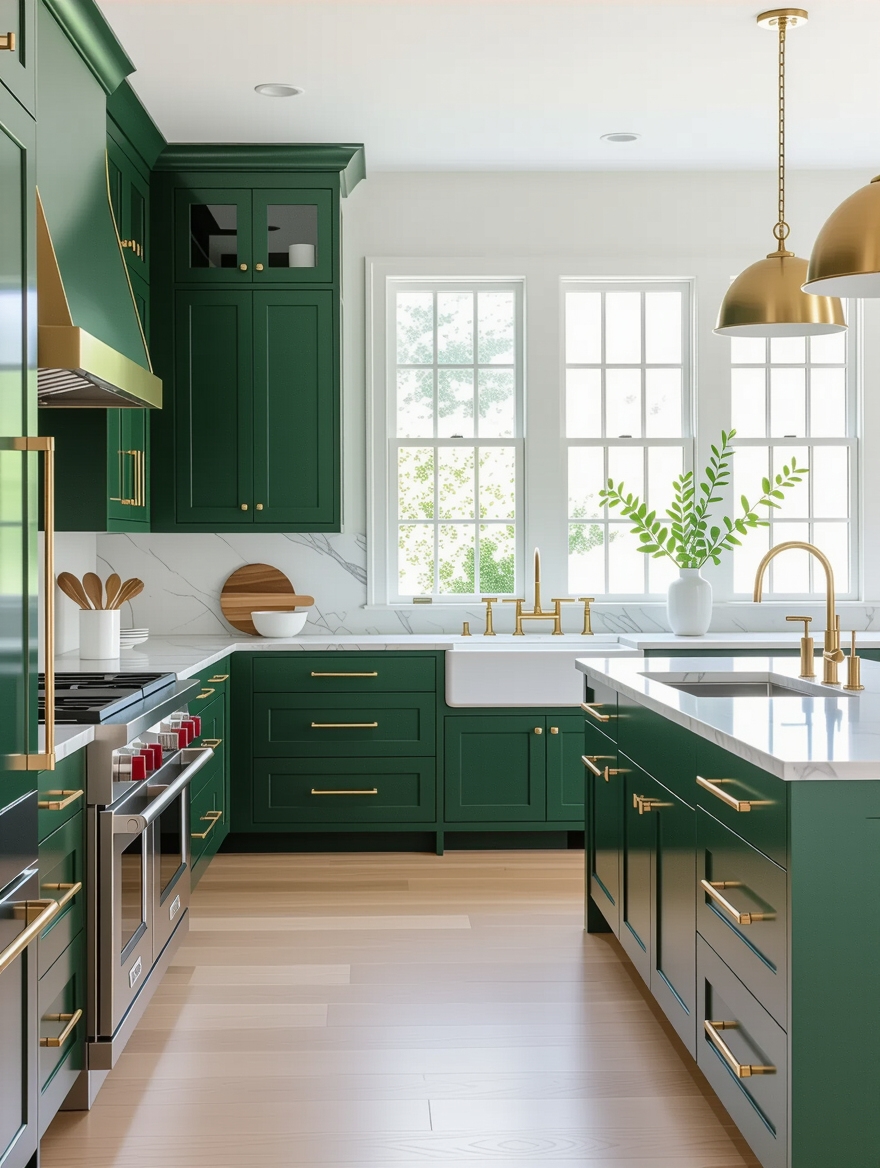
When you want the green to be the thing people remember, the instinct is to add more. The opposite works better. A bold green earns its focal-point status only when the room around it stays quiet, so the cabinets are not competing with a loud backsplash and a busy floor at the same time.
Pick your one supporting accent and stop there. Metallic hardware, a single piece of art, or a statement light fixture gives the eye somewhere to rest after it lands on the green. I tell clients to choose the green, choose one friend for it, and resist the third and fourth ideas.
This restraint is also what separates a kitchen that looks designed from one that looks decorated in stages. If you want the room to feel intentional, the green should be the boldest thing in it, and everything else should agree to play backup.
Adding Brass and Gold Hardware to Green Cabinets
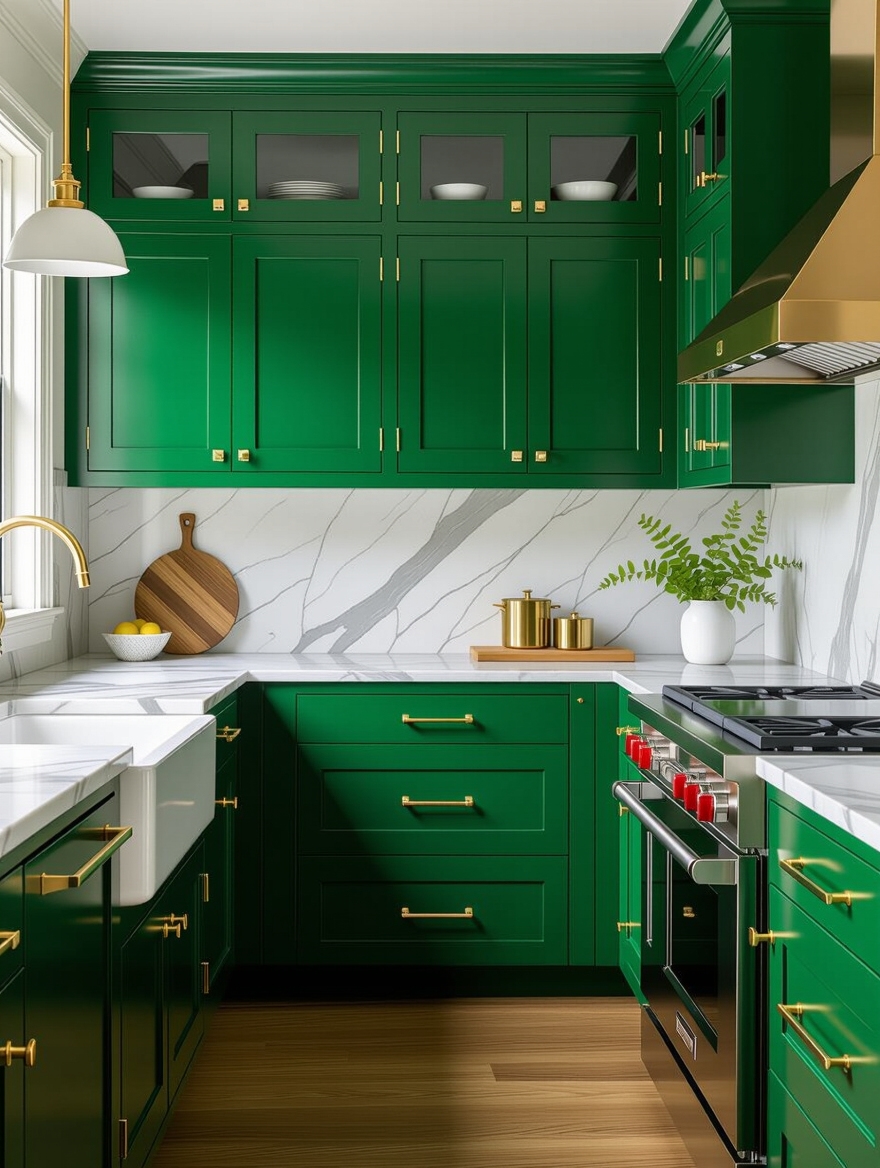
Brass and gold are the hardware finishes that make green look custom. Warm metal against a cool green creates a small, pleasing contrast that feels luxe without trying, which is why you see the pairing in nearly every high-end green kitchen. It is also one of the lowest-cost upgrades you can make.
The choices below keep the look intentional and the budget sane.
- Unlacquered brass ages to a soft patina; lacquered brass stays bright and even. Choose based on whether you want it to evolve.
- Carry the metal into one more spot, usually the faucet or a pendant, so the hardware reads as a plan.
- Budget brass-finish pulls cost a fraction of solid brass and look nearly identical from two feet away, where it counts.
Natural Light Enhances Green’s Elegance

Of every factor on this page, light has the final vote. A green that looks beautiful in the showroom can fall apart in your kitchen if the room is dim or the bulbs are the wrong temperature. Before committing, tape a large sample to the cabinets and watch it at three points in the day.
Where natural light is scarce, you can engineer your way to a flattering result with a few targeted moves.
- Use neutral bulbs around 3000K to 3500K. Warm yellow light sours green; cold blue light makes it look gray and tired.
- Add under-cabinet LED strips, a $40 to $90 upgrade, to keep deep greens from going dark at the counter.
- Keep window treatments light and unfussy so daylight reaches the cabinet faces and lifts the color.
Transforming Small Kitchens With Green, Elegantly
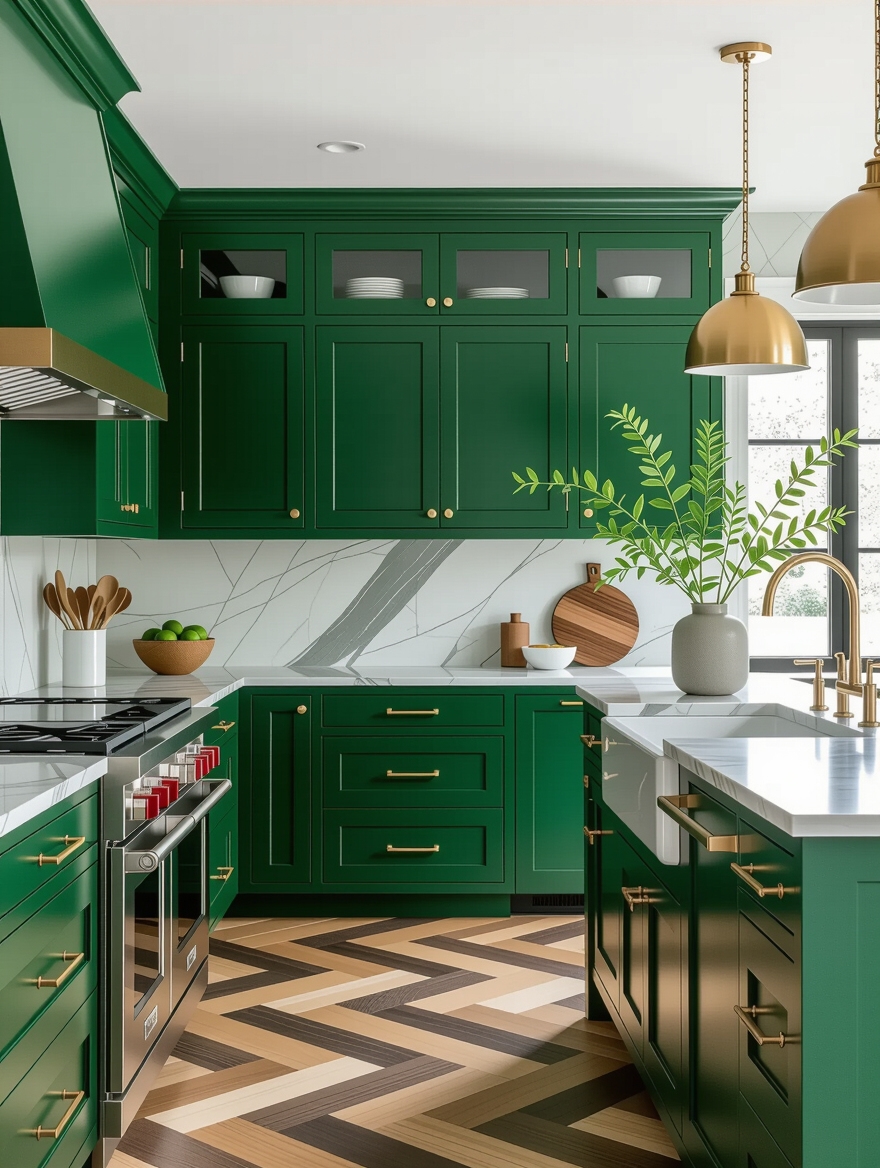
Small kitchens are where people lose their nerve and default to white, but green can make a tight room feel deeper and more deliberate when you handle it with a light touch. The goal is depth without weight, and these moves get you there.
- Put the green on the lowers or a single island and keep the uppers white or open. The bright upper half keeps the room from closing in.
- Lean toward sage or mint, which recede visually and make the walls feel a step farther away.
- If you crave a deep green, confine it to one run and pour light onto it. Contained and well-lit, even hunter can feel cozy in a galley.
Styling Tips That Tie It All Together
Once the big decisions are made, a few small habits keep a green kitchen looking pulled together over time. Repeat the green in two or three tiny touches around the room, a tea towel, a plant, a bowl, so the cabinets feel woven through the space. Three echoes is plenty. More than that and the kitchen starts to look themed instead of styled.
And give the finish the care it needs to keep earning compliments. Wipe spills quickly, clean with mild soap and a soft cloth instead of harsh sprays that dull the sheen, and touch up chips near the handles before they spread. A pint of your cabinet color kept in the garage makes that a five-minute job a year, not a repaint. If green still feels like a leap, seeing how it works as the new neutral or against a calmer grey scheme can settle the nerves.
Green Cabinet Questions, Answered
?Do green cabinets show dirt and fingerprints more than white?
Less than you would think. A satin finish hides smudges well, and mid-tone greens like sage disguise everyday marks better than either bright white or flat black. The trouble spots are matte deep greens near the handles, which is exactly where a satin sheen earns its keep.
?Will green cabinets hurt my home’s resale value?
Muted, neutral-leaning greens like sage and olive are widely liked and rarely a problem; they read as a considered choice rather than a fad. A very saturated or trendy green is a bigger gamble, but since it is paint, a future owner can repaint for a few hundred dollars, which keeps the risk low.
?How often do painted green cabinets need to be repainted?
A quality cabinet enamel applied over proper primer holds up for roughly eight to ten years with normal use. Keeping a pint of your exact color on hand lets you touch up chips near handles and corners as they appear, which stretches the time before a full repaint considerably.
The Green Was Never the Hard Part
If there is one idea to carry out of all this, it is that a green kitchen succeeds on its supporting choices. The counter, the floor, the finish, the metal, and above all the light decide whether the same paint looks like a showpiece or a mistake. Settle those, and almost any green you love will steal the show. The paint is the easy part.
Save this one for when you are standing in the paint aisle second-guessing yourself, and start with the room you already have rather than the chip in your hand.
More to Explore


