

Everyone obsesses over cabinet color and forgets the cheapest character in the room is on the walls. A gallon of green paint and an afternoon will change a kitchen more than most people expect, for a fraction of what new cabinets or even a cabinet repaint costs. The walls are the low-risk place to be brave.
Better still, wall color works around whatever cabinets you already have. These thirteen green walls are sorted by shade and by the cabinets they flatter, so you can find the green that lifts your white, wood, or gray kitchen without touching a single door. I have noted the finish to use and roughly what it costs along the way.
Green Walls at a Glance
| Wall green | Pairs best with | Effect |
|---|---|---|
| Soft sage | White or wood cabinets | Calm, neutral, easy |
| Olive | Cream or wood cabinets | Warm, earthy, grounded |
| Emerald or forest | White cabinets, as accent wall | Rich, dramatic, cozy |
| Mint | White or pale wood | Fresh, bright, retro |
Choosing a Green Wall Color for Your Kitchen

The smart way to pick a green wall color is backwards, from the cabinets out. Your cabinets are the fixed, expensive thing in the room, so the wall green should flatter them, not fight them. White and wood cabinets are the most forgiving partners and take almost any green; gray cabinets want a cool green; warm cream cabinets want a warm olive or moss.
One detail people skip is the finish, and in a kitchen it matters more than usual. Walls here collect grease and steam, so choose a washable eggshell or satin. A flat finish stains and cannot be wiped clean. It costs the same and saves the wall, which is the kind of small decision that separates a kitchen that ages well from one that looks tired in a year.
Soft Sage Green Walls for Calm

Sage is the green wall almost anyone can live with, the shade that reads as a soft neutral and quietly warms a kitchen. It is the one I suggest first to people who want color but are nervous about it, because it flatters white, wood, and gray cabinets alike. Here is how to make a sage wall sing.
- Pair it with white or wood cabinets for the easiest, most timeless result.
- Keep the trim crisp white so the sage has a clean edge to sit against.
- Use a washable satin so the busiest walls, behind the stove and sink, wipe clean. See how green works as a neutral.
A few paint terms worth knowing before you buy a gallon.
📖Eggshell
A low-sheen finish with a slight glow. Washable enough for most kitchen walls and forgiving of minor wall flaws.
📖Satin
A step shinier than eggshell, more scrubbable, and the best pick for high-splatter zones behind the stove and sink.
📖Accent wall
Painting one wall a bolder color while the rest stay neutral. The low-risk way to try a deep green like emerald or forest.
Muted Mint Green Walls for a Fresh Lift

Mint on the walls is the move when a kitchen feels dark or boxed in and you want to open it up. A muted, slightly grayed mint, not a bright candy one, bounces light around the room and adds a clean, vintage freshness that pairs beautifully with white cabinets and chrome or brushed-nickel fixtures.
The trick to keeping mint walls grown-up is warmth elsewhere. A few wood accents, a warm wood floor, or brass hardware on the cabinets keeps the cool mint from tipping into a 1950s diner. In a sunny kitchen, mint walls glow; in a truly dark one, test a sample first, because mint can flatten to gray without daylight to carry it.
Olive Green Farmhouse Walls With Charm
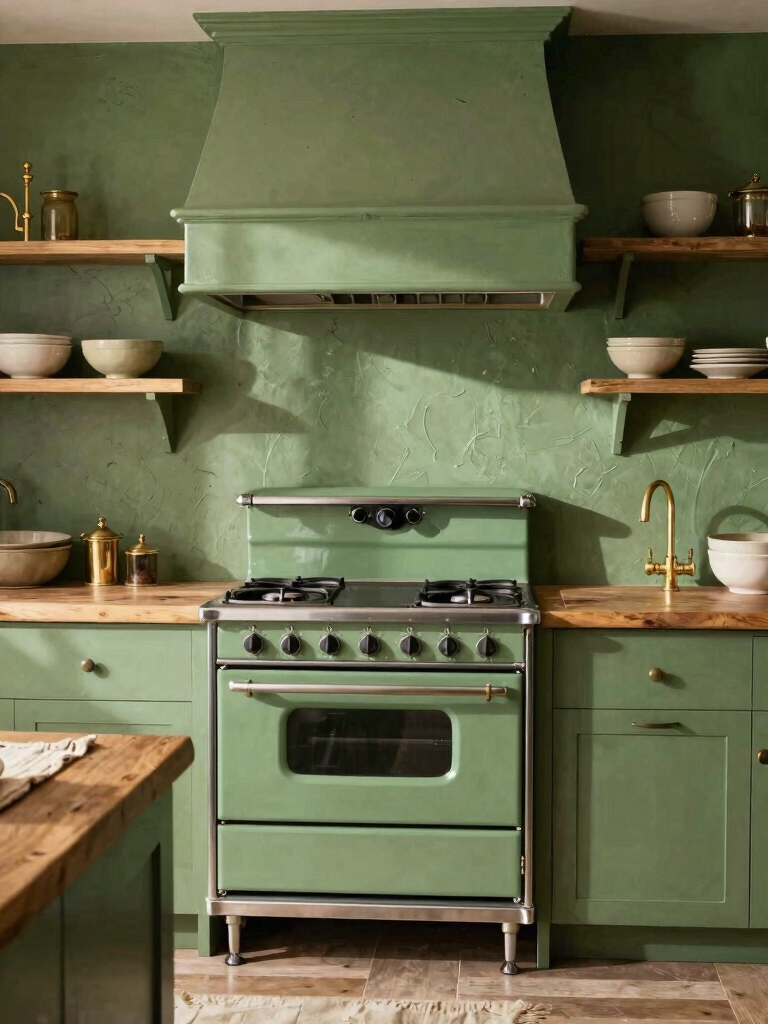
Olive is the warmest, most grounding green you can put on a wall, and it suits a farmhouse or country kitchen down to the ground. Its brown-yellow base echoes wood and aged metal, so olive walls make a room feel settled and a little timeless. These choices play to its strengths.
- Pair olive walls with cream or natural wood cabinets and warm metal for a cohesive, earthy room.
- Lean on washable satin, since farmhouse kitchens see hard daily use.
- Bring in unbleached linen and a few worn wood pieces so the olive reads collected. More in olive’s wider moment.
👍Why paint the walls, not the cabinets
- +Far cheaper: a gallon and an afternoon versus a multi-day cabinet repaint.
- +Lower commitment and easy to undo with another coat.
- +Works around the cabinets you already have, no matter their color.
👎What walls cannot do
- –Less dramatic than green cabinets if your walls are mostly hidden by uppers.
- –A small kitchen may have little visible wall to work with.
- –Deep wall colors still need good light to look their best.
Hunter Green Walls Against Cabinet Contrast

Hunter green walls do something most people do not expect: they make white or pale cabinets look crisper and more expensive by contrast. The deep green wraps the room while the cabinets pop against it, which is a clever way to get a dramatic kitchen without painting the cabinets at all. It is the renter-friendly path to a moody kitchen.
Because hunter is dark, a few choices keep it from closing the room in.
- Use it on the walls with white or light cabinets so the room keeps its brightness at counter level.
- Reserve it for a kitchen with decent light, or limit it to one feature wall.
- Add warm brass or wood touches so the deep green feels rich. See how deep greens look expensive.
Luxurious Emerald Green Walls
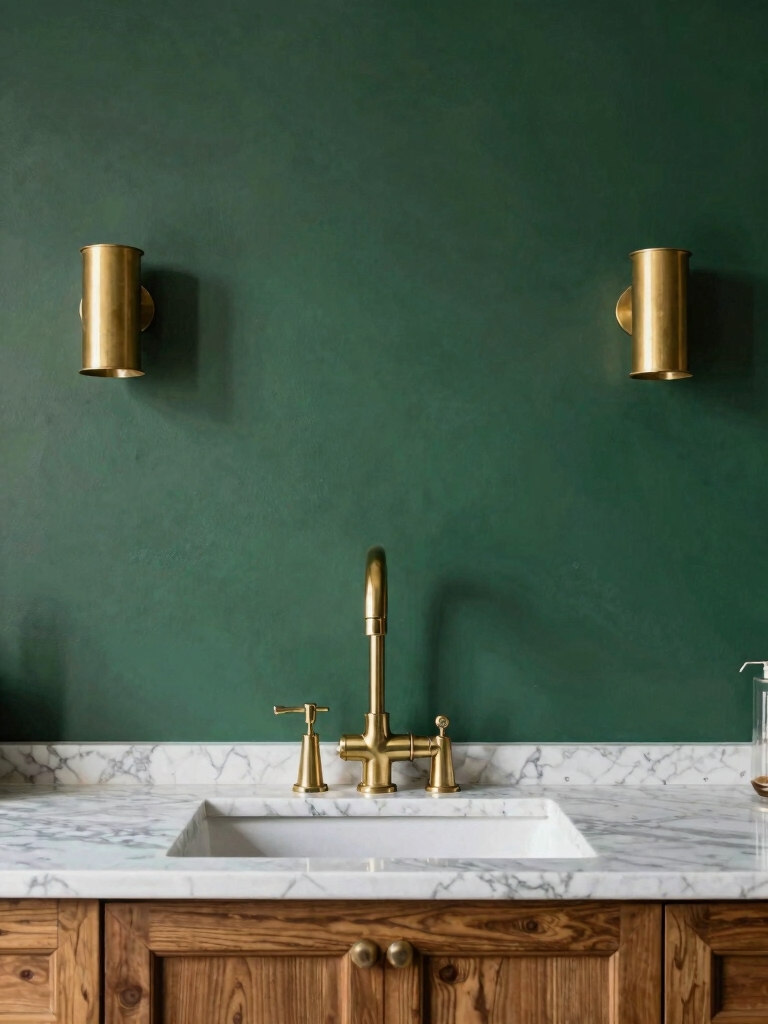
Emerald is the green wall for people who want a little glamour with their character. There is a jewel-box richness to it that makes a dining nook or a single accent wall feel special, and it flatters brass, marble, and wood so well that the rest of the room looks more expensive against it. On a wall, emerald is high impact for the price of a gallon.
Where to Put It
The catch with emerald is the same as any deep color: it needs light. In a bright room an emerald wall glows; in a dim one it can go flat and heavy, so this is a shade to test large and live with before you commit the whole room. An accent wall behind open shelving is the lower-risk way in.
Keep the surrounding surfaces calm so the emerald can lead. Against white cabinets and a simple counter, a single emerald wall does all the talking the kitchen needs.
| Your cabinets | Green wall that works | Why |
|---|---|---|
| White | Almost any green | White is neutral and lets the wall lead |
| Natural wood | Sage, olive, forest | Warm greens echo the wood tones |
| Gray | Sage, eucalyptus, cool mint | Cool greens match the gray undertone |
| Cream | Olive, moss, warm sage | Warm greens agree with cream’s warmth |
Cozy Forest Green Walls
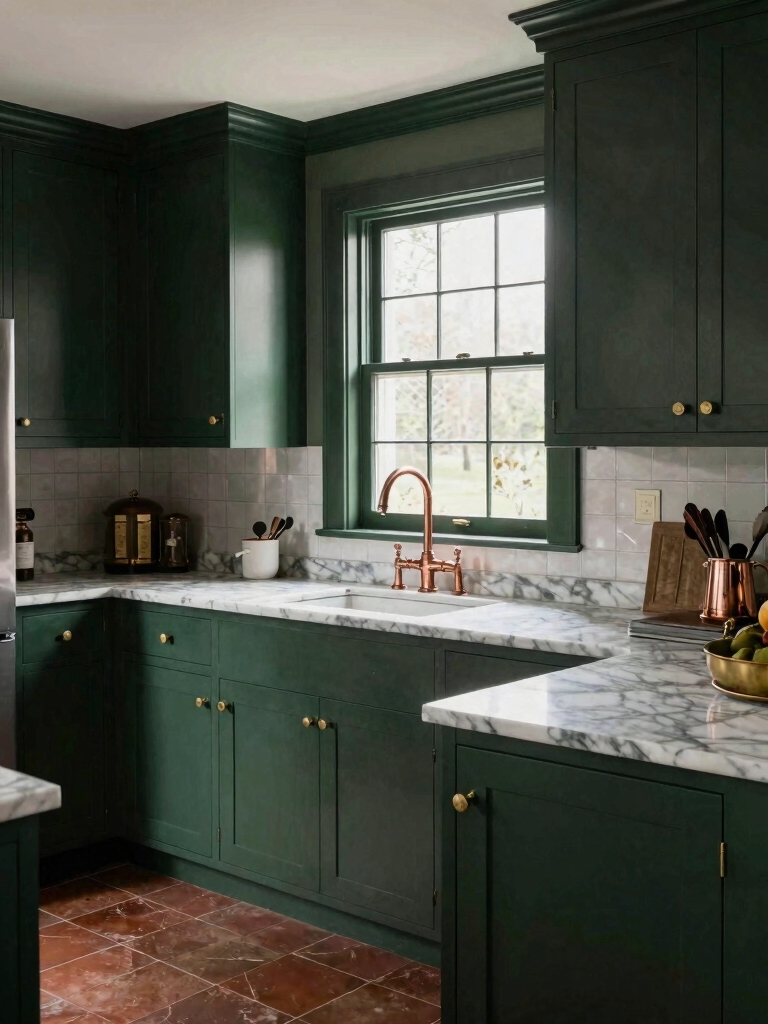
Forest green walls create the enveloping, cabin-like coziness that a lot of kitchens are missing. Slightly warmer and more natural than hunter, forest wraps the room and plays beautifully with wood, which makes it ideal for a kitchen you want to feel like a warm gathering place.
Forest walls suit a room with good light and warm materials. Keep the cabinets light or wood-toned so the deep walls have something to lift against, and lean on warm wood floors and brass to balance the green’s coolness. Like all deep greens, forest rewards a sample test on the actual wall before you roll the whole room.
Balanced Two-Tone Green Walls
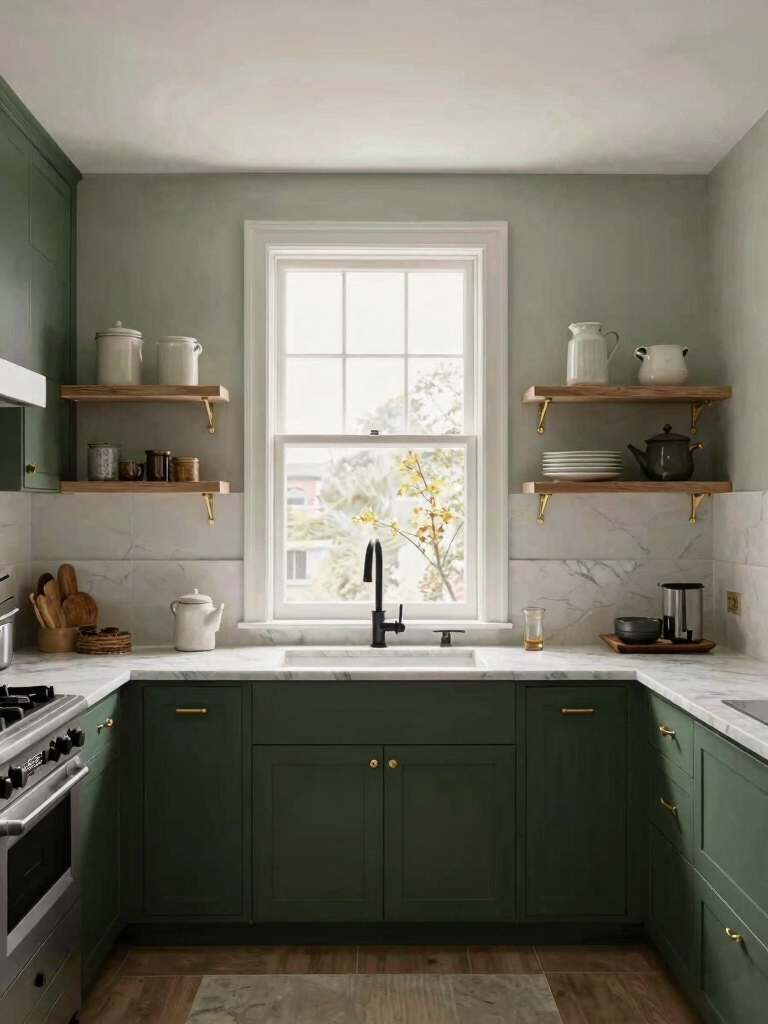
You do not have to commit a whole room to one green. Painting the lower two-thirds of a wall a deeper green and the top a soft white or pale green, divided by a simple picture rail, adds architectural character and makes a low ceiling feel taller. It is an old trick that looks fresh again, and it costs nothing but a second sample pot and some painter’s tape.
The balance is the point. Keep the deeper green on the bottom so it grounds the room, and let the lighter top keep things airy, the same logic that makes two-tone cabinets work. For the cabinet version of this idea, see a full two-tone treatment.
Warm Green and Terracotta Harmony

Pairing green walls with terracotta is a wildly underused color story, and it is pure character. Green and clay-orange sit opposite each other on the color wheel, so they make each other look richer, the green cooler and deeper, the terracotta warmer and earthier. The effect feels Mediterranean and a little soulful.
You can bring the terracotta in without painting a second wall. A terracotta floor tile, a row of clay pots, a warm rug, or unglazed dishware on open shelving is enough to start the conversation with an olive or sage wall. A little goes a long way here.
This pairing wants warm metals and natural materials to complete it. Brass, wood, and woven textures pull the green and terracotta together into a room that feels gathered over time rather than decorated in a weekend.
Moody Industrial Green Walls

For a loft or an industrial-leaning kitchen, a deep green wall is the warm counterweight raw materials need. Set against exposed brick, black metal, and concrete, a moody green softens the hard edges and keeps an industrial space from feeling cold, which is the complaint people have about the style most often.
A few choices make the look intentional and considered.
- Pair a deep green wall with black metal shelving and open wood for the industrial-warm balance.
- Use a slightly matte finish on a feature wall to echo concrete and brick texture.
- Add one warm metal, brass or copper, so the room has a glint against all the matte surfaces.
What to Expect
Green walls are the most forgiving project on the whole green-kitchen menu, but a few honest expectations help. A gallon of quality washable paint runs $40 to $70 and covers a small-to-average kitchen, and the job is an afternoon or a single day, with about an hour of drying between coats, including the cut-in around cabinets and trim.
That is the real appeal: high character for low cost and low commitment, and it undoes with another coat if you change your mind.
The two things worth getting right are finish and light. Use a washable eggshell or satin so the walls survive cooking, and test your green where it will actually live, since wall color shifts across the day just as much as cabinet color does. Deep greens especially can look one way at noon and another at dinner, so tape up a big sample and watch it before you buy the gallon. Get those two right and a green wall is the fastest character a kitchen can gain.
The Cheapest Character in the Room
If green cabinets feel like too big a leap, the walls are where to start, and honestly where a lot of kitchens should have started all along. For the price of a gallon and a free Saturday, a green wall adds the depth and character people spend thousands chasing, and it works around whatever cabinets you already own. That is a rare bargain in a kitchen.
Pick the green that flatters your cabinets, choose a washable finish, and test it big on the wall before you commit. Which wall in your kitchen would you paint first?
More to Explore


