

Country kitchens and green have a long history together, and it is not an accident. Both lean on materials that look better with age: worn wood, hammered copper, stone, unbleached linen. Green is the one paint color that seems to grow out of that palette rather than sit on top of it, which is why a farmhouse kitchen can take a deep olive or a soft sage and look like it was always that way.
What follows are nineteen ways to bring green into a country kitchen, sorted by where the color lands: cabinets, islands, accents, walls, and the little salvaged pieces that give these rooms their soul. I have noted what each shade pairs with, roughly what it costs, and where people tend to overdo it.
Green Country Kitchens at a Glance
What makes green feel country instead of contemporary? The supporting materials. Pair the green with raw wood, brass or aged bronze, stone, and a few flea-market finds, and even a modern shade reads rustic.
Do I have to repaint the whole kitchen? No. Most of the ideas here are accents: an island, a sink, a backsplash, a set of bar stools. You can get the look for the price of a quart of paint and a weekend.
Which greens are easiest to live with? Sage, olive, and celadon are the low-drama workhorses. Brighter chartreuse, kelly, and avocado are best as small, deliberate pops.
Sage Cabinets for a Serene Country Kitchen

Sage is where most green country kitchens begin, because it carries all the calm with none of the commitment anxiety. The gray-dusty undertone keeps it quiet, so it leans against cream ceramics, worn wood, and brushed nickel without asking for anything in return. In a farmhouse, that restraint is the whole point.
It also happens to be the most forgiving green to apply yourself. A mid-tone like sage hides the small imperfections of a hand-painted finish, so the brushed, slightly uneven look that would ruin a glossy emerald actually suits the rustic mood here. A quart of cabinet enamel runs $30 to $50, which is most of what a sage refresh costs.
Want sage to feel country and not spa-like? Lean on texture. Beadboard doors, a worn wood counter, and an unfussy linen curtain give the soft color something rough to play against. A coat of cabinet enamel dries to the touch in about an hour, so a careful weekend painter gets there without rushing.
Earthy Olive Cabinets With Quiet Elegance

Olive is sage’s deeper, earthier cousin, and it is the shade I reach for when a kitchen wants weight without going dark. The brown and yellow in it echo barn wood and dried grass, so it settles into a country room. Paired with brass pulls that catch the afternoon light, it looks settled and a little timeless.
What Olive Pairs With
Because olive carries warmth, it loves warm partners. Butcher block counters, aged bronze hardware, and unlacquered brass all flatter it. Keep the metals and the wood warm and the room holds together. Plan to re-oil that butcher block every month or two to keep it sealed.
Olive is also one of the best greens for a working family kitchen, since its depth hides the scuffs and fingerprints that a pale color would broadcast. For more on this shade, olive green’s wider moment is worth a look.
🅰️Sage on all the cabinets
Wraps the room in calm and commits to the look. Best when your counters and floors already lean warm and you are ready to paint everything.
🅱️Sage on the island only
A lower-stakes way in. You get the color as a focal point, keep the perimeter light and airy, and can test-drive the shade before going all in.
Jade Cabinetry Against Weathered Wood

Jade pushes the green a little richer and a little more saturated, and it comes alive next to weathered, grayed wood. The contrast is the point. The clean depth of the cabinet color makes the beaten timber of an old harvest table look intentional, and the rough table keeps the jade from feeling too precious or too new.
This is a pairing that works best when the wood is honestly worn. A reclaimed-board table, a salvaged bench, or a butcher block that has earned a few knife marks gives jade the counterpoint it needs. New, uniform wood tends to look like it is trying too hard.
If you are nervous about committing to jade on every cabinet, start with a single piece: a freestanding cabinet or a hutch. It lets you test the saturated green against your own wood tones before you paint the whole run.
Deep Emerald Islands in Open Kitchens

In an open-concept country kitchen, a deep emerald island is the single most effective anchor you can add. The saturated green gives the cooking zone a clear center of gravity, so the kitchen feels like its own room even when it flows into a beamed living space. The trick is restraint. Here is how to keep it grounded.
- Top it with butcher block or honed soapstone, which keep the emerald rustic and matte.
- Use brass or oil-rubbed bronze pulls so the hardware warms the cool green and ties into rustic beams.
- Leave the perimeter cabinets light or wood-toned, so the island stays the star and the room stays open.
Heads-Up
A deep emerald or jade island looks incredible until the light gives out. In a dim or north-facing kitchen, a saturated green island can read black and heavy by evening. Before you commit, mount under-cabinet or in-island lighting, or keep the deep shade for a room with real windows and save sage for the dark corners.
Seafoam Cabinets for a Slow Breakfast Corner
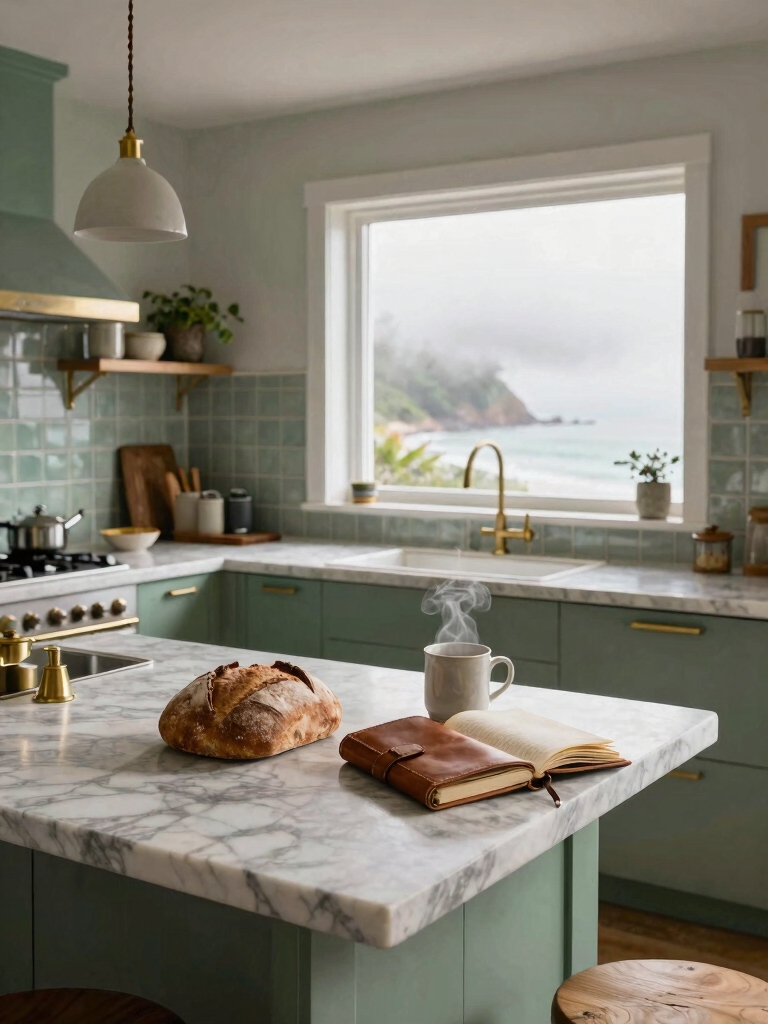
Seafoam sits in that pale spot between blue and green, and it is the shade for the part of a country kitchen meant for lingering. In a breakfast corner or a built-in banquette, it softens the morning light and keeps the mood unhurried, which is what a slow Saturday wants.
It needs rough company to stay out of nursery territory. A century-old beam overhead, a hand-planed table, or a few pieces of brown stoneware give the gentle color enough grit to feel grown-up. Keep the rest of the palette warm and worn.
Seafoam is happiest where there is real daylight, so it suits a nook by a window better than a dim interior wall. In a darker corner it can drift toward gray, so test a sample where it will actually live before you commit.
Minty Accents for a Bright Morning Kitchen

Mint is the green people are most afraid of, sure it will look like a diner. Used as an accent, it does the opposite: it brings a cheerful, slightly retro freshness that suits a country kitchen built for mornings. A mint backsplash, a painted hutch, or a set of canisters is plenty.
Pair it with creamy cabinetry and warm brass to keep it from going cold or candy-like. The cream softens the mint and the brass warms it, which lands the whole thing somewhere between vintage and current. If you love the color, painting just a hutch or a stretch of open shelving mint lets you test it before you ever touch the cabinets, or commit to a full green refresh later.
The fears that keep people away from green in a country kitchen.
❌ Myth: Green country kitchens always look dated and retro
✅ Reality: Only the loud shades risk that, and only when overused. Muted sage, olive, and celadon have looked current in farmhouses for generations.
❌ Myth: You need a big budget for the farmhouse-green look
✅ Reality: Most of it is accents and paint. A quart of enamel, a couple of thrifted stools, and a few copper pieces get you most of the way there.
❌ Myth: Green is hard to match with everything else
✅ Reality: Green is unusually friendly. It sits happily next to wood, cream, brass, stone, and black, which is most of a country palette already.
Energizing Chartreuse Kitchen Accents

Chartreuse is the loudest green here, bright as a cut lime, and it does not tiptoe into a room. That energy is why it works in tiny doses against the muted browns and creams of a country kitchen. A little goes a long way, and a lot goes wrong fast.
Keep it to objects you can swap out, not surfaces you have to repaint. The places I like it most:
- A pair of glossy chartreuse bar stools, ideally salvaged and a little scuffed.
- Hand-thrown ceramic canisters or a single bold bowl on open shelving.
- One oversized pendant over the island, where it can be the room’s exclamation point.
A Sage Farmhouse Sink as the Anchor

A sage apron-front sink is one of those details that quietly makes a country kitchen. The deep front juts out just enough to lean against while you work, and the soft green reads like lichen on old stone, earthy and unbothered by the odd water spot. It is a focal point that earns its keep every day. A few things to know before you fall for one.
- Fireclay and cast iron in color run $400 to $900 and up, well above a plain white sink, so it is a real budget line.
- A colored apron sink commits you, since swapping it later is a plumbing job, not a paint job.
- Match the green to your cabinet undertone so the two greens read as a deliberate set.
Moss Green Backsplash That Warms Copper

Moss green is the velvety, forest-floor shade that turns a backsplash into a backdrop, and its best trick is what it does to copper. Hang a few copper pots or set out a copper kettle, and the warm metal practically lights up against the deep cool green. It is the kind of small pairing that makes a kitchen feel collected.
Tile or paint both work here. Zellige-style or handmade tile gives the moss a rustic, uneven surface that suits a country room, while a painted moss wall behind open shelving is the budget route at a fraction of the cost. Either way, keep the grout or trim quiet so the color stays the focus.
If a full backsplash feels like a lot, a moss-painted alcove or the inside of a glass-front cabinet delivers the same glow in a smaller bite. For more, see how a green backsplash can steal the show without taking over.
Duck Egg Walls and the Contrast of Materials

Sometimes the green belongs on the walls. Duck egg, a pale gray-green-blue, is the country classic for it. As a wall color it becomes a soft stage for everything rough in the room: reclaimed barn wood, exposed beams, a chipped enamel jug. The gentle paint invites you to run your hand along the grain.
The reason it works comes down to a few deliberate contrasts.
- Smooth, matte wall paint against rough, characterful wood gives the eye both rest and interest.
- A cool, quiet green lets warm wood tones step forward and feel rich.
- Keeping the trim and beams natural, not painted, preserves the lived country honesty. Wood cabinets only deepen this, as natural wood cabinets show.
Common Mistakes to Avoid
Most green country kitchens that miss the mark do so for the same handful of reasons, and all of them are easy to dodge once you know to look. The biggest is matching the green to the wrong light: olive and moss turn muddy under warm yellow bulbs, so a neutral bulb around 3000K keeps them honest. The second is pairing a warm-based green like olive with cool gray stone, which fights the undertone and drains the color.
The other classic stumble is overdoing the bright greens. Chartreuse, kelly, and avocado are seasoning, not the main dish, and using them across whole walls or runs of cabinetry tips a charming country kitchen into a costume. Keep those loud shades to objects you can move or repaint, anchor the room in sage, olive, or celadon, and let the salvaged pieces do the talking. When in doubt, add one green at a time and live with it for a week.
Green Country Kitchen Questions
?What flooring works best in a green country kitchen?
Warm wood floors are the safest partner, since they echo the rustic materials green loves and keep cool shades from feeling chilly. Wide-plank oak or a worn pine both work. If you prefer tile, a warm terracotta or an aged stone grounds the room better than cool gray porcelain, which can fight a warm green like olive.
?Are green appliances like avocado a mistake or a statement?
They are a statement, and they can work in a country kitchen if you treat them as the focal point and keep everything around them calm. A restored vintage range in avocado or a colored retro-style fridge brings real character. The misstep is surrounding it with other loud colors; give it a quiet, neutral backdrop and it sings.
?How do I keep a green country kitchen from looking like a theme?
Vary the greens and lean on natural materials. Use one main muted green for the cabinets or walls, then bring other greens in through plants, produce, and a stray painted piece rather than repeating the exact shade everywhere. The wood, stone, and metal should carry as much of the room as the paint does.
?Can green cabinets work in a small country kitchen?
Yes, with a light touch. Keep the green on the lowers or a single piece, leave the uppers white or open, and choose a receding shade like sage. The bright upper half keeps the room feeling open while the green adds the depth that makes a small farmhouse kitchen feel cozy rather than cramped.
?What is the cheapest way to add green to a country kitchen?
Paint a single element you already own. A hutch, an island, a set of bar stools, or the inside of a glass-front cabinet costs about a quart of paint and a weekend. It gives you the country-green look with none of the commitment of repainting an entire kitchen.
Let the Green Grow Into the Room
The thread running through all nineteen of these kitchens is patience. Country charm is not bought in a single shopping trip; it accumulates, one salvaged stool and one worn copper pot at a time, and green is the color that ties those layers together instead of papering over them. Whether you lean toward whisper-soft seafoam or a single run of unapologetic kelly green, the shade matters less than the materials you surround it with.
So start small. Pick the one spot, an island, a sink, a backsplash, where green would do the most work, live with it through a few mornings, and let the room tell you where the color wants to go next.
More Looks We Love


