

A green-and-white kitchen has a freshness you can almost smell, like cut herbs and clean linen. The white keeps everything bright and the green brings it to life, crisp where an all-white kitchen can feel clinical. Morning light hits a sage cabinet beside a white counter and the whole room wakes up.
That bright, garden-fresh contrast is why green and white never seems to date. It is the kitchen equivalent of a white shirt and green trousers: classic, easy, always right. These 16 green-and-white combos show how to use the pairing, from soft sage to deep hunter, so it stays timeless.
Why Green and White Always Works
- Green and white is the garden palette, fresh and crisp, which is why it looks timeless rather than trendy in any kitchen.
- Decide which color leads, white for bright and roomy, green for rich and colorful, and let the other support so it never looks half-and-half.
- Match the whites and greens by undertone, a creamy white with warm olive, a crisp white with cool mint, so the two share a key and harmonize.
Calming Sage Green Cabinets

Sage and white is the gentle classic. Sage green cabinets against crisp white walls and counters are the most popular version of this palette. Sage is so soft and gray-leaning that it works like a warm neutral, and the white keeps it light and clean.
I love sage with white because it is calming without being boring, a quiet color that still has personality. Pair sage lowers with white uppers, or sage cabinets with a white subway backsplash, and add brass or black hardware to sharpen it. The green tones taking over almost always start with a sage like this.
A Mint Backsplash Brightens the Kitchen

If you love white cabinets but want a hint of green, a mint backsplash is the easiest way in. A run of pale mint zellige or glossy subway tile behind white cabinets keeps the kitchen bright while adding a cool, garden-fresh note. The white stays the star. The mint just lifts it, which is why this combo feels so light and current.
Because the tile is a small surface, you can choose a slightly punchier mint than you would dare on cabinets, and it brightens the whole room without any risk of looking dated. The mint-green chic looks lean fully into this fresh tone.
- Add a pale mint backsplash to white cabinets for a fresh lift.
- Go a touch brighter on the tile than you would on cabinets.
- Keep counters and cabinets white so the mint stays an accent.
“With green and white, decide which one is the star before you start. White cabinets with a green backsplash or island look bright and roomy; green cabinets with white counters feel richer and more colorful. Pick one as the lead and let the other support, and the kitchen always looks intentional instead of half-and-half.”
A Seafoam Shiplap Island

For a coastal, cottage feel, a seafoam green island in white shiplap is hard to beat. The pale blue-green of the island pops gently against white perimeter cabinets, and the shiplap texture adds the casual, seaside charm.
Start small. An island is the perfect place to test a green, since it is one piece rather than a whole room. I see an island as the safest place to try a bolder shade, and if you tire of it, repainting one is a weekend job, not a renovation.
Top the seafoam island in a white or pale stone counter to keep it bright, and add woven stools and a couple of plants for the breezy, collected look. Against all that white, the soft green island becomes the cheerful heart of the kitchen.
Celadon Green Vintage Charm
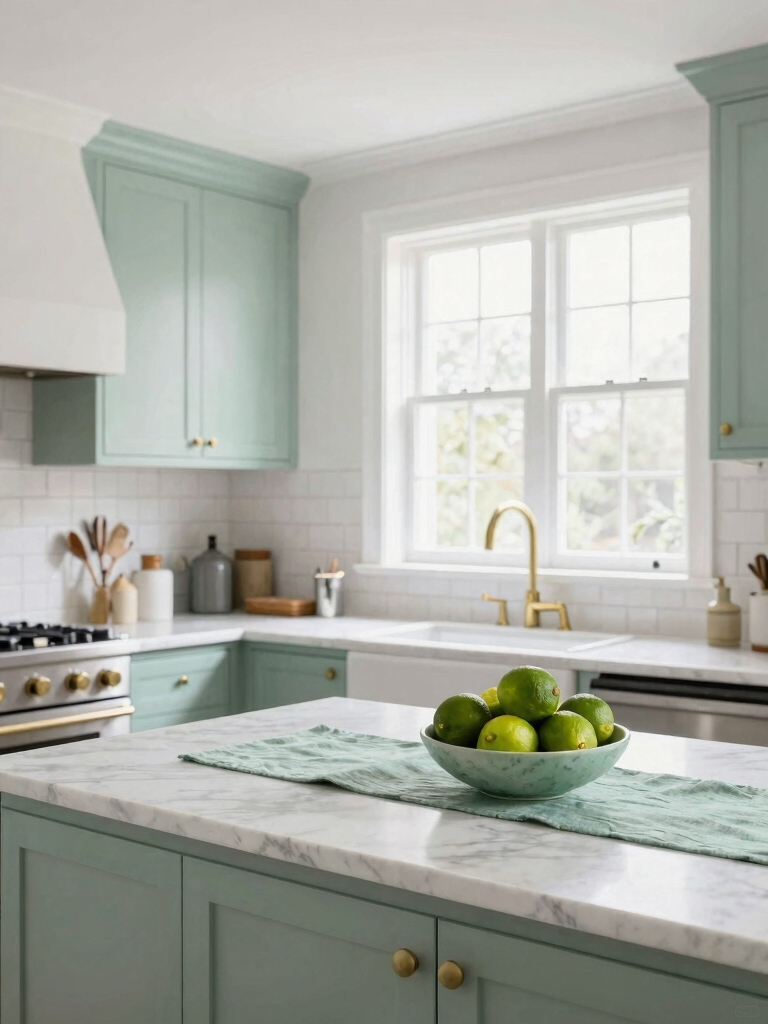
Celadon, the soft gray-green of antique pottery, paired with white has an old-world, vintage charm that suits a cottage or a period home. It feels gentle and timeworn, like a kitchen that has been loved for generations.
Lean into the vintage feel with white beadboard, glass-front cabinets, brass latches, and a farmhouse sink. The celadon stays soft, the white keeps it fresh, and the whole kitchen feels timeless rather than trendy. The country green charm plays in exactly this nostalgic register.
- Pair soft celadon cabinets with white beadboard and trim.
- Add vintage touches: glass fronts, brass latches, a farmhouse sink.
- Keep counters white to hold the gentle, old-world feel.
Pick your green-and-white mood:
🎯Fresh and modern
Crisp white with a clean mint or pistachio accent.
🎯Soft and vintage
Celadon or sage with white beadboard and brass.
🎯Bold and classic
Deep hunter or forest green against bright white.
Olive Cabinets With Cream Trim

Not every white is stark. Olive green with a soft cream or off-white is the warmest version of this palette. The creamy white tones down the contrast, so olive and cream feel cozy and continental rather than crisp and cool.
This is the green-and-white combo for people who find true white too clinical. The warm undertone in the cream flatters olive’s brown-green, and the result is a kitchen that feels sunlit and welcoming. Pair it with wood floors and aged brass for a relaxed, European mood. The olive green styles show how versatile this earthy green is.
- Soften the contrast with a cream or off-white instead of stark white.
- Pair olive cabinets with cream trim, walls, or uppers.
- Add wood and aged brass for a warm, European feel.
A Moss Green Breakfast Nook

Green and white does not have to live only on the cabinets. A moss green breakfast nook, a built-in bench, painted paneling, or a banquette, brings the color into the dining side of an otherwise white kitchen.
A nook is a low-risk, high-charm place for a deeper green, since it is a contained zone rather than the whole room. Paint the bench and paneling moss, add white walls and a simple table, and dress it with green-and-white cushions and a botanical print. The deeper green grounds the nook while the white keeps the rest of the kitchen airy, and it becomes the cozy corner everyone gravitates to.
- Paint a built-in bench or nook paneling a deep moss green.
- Keep the surrounding kitchen white so the nook stands out.
- Layer green-and-white cushions for a cozy, collected corner.
Green is the one bold color that still counts as a neutral, because the eye sees it everywhere in nature. That is why a green-and-white kitchen can feel both colorful and calm at once, and why it almost never goes out of style.
Jade Green Hardware
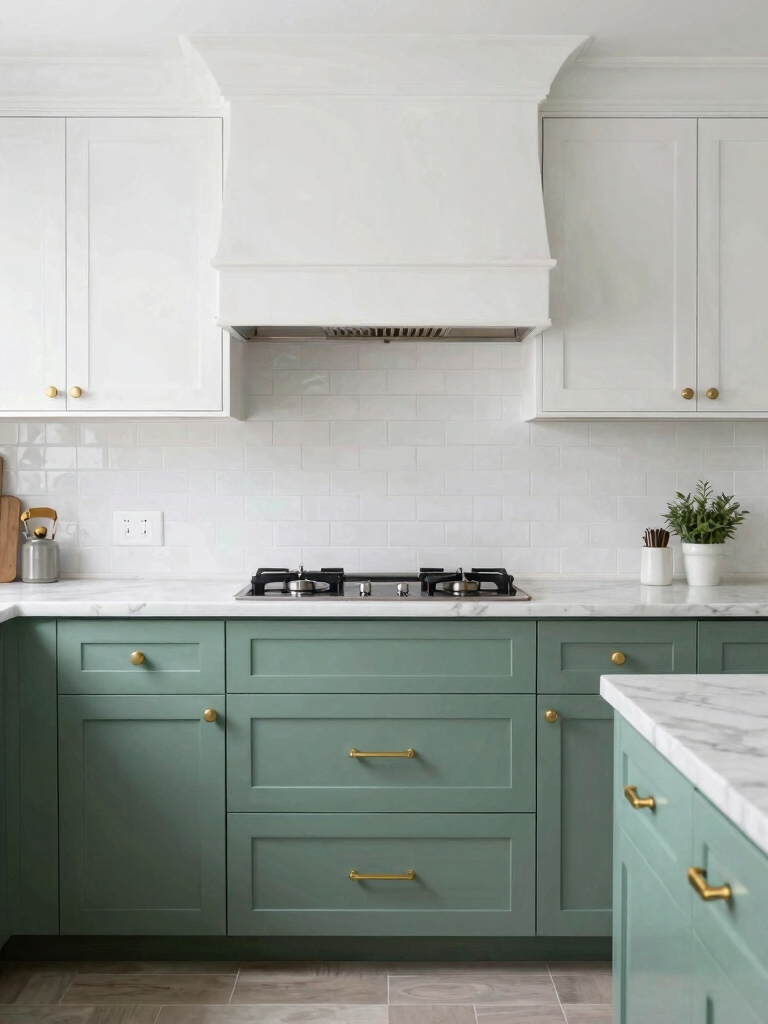
For the most commitment-free green of all, skip the cabinets entirely and add jade green through the hardware and fixtures. Green cabinet knobs, a jade enamel faucet, a green vintage stove, or green-painted bin pulls bring the color into a white kitchen in a way you can change fast.
This is the renter’s and the cautious owner’s green-and-white kitchen: all the freshness, none of the permanence. A handful of jade knobs on white cabinets costs about $20 to $40, instantly warms up an all-white room, and you can swap a full set in under an hour whenever the mood changes.
- Add green through knobs, pulls, a faucet, or a vintage stove.
- Keep the cabinets white so the jade reads as a bright accent.
- Choose this low-commitment route for rentals or quick updates.
Botanical Prints That Brighten

The simplest way to tie a green-and-white kitchen together is with botanical prints and real plants. Framed leaf prints, a vintage botanical chart, or a shelf of herbs in white pots echo the green and keep the room feeling like a garden room.
Bring the Garden Inside
I recommend leaning on plants and prints when your green is subtle, since they reinforce the palette without a single drop of paint. A trailing pothos on an open shelf, a row of herbs on the sill, and a couple of framed ferns do the work.
Greenery does the rest. Keep the frames and pots white or natural wood so the plants stay the focus. Plants also soften all the hard kitchen surfaces, which is part of why green-and-white kitchens feel so welcoming. The fresh light-green looks use greenery to amplify the palette.
Sage Green and White Cabinets

The two-tone classic, sage green on the lowers and white on the uppers, deserves its own spot because it is the green-and-white look that never fails. The green base grounds the room and hides scuffs where they happen, while the white uppers keep the walls feeling tall, bright, and open.
It simply works. It holds up in a tiny galley and a big farmhouse kitchen alike, which is the truest test of timeless. Add a white counter, a subway backsplash, and your choice of brass or black hardware, and you have a kitchen that will still look right in twenty years.
- Put sage green on the lower cabinets and white on the uppers.
- Keep counters and backsplash white to stay bright and open.
- Works in kitchens of any size, which is what makes it timeless.
A Hunter Green Accent

At the boldest end, a hunter or forest green accent against crisp white is the green-and-white kitchen with real drama. Bold needs restraint. A hunter green island, a single run of deep green lowers, or a green range against white cabinets makes a confident statement while the surrounding white keeps it from feeling heavy.
Deep green and bright white is a high-contrast, tailored pairing that feels both classic and current, the kind of kitchen that photographs beautifully and never looks of-its-moment. I tell people to keep the deep green to one element and let the white carry the rest, so the drama stays elegant rather than overwhelming.
- Use deep hunter or forest green on one element, not the whole room.
- Surround it with bright white to keep the contrast crisp.
- Add brass hardware to warm the bold, tailored pairing.
Common Mistakes to Avoid
The most common green-and-white mistake is picking the wrong white. A stark, blue-white next to a warm green can look cold and mismatched, while a creamy white warms a cool green beautifully. Always test your white against your green in the room before committing, since the two have to share undertones to look right.
The other slip is going fifty-fifty, half green and half white with no clear lead, which looks busy and indecisive. Pick a side. Choose one color to dominate and let the other support. Let the white breathe. Resist over-greening with a green counter, green walls, and green cabinets all at once, and the green stays fresh instead of overwhelming.
More Green and White Kitchen Questions
?What white goes best with green kitchen cabinets?
Match the undertone. A cool, crisp white suits cool greens like mint, sage, and celadon, while a warm, creamy white flatters warm greens like olive and moss. Hold white samples against your green in the room’s light, since a mismatched white is what makes the pairing look off.
?Is green and white a good choice for a small kitchen?
Yes, especially with white leading. Plenty of white keeps a small kitchen bright and open, while a green accent, a backsplash, an island, or the lowers, adds personality without darkening the space. Two-tone with white uppers and green lowers is a particularly good small-kitchen move.
?What shade of green is the most timeless with white?
Soft sage and gray-green celadon are the safest timeless bets, since their muted, neutral quality never feels trendy. For a bolder timeless look, deep hunter or forest green against white is a classic that has looked elegant for a century. Avoid neon or novelty greens, which date fastest.
?Should the green be on the cabinets or just an accent?
Either works; it depends on your nerve and your light. Green cabinets make a fuller statement and suit a bright room; a green accent, on an island, backsplash, nook, or hardware, is lower-commitment and keeps a darker kitchen light. Renters and the cautious do best starting with an accent.
?How do I keep a green and white kitchen from looking cold?
Warm it up. Choose a creamy white over a stark blue-white, add brass or wood, and use warm 2700K lighting. A green with a warm undertone, like olive or moss, also feels cozier than a cool mint. These small warm touches keep the fresh palette from tipping into clinical.
Fresh, Classic, and Here to Stay
Green and white endures because it is the palette of a garden, alive but calm, colorful but clean. Whether you choose the softest sage or the deepest hunter, the white keeps it bright and the green keeps it from ever feeling sterile, which is exactly the balance a kitchen wants.
Pick the green that suits your light, decide whether white or green should lead, and keep the two in their right proportions. Done with a little restraint, a green-and-white kitchen feels fresh the day you finish it and stays that way for decades.
More Hair Ideas


