

A sage kitchen in a saved photo and a sage kitchen in your actual light are two different rooms. The dreamy version you keep scrolling past was shot in flattering daylight with finishes chosen to flatter that exact green. Yours has its own light, its own floors, and its own undertone to answer to.
That gap is fixable, and it starts with two questions: is sage right for your room, and which sage. Below are thirteen dream-worthy sage spaces sorted by shade and style, from a barely-there fern to a deep, moody moss. Each one comes with the practical notes that turn a saved photo into a kitchen that actually feels like yours.
Before You Fall for the Photo
- Check whether sage suits your light and floors first; the wrong undertone clashes fast in a real room.
- Pick your shade on a spectrum, with light fern to open a small space and deep moss for drama in a bright one.
- Choose a style lane, farmhouse, modern, or moody, so your sage looks intentional instead of generic.
- Spend on the finish and one good partner material; that is what makes a dream kitchen feel real.
Is Sage Right for Your Kitchen?
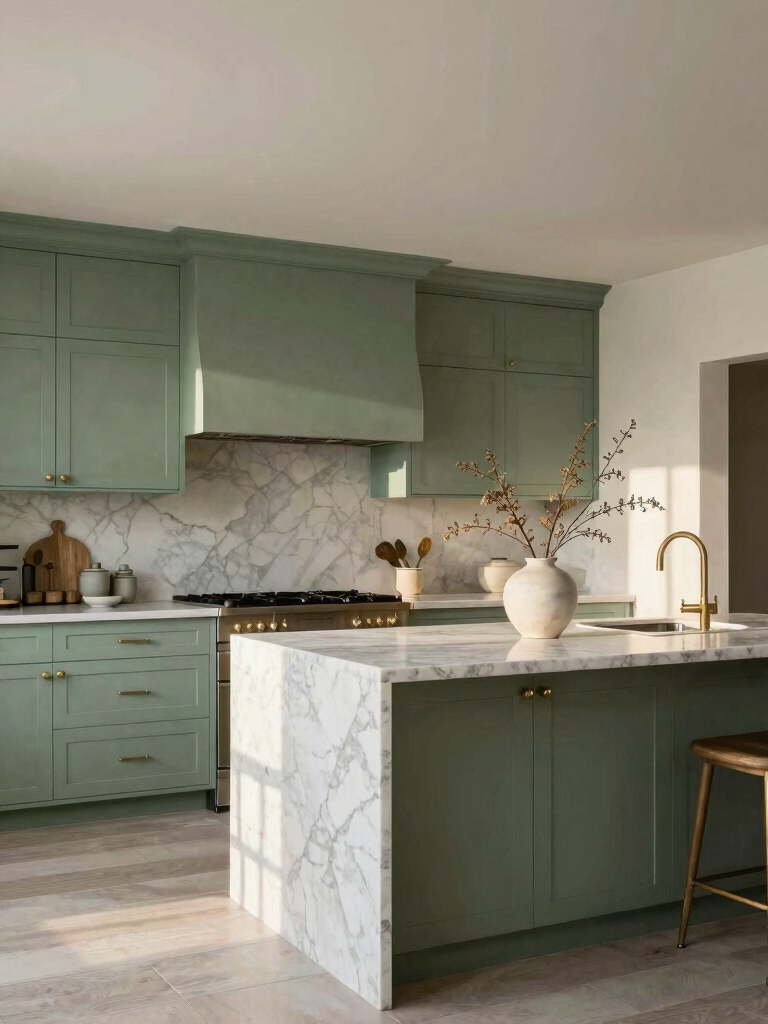
Before you commit, run a quick honesty check on your room. Which way does the light face? What undertone is your flooring? Cool, north-facing rooms suit a grayer sage, while warm, south-facing ones flatter an olive-leaning one. A clash between sage and a strong orange-toned floor is the most common regret I see.
Light and floors decide first
Ask yourself how much green you actually want to live with daily, too. Some people love a full sage kitchen; others are happier with the color on an island or a backsplash. There is no wrong answer, but knowing yours saves a costly redo.
Run these questions before you fall for a photo, and the rest of this list gets easy. Skip them and even the dreamiest sage can land flat in your particular room.
Light Fern to Deep Moss: Choosing Your Sage
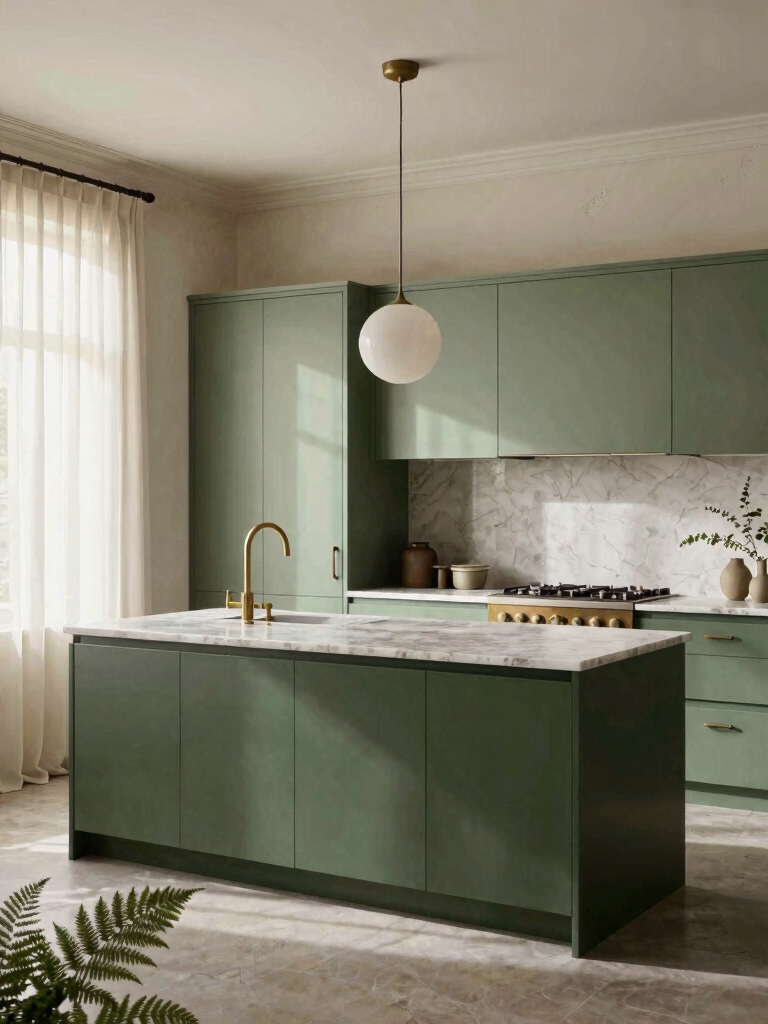
Sage is not one color but a whole spectrum, and where you land changes everything. A pale, fern-leaning sage barely registers as green and behaves almost like a warm gray, which makes it the safe pick for small or dim rooms.
Lighter for small, deeper for bright
Move toward the middle and you get the classic, herb-garden sage most people picture, balanced enough for a whole kitchen. Push to a deep moss and you trade softness for drama, a richer green that needs good light to carry it.
The trick is to match the depth to your room’s light and your appetite for color. When in doubt, go one shade lighter than the chip. Sage darkens across a full run of cabinets, and a green that looked gentle on a two-inch swatch can turn surprisingly heavy once it wraps an entire wall of doors in afternoon shade.
📋Pick your sage shade
- ✓Small or dim room? Lean to a pale, fern-leaning sage that opens the space.
- ✓Plenty of natural light and want drama? A deep moss can carry it.
- ✓Unsure? Choose one shade lighter than the chip, since sage darkens on a full run.
Sage Kitchens That Use Every Inch Well
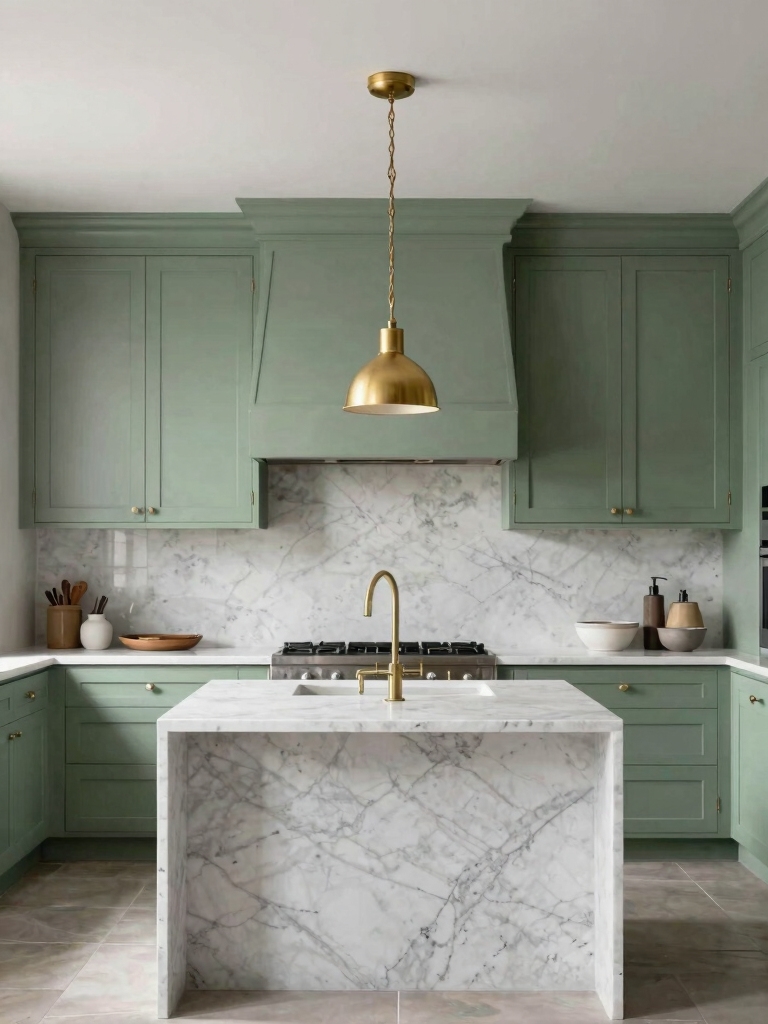
A dreamy small sage kitchen is not magic. It is a light shade handled with care. Keep the sage pale, lean on white above, and the room feels calm and open. I have watched a cramped galley shed years the moment a muddy beige came off and a soft fern went on.
The space-savers underneath matter as much as the color. Tall cabinets, good lighting, and a clear counter let a small sage kitchen breathe, the same moves behind any small kitchen that lives larger than its footprint.
- Use a pale, light-leaning sage so the walls do not close in.
- Run cabinets to the ceiling to draw the eye up and add storage.
- Keep counters clear and lighting layered so the room feels bigger.
Open-Concept Spaces Where Sage Creates Flow
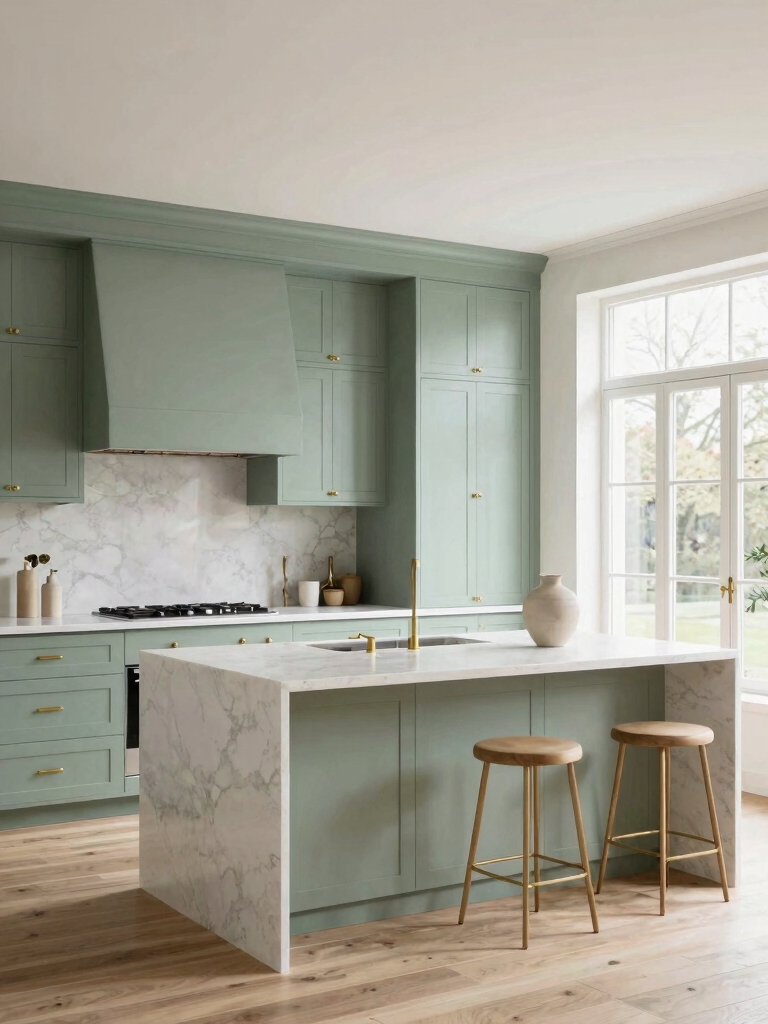
In an open floor plan, the kitchen color is part of the living room whether you like it or not. Sage handles that job gracefully. Because it acts like a soft neutral, it bridges into the next room without a jarring line, which is why it has quietly become the default for homes where the cooking and living spaces share one big open volume.
- Echo a hint of the sage in the adjoining space, like a throw or a plant, to tie the rooms.
- Keep flooring and counters continuous so the eye flows across the plan.
- Let sage be the calm base while the living area carries any bolder color.
ℹ️Good to Know
Sage works so well in open-concept homes because it sits low on the saturation scale, closer to a neutral than a true color. That is why it can touch the kitchen and still feel at home next to the living-room sofa, where a brighter green would compete with everything around it.
Sage and Warm Wood Pairings That Work

The wood you pair with sage is what turns a pretty kitchen into a warm one. A wood island top or open shelves add the warmth a green can otherwise lack, but only if the temperatures agree. For the full breakdown of getting the tones right, a sage and wood kitchen shows it done well.
- Pair a warm, olive sage with oak or walnut for a cozy, grounded feel.
- Match a cooler, gray sage with white oak or ash to keep it crisp.
- Add wood on one or two surfaces so the warmth stays a highlight.
Sage Hardware: Brass and Three Alternatives
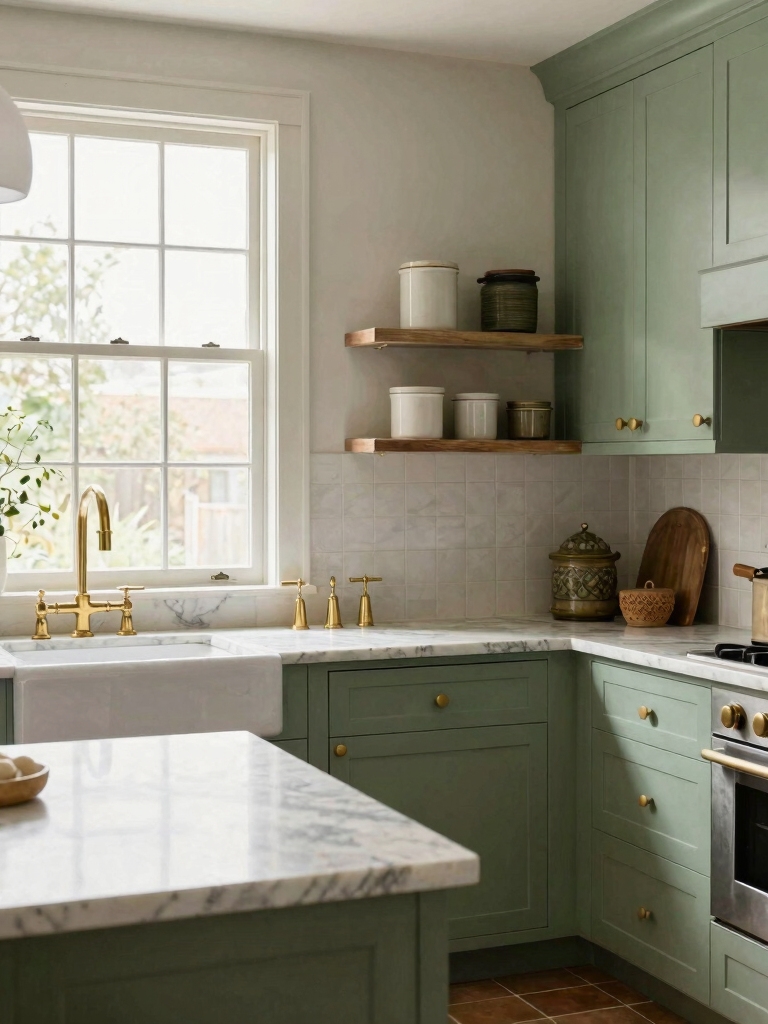
Hardware is the cheapest way to steer a sage kitchen toward dreamy, and the metal you pick sets the mood. It is the easiest thing to change later. At $3 to $8 a pull, swapping the whole kitchen rarely tops sixty dollars.
- Brass warms sage and looks classic; unlacquered ages to a soft patina.
- Matte black sharpens it for a modern, graphic look.
- Brushed nickel or aged bronze play it safe and quiet for a calmer room.
👍Unlacquered brass
- +Ages to a soft patina that suits sage’s relaxed mood.
- +Looks richer and more collected over time.
- +Hides fingerprints as it darkens.
👎Lacquered brass
- –Stays bright and uniform, which some prefer.
- –Will not develop character or patina.
- –Shows fingerprints more on a polished finish.
Sage Backsplashes With Soft Texture
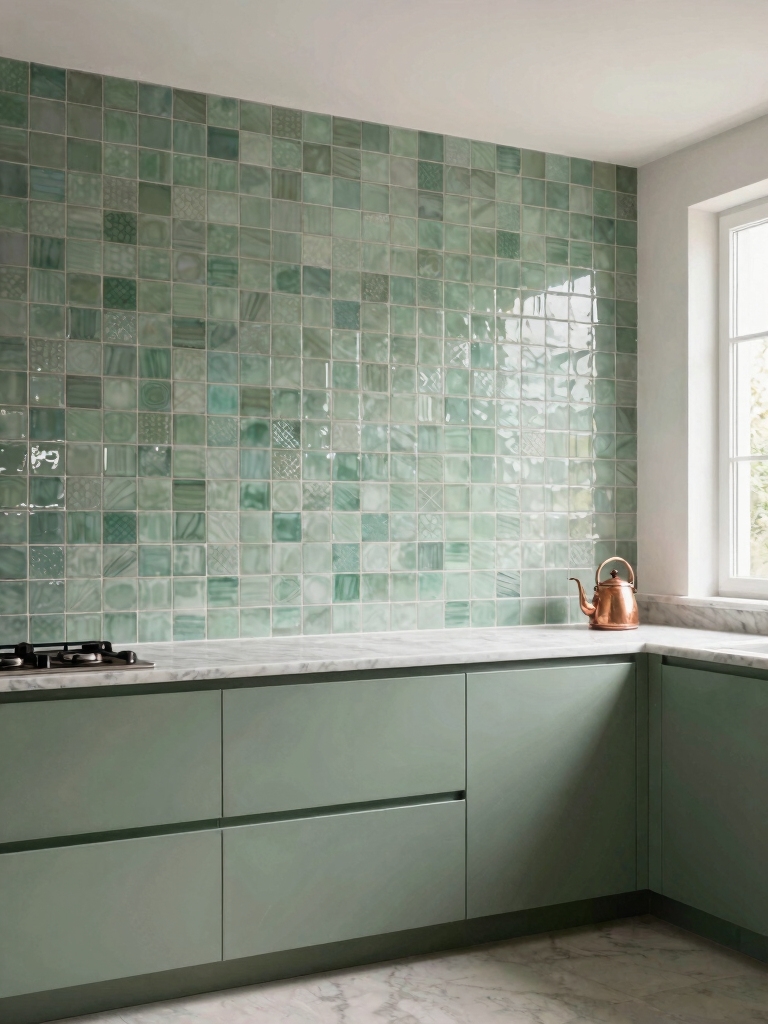
A sage backsplash brings the color in at eye level and adds quiet texture without painting a cabinet. No cabinets touched. Handmade zellige catches light unevenly for a soft, artisan look, while a matte ceramic stays calm and understated.
This is also the dream-kitchen move for people who like their current cabinets. Plan on roughly $8 to $20 a square foot for a handmade tile, less for standard ceramic, and keep the grout close in tone so the wall reads as one soft surface.
- Choose zellige for texture or matte subway tile for a quieter wall.
- Keep grout close to the tile color so the texture leads, not the lines.
- Carry the sage up to the underside of the uppers for a finished look.
Anchoring a Room With a Sage Island

A sage island is the dream-kitchen shortcut: one strong anchor in an otherwise neutral room. It gives you the color and a focal point without committing every cabinet. Best of all, it repaints in a weekend if your taste shifts.
Top it in a material that earns its keep, since the island is where people gather and prep. I love a butcher-block top here for warmth, or pale stone if you want the island to feel cool and calm against the green.
- Paint the island base sage and keep the perimeter white or wood.
- Choose a hardworking top, since the island takes the most use.
- Add two or three stools to make the island the natural gathering spot in the room.
Farmhouse Sage: Rustic Meets Refined
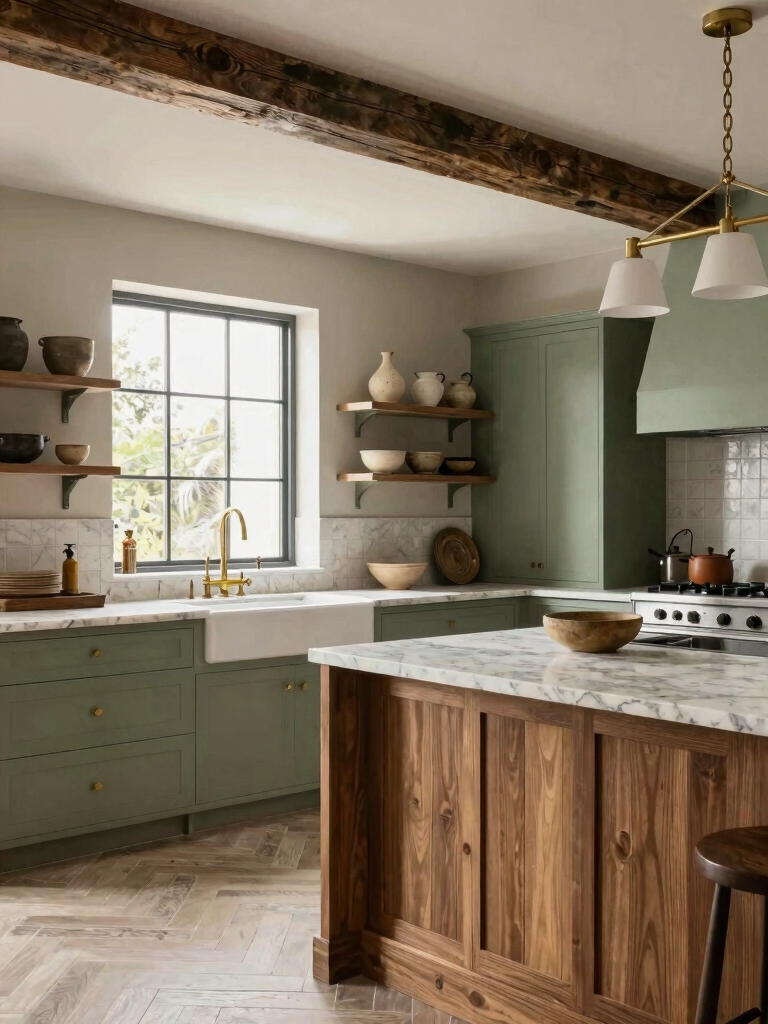
The farmhouse dream sage balances rough and smooth: rustic materials kept just polished enough to feel current. Sage is the perfect base for it. The muted green feels both country and considered at once, which is a hard balance to strike with any louder color.
- Pair sage with an apron-front sink and open wood shelving for country warmth.
- Add one refined element, like a stone counter or brass tap, so it does not tip rustic.
- Keep hardware simple, like cup pulls, to hold the relaxed farmhouse note.
Modern Minimalist Sage: Clean and Calm
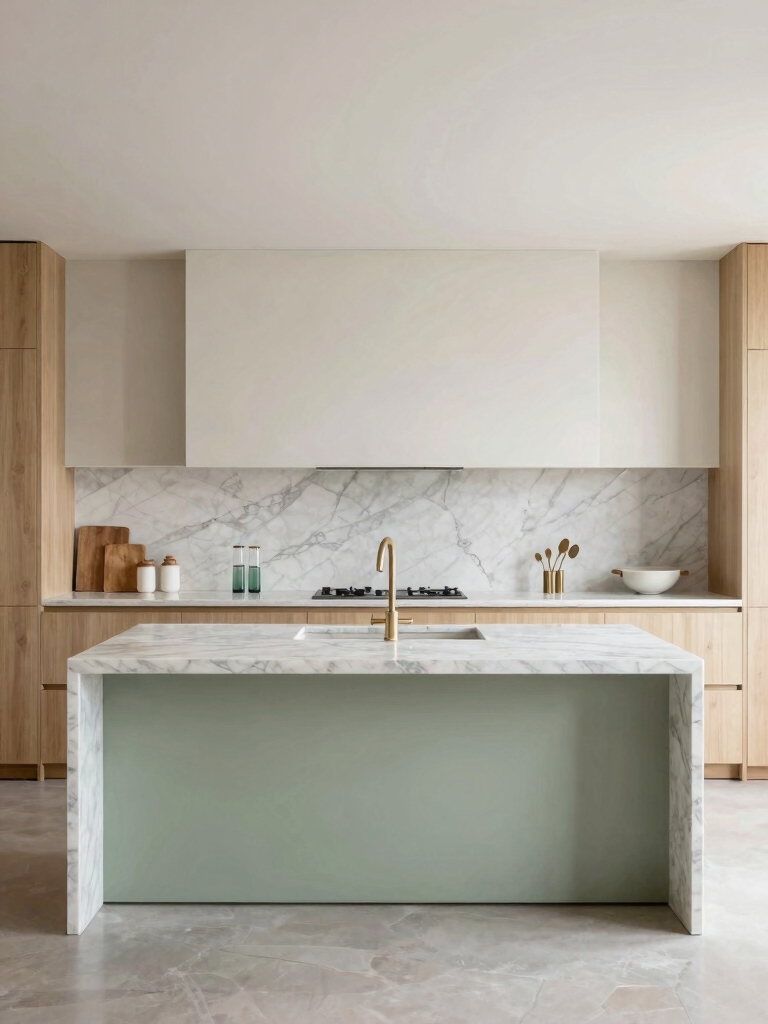
On the other end of the spectrum, sage goes modern when you strip the detail away. Flat-panel doors, hidden hardware, and a single soft sage make a kitchen that feels calm and intentional, the green standing in for any louder accent. Less really is more here. I tell minimalist-leaning clients to pick the quietest sage they can stand, then let the clean lines do the rest of the work.
- Choose flat slab doors and minimal hardware to keep the lines clean.
- Let the sage be the only color so the room stays serene.
- Pick a matte finish so the surfaces read soft rather than glossy.
Maintenance & Care
A dream sage kitchen stays dreamy with very little fuss, but the upkeep depends on what you chose. Painted cabinets in a quality satin or matte finish wipe clean in under a minute with mild soap and hold for years; keep a labeled touch-up jar for chips and plan to recoat a heavy-use run roughly once a decade. A butcher-block island top wants oiling every month or two, and a tile backsplash needs the usual yearly grout seal to stay crisp.
Dark, moody sage shows dust and water spots a little more than a pale one, so it rewards a quick daily wipe, while deep moss on lowers hides scuffs better than any white. Whatever shade you land on, the single best maintenance habit is the one from the start: keep a sample of your exact color and finish, so a future touch-up or addition matches the kitchen you fell for.
Build the Sage Kitchen That Fits You
The dreamiest sage kitchens are not the ones with the biggest budgets; they are the ones where the shade, the light, and the style all agree. Answer the two questions first, is sage right for your room and which sage, and the rest of the choices fall into place.
Pick the version that matches your light and your life, whether that is a pale fern in a small galley or a deep moss with brass in a sunny room. Test your shade in your own kitchen, choose one style lane, and you turn a saved photo into a space that actually feels like a dream to stand in.
More to Explore


