

Why does a green-and-brown kitchen feel so calm the second you walk in? Because it is the palette of the outdoors, leaf and bark, moss and soil, and our eyes register it as restful and grounded. No other color pair feels as naturally at home in a kitchen.
Green and brown also flatter each other. Green’s freshness keeps brown from feeling heavy, and brown’s warmth keeps green from going cold. These 16 green-and-brown kitchens show the range, from pale sage with walnut to deep forest with chocolate, and how to balance the two so the room grounds without going dark.
Grounding a Kitchen With Green and Brown
- Green and brown is the palette of nature, leaf and bark, so it feels restful and grounded in a way no other color pair does.
- Match the undertones: a warm olive with honey oak, a cool celadon with walnut, so the green and brown harmonize instead of clash.
- Let one color lead and keep a light counter or wall in the mix, so an earthy palette grounds the room without making it dark.
Sage Cabinets, Walnut Shelves
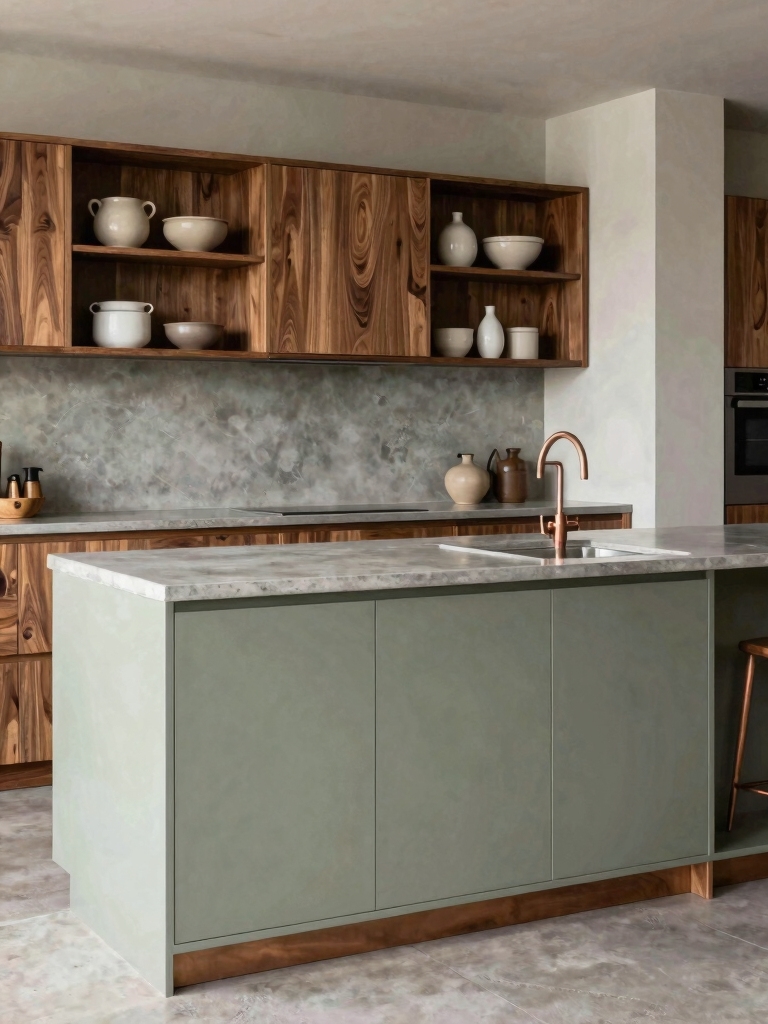
The gentlest way into a green-and-brown kitchen is soft sage cabinets with walnut open shelves. Sage is a muted, gray-leaning green so quiet it behaves like a neutral, and the warm walnut stops it from feeling cold. It is the easiest way to start.
I love this pairing because it is calm and almost foolproof. The low-saturation green and the rich brown sit in the same soft, earthy register, so they feel collected rather than coordinated. Add cream counters and aged brass to complete it.
- Choose a muted, gray-leaning sage so it acts almost neutral.
- Warm it with walnut shelves, a butcher block, or a wood hood.
- Finish with cream counters and aged brass hardware.
Pistachio Tile and Light Birch

For something brighter, pistachio green paired with pale birch or maple feels fresh and Scandinavian. The light green and the blond wood keep a kitchen feeling sunny and open rather than earthy and deep.
This is the green-and-brown palette for a small or north-facing kitchen, since both colors are light and reflect what little daylight there is. Use the pistachio on a backsplash or lower cabinets and let the pale wood warm the rest.
- Pair light pistachio with blond birch, maple, or white oak.
- Use this airy combo in small or low-light kitchens.
- Keep counters white to hold the bright, Scandi feel.
Green-and-brown palette terms worth knowing:
📖Undertone
The subtle warm or cool bias in a color; matching the undertones of your green and brown is what makes them harmonize.
📖Earthy palette
A scheme drawn from natural materials, greens, browns, stone, that reads grounded and restful.
📖Tonal pairing
Two colors of similar softness and saturation, like sage and walnut, that feel collected rather than high-contrast.
A Pale Mint Backsplash

If committing to green cabinets feels like a leap, a pale mint backsplash is the low-risk way to bring green into a brown, wood-toned kitchen. A run of soft mint zellige or subway tile behind walnut or oak cabinets adds a cool, fresh note without taking over.
The brown grounds the room and the mint lifts it, a balance that feels current without chasing a trend. Because a backsplash is a small surface, you can be braver with the green here than you would on a full wall of cabinets, and swap it down the road far more easily than repainting.
- Add a pale mint tile backsplash to a brown or wood kitchen.
- Keep the green to the splash so it stays low-commitment.
- Let the wood cabinets ground the cool mint above.
Celadon and Walnut

Celadon, that soft blue-green of old ceramics, paired with rich walnut is the most elegant green-and-brown combination. The cool, refined green and the deep, warm wood create a quiet luxury that feels timeless.
Cool Green, Warm Wood
I recommend celadon on the cabinets with walnut on an island or a run of open shelving, balanced by a pale stone counter. The contrast between the cool green and the warm brown is what gives the room depth.
Keep the metals warm, brass or bronze, to bridge the two and stop the celadon drifting cold. This is a palette that looks expensive without a single bold move. The grey palette pairings use the same cool-warm balancing act.
Heads-Up
Greens and browns both shift hard with their undertone, so a cool celadon next to a too-orange wood can clash badly. Before you commit, hold your green sample against your actual wood in the kitchen’s own light. If the green looks muddy or the wood looks orange, nudge one toward a more neutral undertone until they settle.
Olive Green and Honey Oak

Olive green with honey oak is the warm, retro-leaning side of the palette, and it is having a real moment. Olive does half the work itself. It is a brown-green to begin with, so it sits naturally beside golden oak, and together they feel sunlit and seventies in the best way.
Use olive on the cabinets and let honey oak show up in the floor, the shelves, or a slatted island, with a creamy counter to keep it from going too dark. This is the green-and-brown kitchen for people who want warmth and character over cool minimalism, and it photographs beautifully in afternoon light.
- Pair olive cabinets with golden honey oak floors or shelves.
- Add a creamy counter to keep the warm palette light.
- Lean into the sunny, retro mood with brass and rattan.
Moss Green Cabinets

Moss green is a deeper, grayed forest tone that grounds a kitchen without the drama of true dark green. Paired with brown, in a leather counter stool, a walnut island, or a chocolate-stained beam, it feels like a walk in the woods.
Moss is one of the easiest deep greens to live with: dark enough to hide daily life on lower cabinets, yet soft enough that it never feels heavy. Keep the uppers or walls light so the moss looks rich rather than gloomy, and let natural materials, wood, stone, leather, do the pairing.
- Use moss green on lowers or an island to ground the room.
- Pair it with walnut, leather, and chocolate-brown accents.
- Keep uppers and walls light so the deep green stays rich.
📋Balancing Green and Brown
- ✓Match the undertones, both warm or both cool, so they harmonize
- ✓Let one color lead and the other support, not a fifty-fifty split
- ✓Add a light counter or wall to keep the earthy palette from going dark
- ✓Bridge the two with a warm metal like brass or bronze
Coastal Green on a Budget

Green and brown does not have to mean forest and walnut. A breezy, coastal take pairs a soft seafoam or sea-glass green with pale, weathered driftwood brown for a kitchen that feels light and beachy.
Seafoam and Driftwood
The beauty of this version is how affordable it is. A seafoam paint on existing cabinets and a weathered-wood open shelf cost very little and look coastal instantly, no renovation required.
I see this work best with white counters, woven baskets, and rope or rattan accents that lean into the seaside mood. The green stays fresh, the brown stays pale, and the whole kitchen feels like a breath of sea air. The earthy green cabinet looks show the deeper end of the same family.
A Timeless Earthy Kitchen
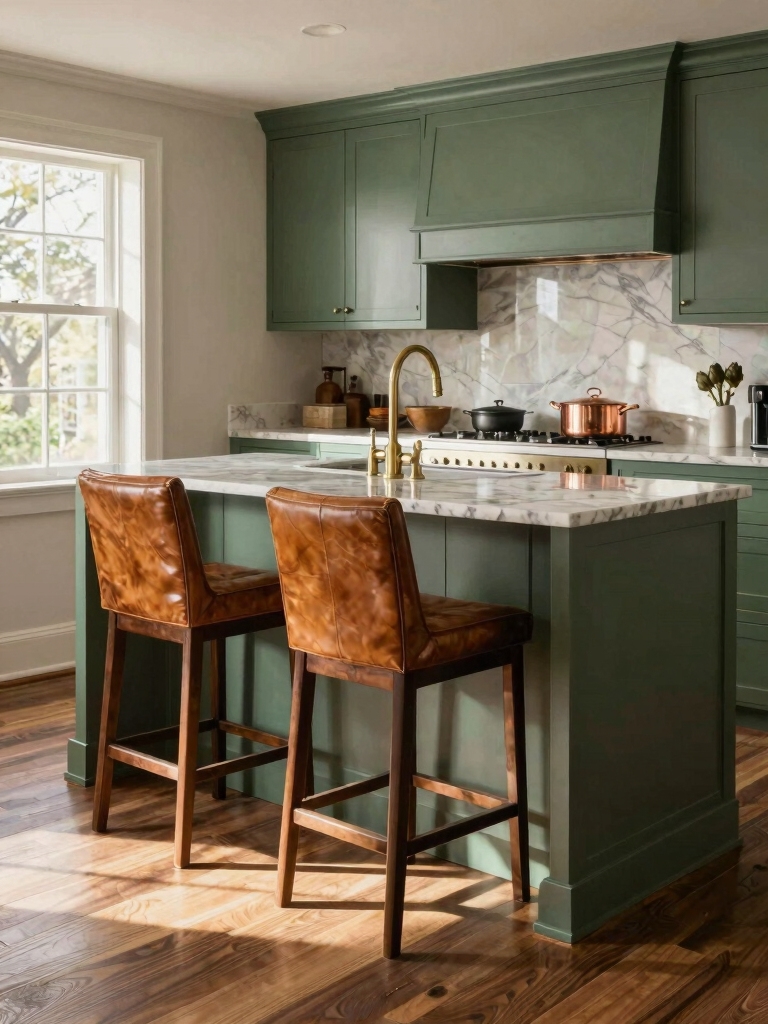
For a green-and-brown kitchen that will never date, stay earthy and mid-toned: a sage or olive green, a medium walnut or oak brown, a stone counter, and natural textures throughout. Because the whole palette comes straight from nature, it sidesteps trend cycles in a way that bolder color schemes cannot. Nature does not go out of fashion.
An earthy green-and-brown kitchen looked right fifty years ago and will look right fifty years from now, which is rare for any color scheme. Keep the shades muted and the materials natural, and you have a kitchen with real staying power. The greens that rethink neutrals make exactly this timeless case.
- Stick to muted, mid-toned greens and browns for longevity.
- Lean on natural materials: wood, stone, linen, clay.
- Skip trend-driven shades for an earthy palette that lasts.
Forest Green and Chocolate

At the deep, dramatic end sits forest green with chocolate brown, a rich, enveloping palette for people who love a moody kitchen. The two deep tones share a warm, dark intensity that feels cozy and high-end, like a library you happen to cook in.
Because both colors are dark, balance is everything. Pair them with a pale counter, brass hardware, and good lighting so the room feels deep rather than dim. Use forest on the cabinets and chocolate in the wood tones, the leather, or a stained island, and keep the walls light. The green makeovers people love show how dramatic this end can go.
- Pair deep forest green with chocolate-brown wood or leather.
- Balance the dark palette with pale counters and good light.
- Add brass to warm and lift the moody scheme.
Rustic Green and Brown on a Budget

You do not need a renovation to land a green-and-brown kitchen, since it is the easiest palette to fake on the cheap. Paint existing cabinets a soft sage or olive, add a couple of reclaimed-wood open shelves, swap in brown leather or woven seating, and bring in plants, and a builder-basic kitchen turns earthy and grounded for the price of a few cans and a weekend.
I tell people to shop their own house first, an old wooden cutting board, a brown crock, a basket, since green and brown forgive a collected, mismatched look. The palette is rustic by nature, so a little imperfection only helps it.
- Paint existing cabinets a soft sage or olive green.
- Add reclaimed-wood shelves and brown leather or woven seating.
- Bring in plants and thrifted wood for an earthy, collected look.
Getting the Palette Right
If you are working with a designer or a paint store, a little vocabulary gets you the green-and-brown kitchen you actually want. Ask for the green by undertone, a gray-green sage, a blue-green celadon, a yellow-green olive, rather than just saying green, since the undertone is what decides whether it works with your wood.
Bring a sample of your wood or brown to the conversation, and ask to see the green against it in the room’s real light before you buy. The single best move is to tape large samples on the actual cabinets, an hour’s job, and live with them for a few days, since green is famously moody from morning to night. A few dollars in sample pots saves a very expensive repaint.
More Green and Brown Kitchen Questions
?Do green and brown go together in a kitchen?
Beautifully, because they are nature’s own pairing, leaf and bark, moss and soil. The key is matching undertones: a warm olive loves honey oak, while a cool celadon wants walnut. Green’s freshness keeps brown from feeling heavy, and brown’s warmth keeps green from going cold.
?What shade of green goes best with brown cabinets or wood?
It depends on the wood’s undertone. Warm, golden woods like oak pair with warm greens like olive and moss; cooler walnut suits cooler greens like sage and celadon. Hold the green against your actual wood in daylight, since a mismatch in undertone is what makes the combo look off.
?How do you keep a green and brown kitchen from looking dark?
Keep the light in the mix. Hold counters, walls, or upper cabinets pale, add warm 2700K lighting, and let one color stay light so the dark one looks rich, not gloomy. A pale counter under deep forest cabinets is what keeps a moody palette feeling cozy instead of cave-like.
?What metals work with a green and brown kitchen?
Warm metals are the move: brass, gold, and bronze bridge the green and the brown and tie the earthy palette together. Aged or unlacquered brass especially suits the natural, collected feel. Cool chrome or nickel can work with cooler greens but tends to feel less at home in this warm scheme.
?Is green and brown a timeless kitchen palette or a trend?
It is about as timeless as color gets, since it comes straight from nature rather than a trend forecast. Muted, earthy greens and mid-toned browns have read right for decades and will keep doing so. Stick to soft, natural shades rather than neon or novelty greens and the palette ages gracefully.
The Most Grounded Palette There Is
Green and brown works because it is the one color pairing we are wired to find restful, the colors of the living world brought indoors. From pale sage and birch to deep forest and chocolate, every version shares that grounded, settled calm, which is exactly what a kitchen should feel like.
Pick the green and brown that match your light and your mood, match their undertones, and keep a little brightness in the mix. Done with care, a green-and-brown kitchen feels like it has always been there, and like it always should be.
More to Explore


