

If you only spend real money on one piece of color in a kitchen, make it the island. A green island is the single best-value statement in the room, because it sits at the center, draws the eye first, and lets the perimeter cabinets stay cheap and neutral. You get the drama of a green kitchen without committing the whole budget to it.
These nineteen ideas treat the island as what it is: an investment piece. I have grouped them around the decisions that actually protect that investment, the undertone, the light, the shade, the hardware, and the counter on top, so the green you pick still looks right five years from now.
Why the Island Is the Place to Spend
A green island concentrates impact where it counts. It anchors an open kitchen, gives the room a focal point, and lets you keep the surrounding cabinets in a low-cost neutral, which is why it returns more drama per dollar than painting everything.
The choices that protect the spend are undertone, light, and the counter on top. Match the green to your room’s light, test it large before you commit, and put a durable, good-looking surface on top, and the island earns its keep for years.
Match the Island’s Undertone to the Room

The mistake that sinks a green island is a clashing undertone, so this is the decision to make first. Your island will sit in a room full of fixed colors, the floor, the perimeter cabinets, the counters, and the green has to agree with their warmth or coolness. Get this right and the island looks built-in; get it wrong and it looks dropped in from another kitchen.
Warm Room or Cool Room
The rule is simple once you name it. Warm rooms with wood floors and cream cabinets want a warm green like olive or moss. Cool rooms with gray tones and white cabinets want a cool green like sage or a blue-leaning emerald. Pulling a warm island into a cool room is the most common way the color falls flat.
If you are unsure which way your room leans, hold a pure white card against your cabinets and floor. Whatever undertone jumps out, yellow, pink, gray, is the temperature your green should answer.
Test Green Swatches Before You Commit
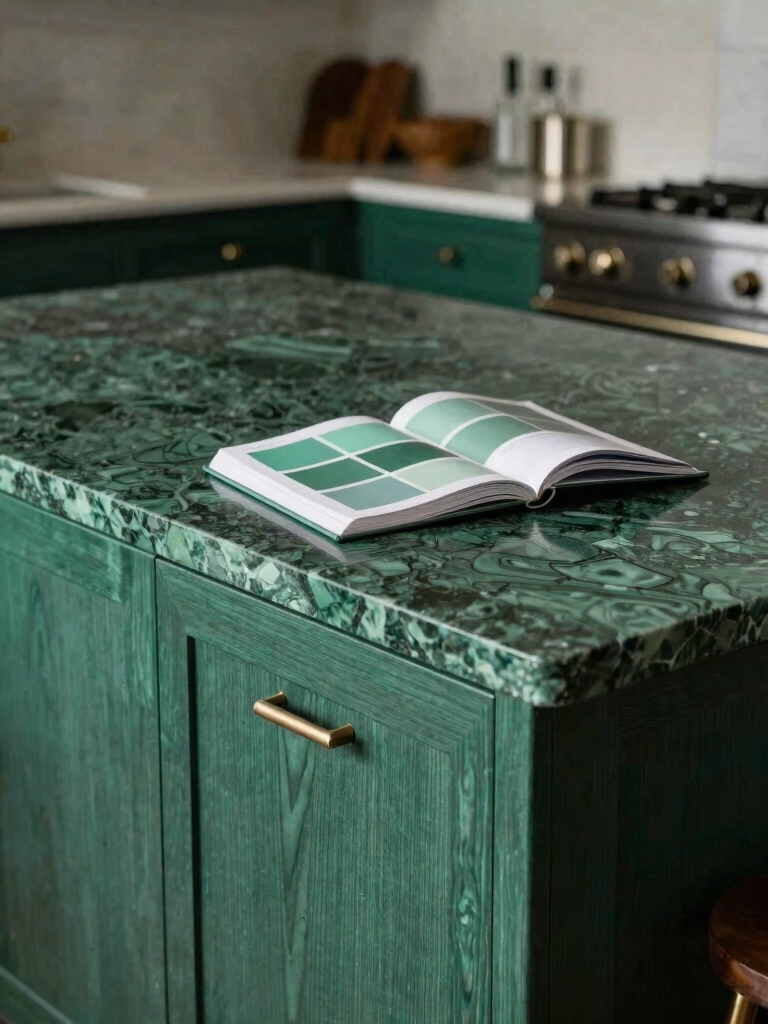
Because an island is an investment, the worst thing you can do is choose the green off a phone screen or a chip the size of a postage stamp. Greens shift more than any other color under different light, so a proper test is the cheapest insurance you can buy. Here is how to do it right.
- Buy two or three sample pots, about $6 each, in the greens you are torn between.
- Paint poster boards in two coats and prop them against the island spot, not the wall.
- Watch them in morning daylight, afternoon sun, and evening bulbs across a full day before deciding.
👍Why a green island pays off
- +Concentrates color and drama in the highest-impact spot in the room.
- +Lets the perimeter cabinets stay cheap and neutral.
- +A contained project: one piece to paint, fewer doors to hardware.
👎Where to be careful
- –A deep green island needs good light or it goes heavy and dull.
- –The counter on top is where real cost lives if you want stone.
- –A clashing undertone makes even a pricey island look dropped in.
Lighting That Transforms a Green Island
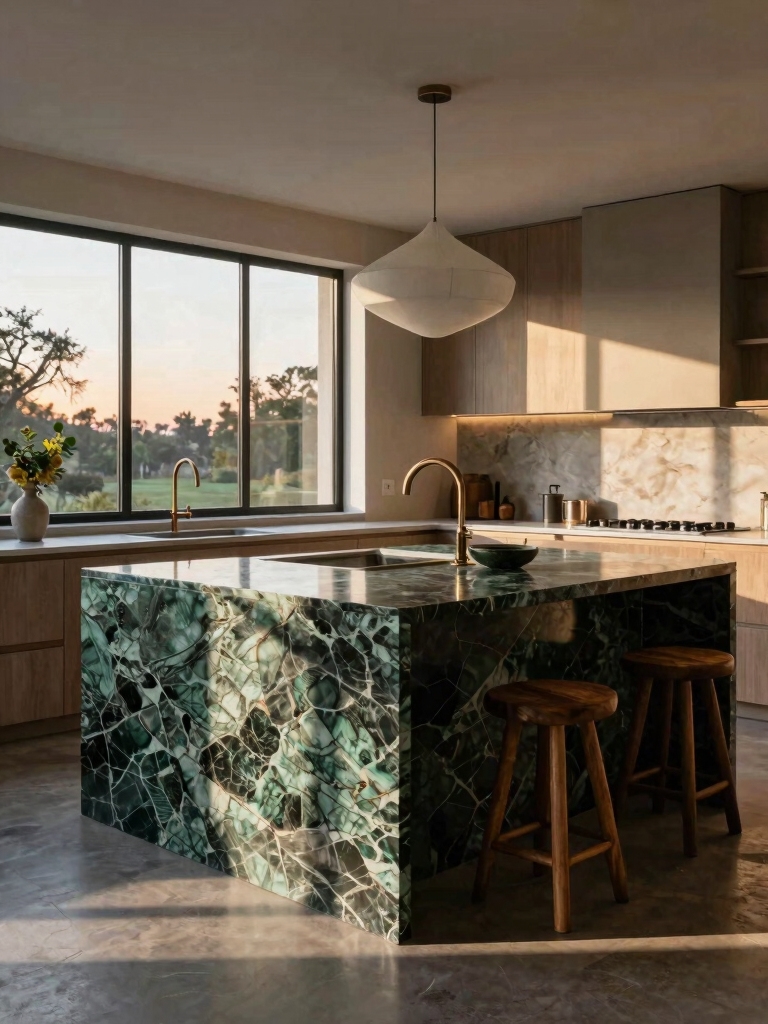
An island almost always gets its own light, usually a pair of pendants, and that light has enormous say over how the green actually looks. Warm yellow bulbs sour a green toward drab; cold blue bulbs drain it toward gray. Aim for a neutral bulb around 3000K to 3500K and the color stays true to the chip you fell for.
Pendants do double duty here, lighting the work surface and warming the green from above. Pick fixtures with a warm metal or soft glass that flatters the shade, and add a dimmer so you can drop the level for dinner. A well-lit island reads rich; a poorly lit one reads muddy, no matter how good the paint was.
Sage for a Calm, Tranquil Island
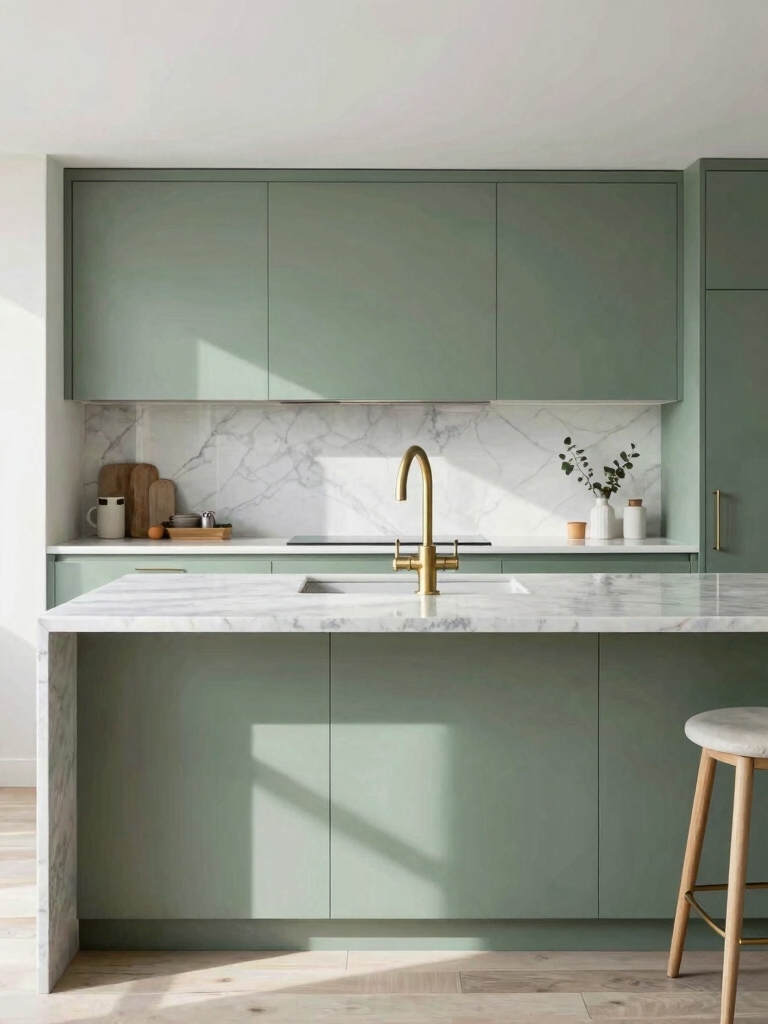
Sage is the safest island investment, the green that behaves like a neutral and almost never dates. On an island, its soft gray-green calms the busiest part of the kitchen without shouting, which makes it a smart pick if you plan to sell within a few years or simply want to stop thinking about it.
It pairs easily with the materials most kitchens already have: white perimeter cabinets, cream counters, warm wood floors. That flexibility is what keeps a sage island looking intentional even as you change the smaller things around it over time.
Sage is also the most forgiving green to paint yourself, so a DIY island is realistic. A coat dries to the touch in about an hour, which means a single island is an afternoon-plus project, not a week of disruption.
- ✓Have you matched the green’s undertone to your floor and perimeter cabinets?
- ✓Did you test the actual shade in your kitchen’s light across a full day?
- ✓Is the island lit with neutral bulbs, ideally on a dimmer?
- ✓Have you budgeted the counter on top, where most of the cost sits?
- ✓Does the green repeat in at least one small accent elsewhere in the room?
Hunter Green for a Polished Island

Hunter green is the shade for an island that wants presence without going black. Its deep, slightly blue-based richness gives the center of the kitchen real weight, the kind that makes an open-plan space feel anchored and considered. It is the green I suggest when someone wants drama but worries pure black would feel cold.
Because it is dark, hunter rewards good light and warm metal. Brass or aged bronze pulls warm the cool green, and a pair of pendants keeps it from disappearing after sunset. Against white perimeter cabinets, a hunter island looks expensive in a way that belies the cost of a few quarts of paint.
It does ask for a well-lit room. In a dim kitchen a hunter island can go heavy and dull, so reserve it for spaces with decent daylight or commit to layered lighting around it.
Forest Green for a Deep, Grounded Island
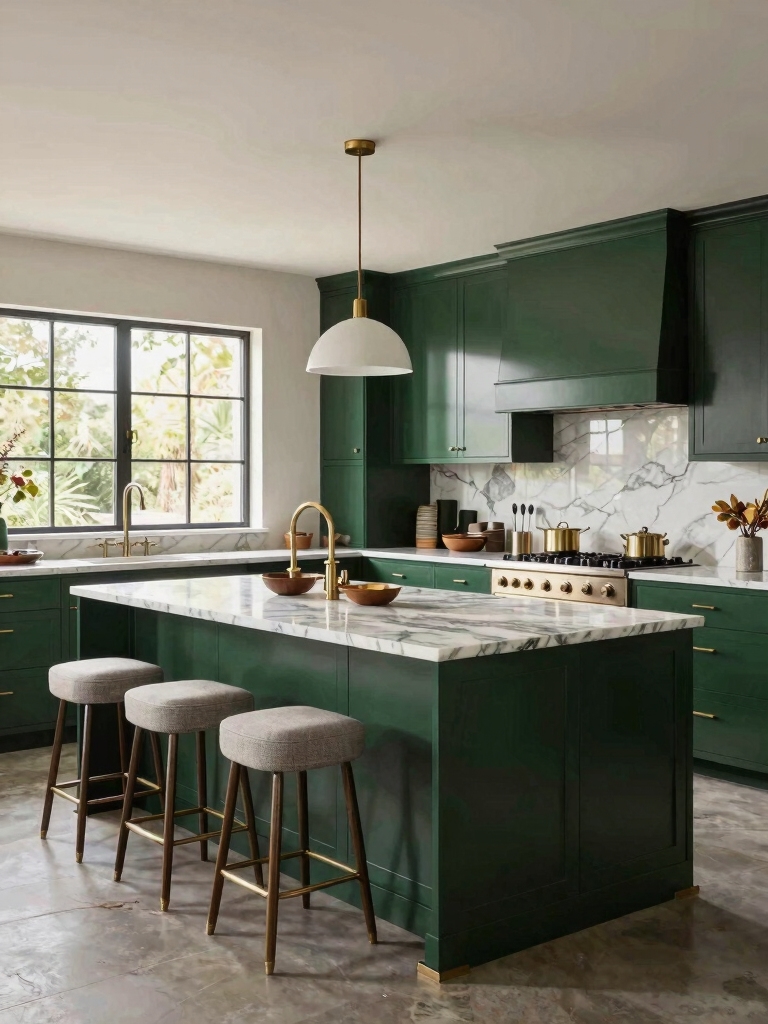
Forest green sits a touch warmer and earthier than hunter, with more of a true-green character, which makes it feel pulled from nature rather than from a jewelry box. On an island it grounds the room and plays beautifully with wood and stone, so it suits kitchens that lean organic or transitional.
A few choices keep a forest island looking like an investment piece.
- Top it with butcher block or honed soapstone to keep the deep green warm and tactile.
- Add seating with a counter overhang of at least 12 inches so the island works as well as it looks.
- Repeat the green in one small accent across the room so the island feels connected. See ideas that steal the show for more.
ℹ️Good to Know
A green island is one of the few kitchen upgrades where painting beats replacing on almost every measure. Repainting an existing island runs a quart of paint and an afternoon, while a new custom island can run several thousand dollars. The exception is the countertop: if your island top is worn or the wrong size, that is the piece truly worth replacing, because it carries the daily use and a big share of the visual weight.
Brass Hardware to Finish the Island
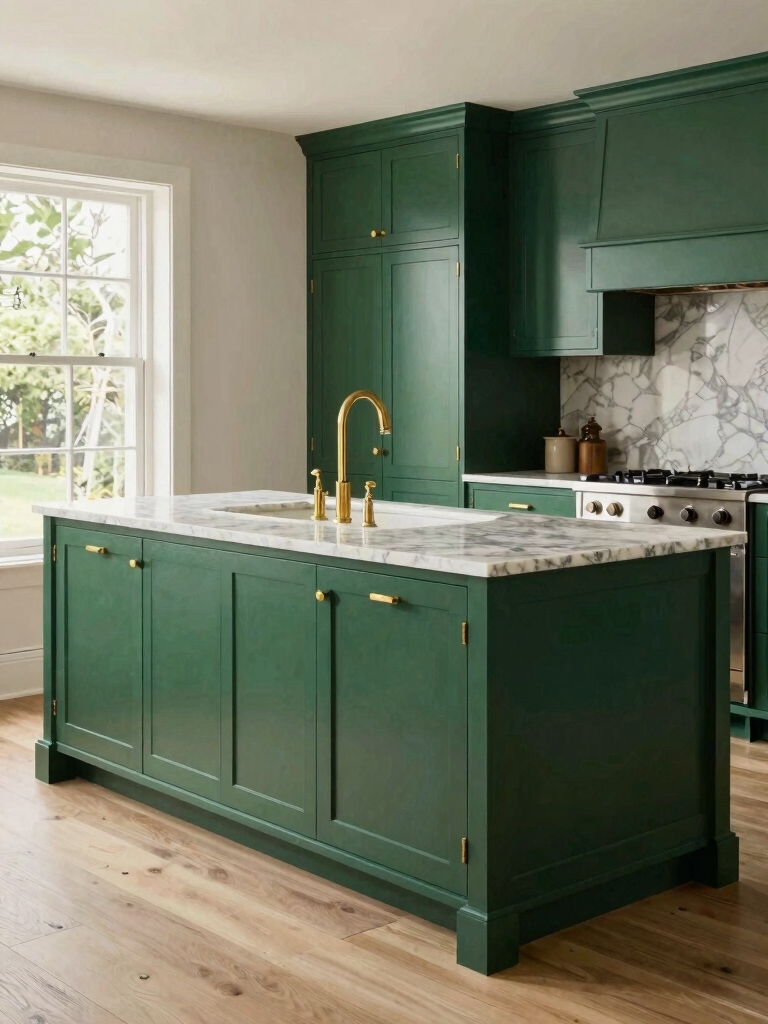
On an island you are investing in, the hardware is not an afterthought; it is the jewelry. Warm brass against a green island creates the small, pleasing contrast that makes the whole piece look custom, and because an island has fewer doors than a full run of cabinets, outfitting it in nice hardware barely registers on the budget.
A few pointers keep it looking deliberate.
- An island’s worth of brass pulls usually runs $40 to $90, far less than a full kitchen.
- Choose unlacquered brass to age into a patina, or lacquered to stay bright and even.
- Echo the metal in the pendants or faucet so the island reads as a planned scheme. More in the greens that look expensive.
Rustic Olive Green Islands
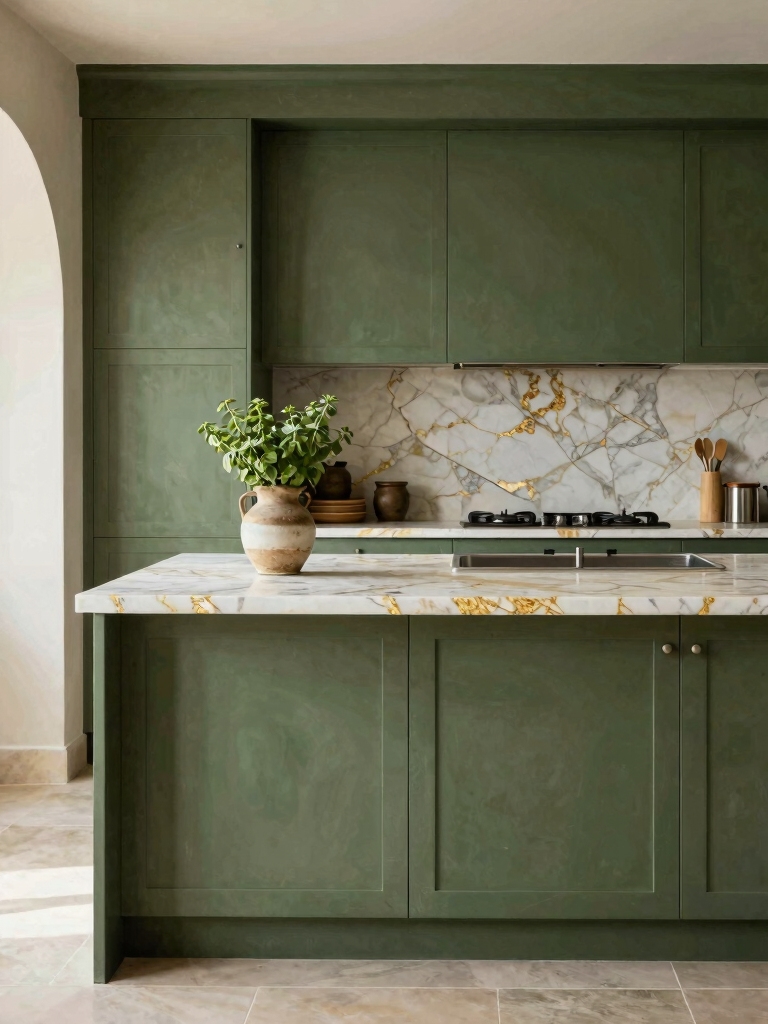
Olive is the island green for a kitchen with rustic or farmhouse leanings. Its muted, brown-based warmth echoes barn wood and aged metals, so an olive island settles into a country kitchen as though it has always been there. It is also the most beige-like of the greens, which makes it surprisingly easy to live with day to day.
What Olive Loves
Olive earns its keep through warm company. Aged bronze hardware, a butcher block top, and a few thrifted stools play to its earthy base, while keeping the surrounding cabinets light and warm lets the island lead. Olive’s depth also hides the scuffs and fingerprints that a busy island collects.
It is a workhorse choice for a family kitchen, where the island takes the most abuse. The color forgives daily life better than a pale shade, so the investment keeps looking good through homework, spills, and weeknight dinners.
Mint Green for a Lighter Island

Not every island wants to go dark. Mint is the choice when you want the island to add color and personality while keeping the kitchen bright and airy, which makes it a smart pick in a smaller or lower-light room where a deep green would feel heavy. On an island, a pale mint reads fresh and a little retro at once.
Keep it grown-up with warm partners.
- Pair mint with warm wood and brass so it lands current and grown-up.
- Use it where the kitchen already gets decent light, since mint flattens to gray in a dark corner.
- Top a mint island in a warm wood or creamy stone to balance its coolness.
Stone Countertops Worth the Splurge
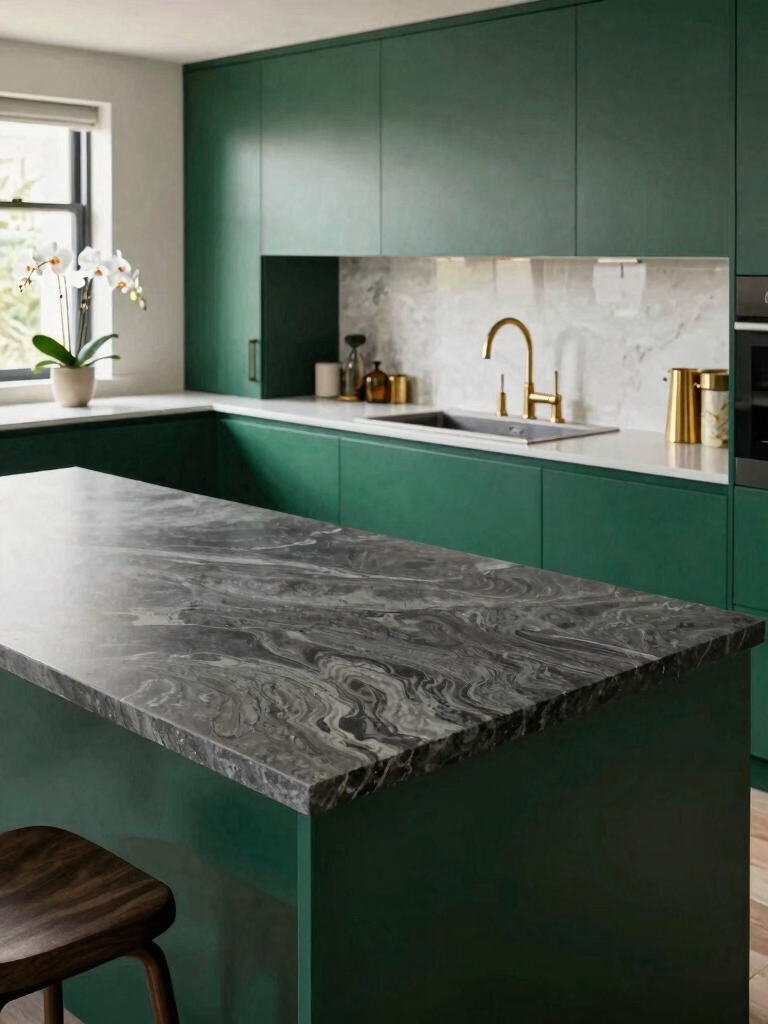
If the green is the statement, the counter on top is where the investment quietly pays off, because the island surface takes the most use and shows the most. Spending here, even while you save by painting the cabinets, is the smart trade. Here is how the popular tops stack up on a green island.
- Honed soapstone suits deep greens like hunter and forest, ages with character, and runs roughly $70 to $120 per square foot installed.
- Quartz is the low-maintenance workhorse, brightens the green, and resists stains, ideal for a busy family island.
- Butcher block is the budget-warm choice for sage and olive, often under $200 for a small slab, but plan to re-oil it every month or two.
Who It Suits Best
A green island is not the right move for every kitchen, and being honest about that protects your money. It pays off most in an open-plan or larger kitchen that needs a focal point, where the island is visible from the living space and earns its statement role. In those rooms, a deep hunter or forest island anchors everything around it.
It is also a smart play for anyone wanting color without full commitment, since you keep the perimeter neutral and concentrate the spend in one place. The kitchens where I would think twice are very small galleys with no real island and rentals where you cannot alter built-ins. If that is you, a freestanding island cart painted green gives you the look with none of the permanence, and you can take it with you when you go.
Green Island Questions, Answered
?Is a green island a good investment if I might sell?
Yes, if you keep the shade muted. A sage, olive, or soft forest island reads as a considered focal point, the kind buyers respond to, and because the perimeter stays neutral, a buyer sees a calm kitchen with one tasteful statement. Bright or trendy greens are the bigger gamble, but even those repaint for the cost of a quart if needed.
?What is the best countertop for a green island?
It depends on the green and the use. Honed soapstone flatters deep hunter and forest and ages beautifully; quartz is the low-maintenance, family-friendly choice that brightens any green; butcher block is the warm, budget option for sage and olive. Match the counter’s temperature to the green’s undertone so the two relate as a set.
?How much does it cost to paint a kitchen island green?
A DIY repaint of an existing island runs about a quart of cabinet enamel, roughly $30 to $50, plus primer and a few supplies, and takes an afternoon or two. New hardware adds $40 to $90. The big variable is the countertop; if you keep the existing top, the whole project stays under a couple hundred dollars.
?Should the island be a different green from the cabinets?
If the rest of your cabinets are already green, keep the island in the same family but a deeper value so it still reads as the anchor. More often, the perimeter stays neutral and the island is the only green, which is the highest-impact and lowest-risk approach. Either way, avoid two unrelated greens competing in one room.
?Can a green island work in a small kitchen?
Only if you actually have room for an island in the first place. In a tight kitchen, a pale shade like sage or mint keeps a small island from feeling bulky, and good light is non-negotiable. If there is no built-in island, a freestanding green island cart delivers the look without crowding the floor or committing you permanently.
Spend Where the Eye Lands
The reason a green island is such a good investment is that it puts your color and your money exactly where the eye goes first. Keep the rest of the kitchen quiet, get the undertone and the light right, and put a surface on top that can take the daily use, and a single island will carry the whole room. It is the rare splurge that actually makes the cheaper choices around it look better.
Pick the shade your light can carry, test it large before you commit a brush, and start with the island before you think about anything else. Which green would you put at the center of your kitchen?
More Hair Ideas


