

When was the last time you looked up in your kitchen? Almost nobody does, which is exactly why the ceiling is the most overlooked drama in the room. Designers call it the fifth wall, and treating it as one, with color, texture, or architecture overhead, can transform a flat kitchen in a way no one quite expects but everyone feels.
These twenty ceiling ideas range from a weekend coat of paint to a coffered installation that needs a carpenter. For each I have noted the effect it creates and whether it is a do-it-yourself job or a call to a pro, since some are pure decoration and some touch structure, wiring, or real carpentry. Look up; there is a whole surface up there doing nothing.
The Fifth Wall, Answered Fast
Why bother with the ceiling? It is the one large surface in a kitchen almost always left plain. Treating it adds depth and drama the walls and cabinets cannot, often for the price of paint.
What is the easiest ceiling upgrade? Paint. A bold or even a soft color overhead transforms a room in a weekend, with no structural work and no permit.
When do I need a professional? Anything structural or wired, coffered and tray ceilings, beams, recessed lighting, belongs to a carpenter or electrician. Paint and wallpaper are DIY.
A Bold Ceiling Color Transformation

The single most dramatic thing you can do to a kitchen ceiling costs a gallon of paint: color it. A bold shade overhead, a deep green, an inky navy, a moody charcoal, wraps the room and draws the eye up, turning a plain white lid into the most surprising surface in the kitchen. It is the highest-impact, lowest-cost ceiling idea there is.
Color overhead works best with a little nerve and the right light. A dark ceiling can feel cozy and enveloping in a bright room with good height, and it makes a kitchen feel intimate rather than cavernous. In a low or dim space, a soft color, a muted sage, a warm clay, a pale blue, gives you the effect more gently.
The trick that makes a colored ceiling look intentional is to tie it to the room below. Echo the ceiling color in the island, the lower cabinets, or an accent, so the bold overhead reads as part of a scheme. A coat of ceiling paint runs well under a hundred dollars and goes up in a day, with each coat drying an hour or two.
Glossy Finishes That Enhance Brightness

A high-gloss or lacquered ceiling is the dramatic finish for people who want shine and light rather than a matte, moody look. The reflective surface bounces light around the kitchen and can make a low ceiling feel taller, since the gloss blurs the line between the surface and the air. In a dark or compact kitchen, it is a clever way to add both drama and brightness at once.
Gloss overhead is unforgiving, so it rewards care. A high-sheen ceiling shows every bump and roller mark, which means the surface needs smoothing and a patient application to look right; this is the ceiling finish most worth hiring out or spraying. Done well, a glossy colored ceiling, deep and reflective, is one of the most striking moves in this whole list.
Find the ceiling move for your kitchen.
1You want maximum drama for minimum money
Paint it a bold color. A gallon and a weekend transform the room with no structural work.
2You want warmth and texture overhead
Wood planks or reclaimed beams, for an organic, cabin-like coziness.
3You want high-end architecture and have the budget
A coffered or tray ceiling, built by a carpenter, in a room with the height to carry it.
A Color-Blocked Ceiling Design
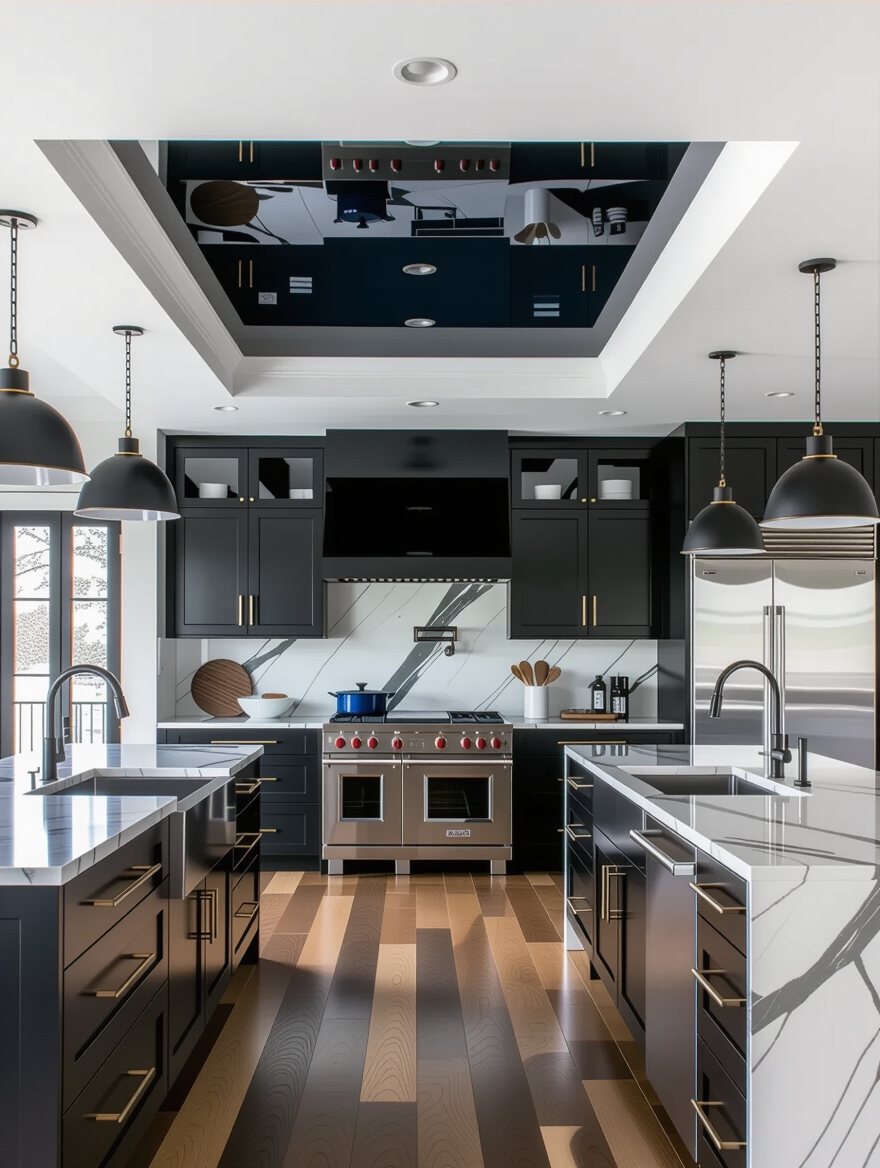
Color-blocking the ceiling, carrying a wall color up and over, or wrapping the top of the walls into the ceiling, is the trick that makes a kitchen feel custom and considered. Instead of stopping the color at the ceiling line, you let it spill onto or over the fifth wall, which cocoons the room and erases the boxy, where-the-wall-stops feeling.
Where to Stop the Color
There are a few ways to play it. You can paint the ceiling the same color as the walls for an unbroken cocoon, drop the wall color down only partway as a band, or run a contrasting color overhead as a clear block. Each sends a different mood, from enveloping to graphic.
This is a paint-only project, which makes it a low-risk way to be bold. Tape your lines carefully where the colors meet, since the crispness of that edge is what separates a designed color-block from a sloppy one. The materials cost is just paint and tape.
Ceiling Wallpaper for Style
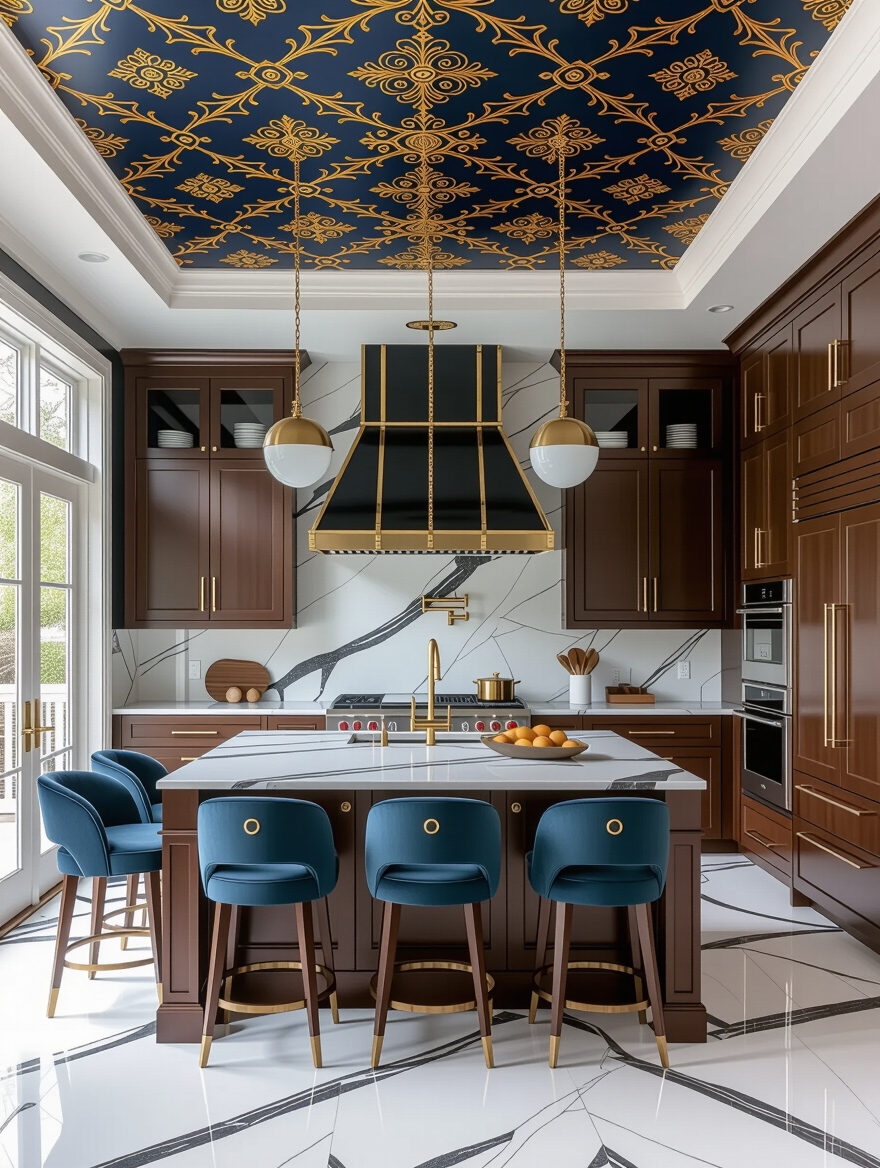
Wallpapering the ceiling is the unexpected, slightly daring move that turns the fifth wall into the room’s showpiece. A patterned paper overhead, florals, a subtle geometric, a textured grasscloth, brings color and detail that paint alone cannot, and because nobody expects it, it delivers real wow. Here is how to do it without regret.
- Choose a forgiving pattern, since busy or directional papers are hard to align overhead and on the ceiling.
- Use peel-and-stick paper for a lower-commitment, renter-friendly version that comes back off.
- Pick a moisture-tolerant paper and keep it away from directly above the stove, where grease and steam collect.
🅰️Paint the ceiling
A bold or soft color overhead, under a hundred dollars and a weekend, no structural work. The easiest, most reversible drama there is.
🅱️Clad or build the ceiling
Wood planks, coffering, or a tray for architecture and texture. Far more impact and permanence, but it means real carpentry and budget.
Warmth With Wood Ceiling Accents

Cladding the ceiling in wood, planks, beams, or a plank-look, is the surest way to add warmth and texture overhead. Where a painted ceiling adds color, a wood ceiling adds soul, bringing an organic, cabin-like coziness that makes the whole kitchen feel grounded. It is the dramatic move for a warm, natural kitchen. Here is how to bring it in.
- Run tongue-and-groove planks across the ceiling for a clean, cottage-meets-modern warmth.
- Add a few faux or real beams for architecture and rhythm, a carpenter’s job if they are structural.
- Keep the wood tone matched to the kitchen’s other wood so the ceiling reads as part of the whole. See wood cabinets that feel fresh.
A Metallic Ceiling for Sophistication

A metallic ceiling, pressed-tin tiles, a metallic-painted surface, or a subtle leaf finish, brings a vintage glamour and a reflective glint overhead that few other treatments can. Tin ceiling tiles in particular carry a period charm that suits both farmhouse and eclectic kitchens, and they catch light in a way that adds quiet drama. A couple of choices keep it tasteful.
These keep a metallic ceiling from tipping into too much.
- Choose a muted or aged metallic, pewter, bronze, antique tin, over a bright, shiny gold.
- Use real or faux pressed-tin tiles, many of which are lightweight panels that glue or staple up.
- Let the ceiling be the statement and keep the walls and cabinets quiet beneath it.
The ceiling is the one surface in a kitchen everyone sees and no one decorates. Give it a color or a texture and the whole room changes, mostly because the eye finally has a reason to look up.
Eco-Friendly Warmth in Ceilings
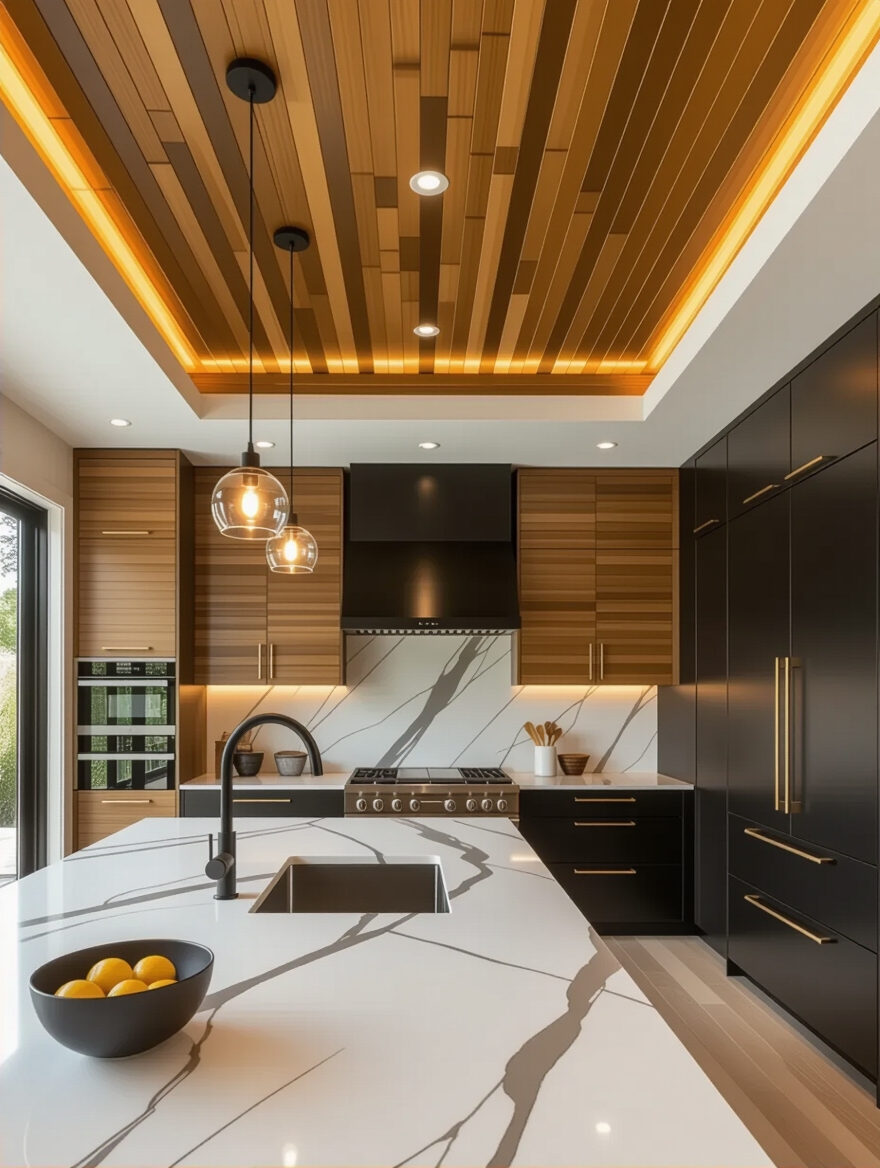
For a ceiling with warmth and a lighter footprint, natural and reclaimed materials bring character that new ones cannot fake. Reclaimed wood planks, cork, bamboo, or salvaged beams add texture and a sustainable story overhead, and the patina of truly old material gives a kitchen instant soul. Here is how to lean into it.
- Use reclaimed wood planks or salvaged beams, which bring age and character a new board lacks.
- Consider cork or bamboo cladding for a warm, renewable, sound-softening surface.
- Source from architectural salvage yards, where reclaimed ceiling material often costs less than new.
An Elegant Coffered Ceiling Installation
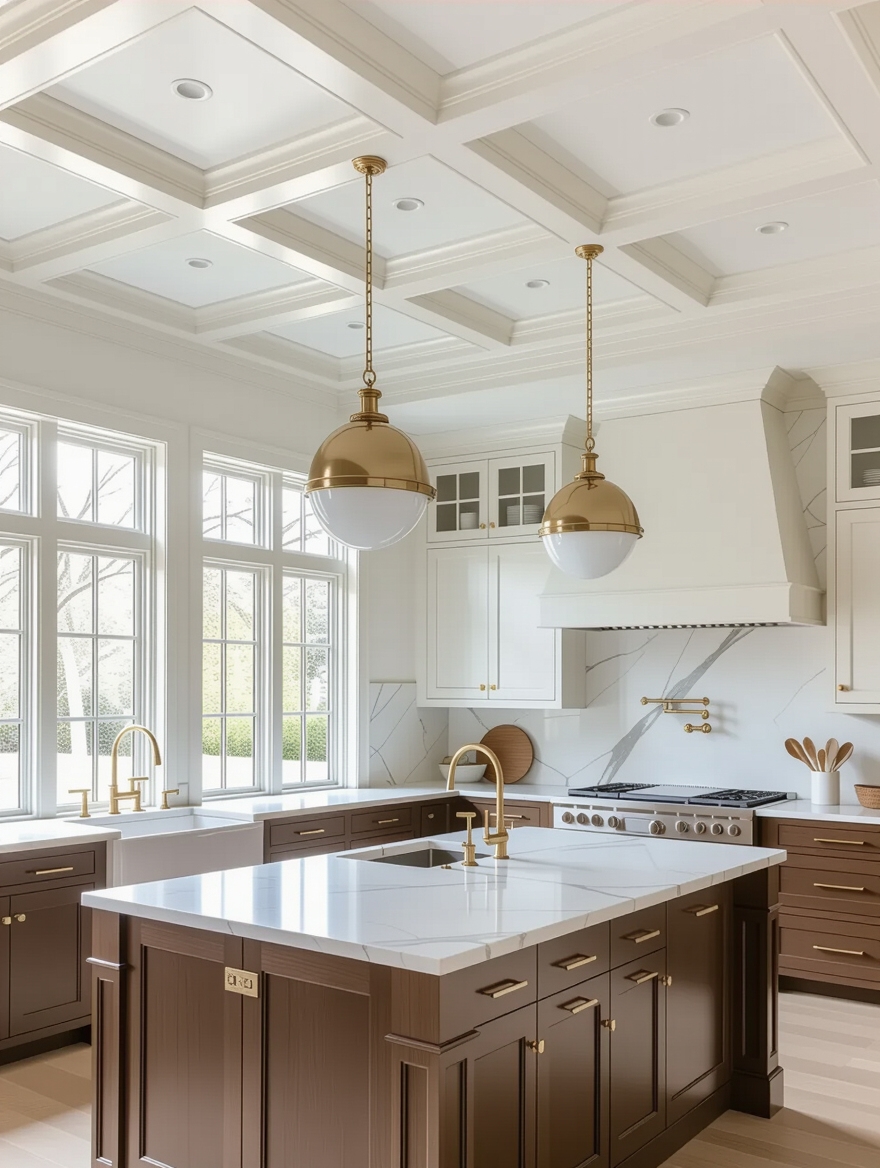
A coffered ceiling, a grid of recessed panels framed by beams, is the most architectural and high-end drama you can add overhead. The depth and shadow of the grid bring a tailored, custom richness that signals real craftsmanship, which is why coffered ceilings anchor so many luxury kitchens. It is the ceiling that makes a room feel built rather than decorated.
This is firmly a carpentry job, not a weekend project. A true coffered ceiling involves building a grid of beams and panels with precise spacing, and it works best in a room with the height to carry the depth without feeling low. It is a real investment, so it suits a planned renovation and a generous ceiling, where its architecture truly transforms the space. For a softer architectural touch, see arches that add quiet architecture.
Add Depth With a Tray Ceiling
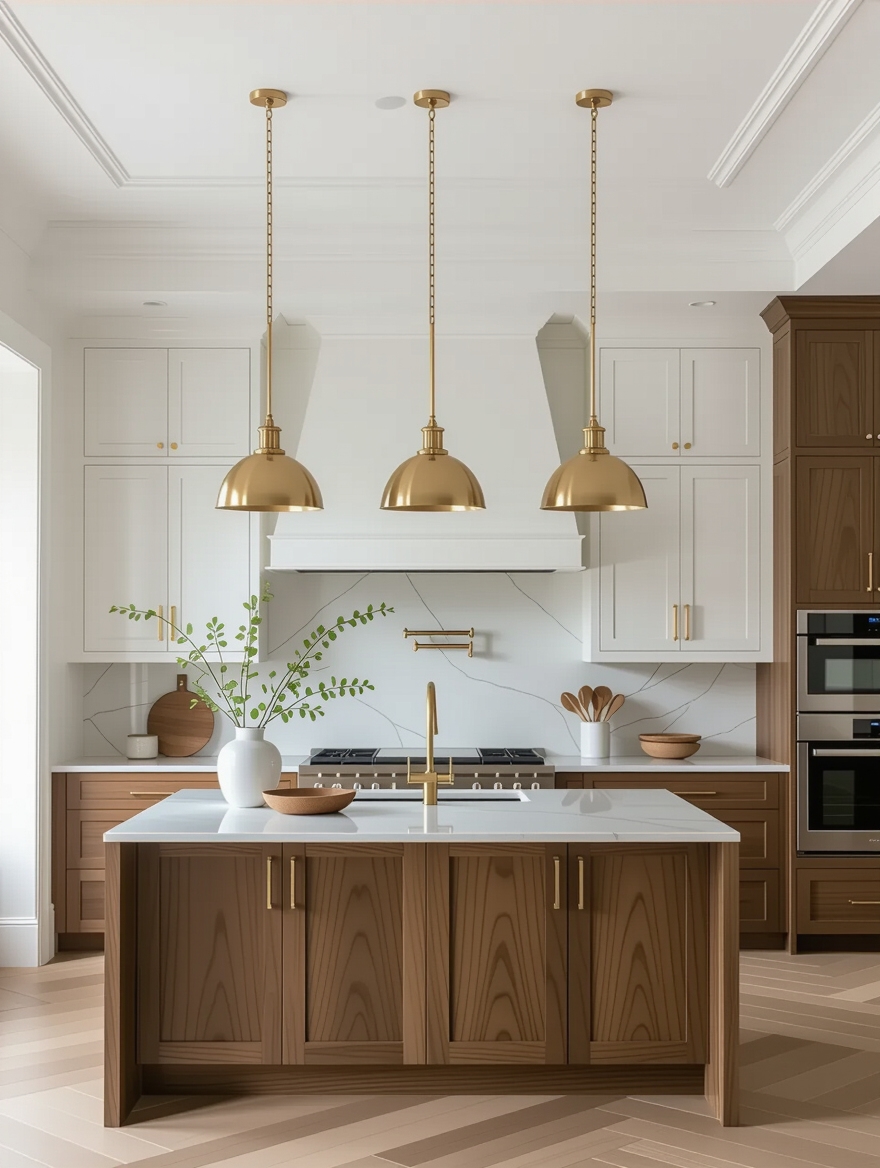
A tray ceiling, where a central section is recessed higher than the surrounding edge, adds height and quiet drama without the full commitment of coffering. The stepped-up center makes the room feel taller and gives you a natural spot for a paint color, a wallpaper, or hidden cove lighting. It is the architectural move that reads custom while staying relatively restrained.
Treat the Recess
Tray ceilings shine when you treat the recess. Painting the inset a different color, papering it, or tucking LED cove lighting around its edge turns a subtle architectural feature into a real focal point overhead. The contrast between the lower border and the lifted center is what creates the depth.
Adding a tray to a flat ceiling is a carpentry and possibly a structural job, so it belongs in a renovation rather than a DIY weekend. If you already have one, though, treating it with color or light is an easy, high-impact upgrade you can do yourself.
Transform Your Kitchen Ceiling, Start Small

If the bigger architectural ideas feel out of reach, the good news is that the most transformative ceiling moves are also the cheapest, so anyone can start. You do not need a carpenter to make the fifth wall earn its keep; you need a gallon of paint and the willingness to look up. Here is where to begin.
These are the high-impact, low-cost places to start overhead.
- Paint the ceiling a color, the single biggest change for under a hundred dollars and a weekend.
- Add peel-and-stick wallpaper or planks for texture without a permanent commitment.
- Update the lighting, since a great fixture or warm bulbs make any ceiling treatment look better. See kitchen staples that add warmth.
Common Mistakes to Avoid
The ceiling rewards boldness, but a few missteps trip people up. The biggest is going dark in a room that cannot carry it: a deep ceiling color in a low, dim kitchen can feel like a lid pressing down rather than a cozy cocoon, so be honest about your height and light before you commit. The second is forgetting the lighting; a dark or textured ceiling absorbs light, so plan warm, layered lighting to keep the room from going gloomy under it.
The other common errors are about restraint and safety. A ceiling treatment is a statement, so let it be the statement and keep the walls and cabinets calmer beneath it, since a bold ceiling over a busy room reads as chaos.
And know your limits: paint and peel-and-stick are weekend jobs, but anything involving beams, structure, or wiring, coffered grids, tray recesses, recessed lights, belongs to a carpenter or a licensed electrician. The drama is not worth a safety shortcut overhead.
Kitchen Ceiling Questions, Answered
?What is the easiest way to add drama to a kitchen ceiling?
Paint it a color. A bold deep shade or even a soft muted one overhead transforms a room for under a hundred dollars and a weekend, with no structural work and no permit. It is the highest-impact, lowest-cost ceiling move, and it is fully reversible with another coat if you change your mind.
?Will a dark ceiling make my kitchen feel smaller?
It depends on height and light. In a room with decent ceiling height and good light, a dark color feels cozy and enveloping rather than cramped. In a low or dim kitchen it can feel like a lid pressing down, so go softer there, and either way plan warm, layered lighting so the dark surface does not swallow the room.
?Do I need a professional for a ceiling project?
For paint, peel-and-stick wallpaper, or lightweight glue-up planks and tiles, no, those are weekend DIY jobs. For anything structural or wired, coffered grids, tray recesses, real beams, or recessed lighting, yes; those belong to a carpenter or a licensed electrician. The rule of thumb is that decoration is DIY and construction or wiring is not.
?What ceiling treatment adds the most value or wow?
For sheer wow per dollar, a bold painted or color-blocked ceiling wins, since it costs little and surprises everyone. For high-end, lasting architecture, a coffered or tray ceiling adds the most perceived craftsmanship, though at far greater cost. Wood cladding sits in between, adding warmth and texture for a moderate investment and a big visual payoff.
Look Up, and Use the Fifth Wall
The reason a treated ceiling feels so dramatic is that almost no one expects it; the fifth wall is the surface kitchens forget. Whether you brush on a moody color over a weekend or commission a coffered grid, drawing the eye up adds a depth and character the walls and cabinets simply cannot. Start with the cheap, reversible moves, paint, paper, planks, and call a pro for anything structural or wired.
Bookmark this, then go stand in your kitchen and actually look up at all that wasted white. What would you do with the fifth wall if you stopped ignoring it?
More to Explore


