

Open a tall kitchen wardrobe in a well-designed kitchen and everything is right there at a glance, no kneeling, no digging, no avalanche of lids. That floor-to-ceiling larder unit is the quiet hero of a clutter-free kitchen, since it swallows the food, the appliances, and the chaos that would otherwise sprawl across counters and crowd the lower cabinets.
Below are the wardrobe and larder designs that actually keep a kitchen calm, the corner units, the pull-out fittings, the drawer systems that bring the back of the cabinet out to you. Each comes with the rough cost and the catch worth knowing, since the fittings inside the wardrobe matter far more than the door on the front. Build the right one and the clutter has nowhere left to gather.
What Makes a Wardrobe Clutter-Free
A clutter-free kitchen wardrobe comes down to its fittings. Full-extension pull-outs, adjustable shelves, deep drawers, and a smart corner solution bring everything into view and within reach, so nothing hides at the back to be bought twice and forgotten.
One tall larder also keeps the counters clear, since it can hold the food, small appliances, and bulk stock that would otherwise sprawl across the kitchen. Tune the internal mechanisms to how you actually cook, and a single wardrobe quietly absorbs most of a kitchen’s clutter.
Smart Organization That Reduces Clutter
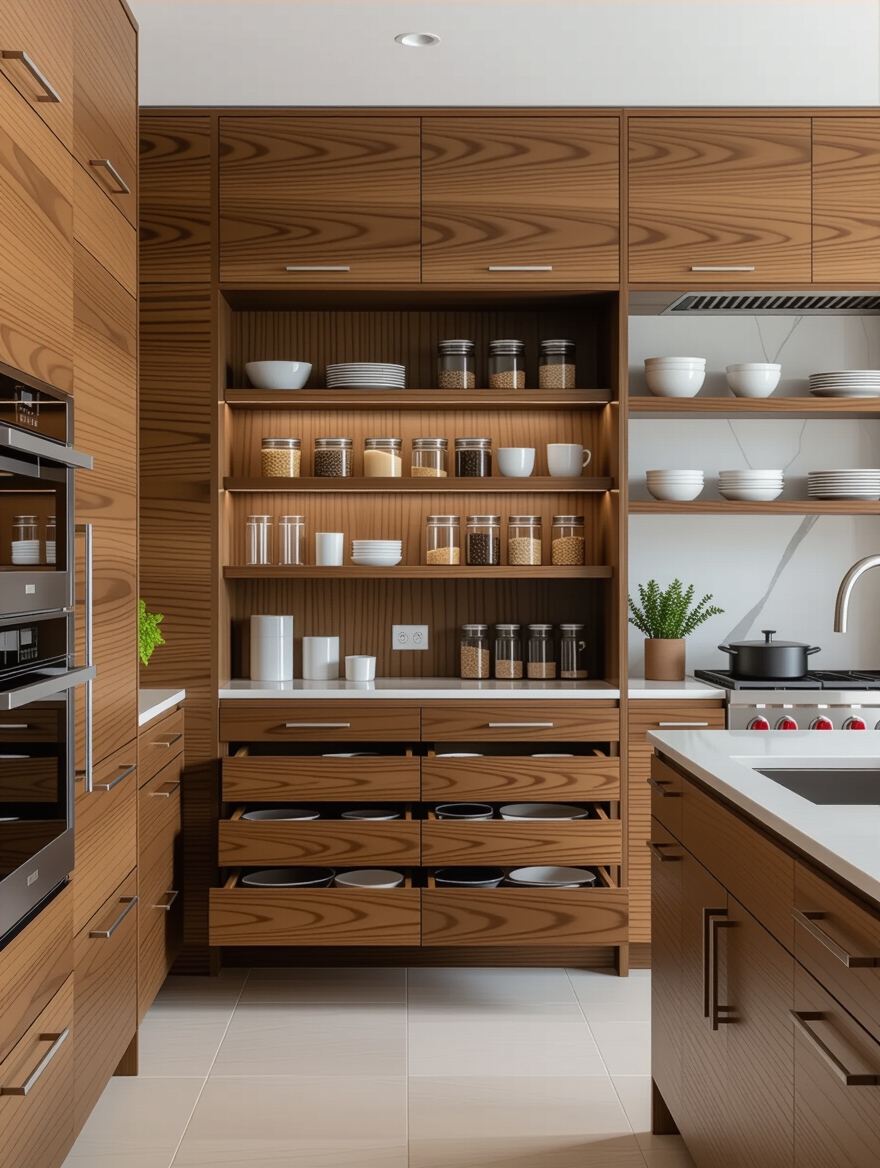
The reason a tall wardrobe matters is simple. It concentrates the clutter that would otherwise scatter. Instead of food in three different cabinets and appliances crowding the counter, one well-fitted larder holds it all in a single, organized place you open and close in seconds. That concentration is what makes the rest of the kitchen feel calm, the same logic behind our declutter-first plan.
The key is treating the wardrobe as a system, giving each kind of thing a dedicated spot. When the breakfast items, the baking gear, and the tinned goods each have a zone, you stop the slow drift back into chaos. A wardrobe planned to your real habits stays organized far longer than one you simply fill.
Maximize Space With Tall Wardrobes
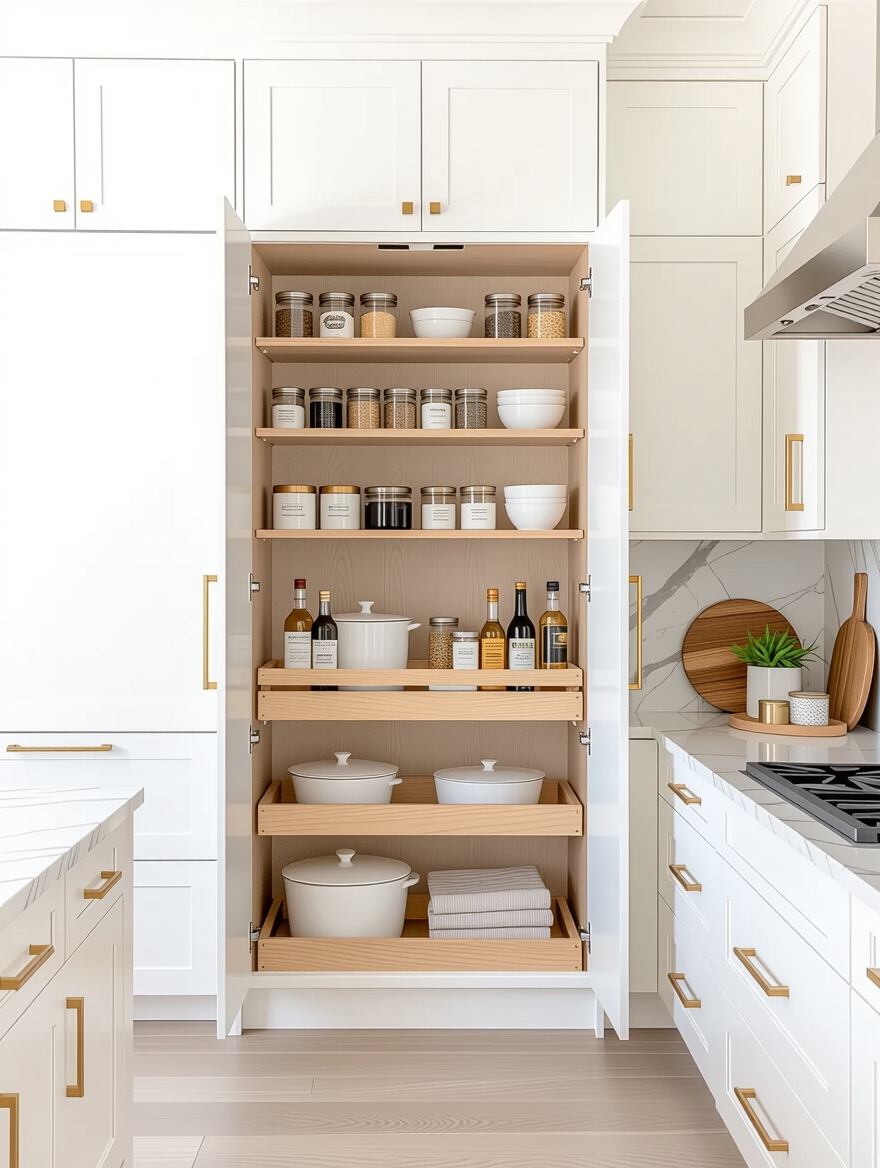
A full-height wardrobe is the most space-efficient unit in any kitchen. It uses the vertical run from floor to ceiling that base cabinets leave empty. Where a standard cabinet stops at counter height and wastes the wall above, a tall larder keeps storing all the way up, holding far more in the same footprint. It is the single best answer to a kitchen short on cabinets, a move our small-kitchen design ideas lean on.
- Run the wardrobe floor to ceiling to capture the storage a standard cabinet wastes up high
- Keep daily items at eye level and bulk or rarely-used stock up top, with a step stool nearby
- Choose one wide tall unit over two narrow ones where you can, since fewer dividers means more usable room
Two questions to plan your wardrobe:
1Where does your kitchen lose the most space?
If it is a dead corner, invest in a swing or carousel fitting. If it is wasted height, a floor-to-ceiling larder with pull-outs reclaims the most; if it is cluttered counters, a hidden appliance larder is the answer.
2Spend on the box or the fittings?
The fittings, every time. A plain tall cabinet with smart full-extension pull-outs and dividers beats a beautiful wardrobe full of fixed shelves, since the inside is what keeps it clutter-free.
Efficient Corner Wardrobe Solutions
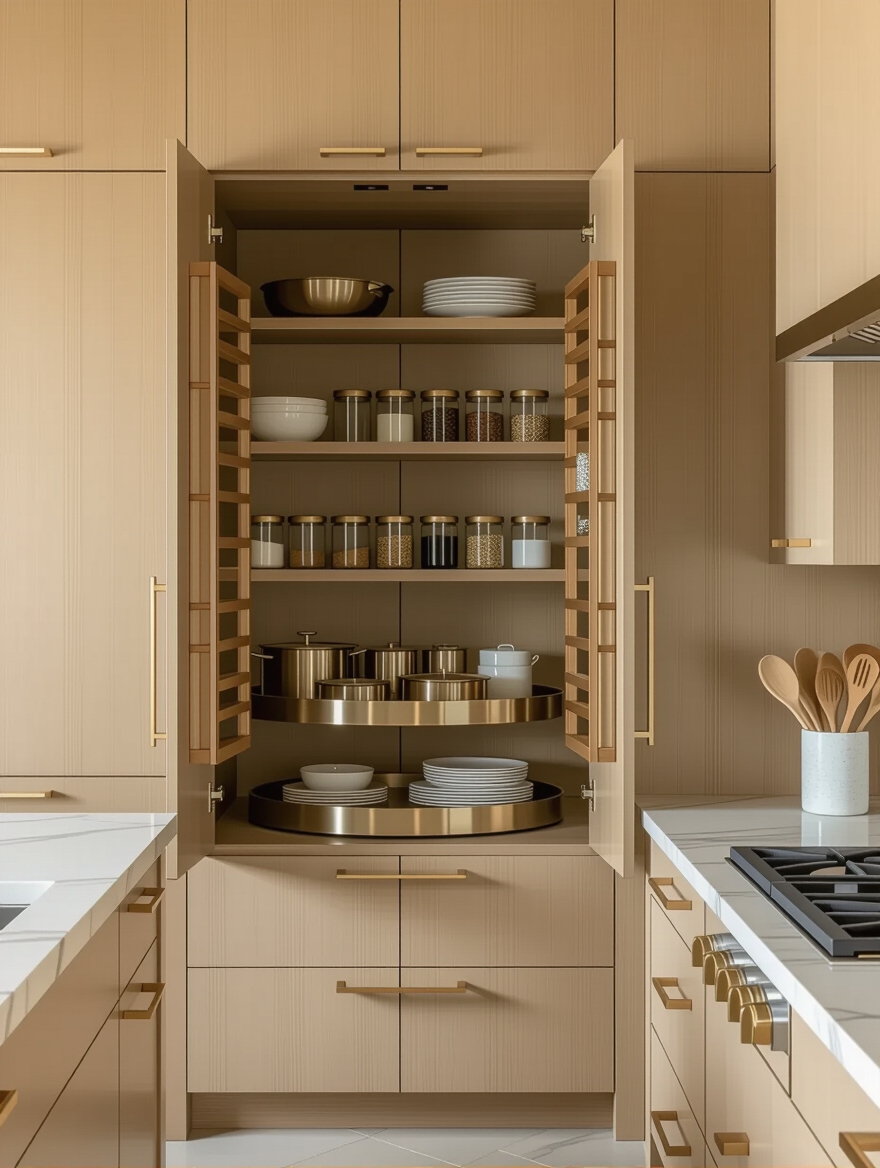
The corner is where a kitchen wastes the most space. A proper corner wardrobe fitting turns that black hole into reachable storage. A pull-out swing or a curved carousel mechanism brings the contents out and around to you, so nothing disappears into the dark depth where things go to expire. It is the priciest fitting here but the one that reclaims the most otherwise-dead space.
- Choose a pull-out swing or carousel unit for a blind corner, the only real fix for that depth
- Budget more for corner mechanisms, since the engineering that makes them work adds real cost
- Reserve the corner for bulkier, less-frequent items, since even the best fitting is a reach
Maximize Vertical Storage in a Larder
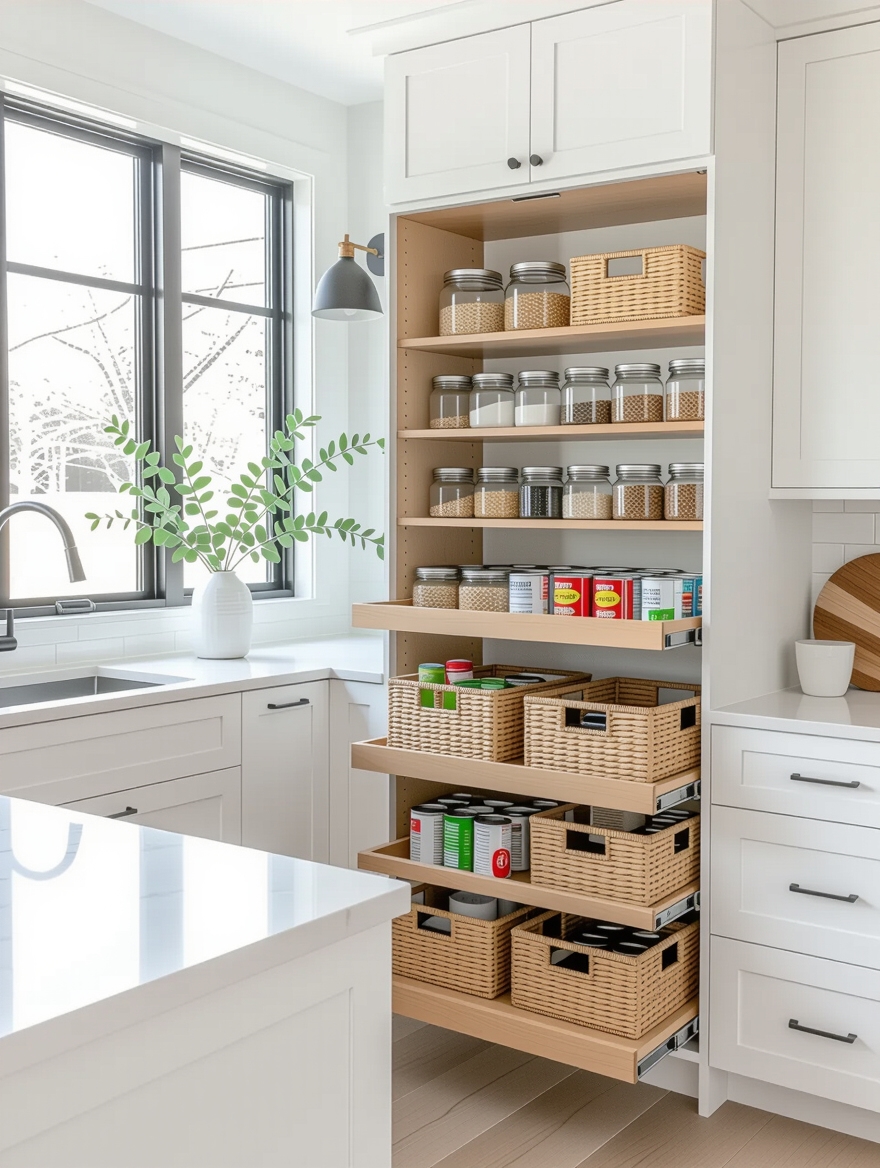
Inside a tall larder, a full pull-out system is what makes the height usable, since shelves you pull toward you let you see and reach the back without a stool for everything. A larder pull-out, with tiered baskets or shelves on runners, glides the whole stack out so the very back is as reachable as the front. This is the fitting I love most in a tall larder, since it turns a deep, dark cabinet into a clutter-free wall of food.
Bring the back of the larder forward
These pull-out larder mechanisms are a real investment, often a few hundred dollars for the runners and baskets alone, but they transform how a tall unit works. For a kitchen you plan to keep, they pay back daily in time and sanity.
If a full pull-out larder is out of budget, simple adjustable shelves set to your real items, plus a couple of clip-on baskets, get you partway there for far less. The principle is the same: bring the back forward and let every level be seen. Our whole-kitchen storage system covers the cheaper fittings in depth.
Which wardrobe fitting solves your problem?
🎯Things expire at the back
A full pull-out larder brings every shelf out to you, so nothing hides in the depth to be forgotten and rebought.
🎯The corner is a black hole
A pull-out swing or carousel turns the blind corner into reachable, usable storage, the priciest fix but the highest-impact.
🎯Counters are always cluttered
A hidden appliance larder with bi-fold doors swallows the kettle, toaster, and clutter behind a clean front.
Customizable Wardrobe Storage
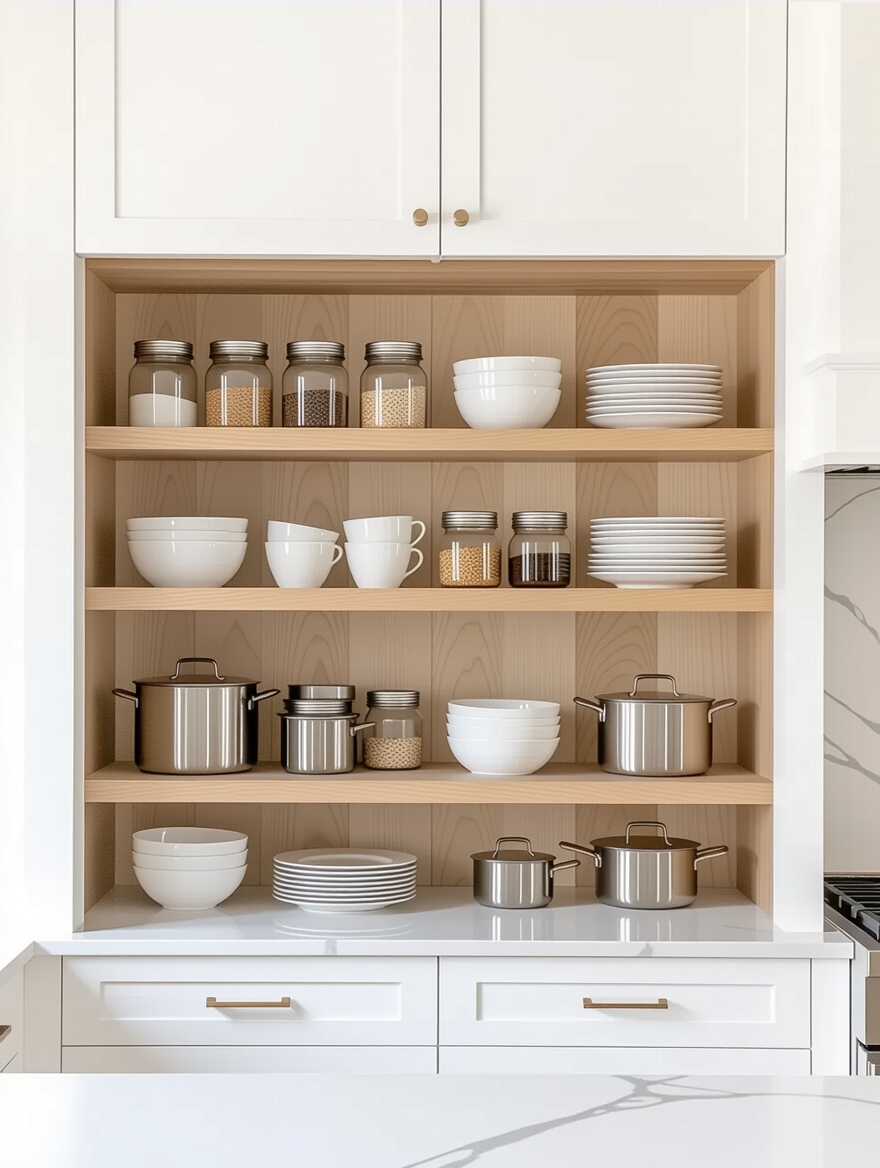
The best wardrobes are customizable, since a unit tuned to your real life beats a generic grid of shelves every time. Adjustable shelves, removable baskets, door-mounted racks, and modular inserts let you carve the interior into zones for breakfast, baking, snacks, and bulk, then change it as your needs shift. The flexibility is what keeps the wardrobe working for years rather than fighting you after one.
I tell clients to plan the inside around what they actually store before choosing the unit, since how it is fitted out matters far more than which door you end up picking. A wardrobe sized for someone else’s habits never quite settles, which is why our modular cabinet ideas start from your real stuff.
- Choose adjustable, modular fittings so the interior adapts as your storage changes
- Carve clear zones, breakfast, baking, bulk, so every item has a home it returns to
- Use the door backs for shallow racks, since that surface is usually wasted
Deep Drawers for Cookware
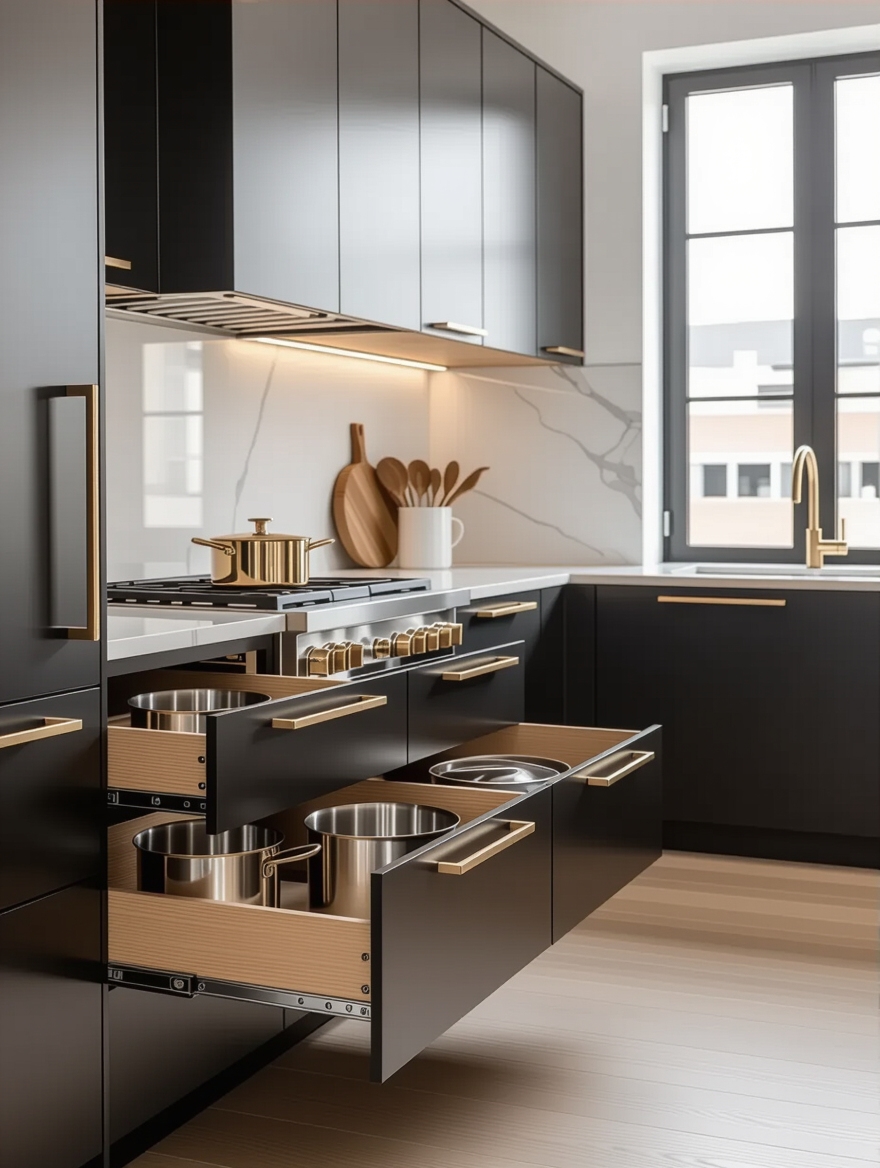
Building deep drawers into the lower wardrobe finally tames pots, pans, and their lids. You pull the whole drawer out and look straight down at everything. A low cabinet hides cookware at the back and forces a kneel-and-dig; a deep drawer brings it all to you. For everyday pots, it is the single most satisfying upgrade in the kitchen, and I see clients use it the day it goes in.
Add pegboard dividers or adjustable pegs inside the drawer so lids and pans stay upright and separated rather than stacking into a clatter. Deep drawers cost more than shelves to build, but for the daily-use cookware they earn it many times over.
- Choose deep, full-extension drawers for pots so the whole contents pull out to you
- Add peg dividers to keep lids and pans upright instead of stacked and clattering
- Reserve the deepest drawers for the heavy, everyday cookware you reach for most
A kitchen wardrobe is won on the inside, not the door. Spend on the pull-outs and dividers, and the clutter has nowhere left to hide.
Organized Baking Sheet Storage
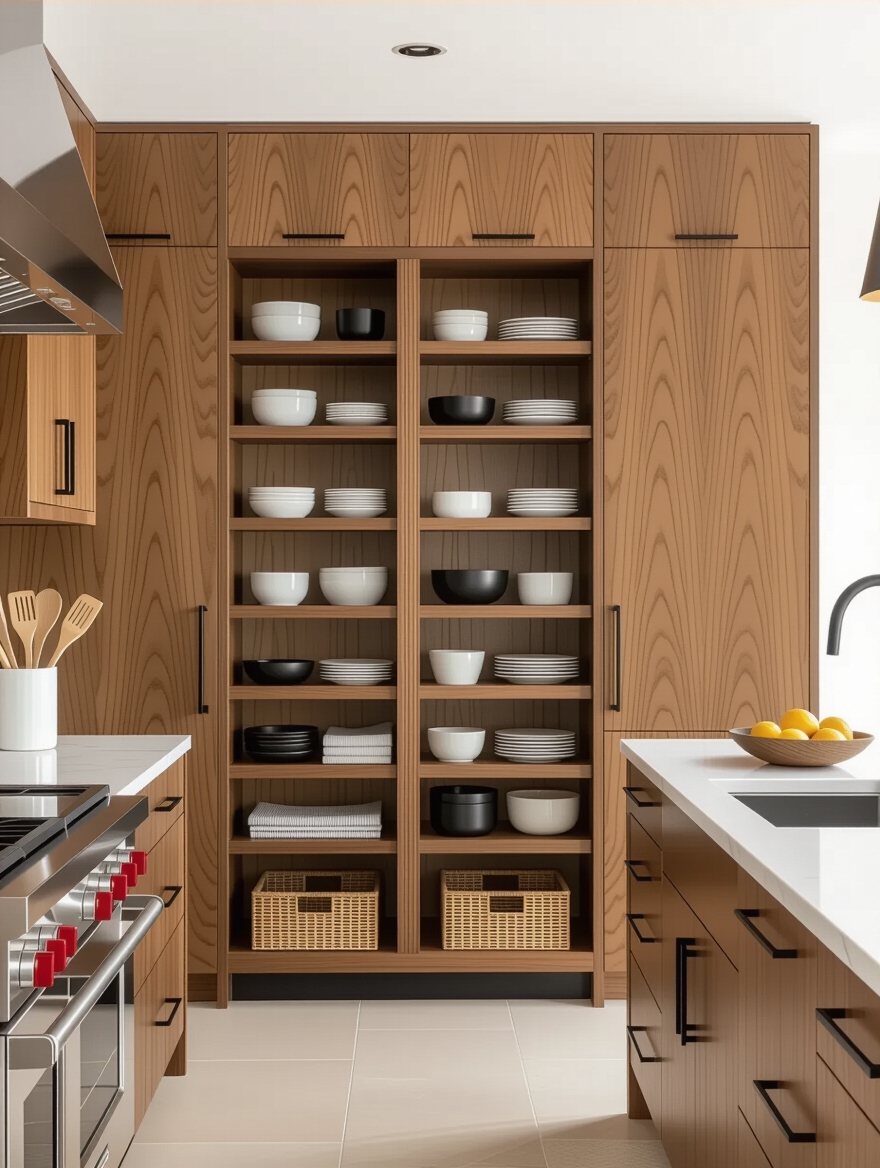
Flat bakeware, sheet pans, cooling racks, cutting boards, muffin tins, is the classic cabinet avalanche, and a vertical divider section in the wardrobe solves it for good. A tall, narrow bay fitted with dividers lets each tray stand on its edge so you slide out exactly the one you want. It is a small fitting that ends one of the most annoying daily digs in any kitchen.
- Fit a narrow vertical divider bay so trays and boards stand upright and pull out singly
- Place it beside the oven, since that is where you reach for bakeware mid-cook
- Add wire dividers, a cheap retrofit, if your wardrobe did not come with a tray bay
A Built-In Spice Rack Solution
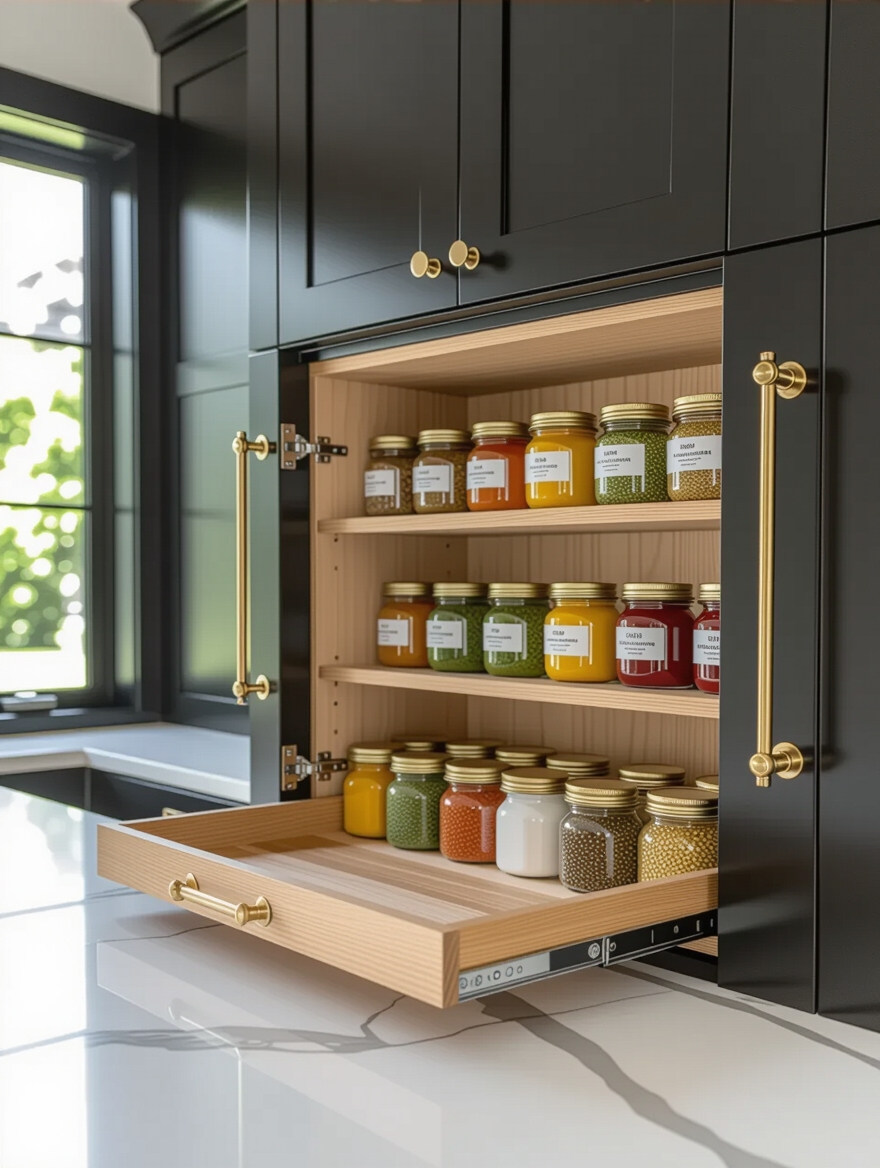
A built-in spice fitting inside the wardrobe keeps seasonings visible and to hand, which is the difference between using them and buying them twice. A shallow pull-out, a tiered shelf insert, or a door-mounted rack lays the jars out so every label shows at a glance. Grouped the way you cook, baking spices together and everyday savory ones up front, it shaves real time off every meal, much as our pantry design ideas organize a walk-in.
Site the spice fitting near where you actually season, by the prep counter or the hob, rather than across the kitchen. And keep it out of the steam directly over the cooktop, since heat and moisture dull spices faster. A quick smell-test purge now and then keeps the rack honest, since a scentless jar is just taking up a good slot.
Clever Hidden Storage Solutions
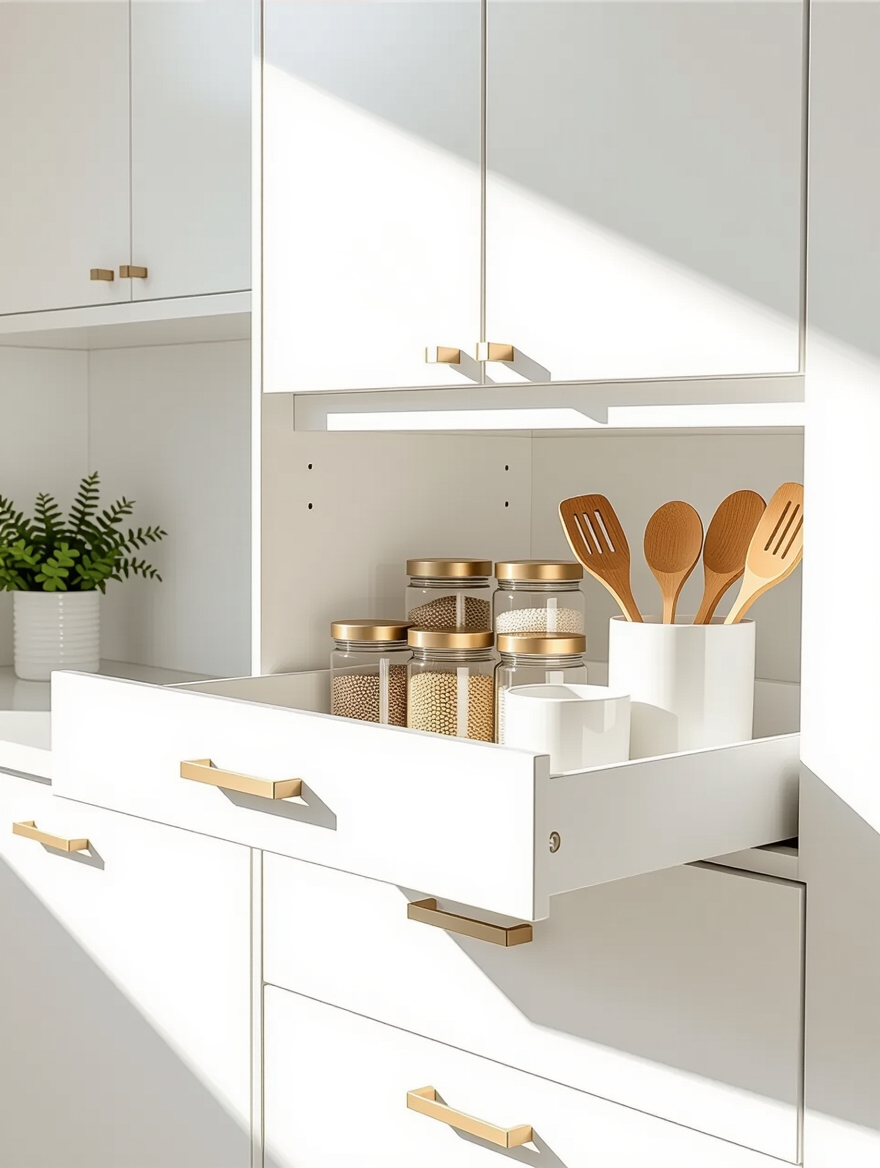
The cleverest wardrobes hide the working mess entirely behind doors that fold or pocket away, so the appliances, the clutter, and the half-used packets vanish when you step back. A larder with bi-fold or pocket doors opens to reveal a full breakfast or coffee station, then closes to a clean, calm front. This is how a busy kitchen keeps its serene face without anyone tidying for guests.
- Choose bi-fold or pocket doors so the open larder does not block the walkway
- Fit a power point inside for an appliance station, kettle, toaster, coffee maker, hidden away
- Use the hidden zone for the daily clutter you want out of sight, then simply close the door
Efficient Kitchen Waste Management
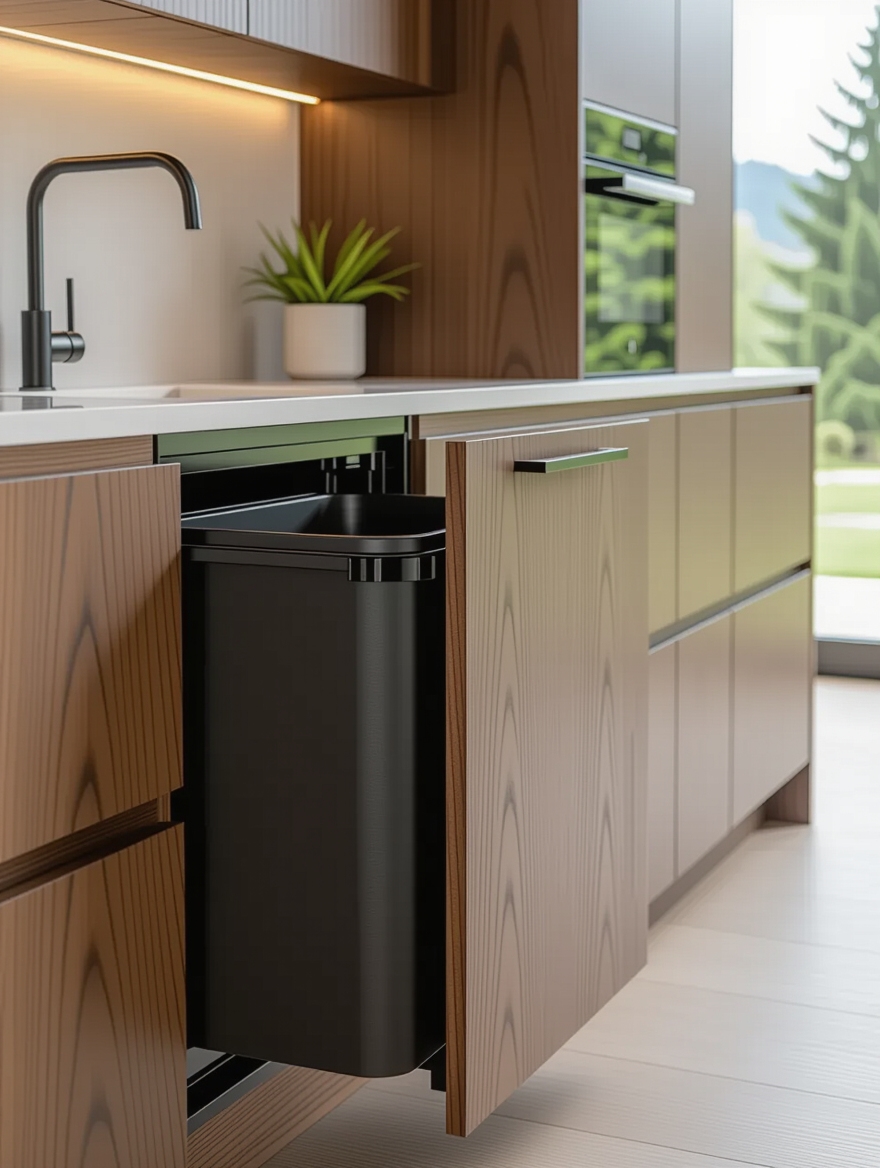
A clutter-free kitchen needs somewhere honest for the waste, and a built-in bin system inside the wardrobe or a base unit hides it while keeping it sorted. A pull-out frame holding separate bins for trash, recycling, and compost keeps the floor clear of bags, and a fitter retrofits one in under an hour. It is the unglamorous fitting that quietly finishes a tidy kitchen.
- Fit a pull-out bin frame, often $30 to $80, with separate bins for trash, recycling, and compost
- Site it beside the sink or prep zone, where most waste is actually generated
- Choose soft-close runners so a full, heavy bin frame glides shut rather than slamming
Kitchen Wardrobe Questions People Ask
?What is a kitchen wardrobe or larder unit?
A tall, floor-to-ceiling cabinet that stores food, small appliances, and bulk goods in one place. Fitted with pull-outs, adjustable shelves, and door racks, it concentrates the clutter that would otherwise spread across counters and lower cabinets, which is why it is the backbone of a clutter-free kitchen.
?Should I spend on the wardrobe box or the fittings inside?
The fittings, almost always. A plain tall cabinet with smart full-extension pull-outs, dividers, and a good corner mechanism stays organized far better than a beautiful wardrobe full of fixed shelves. The inside is what keeps things visible and reachable, so prioritize the mechanisms and let the door finish come second.
?How do I fix a kitchen corner that wastes space?
Fit a pull-out swing or a curved carousel mechanism into the corner wardrobe, which brings the contents out and around to you instead of leaving them lost in the dark depth. It is the priciest fitting because of the engineering, but it reclaims the most otherwise-dead space in the kitchen, so reserve it for bulkier, less-frequent items.
?What is the best way to store pots and pans clutter-free?
Deep, full-extension drawers in the lower wardrobe, with peg dividers to keep lids and pans upright. You pull the whole drawer out and look straight down at everything, which ends the kneel-and-dig of a low cabinet. Reserve the deepest drawers for the heavy everyday cookware you reach for most.
Build the Inside, and the Clutter Has Nowhere to Go
A clutter-free kitchen rarely comes from willpower; it comes from a tall wardrobe whose insides are planned around how you cook. Pull-outs that bring the back forward, a corner fitting that rescues the dead zone, deep drawers for pots, and a hidden bin keep everything in view and within reach, which is what stops the drift back into chaos.
So before you choose a wardrobe on its door alone, plan the fittings around what you actually store and where the space is lost. Save this page, prioritize the internal mechanisms over the finish, and one well-built larder will quietly keep the whole kitchen calm for years.
More Hair Ideas


